June 2025: Paper 3: Pure Mathematics and Mechanics

100 marks · 36 question parts · Question paper, mark scheme and examiner's report on OCR's site

Question by question

QTopicMarksDifficulty
1(a) Quadratics and the discriminant 3 Easy
1(b) Quadratics and the discriminant, Graphs and transformations 1 Easy
1(c) Differentiation: first principles, gradients, stationary points, Straight lines, Quadratics and the discriminant 1 Hard
2(a) Graphs and transformations 2 Easy
2(b) Graphs and transformations 2 Easy
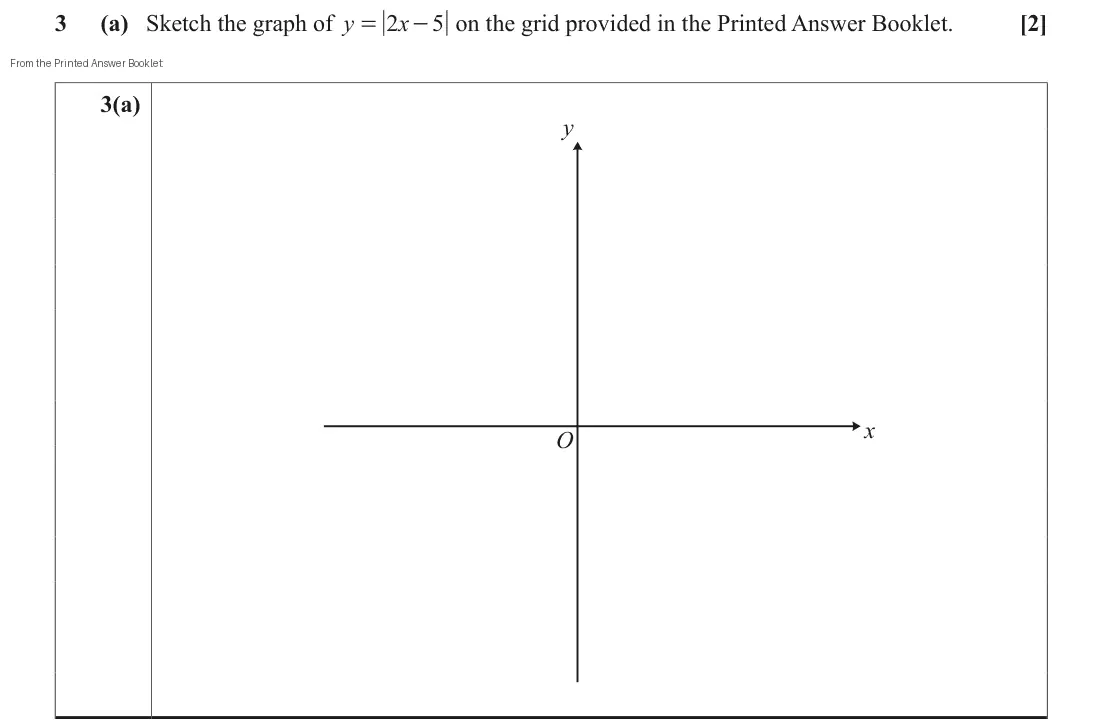
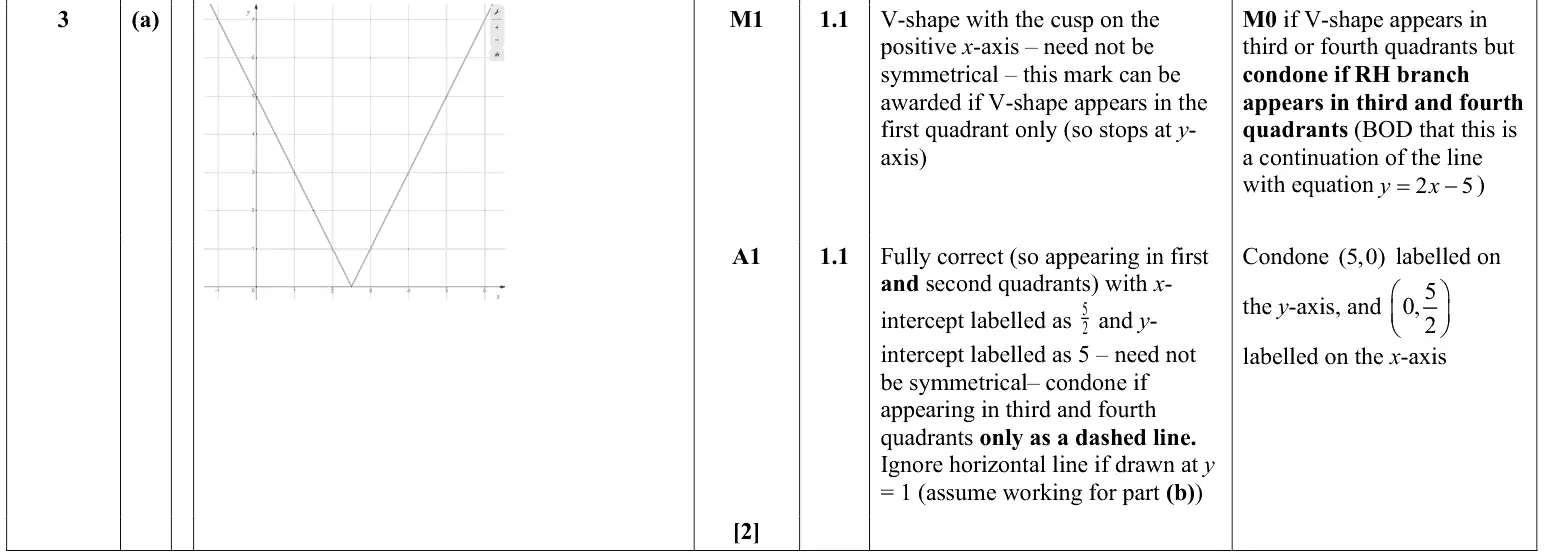
3(a) Functions, composite and inverse functions, modulus 2 Easy
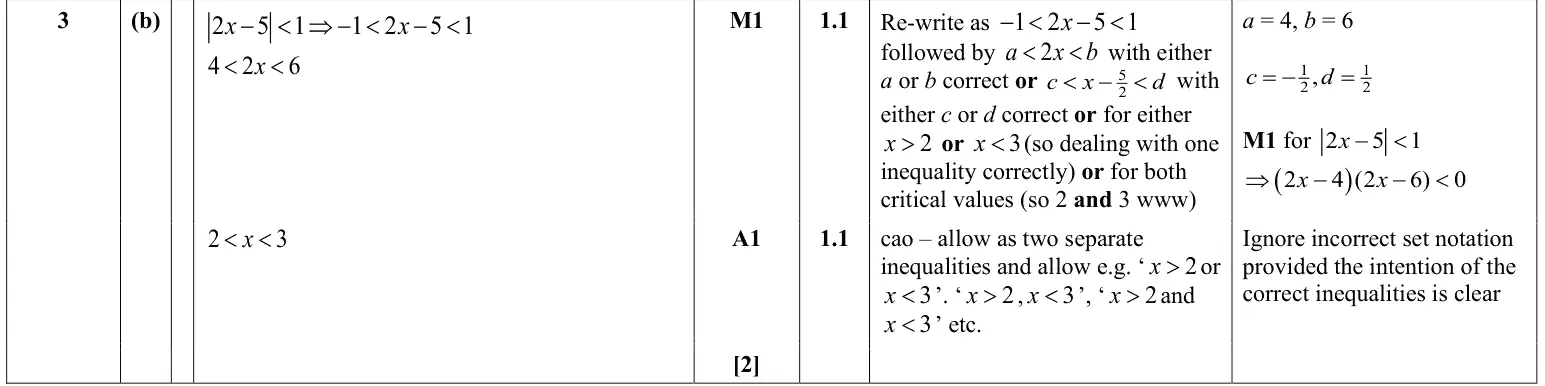
3(b) Functions, composite and inverse functions, modulus, Inequalities 2 Easy
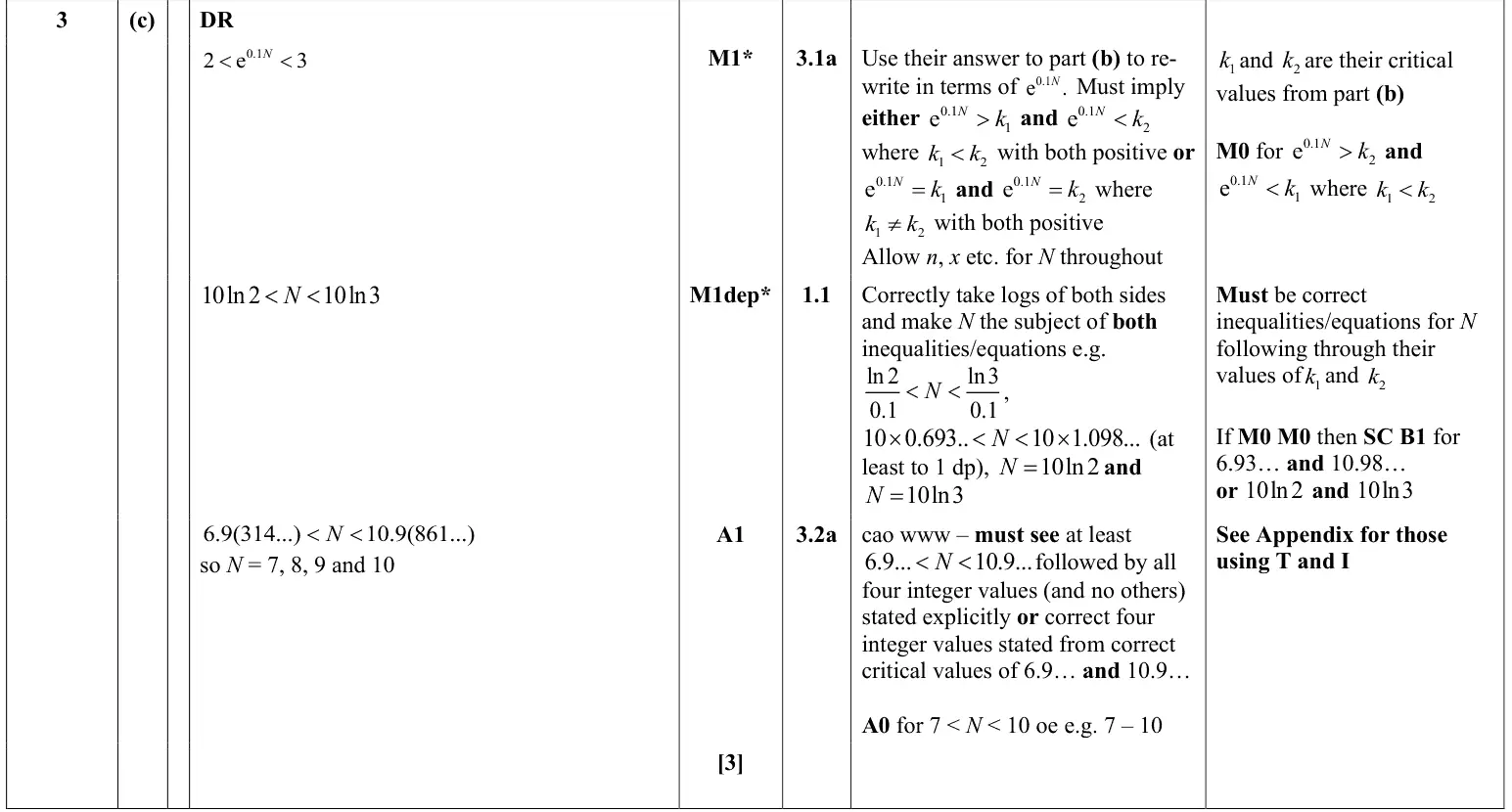
3(c) Exponentials and logarithms, Functions, composite and inverse functions, modulus 3 Medium
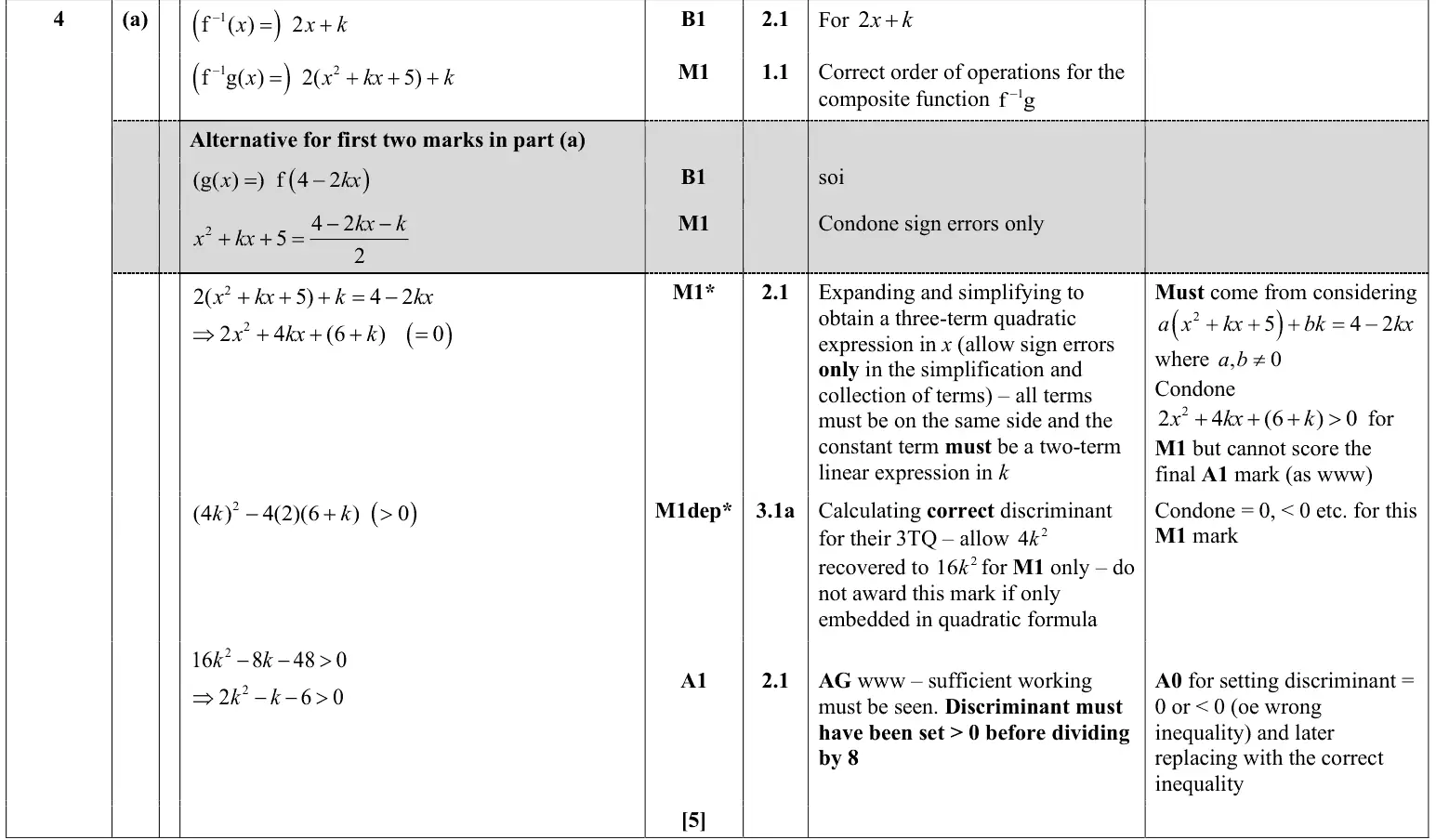
4(a) Functions, composite and inverse functions, modulus, Quadratics and the discriminant, Algebraic methods: polynomials, factor theorem and rational expressions 5 Medium
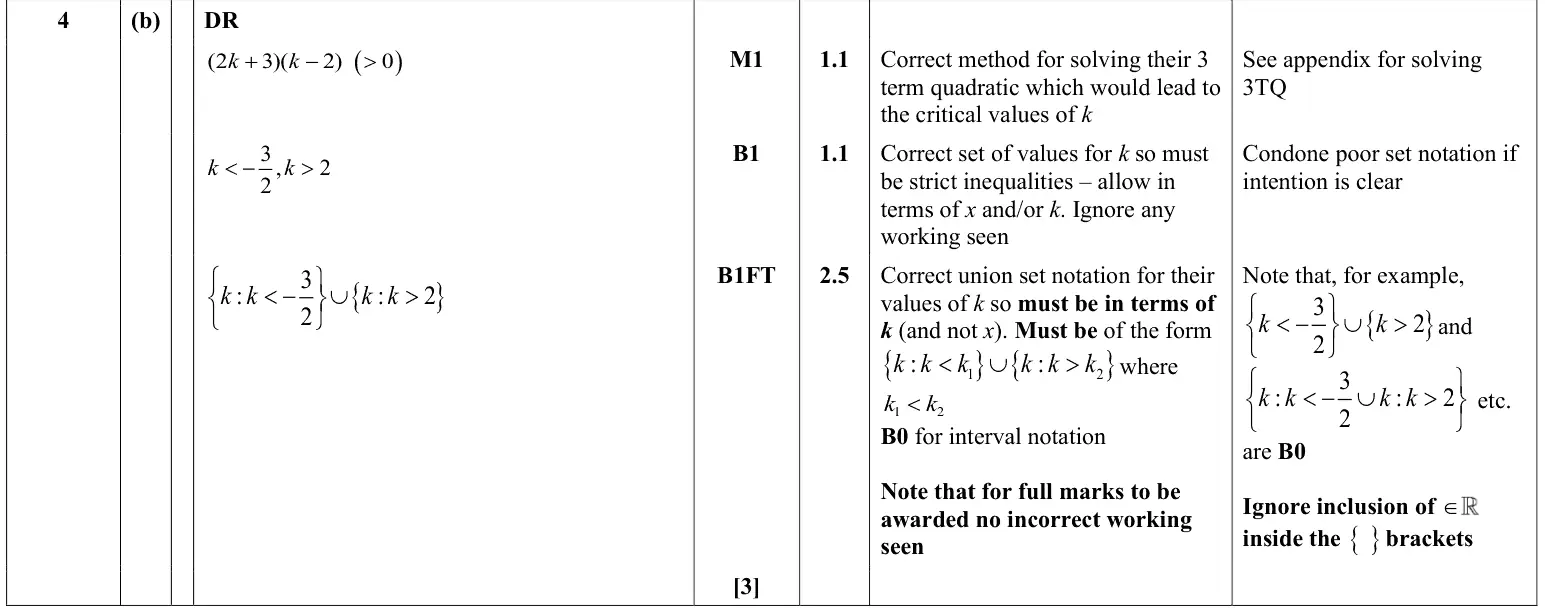
4(b) Inequalities 3 Medium
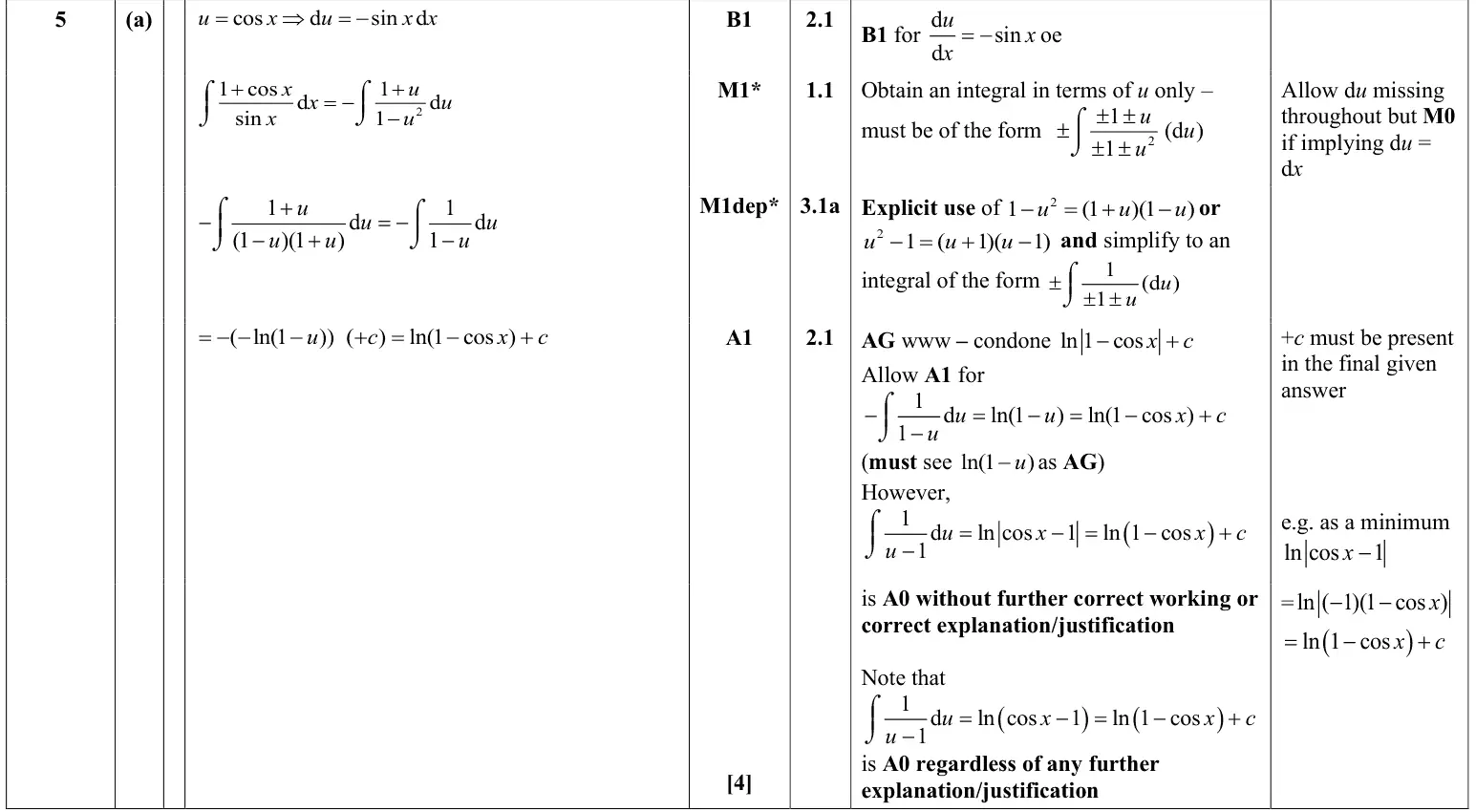
5(a) Integration by parts and by substitution, Trigonometric identities and proofs, Integration: standard integrals, definite integrals and areas 4 Medium
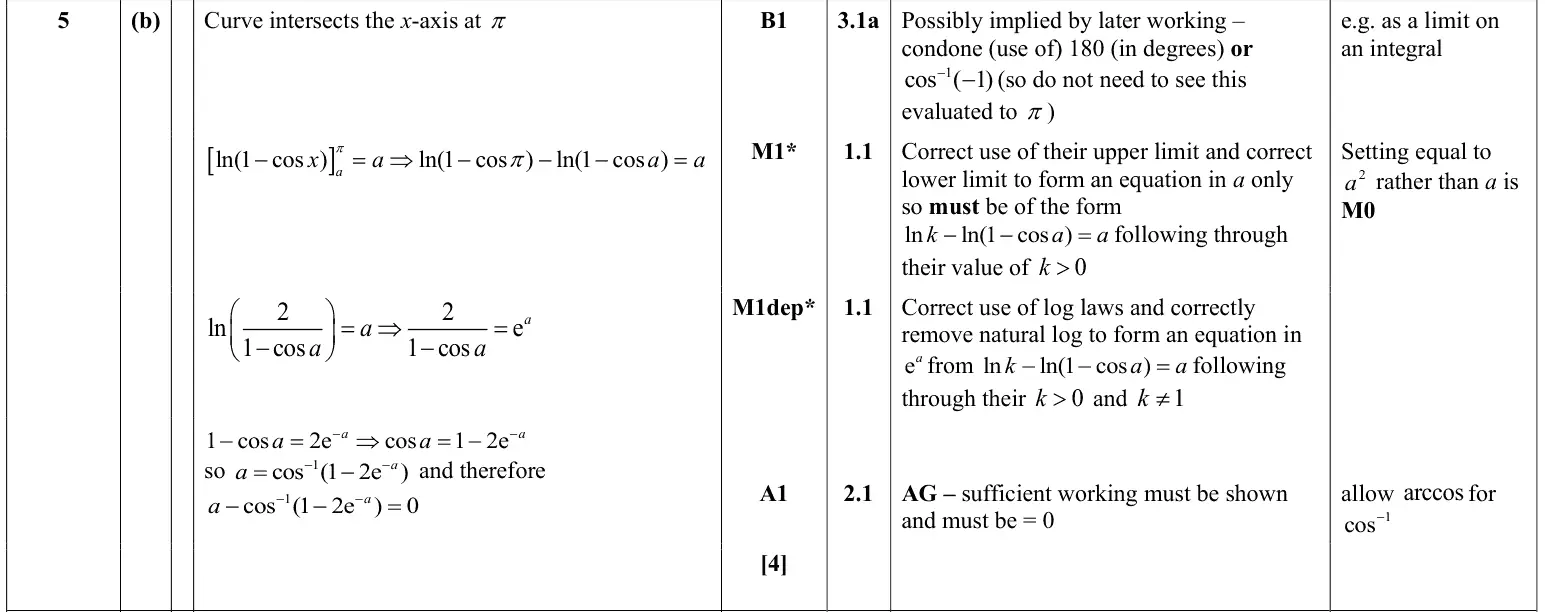
5(b) Integration: standard integrals, definite integrals and areas, Exponentials and logarithms, Reciprocal and inverse trigonometric functions 4 Medium
5(c) Numerical methods: roots, iteration and Newton–Raphson 2 Easy
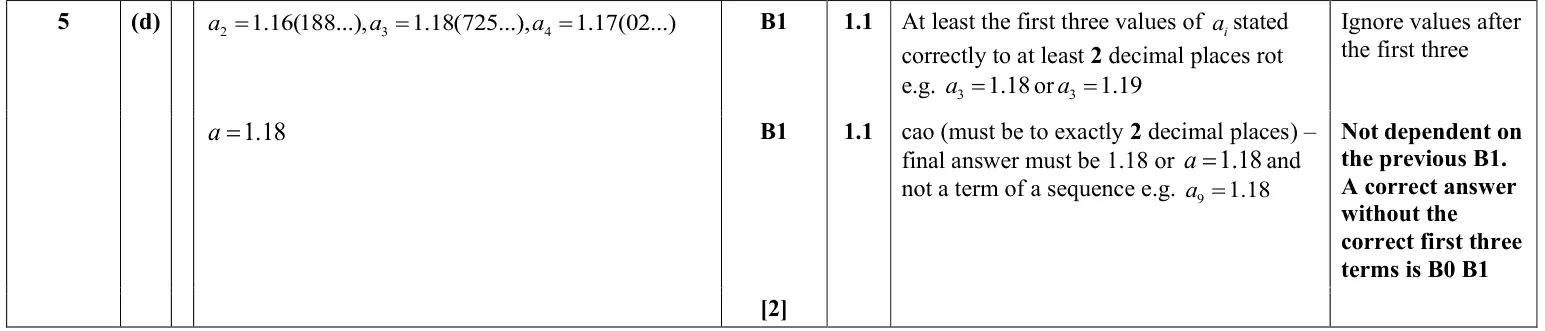
5(d) Numerical methods: roots, iteration and Newton–Raphson, Reciprocal and inverse trigonometric functions 2 Easy
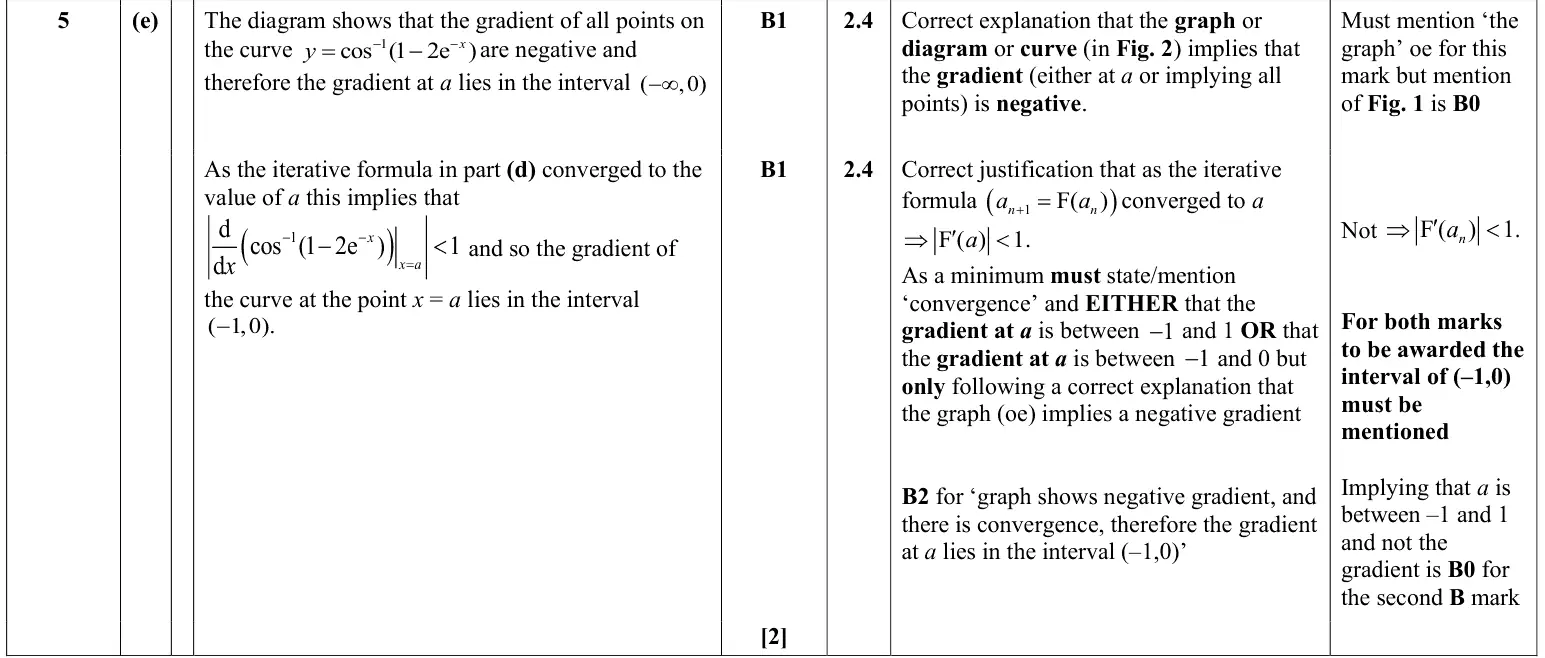
5(e) Numerical methods: roots, iteration and Newton–Raphson, Differentiation: first principles, gradients, stationary points 2 Hard
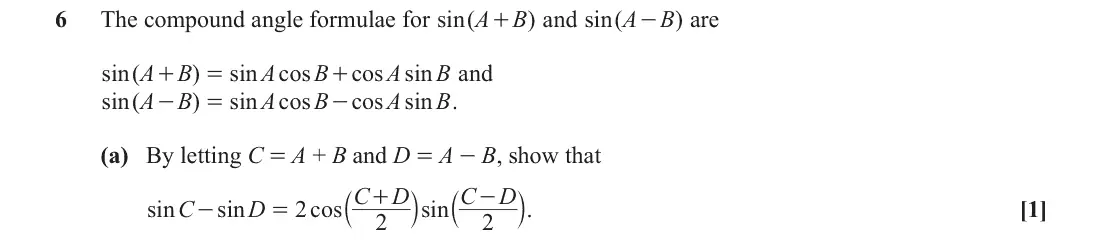
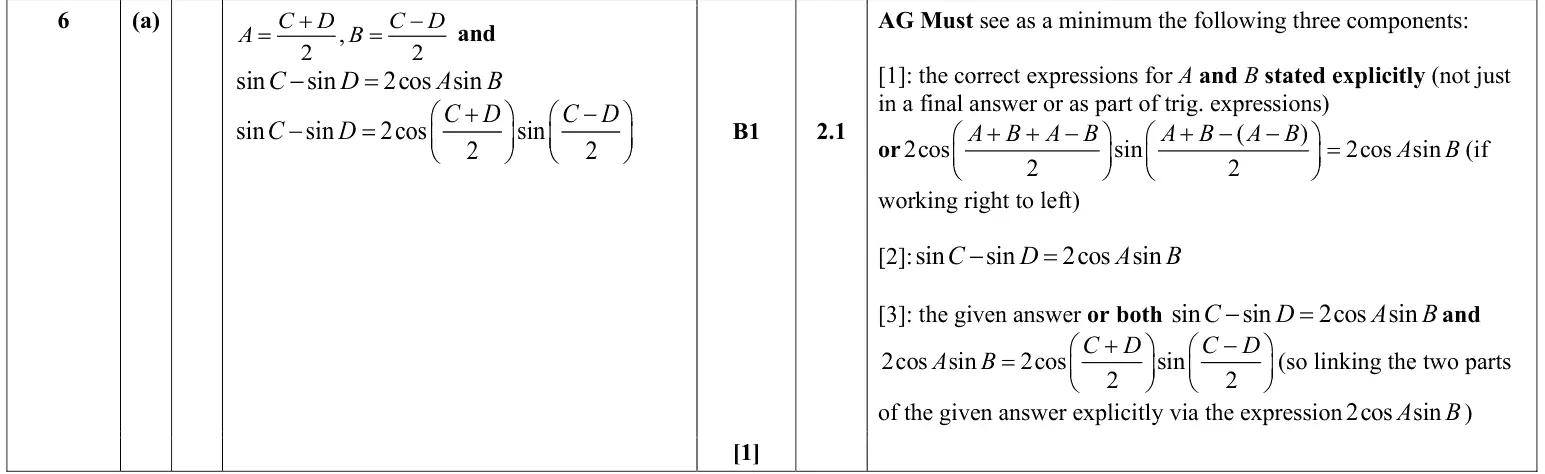
6(a) Addition and double-angle formulae, harmonic form, Trigonometric identities and proofs 1 Hard
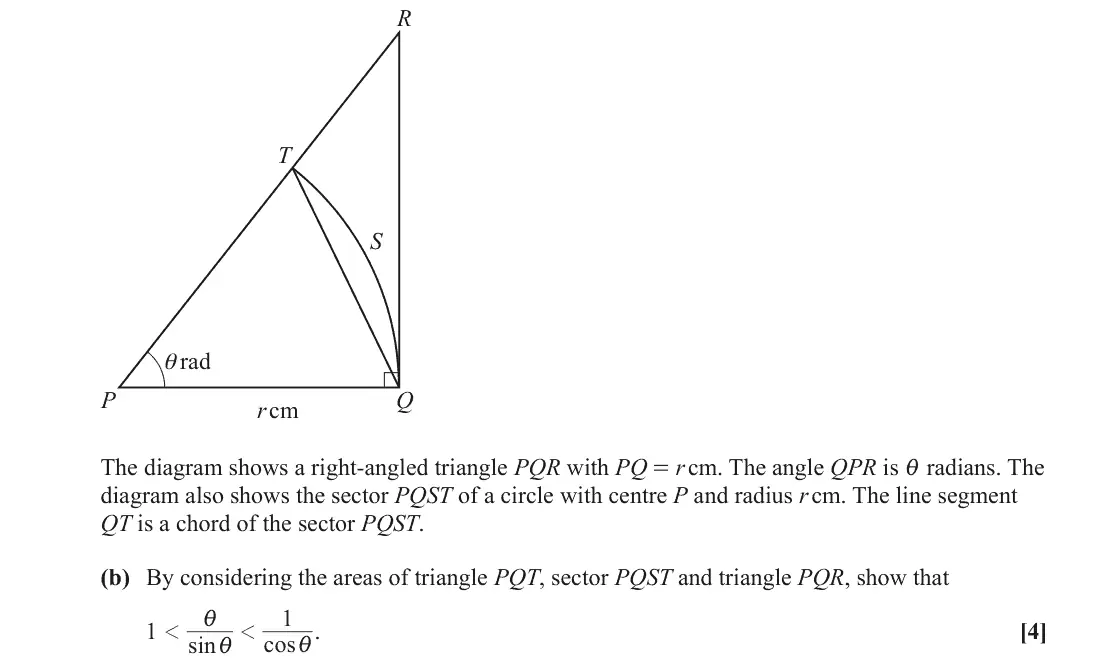
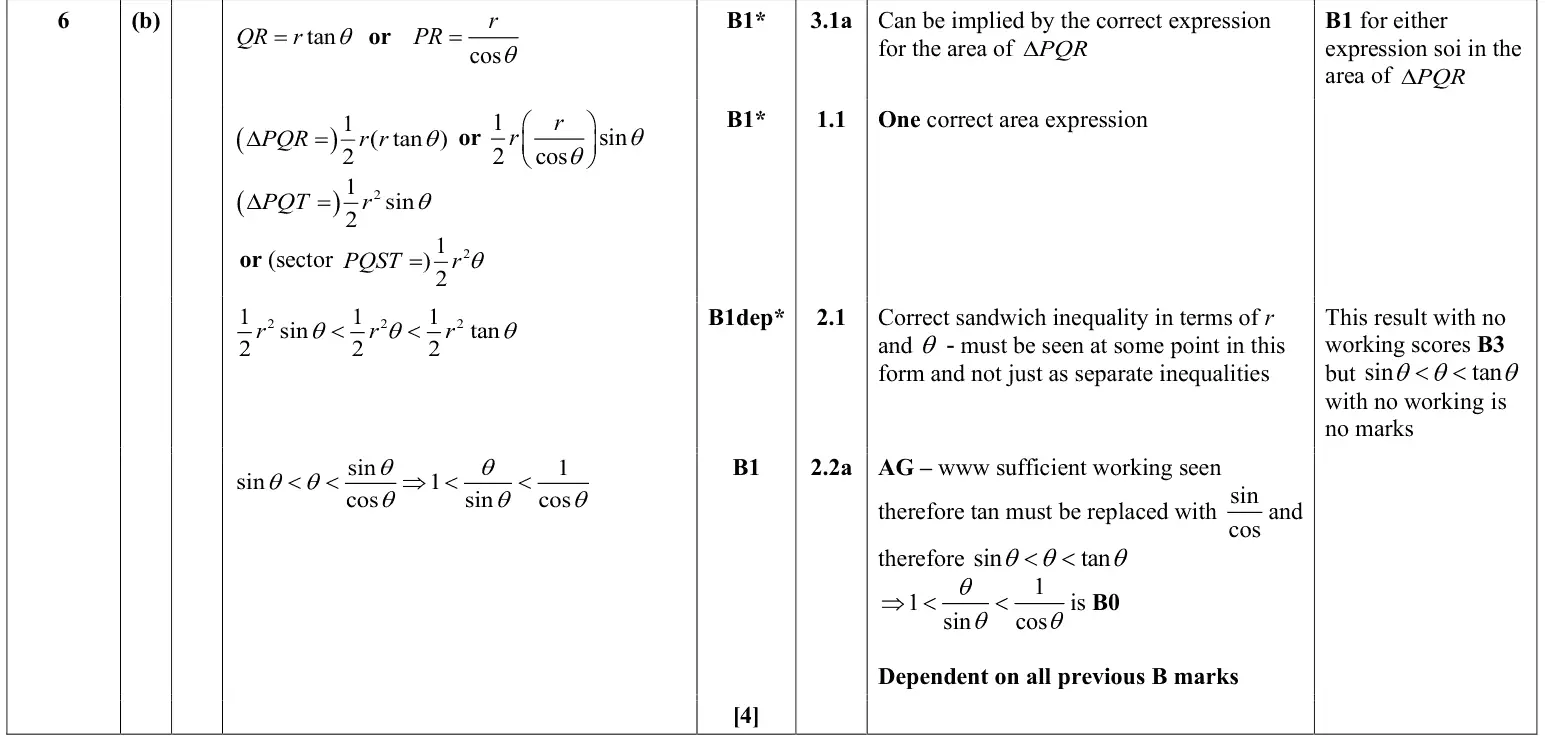
6(b) Trigonometric ratios, graphs, radians and the sine and cosine rules, Reciprocal and inverse trigonometric functions 4 Hard
6(c)(i) Small-angle approximations, Proof, including contradiction 1 Hard
6(c)(ii) Differentiation: first principles, gradients, stationary points, Small-angle approximations 1 Hard
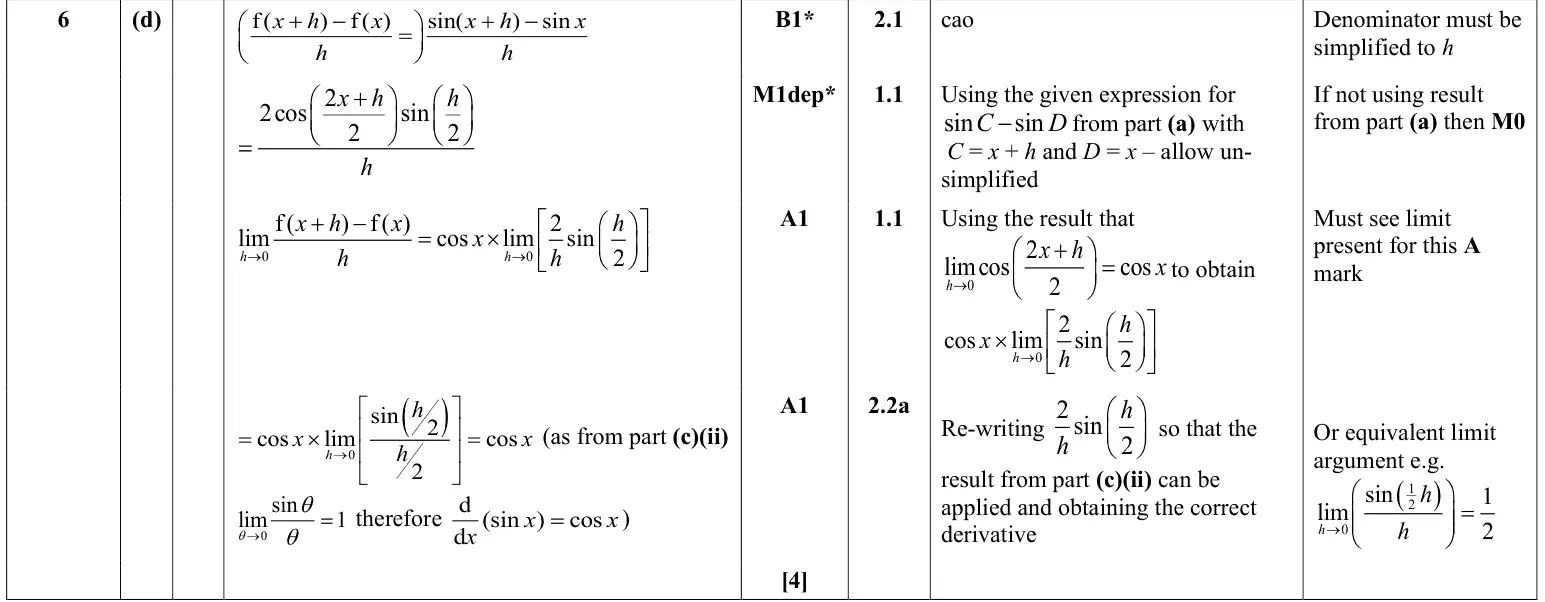
6(d) Differentiation: first principles, gradients, stationary points, Addition and double-angle formulae, harmonic form 4 Medium
6(e) Chain, product and quotient rules; connected rates of change, Differentiation: first principles, gradients, stationary points 1 Easy
7(a) Forces, Newton's laws and connected particles, Friction, resultant forces and motion in a plane 3 Medium
7(b) Constant acceleration (SUVAT) 2 Medium
8(a) Forces, Newton's laws and connected particles 2 Easy
8(b) Forces, Newton's laws and connected particles 2 Medium
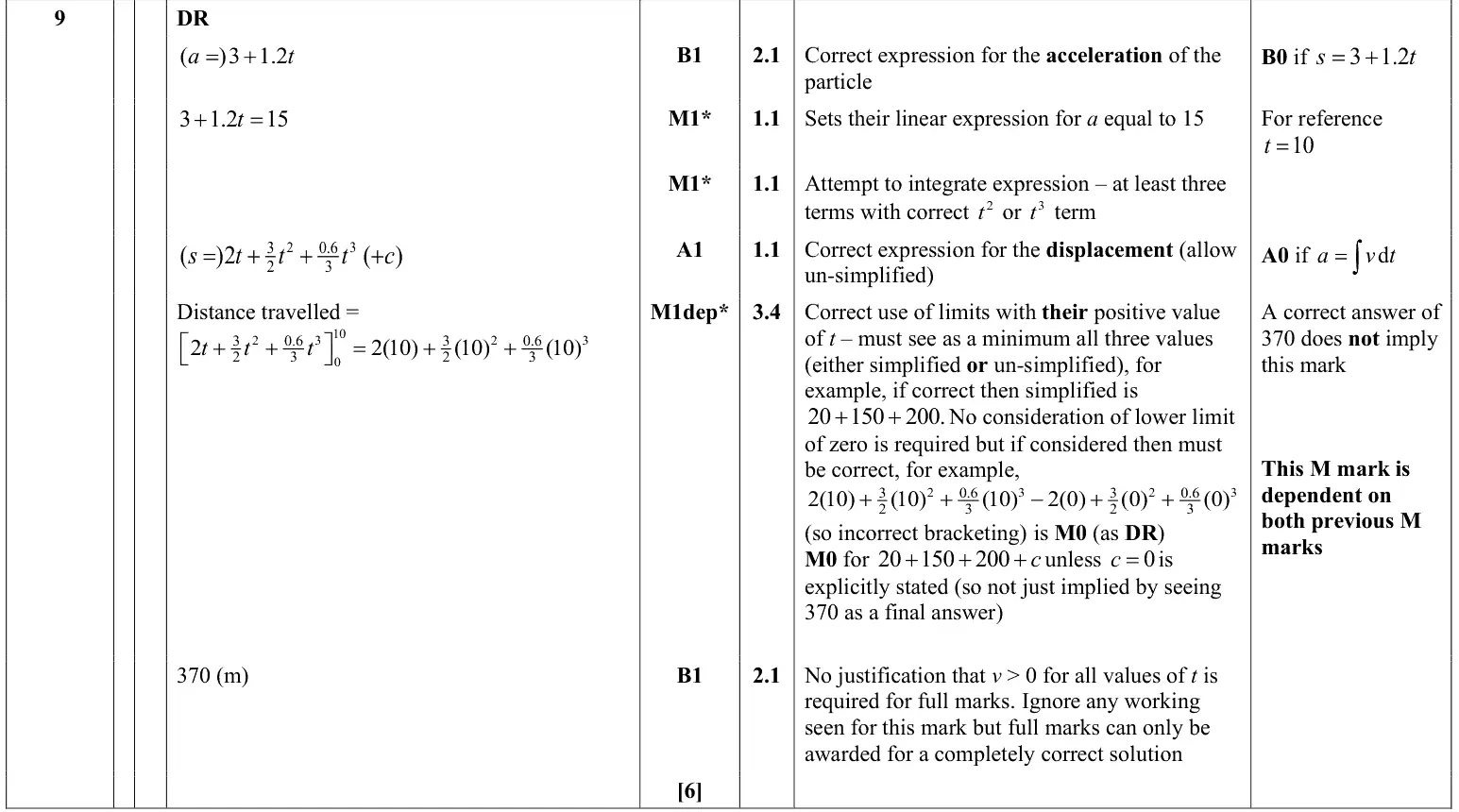
9 Variable acceleration, Differentiation: first principles, gradients, stationary points, Integration: standard integrals, definite integrals and areas 6 Easy
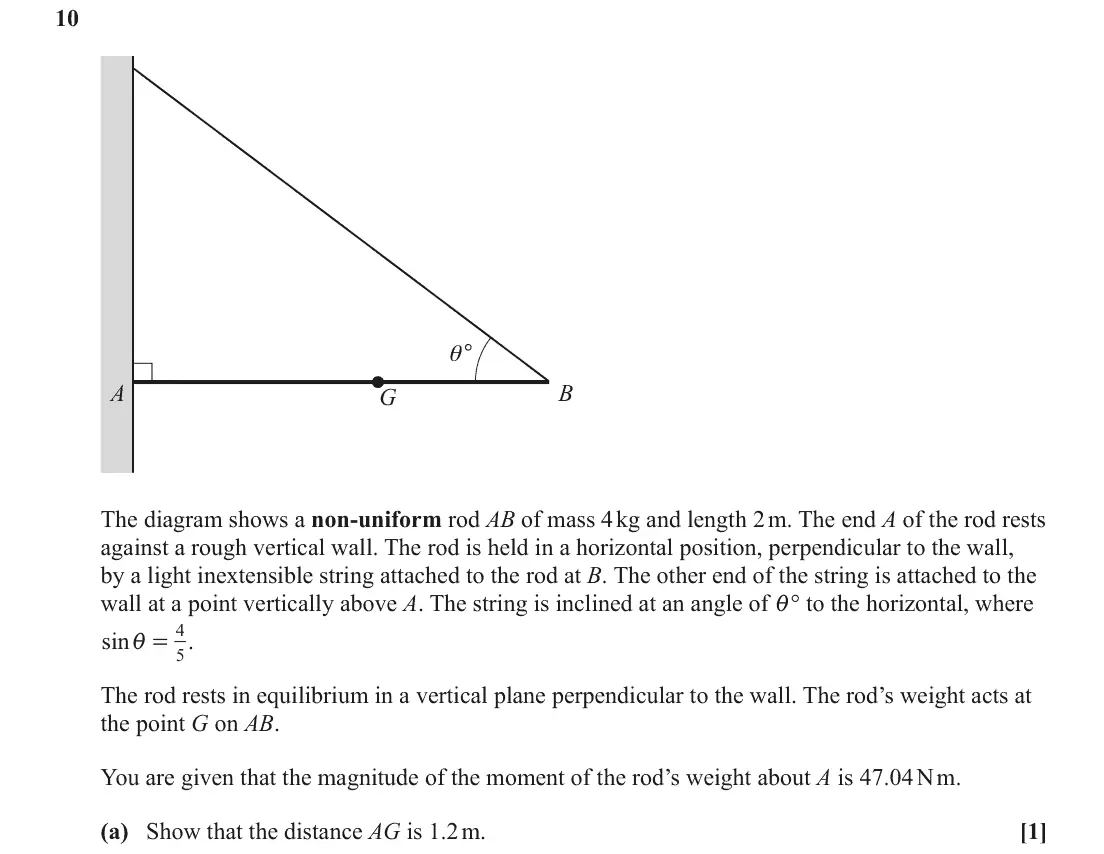
10(a) Moments 1 Easy
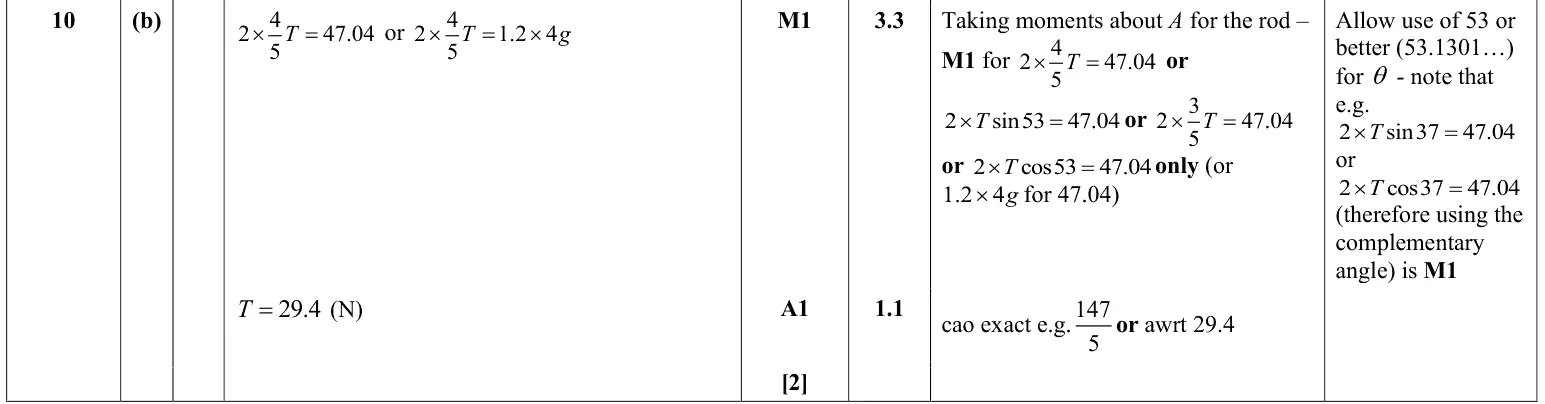
10(b) Moments, Trigonometric ratios, graphs, radians and the sine and cosine rules 2 Medium
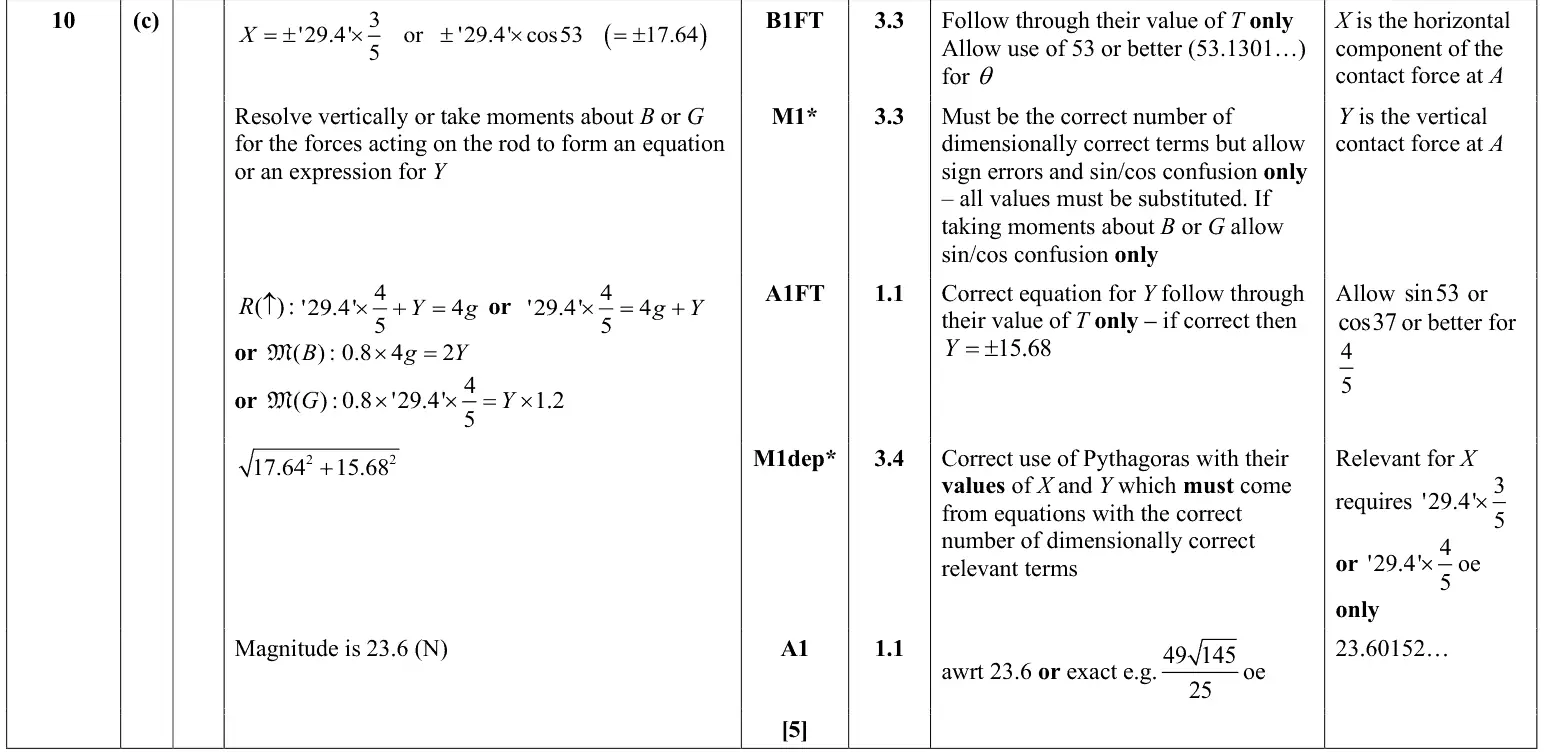
10(c) Moments, Friction, resultant forces and motion in a plane, Trigonometric ratios, graphs, radians and the sine and cosine rules 5 Medium
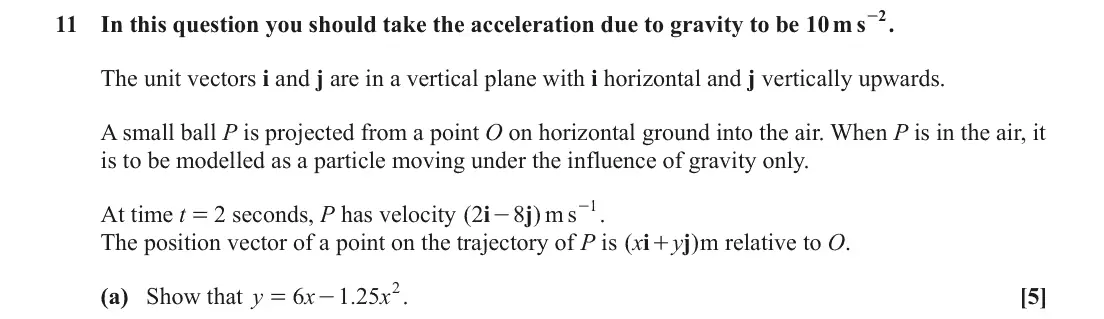
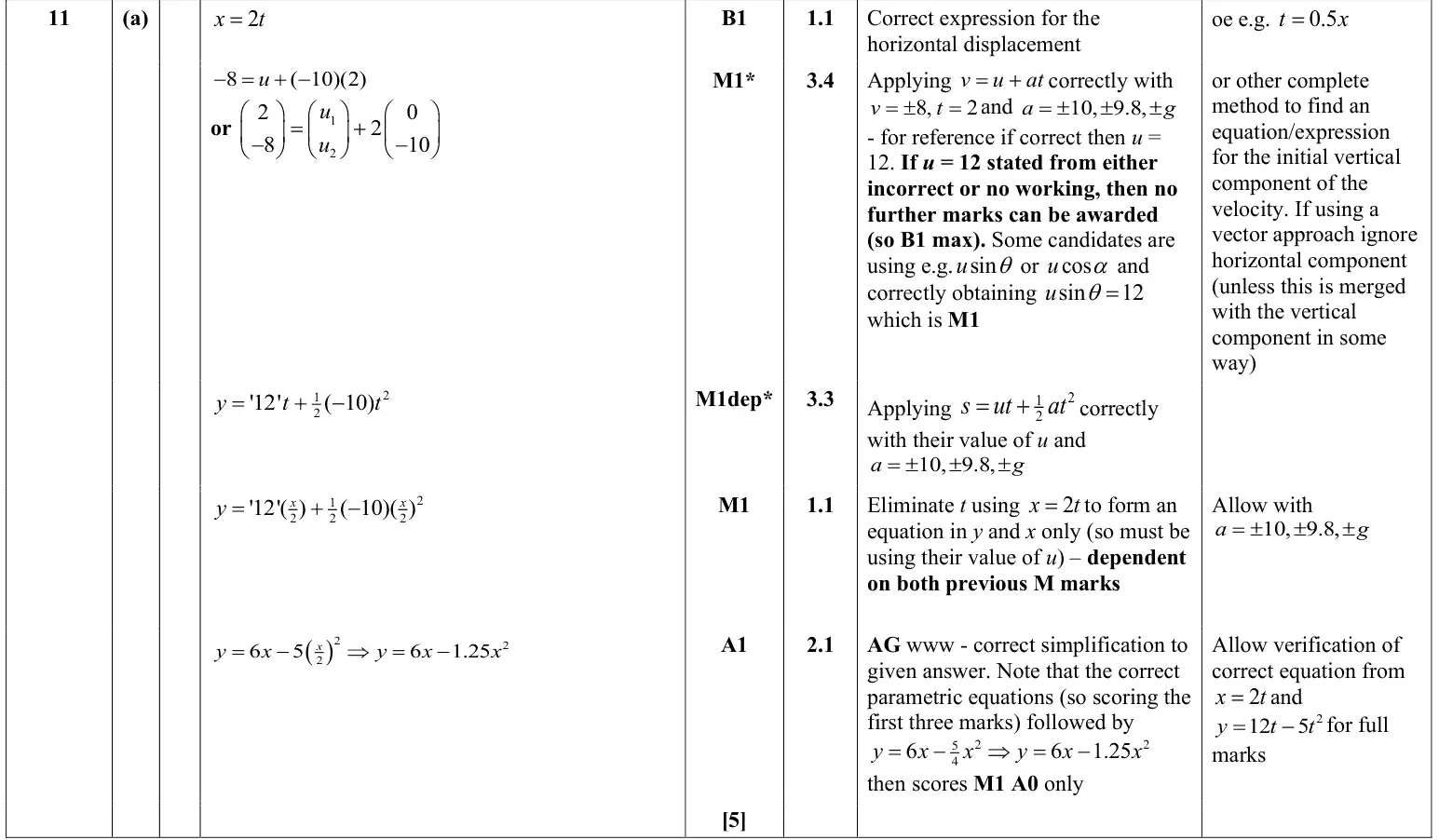
11(a) Projectiles, Parametric equations 5 Hard
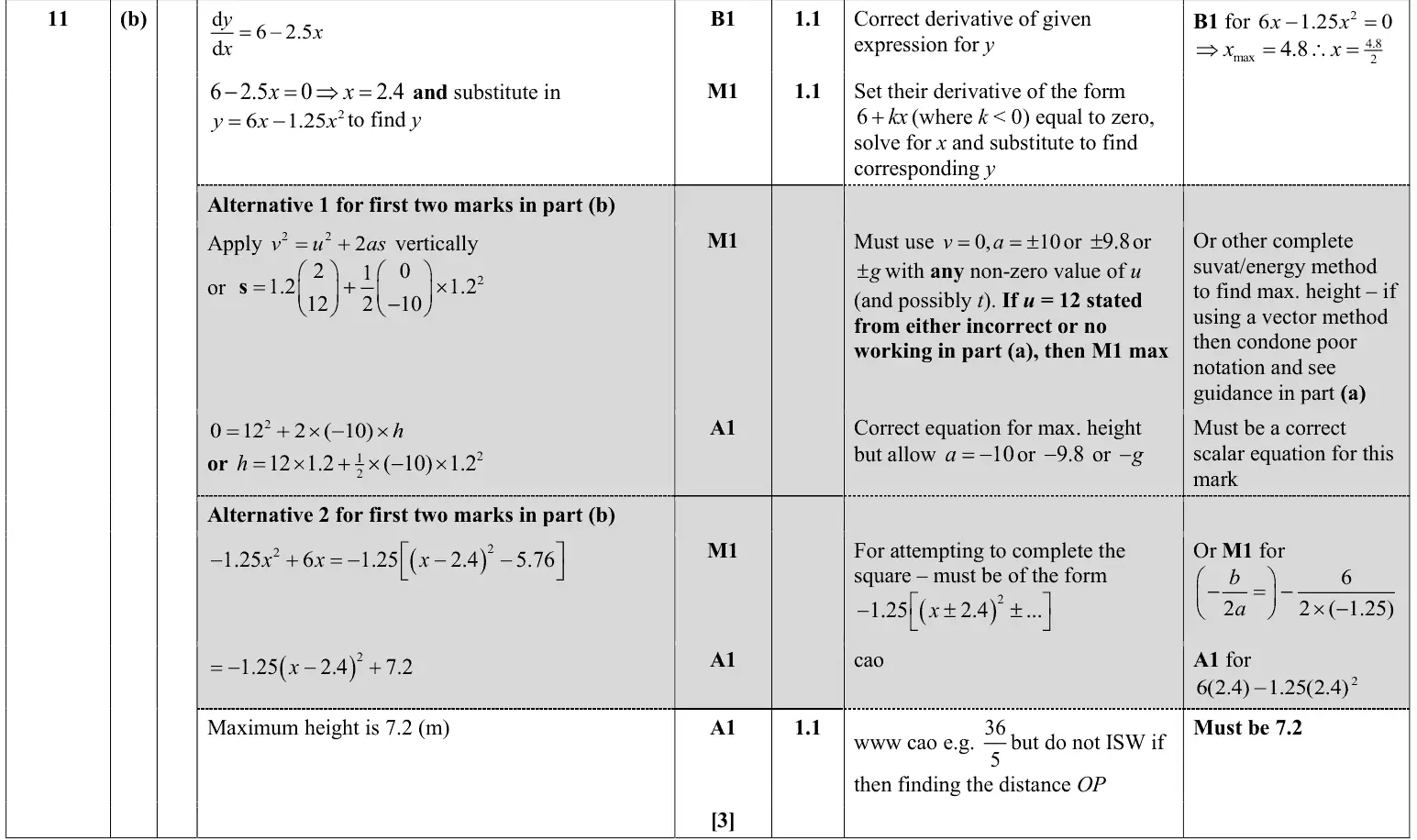
11(b) Projectiles, Differentiation: first principles, gradients, stationary points, Quadratics and the discriminant 3 Medium
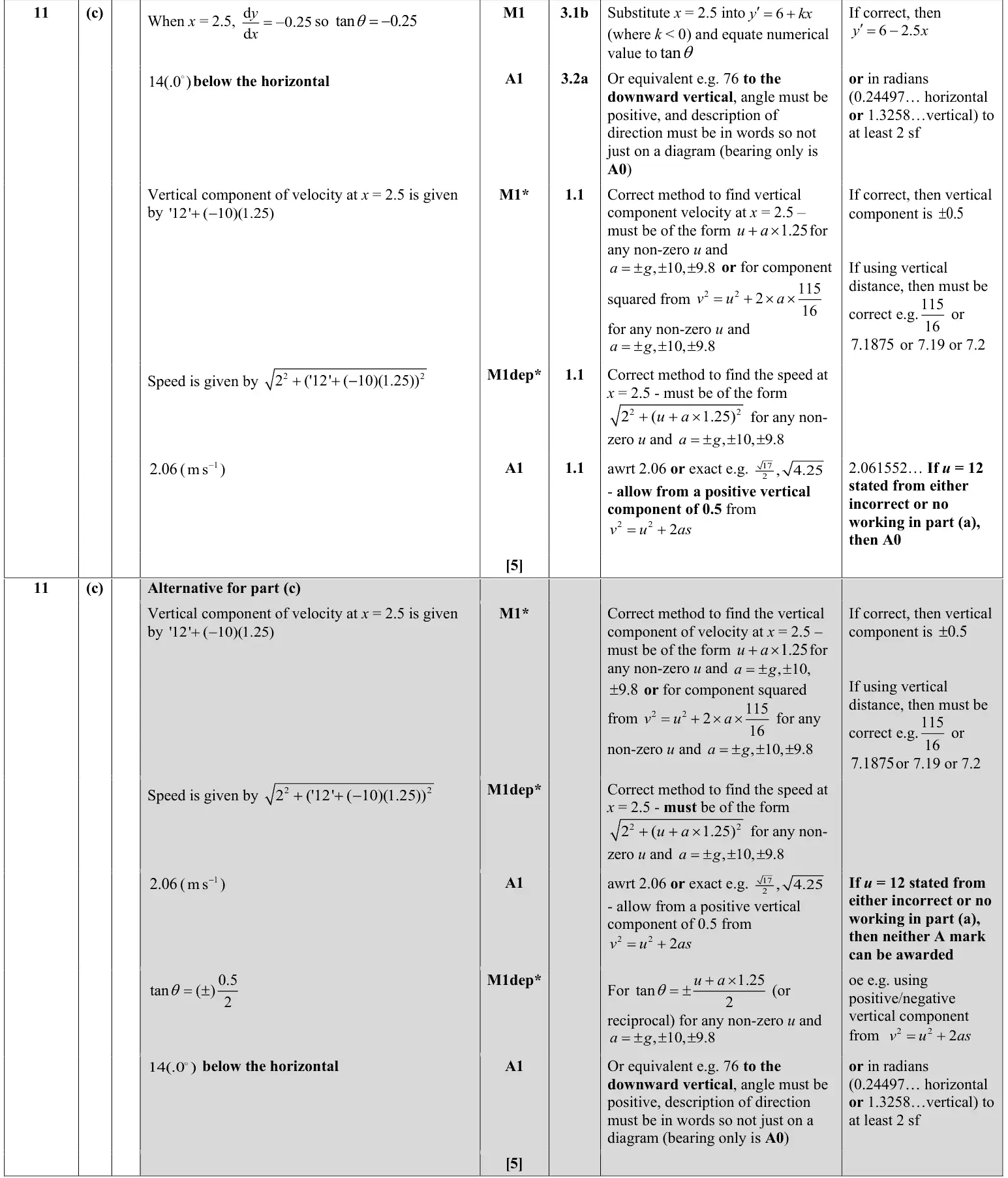
11(c) Projectiles, Vectors, Differentiation: first principles, gradients, stationary points 5 Medium
11(d) Projectiles 1 Easy
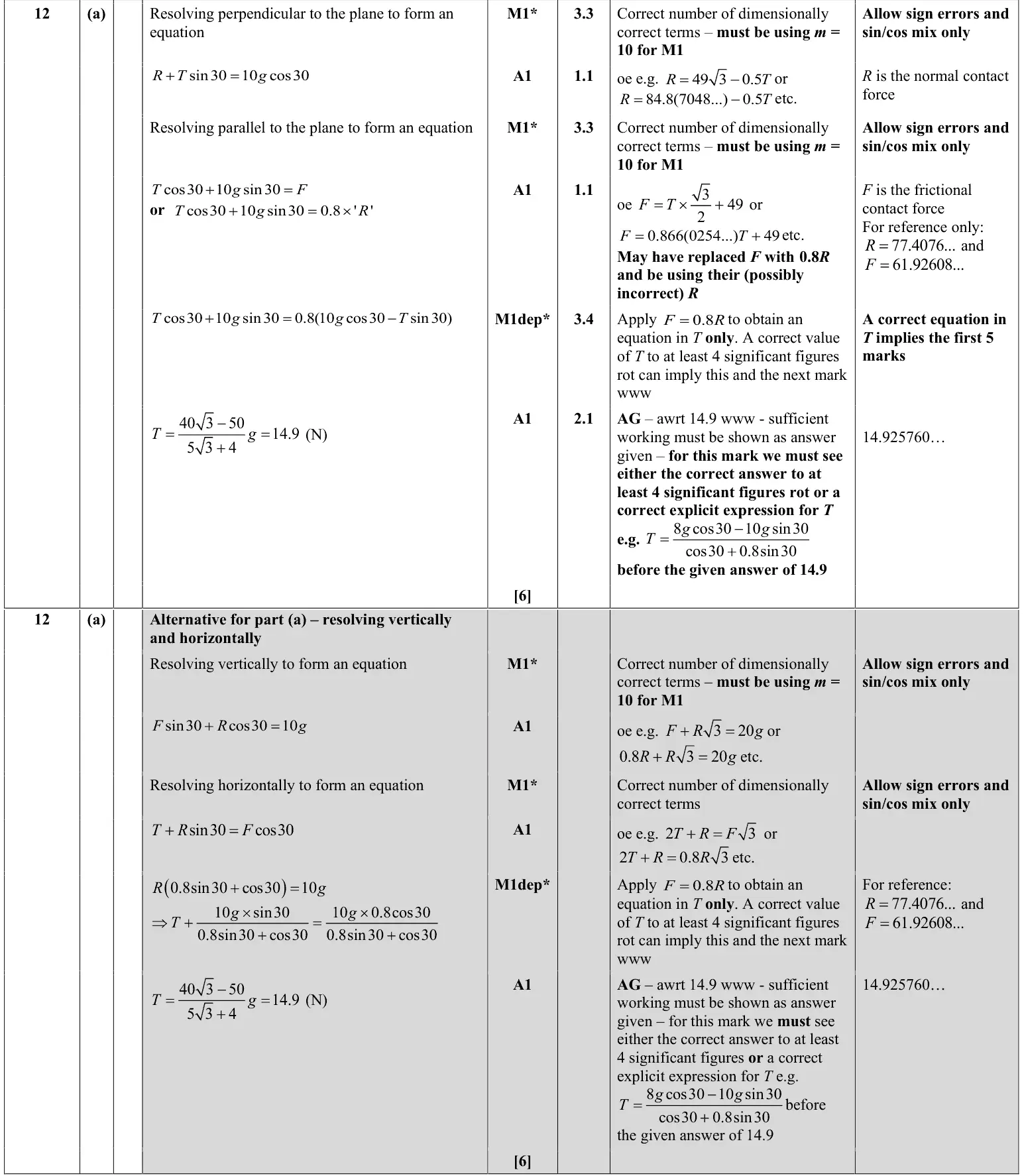
12(a) Friction, resultant forces and motion in a plane, Trigonometric ratios, graphs, radians and the sine and cosine rules 6 Medium
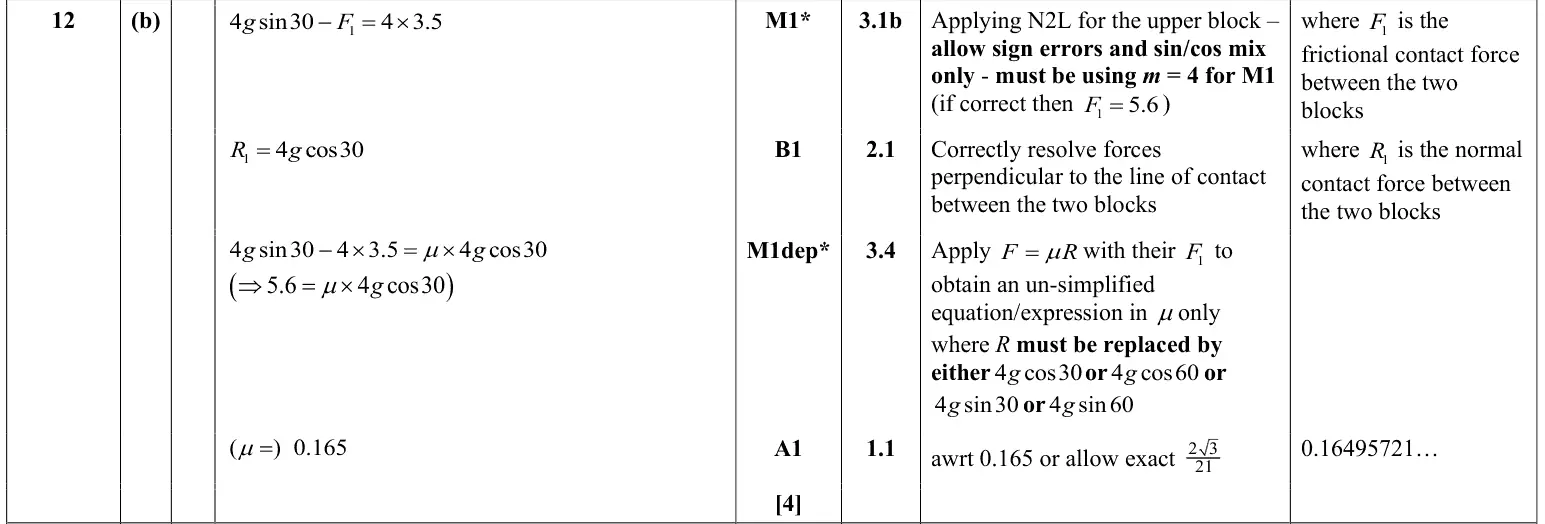
12(b) Friction, resultant forces and motion in a plane 4 Medium
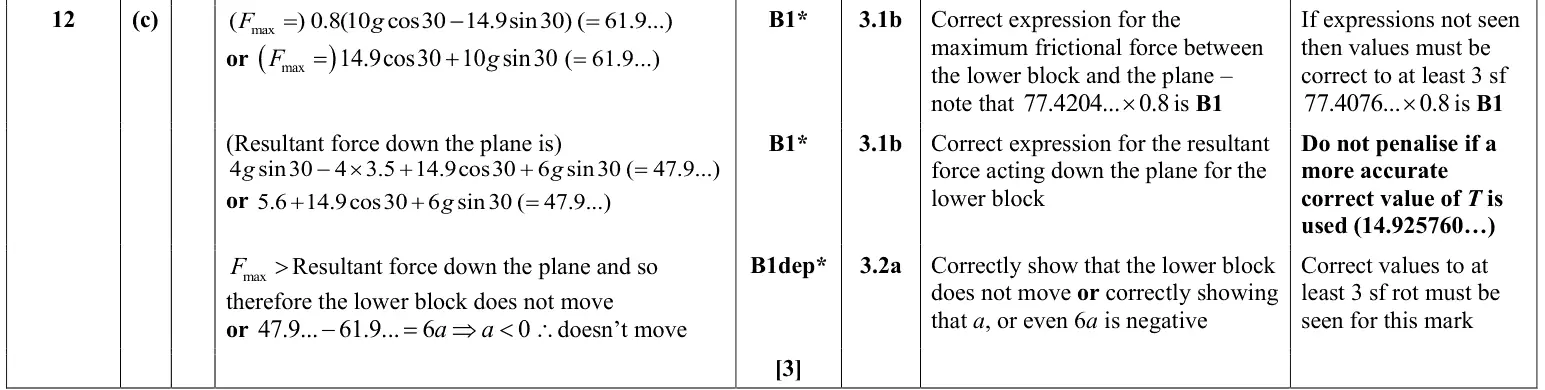
12(c) Friction, resultant forces and motion in a plane 3 Hard

The questions

1(a)1(b)1(c)2(a)2(b)3(a)3(b)3(c)4(a)4(b)5(a)5(b)5(c)5(d)5(e)6(a)6(b)6(c)(i)6(c)(ii)6(d)6(e)7(a)7(b)8(a)8(b)910(a)10(b)10(c)11(a)11(b)11(c)11(d)12(a)12(b)12(c)
June 2025 · Paper 3 · Q1(a) 3 marks Easy quadratics
^ h 2 - 1 (a) Express x x in the form a x b c where a, b and c are constants. [3] + - +

June 2025 · Paper 3 · Q1(b) 1 mark Easy quadraticsgraphs and transformations
Show the start of this questionEarlier part of this question
(b) State the coordinates of the minimum point of the curve y x x . [1] = - +
June 2025 · Paper 3 · Q1(c) 1 mark Hard differentiationstraight linesquadratics
Show the start of this questionEarlier part of this questionEarlier part of this question
(c) State the equation of the normal to the curve y x x at its minimum point. [1] = - +
June 2025 · Paper 3 · Q2(a) 2 marks Easy graphs and transformations
2 (a) The curve y is translated by 4 units in the positive x-direction. = x Write down the equation of the curve after it has been translated. [2]
June 2025 · Paper 3 · Q2(b) 2 marks Easy graphs and transformations
5 2 (b) The curve y x is stretched parallel to the y-axis with scale factor 4. = 5 2 The point on the curve y x with x-coordinate 3 is transformed to the point P. = Write down the coordinates of P. [2]
June 2025 · Paper 3 · Q3(a) 2 marks Easy functions
3 (a) Sketch the graph of y x [2] on the grid provided in the Printed Answer Booklet. = -
June 2025 · Paper 3 · Q3(b) 2 marks Easy functionsinequalities
Show the start of this questionEarlier part of this question
(b) Solve the inequality x [2] . -
June 2025 · Paper 3 · Q3(c) 3 marks Medium exponentials and logsfunctions
Show the start of this questionEarlier part of this question
(c) In this question you must show detailed reasoning. Hence find all the possible integer values N that satisfy the inequality e . N 0 1 [3] . -
June 2025 · Paper 3 · Q4(a) 5 marks Medium functionsquadraticsalgebraic methods
4 Functions f and g are defined for all real values of x by x k - and ( )x ( )x x kx , where k is a constant. f g = = + + ( )x kx You are given that the equation f - g has real distinct roots. = - (a) Show that k satisfies the inequality k k [5] . - -
June 2025 · Paper 3 · Q4(b) 3 marks Medium inequalities
Show the start of this questionEarlier part of this question
(b) In this question you must show detailed reasoning. Hence find the set of values of k. Give your answer in set notation. [3]
June 2025 · Paper 3 · Q5(a) 4 marks Medium integration by parts and substitutiontrig identitiesintegration
5 (a) Use the substitution u cos x to show that = cos x x + y d ln ( cos x ) c . [4] = - + sin x
June 2025 · Paper 3 · Q5(b) 4 marks Medium integrationexponentials and logsreciprocal trig functions
Show the start of this questionEarlier part of this question
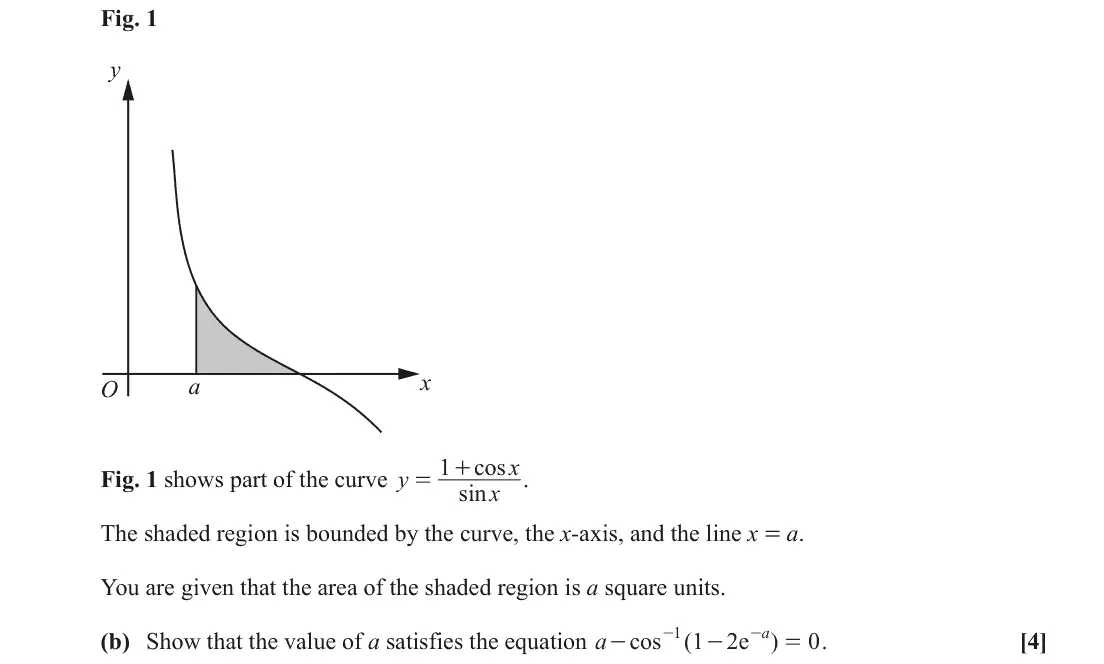
Fig. 1 y x a O cos x + Fig. 1 shows part of the curve y . = sin x The shaded region is bounded by the curve, the x-axis, and the line x = a. You are given that the area of the shaded region is a square units. e a (b) Show that the value of a satisfies the equation a cos - ( - ) . [4] - - =
June 2025 · Paper 3 · Q5(c) 2 marks Easy numerical methods
Show the start of this questionEarlier part of this question
(c) Show by calculation that the value of a lies between 1.1 and 1.2. [2]
June 2025 · Paper 3 · Q5(d) 2 marks Easy numerical methodsreciprocal trig functions
Show the start of this questionEarlier part of this question
(d) Use the iterative formula a a cos - ( 2e - ) , = - n n + with starting value a 1 2 . , to find the value of a correct to 2 decimal places. Show the 1 = result of each step of the iterative process. [2]
June 2025 · Paper 3 · Q5(e) 2 marks Hard numerical methodsdifferentiation
Show the start of this questionEarlier part of this question
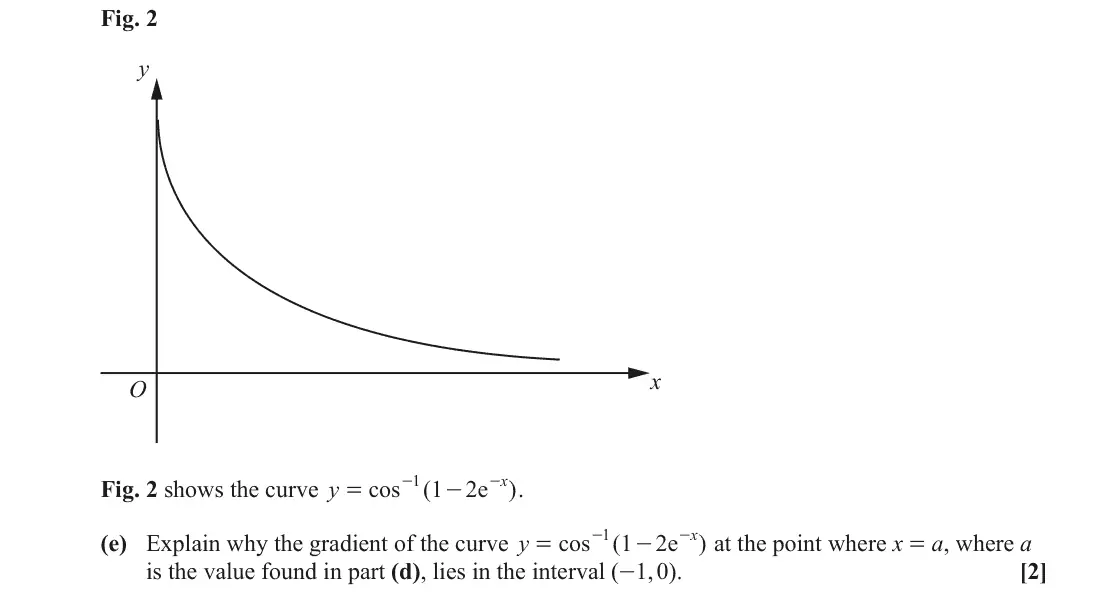
Fig. 2 y x O - . 2e x Fig. 2 shows the curve y cos - ( ) = - 2e x (e) Explain why the gradient of the curve y cos - ( - at the point where x = a, where a ) = - is the value found in part (d), lies in the interval (-1, 0). [2]
June 2025 · Paper 3 · Q6(a) 1 mark Hard double angle formulaetrig identities
6 The compound angle formulae for sin A ( B ) and sin A ( B ) are + - sin ( A B ) sin A cos B cos A sin B and + = + sin ( A B ) sin A cos B cos A sin B . - = - (a) By letting C = A + B and D = A - B, show that a k a k. C D C D + - sin C sin D cos sin [1] - =
June 2025 · Paper 3 · Q6(b) 4 marks Hard trigonometric ratiosreciprocal trig functions
R T S rad θ P Q r cm The diagram shows a right-angled triangle PQR with PQ = r cm. The angle QPR is i radians. The diagram also shows the sector PQST of a circle with centre P and radius r cm. The line segment QT is a chord of the sector PQST. (b) By considering the areas of triangle PQT, sector PQST and triangle PQR, show that i i. [4] sin cos i
June 2025 · Paper 3 · Q6(c)(i) 1 mark Hard small angle approximationsproof
Show the start of this questionEarlier part of this question
(c) (i) Hence write down a similar inequality interval for the expression sin i. [1] i
June 2025 · Paper 3 · Q6(c)(ii) 1 mark Hard differentiationsmall angle approximations
Show the start of this questionEarlier part of this question
(ii) Hence state lim sin i . [1] i i "
June 2025 · Paper 3 · Q6(d) 4 marks Medium differentiationdouble angle formulae
Show the start of this questionEarlier part of this questionEarlier part of this question
(d) Using parts (a) and (c)(ii), show from first principles that the derivative of sinx is cosx, where x is measured in radians. [4]
June 2025 · Paper 3 · Q6(e) 1 mark Easy differentiation rulesdifferentiation
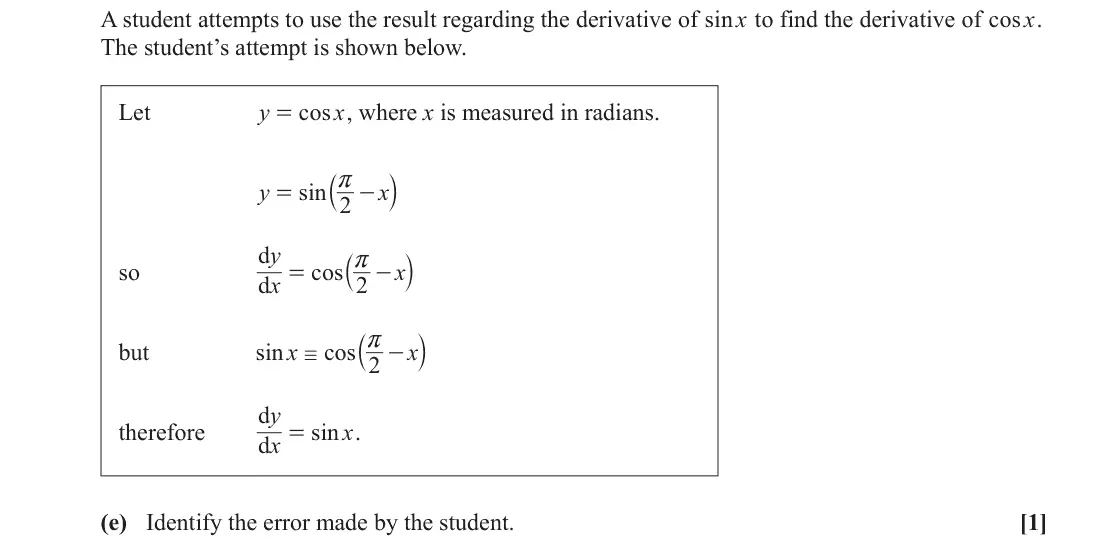
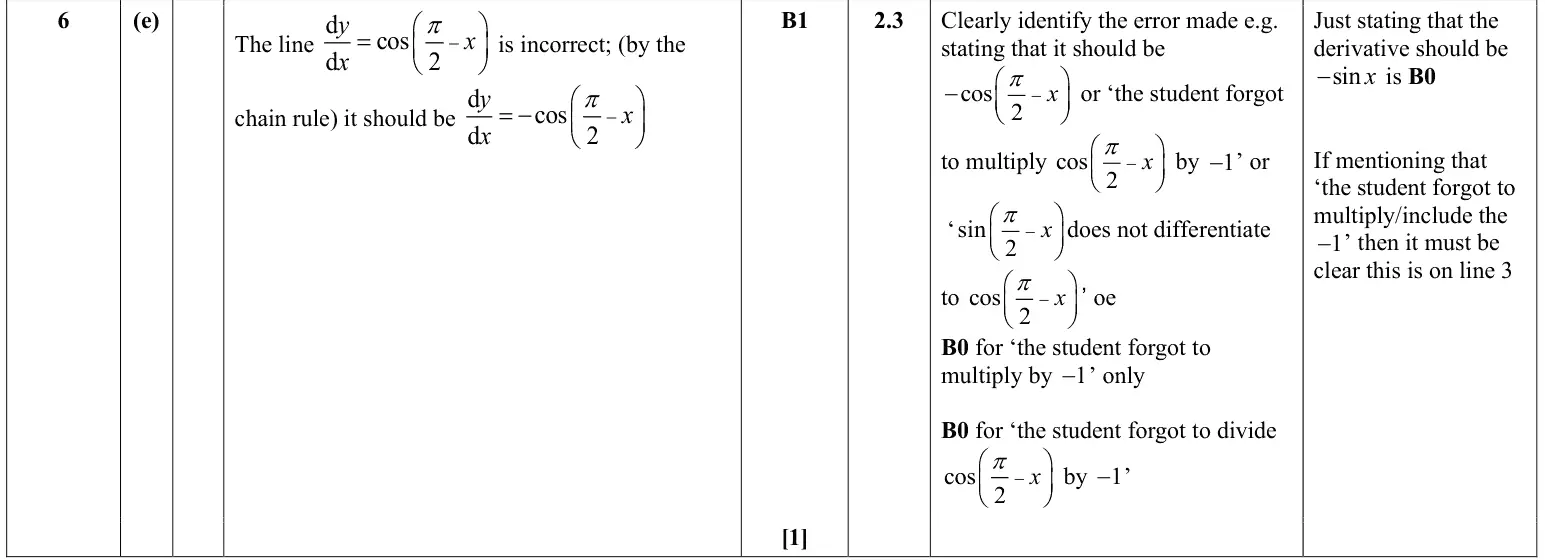
A student attempts to use the result regarding the derivative of sinx to find the derivative of cosx. The student’s attempt is shown below. Let y cos x , where x is measured in radians. = a k r y sin x = - y d a k r so cos x = - x d a k r - but sin x cos x / y d = therefore sin x . x d (e) Identify the error made by the student. [1]
June 2025 · Paper 3 · Q7(a) 3 marks Medium forces and newtons lawsfriction and forces in a plane
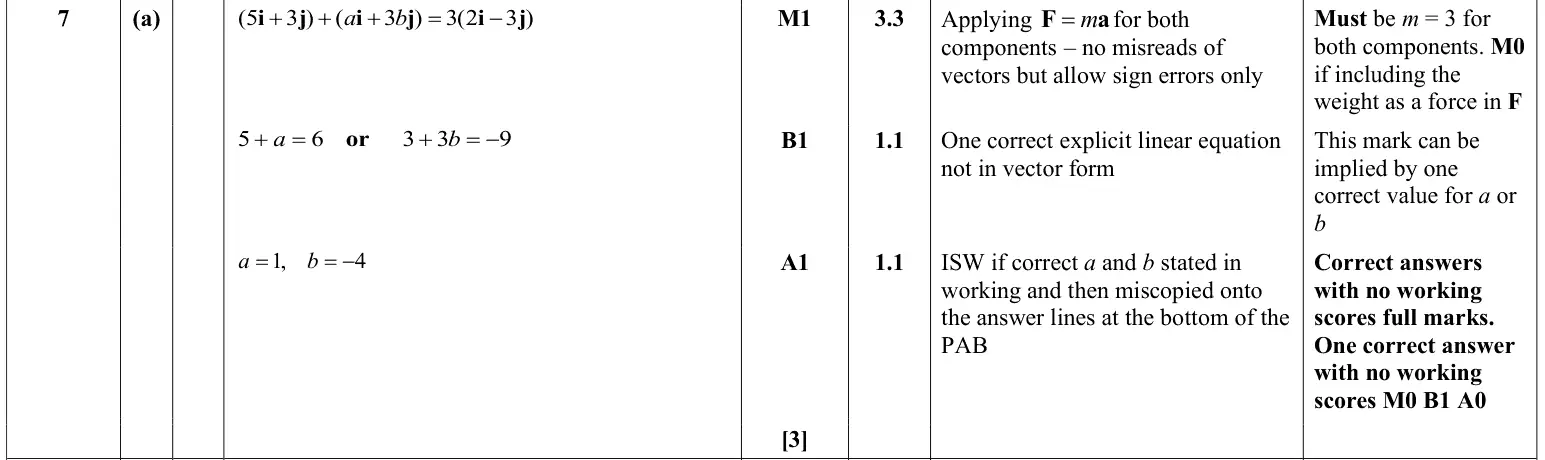
7 A particle P of mass 3 kg is moving on a smooth horizontal surface under the action of two - . m s 2 constant horizontal forces ( i j ) N and ( a i b j ) N . The acceleration of P is ( i j ) + + - (a) Find the value of a and the value of b. [3]
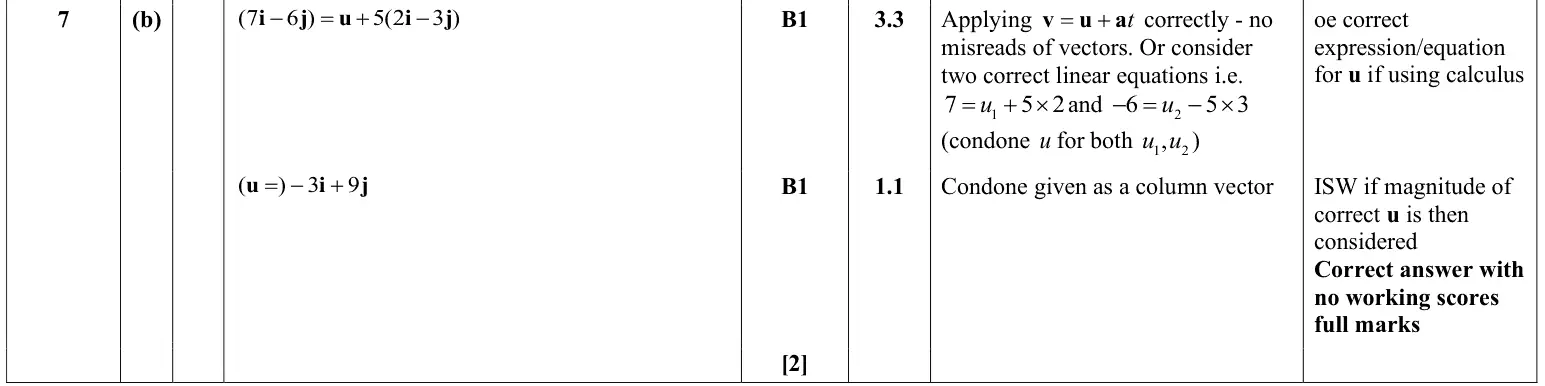
June 2025 · Paper 3 · Q7(b) 2 marks Medium constant acceleration
Show the start of this questionEarlier part of this question
At time t = 0 seconds the velocity of P is u m s 1 - and at time t = 5 seconds the velocity of P is - . m s 1 ( i j ) - (b) Find, in terms of i and j, an expression for u. [2]
June 2025 · Paper 3 · Q8(a) 2 marks Easy forces and newtons laws
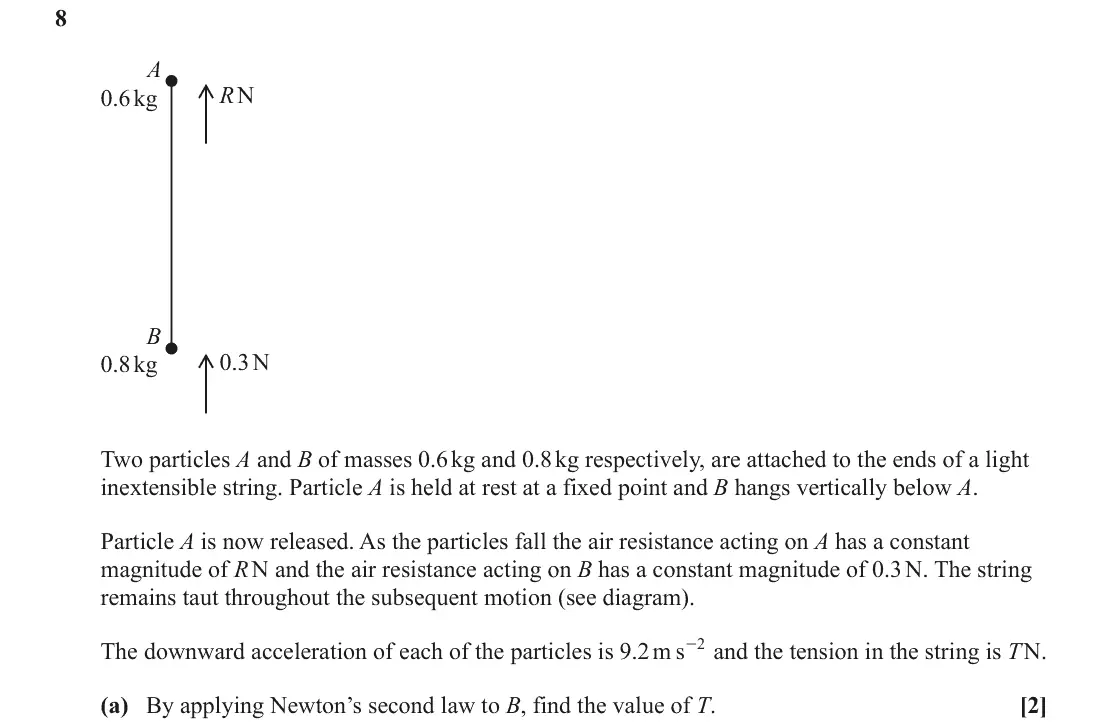
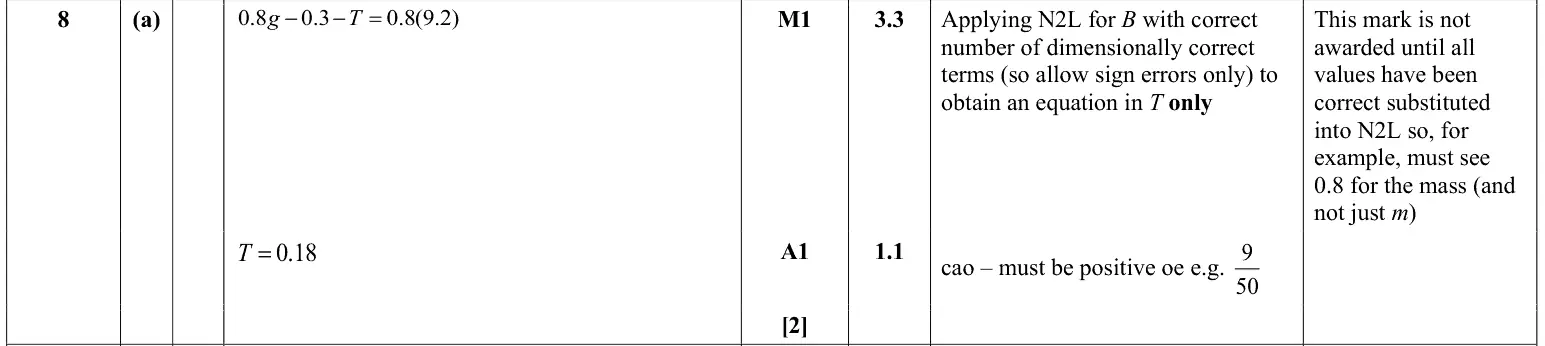
8 A R N 0.6 kg B 0.3 N 0.8 kg Two particles A and B of masses 0.6 kg and 0.8 kg respectively, are attached to the ends of a light inextensible string. Particle A is held at rest at a fixed point and B hangs vertically below A. Particle A is now released. As the particles fall the air resistance acting on A has a constant magnitude of R N and the air resistance acting on B has a constant magnitude of 0.3 N. The string remains taut throughout the subsequent motion (see diagram). The downward acceleration of each of the particles is 9.2 m s 2 - and the tension in the string is T N. (a) By applying Newton’s second law to B, find the value of T. [2]
June 2025 · Paper 3 · Q8(b) 2 marks Medium forces and newtons laws
Show the start of this questionEarlier part of this question
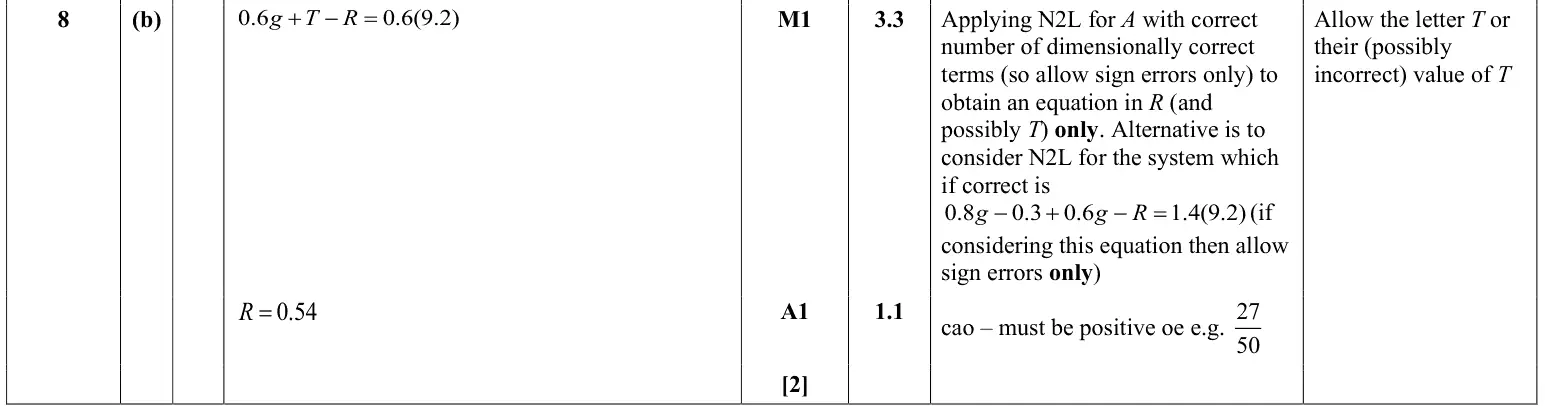
(b) Hence, or otherwise, find the value of R. [2]
June 2025 · Paper 3 · Q9 6 marks Easy variable accelerationdifferentiationintegration
9 In this question you must show detailed reasoning. A particle moves in a straight line. Its velocity t seconds after leaving a fixed point on the line is v m s 1 0 6 2 - where v t . t . = + + Find the distance travelled by the particle from time t = 0 until the instant when its acceleration is - . 15 m s 2 [6]
June 2025 · Paper 3 · Q10(a) 1 mark Easy moments
10 ° θ A B G The diagram shows a non-uniform rod AB of mass 4 kg and length 2 m. The end A of the rod rests against a rough vertical wall. The rod is held in a horizontal position, perpendicular to the wall, by a light inextensible string attached to the rod at B. The other end of the string is attached to the wall at a point vertically above A. The string is inclined at an angle of i° to the horizontal, where sin . i = The rod rests in equilibrium in a vertical plane perpendicular to the wall. The rod’s weight acts at the point G on AB. You are given that the magnitude of the moment of the rod’s weight about A is 47.04 N m. (a) Show that the distance AG is 1.2 m. [1]
June 2025 · Paper 3 · Q10(b) 2 marks Medium momentstrigonometric ratios
Show the start of this questionEarlier part of this question
(b) Find the tension in the string. [2]
June 2025 · Paper 3 · Q10(c) 5 marks Medium momentsfriction and forces in a planetrigonometric ratios
Show the start of this questionEarlier part of this questionEarlier part of this question
(c) Determine the magnitude of the contact force exerted on the rod by the wall at A. [5]
June 2025 · Paper 3 · Q11(a) 5 marks Hard projectilesparametric equations
- . 11 In this question you should take the acceleration due to gravity to be 10 m s 2 The unit vectors i and j are in a vertical plane with i horizontal and j vertically upwards. A small ball P is projected from a point O on horizontal ground into the air. When P is in the air, it is to be modelled as a particle moving under the influence of gravity only. - . m s 1 At time t = 2 seconds, P has velocity ( i j ) - The position vector of a point on the trajectory of P is ( x i y j ) m relative to O. + 1 25 2 (a) Show that y x . x . [5] = -
June 2025 · Paper 3 · Q11(b) 3 marks Medium projectilesdifferentiationquadratics
Show the start of this questionEarlier part of this question
(b) Determine the maximum height of P above the ground during its motion. [3]
June 2025 · Paper 3 · Q11(c) 5 marks Medium projectilesvectorsdifferentiation
Show the start of this questionEarlier part of this question
(c) Determine the following as P passes through the point on its trajectory where x = 2.5. • the speed of P • the direction of motion of P [5]
June 2025 · Paper 3 · Q11(d) 1 mark Easy projectiles
Show the start of this questionEarlier part of this question
In reality P does not move only under the influence of gravity but is also subject to air resistance. (d) Explain how this would affect your answer to part (b). [1]
June 2025 · Paper 3 · Q12(a) 6 marks Medium friction and forces in a planetrigonometric ratios
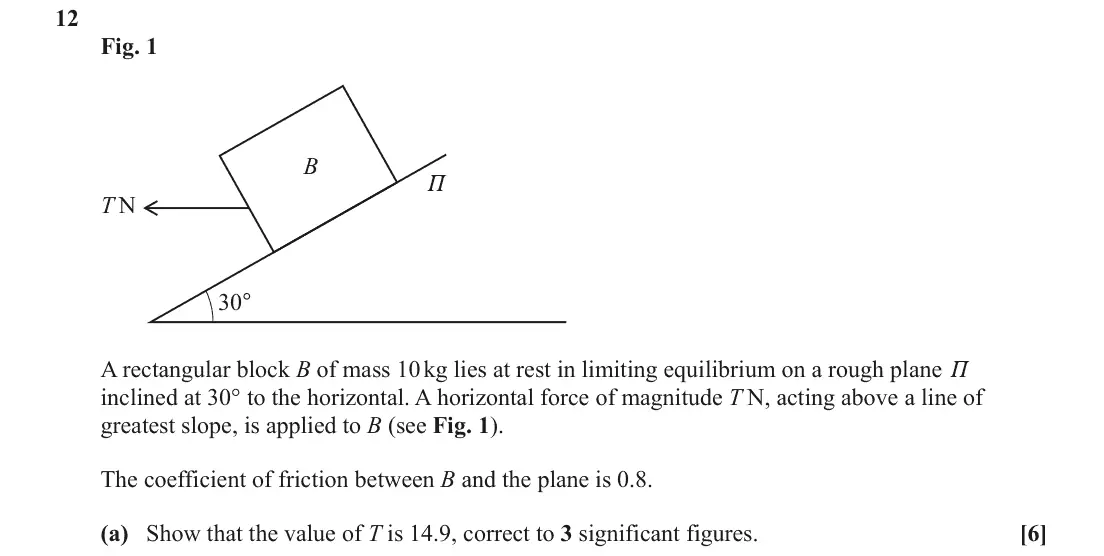
12 Fig. 1 B P T N 30° A rectangular block B of mass 10 kg lies at rest in limiting equilibrium on a rough plane P inclined at 30° to the horizontal. A horizontal force of magnitude T N, acting above a line of greatest slope, is applied to B (see Fig. 1). The coefficient of friction between B and the plane is 0.8. (a) Show that the value of T is 14.9, correct to 3 significant figures. [6]
June 2025 · Paper 3 · Q12(b) 4 marks Medium friction and forces in a plane
Show the start of this questionEarlier part of this question
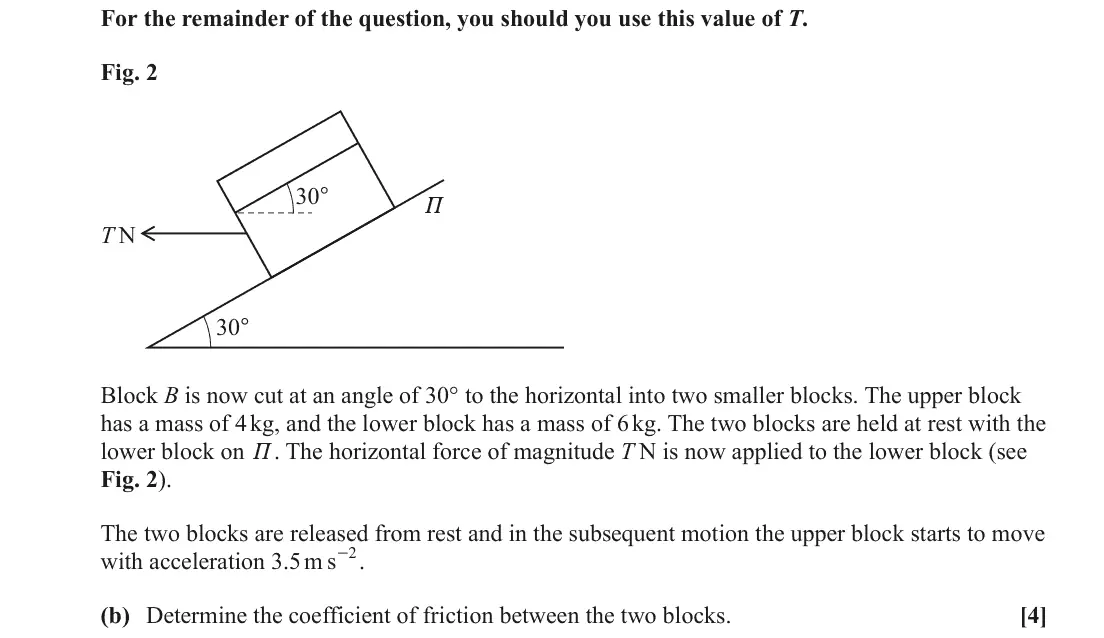
For the remainder of the question, you should you use this value of T. Fig. 2 30° P T N 30° Block B is now cut at an angle of 30° to the horizontal into two smaller blocks. The upper block has a mass of 4 kg, and the lower block has a mass of 6 kg. The two blocks are held at rest with the lower block on P. The horizontal force of magnitude T N is now applied to the lower block (see Fig. 2). The two blocks are released from rest and in the subsequent motion the upper block starts to move - . with acceleration 3.5 m s 2 (b) Determine the coefficient of friction between the two blocks. [4]
June 2025 · Paper 3 · Q12(c) 3 marks Hard friction and forces in a plane
Show the start of this questionEarlier part of this questionEarlier part of this question
(c) Show that the lower block does not move. [3]

Find an A-level maths tutor

Want this paper marked and gone through with you? Message us.

Prefer email? Send an enquiry

If you are under 18, please include a parent's contact details. Enquiries go to enquiries@mathsaleveltutor.com and are deleted once handled.