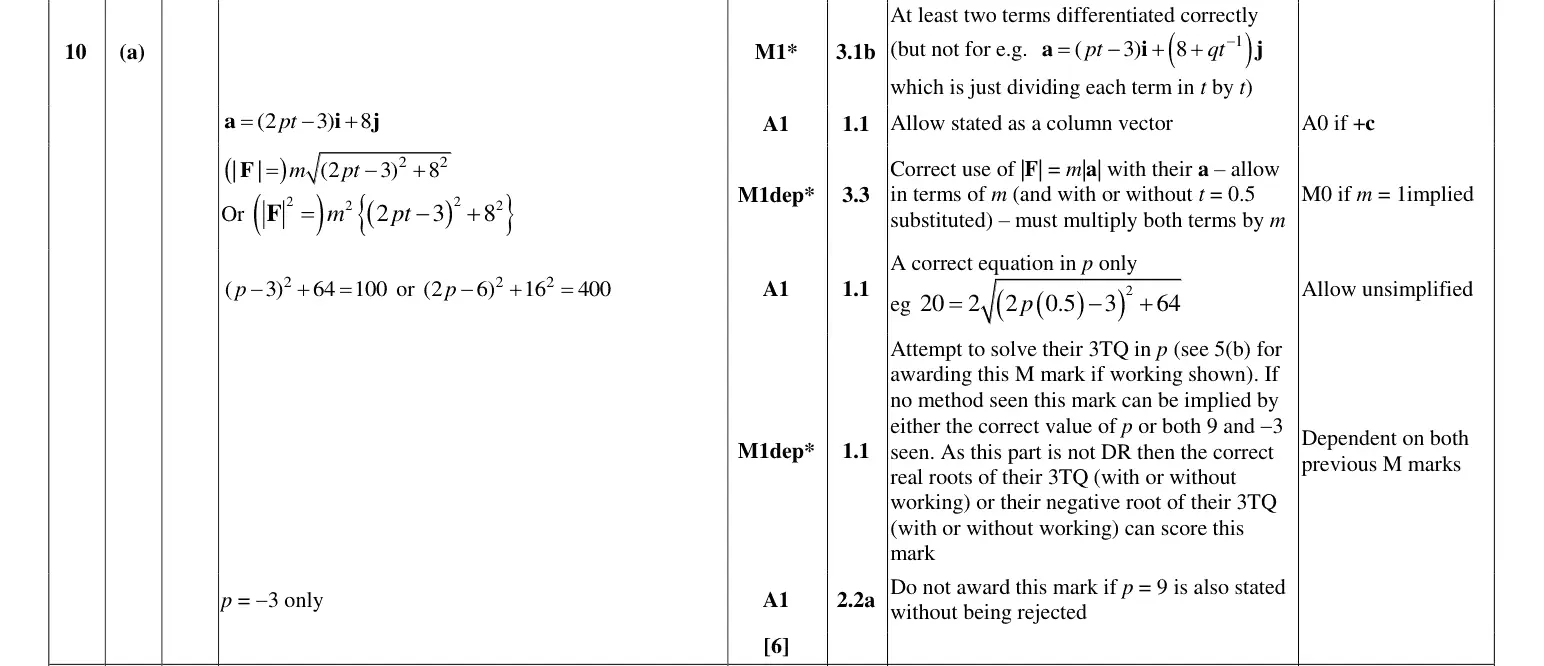
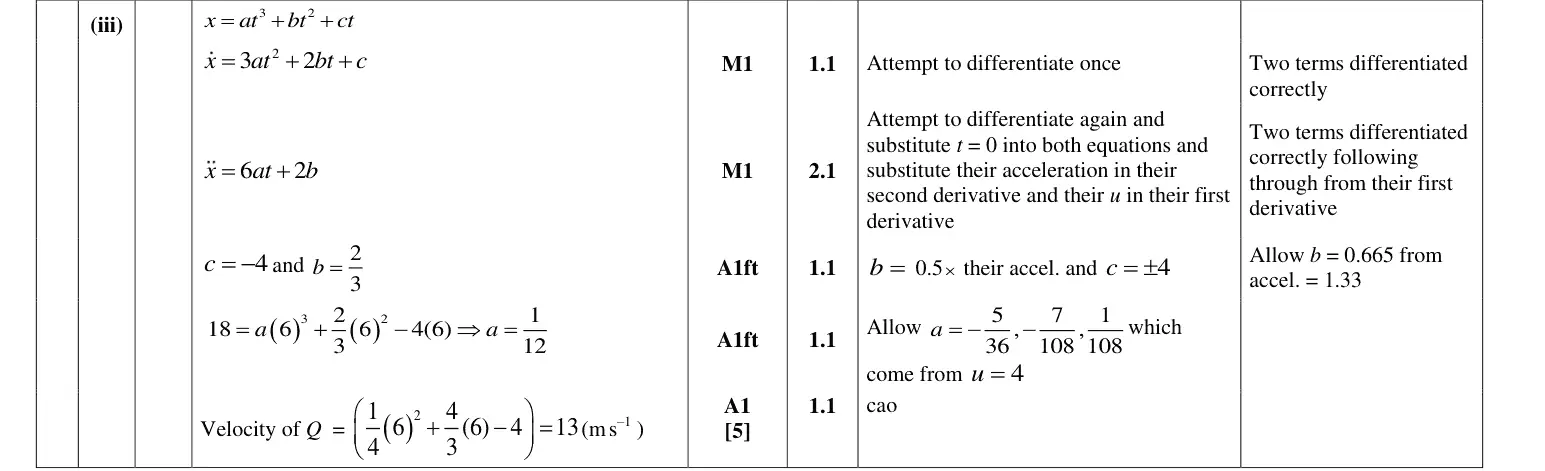
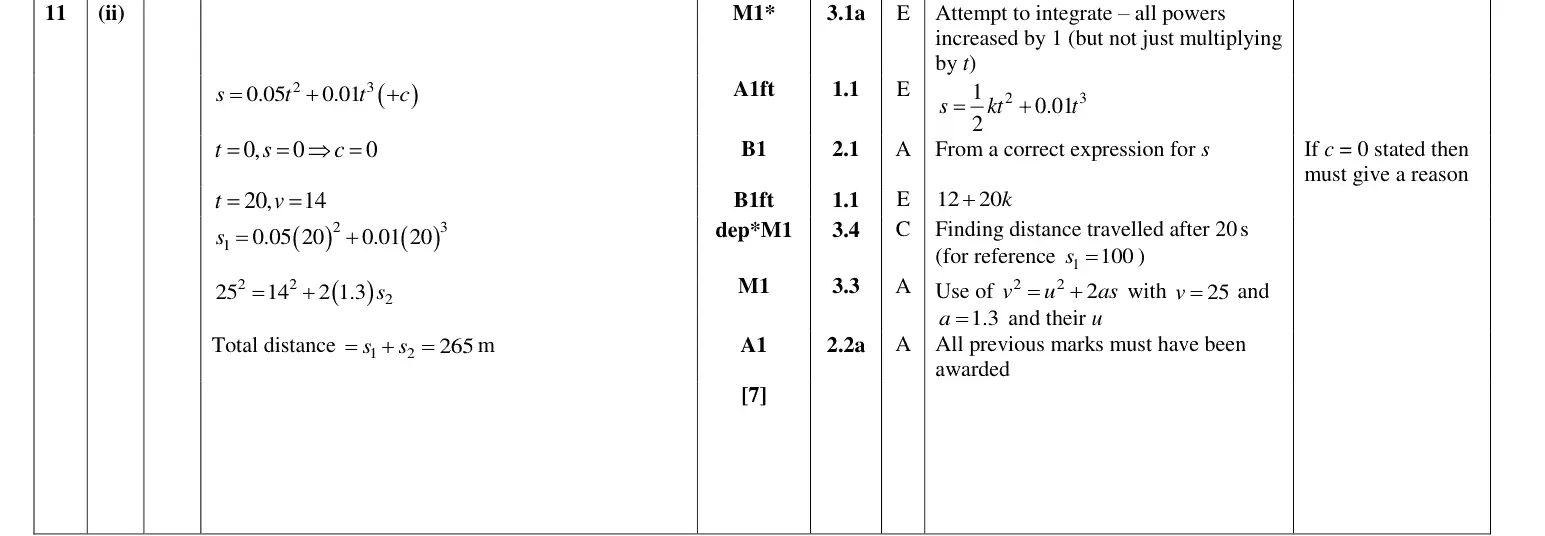
Mark scheme for this part

Examiner's comment
This was very well done with many candidates getting the correct acceleration.
Key points and common errors
- a = dv/dt = 0.1t − 0.4 = 0.2 m s⁻² at t = 6
Notes, worked examples and practice for this topic are being written by our tutors. The past-paper questions below are ready now: work each one on paper, then open the mark scheme and the examiner's comment.
Print this topic as a pack questions first, then the mark schemes
This was very well done with many candidates getting the correct acceleration.

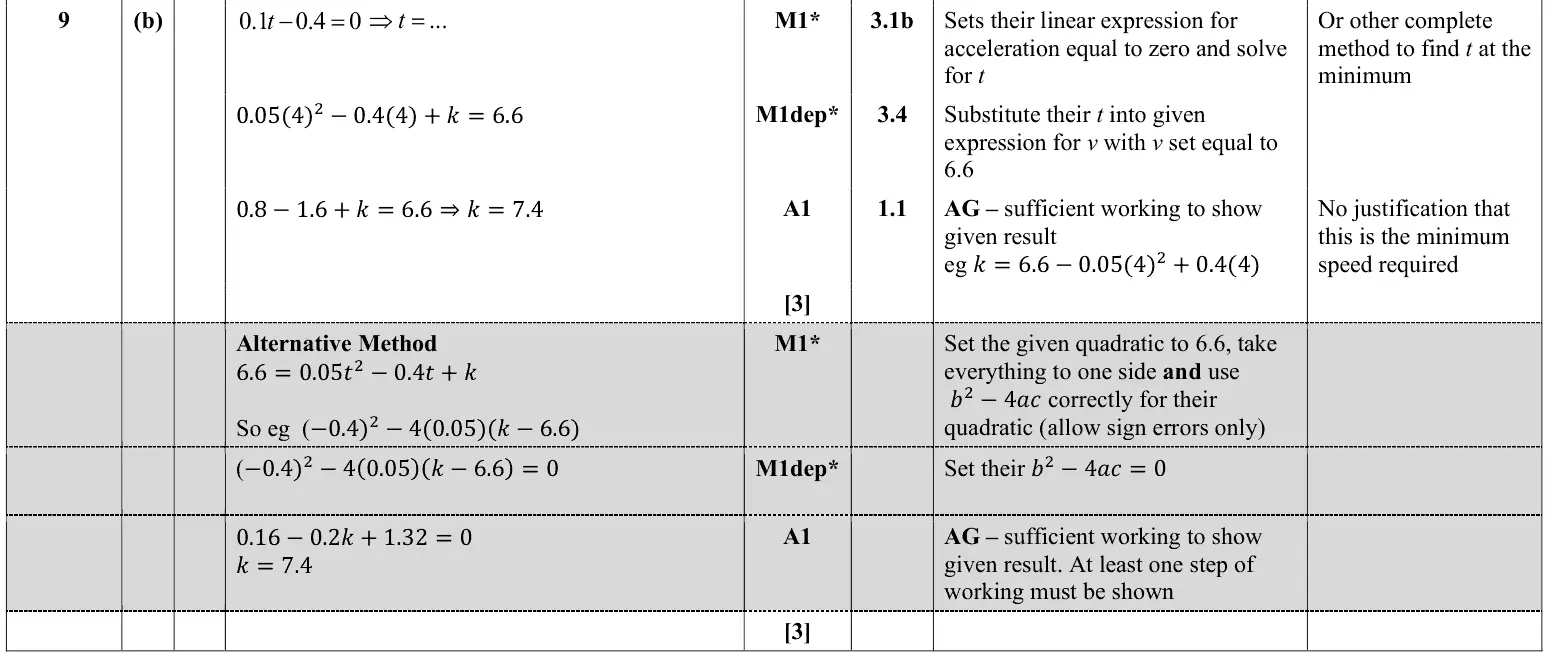
Usually t = 4 was found from the acceleration, but some completed the square. If this stage was successful, full marks generally followed provided sufficient working was shown – this was needed as the question gave the answer. A few solved the quadratic with 6.6 and the given k = 7.4 to get t = 4, but unless the significance of t = 4 was discussed (and it normally was not) no marks were given. Substitution of t = 6 into v in an attempt to find k was seen. The alternative method was seen less frequently but when seen, was largely successful.

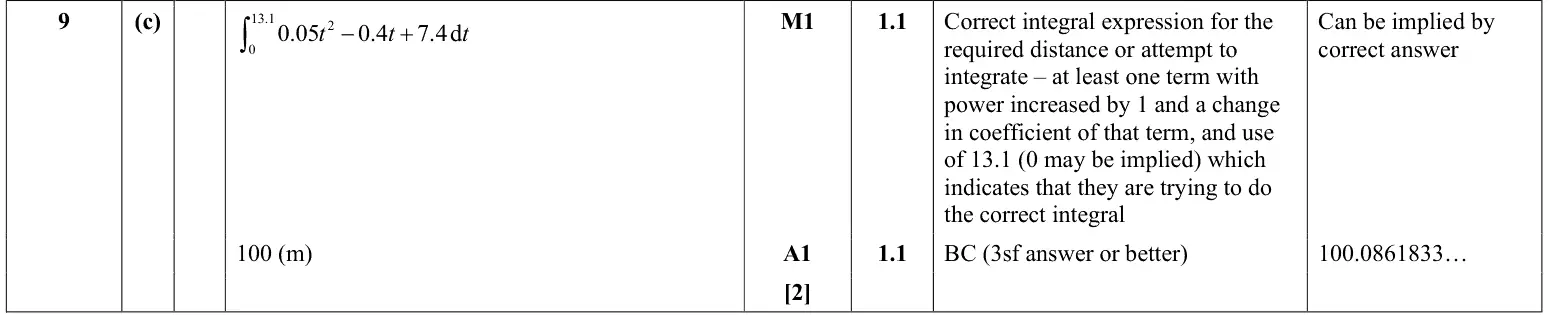
In this instance, candidates could answer this question part by calculator, but many instead showed integration. A fair proportion did not recognise variable acceleration, despite having (a) correct in the majority of cases, and worked with suvat equations or d = vt .

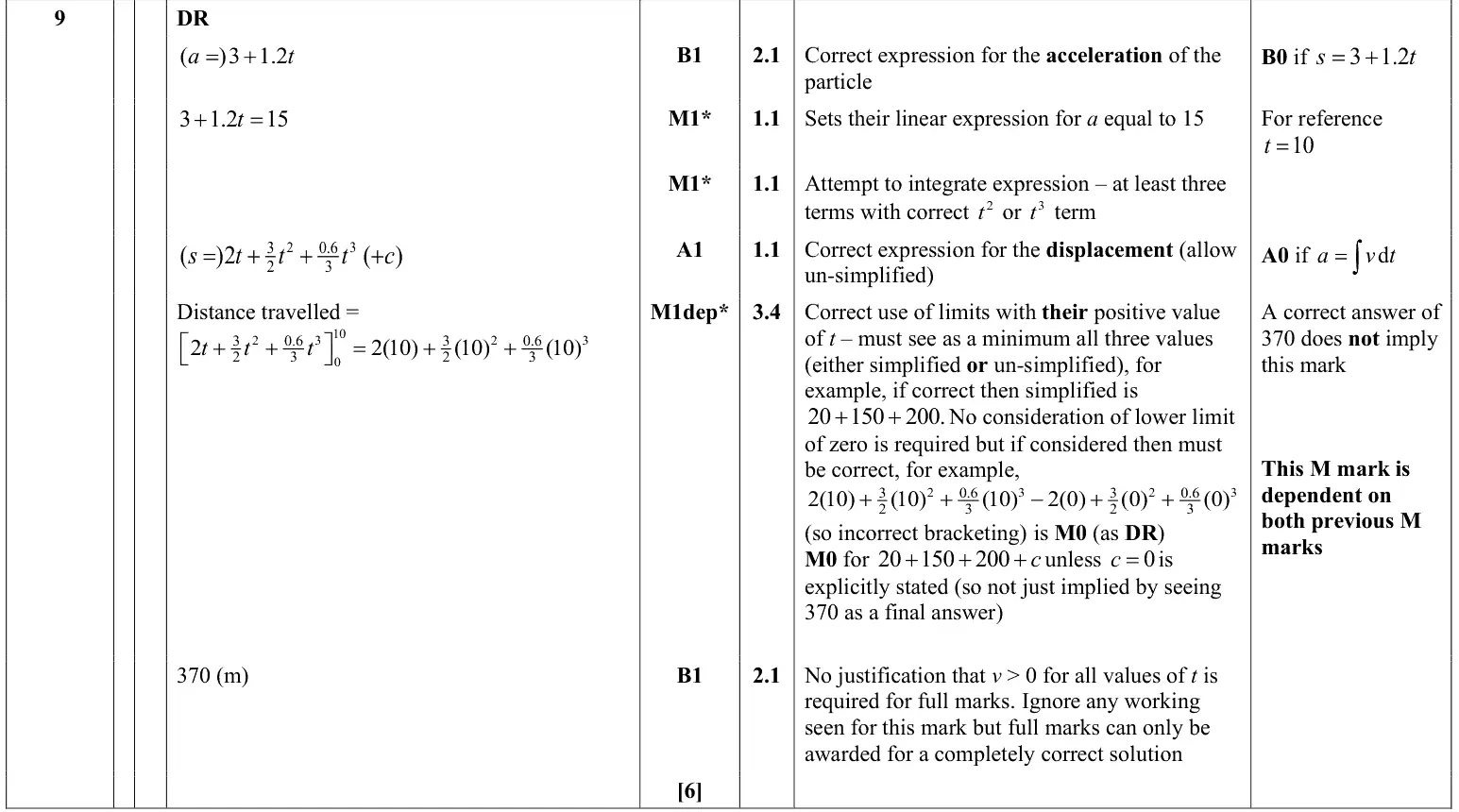
This was probably the best answered question in the mechanics section with many candidates scoring all 6 marks. As this part required DR many did not gain a mark for not showing the explicit substituting of 𝑡= 10 into their integrated expression to find the required distance travelled. The most common errors seen by examiners were those candidates who implied that 𝑠= d𝑡 and/or 𝑎= ∫𝑣 d𝑡, and some incorrectly used the equations of constant acceleration even though the acceleration was variable. required detailed reasoning. The candidate has given no explicit indication of where the answer of 370 came from (as they have not shown the limits of 0 and 10 being applied to the cubic expression) and so 1 of the 6 marks could not be awarded.
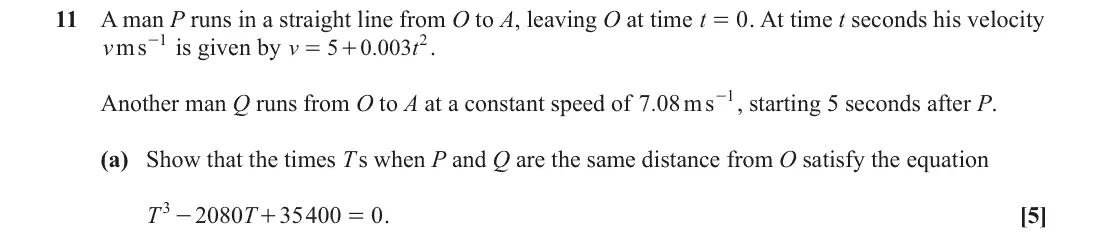
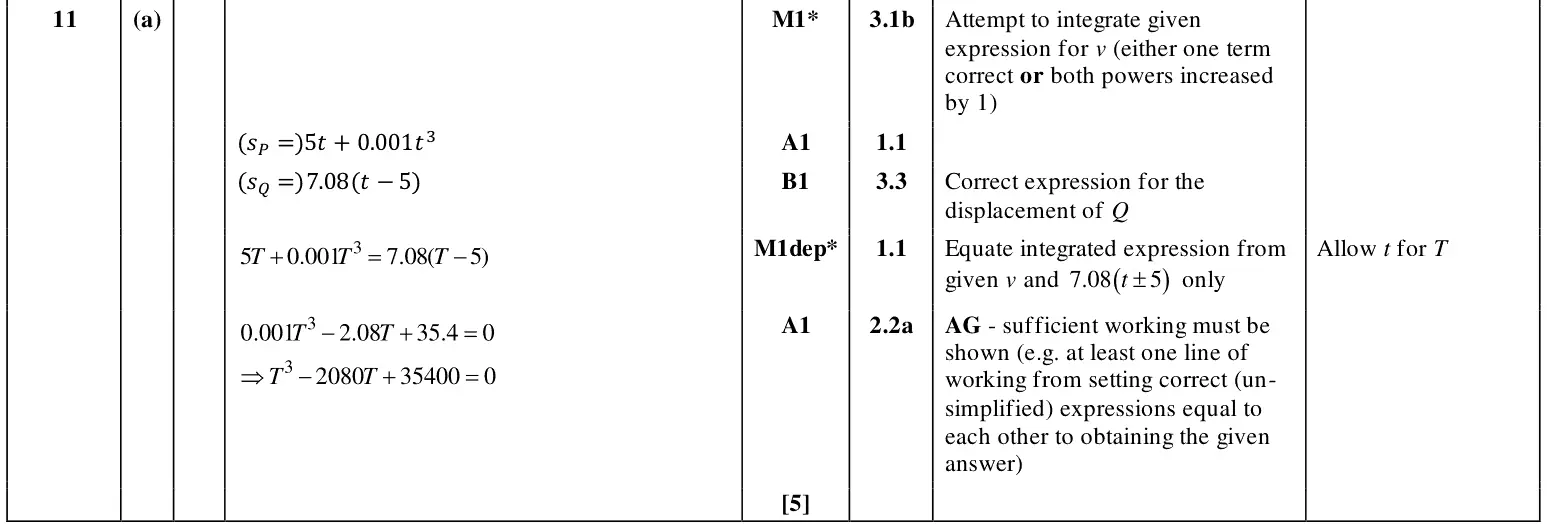
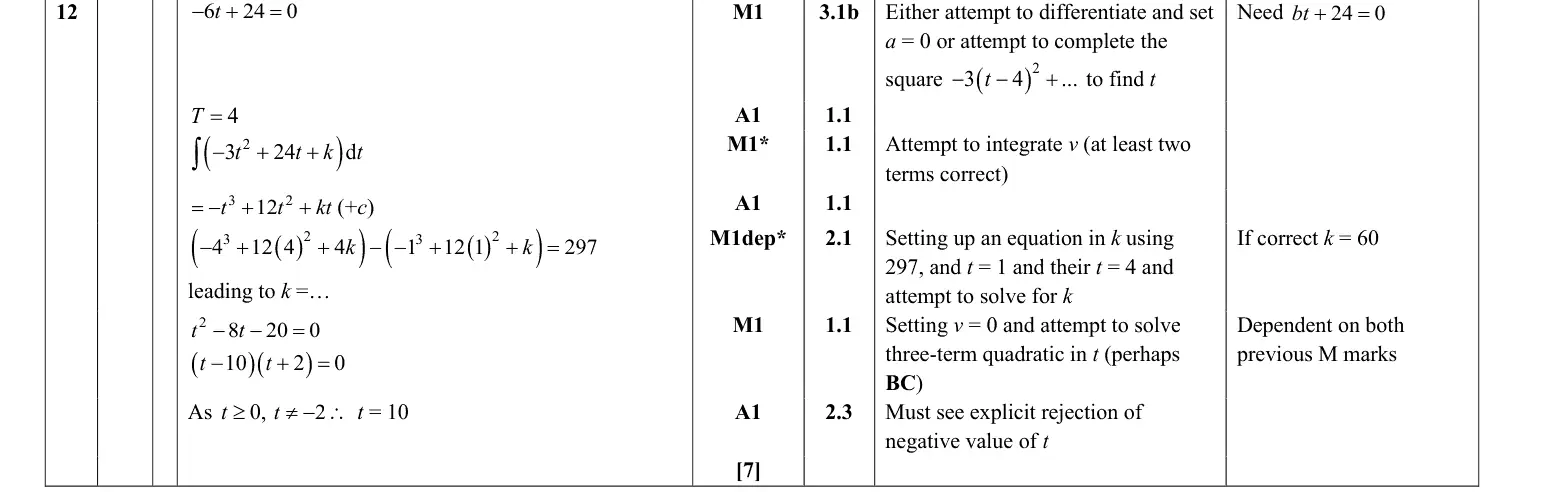
The need to integrate to find sp was appreciated by many and often these were the only 2 marks given. A few tried sp = vt. For Q, sQ = 7.08t was more common than the correct result. Because the final answer was given, examiners looked for a convincing argument leading to it; a sudden appearance of 35.4 in the working that looked as if it had been worked back from the given answer could not be given marks. For the final mark we wanted to see exactly what was given on the question paper (correctly obtained), so T rather than t and ‘= 0’.

This part requested detailed reasoning, so we expected to see the method clearly presented; in very many cases this did not happen. As soon as candidates see this instruction they should think carefully about how they are going to use the calculator (see Exemplar 3 below and its commentary). To gain the M mark (and so potentially the next 2 marks also), we wanted to see clear evidence of factorising or long division. For the A mark allocated to T = 22.5, we wanted to see how this value had been obtained, for example evidence of the quadratic formula. Many candidates just gained the last 2 marks, as seen in cubic given in (a). This is not sufficient following a ‘show detailed reasoning’ request and earned M0. Note that the last B mark could still be given in such cases.
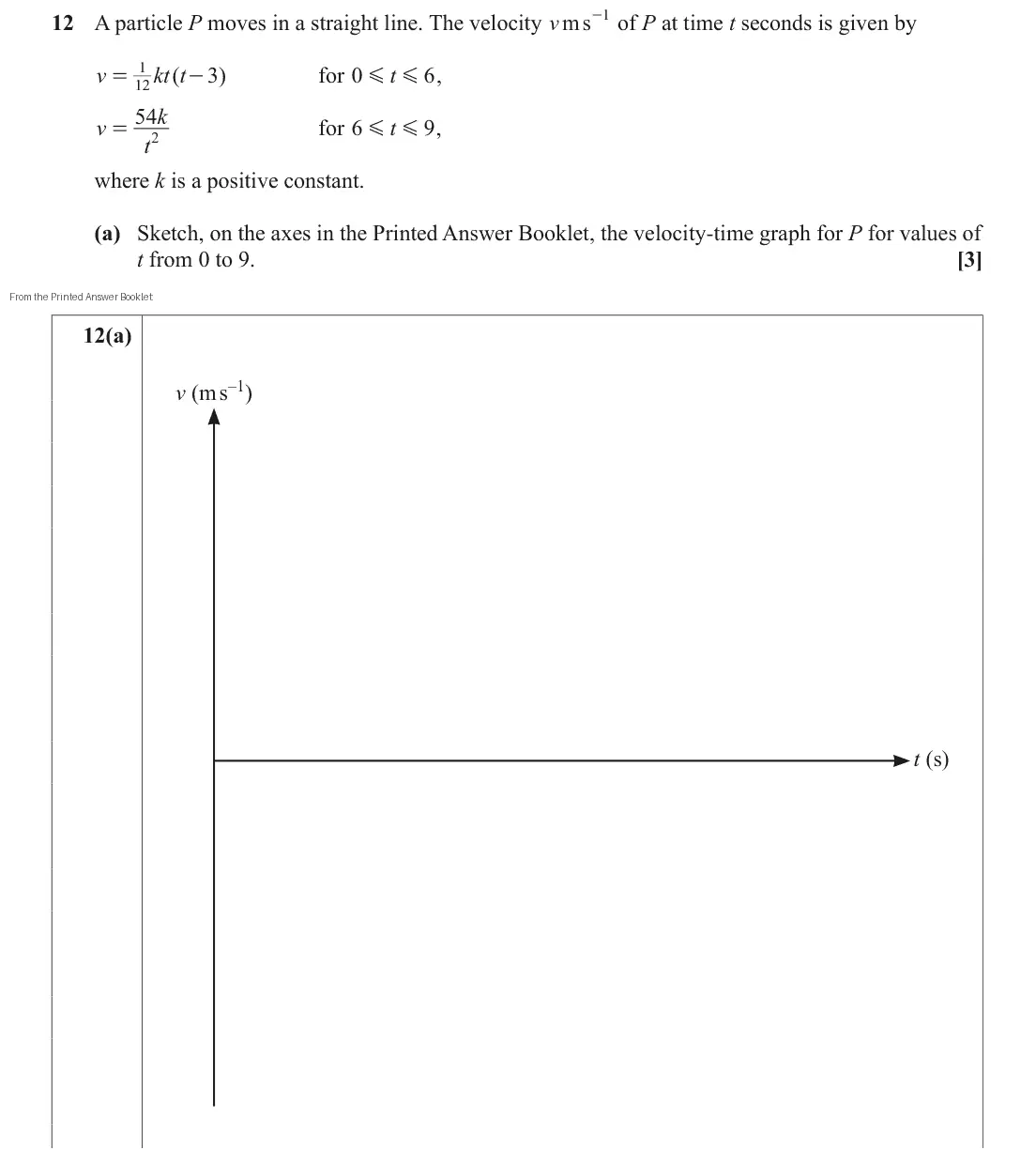

The most common incorrect answer in this part was 6 with the correct value of 1.5 rarely seen. Of those that did correctly attempt this part many used calculus techniques instead of considering their graph from part (a).

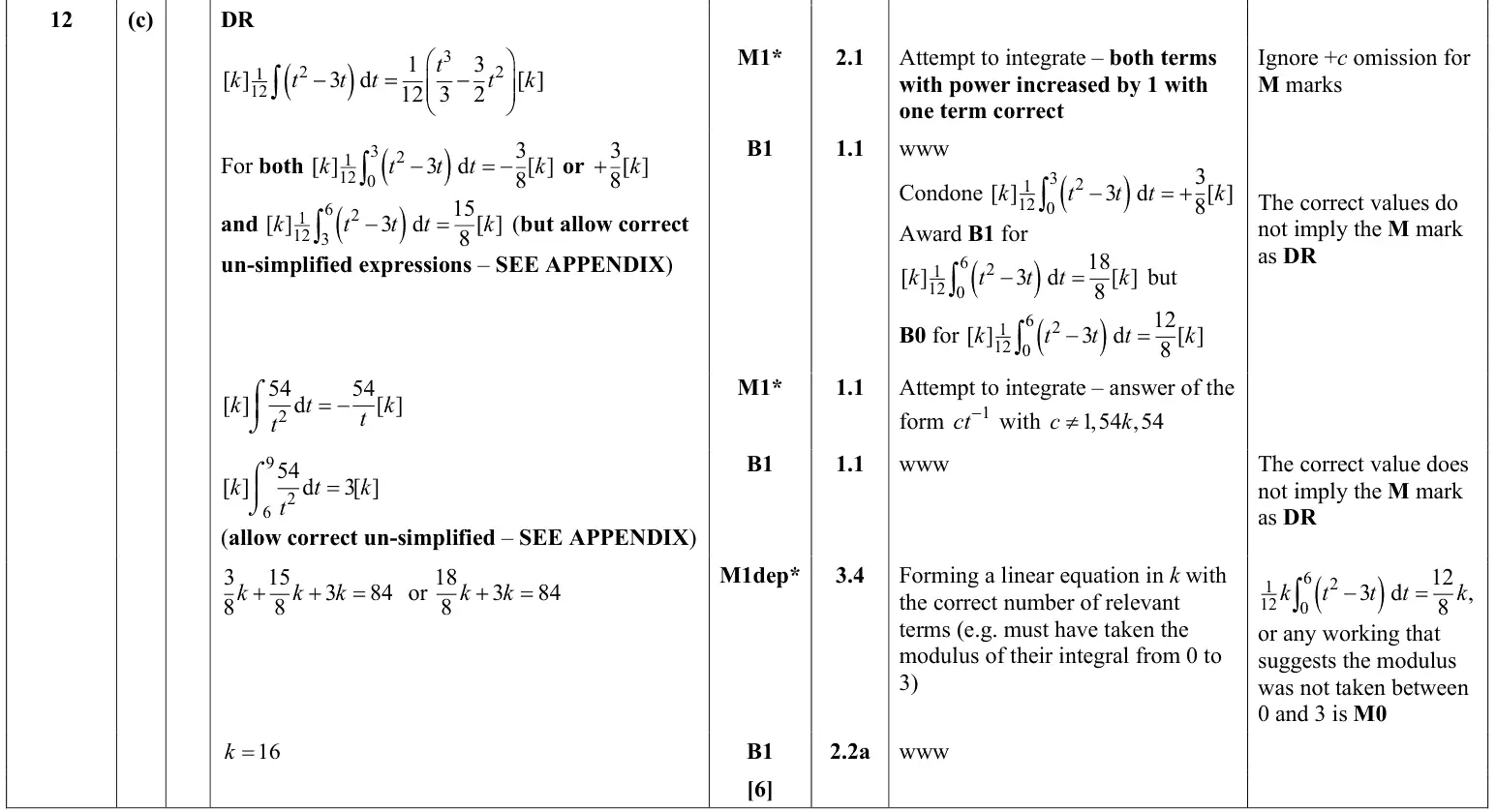
Many of the candidates who had drawn a correct velocity-time graph in part (a) did not realise the significance of the fact that part of this graph (between the times of 0 and 3) was below the 𝑡-axis and so therefore considered incorrect limits on their first integral i.e. ∫ . Some candidates seemed 12 𝑘𝑡(𝑡−3)d𝑡 to use the trapezium rule (or other non-calculus method) in this part. It was rare for candidates to set up the correct equation for 𝑘 as −∫ 12 𝑘𝑡(𝑡−3)d𝑡 12 𝑘𝑡(𝑡−3)d𝑡+ . + ∫ ∫ 𝑡2 d𝑡= 84 This candidate highlights the most common error seen by examiners in this part, which is considering the integral from 0 to 6 instead of considering the two integrals from 0 to 3 and from 3 to 6 separately. This response scored 3 of the 6 marks available.

This question was answered very well, with the integration generally correct. A few candidates omitted ‘+ c’. Using v = (4t – 9)t was given M0.

Those who were successful with (a) usually scored full marks here.

Most candidates realised this part required v to be integrated, with many not using the calculator to do this. The most common error was to just do this with limits 3 and 0 (mirroring a similar error seen in Question 11(c) of the summer 2022 paper); this scored no marks. With this year’s question now giving future candidates an extra question of this type to practice on in mock exams, hopefully this type of error will be reduced in the future.
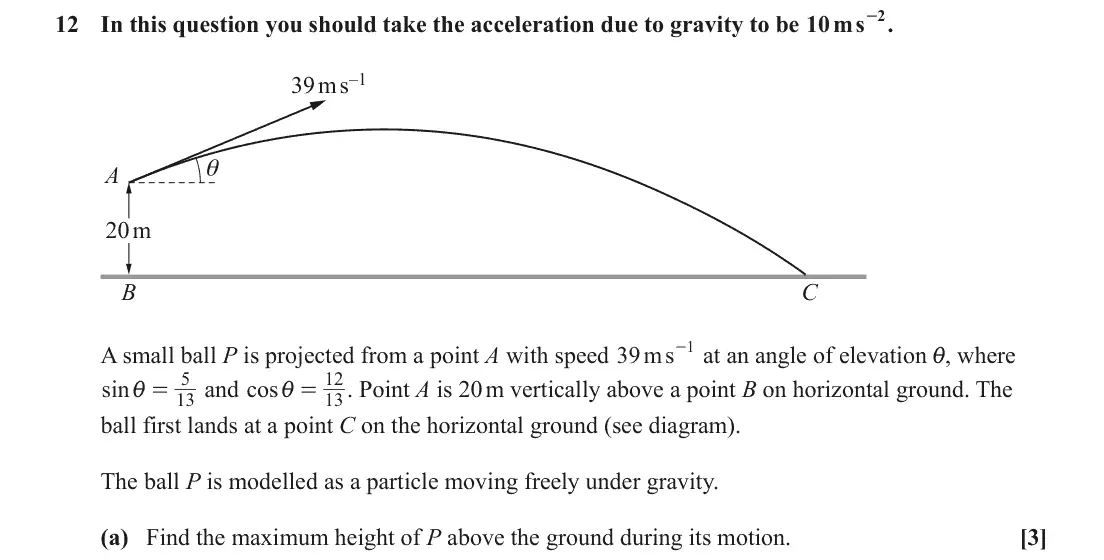

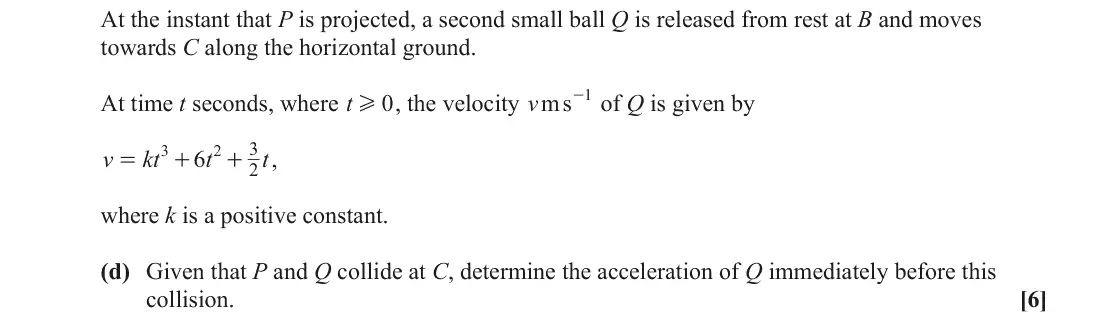
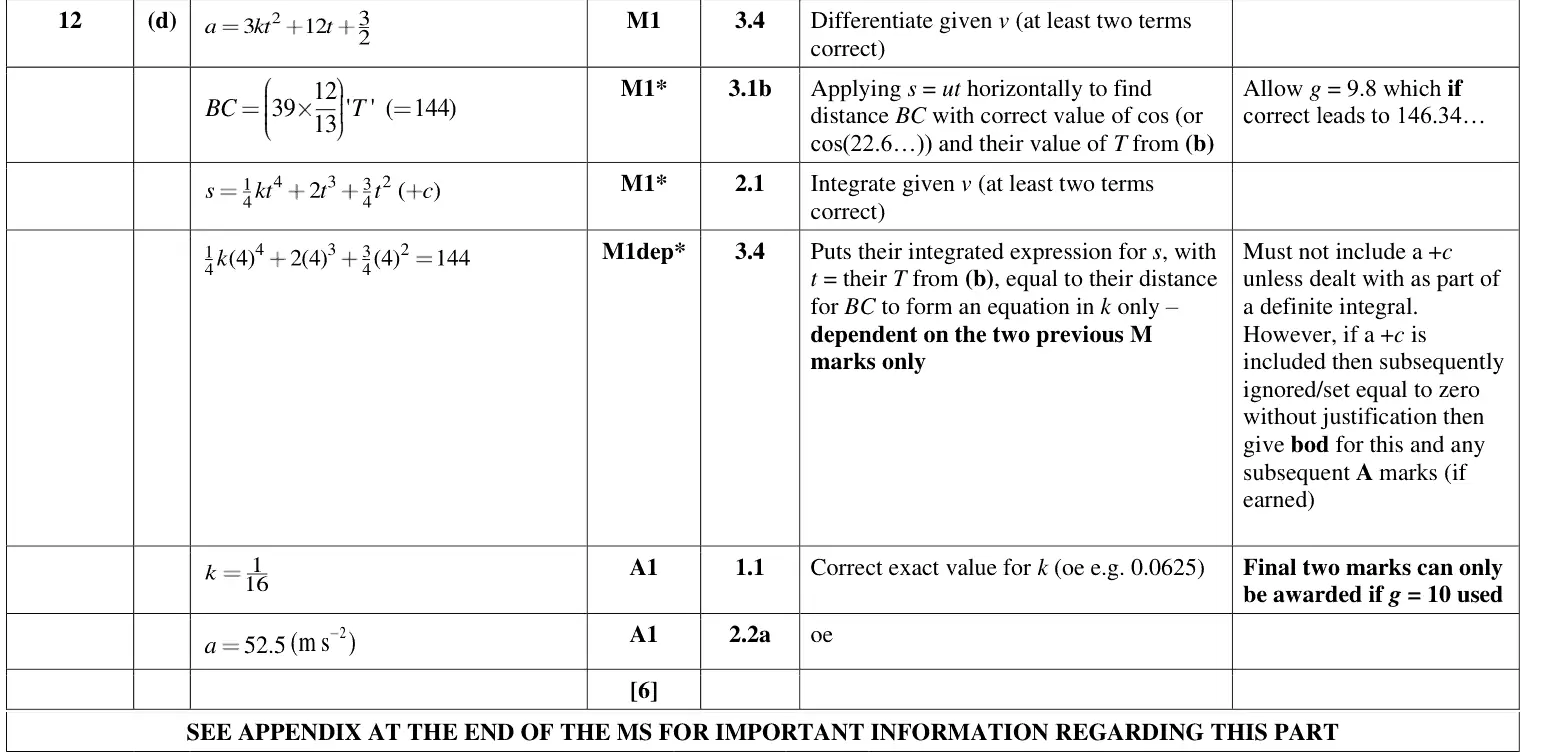
The responses to this part were mixed with some candidates making little progress apart from differentiating the given expression for v to obtain an expression for a in terms of t. Those candidates who realised that they had to use the value of T found in part (b) to find the horizontal distance BC and then integrate to set up an equation to find the value of k were usually successful. Although not penalised in the first two parts of the question, using an incorrect value of g meant that neither of the 2 accuracy marks (for finding k and then the required acceleration) could be awarded in this part. It was surprising how many candidates used equations for constant acceleration in this part to model the motion of Q.
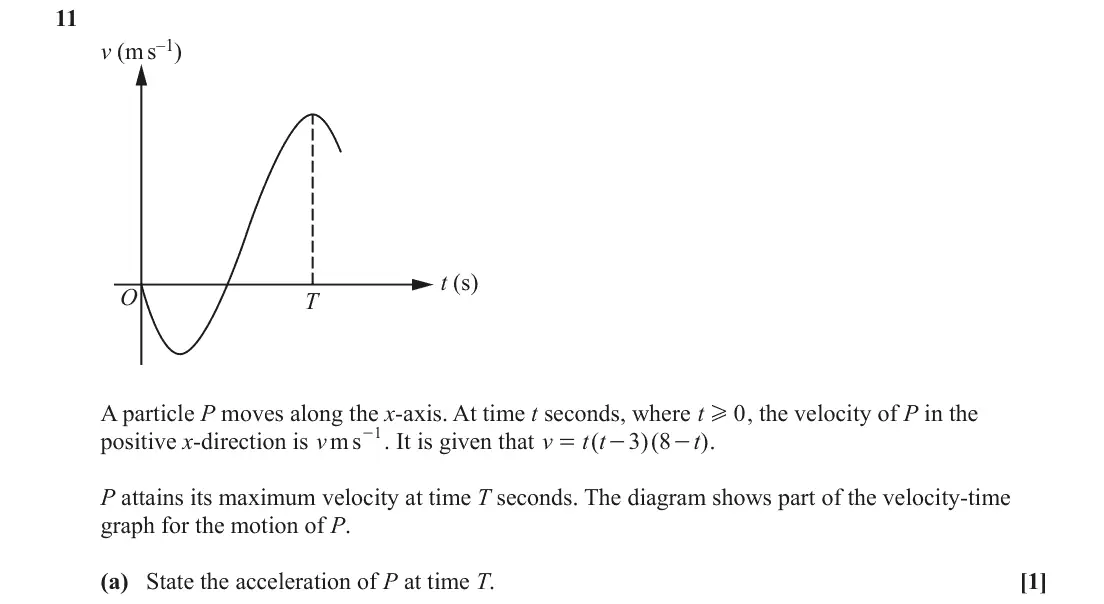
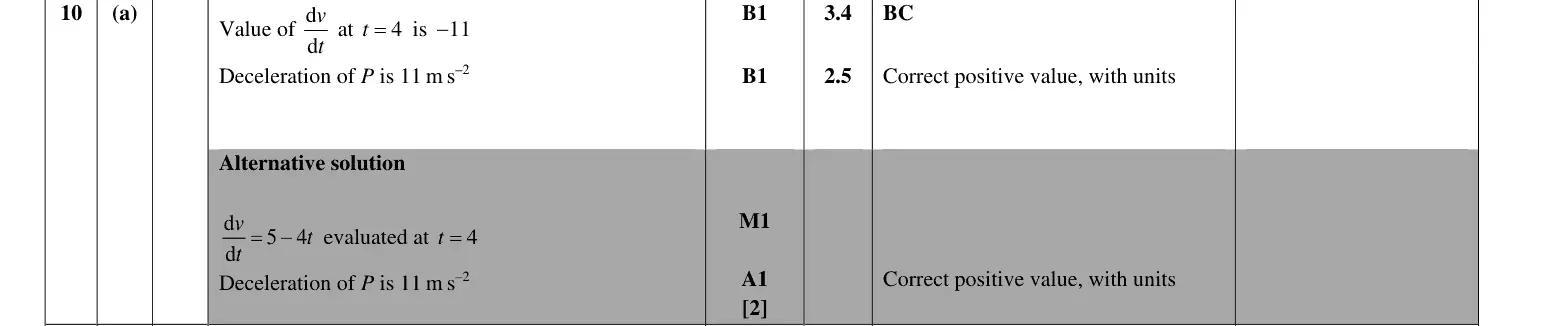
Many correct values. A few gave an expression for the acceleration rather than the required value.

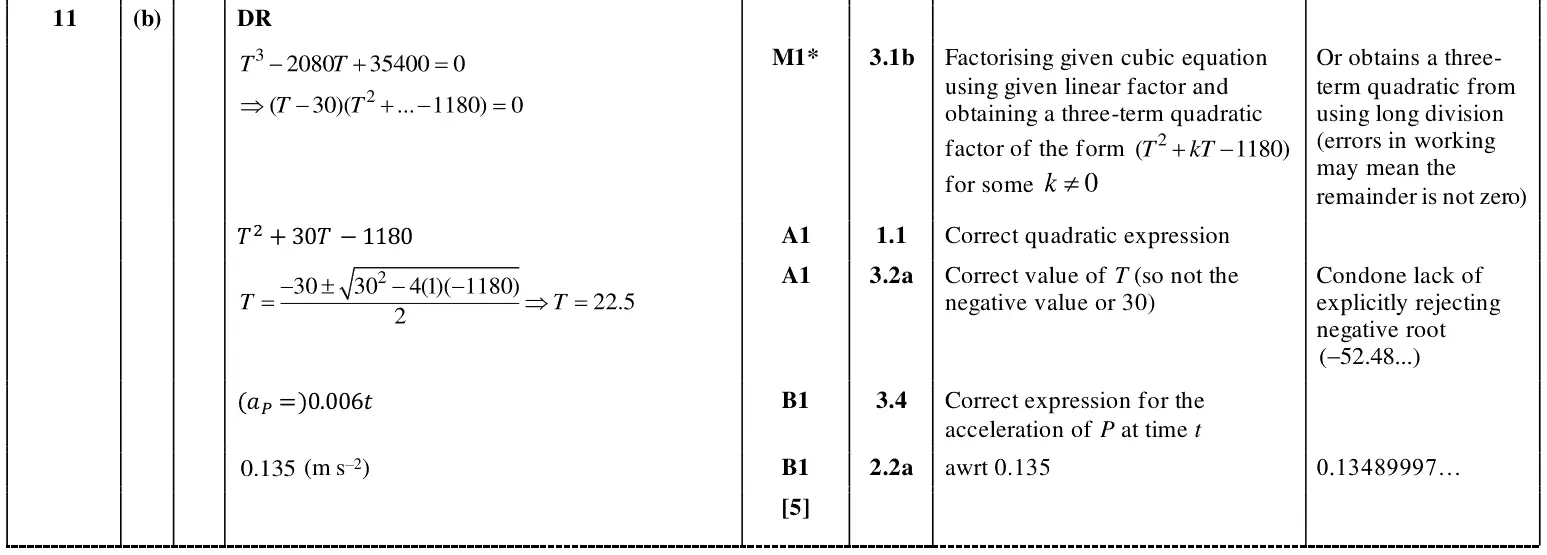
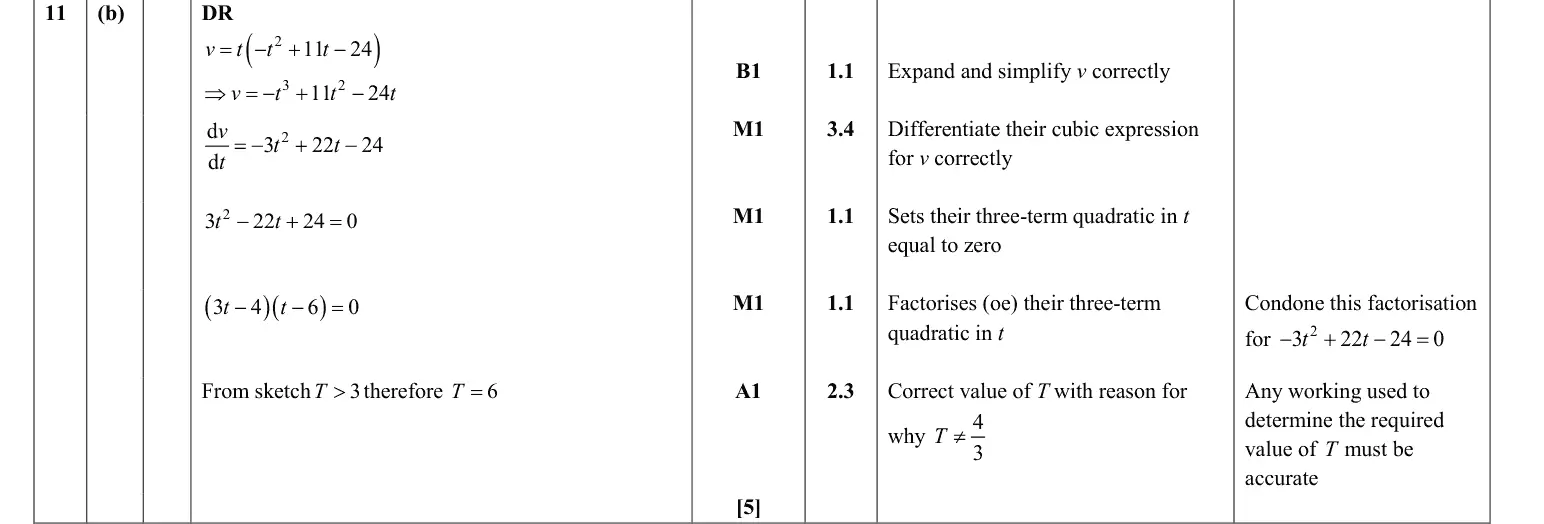
Candidates generally knew how to answer this question. It is another detailed reasoning (DR) question so, as in Question 2, we wanted to see how the quadratic equation had been solved. Many did not provide this evidence so 3/5 was a common mark. We also expected to see a valid reason for the rejection of T = 4/3.

Most candidates realised this part required v to be integrated. Many did not use the calculator to do this despite the instruction being ‘Find’. The most common error was to do this with limits 6 and 0, but the combination of 6 and 4/3 and 4/3 and 0 was also seen. When doing definite integrals on the calculator it is wise, time permitting, for candidates to type in the relevant details twice to hopefully avoid careless errors.
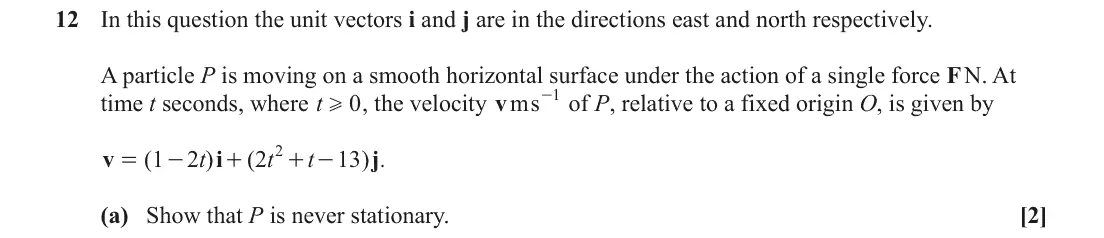
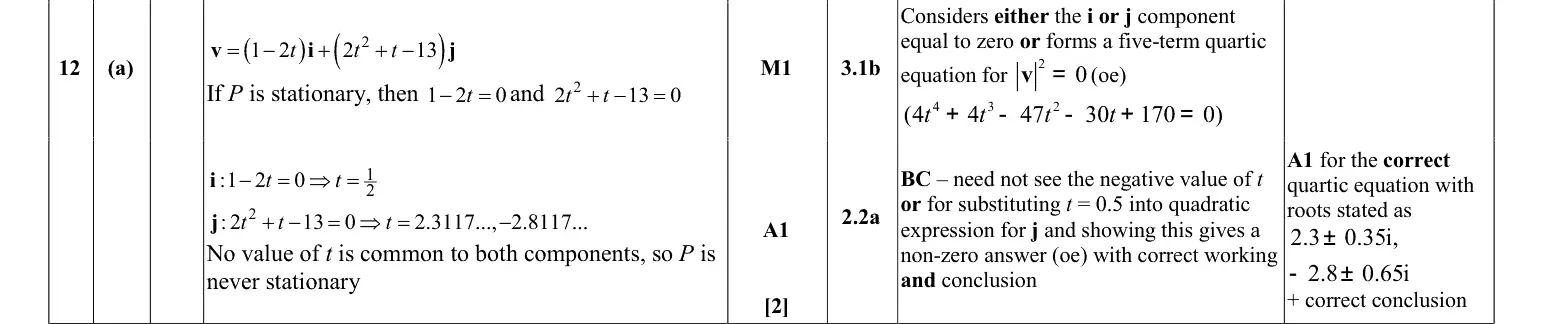
The most common way of showing that P was never stationary was to solve either 1 2 − t = 0 or 2 t + − t 13 = 0 and show that the value of t from one equation was not consistent with the value(s) of t from the other equation. Those candidates who instead decided to find an expression for the speed of P at time t (which in most cases was a 5-term quartic equation) were rarely successful in either deriving this equation correctly or articulating their findings when they attempted to solve it.

This question was almost always answered correctly by differentiating the expression given in the stem to part (a). Only occasionally did examiners report cases of candidates using either constant acceleration formulae or integration.

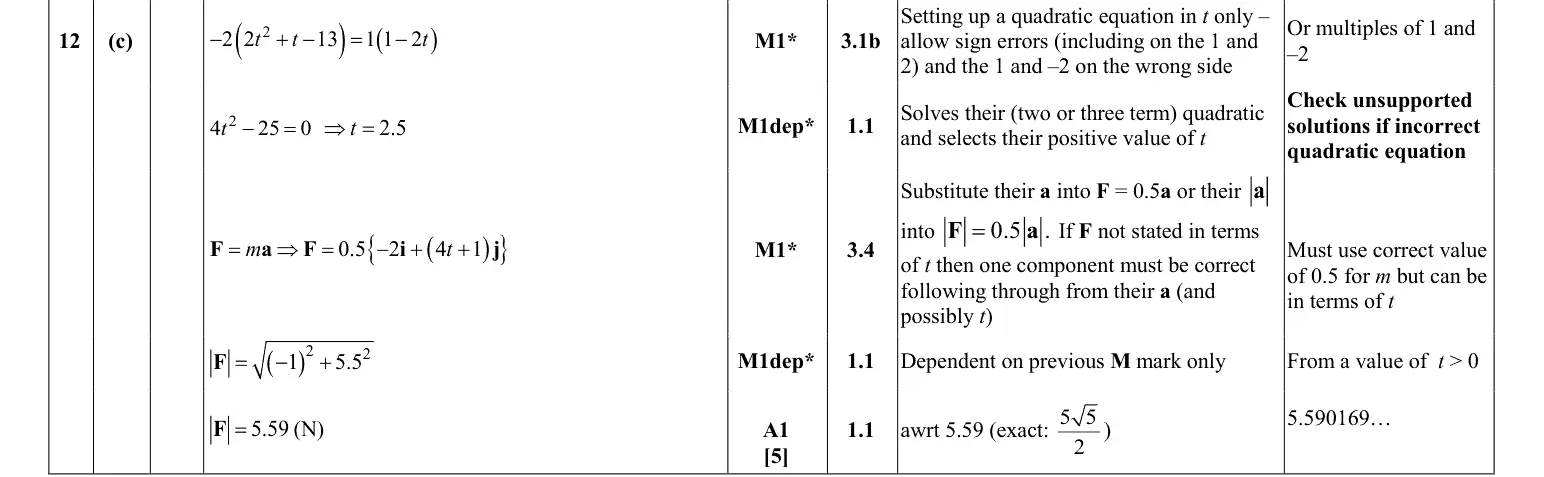
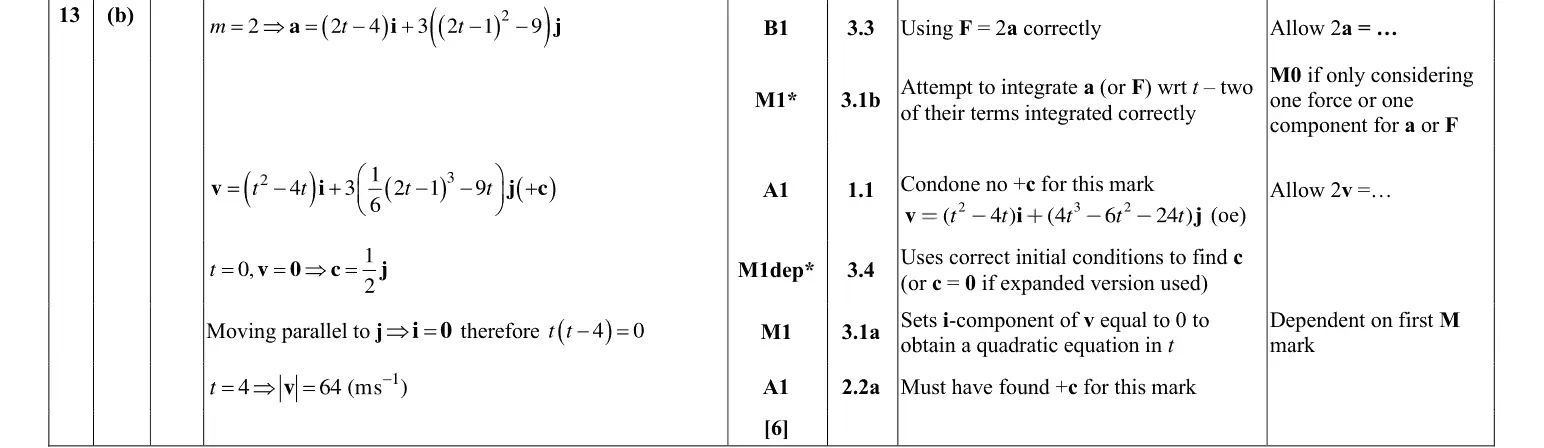
How to deal with ‘…moving in the direction of the vector 2 − i + j ’ was not well known by most candidates (and it would seem that many candidates did not realise that the direction of motion of P is governed by the corresponding velocity vector and not the displacement vector). For those candidates who did realise − − 2 1 2 t = that k for some constant k most usually went on to find the correct value of t as 2.5. + − 1 2 t t 13 In comparison, the vector expression for F (and corresponding magnitude) were much better known by candidates and even if they did not obtain the correct value of t they could still access some marks for their knowledge of these results.

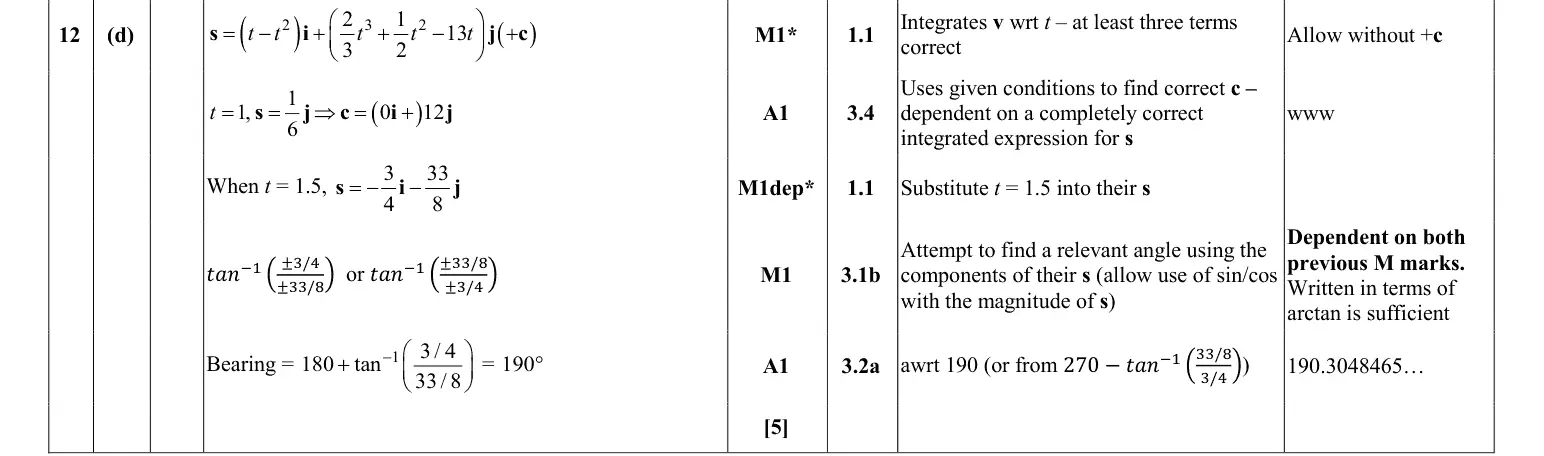
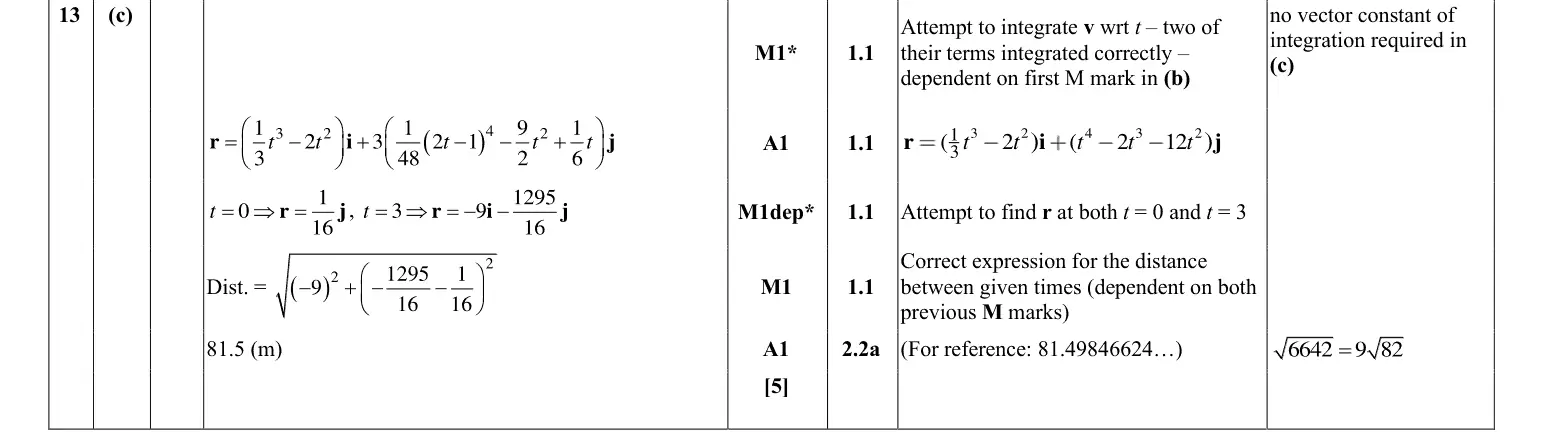
This question was much better answered than part (c) with many candidates correctly integrating the velocity vector to obtain the corresponding displacement vector. Some candidates did not include a vector constant of integration (and some just automatically assumed that it would be a zero vector). 3 33 However, many correctly found the displacement at time 1.5 as − − j and although many used the i 4 8 tan ratio to work out a suitable angle only some correctly found the required bearing.


(From the general report) Question 9 states constant acceleration so ‘suvat’ can be used, whereas Question 13 has a variable force term so calculus must be used.

(From the general report) Question 9 states constant acceleration so ‘suvat’ can be used, whereas Question 13 has a variable force term so calculus must be used.

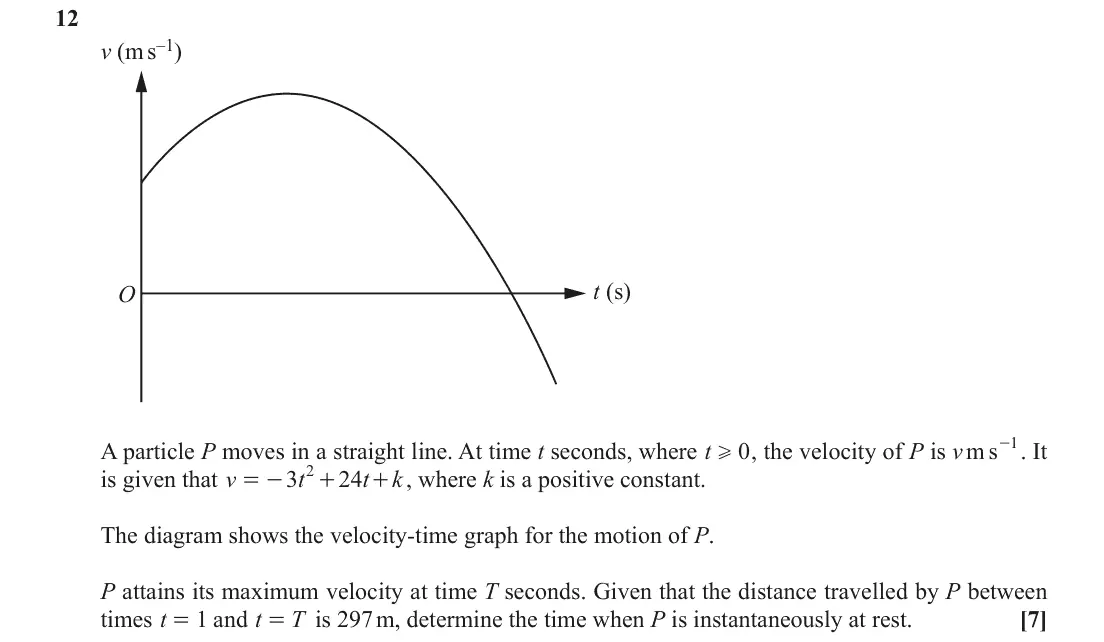
(Comment on Question 10 as a whole) Part (c) - Most just considered t = 0 to t = 4 without realising the importance of t = 3, even though (b) was almost always correct.

(Comment on Question 10 as a whole) Part (c) - Most just considered t = 0 to t = 4 without realising the importance of t = 3, even though (b) was almost always correct.

(Comment on Question 10 as a whole) Part (c) - Most just considered t = 0 to t = 4 without realising the importance of t = 3, even though (b) was almost always correct.
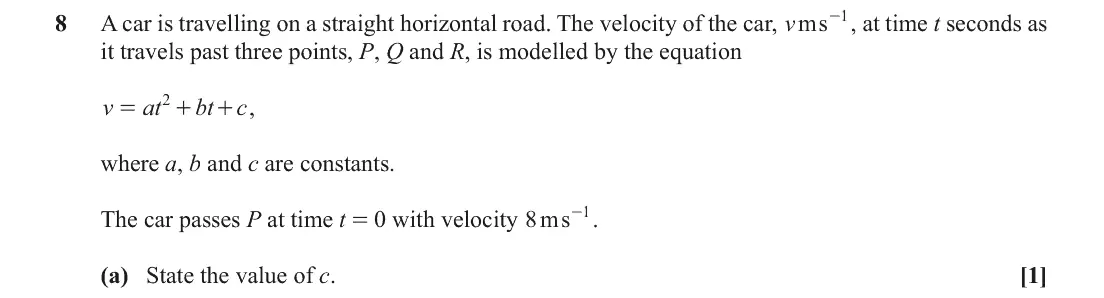
(Comment on Question 08 as a whole) This question was also completed well, although a significant number attempted to use the ‘suvat’ equations. Part (a) was answered correctly on almost 100% of the scripts. Part (b) was also answered well. Unfortunately, some candidates ignored the negative sign needed for deceleration, which meant only 3 out of the 4 marks were available. Part (c) was a ‘Find’ question, so an answer obtained directly from the calculator was expected, although some candidates did show a fully integrated expression first. Some candidates dropped marks when they used the incorrect limits and some attempted to use ‘suvat’, even if they had used calculus in the earlier parts.

(Comment on Question 08 as a whole) This question was also completed well, although a significant number attempted to use the ‘suvat’ equations. Part (a) was answered correctly on almost 100% of the scripts. Part (b) was also answered well. Unfortunately, some candidates ignored the negative sign needed for deceleration, which meant only 3 out of the 4 marks were available. Part (c) was a ‘Find’ question, so an answer obtained directly from the calculator was expected, although some candidates did show a fully integrated expression first. Some candidates dropped marks when they used the incorrect limits and some attempted to use ‘suvat’, even if they had used calculus in the earlier parts.

(Comment on Question 08 as a whole) This question was also completed well, although a significant number attempted to use the ‘suvat’ equations. Part (a) was answered correctly on almost 100% of the scripts. Part (b) was also answered well. Unfortunately, some candidates ignored the negative sign needed for deceleration, which meant only 3 out of the 4 marks were available. Part (c) was a ‘Find’ question, so an answer obtained directly from the calculator was expected, although some candidates did show a fully integrated expression first. Some candidates dropped marks when they used the incorrect limits and some attempted to use ‘suvat’, even if they had used calculus in the earlier parts.
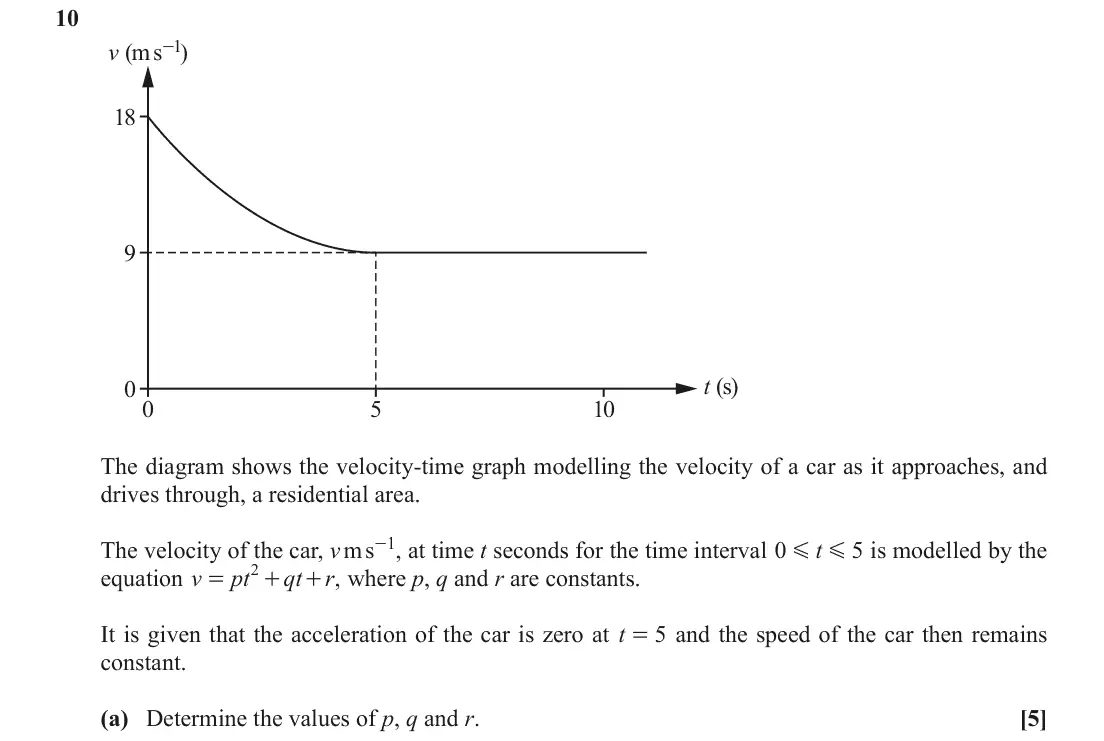
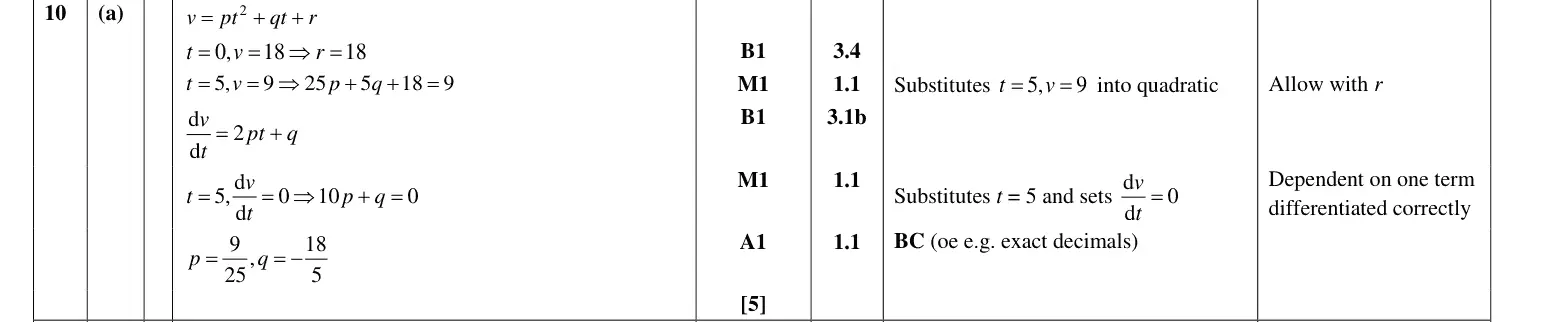
Many candidates managed to gain some credit on this question. r = 18 was often spotted and v = 9 at t = 5 well applied. Some then stated v = 9 at t = 10 also, and floundered. Pleasingly, those who realised they needed the acceleration generally differentiated and were accurate.

The most common fundamental error here was to see an integral evaluated using the limits 0 and 10. There was no reason for candidates not to use the numerical integration function on their calculator, but more often than not showed the algebra. Without values for p, q and r found in (a) only B1 was possible.

( ) Nearly all candidates correctly differentiated v and obtained a = 2 pt − 3 i + 8 j Unfortunately many . candidates then made careless slips in applying F = m a to obtain an equation in p only with the most common errors being forgetting the mass completely or only multiplying the i component by the value of m. Candidates are one again reminded to read the question carefully as while many had a correct equation in p e.g. ( p − 3 ) + 64 = 100 many solved and gave the positive root even though the question specifically said that p was negative. This response scored the first five marks. An almost perfect response let down by the fact that the candidate did not read the question carefully enough and assumed that the value of p could not be negative.

This part was answered extremely well with many candidates correctly realising that they had to use integration to find an expression for the displacement in terms of t. However, many ignored the vector constant of integration that would arise from the corresponding indefinite integral and some incorrectly integrated q as 2 q instead of as qt.

This part discriminated well with many candidates making little progress apart from substituting t = 1 into their expression from part (b). Those candidates who realised that one way to find q was to equate a scalar multiple of their displacement vector (evaluated at t = 1) to 2 i − 8 j were usually successful in first finding the scalar multiple and hence the value of q.
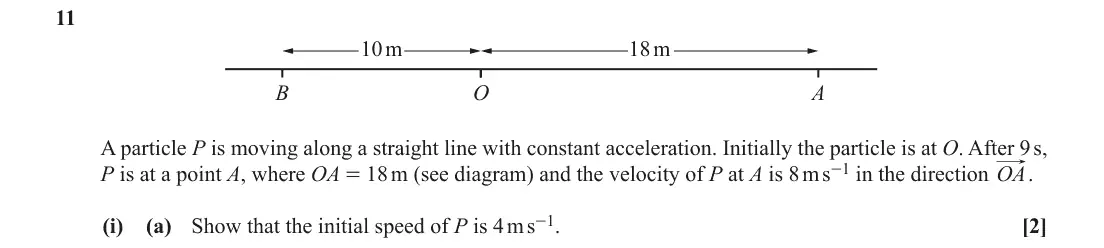

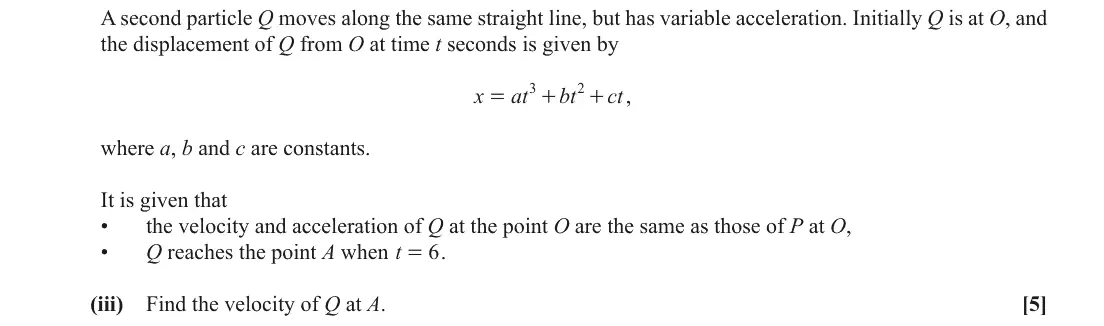
Few fully correct solutions were seen to this part. Many just earned one mark for differentiating the given displacement equation, seemingly not understanding that t = 0 needed to be used in the work to find b and c (not t = 6) and then t = 6 needed to obtain a. A number of candidates attempted to solve this part using the constant acceleration formulae.

Nearly all candidates correctly differentiated the expression for v and correctly obtained the value of k as 0.1.

This part was answered extremely well with many candidates correctly finding the total distance that car had travelled when its speed had reached 25 ms-1. Many correctly realised that they had to use integration to find an expression for the displacement in terms of t which they could then use to find the distance travelled by the car in the first 20 seconds. However, many ignored the constant of integration that would arise from the corresponding indefinite integral; even though this constant was zero it is mathematically incorrect to simply ignore it (and for full marks candidates either had to consider this displacement expressed as a definite integral or explain why the constant was zero). Most candidates then used the SUVAT equations to work out the remaining distance travelled when the speed increased from 14 to 25 and correctly calculated the total distance as 265 m.
Stuck on this? Book a trial session with an A-level maths tutor.