June 2018: Paper 1: Pure Mathematics

100 marks · 29 question parts · Question paper, mark scheme and examiner's report on OCR's site

Question by question

QTopicMarksDifficulty
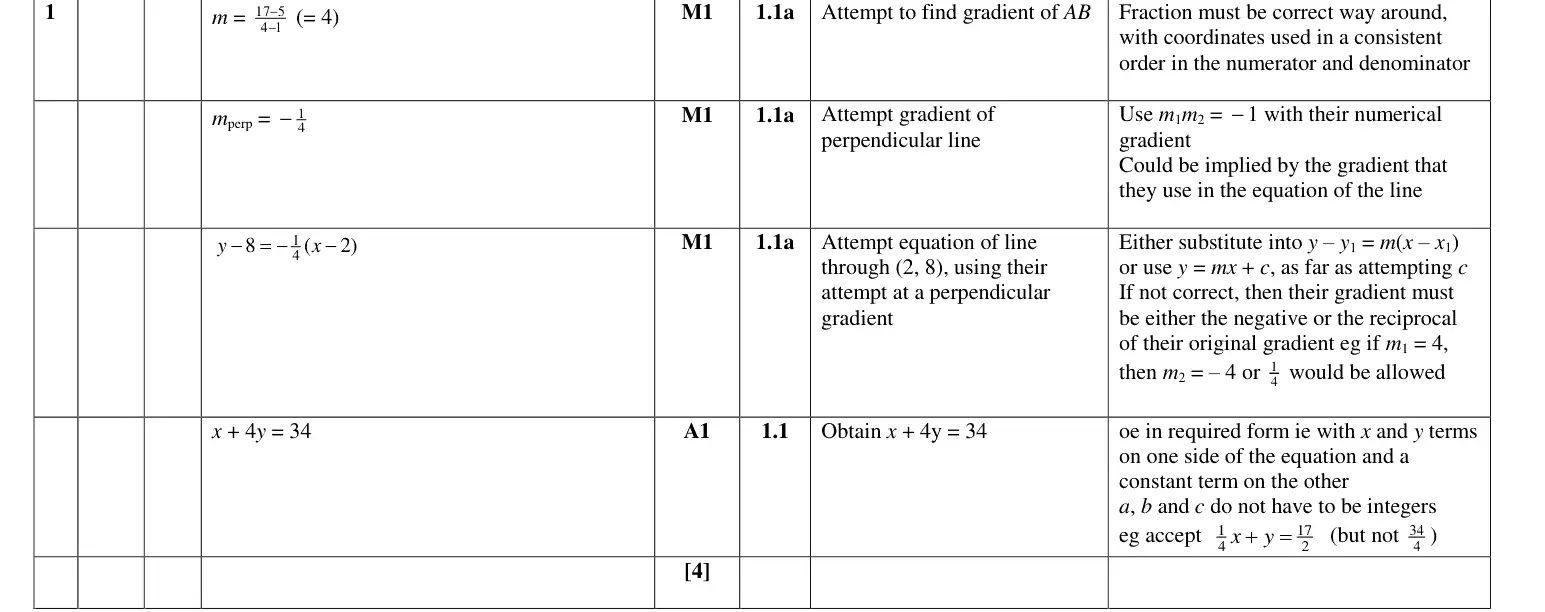
1 Straight lines 4 Easy
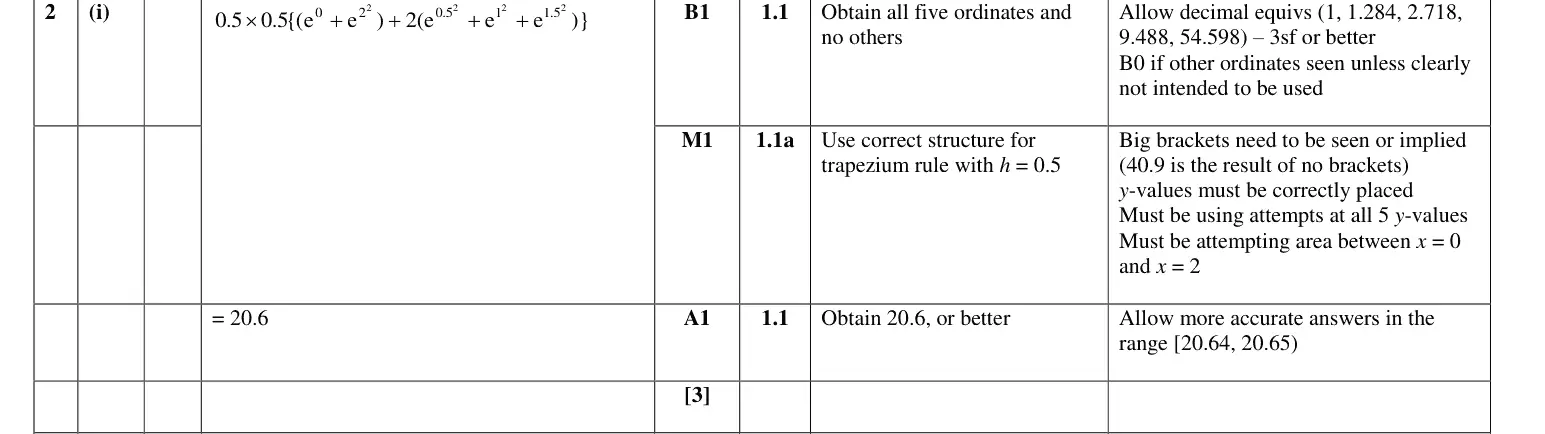
2(i) Trapezium rule and numerical integration, Exponentials and logarithms 3 Easy
2(ii) Trapezium rule and numerical integration 1 Medium
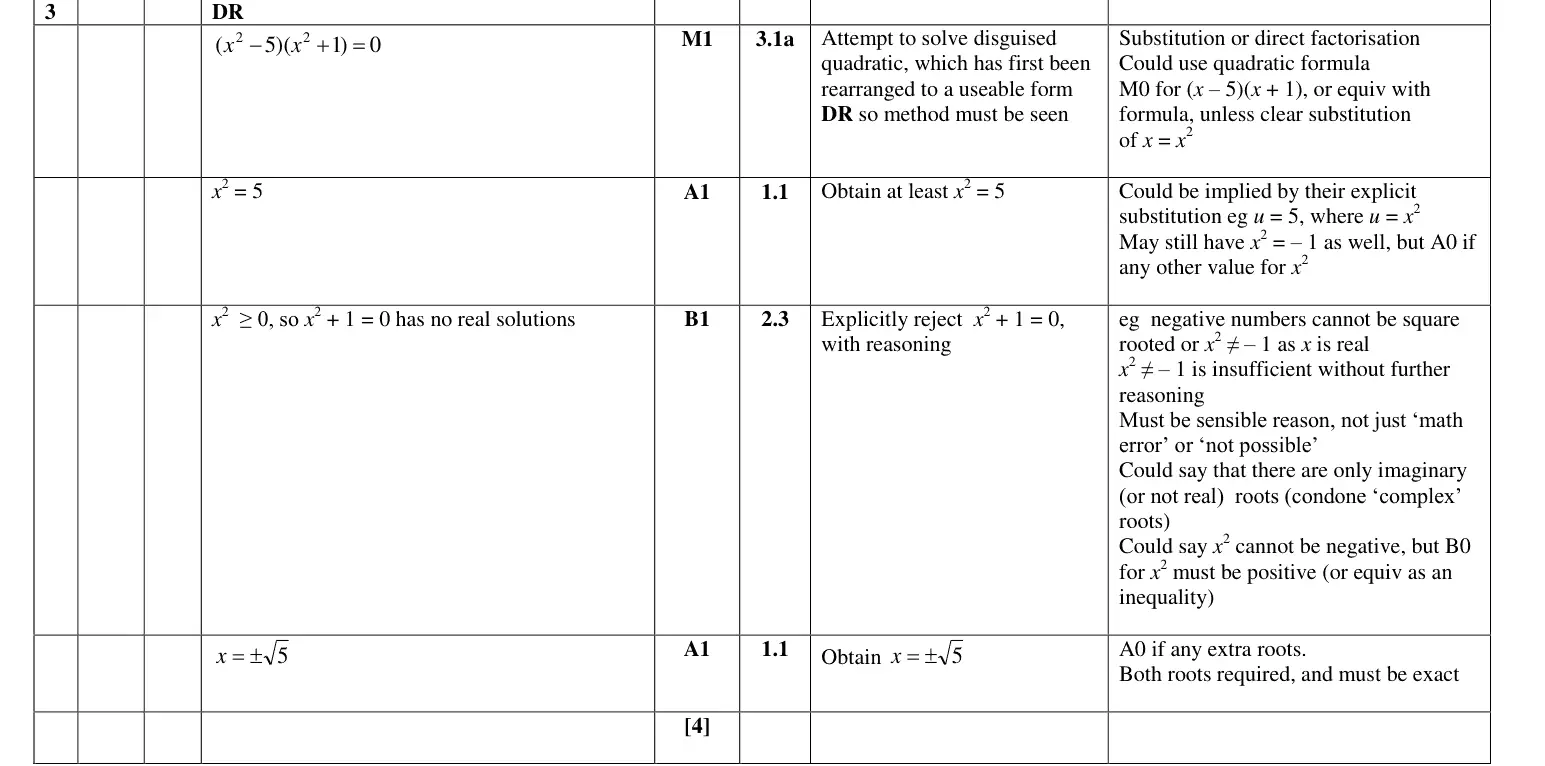
3 Quadratics and the discriminant 4 Easy
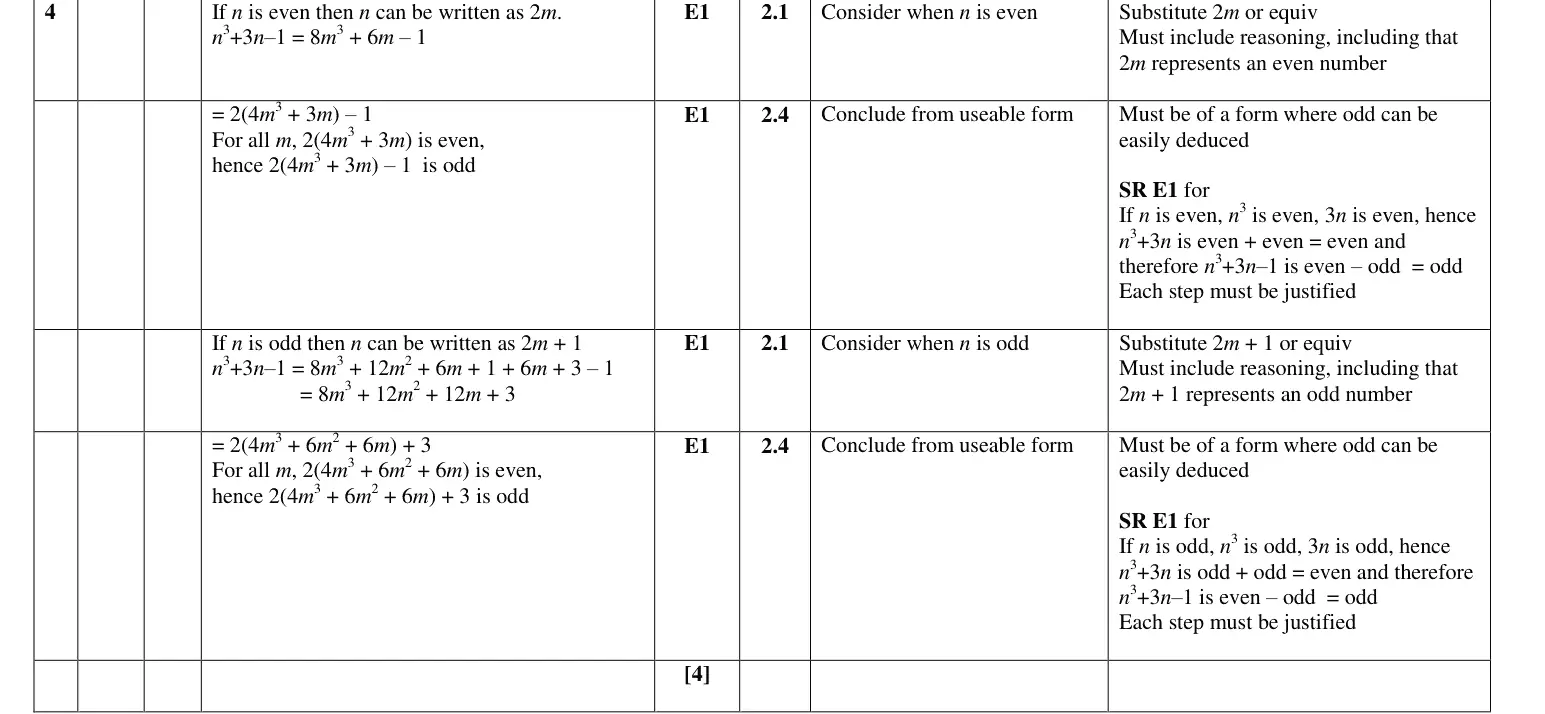
4 Proof, including contradiction 4 Medium
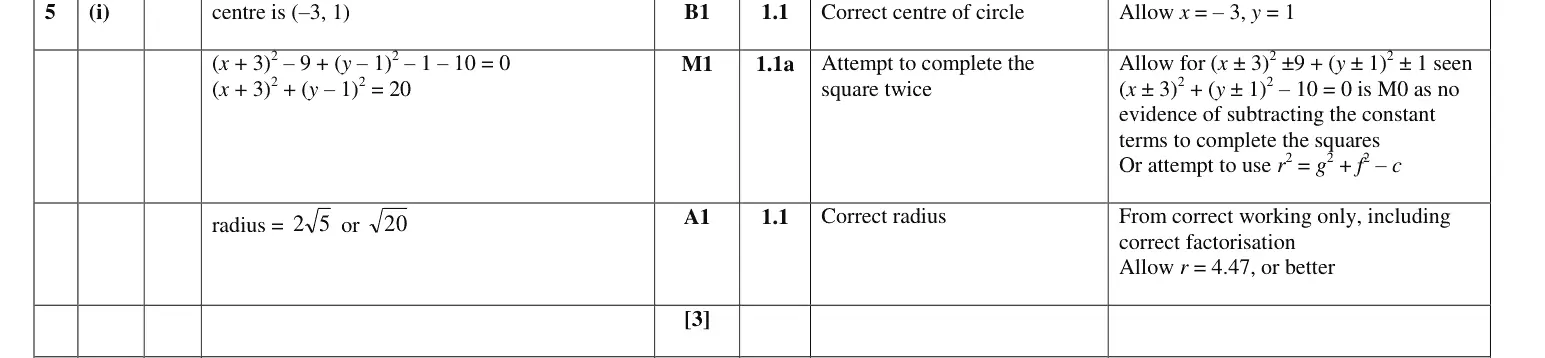
5(i) Circles 3 Easy
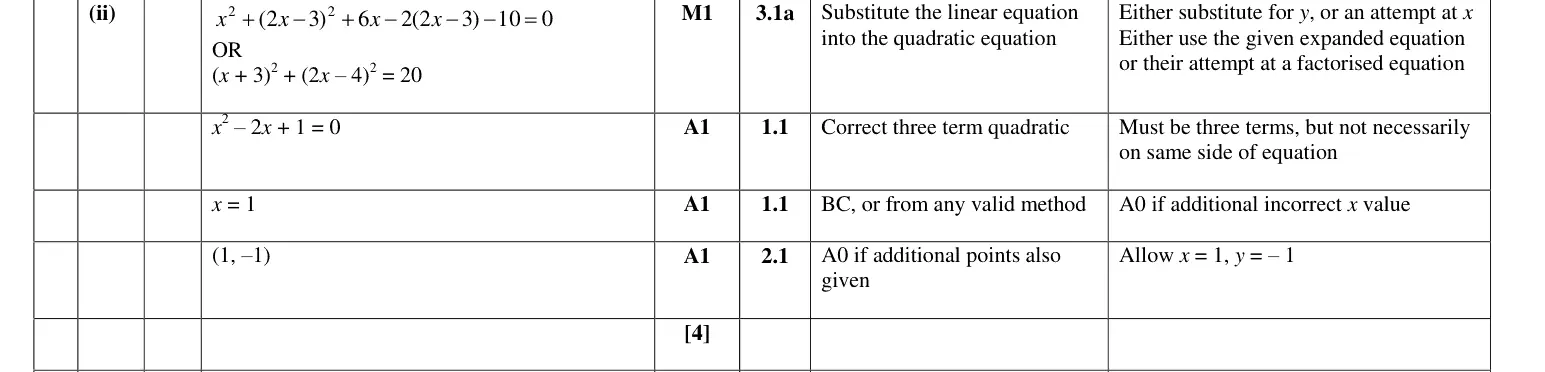
5(ii) Circles, Simultaneous equations 4 Medium
5(iii) Circles, Graphs and transformations 1 Medium
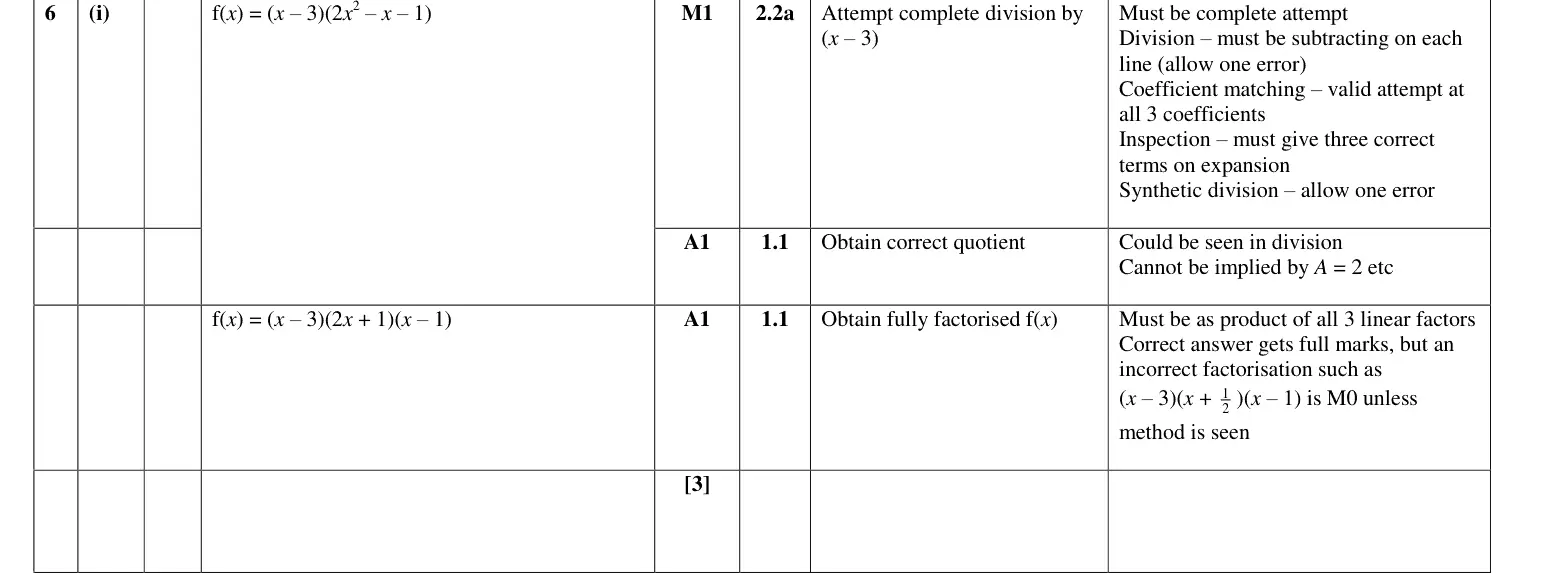
6(i) Algebraic methods: polynomials, factor theorem and rational expressions 3 Easy
6(ii) Graphs and transformations 2 Easy
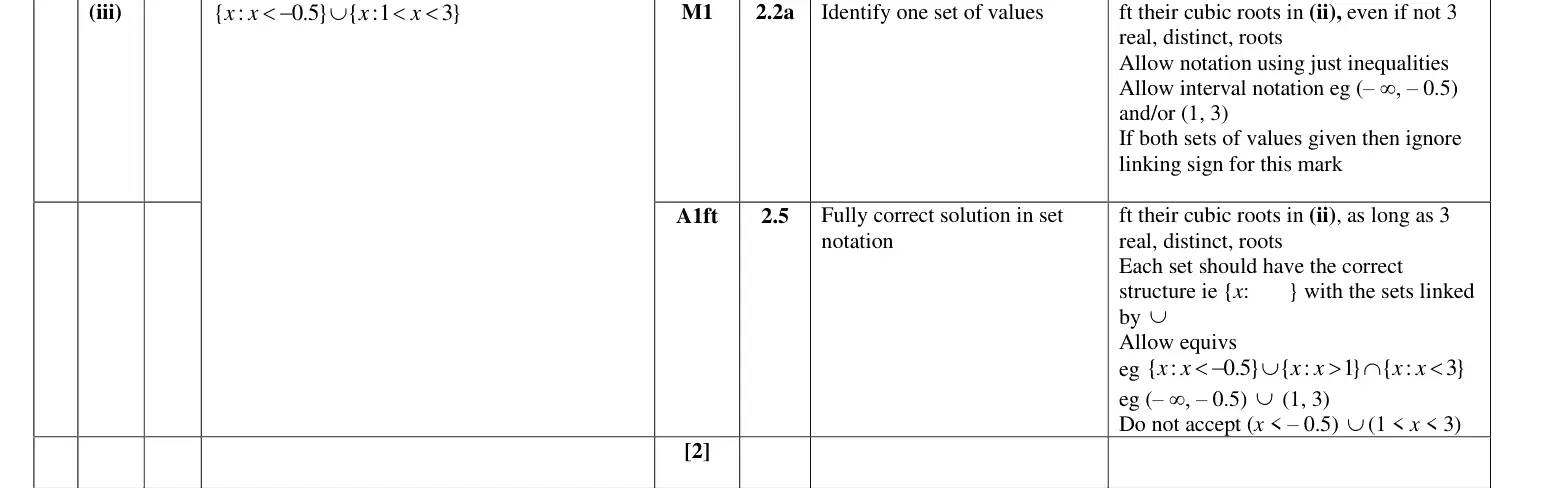
6(iii) Inequalities 2 Medium
6(iv) Graphs and transformations 2 Easy
7(i) Sequences and series 4 Medium
7(ii) Sequences and series, Exponentials and logarithms 3 Easy
7(iii) Sequences and series 2 Medium
8(i) Binomial expansion 4 Easy
8(ii) Binomial expansion 3 Easy
9(i) Functions, composite and inverse functions, modulus, Quadratics and the discriminant 3 Easy
9(ii) Functions, composite and inverse functions, modulus, Quadratics and the discriminant 4 Easy
10(i) Implicit and parametric differentiation, Differentiation: first principles, gradients, stationary points 4 Medium
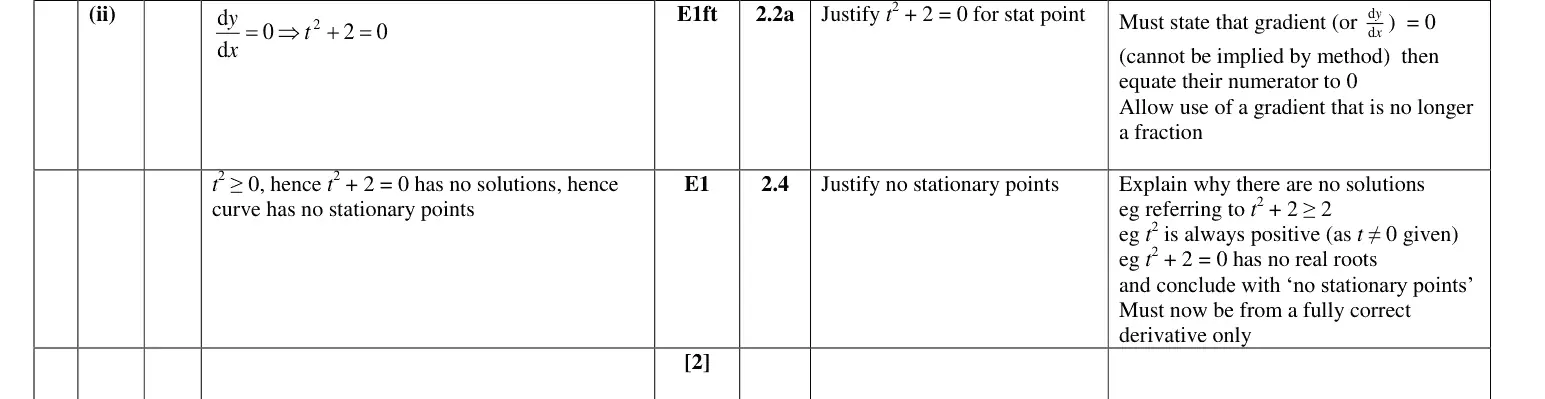
10(ii) Differentiation: first principles, gradients, stationary points, Implicit and parametric differentiation 2 Medium
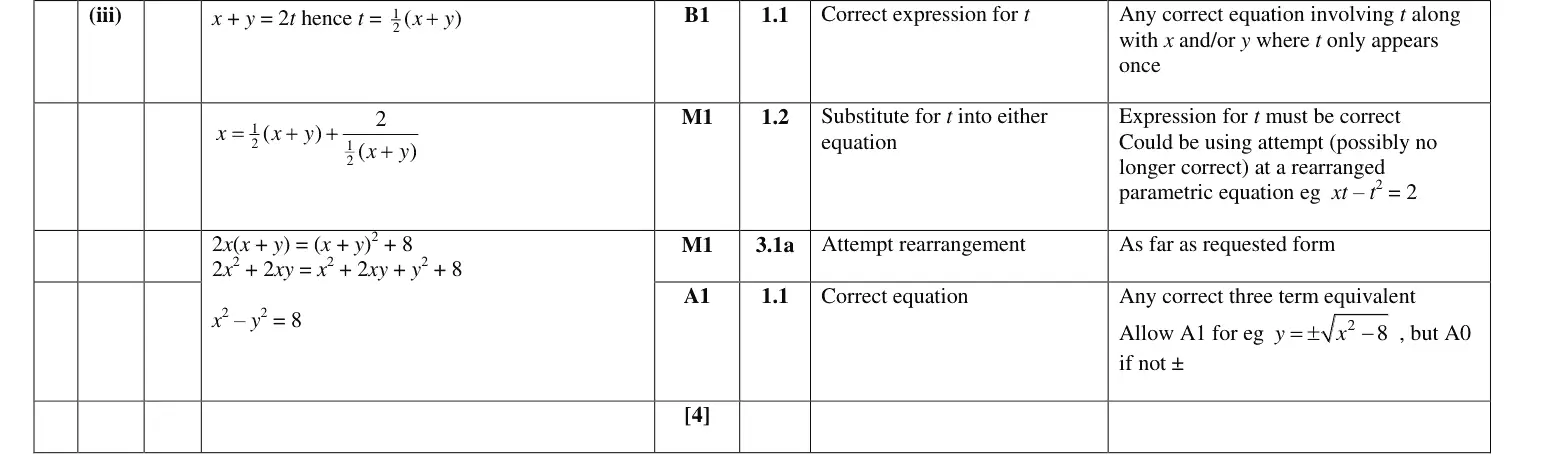
10(iii) Parametric equations, Algebraic methods: polynomials, factor theorem and rational expressions 4 Medium
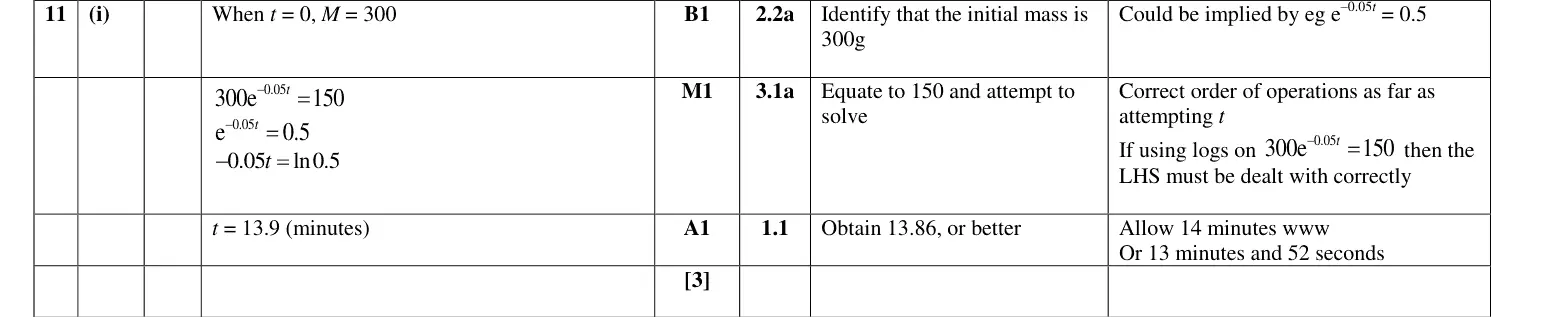
11(i) Exponential growth, decay and modelling, Exponentials and logarithms 3 Easy
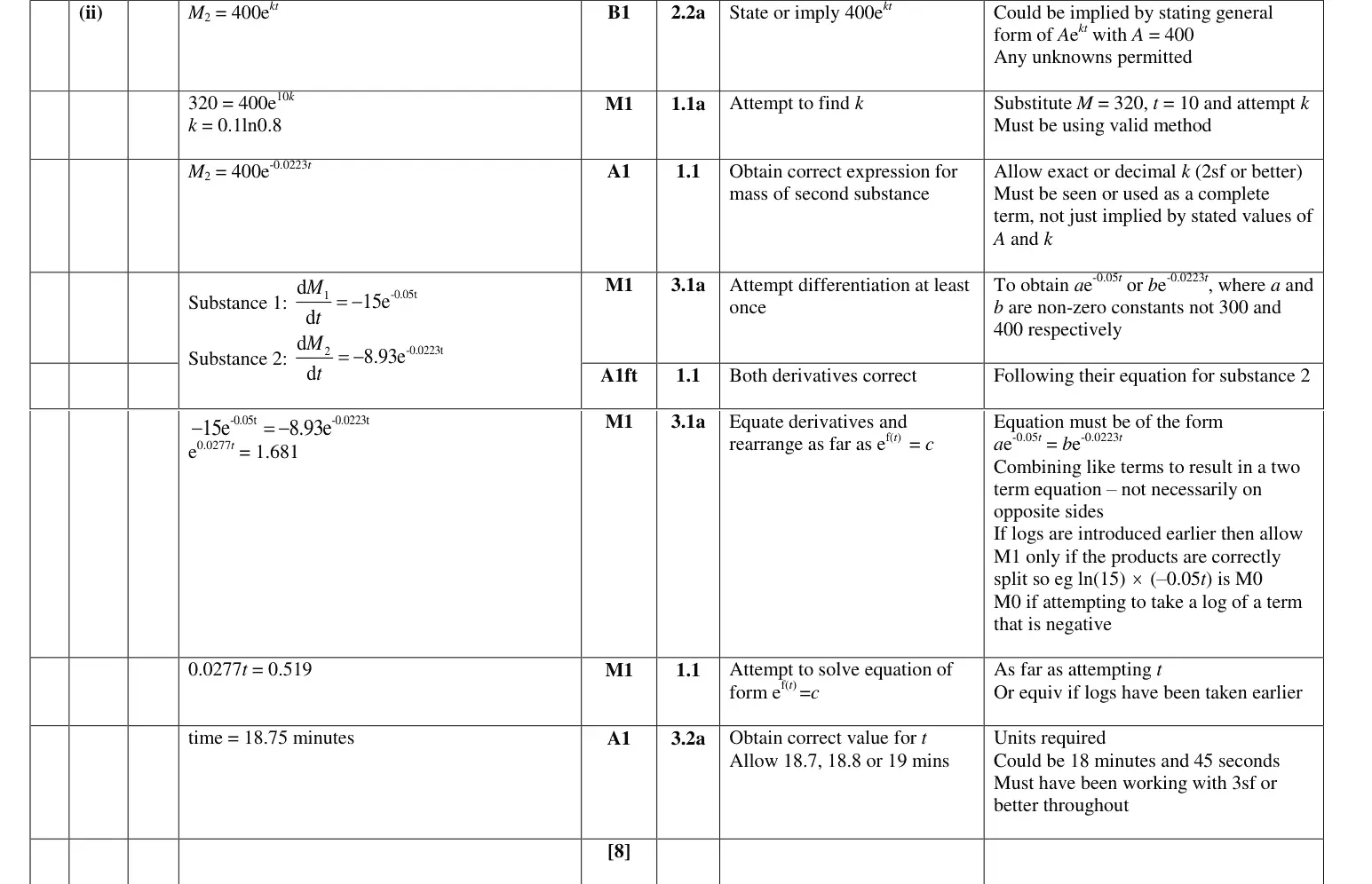
11(ii) Exponential growth, decay and modelling, Differentiation: first principles, gradients, stationary points, Exponentials and logarithms 8 Medium
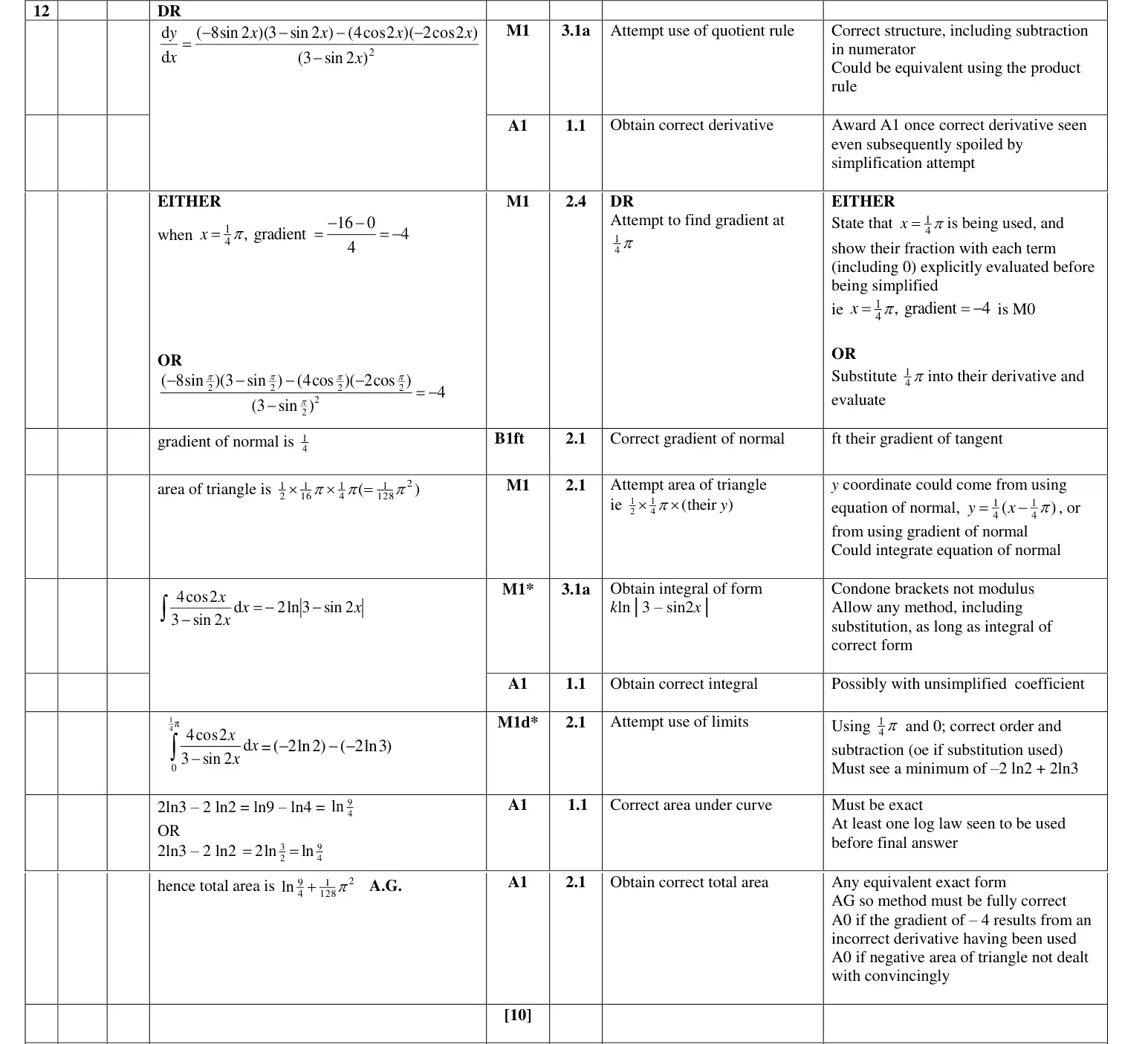
12 Chain, product and quotient rules; connected rates of change, Differentiation: first principles, gradients, stationary points, Integration by parts and by substitution, Integration: standard integrals, definite integrals and areas, Exponentials and logarithms 10 Medium
13(i)(a) Differential equations 1 Easy
13(i)(b) Differential equations 4 Easy
13(ii) Differential equations, Integration: standard integrals, definite integrals and areas 6 Medium
13(iii) Differential equations 2 Hard

The questions

12(i)2(ii)345(i)5(ii)5(iii)6(i)6(ii)6(iii)6(iv)7(i)7(ii)7(iii)8(i)8(ii)9(i)9(ii)10(i)10(ii)10(iii)11(i)11(ii)1213(i)(a)13(i)(b)13(ii)13(iii)
June 2018 · Paper 1 · Q1 4 marks Easy straight lines
1 The points A and B have coordinates (1, 5) and (4, 17) respectively. Find the equation of the straight line which passes through the point (2, 8) and is perpendicular to AB. Give your answer in the form ax by c = , + where a, b and c are constants. [4]
June 2018 · Paper 1 · Q2(i) 3 marks Easy trapezium ruleexponentials and logs
2 (i) Use the trapezium rule, with four strips each of width 0.5, to estimate the value of y x x e d giving your answer correct to 3 significant figures. [3]
June 2018 · Paper 1 · Q2(ii) 1 mark Medium trapezium rule
Show the start of this questionEarlier part of this question
(ii) Explain how the trapezium rule could be used to obtain a more accurate estimate. [1]
June 2018 · Paper 1 · Q3 4 marks Easy quadratics
3 In this question you must show detailed reasoning. Find the two real roots of the equation x x [4] . Give the roots in an exact form. - =
June 2018 · Paper 1 · Q4 4 marks Medium proof
3 + 4 Prove algebraically that n n - is odd for all positive integers n. [4]
June 2018 · Paper 1 · Q5(i) 3 marks Easy circles
5 The equation of a circle is x y x y . + + - - = (i) Find the centre and radius of the circle. [3]
June 2018 · Paper 1 · Q5(ii) 4 marks Medium circlessimultaneous equations
Show the start of this questionEarlier part of this question
(ii) Find the coordinates of any points where the line y x - meets the circle x y x y . = + + - - = [4]
June 2018 · Paper 1 · Q5(iii) 1 mark Medium circlesgraphs and transformations
Show the start of this questionEarlier part of this question
(iii) State what can be deduced from the answer to part (ii) about the line y x - and the circle = x y x y [1] . + + - - =
June 2018 · Paper 1 · Q6(i) 3 marks Easy algebraic methods
6 The cubic polynomial ( )x is defined by ( )x x x x f f + . = - + (i) Given that ( x is a factor of ( )x , express ( )x [3] ) f f in a fully factorised form. -
June 2018 · Paper 1 · Q6(ii) 2 marks Easy graphs and transformations
Show the start of this questionEarlier part of this question
(ii) Sketch the graph of y x , indicating the coordinates of any points of intersection with the axes. [2] f ( ) =
June 2018 · Paper 1 · Q6(iii) 2 marks Medium inequalities
Show the start of this questionEarlier part of this questionEarlier part of this question
(iii) Solve the inequality ( )x [2] f , giving your answer in set notation.
June 2018 · Paper 1 · Q6(iv) 2 marks Easy graphs and transformations
Show the start of this questionEarlier part of this question
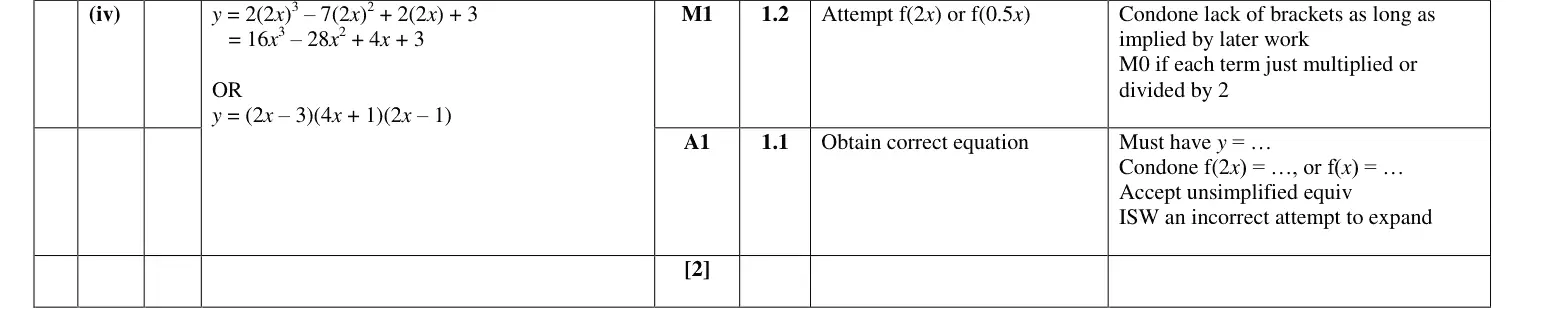
1 . (iv) The graph of y x is transformed by a stretch parallel to the x-axis, scale factor 2 f ( ) = Find the equation of the transformed graph. [2]
June 2018 · Paper 1 · Q7(i) 4 marks Medium sequences and series
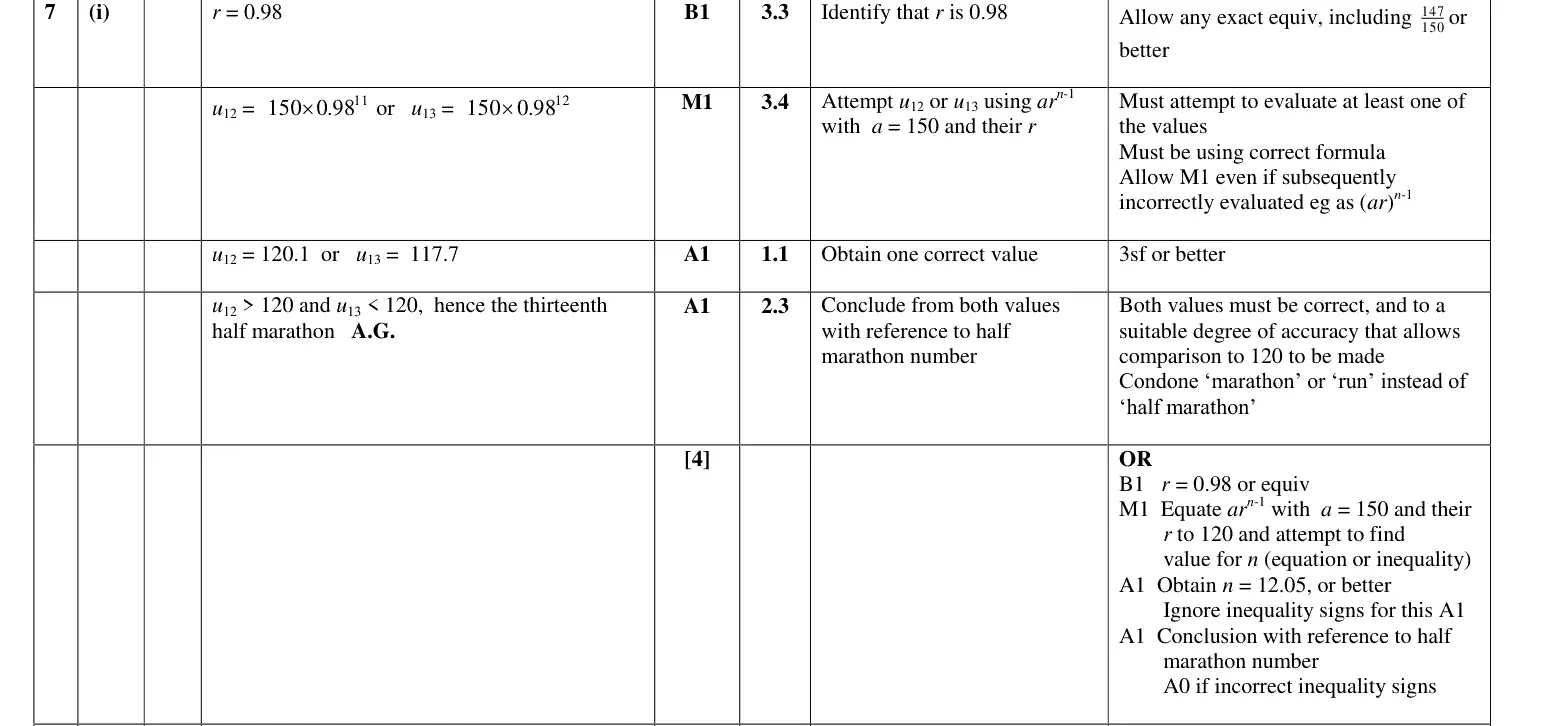
7 Chris runs half marathons, and is following a training programme to improve his times. His time for his first half marathon is 150 minutes. His time for his second half marathon is 147 minutes. Chris believes that his times can be modelled by a geometric progression. (i) Chris sets himself a target of completing a half marathon in less than 120 minutes. Show that this [4] model predicts that Chris will achieve his target on his thirteenth half marathon.
June 2018 · Paper 1 · Q7(ii) 3 marks Easy sequences and seriesexponentials and logs
Show the start of this questionEarlier part of this question
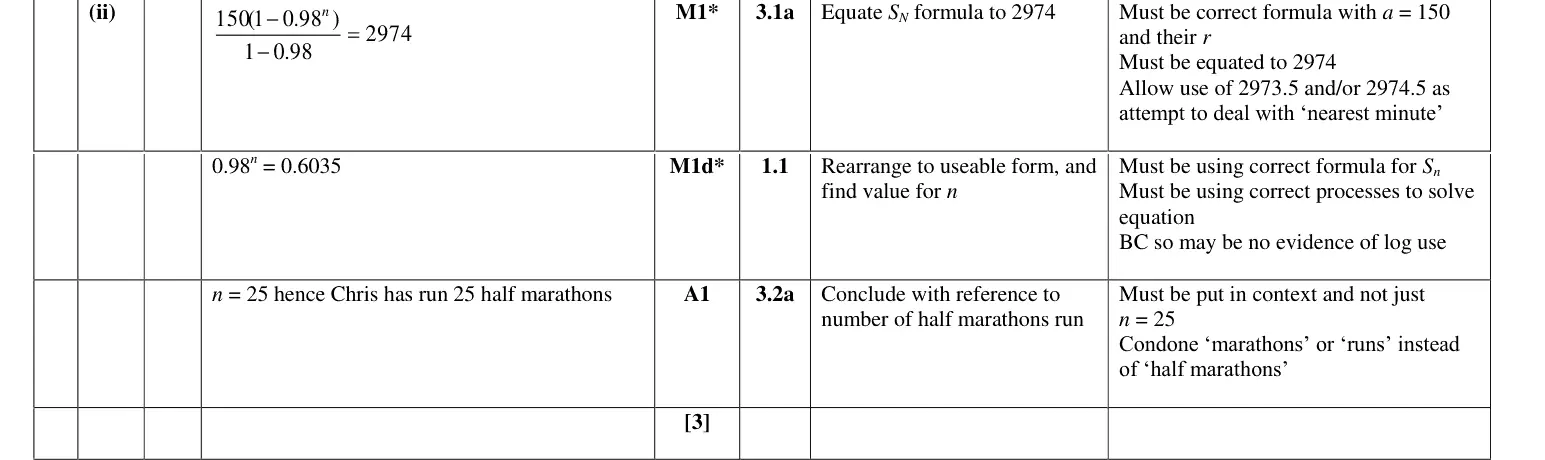
(ii) After twelve months Chris has spent a total of 2974 minutes, to the nearest minute, running half [3] marathons. Use this model to find how many half marathons he has run.
June 2018 · Paper 1 · Q7(iii) 2 marks Medium sequences and series
Show the start of this questionEarlier part of this question
(iii) Give two reasons why this model may not be appropriate when predicting the time for a half marathon. [2]
June 2018 · Paper 1 · Q8(i) 4 marks Easy binomial expansion
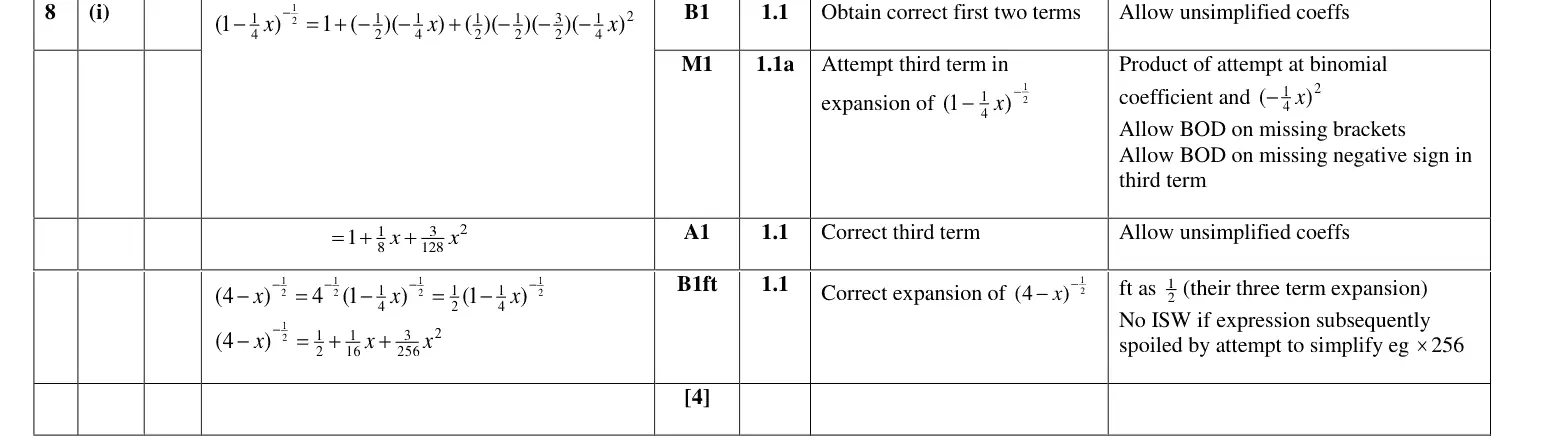
8 (i) Find the first three terms in the expansion of ( )x - in ascending powers of x. [4] -
June 2018 · Paper 1 · Q8(ii) 3 marks Easy binomial expansion
Show the start of this questionEarlier part of this question
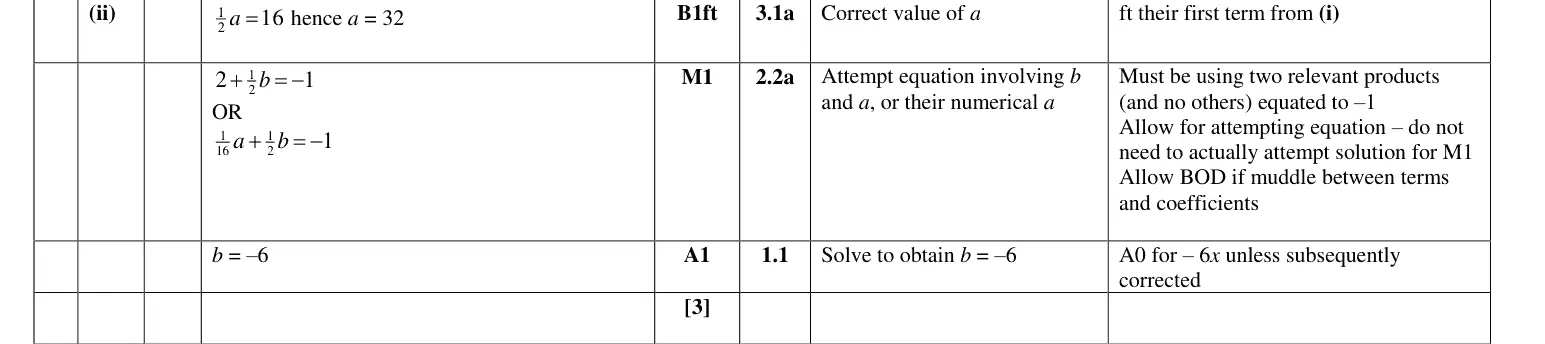
a bx + (ii) The expansion of 16- … . Find the values of the constants a and b. x [3] is 4- x
June 2018 · Paper 1 · Q9(i) 3 marks Easy functionsquadratics
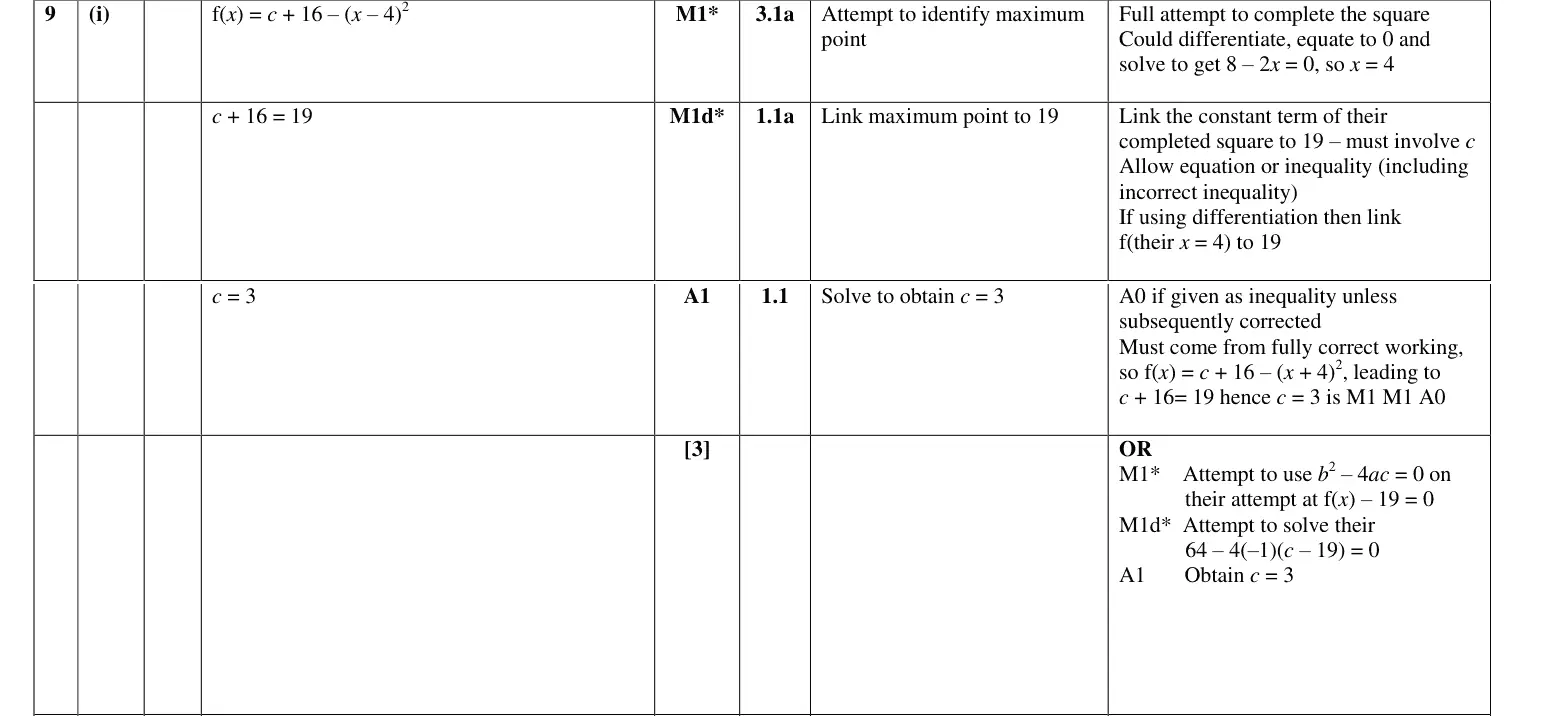
9 The function f is defined for all real values of x as ( )x c x x , where c is a constant. f = + - (i) Given that the range of f is ( )x , find the value of c. [3] f G
June 2018 · Paper 1 · Q9(ii) 4 marks Easy functionsquadratics
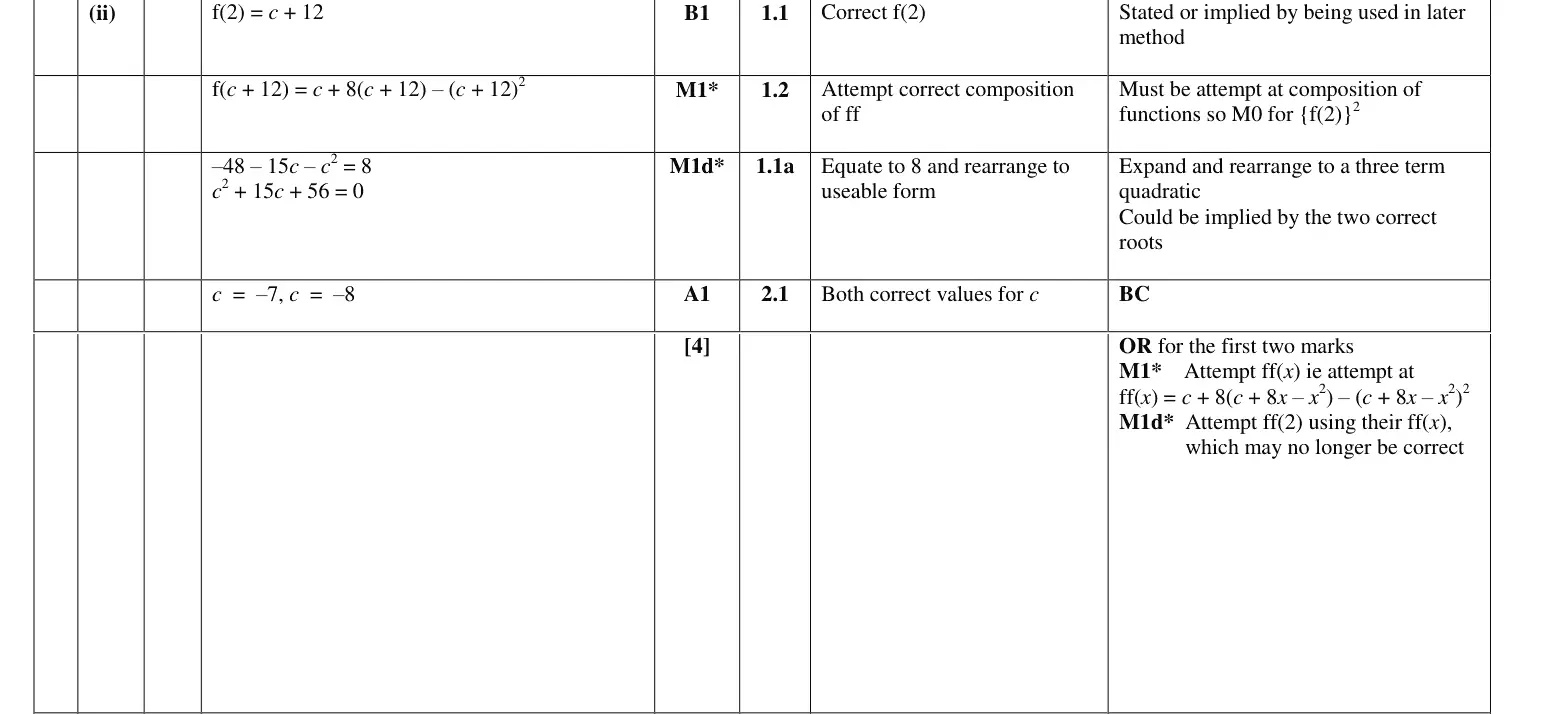
(ii) Given instead that ff(2) = 8, find the possible values of c. [4]
June 2018 · Paper 1 · Q10(i) 4 marks Medium implicit and parametric differentiationdifferentiation
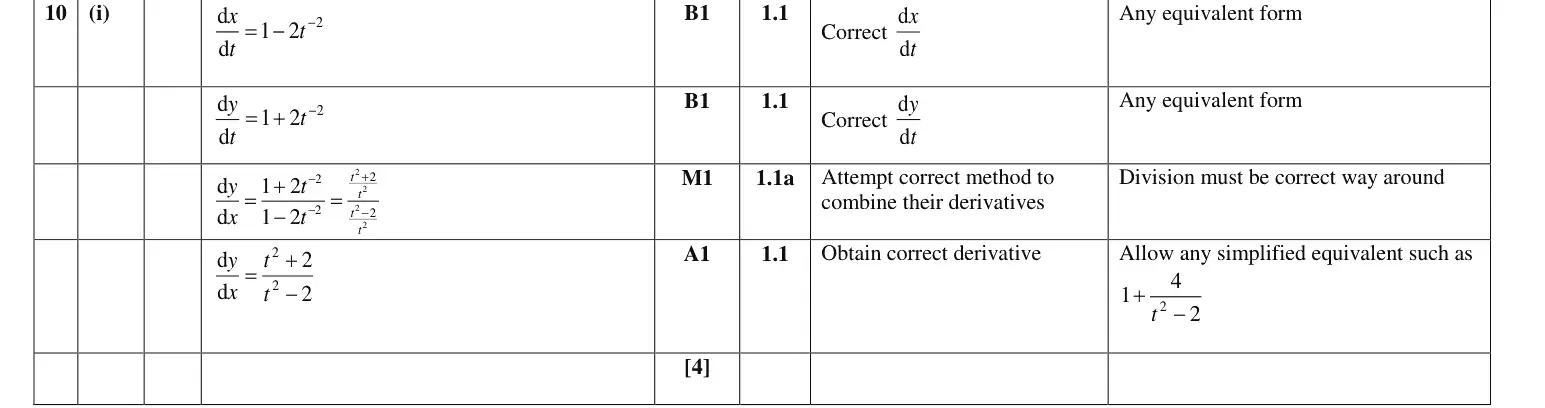
10 A curve has parametric equations x t and y t , for t . ! = + = - t t d in terms of t, giving your answer in its simplest form. y (i) Find x [4] d
June 2018 · Paper 1 · Q10(ii) 2 marks Medium differentiationimplicit and parametric differentiation
Show the start of this questionEarlier part of this question
(ii) Explain why the curve has no stationary points. [2]
June 2018 · Paper 1 · Q10(iii) 4 marks Medium parametric equationsalgebraic methods
(iii) By considering x + y, or otherwise, find a cartesian equation of the curve, giving your answer in a form [4] not involving fractions or brackets.
June 2018 · Paper 1 · Q11(i) 3 marks Easy exponential modellingexponentials and logs
11 In a science experiment a substance is decaying exponentially. Its mass, M grams, at time t minutes is given 0 05 . t by M e 300 - . = (i) Find the time taken for the mass to decrease to half of its original value. [3]
June 2018 · Paper 1 · Q11(ii) 8 marks Medium exponential modellingdifferentiationexponentials and logs
Show the start of this questionEarlier part of this question
A second substance is also decaying exponentially. Initially its mass was 400 grams and, after 10 minutes, its mass was 320 grams. (ii) Find the time at which both substances are decaying at the same rate. [8]
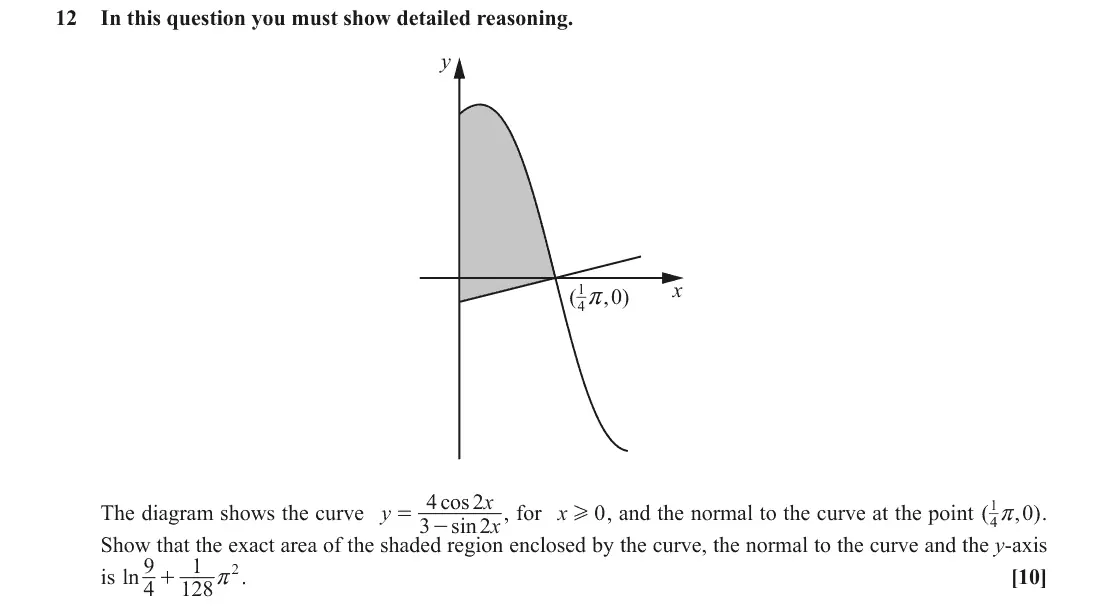
12 In this question you must show detailed reasoning. y x 1 r ( , ) cos x 1 r The diagram shows the curve y , for x , and the normal to the curve at the point ( , ) . = H sin x - Show that the exact area of the shaded region enclosed by the curve, the normal to the curve and the y-axis is ln 4 . [10] + r 128
June 2018 · Paper 1 · Q13(i)(a) 1 mark Easy differential equations
13 A scientist is attempting to model the number of insects, N, present in a colony at time t weeks. When t = 0 there are 400 insects and when t = 1 there are 440 insects. (i) A scientist assumes that the rate of increase of the number of insects is inversely proportional to the number of insects present at time t. (a) Write down a differential equation to model this situation. [1]
June 2018 · Paper 1 · Q13(i)(b) 4 marks Easy differential equations
Show the start of this questionEarlier part of this question
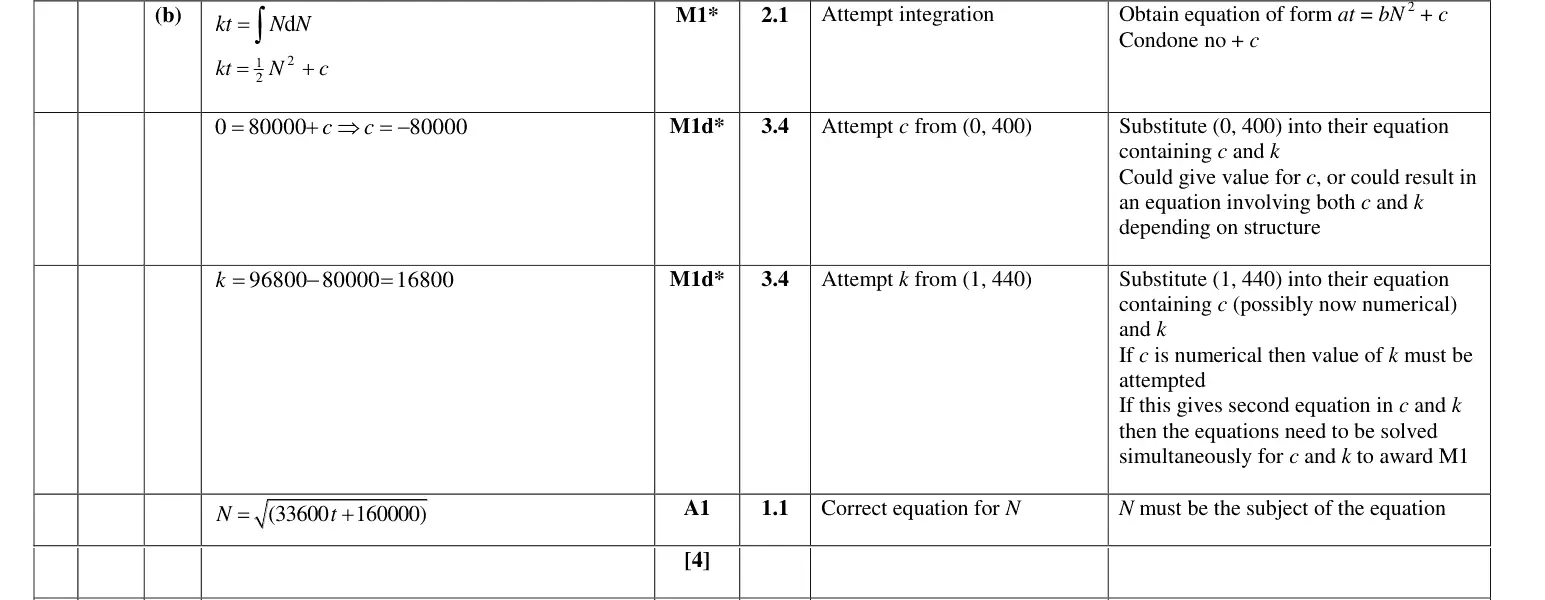
(b) Solve this differential equation to find N in terms of t. [4]
June 2018 · Paper 1 · Q13(ii) 6 marks Medium differential equationsintegration
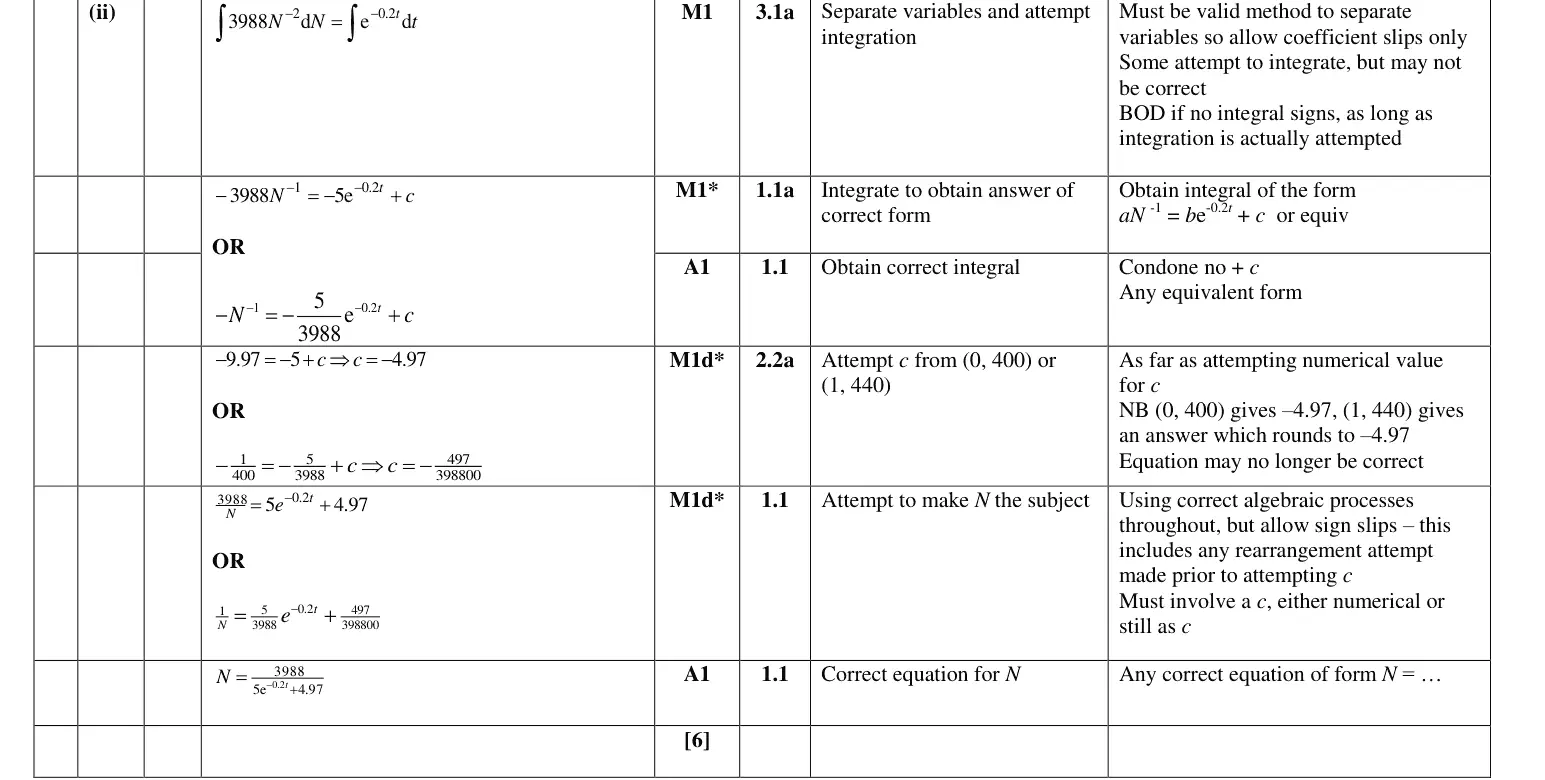
d N N (ii) In a revised model it is assumed that . Solve this differential equation to find N in = d t e . t 0 2 3988 terms of t. [6]
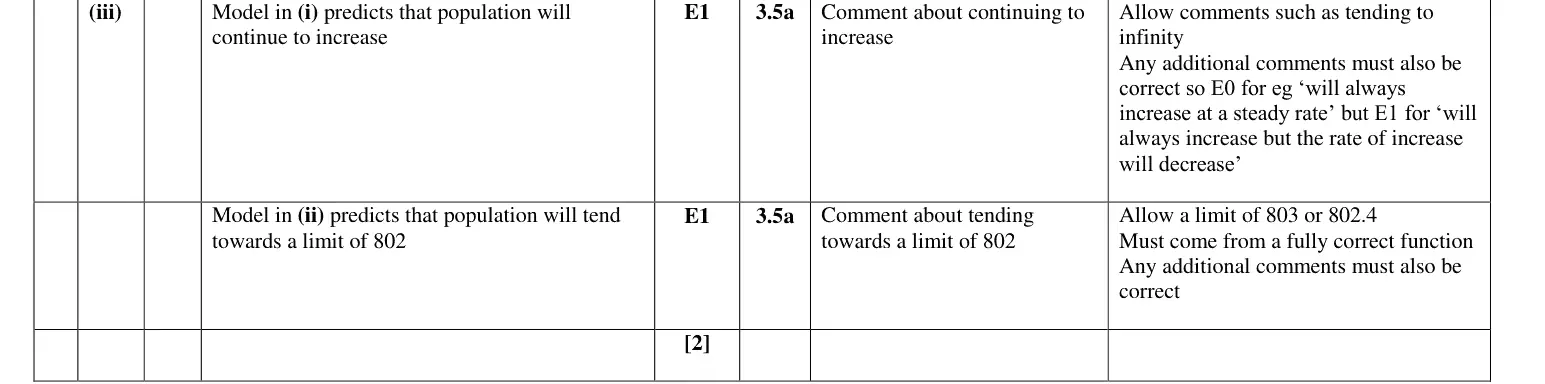
June 2018 · Paper 1 · Q13(iii) 2 marks Hard differential equations
Show the start of this questionEarlier part of this questionEarlier part of this question
(iii) Compare the long-term behaviour of the two models. [2]

Find an A-level maths tutor

Want this paper marked and gone through with you? Message us.

Prefer email? Send an enquiry

If you are under 18, please include a parent's contact details. Enquiries go to enquiries@mathsaleveltutor.com and are deleted once handled.