June 2024: Paper 2: Pure Mathematics 2

100 marks · 35 question parts · Question paper, mark scheme and examiner's report on Pearson's site

Question by question

QTopicMarksDifficulty
1(a) Differentiation: first principles, gradients, stationary points 3 —
1(b) Differentiation: first principles, gradients, stationary points 2 —
2(a) Sequences and series 1 —
2(b) Sequences and series, Algebraic methods: polynomials, factor theorem and division 2 —
2(c) Quadratics and the discriminant, Sequences and series 2 —
3 Graphs and transformations 4 —
4(a) Sequences and series 2 —
4(b) Sequences and series, Quadratics and the discriminant 3 —
5 Small-angle approximations 3 —
6(a) Chain, product and quotient rules; connected rates of change, Differentiation: first principles, gradients, stationary points 2 —
6(b) Exponentials and logarithms, Chain, product and quotient rules; connected rates of change 2 —
6(c) Numerical methods: roots, iteration and Newton–Raphson 3 —
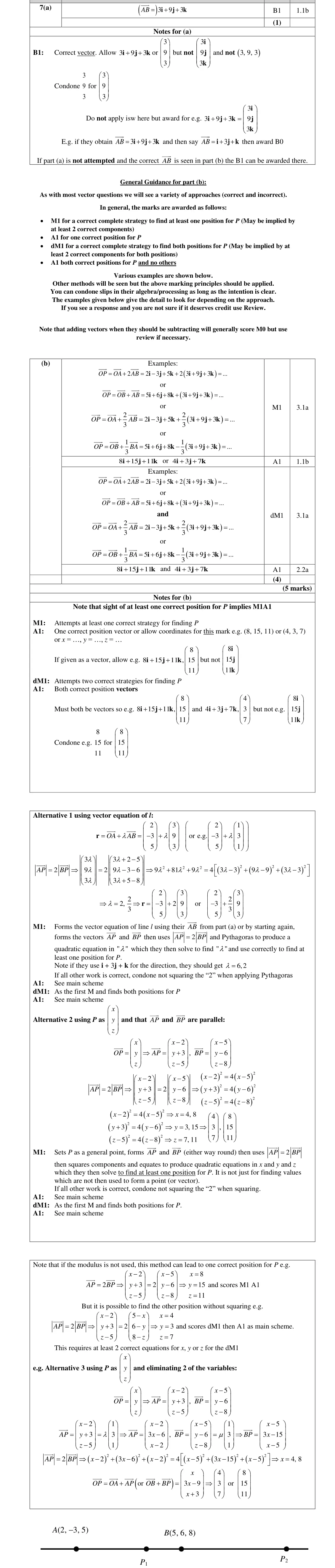
7(a) Vectors 1 —
7(b) Vectors 4 —
8(a) Trigonometric identities and proofs, Reciprocal and inverse trigonometric functions 3 —
8(b) Solving trigonometric equations, Reciprocal and inverse trigonometric functions, Trigonometric identities and proofs 4 —
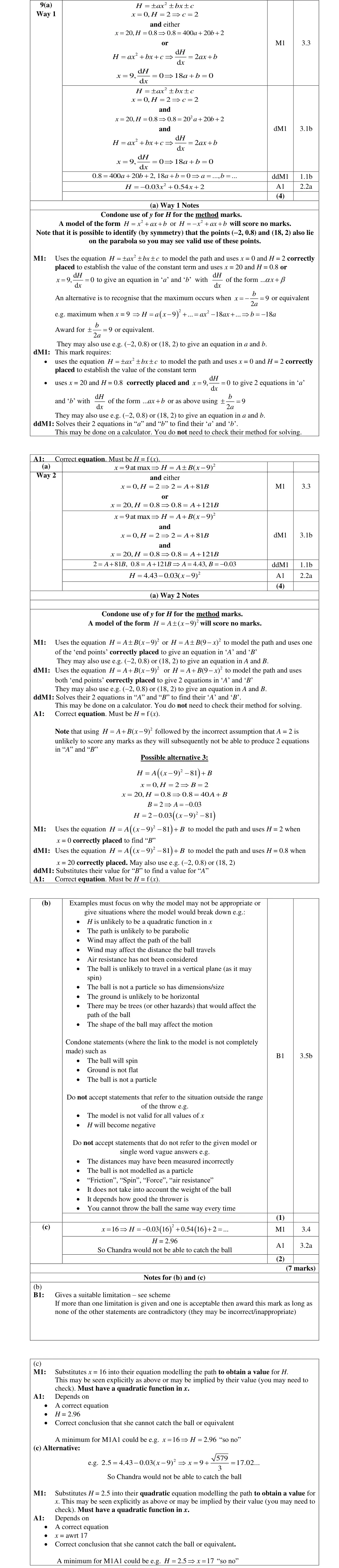
9(a) Functions, composite and inverse functions, modulus, Quadratics and the discriminant, Simultaneous equations, Differentiation: first principles, gradients, stationary points 4 —
9(b) Functions, composite and inverse functions, modulus 1 —
9(c) Functions, composite and inverse functions, modulus 2 —
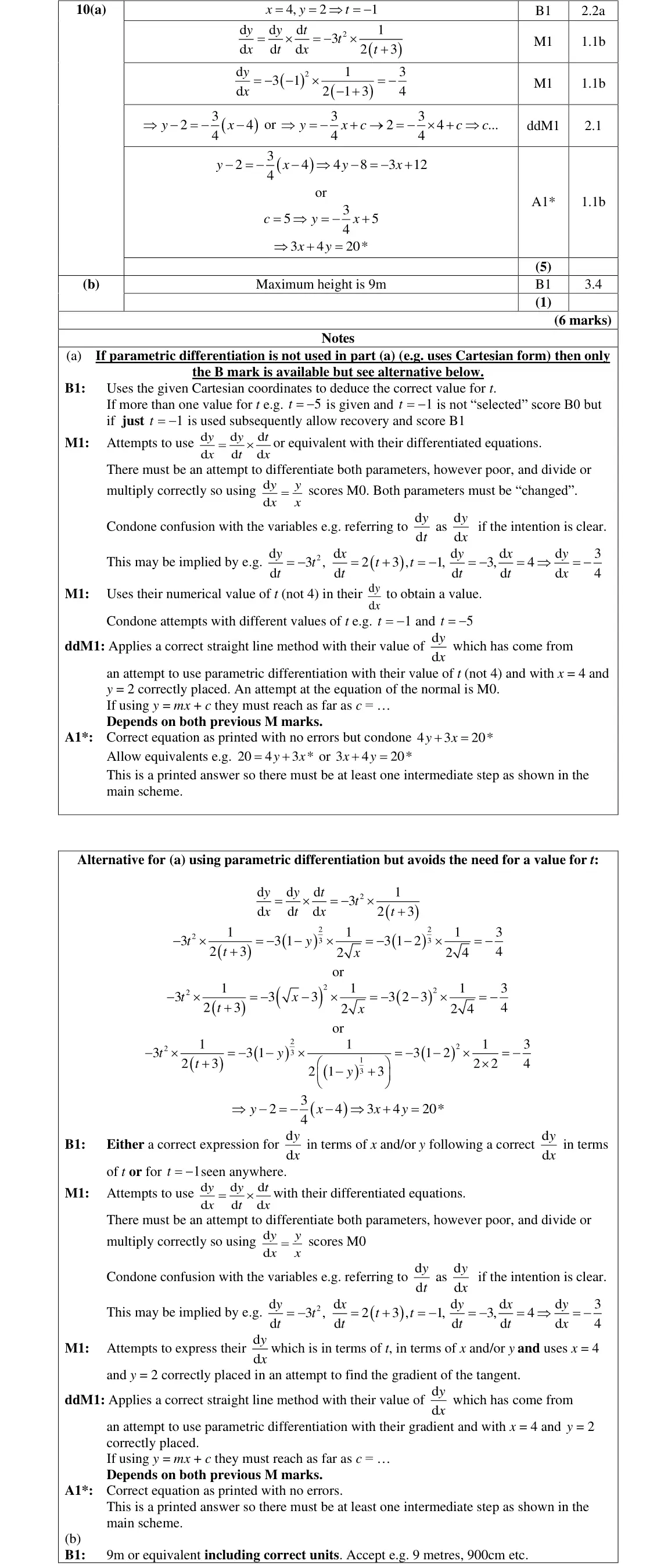
10(a) Implicit and parametric differentiation, Straight lines, Chain, product and quotient rules; connected rates of change 5 —
10(b) Parametric equations 1 —
11 Integration by parts and by substitution, Integration: standard integrals, definite integrals and areas 5 —
12(a) Partial fractions 2 —
12(b) Differential equations, Partial fractions, Exponentials and logarithms 5 —
12(c) Exponentials and logarithms, Differential equations 3 —
12(d) Differential equations, Exponentials and logarithms 2 —
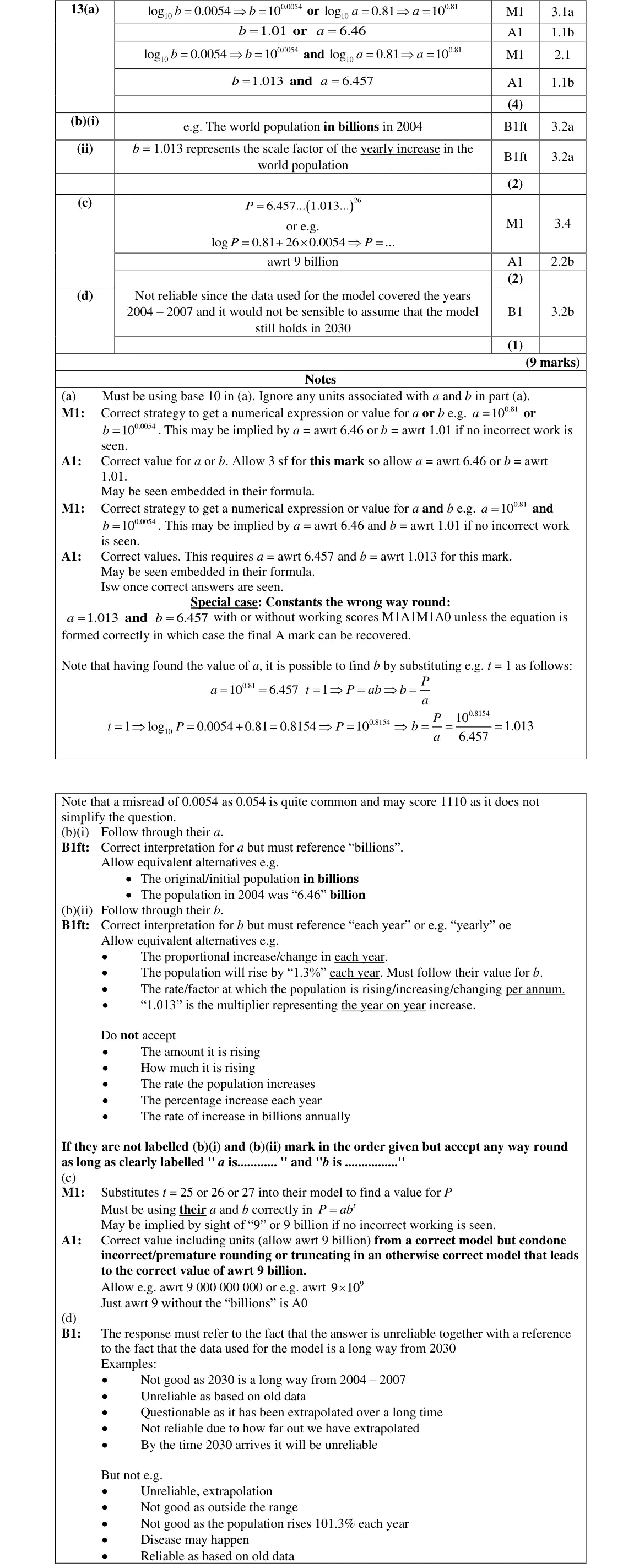
13(a) Exponentials and logarithms, Exponential growth, decay and modelling 4 —
13(b) Exponential growth, decay and modelling, Exponentials and logarithms 2 —
13(c) Exponential growth, decay and modelling 2 —
13(d) Exponential growth, decay and modelling 1 —
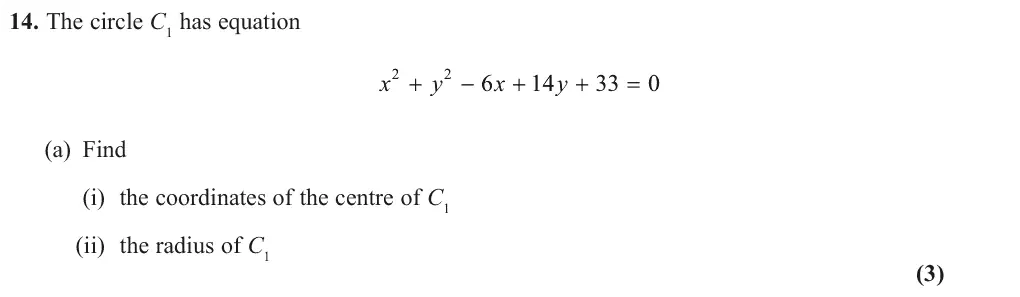
14(a) Circles, Quadratics and the discriminant 3 —
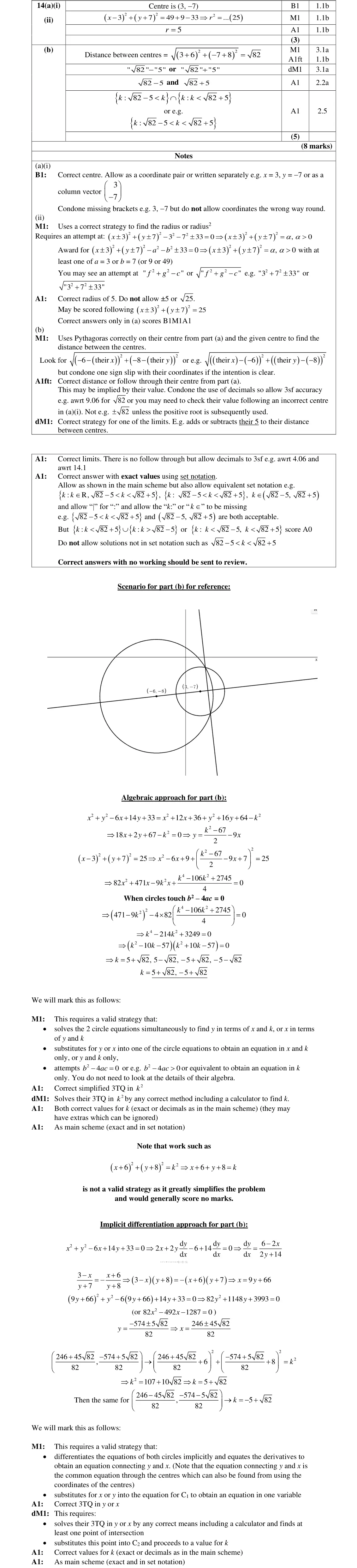
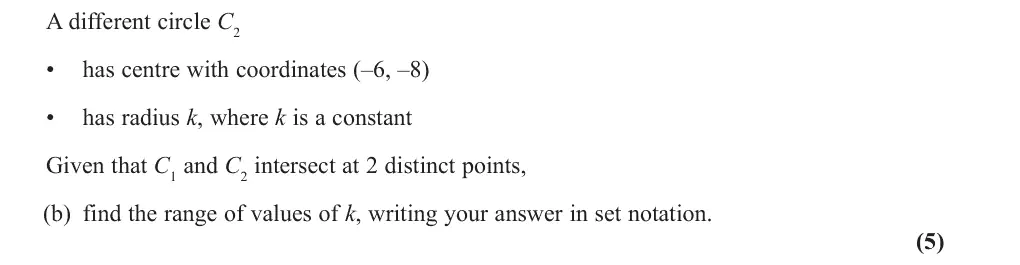
14(b) Circles, Inequalities 5 —
15(a) Implicit and parametric differentiation, Chain, product and quotient rules; connected rates of change 5 —
15(b) Differentiation: first principles, gradients, stationary points, Implicit and parametric differentiation, Straight lines 2 —
15(c) Proof, including contradiction, Quadratics and the discriminant, Algebraic methods: polynomials, factor theorem and division, Simultaneous equations 5 —

The questions

1(a)1(b)2(a)2(b)2(c)34(a)4(b)56(a)6(b)6(c)7(a)7(b)8(a)8(b)9(a)9(b)9(c)10(a)10(b)1112(a)12(b)12(c)12(d)13(a)13(b)13(c)13(d)14(a)14(b)15(a)15(b)15(c)
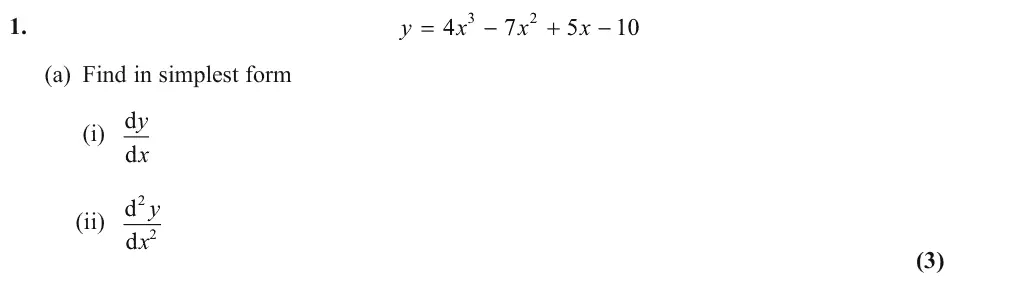
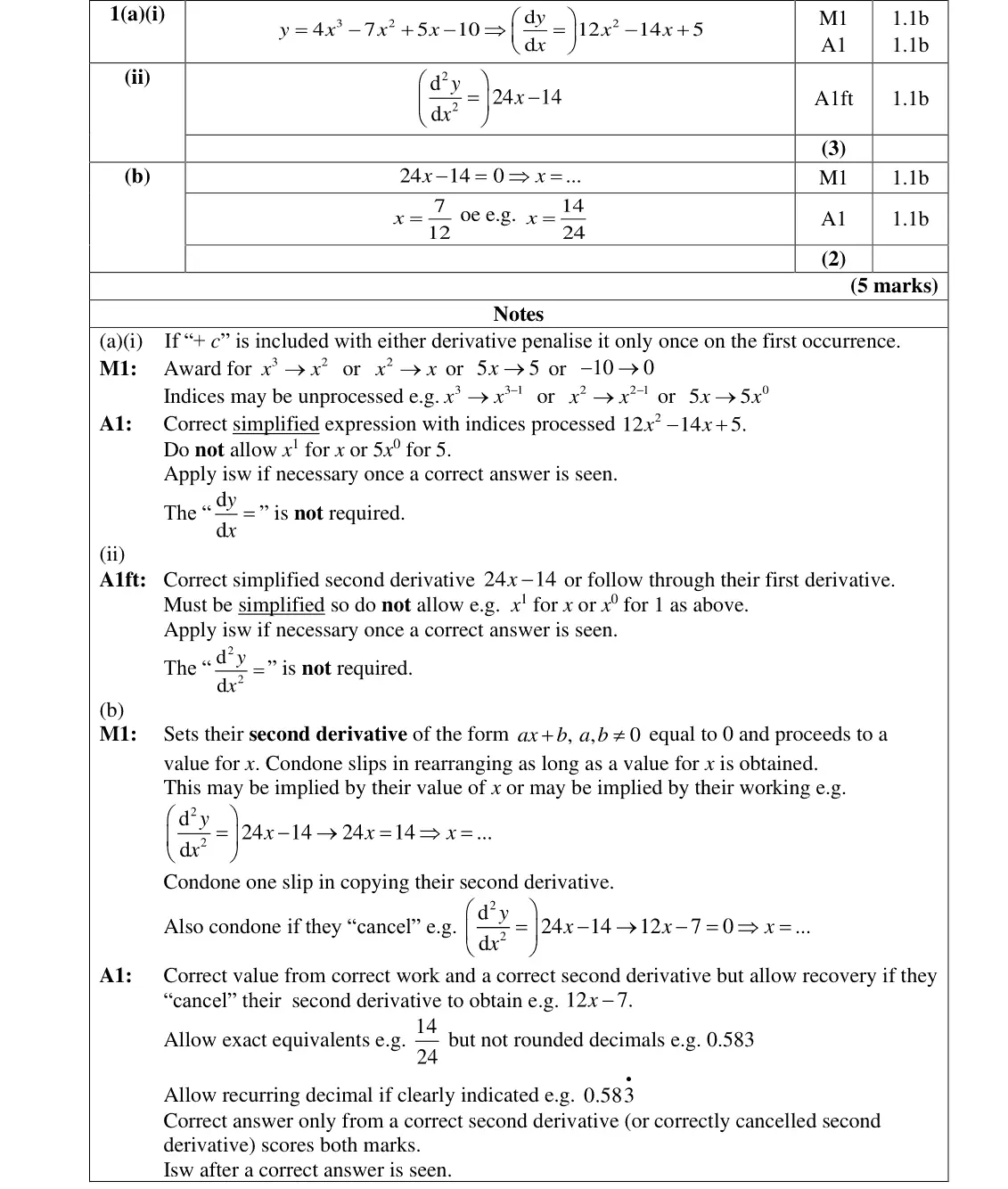
June 2024 · Paper 2 · Q1(a) 3 marks differentiation
1. y x x x (a) Find in simplest form (i) d y d x y (ii) d x d (3)
June 2024 · Paper 2 · Q1(b) 2 marks differentiation
y (b) Hence find the exact value of x when d x = 0 d (2)
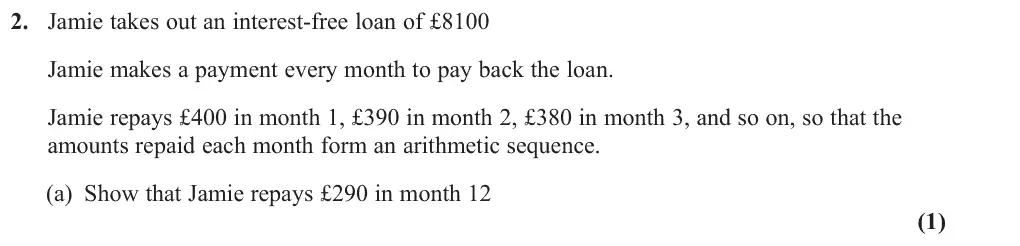
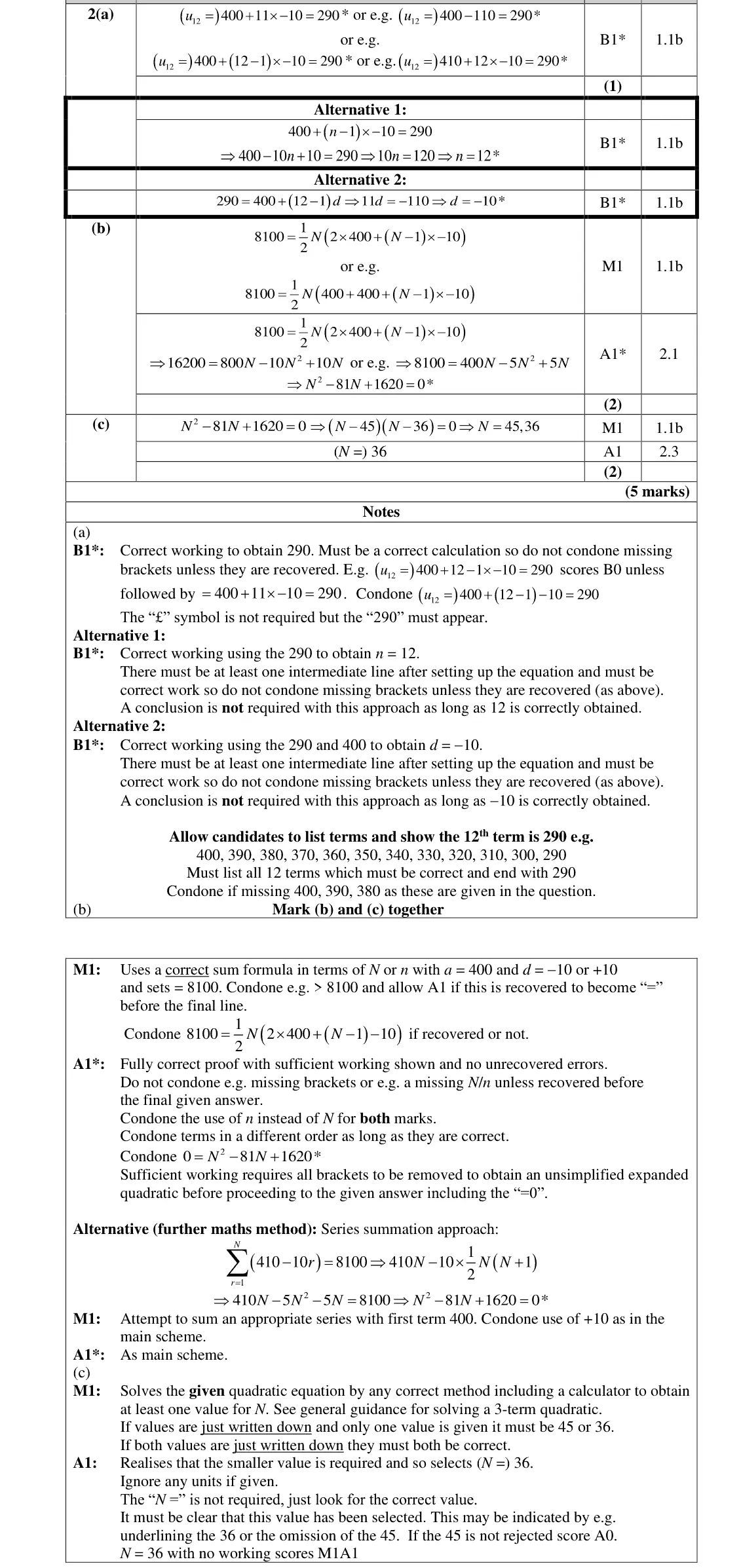
June 2024 · Paper 2 · Q2(a) 1 mark sequences and series
2. Jamie takes out an interest‑free loan of £8100 Jamie makes a payment every month to pay back the loan. Jamie repays £400 in month 1, £390 in month 2, £380 in month 3, and so on, so that the amounts repaid each month form an arithmetic sequence. (a) Show that Jamie repays £290 in month 12 (1)
June 2024 · Paper 2 · Q2(b) 2 marks sequences and seriesalgebraic methods
After Jamie’s Nth payment, the loan is completely paid back. (b) Show that N 2 – 81N + 1620 = 0 (2)
June 2024 · Paper 2 · Q2(c) 2 marks quadraticssequences and series
(c) Hence find the value of N. (2)
June 2024 · Paper 2 · Q3 4 marks graphs and transformations
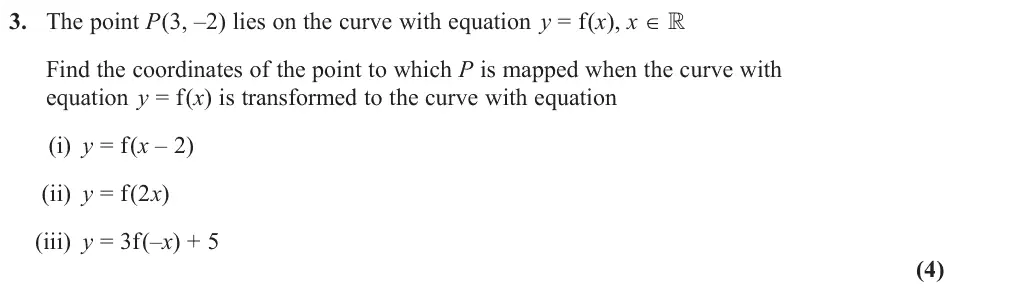
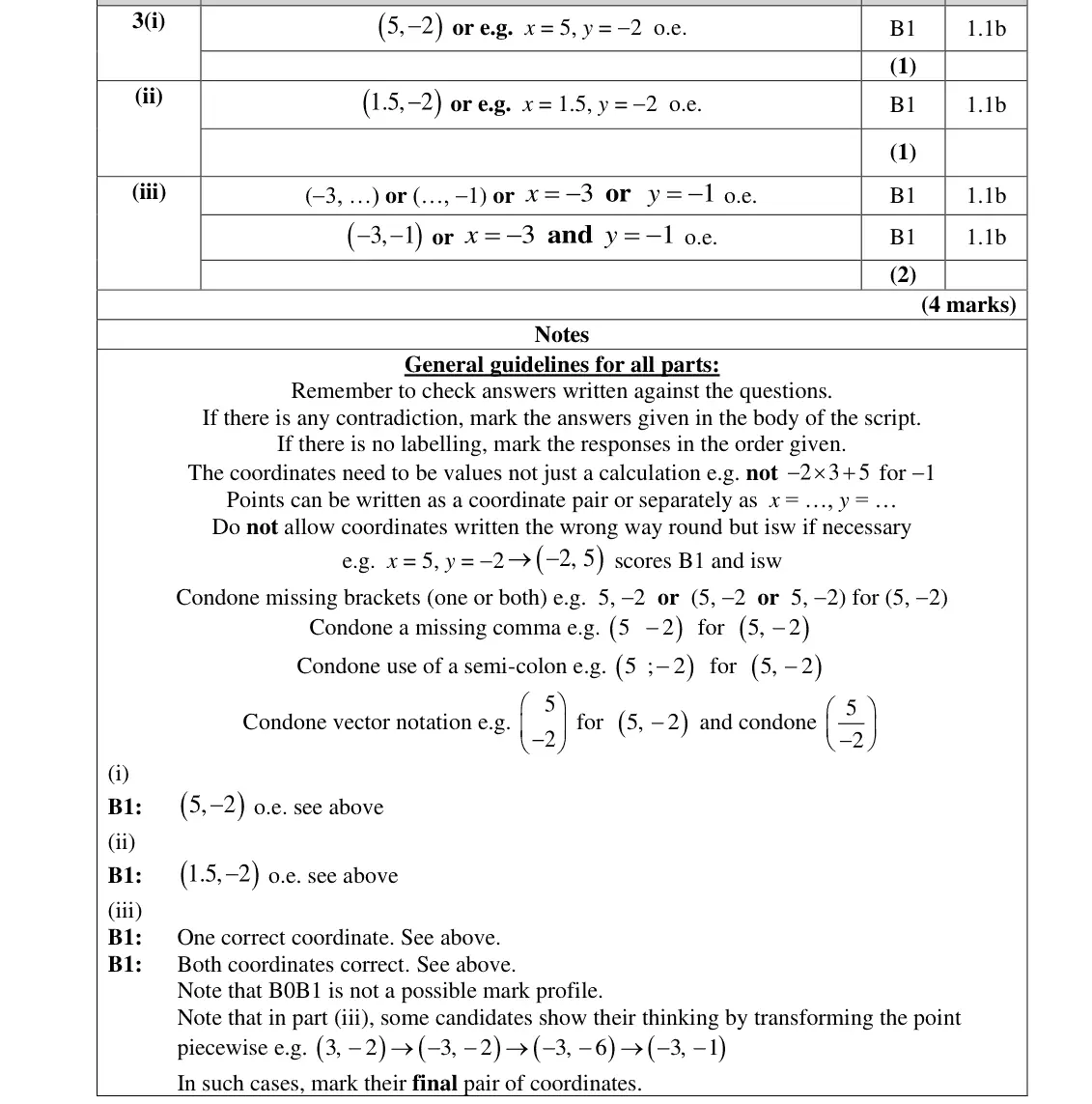
3. The point P(3, –2) lies on the curve with equation y = f(x), x ∈ ℝ Find the coordinates of the point to which P is mapped when the curve with equation y = f(x) is transformed to the curve with equation (i) y = f(x – 2) (ii) y = f(2x) (iii) y = 3f(–x) + 5 (4)
June 2024 · Paper 2 · Q4(a) 2 marks sequences and series
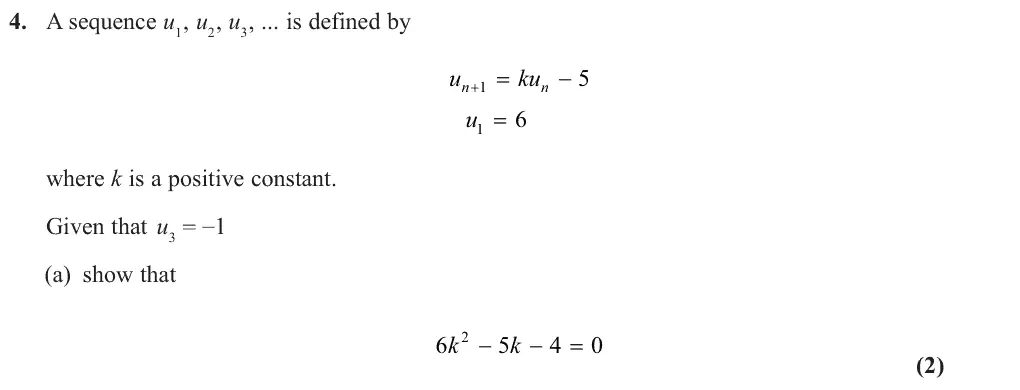
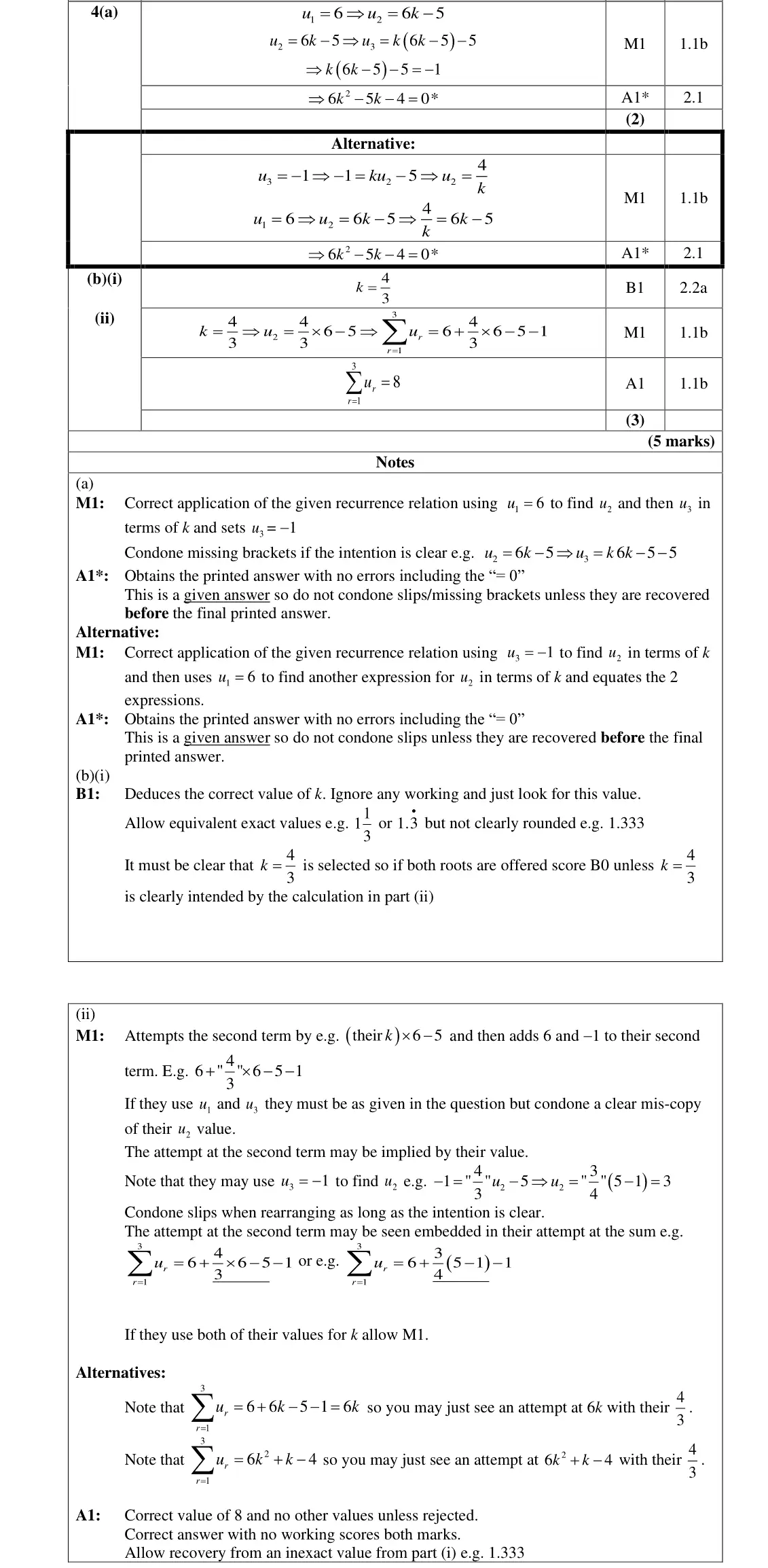
4. A sequence u1, u2, u3, ... is defined by u 1 O ku n n u where k is a positive constant. Given that u3 = –1 (a) show that k k (2)
June 2024 · Paper 2 · Q4(b) 3 marks sequences and seriesquadratics
(b) Hence (i) find the value of k, rO; ur (ii) find the value of (3)
June 2024 · Paper 2 · Q5 3 marks small angle approximations
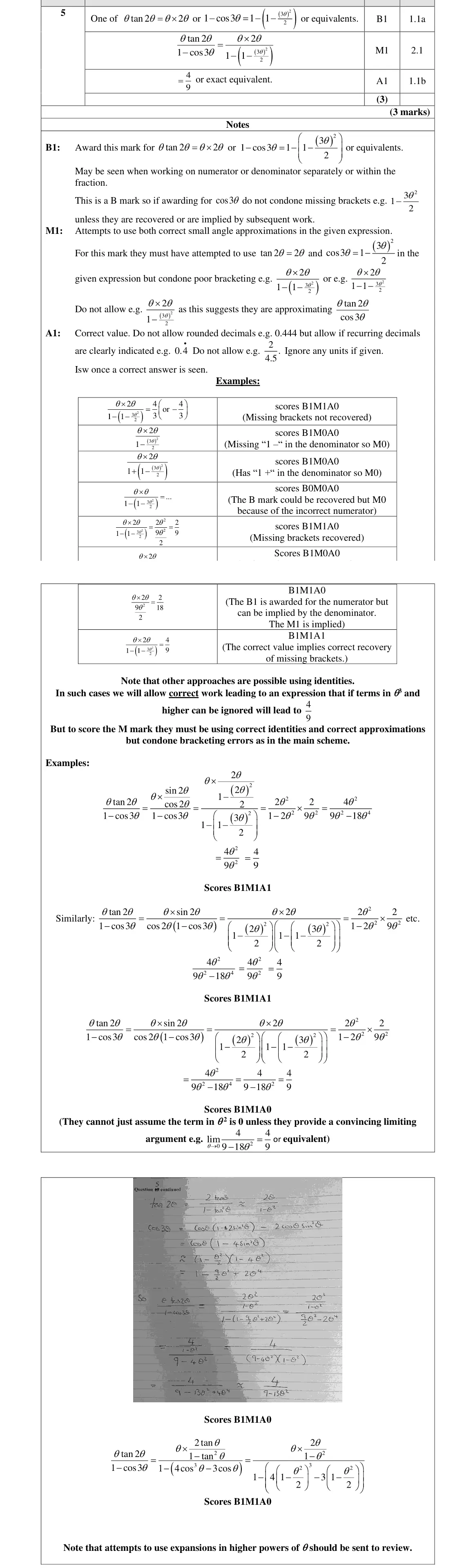
5. Given that theta is small and in radians, use the small angle approximations to find an approximate numerical value of theta tan 2 theta cos3 theta (3)
June 2024 · Paper 2 · Q6(a) 2 marks differentiation rulesdifferentiation
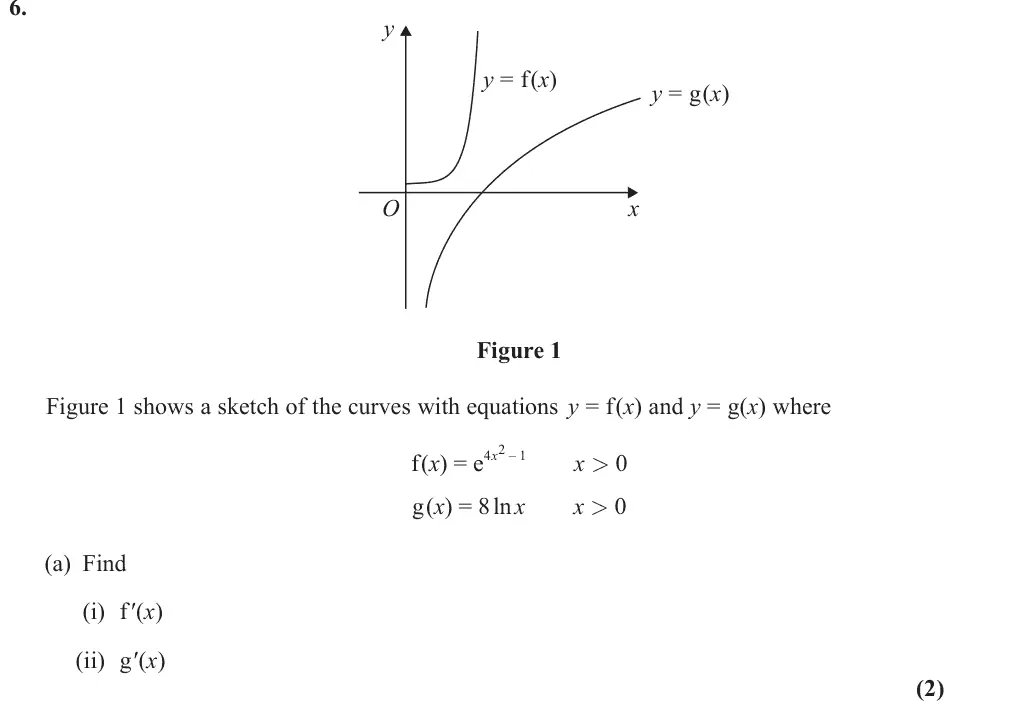
6. y y = f(x) y = g(x) x Figure 1 Figure 1 shows a sketch of the curves with equations y = f(x) and y = g(x) where 4x2 – 1 x > 0 f(x) = e g(x) = 8 ln x x > 0 (a) Find (i) f′(x) (ii) g′(x) (2)
June 2024 · Paper 2 · Q6(b) 2 marks exponentials and logsdifferentiation rules
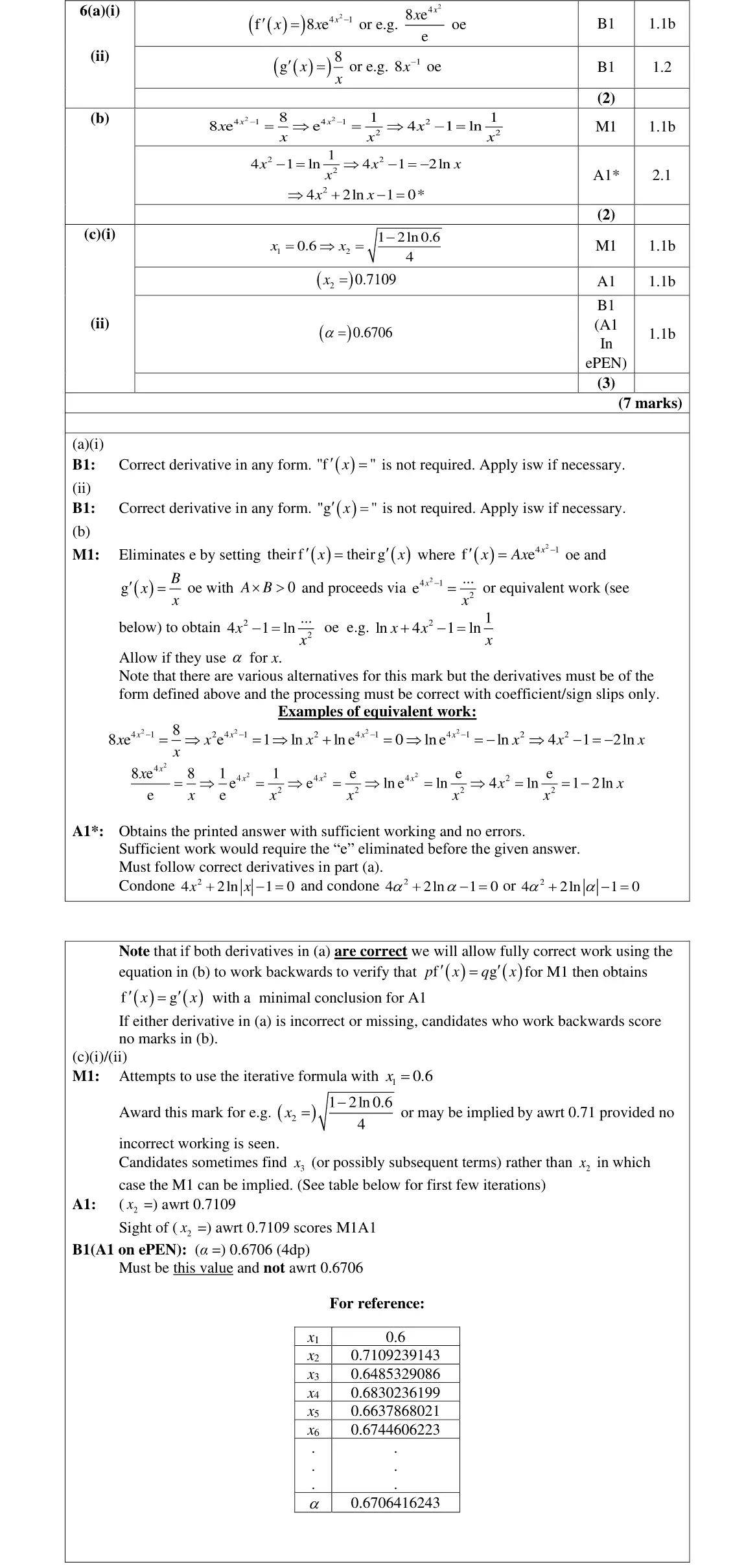
Given that f′(x) = g′(x) at x = alpha (b) show that alpha satisfies the equation x x ln (2)
June 2024 · Paper 2 · Q6(c) 3 marks numerical methods
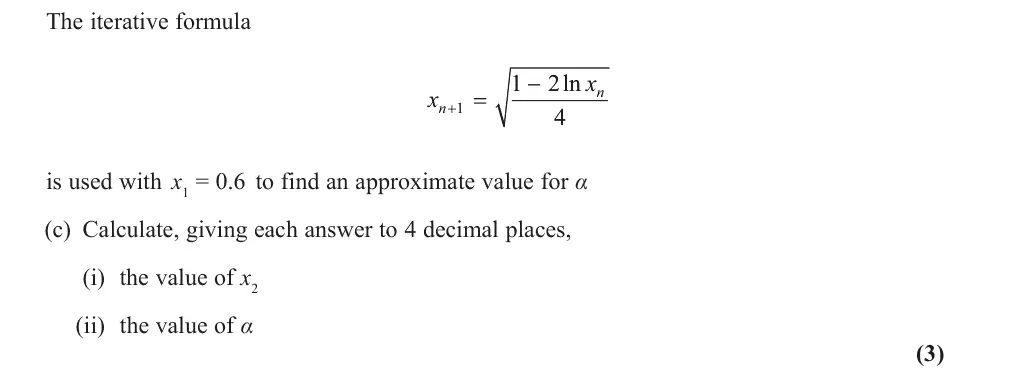
The iterative formula x ln x n 1 O n is used with x1 = 0.6 to find an approximate value for alpha (c) Calculate, giving each answer to 4 decimal places, (i) the value of x2 (ii) the value of alpha (3)
June 2024 · Paper 2 · Q7(a) 1 mark vectors
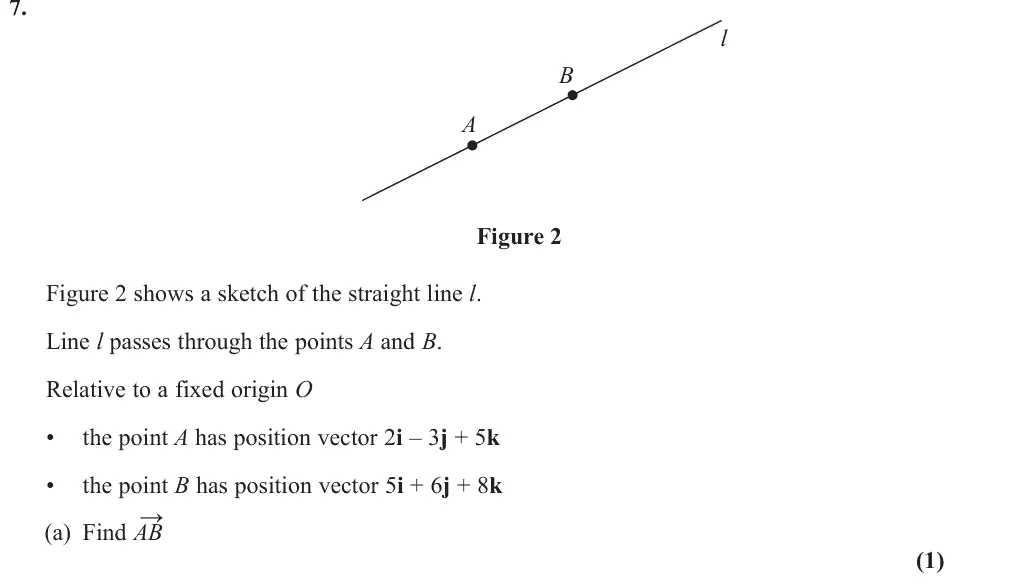
7. l B A Figure 2 Figure 2 shows a sketch of the straight line l. Line l passes through the points A and B. Relative to a fixed origin O • the point A has position vector 2i – 3j + 5k • the point B has position vector 5i + 6j + 8k → (a) Find AB (1)
June 2024 · Paper 2 · Q7(b) 4 marks vectors
Given that a point P lies on l such that →½ = 2½BP →½ ½AP (b) find the possible position vectors of P. (4)
June 2024 · Paper 2 · Q8(a) 3 marks trig identitiesreciprocal trig functions
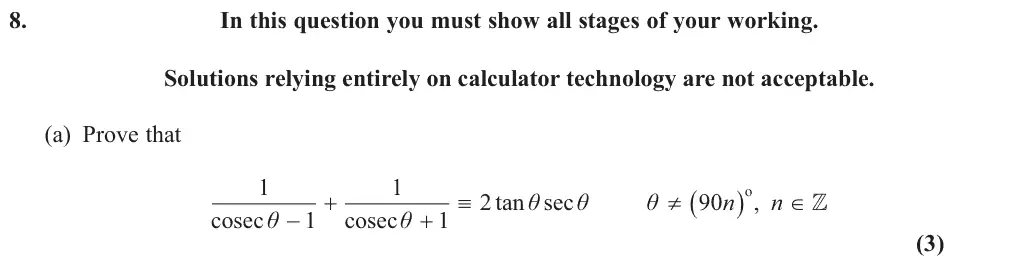
8. In this question you must show all stages of your working. Solutions relying entirely on calculator technology are not acceptable. (a) Prove that / o 2tan sec theta theta theta n , n < cosec theta cosec theta (3)
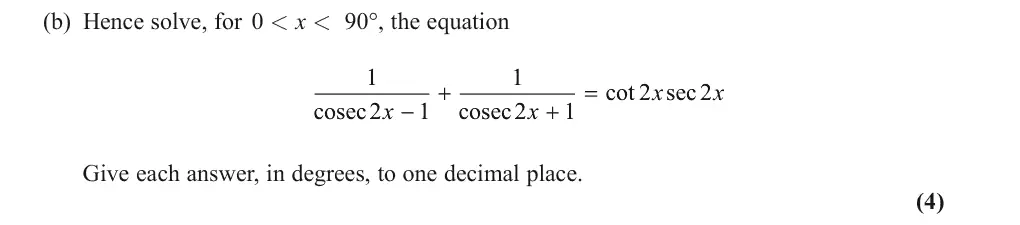
(b) Hence solve, for 0 < x < 90°, the equation O cot x x sec x x cosec cosec Give each answer, in degrees, to one decimal place. (4)
June 2024 · Paper 2 · Q9(a) 4 marks functionsquadraticssimultaneous equationsdifferentiation
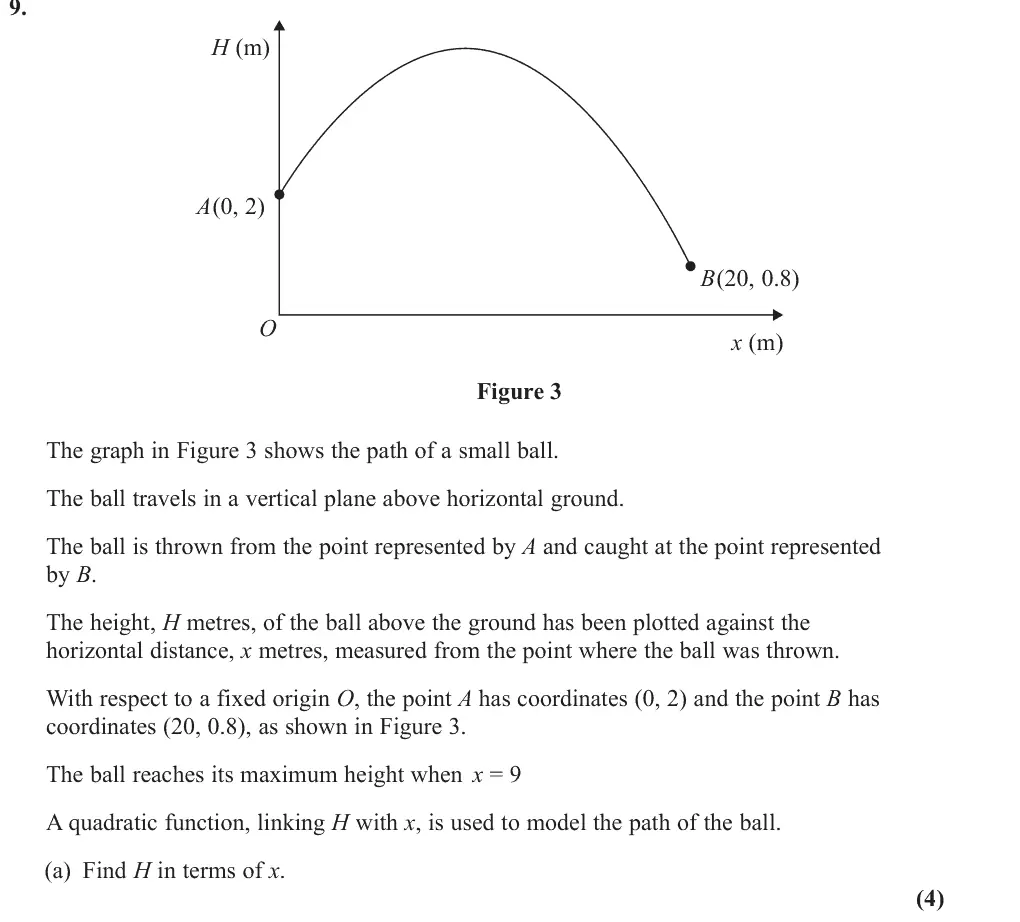
9. H (m) A(0, 2) B(20, 0.8) x (m) Figure 3 The graph in Figure 3 shows the path of a small ball. The ball travels in a vertical plane above horizontal ground. The ball is thrown from the point represented by A and caught at the point represented by B. The height, H metres, of the ball above the ground has been plotted against the horizontal distance, x metres, measured from the point where the ball was thrown. With respect to a fixed origin O, the point A has coordinates (0, 2) and the point B has coordinates (20, 0.8), as shown in Figure 3. The ball reaches its maximum height when x = 9 A quadratic function, linking H with x, is used to model the path of the ball. (a) Find H in terms of x. (4)
June 2024 · Paper 2 · Q9(b) 1 mark functions
(b) Give one limitation of the model. (1)
June 2024 · Paper 2 · Q9(c) 2 marks functions
Chandra is standing directly under the path of the ball at a point 16 m horizontally from O. Chandra can catch the ball if the ball is less than 2.5 m above the ground. (c) Use the model to determine if Chandra can catch the ball. (2)
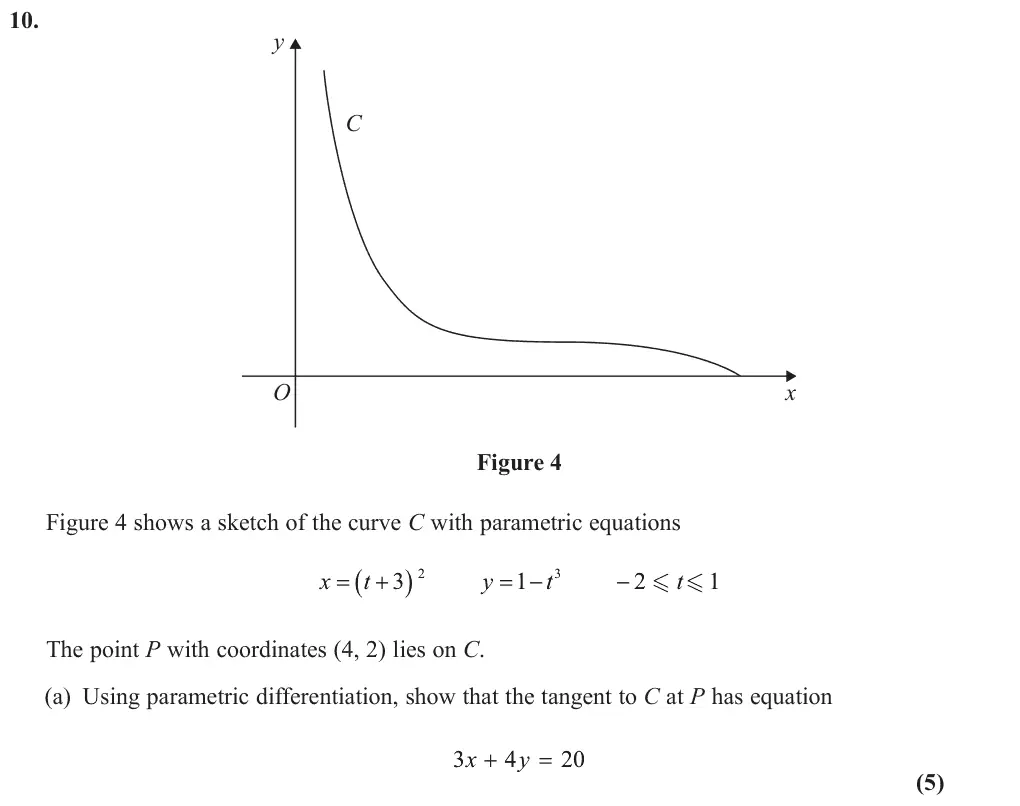
10. y C x Figure 4 Figure 4 shows a sketch of the curve C with parametric equations / x t y O 3 t t The point P with coordinates (4, 2) lies on C. (a) Using parametric differentiation, show that the tangent to C at P has equation x y (5)
June 2024 · Paper 2 · Q10(b) 1 mark parametric equations
The curve C is used to model the profile of a slide at a water park. Units are in metres, with y being the height of the slide above water level. (b) Find, according to the model, the greatest height of the slide above water level. (1)
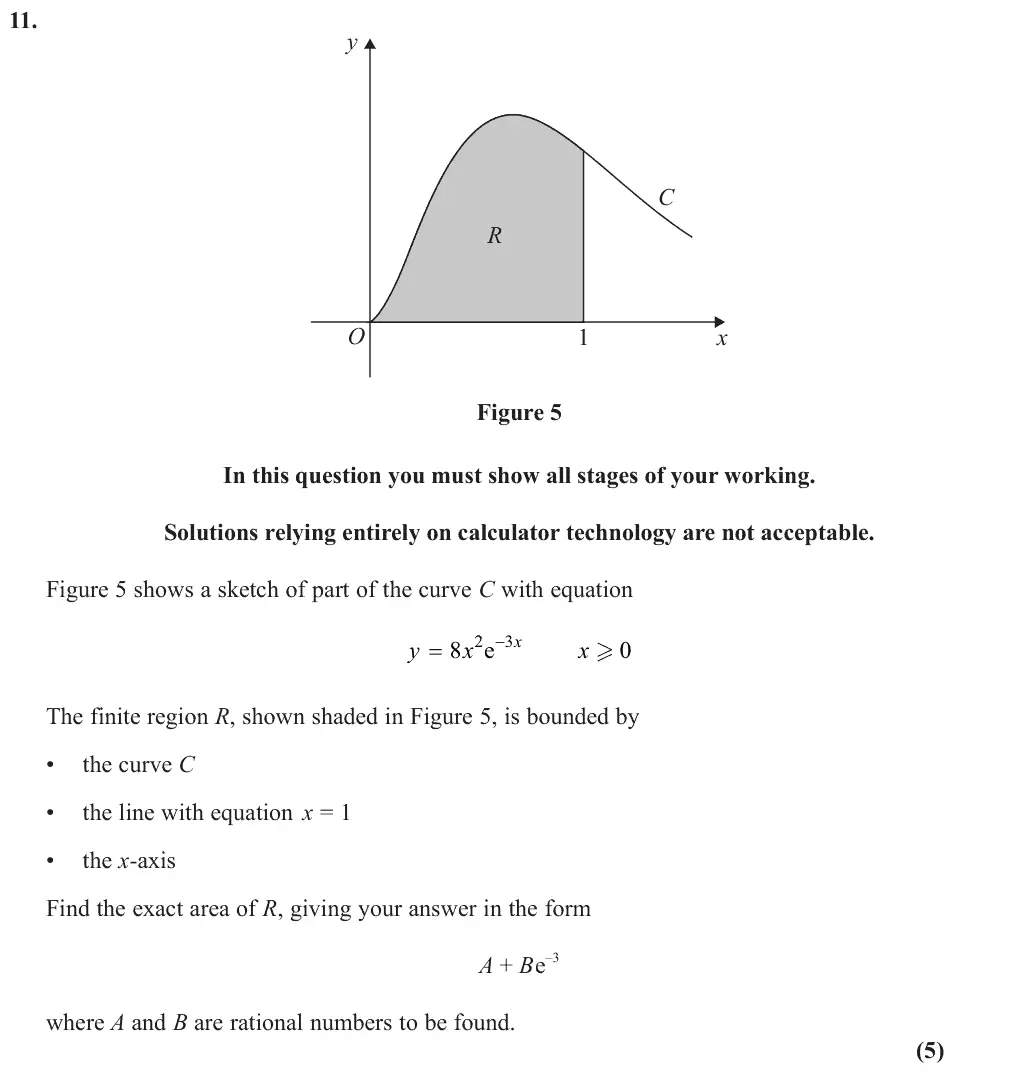
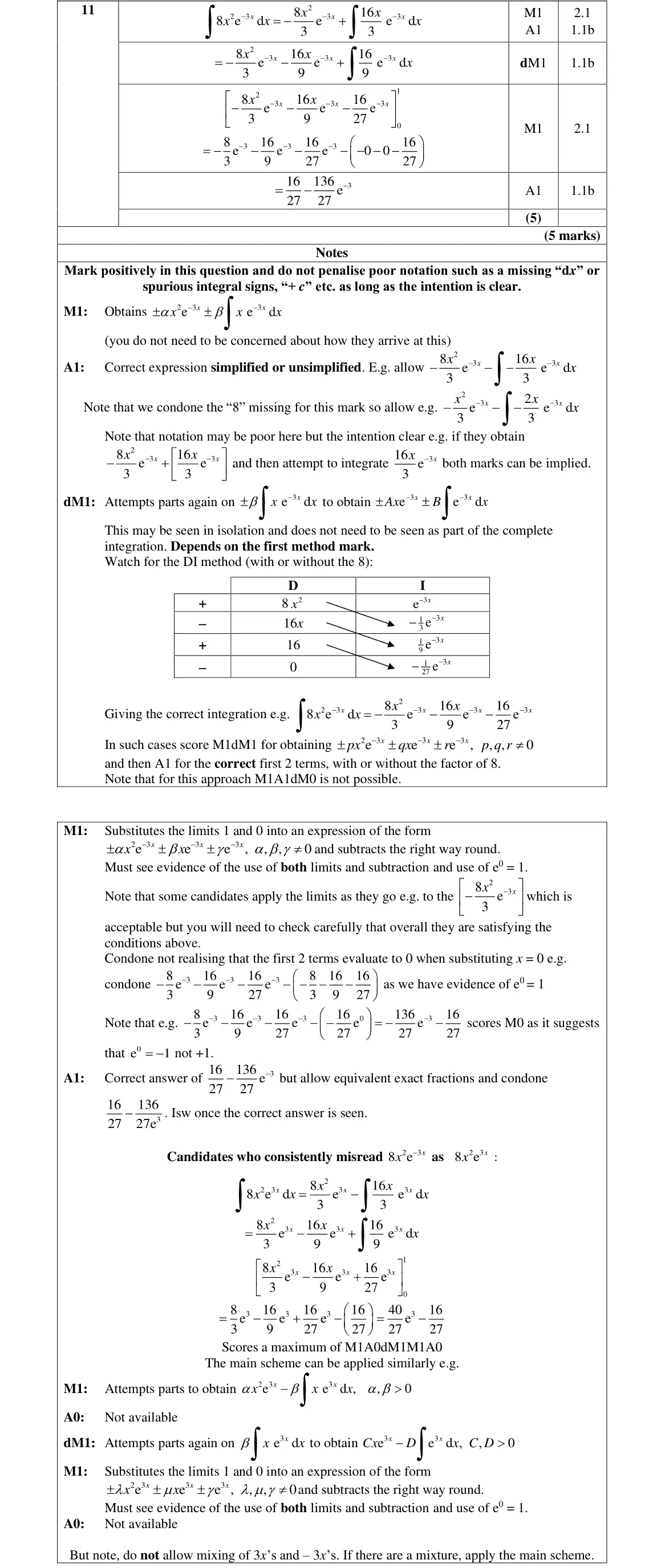
June 2024 · Paper 2 · Q11 5 marks integration by parts and substitutionintegration
11. y C R x Figure 5 In this question you must show all stages of your working. Solutions relying entirely on calculator technology are not acceptable. Figure 5 shows a sketch of part of the curve C with equation x y x x <= e The finite region R, shown shaded in Figure 5, is bounded by • the curve C • the line with equation x = 1 • the x-axis Find the exact area of R, giving your answer in the form –3 A + Be where A and B are rational numbers to be found. (5)
June 2024 · Paper 2 · Q12(a) 2 marks partial fractions
12. (a) Express / in partial fractions. V V (2)
June 2024 · Paper 2 · Q12(b) 5 marks differential equationspartial fractionsexponentials and logs
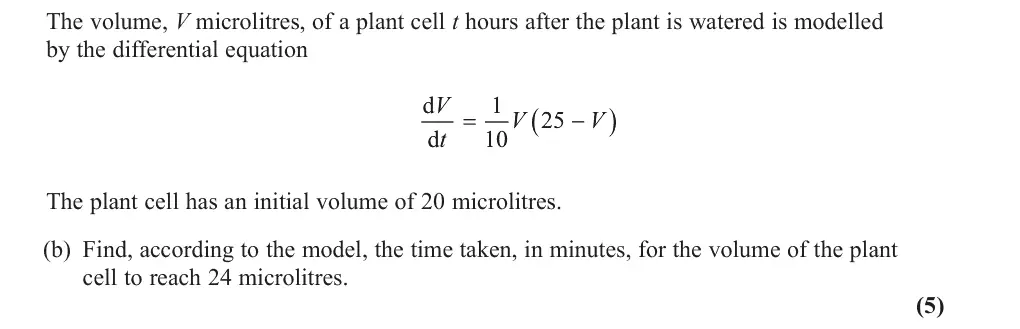
The volume, V microlitres, of a plant cell t hours after the plant is watered is modelled by the differential equation V d / V V t d The plant cell has an initial volume of 20 microlitres. (b) Find, according to the model, the time taken, in minutes, for the volume of the plant cell to reach 24 microlitres. (5)
June 2024 · Paper 2 · Q12(c) 3 marks exponentials and logsdifferential equations
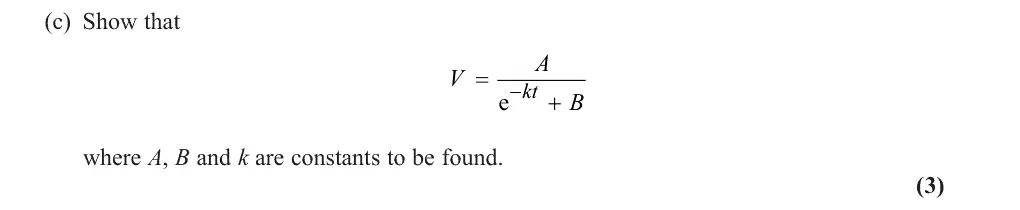
(c) Show that A V kt e B where A, B and k are constants to be found. (3)
June 2024 · Paper 2 · Q12(d) 2 marks differential equationsexponentials and logs
The model predicts that there is an upper limit, L microlitres, on the volume of the plant cell. (d) Find the value of L, giving a reason for your answer. (2)
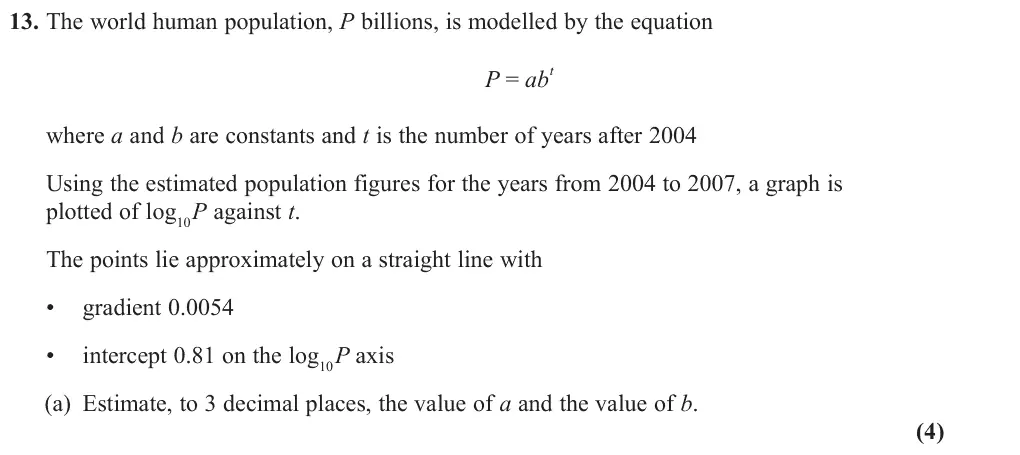
June 2024 · Paper 2 · Q13(a) 4 marks exponentials and logsexponential modelling
13. The world human population, P billions, is modelled by the equation t P = ab where a and b are constants and t is the number of years after 2004 Using the estimated population figures for the years from 2004 to 2007, a graph is plotted of log10P against t. The points lie approximately on a straight line with • gradient 0.0054 • intercept 0.81 on the log10P axis (a) Estimate, to 3 decimal places, the value of a and the value of b. (4)
June 2024 · Paper 2 · Q13(b) 2 marks exponential modellingexponentials and logs
In the context of the model, (b) (i) interpret the value of the constant a, (ii) interpret the value of the constant b. (2)
June 2024 · Paper 2 · Q13(c) 2 marks exponential modelling
(c) Use the model to estimate the world human population in 2030 (2)
June 2024 · Paper 2 · Q13(d) 1 mark exponential modelling
(d) Comment on the reliability of the answer to part (c). (1)
June 2024 · Paper 2 · Q14(a) 3 marks circlesquadratics
14. The circle C1 has equation x y x y (a) Find (i) the coordinates of the centre of C1 (ii) the radius of C1 (3)
June 2024 · Paper 2 · Q14(b) 5 marks circlesinequalities
A different circle C2 • has centre with coordinates (–6, –8) • has radius k, where k is a constant Given that C1 and C2 intersect at 2 distinct points, (b) find the range of values of k, writing your answer in set notation. (5)
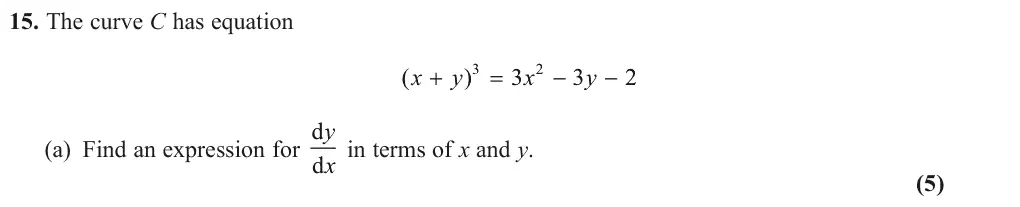
June 2024 · Paper 2 · Q15(a) 5 marks implicit and parametric differentiationdifferentiation rules
15. The curve C has equation x y x y ( ) (a) Find an expression for d y x in terms of x and y. d (5)
The point P(1, 0) lies on C. (b) Show that the normal to C at P has equation y x O 3 (2)
June 2024 · Paper 2 · Q15(c) 5 marks proofquadraticsalgebraic methodssimultaneous equations
(c) Prove that the normal to C at P does not meet C again. You should use algebra for your proof and make your reasoning clear. (5)

Find an Edexcel maths tutor

Want this paper marked and gone through with you? Message us.

Prefer email? Send an enquiry

If you are under 18, please include a parent's contact details. Enquiries go to enquiries@mathsaleveltutor.com and are deleted once handled.