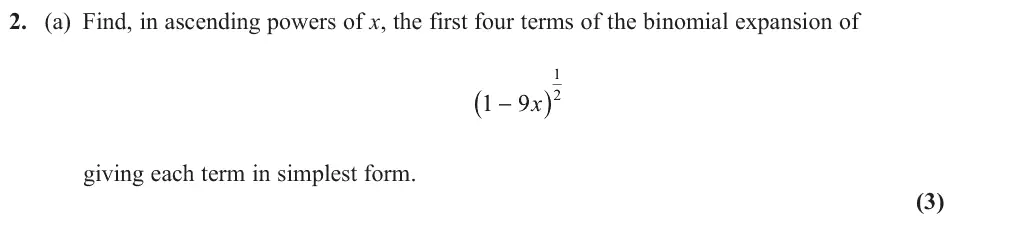
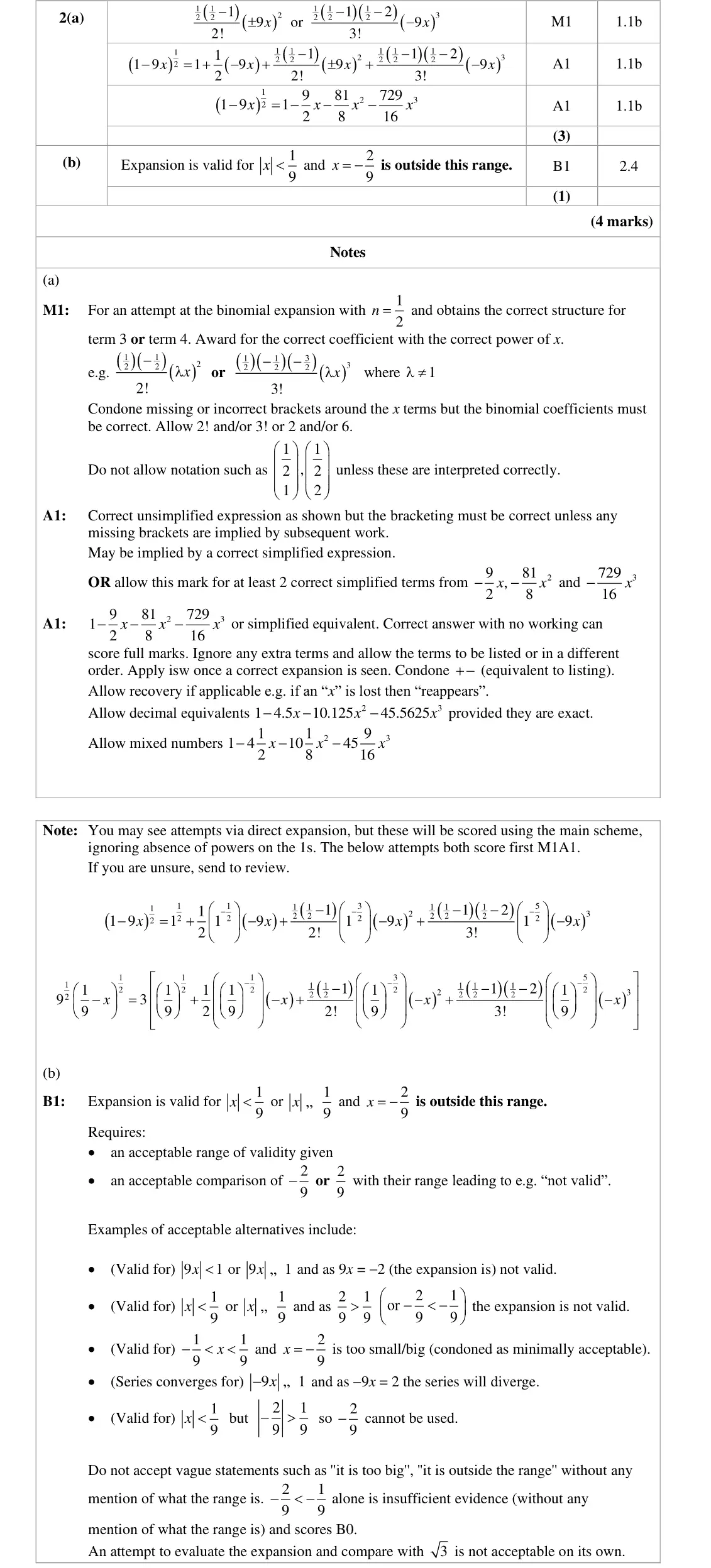
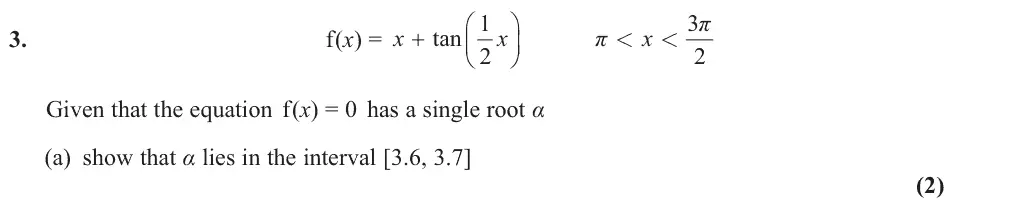
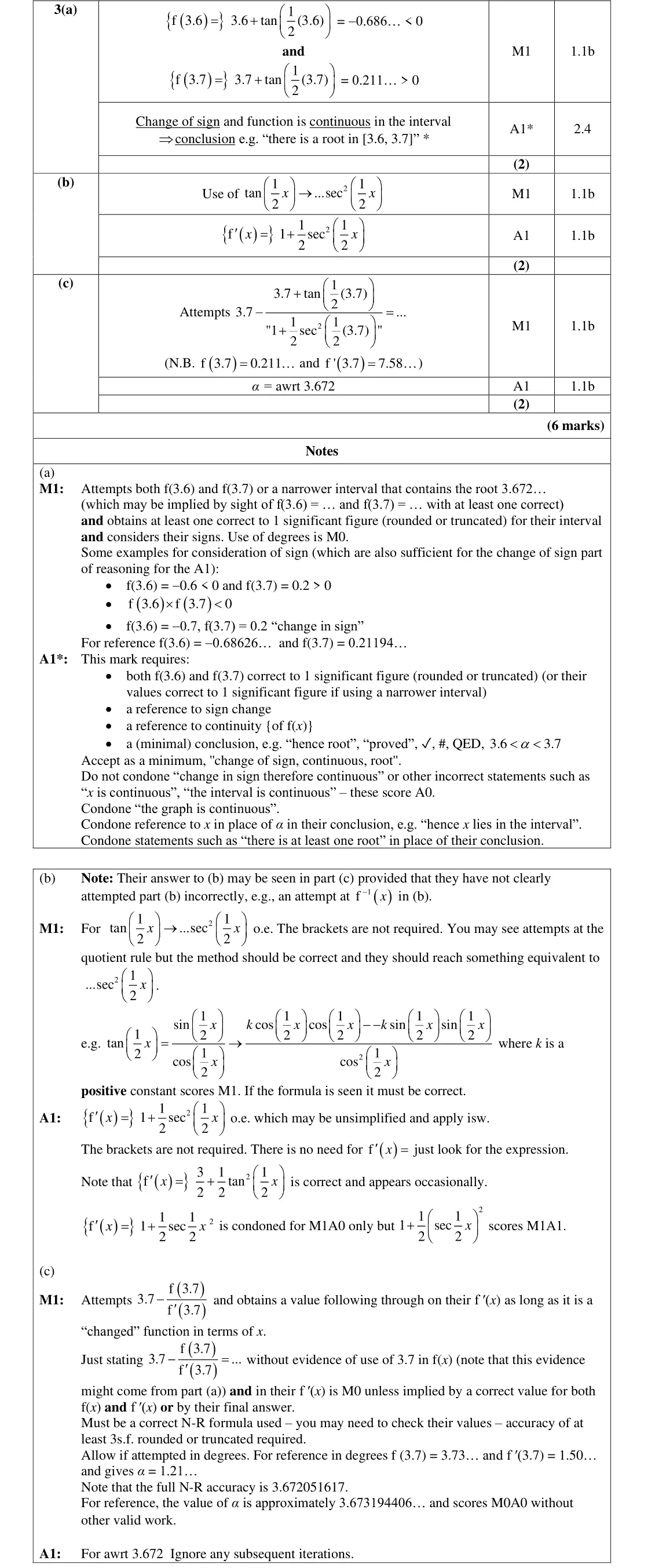
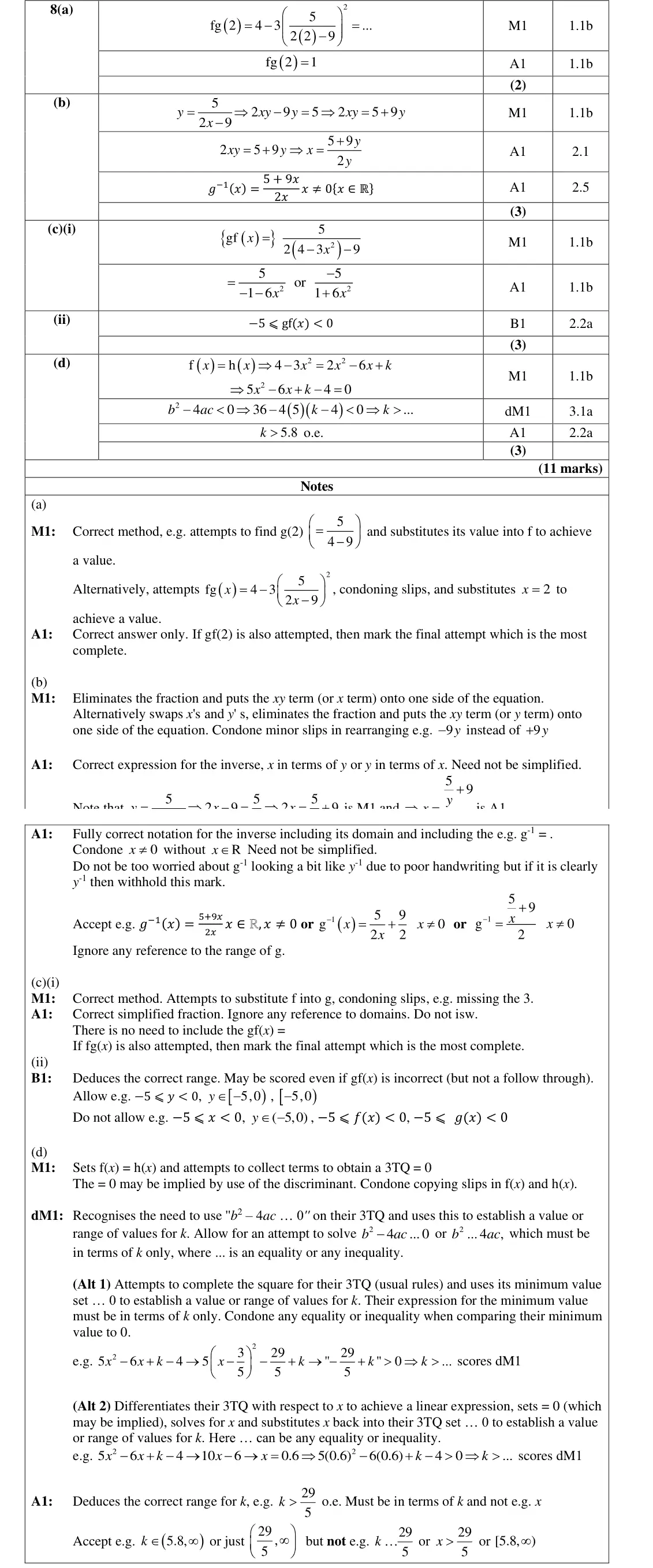
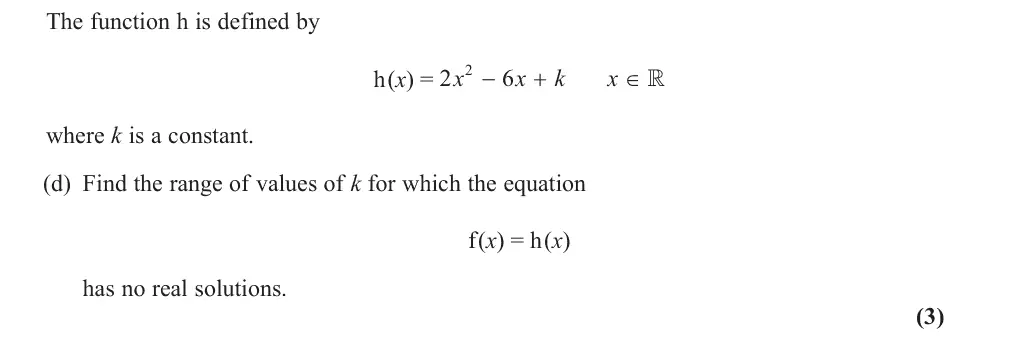
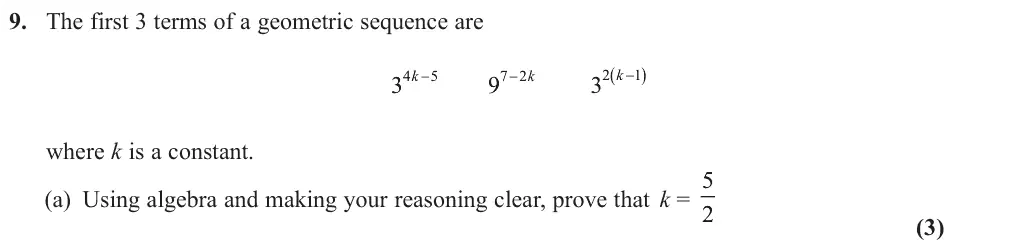
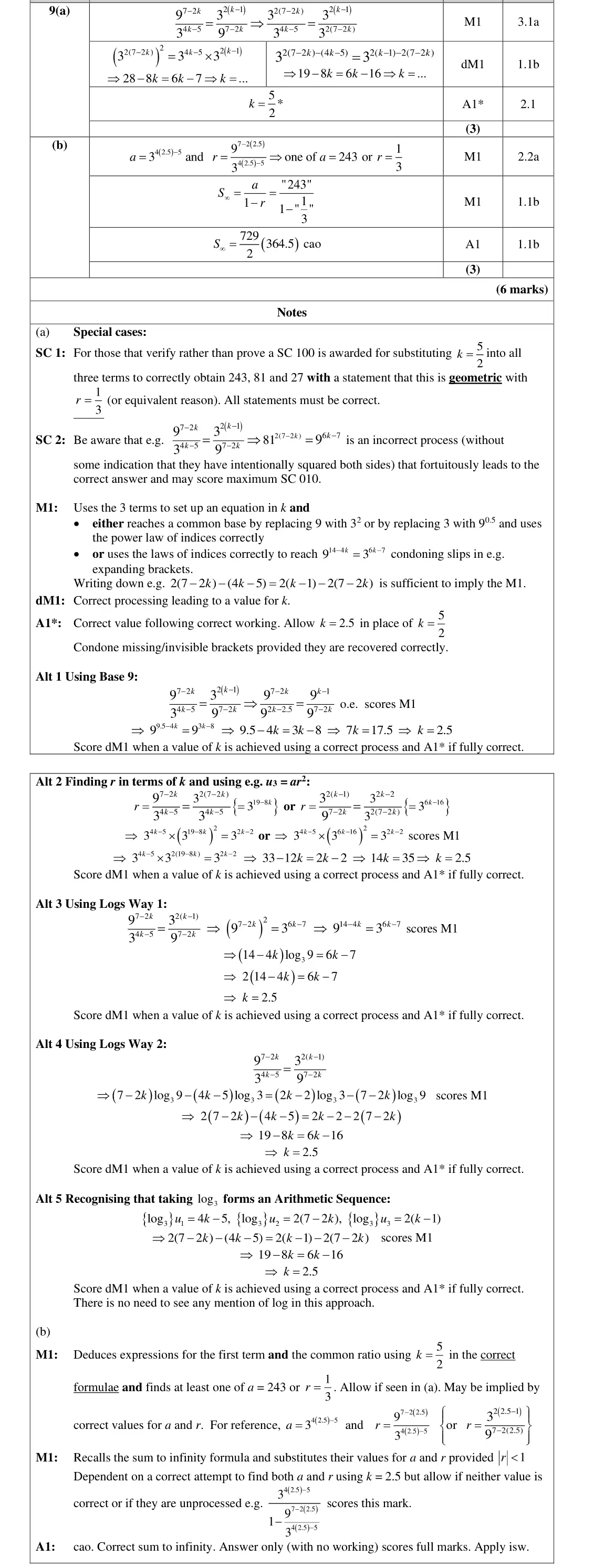
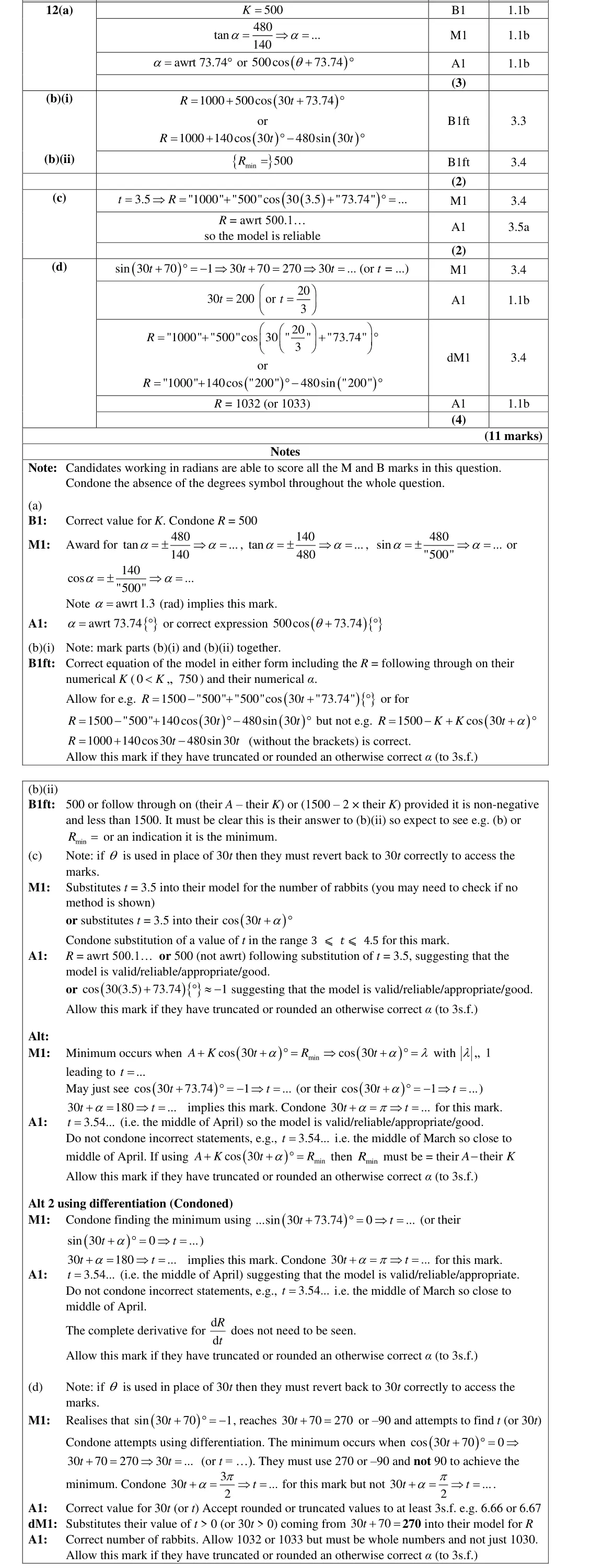
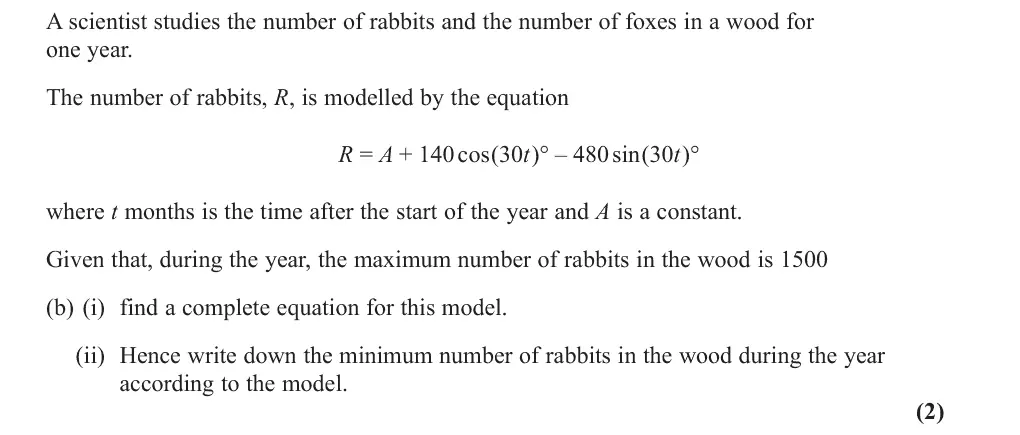
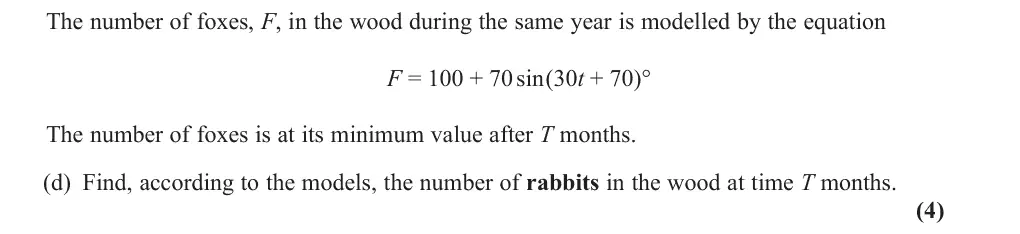
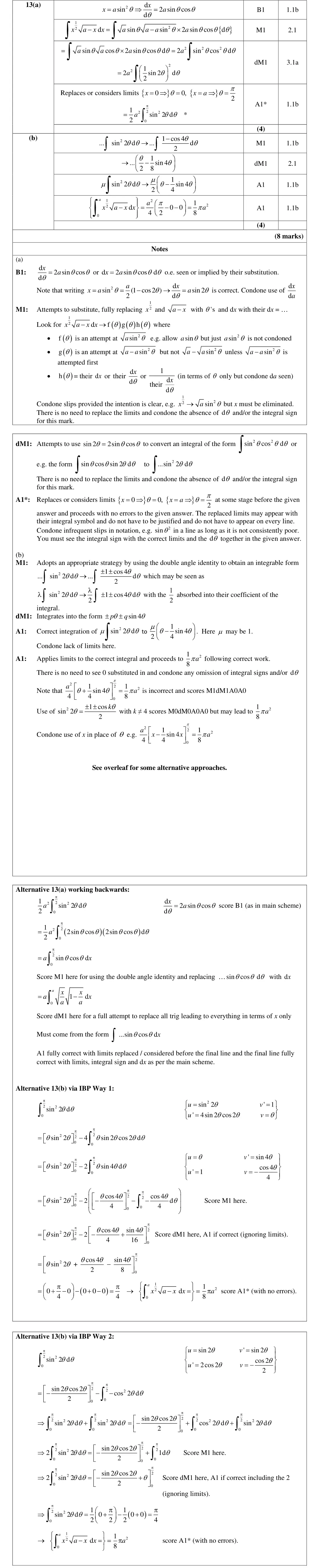
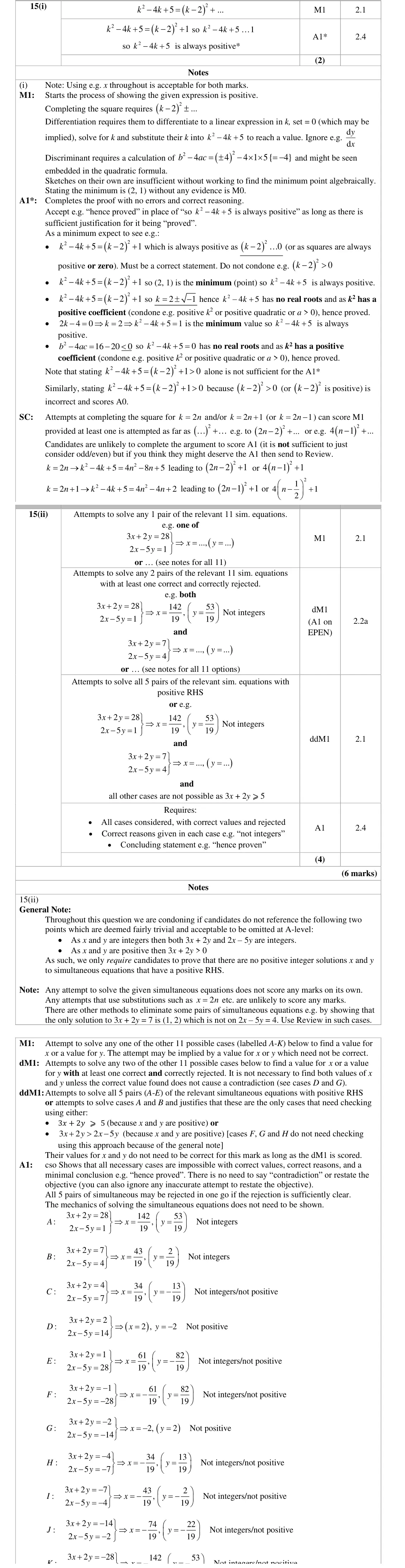
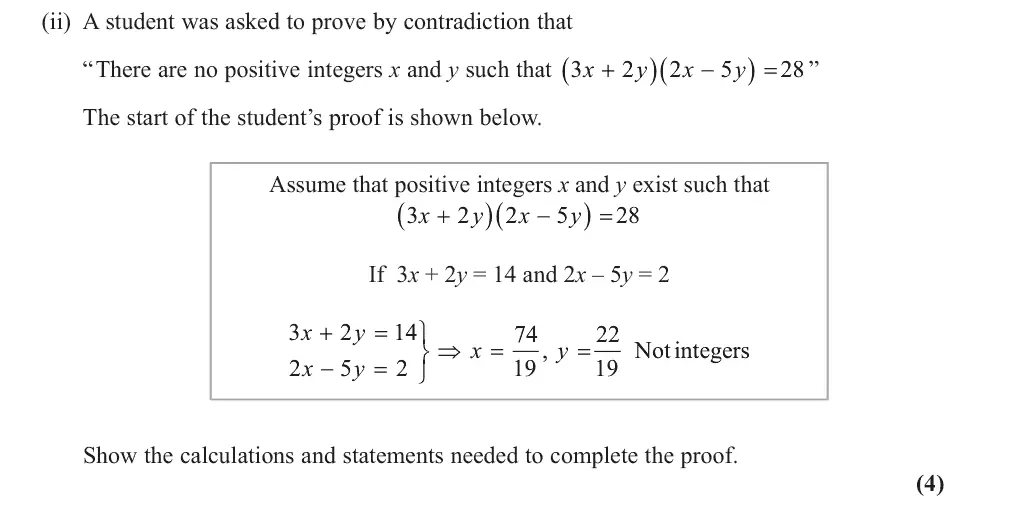
Mark scheme (whole question; this part is marked with the orange bar)
Examiner's comment
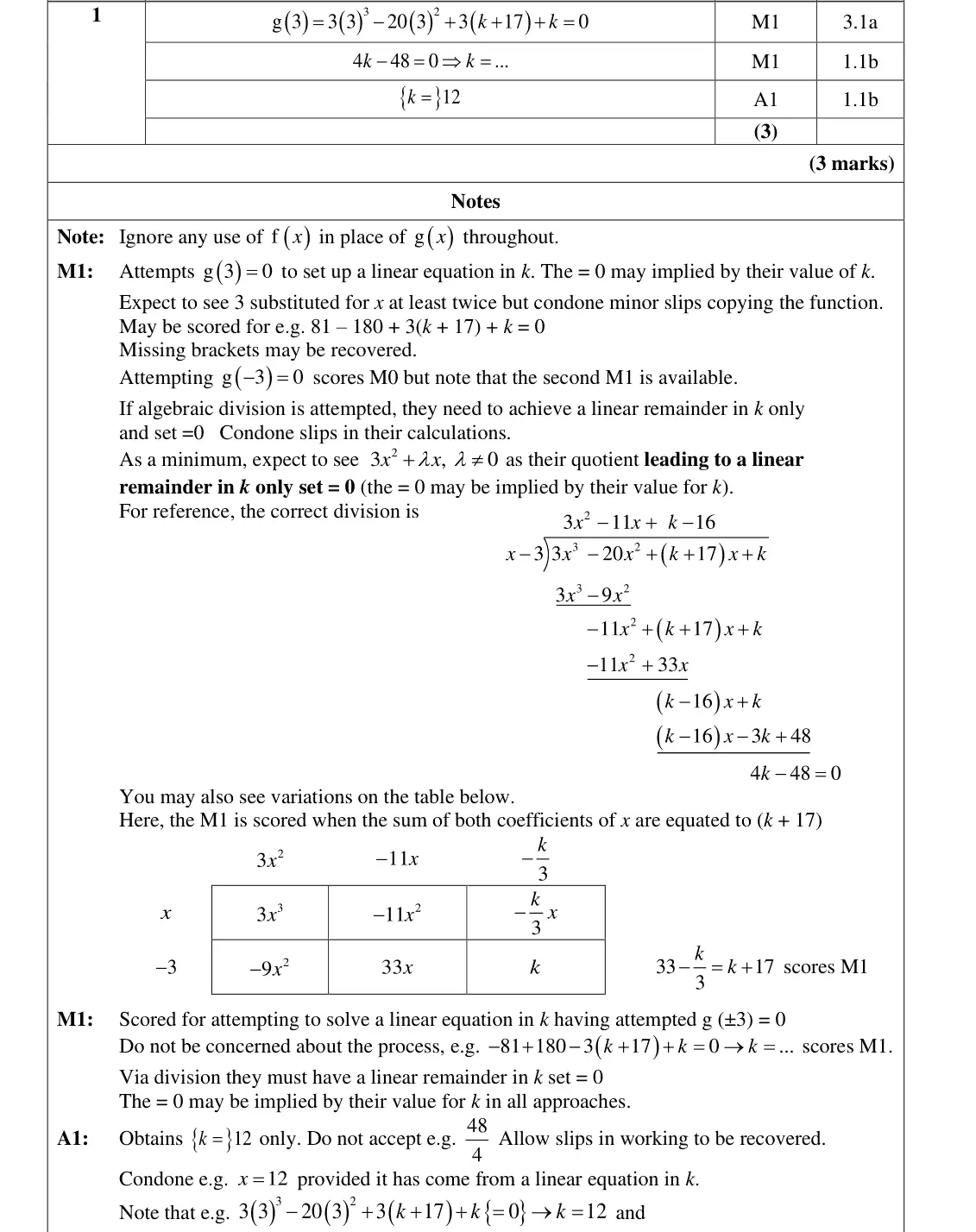
This question was very accessible, familiar to candidates and of low demand, making it particularly suitable for the opening question of the paper. Candidates were required to determine the value of a constant, k, in a cubic expression, g(x), given that (x – 3) was a factor of this expression. The vast majority of candidates found this question straightforward and clearly understood that they should apply the factor theorem to the question, determining the value of k via a linear equation in k that followed from g(3) = 0. A small proportion of candidates made errors in setting up the linear equation, or in attempting to solve their linear equation, however method marks were available in these instances. Some candidates did not include an = 0 in their work, however they were able to recover and achieve the marks if the = 0 was implied by later work. Quite rarely, g(–3) = 0 was attempted but even in this case credit for attempting to solve a linear equation was available. A common alternative route was to attempt division of g(3) by (x – 3), which made this otherwise routine question significantly more challenging. A number of methods for setting out the division were seen but marks could not be awarded until their linear remainder, only in k, was set equal to zero. When algebraic division was applied it was rarely completed well enough to gain all the marks, although many made quite pleasing progress with this more complex algebra. Centres should ensure candidates consider which method is more appropriate for solving a given problem. A very small proportion of candidates attempted to factorise g(x) and then equated coefficients which only a handful of candidates completed successfully.
Common mistakes
- factor theorem: set g(3) = 0 (not g(−3)) to get the linear equation 4k − 48 = 0
- the "= 0" must be seen or implied
- algebraic division is a much harder route