Examiner's comment
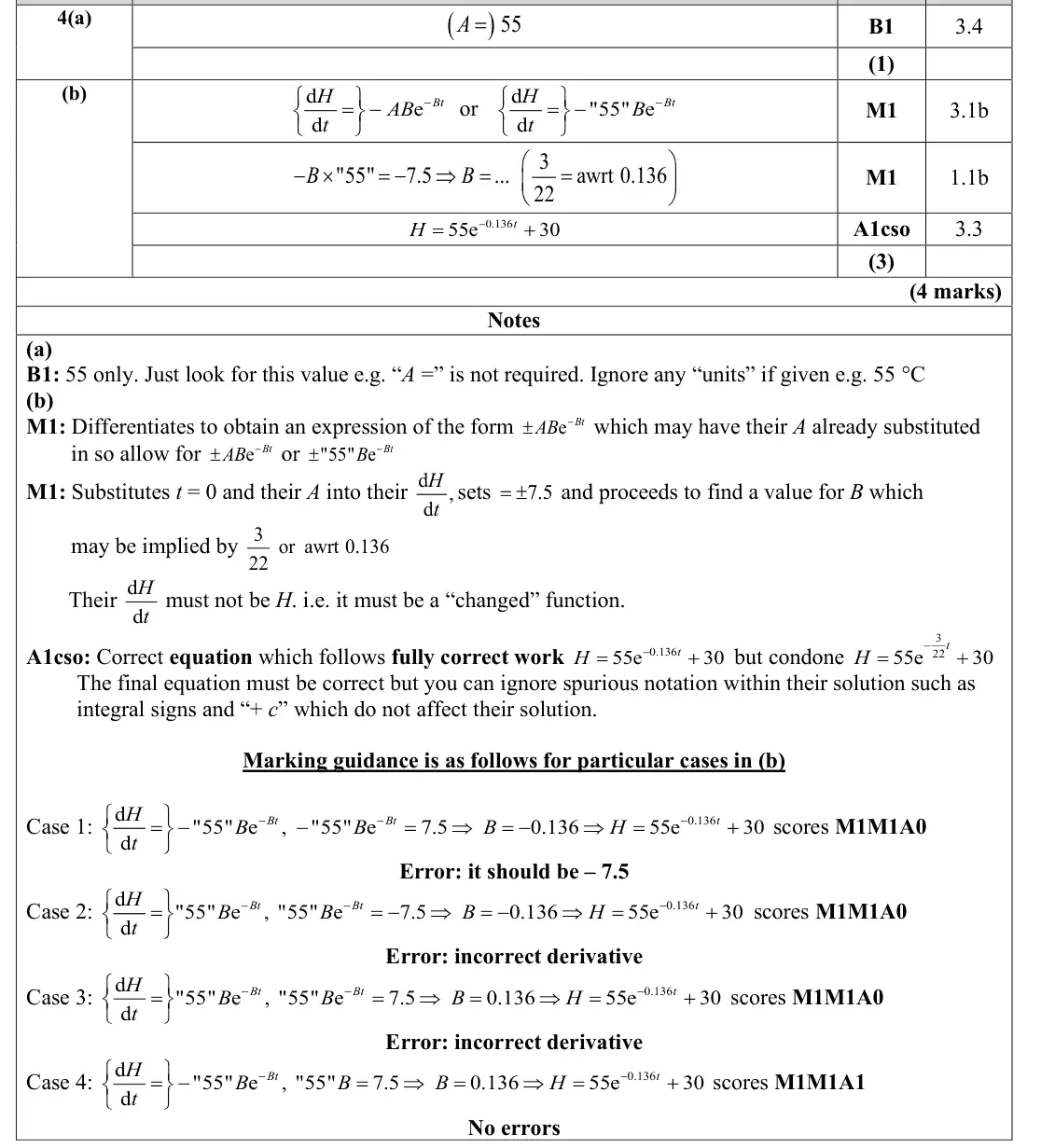
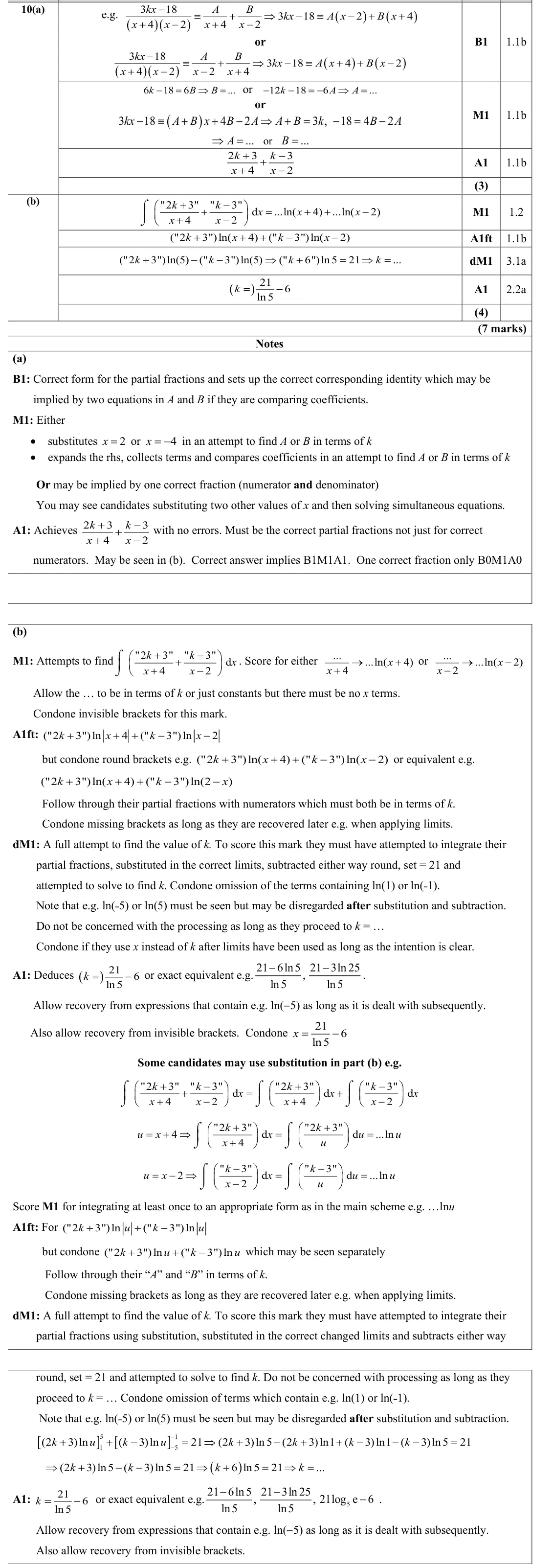
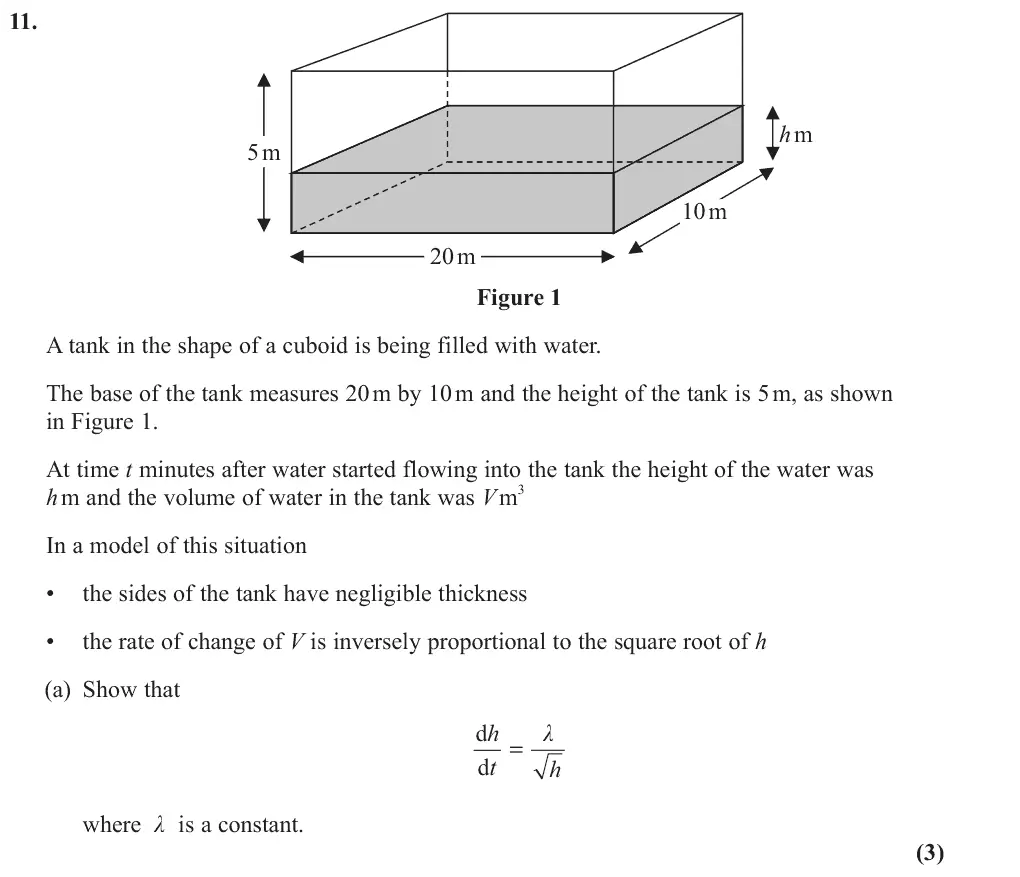
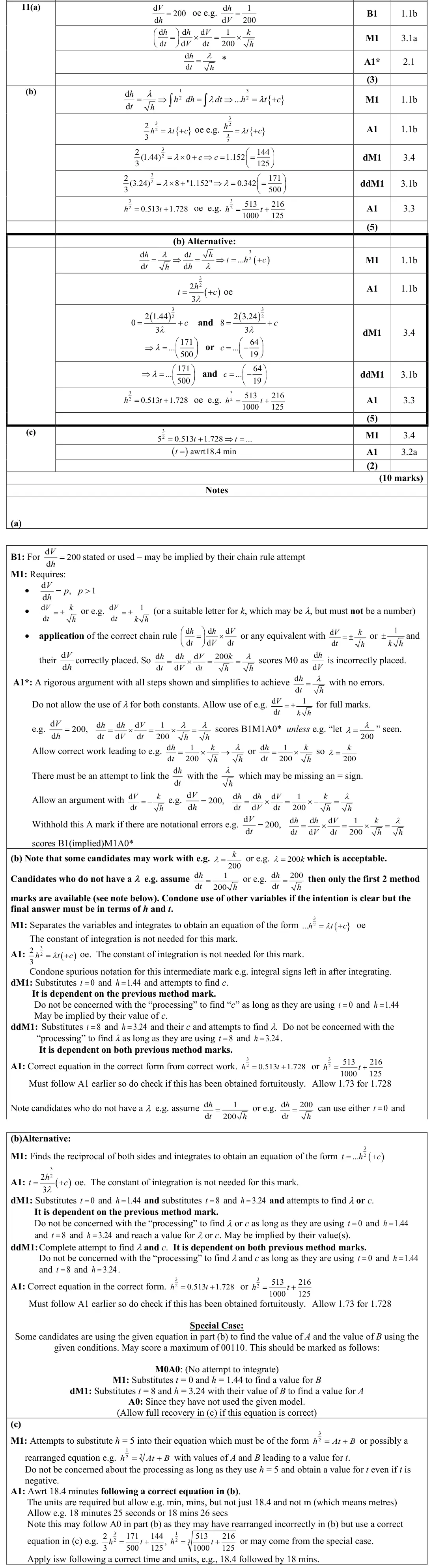
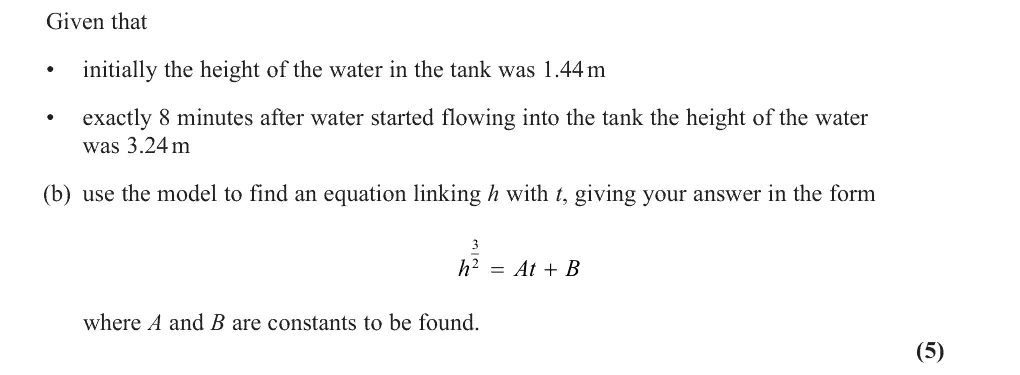
Many candidates found this question challenging and there were a significant number of blank responses. Approaches to part (b) of the question were very mixed. Many candidates failed to realise that, as the question said, ‘use the model to find an equation’, they were expected to, for example, separate the variables and use calculus to solve the differential equation. As they were asked to give their answer in a specific form, a large number started from this and found the constants A and B using the given values of t and h. Fortunately, they were able to gain two marks from the h , although special case. Candidates who used calculus rarely had problems integrating 3 h or in dealing with the 2 2 errors were seen later when substituting into when rearranging the 3 equation. Candidates who started this part with the 𝜆 were generally more successful. Some candidates correctly found c and 𝜆, and then rearranged. Others rearranged before making substitutions, stating 3 and 3 = = A 2 c B . A minority lost the second accuracy mark as they 2 did not give the final equation in the correct form. Some candidates who had correctly found d 1 h k k = solved the differential equation using 200 in place of 𝜆, in most cases d 200 t h successfully, although the algebraic manipulation was more tricky. Some candidates who had made an incorrect attempt at (a) continued with their answer, usually d 1 1 h = , in this d 200 t h part. As they only had one constant, the ‘c’, in their expression, they could only attain the first two method marks. It was rare to see the constant of integration missed and basic arithmetical errors when finding either 𝜆 and c or A and B were also relatively infrequent. The alternative approach, rearranging to give d t h or 200 h = was seen on a few occasions. d h k The majority of candidates who had a correct form of the equation in part (b) made a good attempt at part (c) and were generally able to gain the method mark. Relatively few lost the