June 2019: Paper 3: Pure Mathematics and Mechanics

100 marks · 30 question parts · Question paper, mark scheme and examiner's report on OCR's site

Question by question

QTopicMarksDifficulty
1 Trigonometric ratios, graphs, radians and the sine and cosine rules 2 Easy
2(a)(i) Circles 2 Easy
2(a)(ii) Circles 1 Easy
2(b) Circles, Quadratics and the discriminant, Inequalities 5 Medium
3(a) Functions, composite and inverse functions, modulus, Inequalities 4 Easy
3(b) Graphs and transformations, Functions, composite and inverse functions, modulus 3 Hard
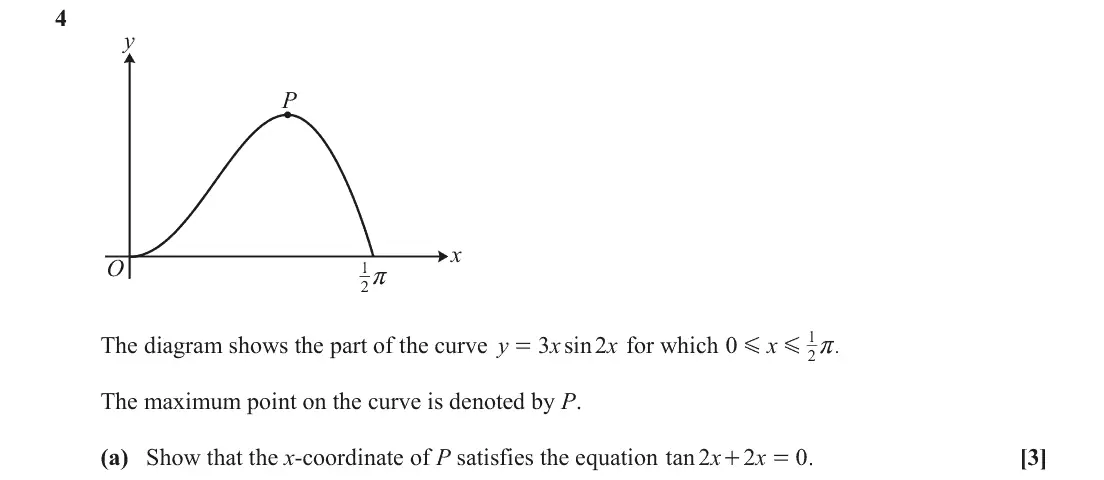
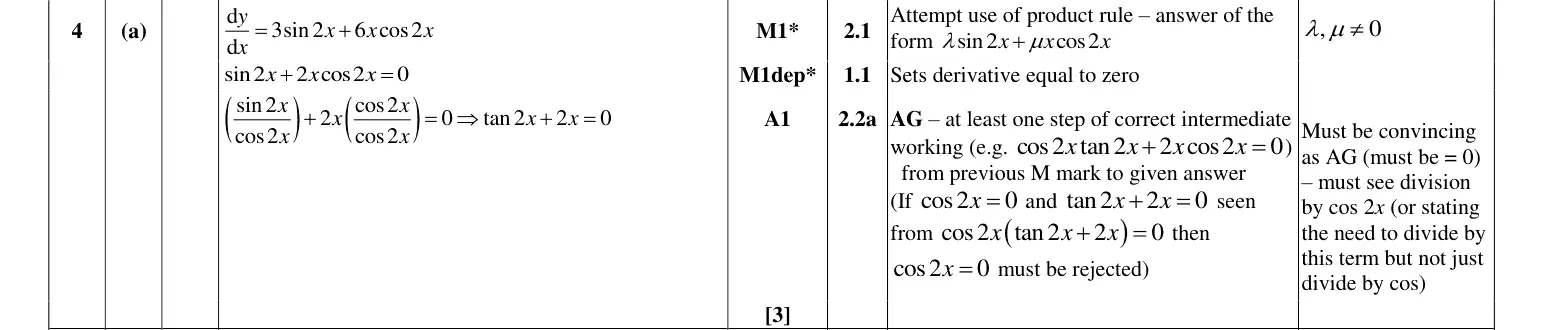
4(a) Chain, product and quotient rules; connected rates of change, Differentiation: first principles, gradients, stationary points, Reciprocal and inverse trigonometric functions 3 Medium
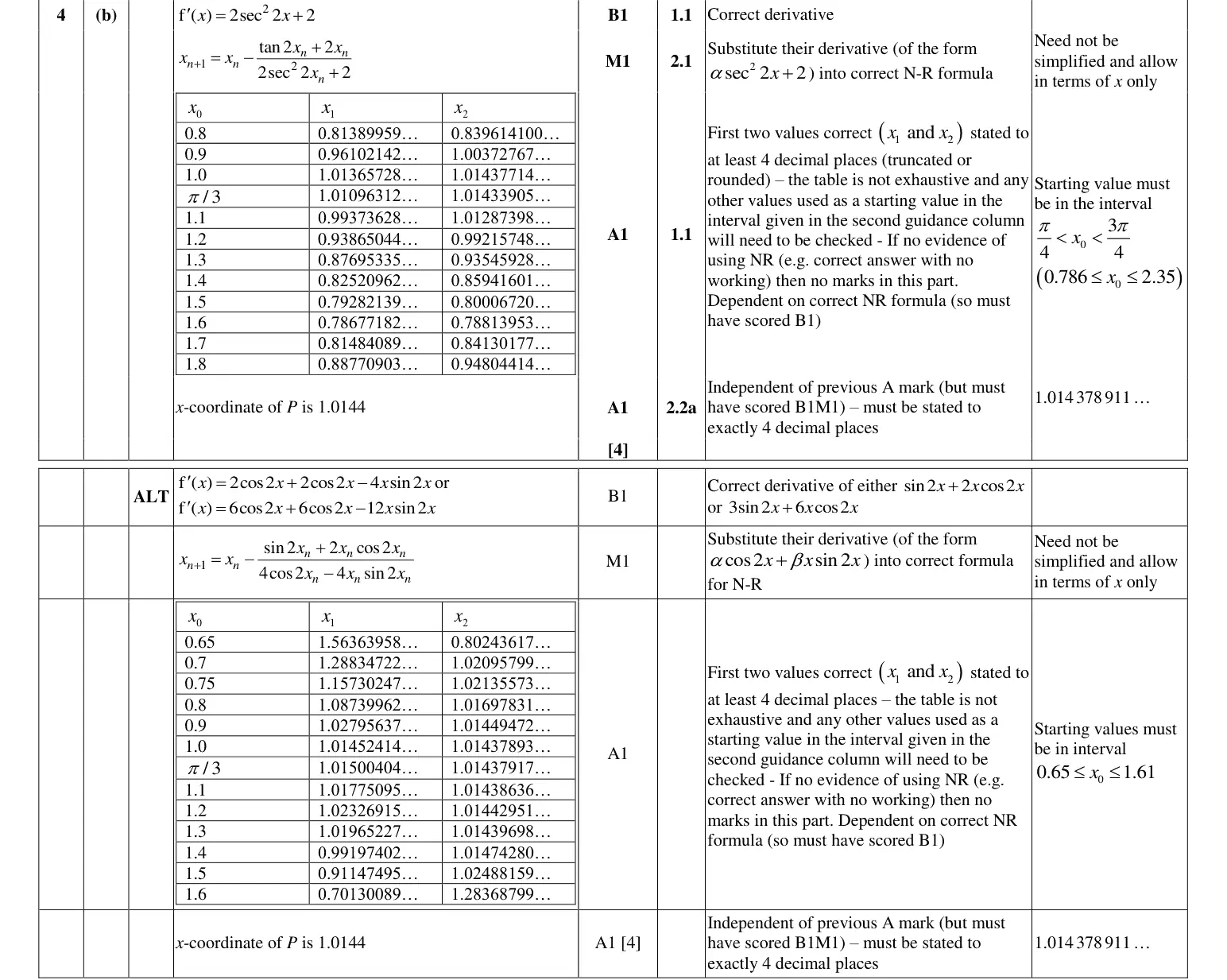
4(b) Numerical methods: roots, iteration and Newton–Raphson, Differentiation: first principles, gradients, stationary points, Reciprocal and inverse trigonometric functions 4 Hard
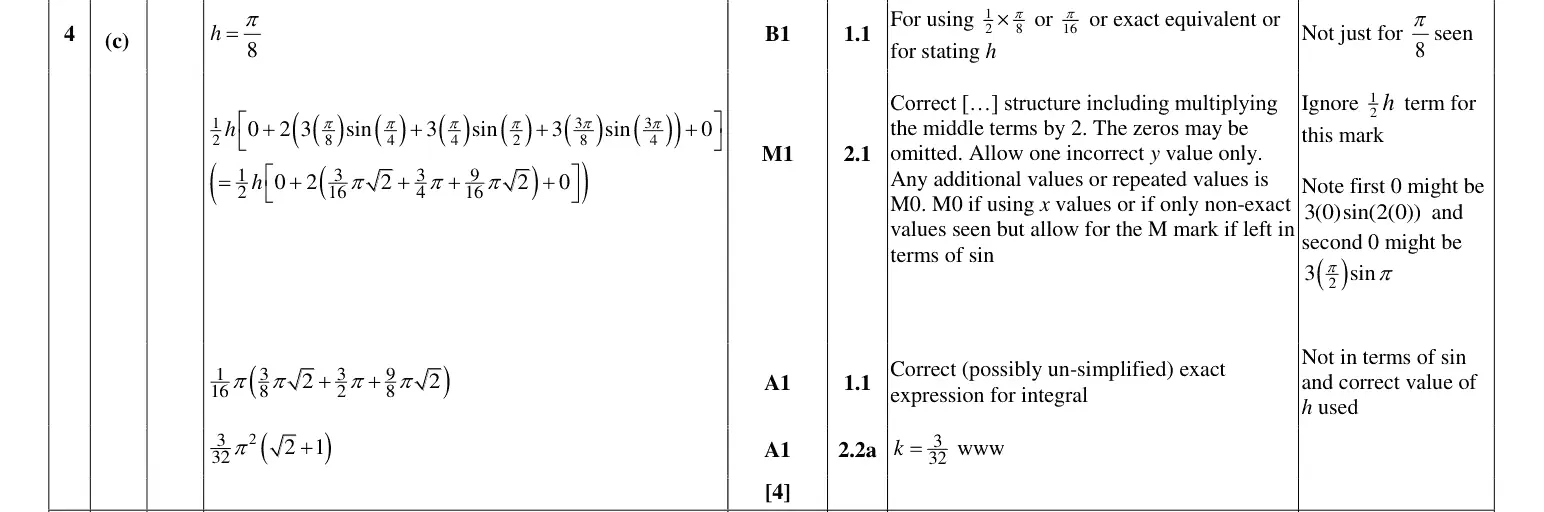
4(c) Trapezium rule and numerical integration, Trigonometric ratios, graphs, radians and the sine and cosine rules 4 Medium
4(d)(i) Integration: standard integrals, definite integrals and areas, Integration by parts and by substitution 1 Medium
4(d)(ii) Trapezium rule and numerical integration 1 Medium
4(d)(iii) Trapezium rule and numerical integration, Differentiation: first principles, gradients, stationary points 1 Medium
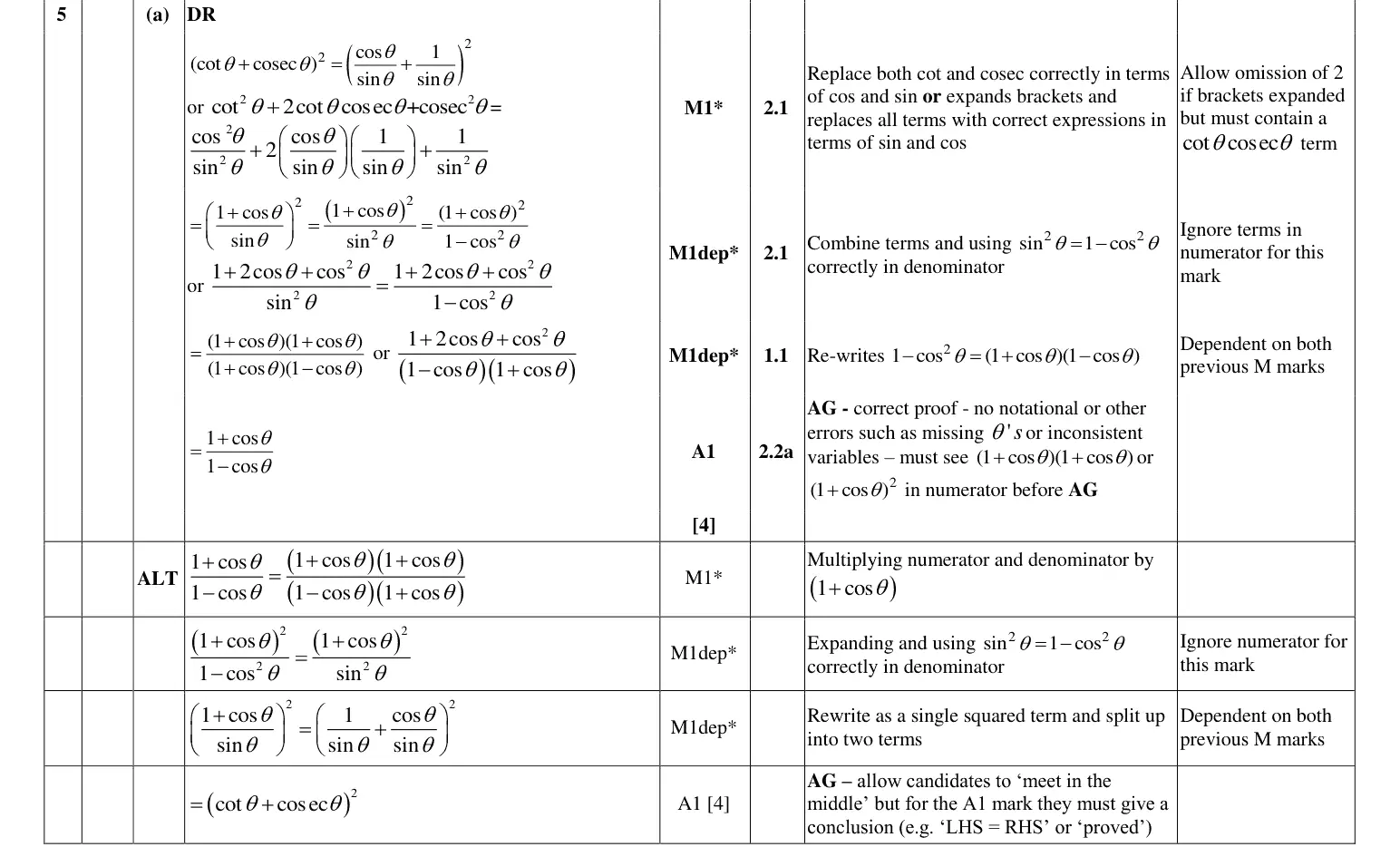
5(a) Trigonometric identities and proofs, Reciprocal and inverse trigonometric functions 4 Medium
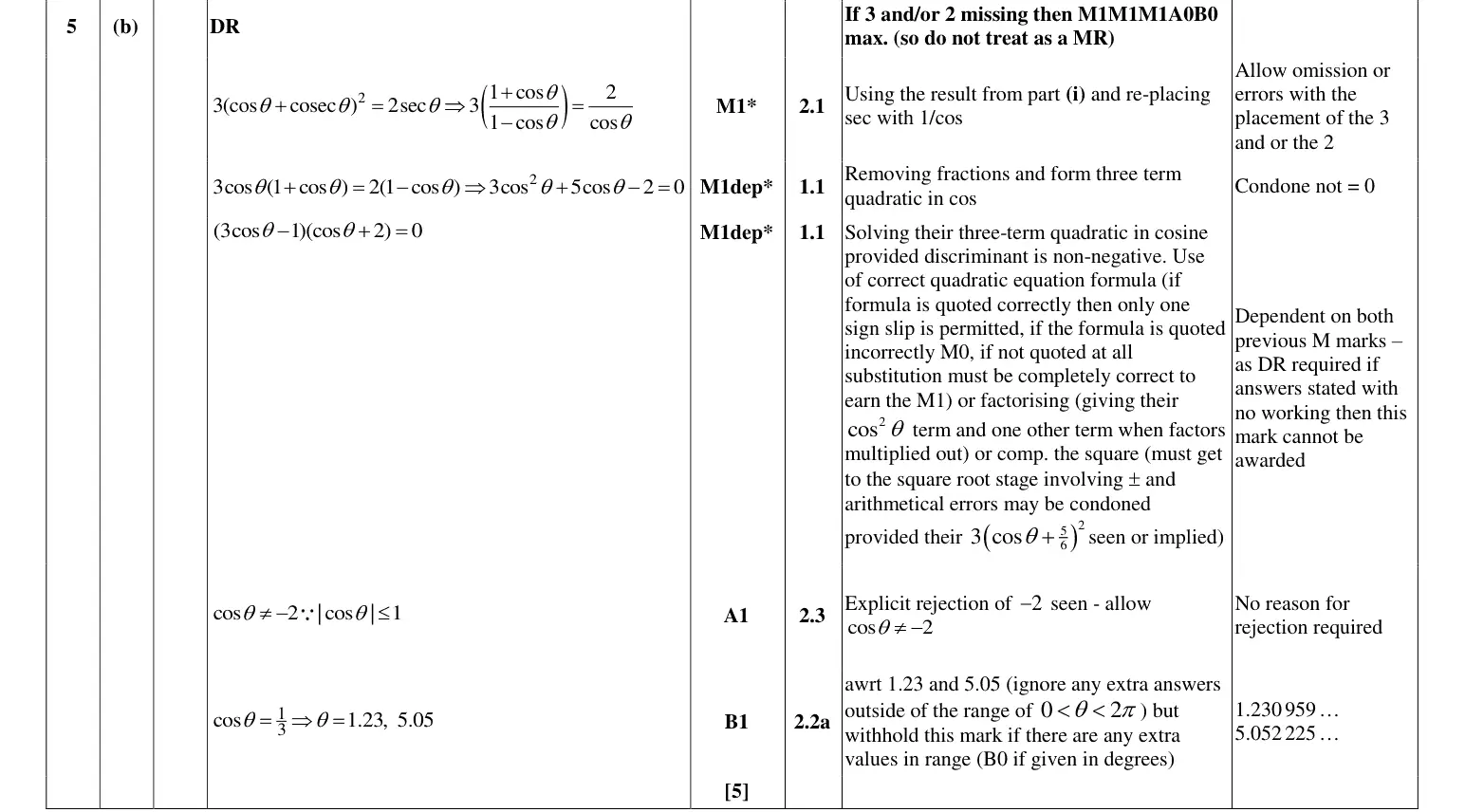
5(b) Solving trigonometric equations, Reciprocal and inverse trigonometric functions, Quadratics and the discriminant 5 Medium
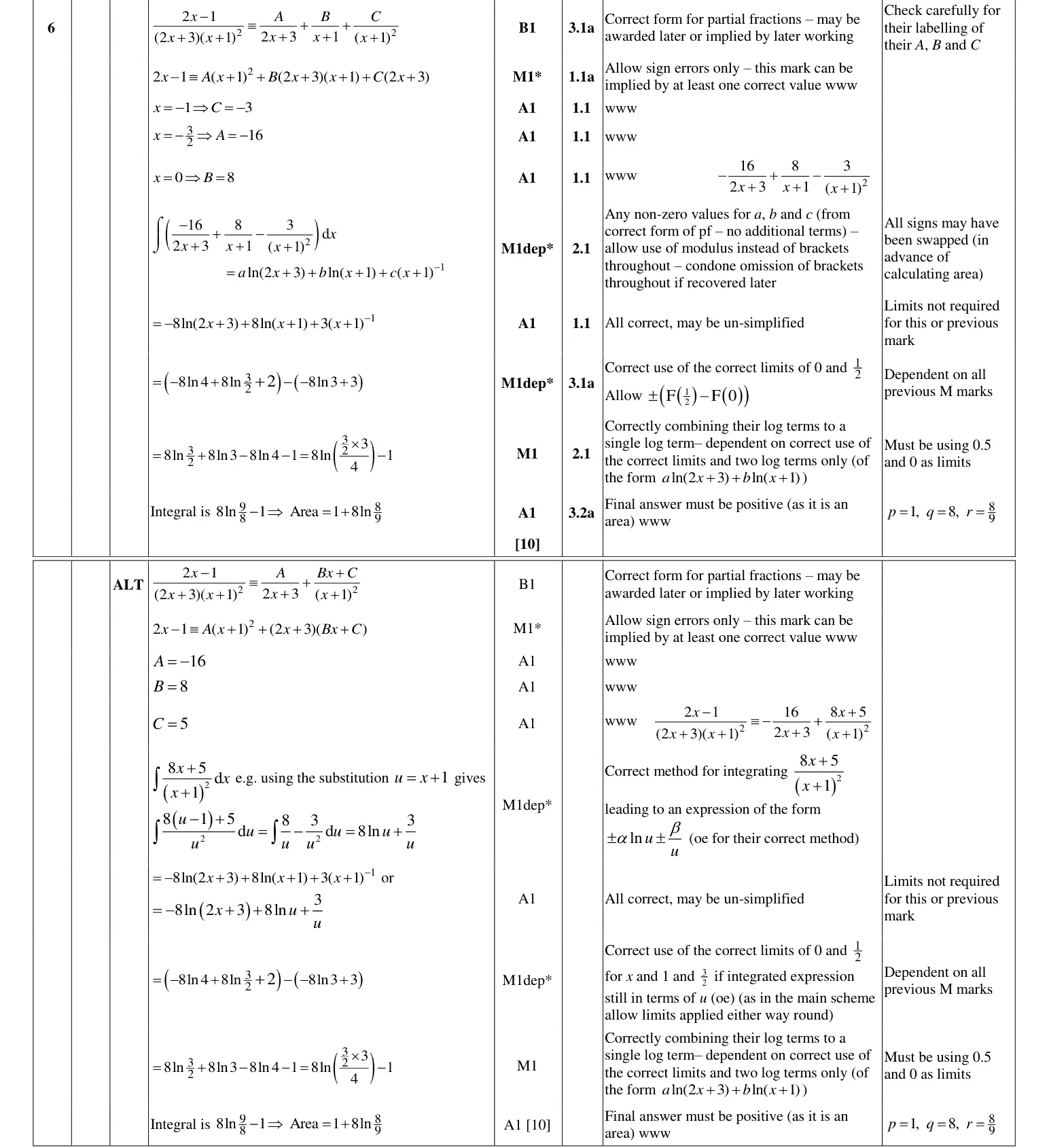
6 Partial fractions, Integration: standard integrals, definite integrals and areas, Exponentials and logarithms 10 Hard
7(a) Kinematics: language and graphs 2 Easy
7(b) Kinematics: language and graphs 2 Easy
8(a) Projectiles 1 Easy
8(b) Projectiles, Constant acceleration (SUVAT) 2 Medium
8(c) Projectiles 3 Medium
8(d) Projectiles, Vectors 4 Hard
9(a) Forces, Newton's laws and connected particles, Friction, resultant forces and motion in a plane, Constant acceleration (SUVAT), Trigonometric ratios, graphs, radians and the sine and cosine rules 4 Medium
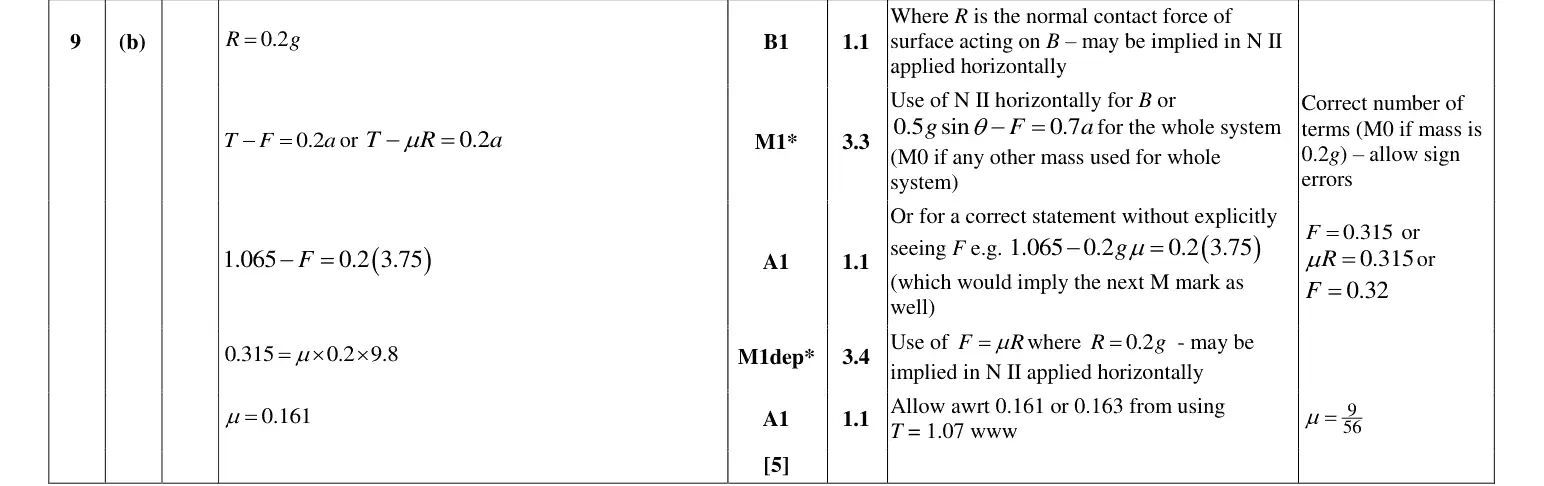
9(b) Friction, resultant forces and motion in a plane, Forces, Newton's laws and connected particles 5 Hard
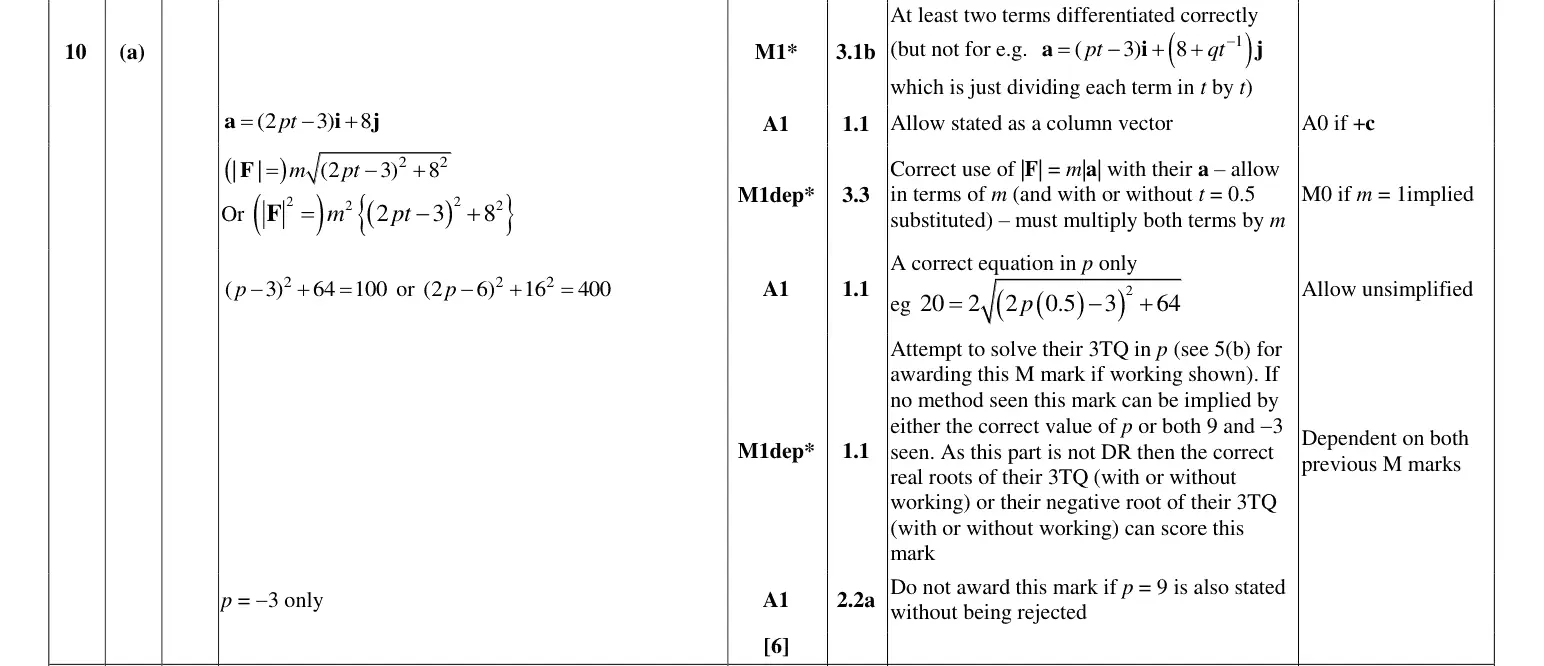
10(a) Variable acceleration, Forces, Newton's laws and connected particles, Differentiation: first principles, gradients, stationary points, Vectors 6 Medium
10(b) Variable acceleration, Integration: standard integrals, definite integrals and areas 4 Easy
10(c) Variable acceleration, Vectors 3 Hard
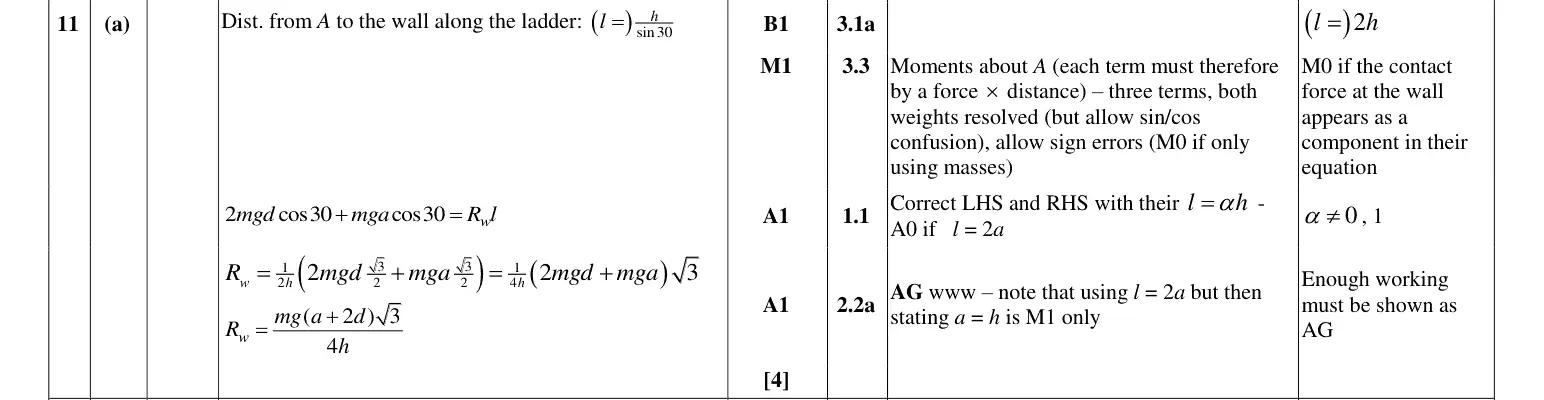
11(a) Moments 4 Hard
11(b) Moments, Friction, resultant forces and motion in a plane 7 Hard
11(c) Moments 2 Hard
11(d) Moments 1 Medium

The questions

12(a)(i)2(a)(ii)2(b)3(a)3(b)4(a)4(b)4(c)4(d)(i)4(d)(ii)4(d)(iii)5(a)5(b)67(a)7(b)8(a)8(b)8(c)8(d)9(a)9(b)10(a)10(b)10(c)11(a)11(b)11(c)11(d)
June 2019 · Paper 3 · Q1 2 marks Easy trigonometric ratios
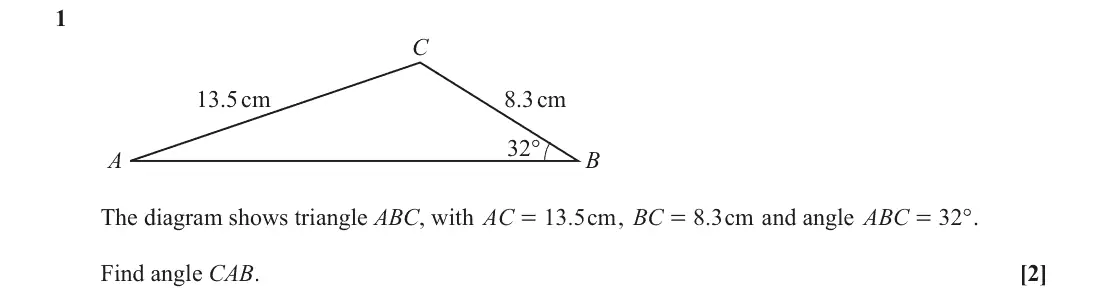
1 C 13.5 cm 8.3 cm 32° A B The diagram shows triangle ABC, with AC 13 5cm . , BC 8 3cm . and angle ABC 32° . = = = Find angle CAB. [2]
June 2019 · Paper 3 · Q2(a)(i) 2 marks Easy circles
2 A circle with centre C has equation x y x y . + - + + = (a) Find (i) the coordinates of C, [2]
June 2019 · Paper 3 · Q2(a)(ii) 1 mark Easy circles
Show the start of this questionEarlier part of this question
(ii) the radius of the circle. [1]
June 2019 · Paper 3 · Q2(b) 5 marks Medium circlesquadraticsinequalities
Show the start of this questionEarlier part of this question
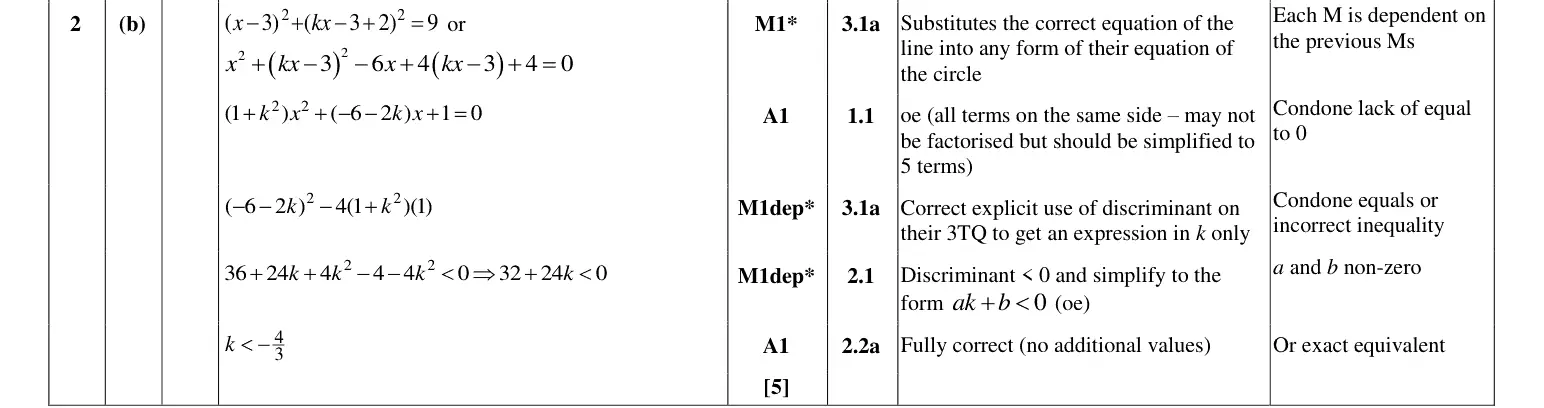
(b) Determine the set of values of k for which the line y kx - does not intersect or touch the = circle. [5]
June 2019 · Paper 3 · Q3(a) 4 marks Easy functionsinequalities
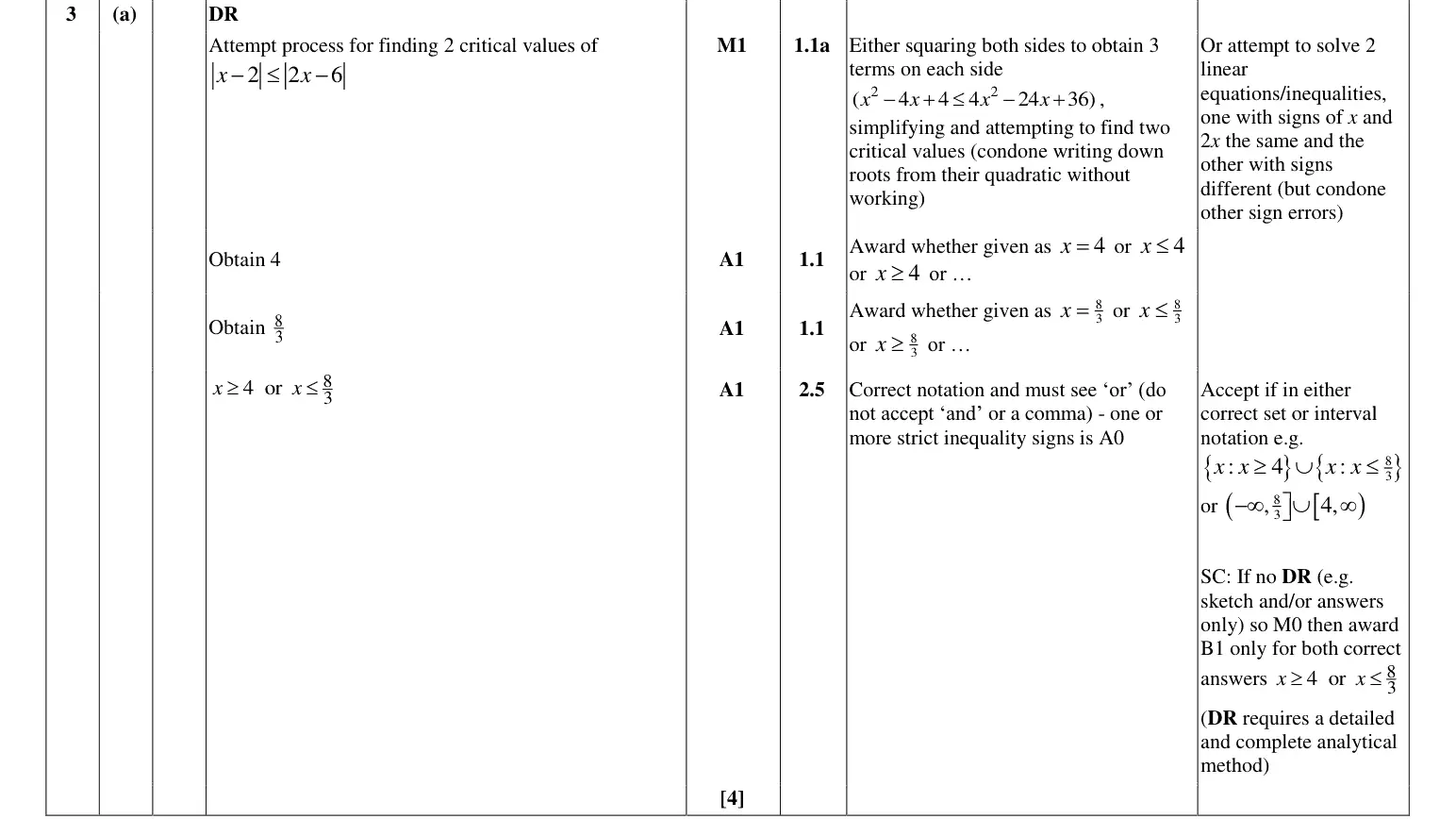
3 (a) In this question you must show detailed reasoning. Solve the inequality x x . [4] - G -
June 2019 · Paper 3 · Q3(b) 3 marks Hard graphs and transformationsfunctions
Show the start of this questionEarlier part of this question
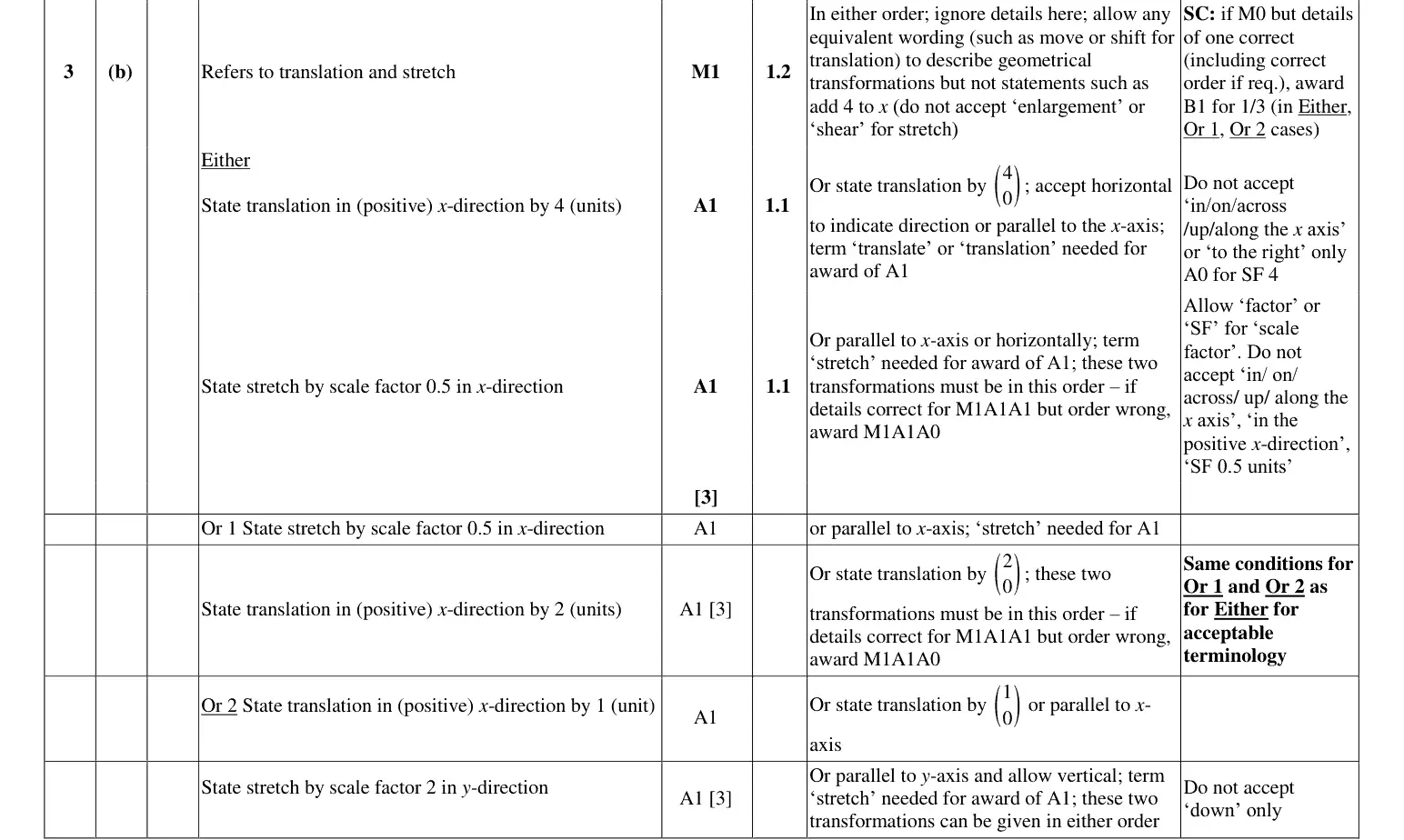
(b) Give full details of a sequence of two transformations needed to transform the graph of y x to the graph of y x . [3] = - = -
June 2019 · Paper 3 · Q4(a) 3 marks Medium differentiation rulesdifferentiationreciprocal trig functions
4 y P x O 1 r The diagram shows the part of the curve y x sin x for which x = G G . r The maximum point on the curve is denoted by P. (a) Show that the x-coordinate of P satisfies the equation tan x x . [3] + =
June 2019 · Paper 3 · Q4(b) 4 marks Hard numerical methodsdifferentiationreciprocal trig functions
Show the start of this questionEarlier part of this question
(b) Use the Newton-Raphson method, with a suitable initial value, to find the x-coordinate of P, giving your answer correct to 4 decimal places. Show the result of each iteration. [4]

June 2019 · Paper 3 · Q4(c) 4 marks Medium trapezium ruletrigonometric ratios
Show the start of this questionEarlier part of this question
(c) The trapezium rule, with four strips of equal width, is used to find an approximation to 1 r y x sin 2 d x x . ^ h, where k is a rational number to be Show that the result can be expressed as k + r determined. [4]
June 2019 · Paper 3 · Q4(d)(i) 1 mark Medium integrationintegration by parts and substitution
Show the start of this questionEarlier part of this question
1 r y (d) (i) Evaluate x sin 2 d x x . [1]
June 2019 · Paper 3 · Q4(d)(ii) 1 mark Medium trapezium rule
Show the start of this questionEarlier part of this questionEarlier part of this question
(ii) Hence determine whether using the trapezium rule with four strips of equal width gives an under- or over-estimate for the area of the region enclosed by the curve y x sin x = and the x-axis for x r [1] G G .
June 2019 · Paper 3 · Q4(d)(iii) 1 mark Medium trapezium ruledifferentiation
Show the start of this questionEarlier part of this questionEarlier part of this question
(iii) Explain briefly why it is not easy to tell from the diagram alone whether the trapezium rule with four strips of equal width gives an under- or over-estimate for the area of the region in this case. [1]
June 2019 · Paper 3 · Q5(a) 4 marks Medium trig identitiesreciprocal trig functions
5 In this question you must show detailed reasoning. cos + i (a) Prove that ( cot cosec ) . [4] + = i i cos - i
June 2019 · Paper 3 · Q5(b) 5 marks Medium trigonometric equationsreciprocal trig functionsquadratics
Show the start of this questionEarlier part of this question
(b) Hence solve, for 0 2 , r ( cot cosec ) sec [5] + = . i i i i
June 2019 · Paper 3 · Q6 10 marks Hard partial fractionsintegrationexponentials and logs
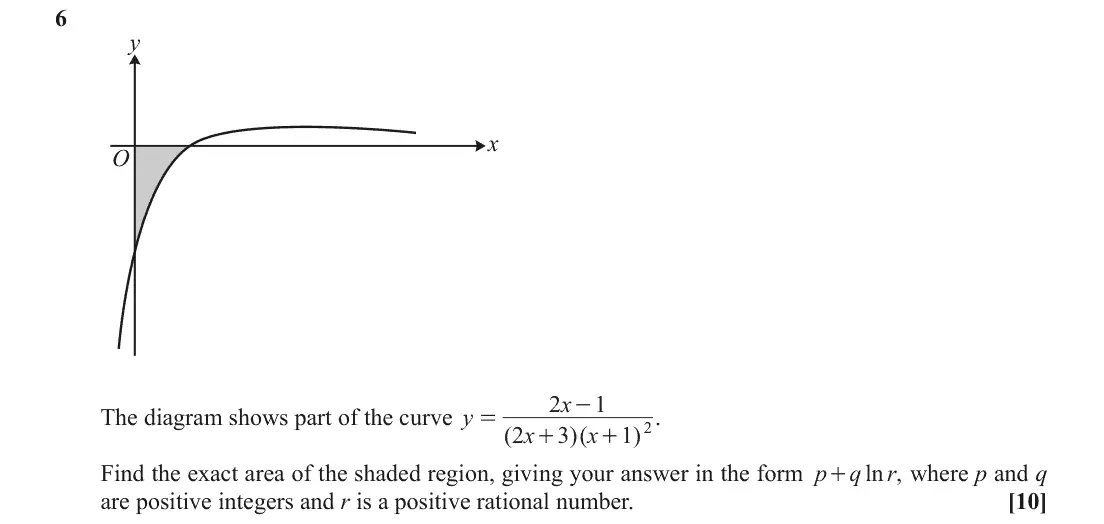
6 y x O x - The diagram shows part of the curve y . = x x ( )( ) + + Find the exact area of the shaded region, giving your answer in the form p q ln r, where p and q + are positive integers and r is a positive rational number. [10]
June 2019 · Paper 3 · Q7(a) 2 marks Easy kinematics
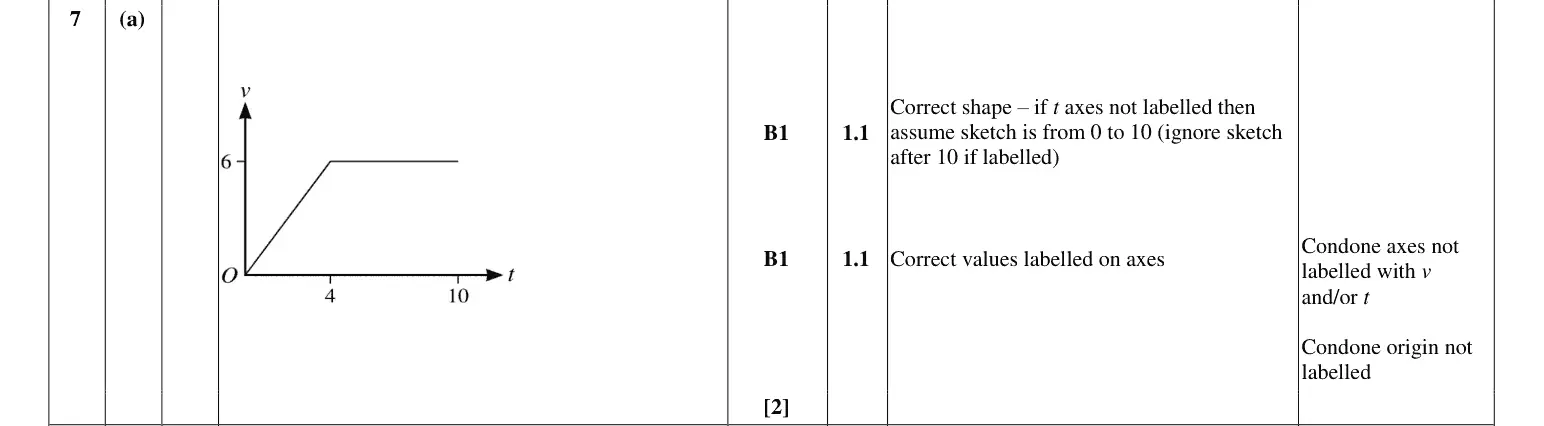
7 A cyclist starting from rest accelerates uniformly at .1 5ms - for 4 s and then travels at constant speed. (a) Sketch a velocity-time graph to represent the first 10 seconds of the cyclist’s motion. [2]

June 2019 · Paper 3 · Q7(b) 2 marks Easy kinematics
Show the start of this questionEarlier part of this question
(b) Calculate the distance travelled by the cyclist in the first 10 seconds. [2]
June 2019 · Paper 3 · Q8(a) 1 mark Easy projectiles
8 A particle P projected from a point O on horizontal ground hits the ground after 2.4 seconds. The horizontal component of the initial velocity of P is d ms - . (a) Find, in terms of d, the horizontal distance of P from O when it hits the ground. [1]
June 2019 · Paper 3 · Q8(b) 2 marks Medium projectilesconstant acceleration
Show the start of this questionEarlier part of this question
(b) Find the vertical component of the initial velocity of P. [2]
June 2019 · Paper 3 · Q8(c) 3 marks Medium projectiles
Show the start of this questionEarlier part of this questionEarlier part of this question
P just clears a vertical wall which is situated at a horizontal distance d m from O. (c) Find the height of the wall. [3]
June 2019 · Paper 3 · Q8(d) 4 marks Hard projectilesvectors
Show the start of this questionEarlier part of this questionEarlier part of this questionEarlier part of this question
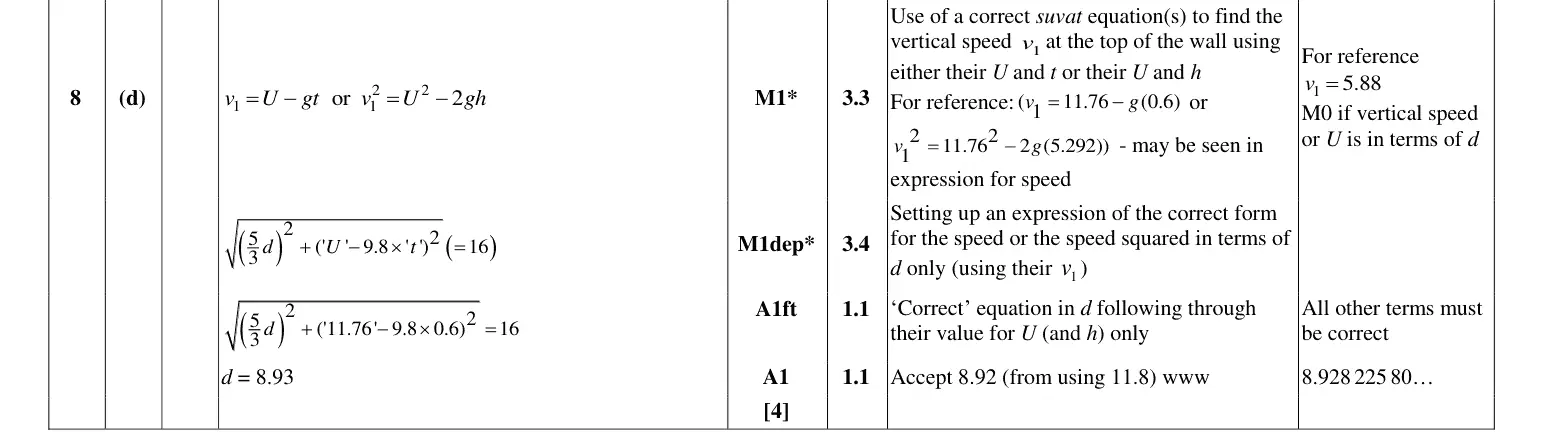
- . The speed of P as it passes over the wall is 16ms 1 (d) Find the value of d correct to 3 significant figures. [4]
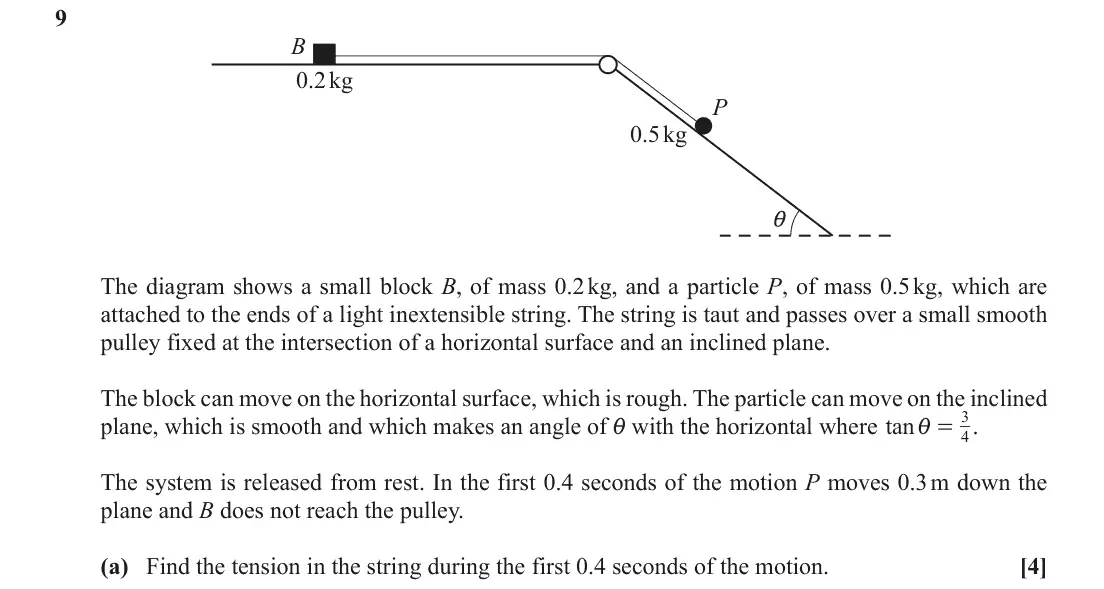
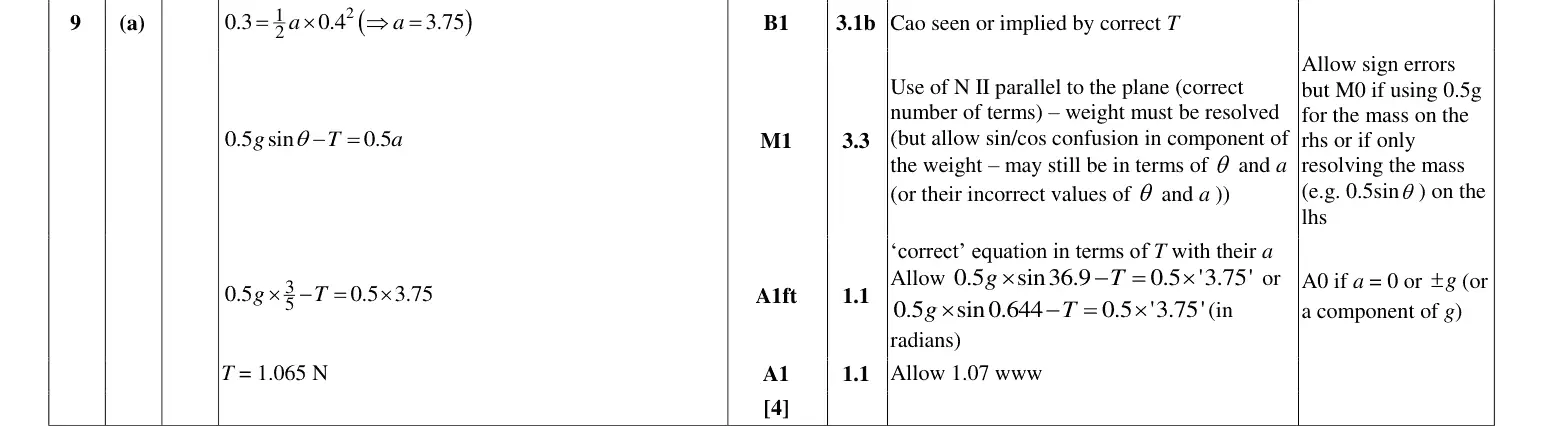
9 B 0.2 kg P 0.5 kg i The diagram shows a small block B, of mass 0.2 kg, and a particle P, of mass 0.5 kg, which are attached to the ends of a light inextensible string. The string is taut and passes over a small smooth pulley fixed at the intersection of a horizontal surface and an inclined plane. The block can move on the horizontal surface, which is rough. The particle can move on the inclined plane, which is smooth and which makes an angle of i with the horizontal where tan . i = The system is released from rest. In the first 0.4 seconds of the motion P moves 0.3 m down the plane and B does not reach the pulley. (a) Find the tension in the string during the first 0.4 seconds of the motion. [4]

June 2019 · Paper 3 · Q9(b) 5 marks Hard friction and forces in a planeforces and newtons laws
Show the start of this questionEarlier part of this question
(b) Calculate the coefficient of friction between B and the horizontal surface. [5]

June 2019 · Paper 3 · Q10(a) 6 marks Medium variable accelerationforces and newtons lawsdifferentiationvectors
10 In this question the unit vectors i and j are in the directions east and north respectively. A particle R of mass 2 kg is moving on a smooth horizontal surface under the action of a single horizontal force F N. At time t seconds, the velocity vms 1 - of R, relative to a fixed origin O, is given by v ( pt t ) i ( t q ) j , where p and q are constants and p . = - + + (a) Given that when t 0 5 . the magnitude of F is 20, find the value of p. [6] =
June 2019 · Paper 3 · Q10(b) 4 marks Easy variable accelerationintegration
Show the start of this questionEarlier part of this question
When t , R is at the point with position vector ( i 3 m j ) . = - (b) Find, in terms of q, an expression for the displacement vector of R at time t. [4]
June 2019 · Paper 3 · Q10(c) 3 marks Hard variable accelerationvectors
Show the start of this questionEarlier part of this questionEarlier part of this question
When t = , R is at a point on the line L, where L passes through O and the point with position vector i j . - (c) Find the value of q. [3]
June 2019 · Paper 3 · Q11(a) 4 marks Hard moments
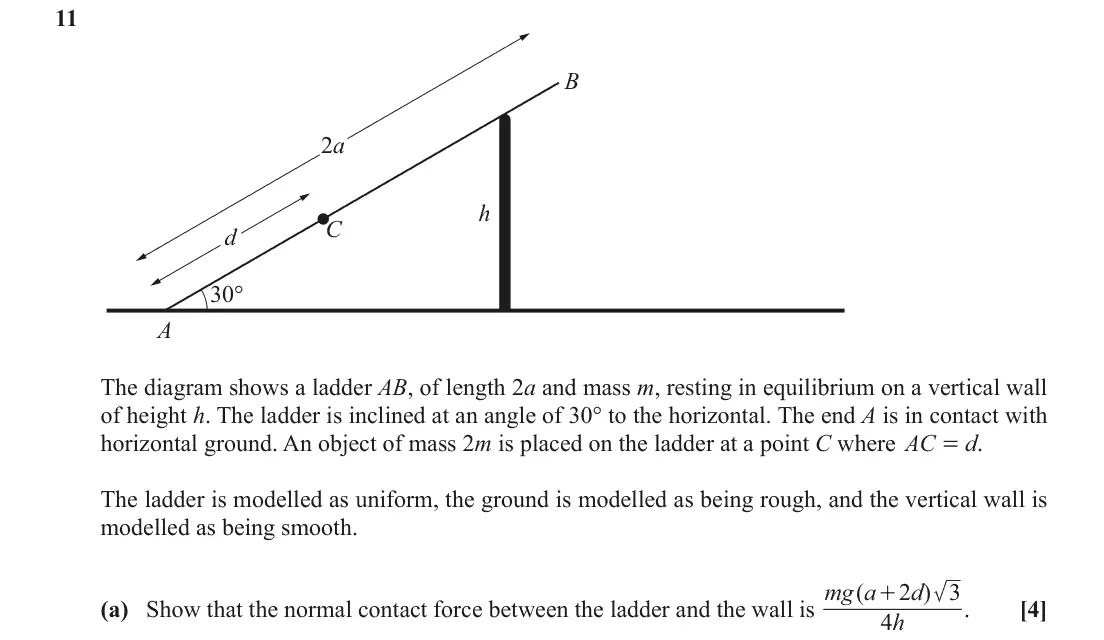
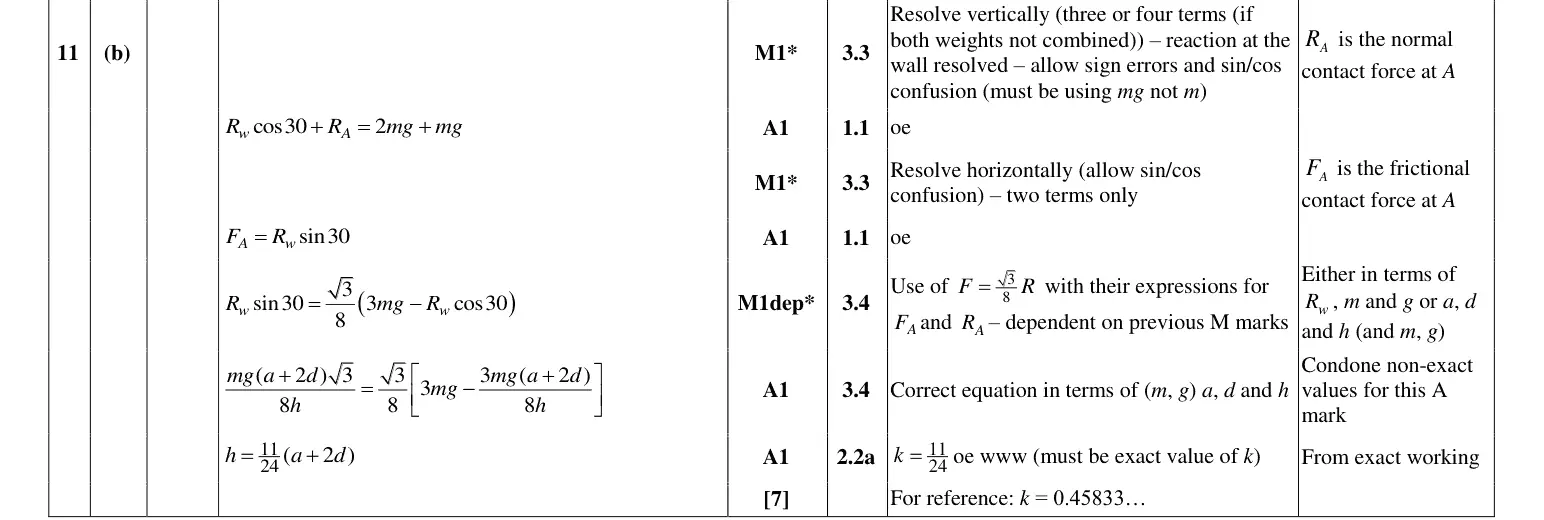
11 B 2a h C d 30° A The diagram shows a ladder AB, of length 2a and mass m, resting in equilibrium on a vertical wall of height h. The ladder is inclined at an angle of 30° to the horizontal. The end A is in contact with horizontal ground. An object of mass 2m is placed on the ladder at a point C where AC d. = The ladder is modelled as uniform, the ground is modelled as being rough, and the vertical wall is modelled as being smooth. mg a ( d ) + (a) Show that the normal contact force between the ladder and the wall is . [4] h
June 2019 · Paper 3 · Q11(b) 7 marks Hard momentsfriction and forces in a plane
Show the start of this questionEarlier part of this question
It is given that the equilibrium is limiting and the coefficient of friction between the ladder and the ground is 3. (b) Show that h k a ( d ) , where k is a constant to be determined. [7] = +
June 2019 · Paper 3 · Q11(c) 2 marks Hard moments
Show the start of this questionEarlier part of this questionEarlier part of this question
(c) Hence find, in terms of a, the greatest possible value of d. [2]
June 2019 · Paper 3 · Q11(d) 1 mark Medium moments
Show the start of this questionEarlier part of this question
(d) State one improvement that could be made to the model. [1]

Find an A-level maths tutor

Want this paper marked and gone through with you? Message us.

Prefer email? Send an enquiry

If you are under 18, please include a parent's contact details. Enquiries go to enquiries@mathsaleveltutor.com and are deleted once handled.