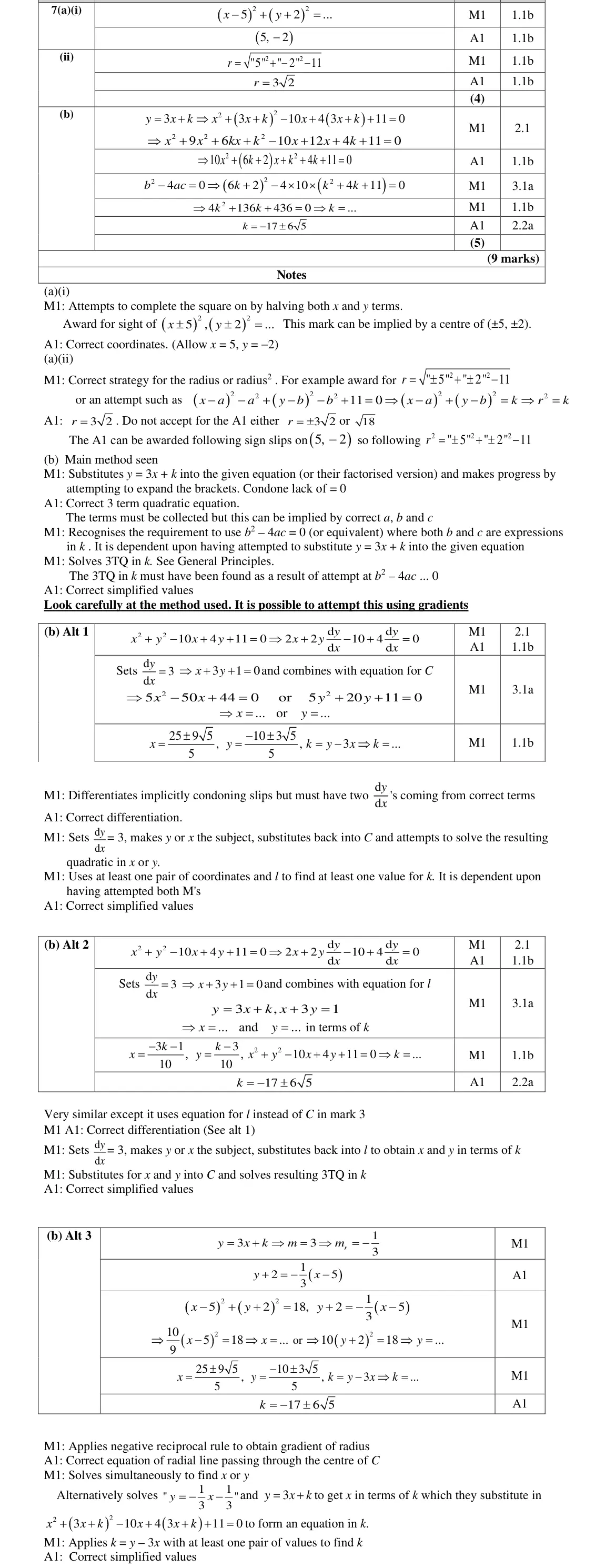
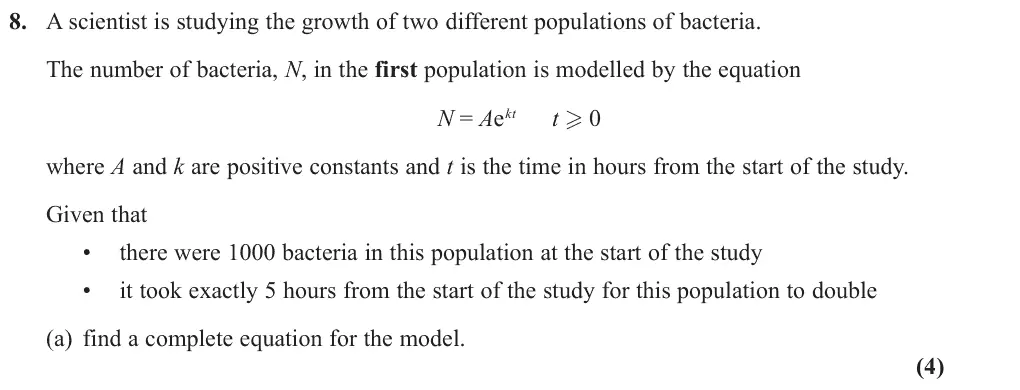
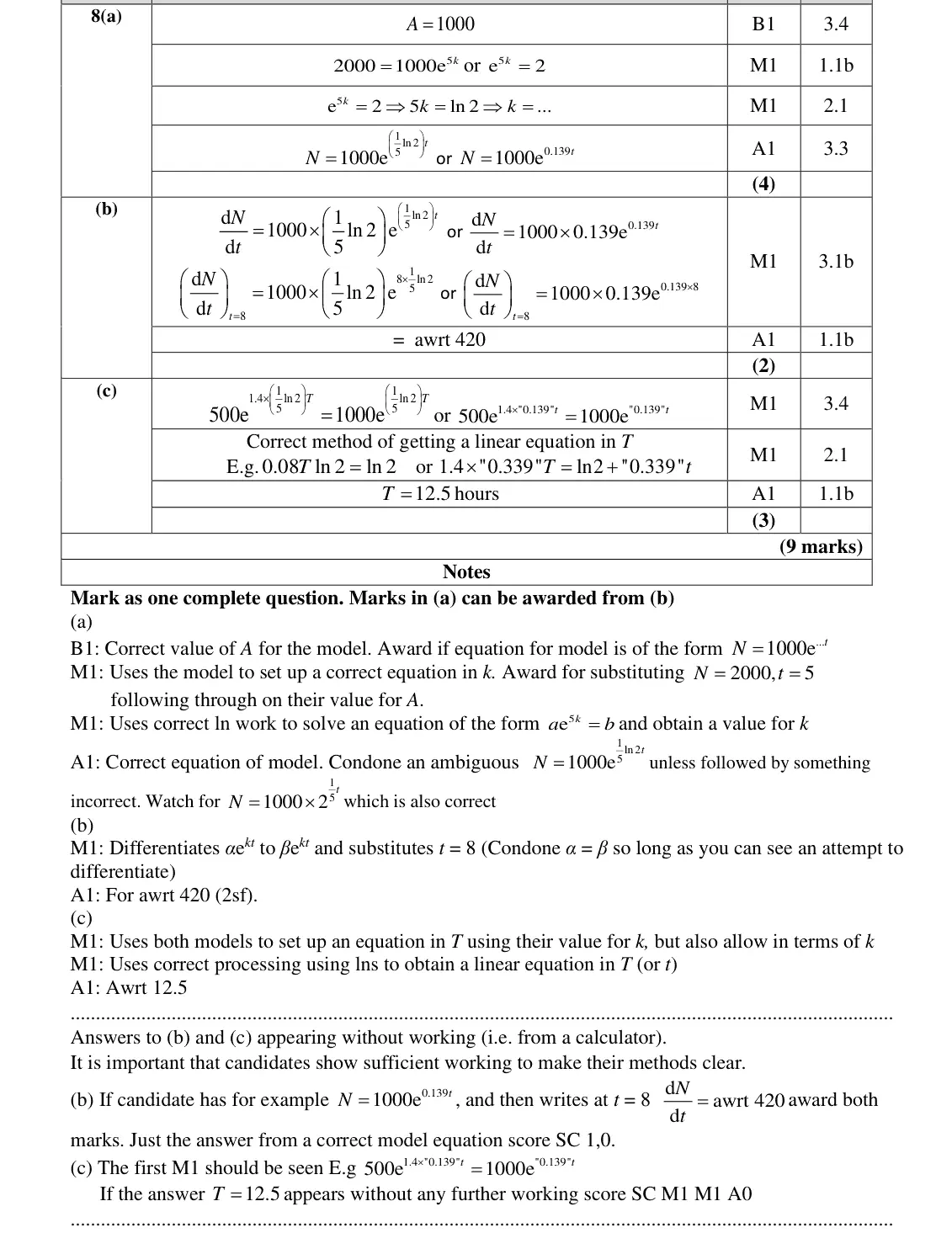
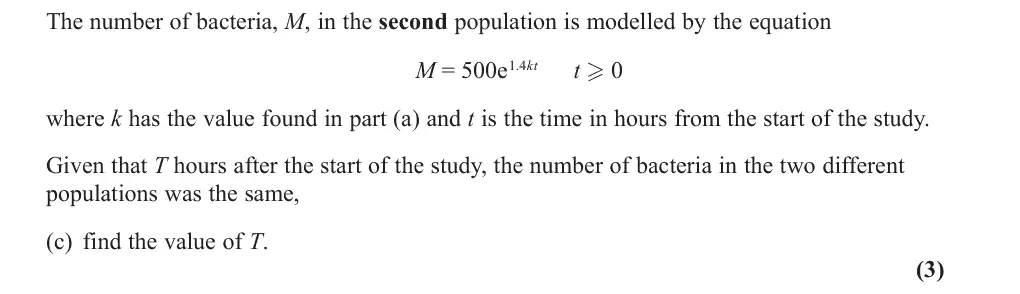
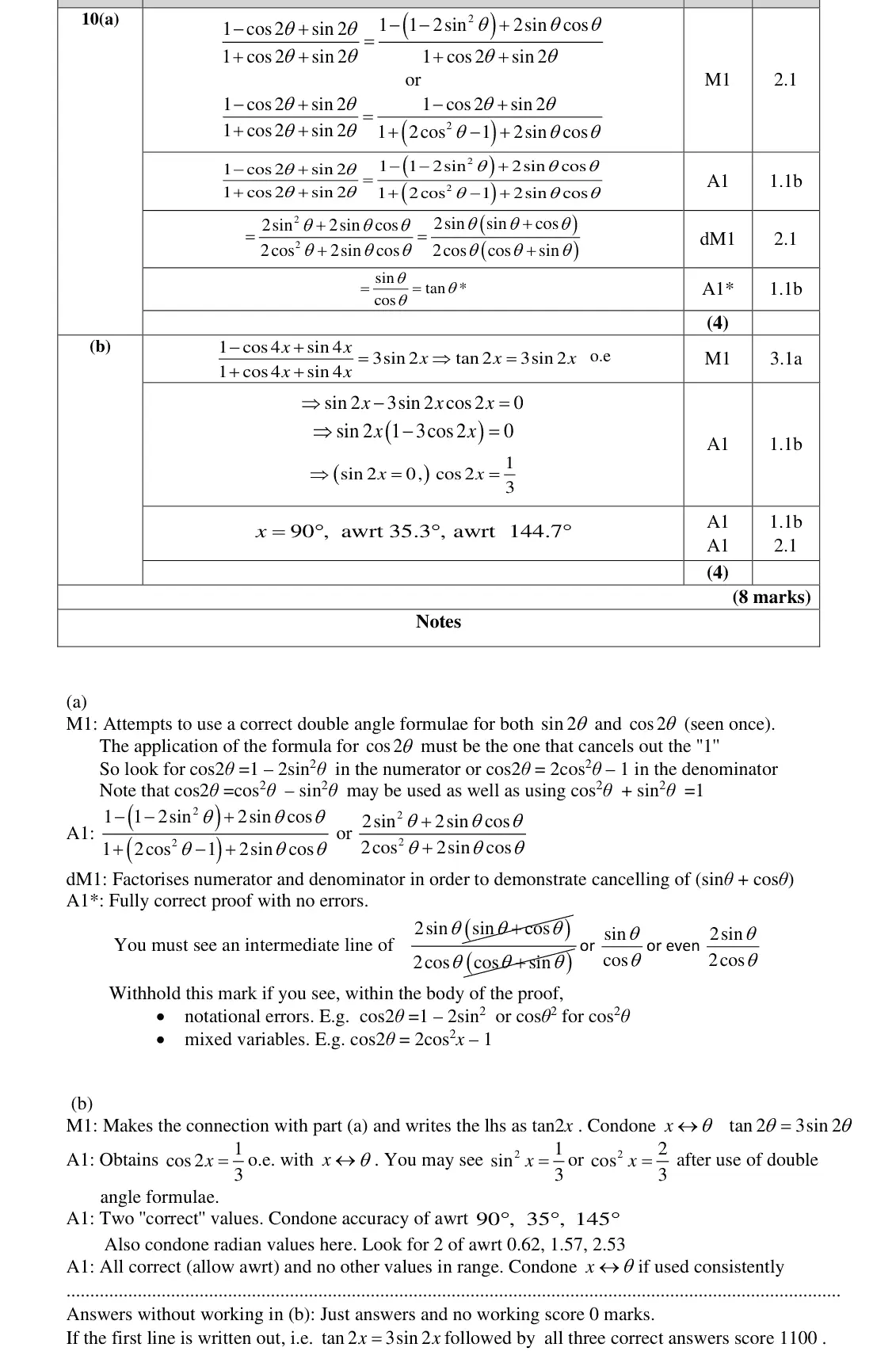
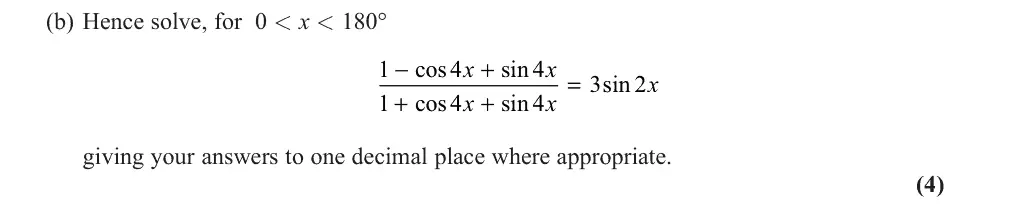
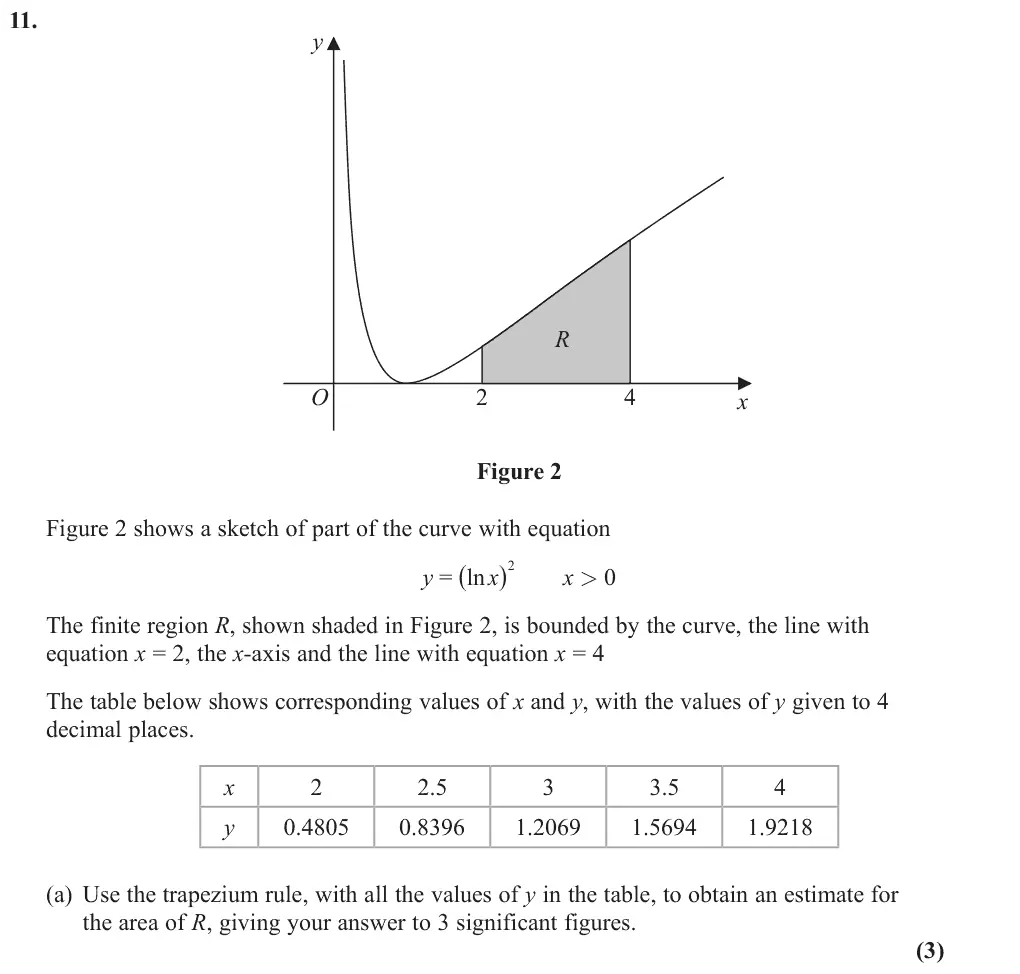
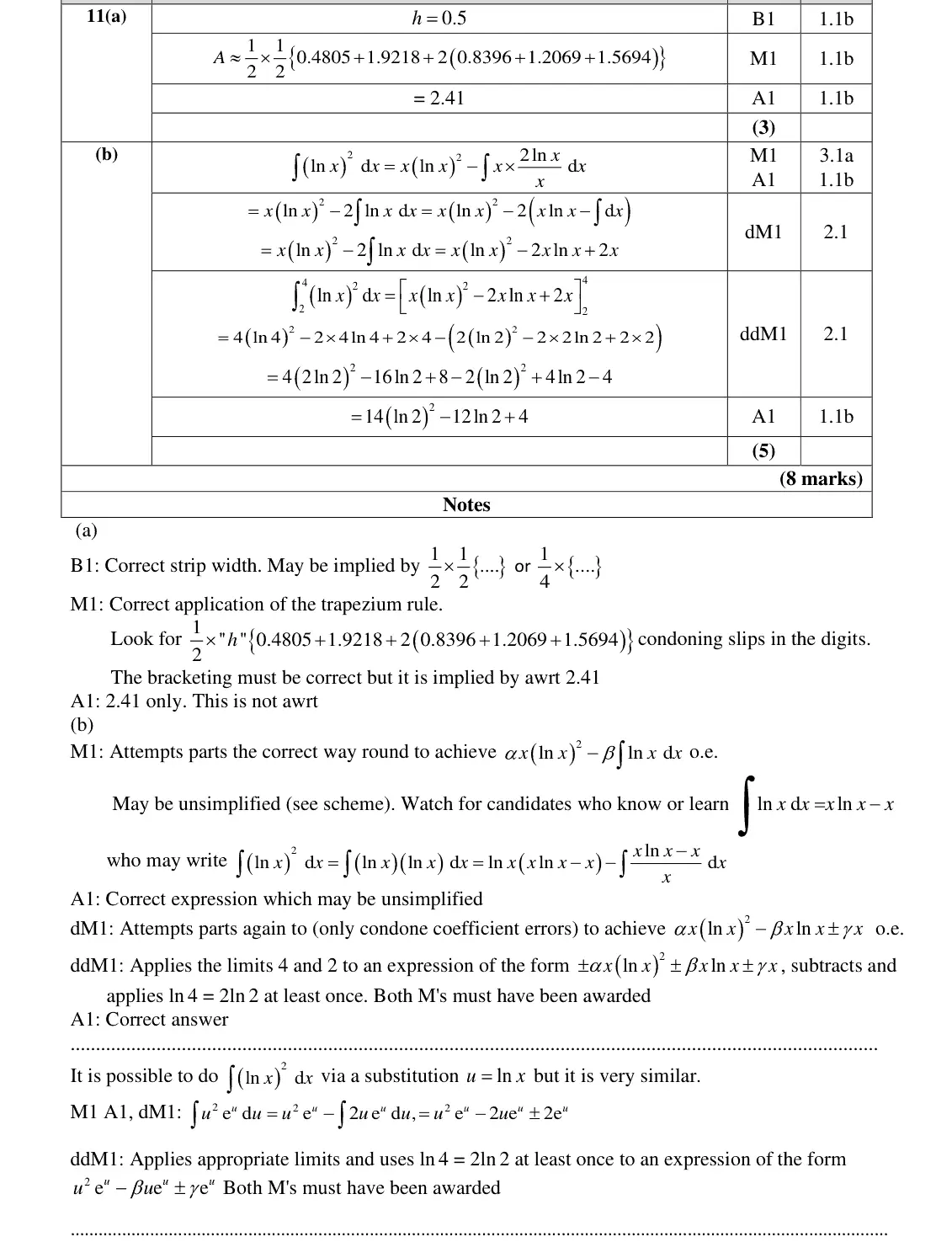
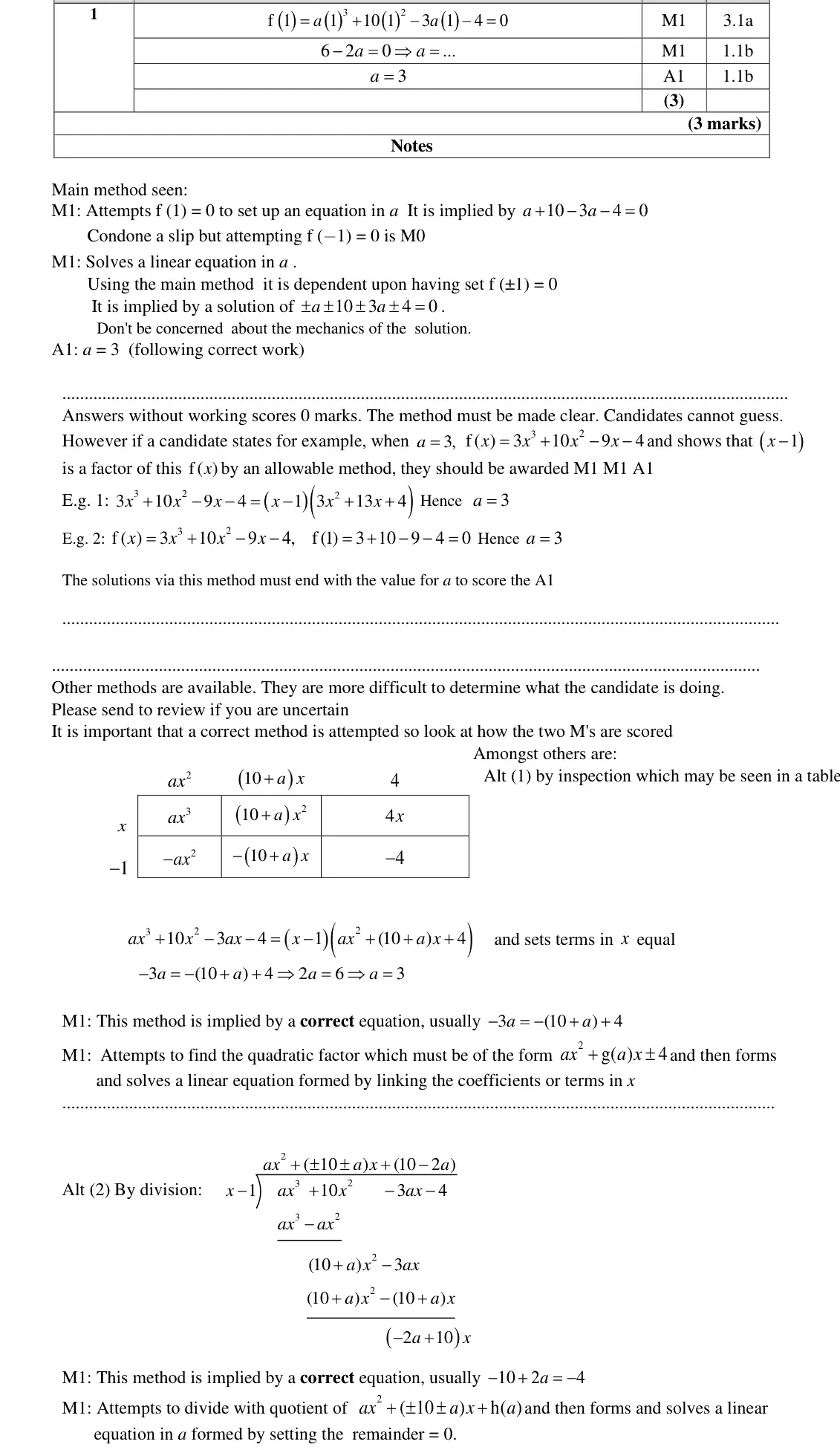
Mark scheme (whole question; this part is marked with the orange bar)
Examiner's comment
This was a very familiar and accessible question, and hence proved to be a suitable first question. A significant majority of candidates gave a fully correct response to this question, with the most common and successful approach being via the use of the factor theorem. Very few candidates tried to evaluate f (-1). Following on from correct use of f (1)=0, there were occasional errors in solving the resulting simple linear equation. One (perhaps unexpected) error seen several times was to simplify a(1)3 as a3. Algebraic division was attempted by some candidates, but the working needed here was much more complicated and so often led to errors (mainly with signs). This does highlight the importance of choosing the best method to a problem, as well as carrying it out accurately.
Common mistakes
- factor theorem: set f(1) = 0 (not f(−1)) to get 6 − 2a = 0, a = 3
- method must be clear (answer alone scores 0)
- a(1)³ wrongly written as a³
- algebraic division is longer and error-prone