June 2023: Paper 1: Pure Mathematics

100 marks · 38 question parts · Question paper, mark scheme and examiner's report on OCR's site

Question by question

QTopicMarksDifficulty
1(a) Trigonometric ratios, graphs, radians and the sine and cosine rules 2 Medium
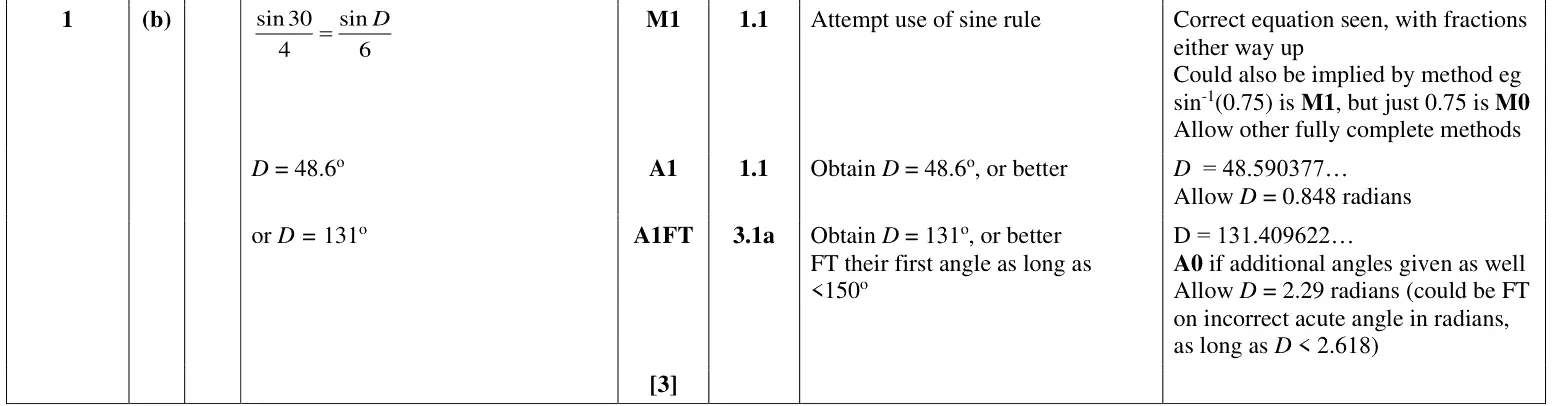
1(b) Trigonometric ratios, graphs, radians and the sine and cosine rules 3 Medium
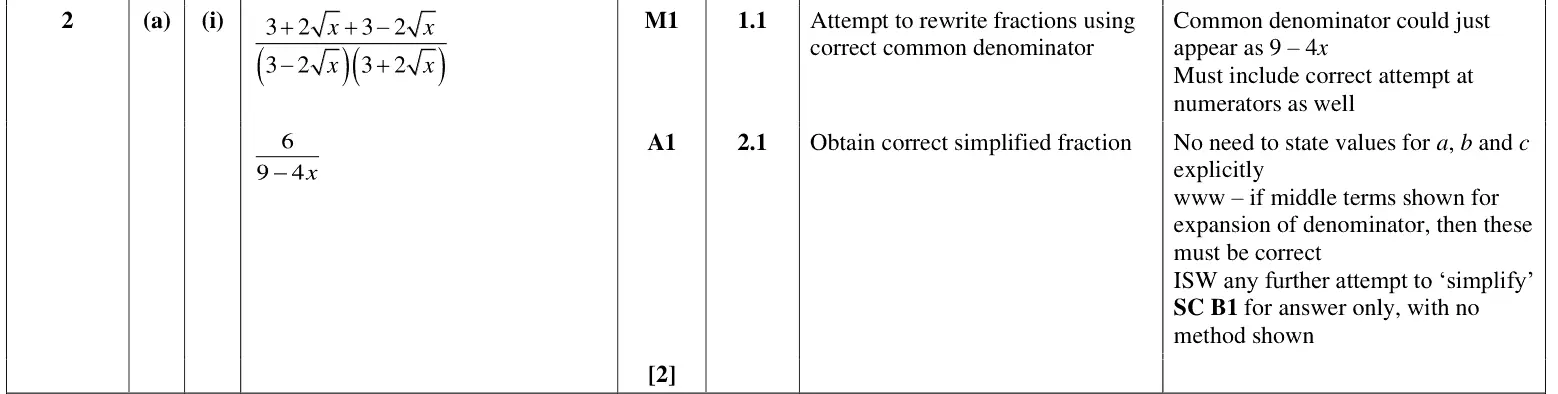
2(a)(i) Indices and surds, Algebraic methods: polynomials, factor theorem and rational expressions 2 Easy
2(a)(ii) Indices and surds 2 Easy
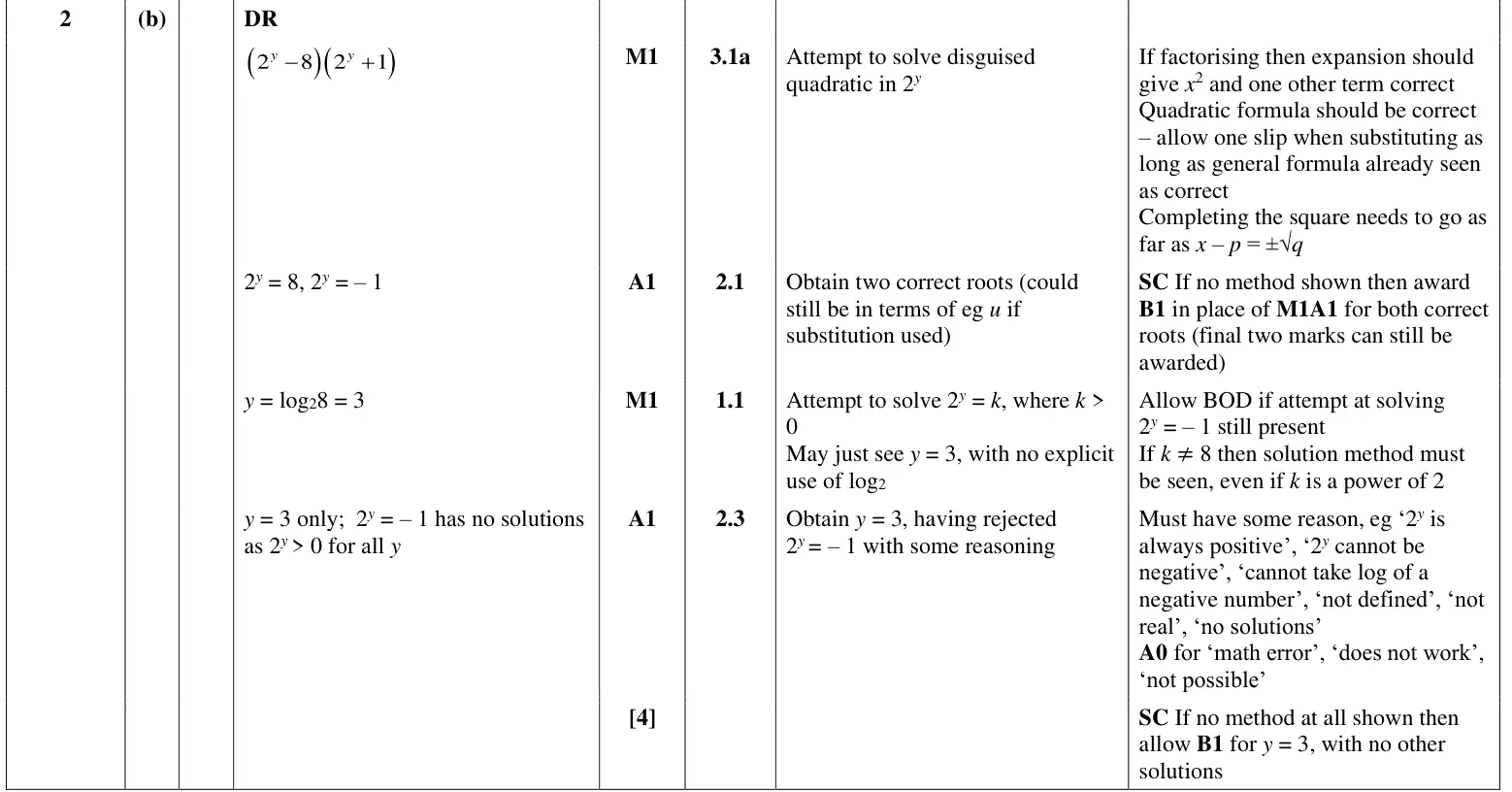
2(b) Quadratics and the discriminant, Exponentials and logarithms 4 Easy
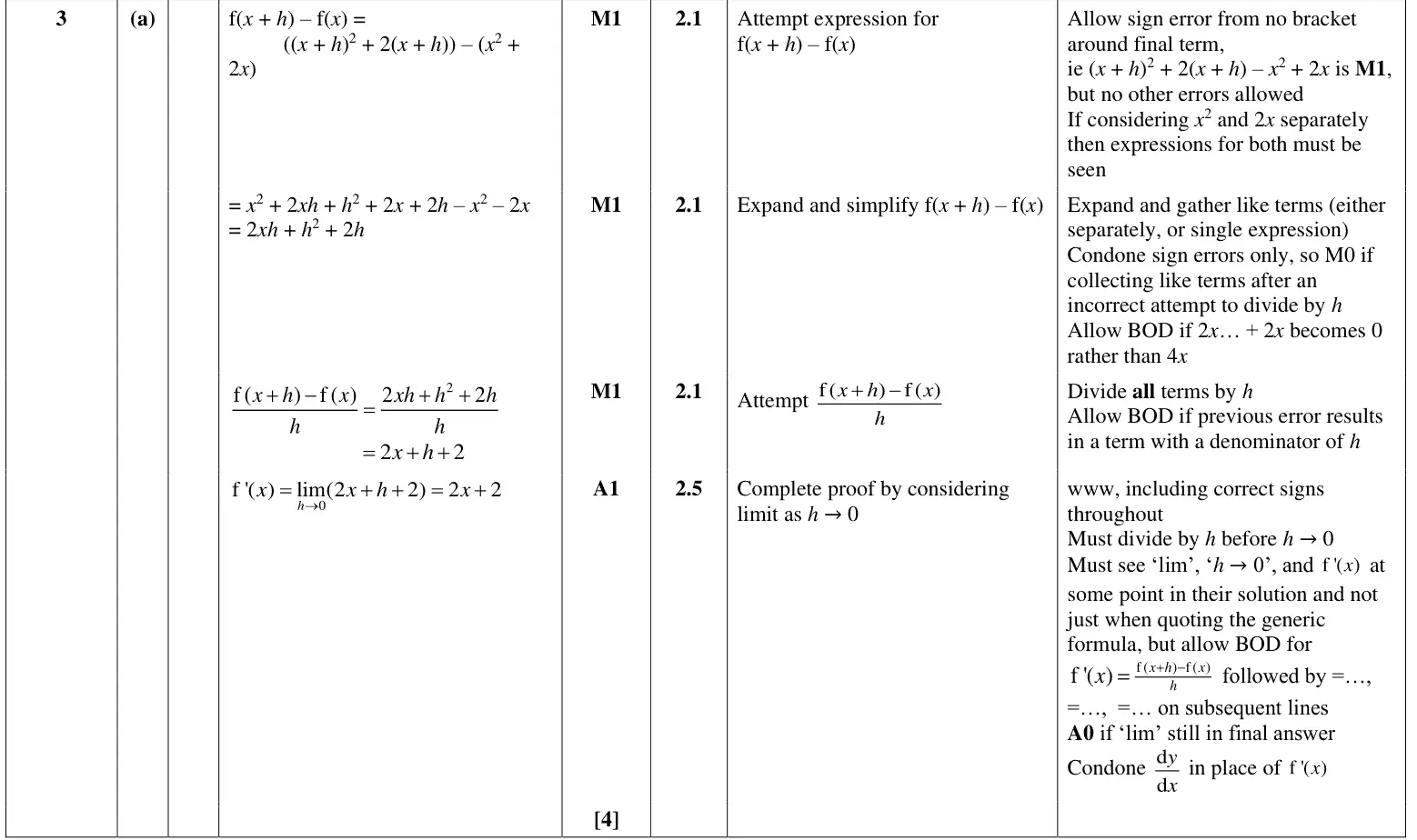
3(a) Differentiation: first principles, gradients, stationary points 4 Easy
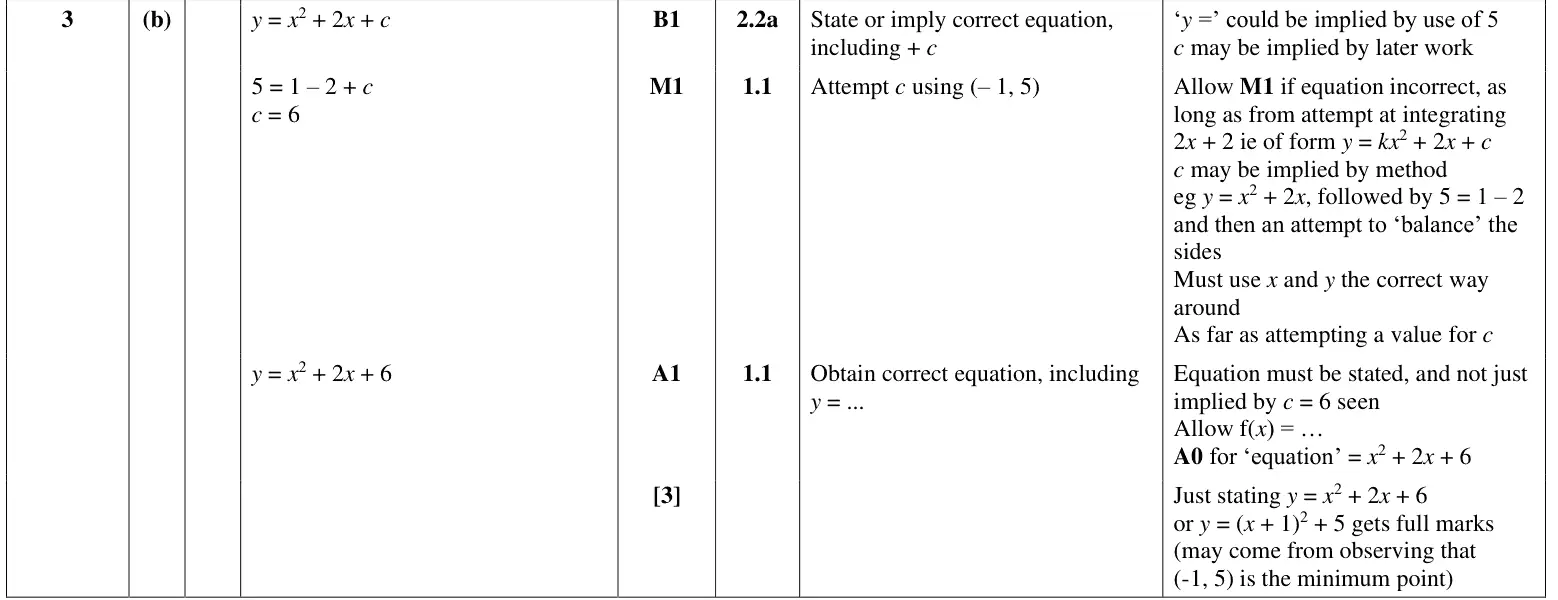
3(b) Integration: standard integrals, definite integrals and areas 3 Easy
4(a) Vectors 1 Easy
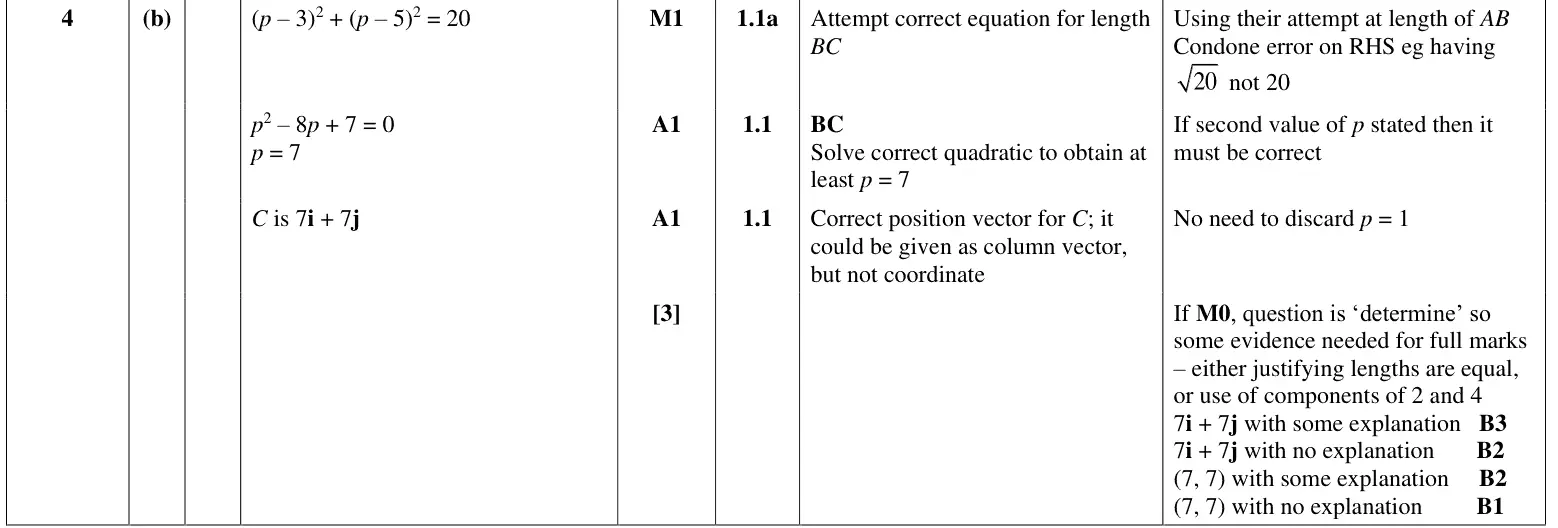
4(b) Vectors, Quadratics and the discriminant 3 Easy
4(c) Vectors 2 Hard
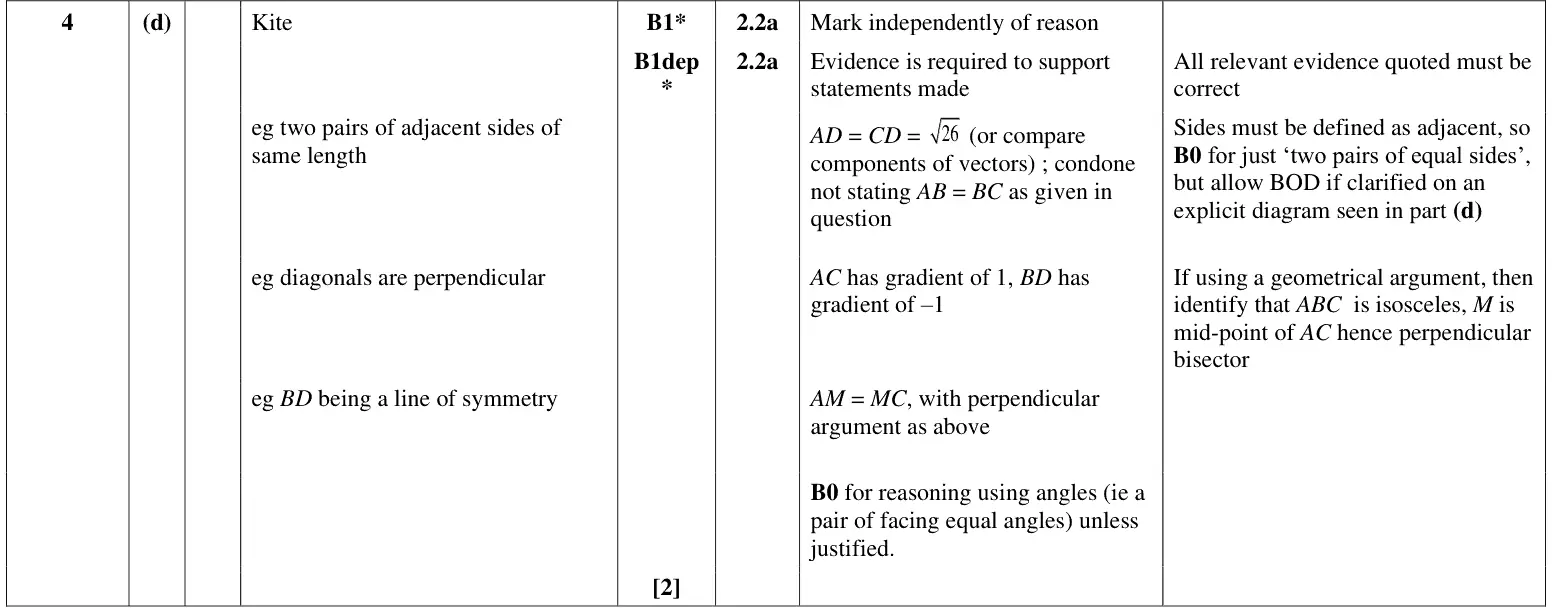
4(d) Vectors 2 Hard
5(a)(i) Functions, composite and inverse functions, modulus, Graphs and transformations 3 Medium
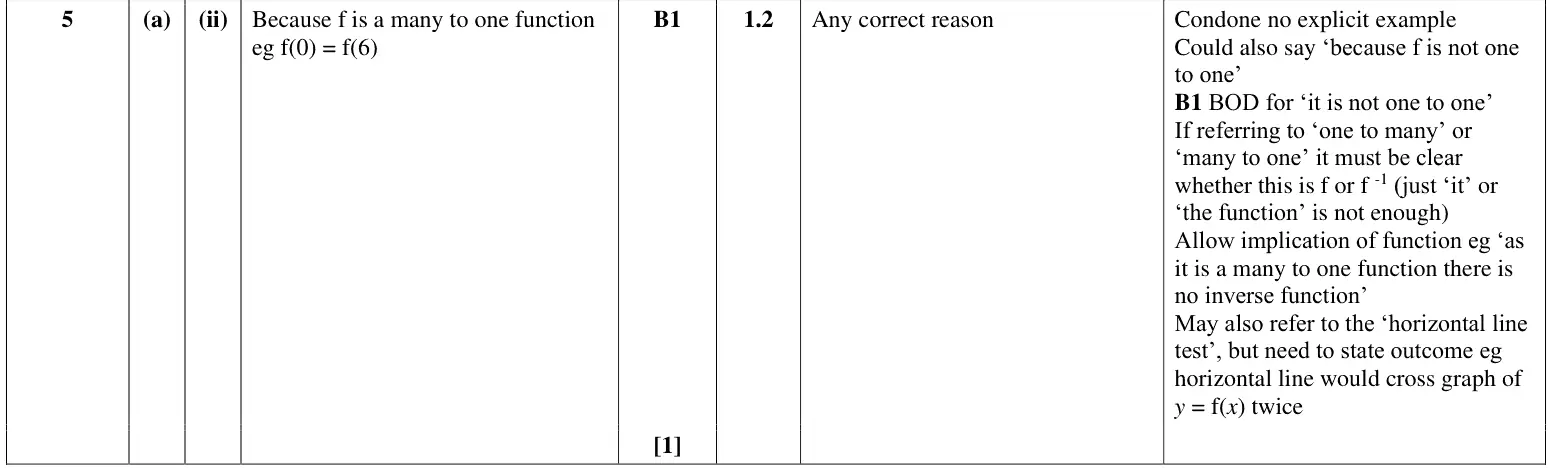
5(a)(ii) Functions, composite and inverse functions, modulus 1 Medium
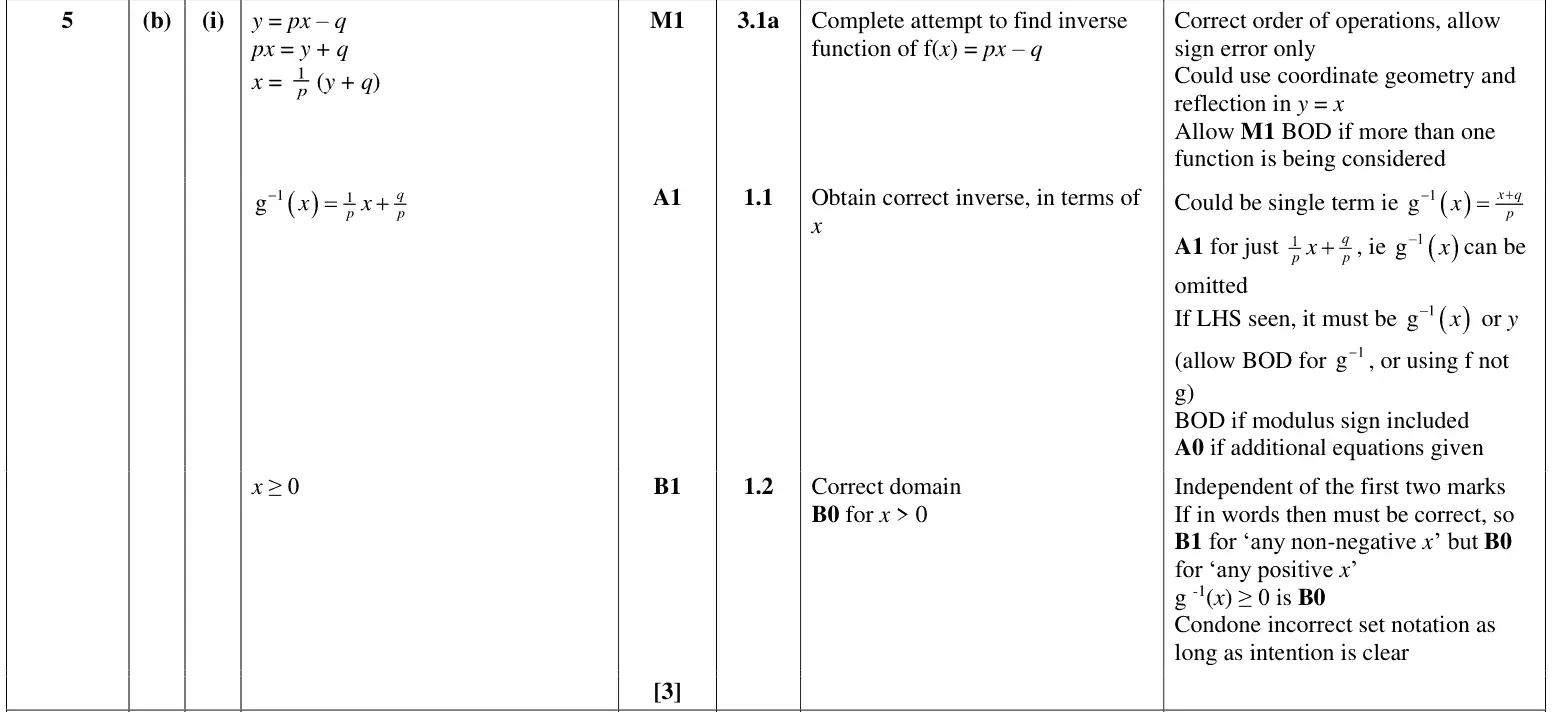
5(b)(i) Functions, composite and inverse functions, modulus 3 Medium
5(b)(ii) Functions, composite and inverse functions, modulus 1 Hard
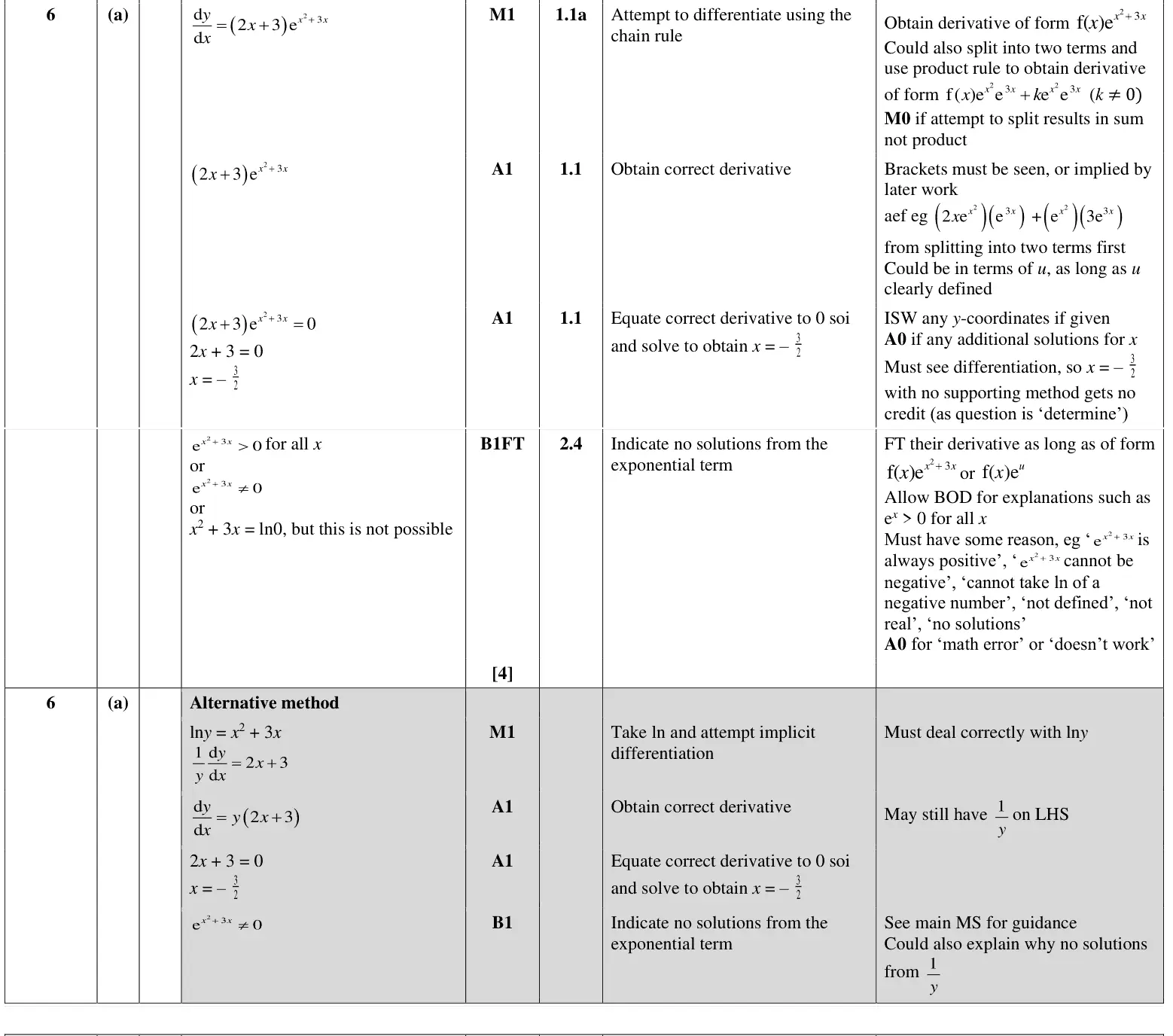
6(a) Chain, product and quotient rules; connected rates of change, Differentiation: first principles, gradients, stationary points 4 Easy
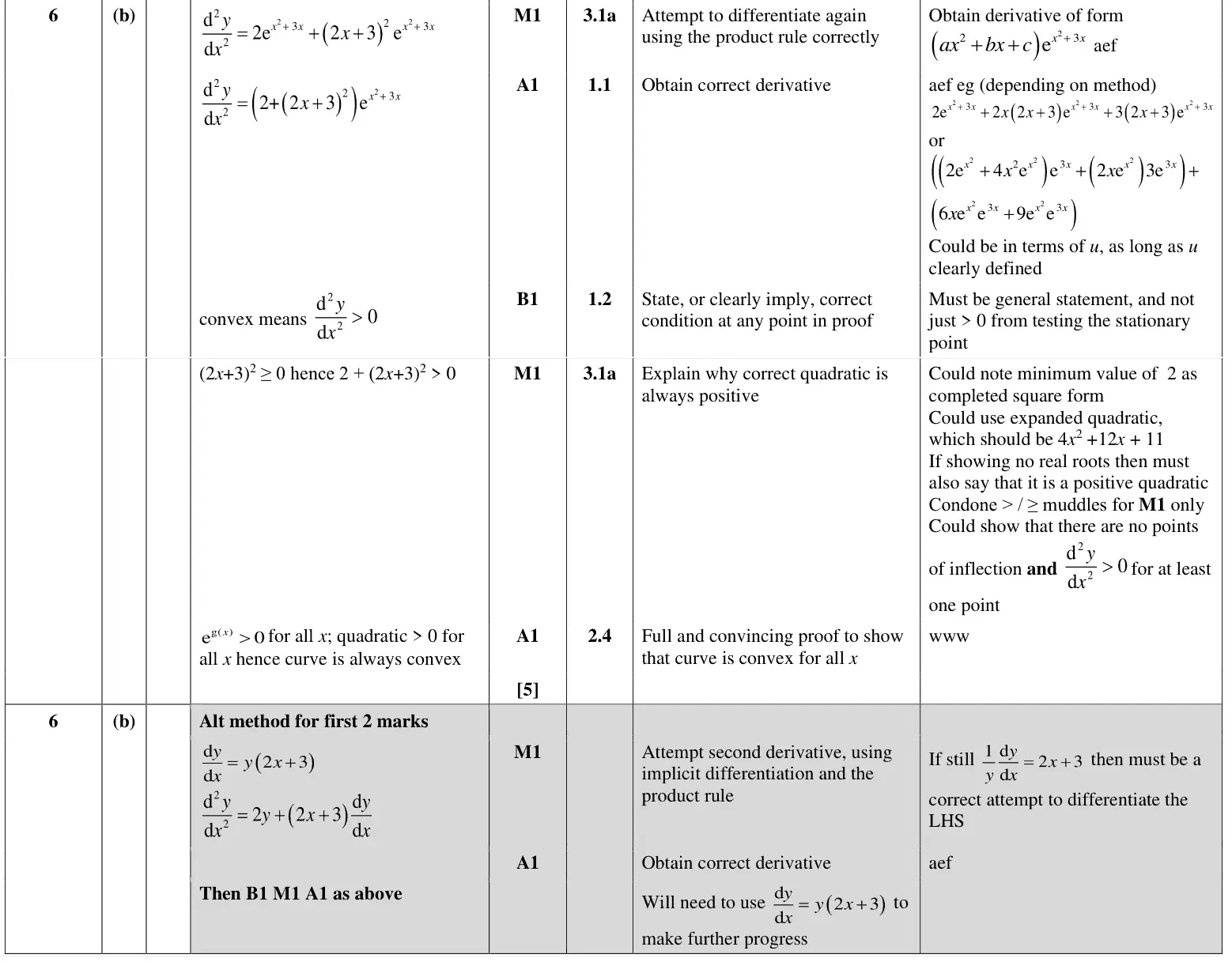
6(b) Differentiation: first principles, gradients, stationary points, Chain, product and quotient rules; connected rates of change, Quadratics and the discriminant 5 Hard
7(a) Addition and double-angle formulae, harmonic form, Trigonometric identities and proofs, Trigonometric ratios, graphs, radians and the sine and cosine rules 2 Hard
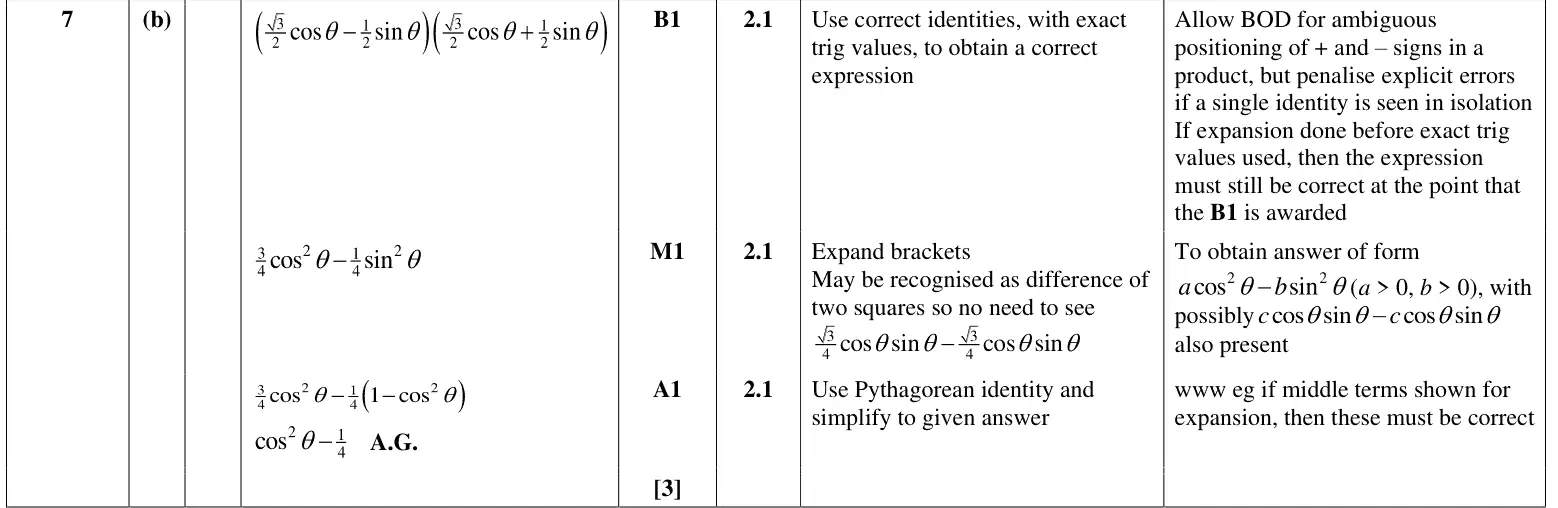
7(b) Addition and double-angle formulae, harmonic form, Trigonometric identities and proofs, Trigonometric ratios, graphs, radians and the sine and cosine rules 3 Easy
7(c)(i) Trigonometric ratios, graphs, radians and the sine and cosine rules 2 Medium
7(c)(ii) Trigonometric ratios, graphs, radians and the sine and cosine rules 2 Medium
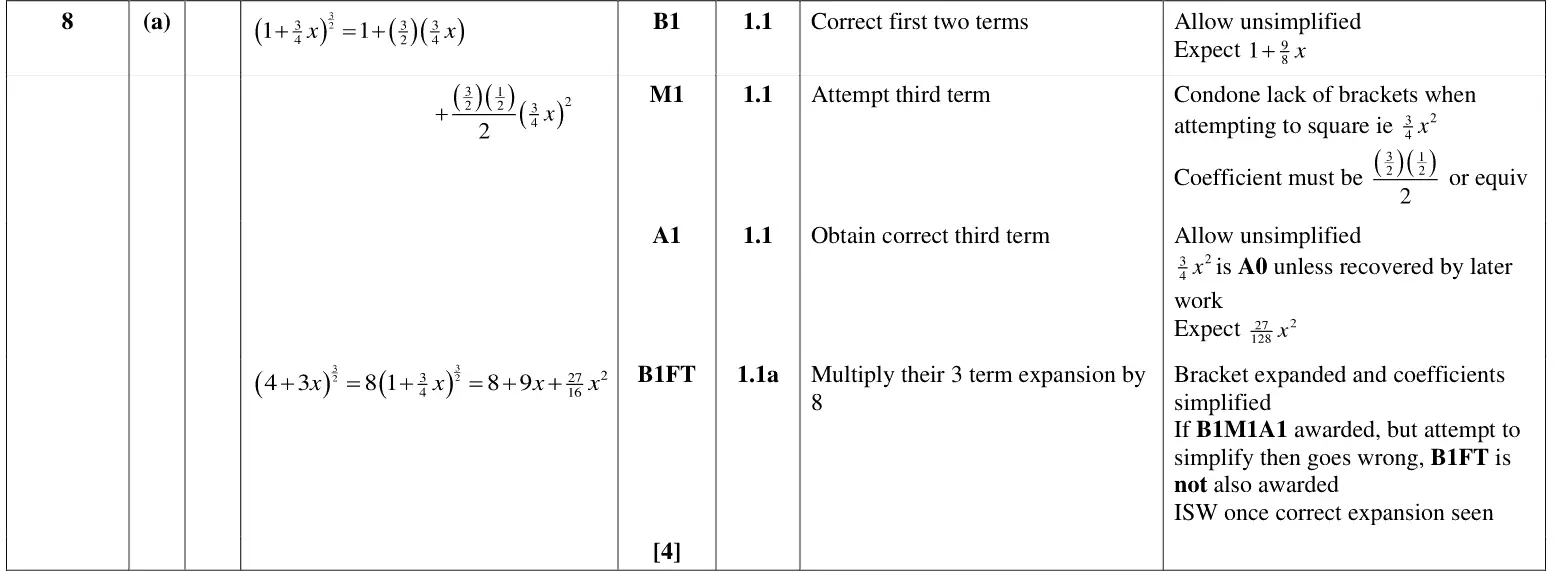
8(a) Binomial expansion 4 Easy
8(b) Binomial expansion 1 Hard
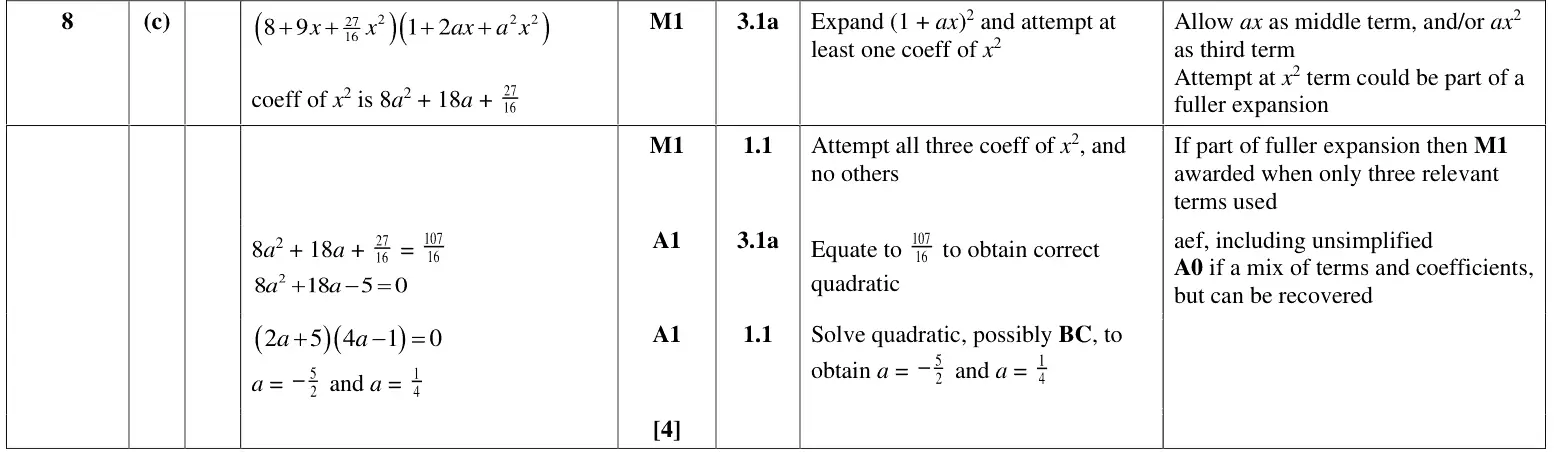
8(c) Binomial expansion, Quadratics and the discriminant 4 Easy
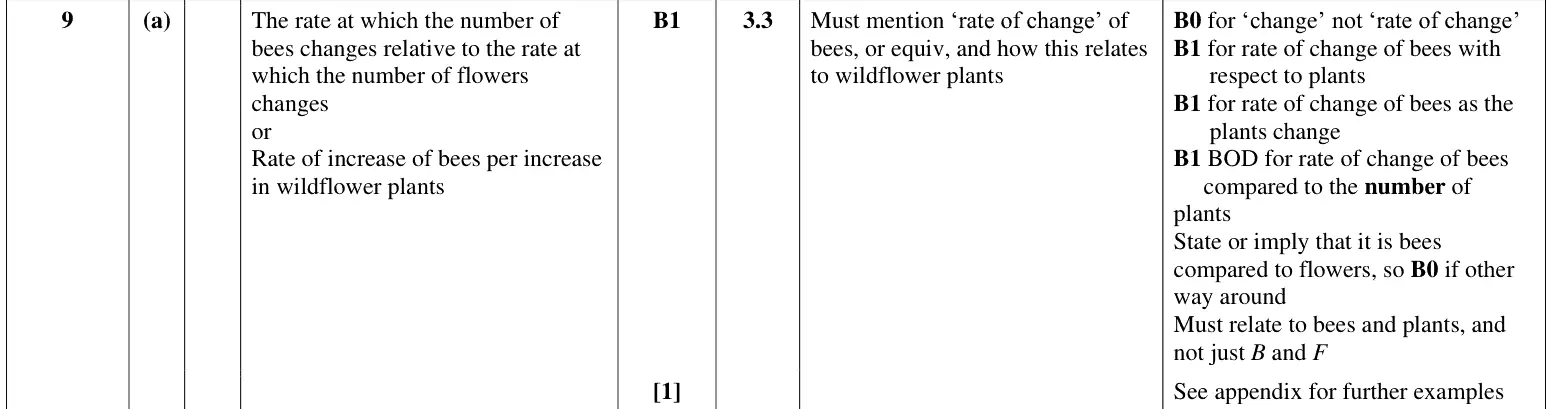
9(a) Differentiation: first principles, gradients, stationary points, Chain, product and quotient rules; connected rates of change 1 Medium
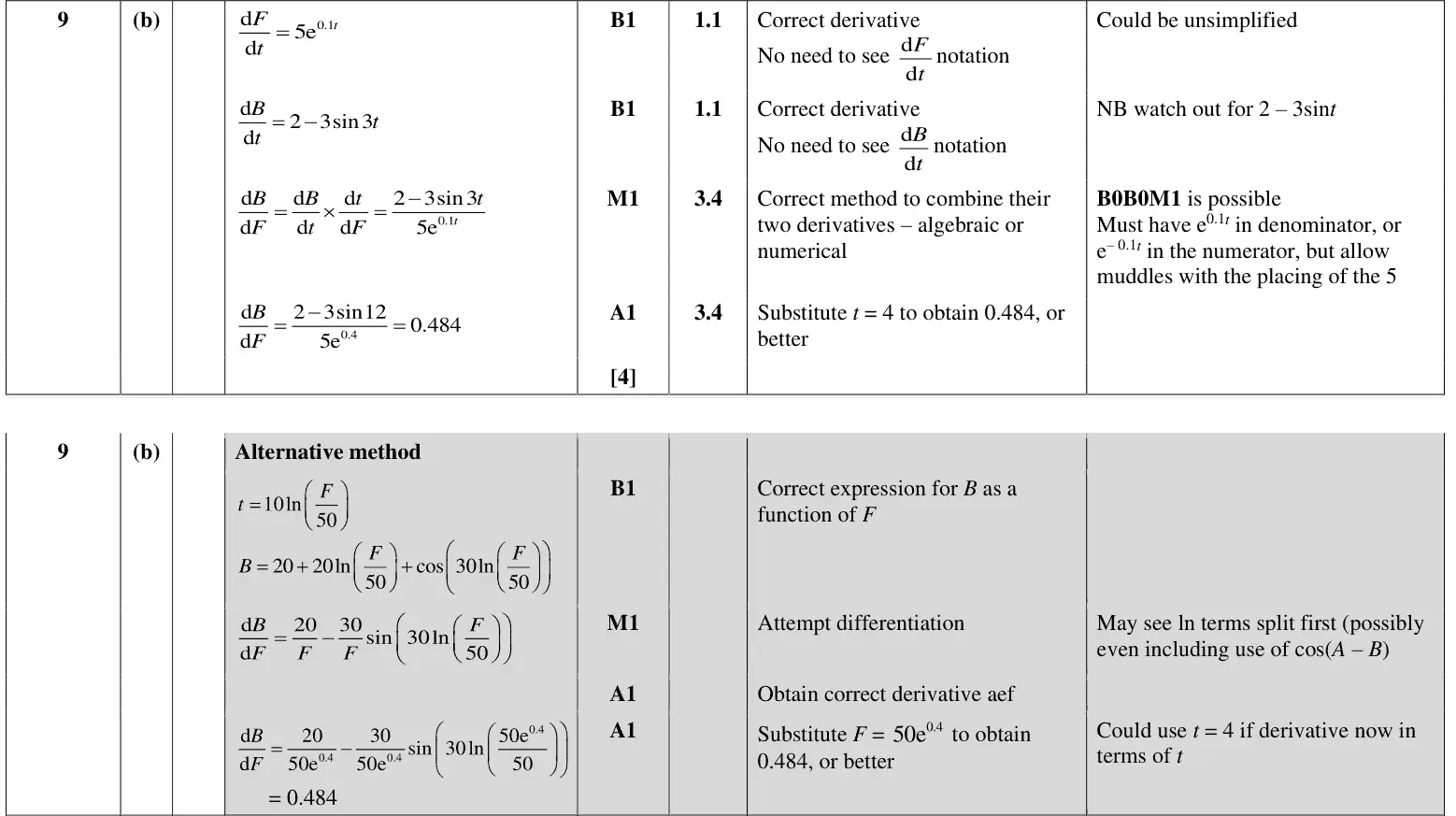
9(b) Chain, product and quotient rules; connected rates of change, Differentiation: first principles, gradients, stationary points 4 Easy
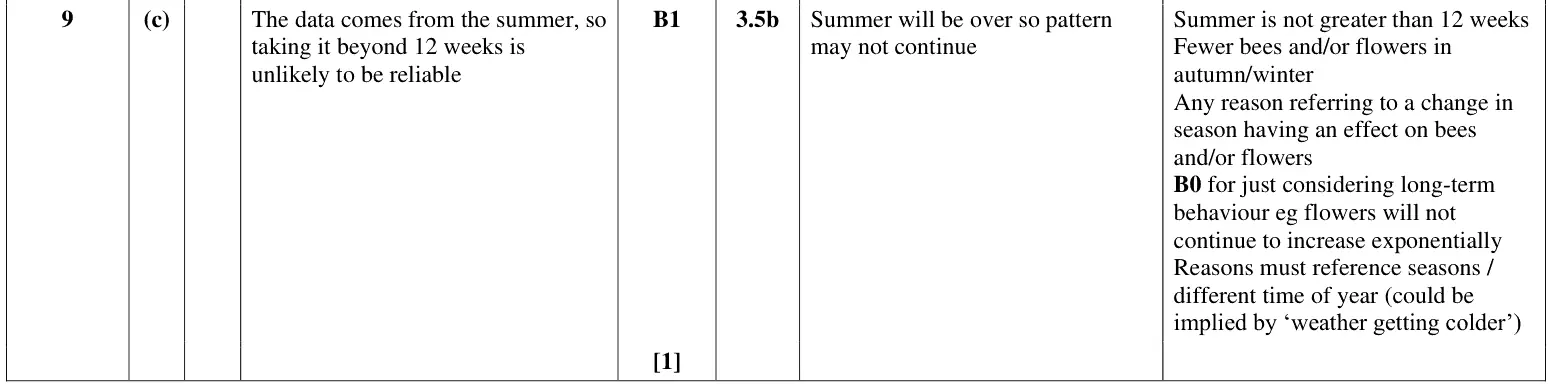
9(c) Chain, product and quotient rules; connected rates of change 1 Medium
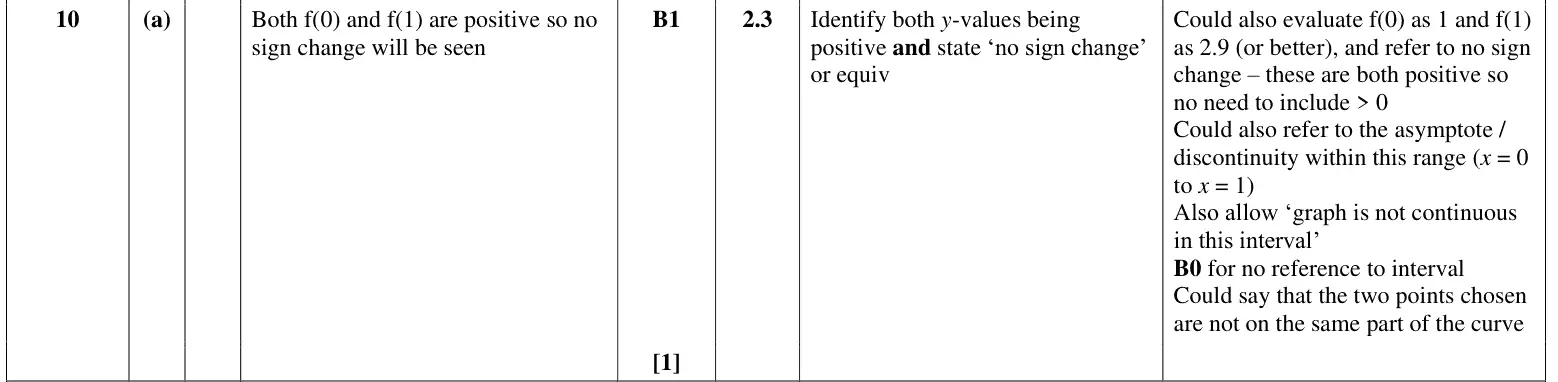
10(a) Numerical methods: roots, iteration and Newton–Raphson 1 Hard
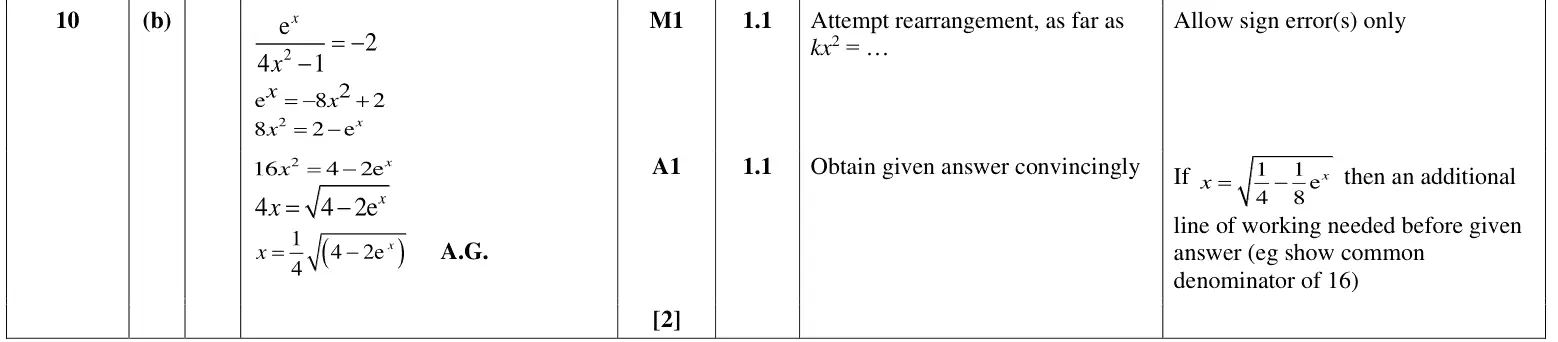
10(b) Numerical methods: roots, iteration and Newton–Raphson, Algebraic methods: polynomials, factor theorem and rational expressions 2 Medium
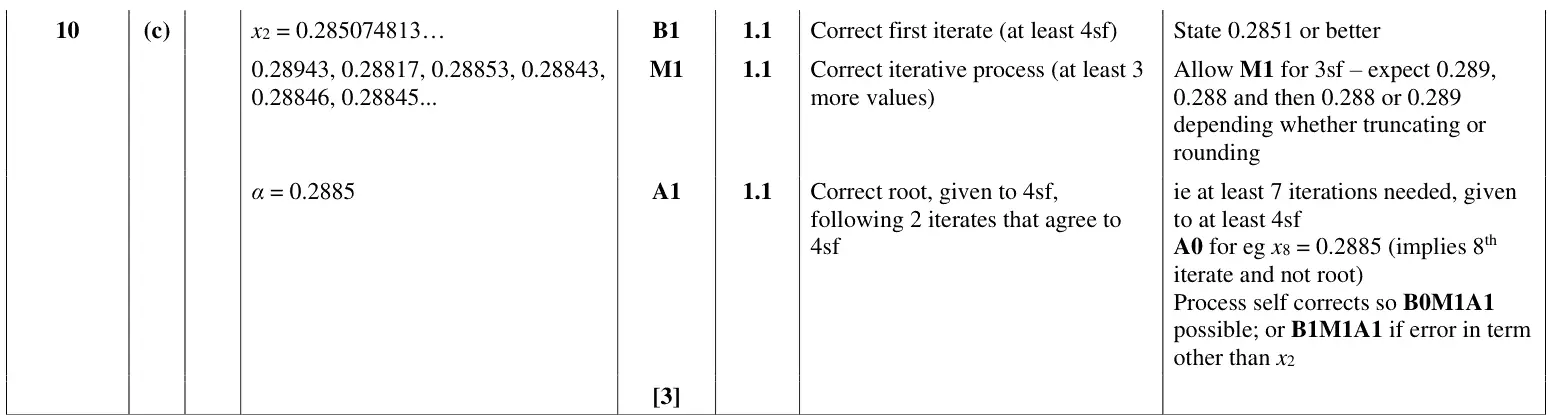
10(c) Numerical methods: roots, iteration and Newton–Raphson 3 Easy
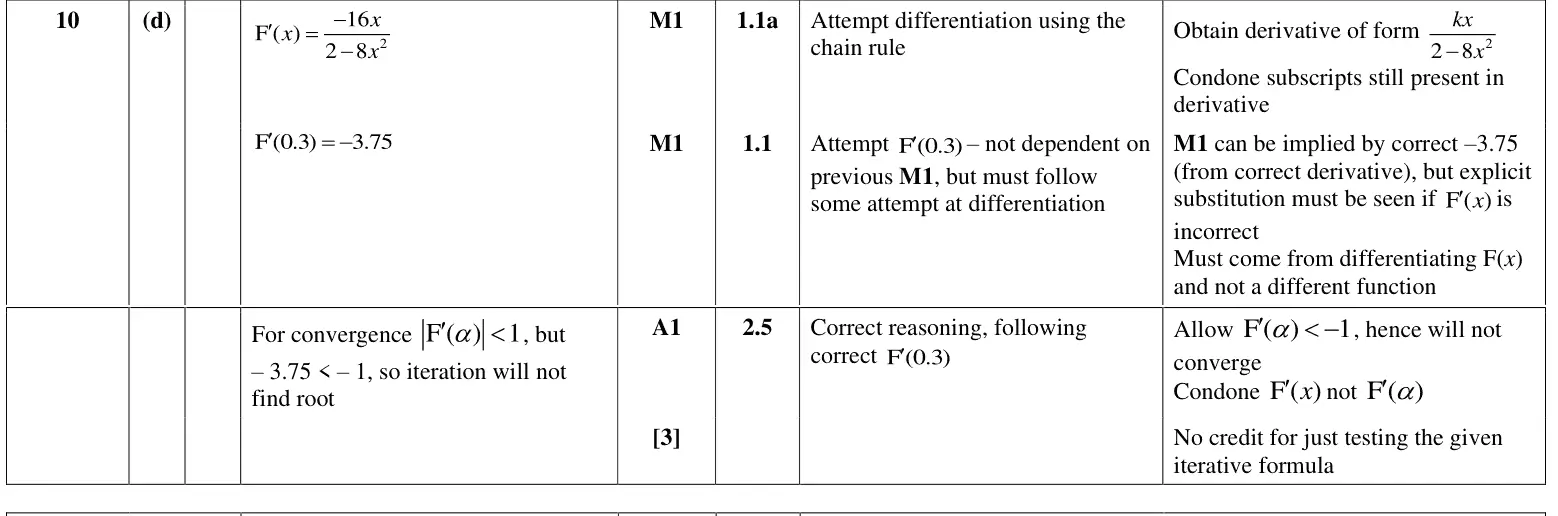
10(d) Numerical methods: roots, iteration and Newton–Raphson, Chain, product and quotient rules; connected rates of change, Differentiation: first principles, gradients, stationary points 3 Medium
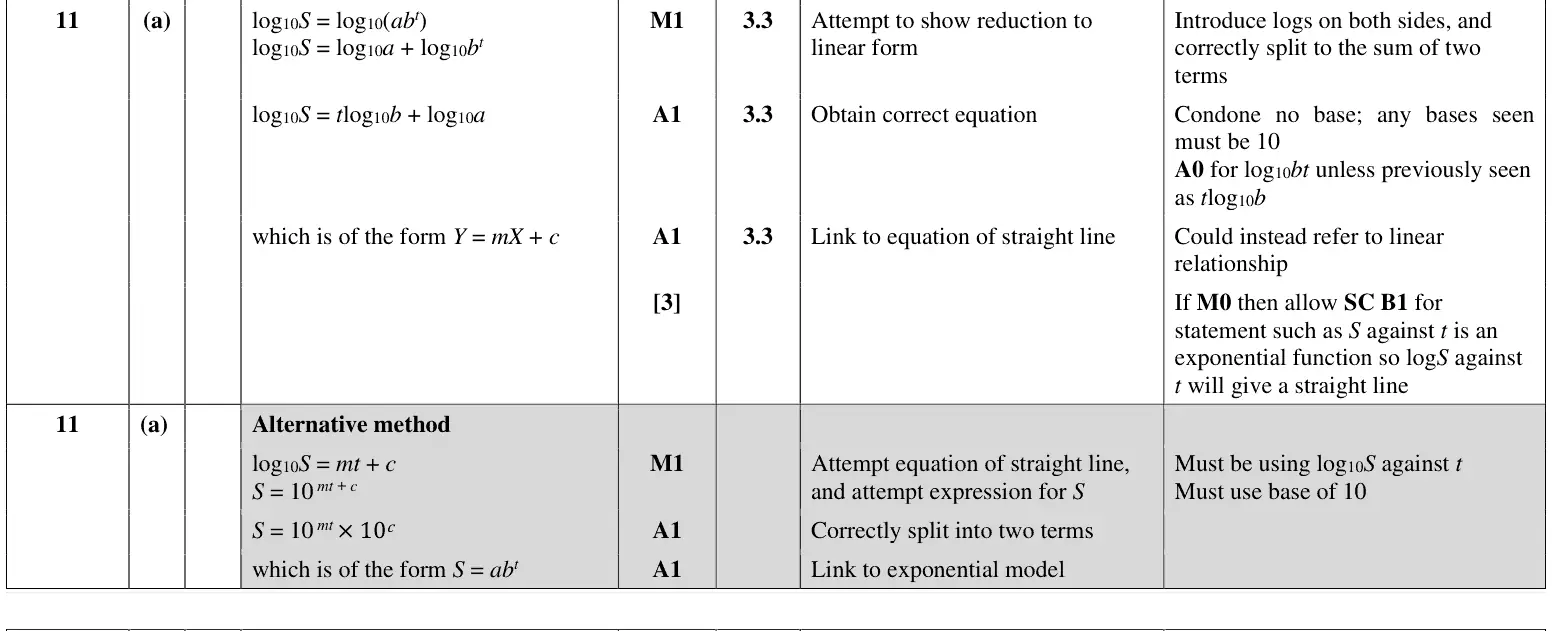
11(a) Exponentials and logarithms 3 Medium
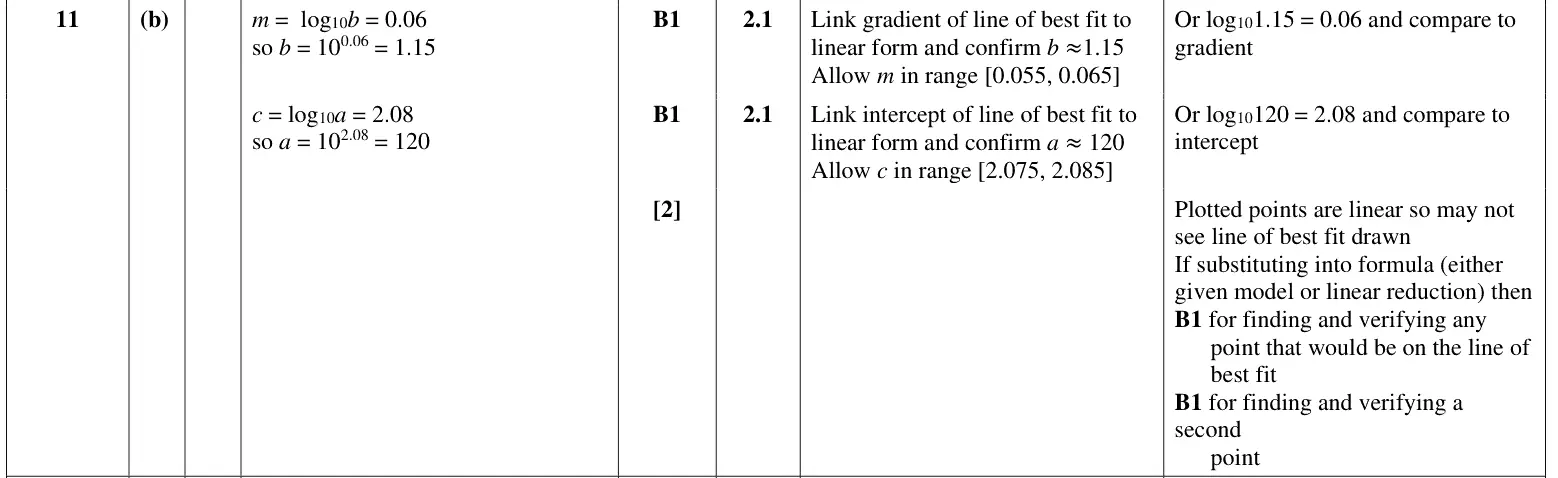
11(b) Exponentials and logarithms 2 Easy
11(c) Exponential growth, decay and modelling 2 Easy
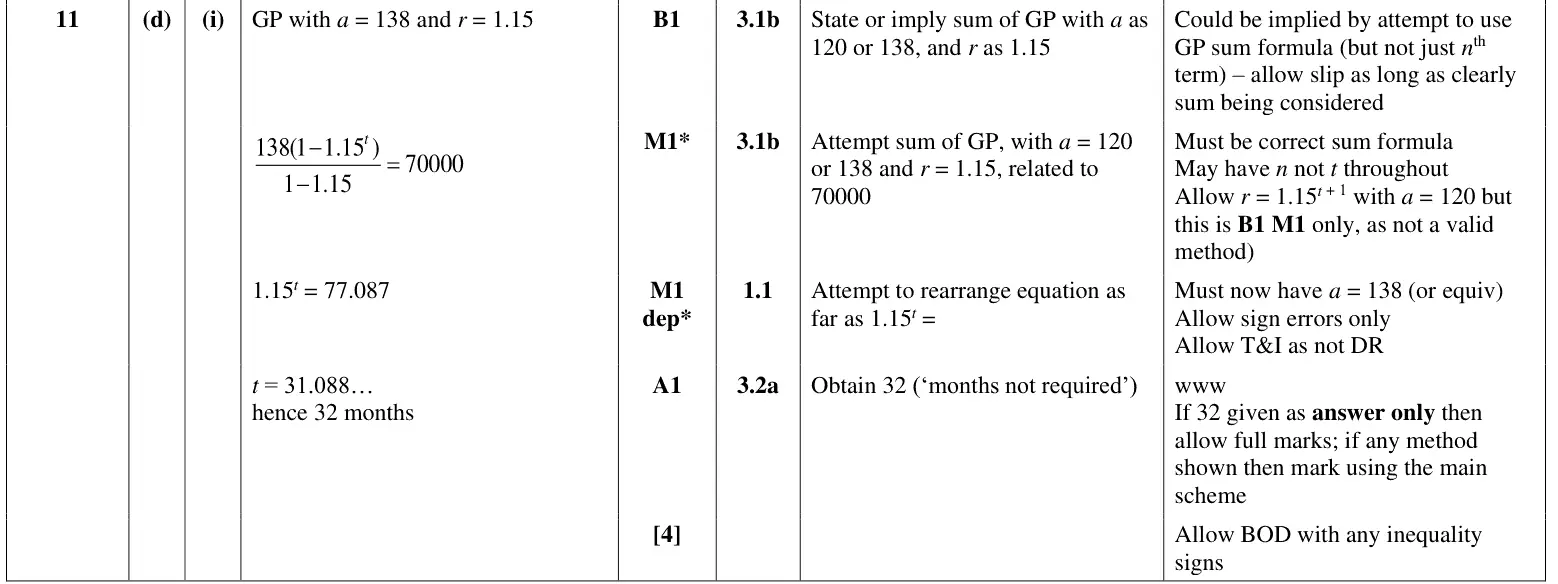
11(d)(i) Sequences and series, Exponentials and logarithms 4 Hard
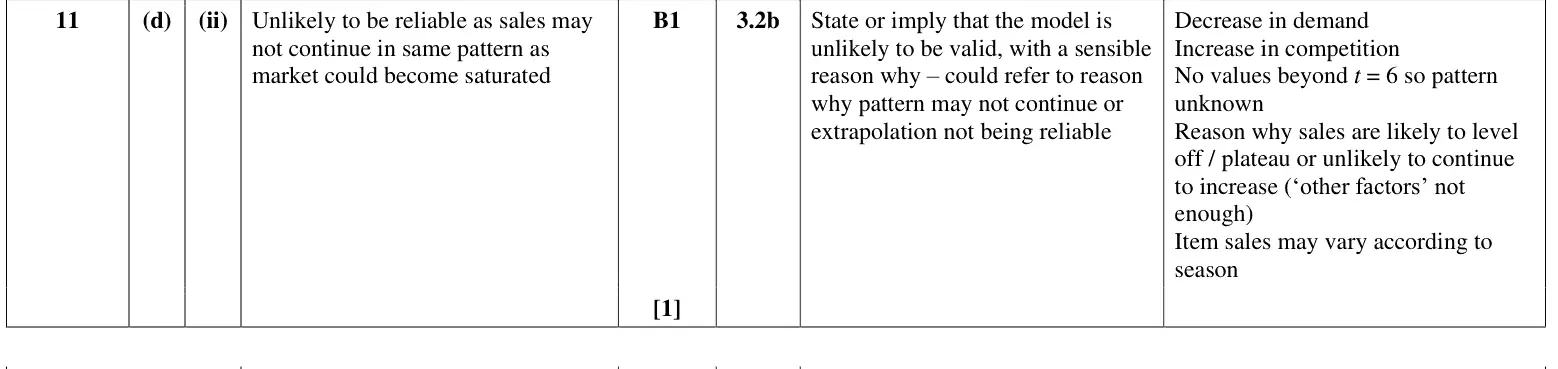
11(d)(ii) Sequences and series, Exponential growth, decay and modelling 1 Hard
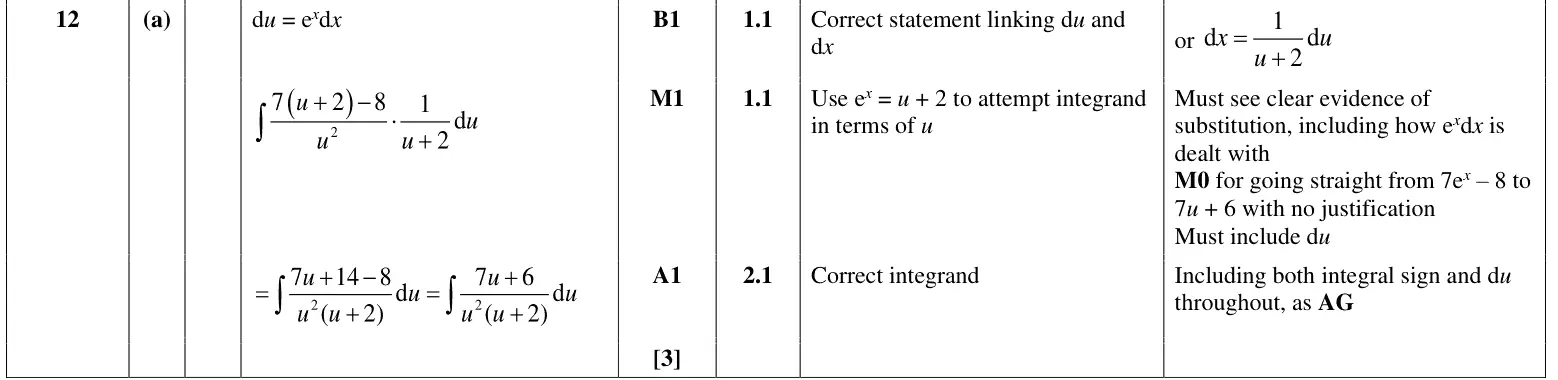
12(a) Integration by parts and by substitution 3 Easy
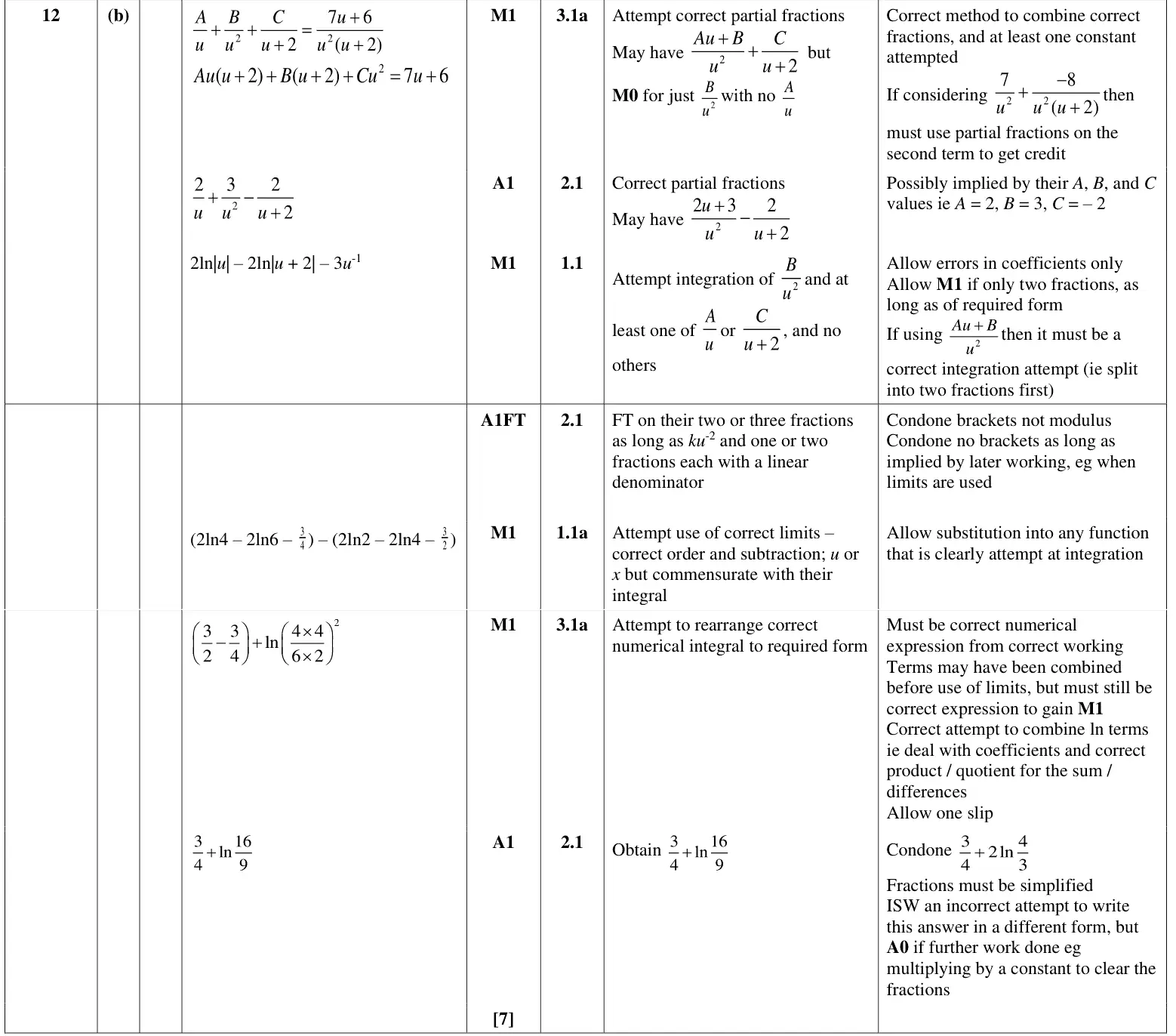
12(b) Partial fractions, Integration: standard integrals, definite integrals and areas, Exponentials and logarithms 7 Hard

The questions

1(a)1(b)2(a)(i)2(a)(ii)2(b)3(a)3(b)4(a)4(b)4(c)4(d)5(a)(i)5(a)(ii)5(b)(i)5(b)(ii)6(a)6(b)7(a)7(b)7(c)(i)7(c)(ii)8(a)8(b)8(c)9(a)9(b)9(c)10(a)10(b)10(c)10(d)11(a)11(b)11(c)11(d)(i)11(d)(ii)12(a)12(b)
June 2023 · Paper 1 · Q1(a) 2 marks Medium trigonometric ratios
1 In the triangle ABC, the length AB = 6 cm, the length AC = 15 cm and the angle BAC = 30°. (a) Calculate the length BC. [2]
June 2023 · Paper 1 · Q1(b) 3 marks Medium trigonometric ratios
Show the start of this questionEarlier part of this question
D is the point on AC such that the length BD = 4 cm. (b) Calculate the possible values of the angle ADB. [3]
June 2023 · Paper 1 · Q2(a)(i) 2 marks Easy indices and surdsalgebraic methods
a 2 (a) (i) Show that can be written in the form b , where a, b and c are + cx x x + - + constants to be determined. [2]
June 2023 · Paper 1 · Q2(a)(ii) 2 marks Easy indices and surds
Show the start of this questionEarlier part of this question
(ii) Hence solve the equation . [2] + = x x - +
June 2023 · Paper 1 · Q2(b) 4 marks Easy quadraticsexponentials and logs
(b) In this question you must show detailed reasoning. y y Solve the equation 2 . [4] - - = #

June 2023 · Paper 1 · Q3(a) 4 marks Easy differentiation
3 (a) Given that ( ) f x x x , use differentiation from first principles to show that f ( )x x . l = + = + [4]
June 2023 · Paper 1 · Q3(b) 3 marks Easy integration
Show the start of this questionEarlier part of this question
d = y (b) The gradient of a curve is given by x x + and the curve passes through the d point (-1, 5). Find the equation of the curve. [3]
June 2023 · Paper 1 · Q4(a) 1 mark Easy vectors
4 It is given that ABCD is a quadrilateral. The position vector of A is i j + , and the position vector of B is i j . + (a) Find the length AB. [1]
June 2023 · Paper 1 · Q4(b) 3 marks Easy vectorsquadratics
Show the start of this questionEarlier part of this question
(b) The position vector of C is p i+ p j where p is a constant greater than 1. Given that the length AB is equal to the length BC, determine the position vector of C. [3]
June 2023 · Paper 1 · Q4(c) 2 marks Hard vectors
Show the start of this questionEarlier part of this questionEarlier part of this question
(c) The point M is the midpoint of AC. Given that MD BM , determine the position vector of D. [2] =
June 2023 · Paper 1 · Q4(d) 2 marks Hard vectors
Show the start of this questionEarlier part of this questionEarlier part of this questionEarlier part of this question
(d) State the name of the quadrilateral ABCD, giving a reason for your answer. [2]
June 2023 · Paper 1 · Q5(a)(i) 3 marks Medium functionsgraphs and transformations
5 (a) The function ( )x f is defined for all values of x as ( ) f x ax b , where a and b are positive = - constants. (i) The graph of y f ( ) x + , where c is a constant, has a vertex at (3, 1) and crosses the c = y-axis at (0, 7). Find the values of a, b and c. [3]


June 2023 · Paper 1 · Q5(a)(ii) 1 mark Medium functions
Show the start of this questionEarlier part of this question
(ii) Explain why f - ( )x does not exist. [1]
June 2023 · Paper 1 · Q5(b)(i) 3 marks Medium functions
Show the start of this questionEarlier part of this question
q (b) The function ( )x g is defined for x as ( )x g px q , where p and q are positive = - H p constants. g 1 g 1 (i) Find, in terms of p and q, an expression for - ( )x , stating the domain of - ( )x . [3]
June 2023 · Paper 1 · Q5(b)(ii) 1 mark Hard functions
Show the start of this questionEarlier part of this questionEarlier part of this question
g 1 (ii) State the set of values of p for which the equation ( ) g x - ( ) x has no solutions. [1] =
June 2023 · Paper 1 · Q6(a) 4 marks Easy differentiation rulesdifferentiation
+ . ex x 6 A curve has equation y = (a) Determine the x-coordinates of any stationary points on the curve. [4]
June 2023 · Paper 1 · Q6(b) 5 marks Hard differentiationdifferentiation rulesquadratics
(b) Show that the curve is convex for all values of x. [5]
June 2023 · Paper 1 · Q7(a) 2 marks Hard double angle formulaetrig identitiestrigonometric ratios
7 (a) Use the result cos ( A B ) cos A cos B sin A sin B to show that + = - cos ( A B ) cos A cos B sin A sin B . [2] - = +
June 2023 · Paper 1 · Q7(b) 3 marks Easy double angle formulaetrig identitiestrigonometric ratios
The function ( ) f i is defined as cos ( ° ) cos ( ° ) , where i is in degrees. i i + - (b) Show that ( ) f cos . [3] i = i -
June 2023 · Paper 1 · Q7(c)(i) 2 marks Medium trigonometric ratios
Show the start of this questionEarlier part of this question
(c) (i) Determine the following. • The maximum value of ( ) f i • The smallest positive value of i for which this maximum value occurs [2]
June 2023 · Paper 1 · Q7(c)(ii) 2 marks Medium trigonometric ratios
Show the start of this questionEarlier part of this question
(ii) Determine the following. • The minimum value of ( ) f i • The smallest positive value of i for which this minimum value occurs [2]
June 2023 · Paper 1 · Q8(a) 4 marks Easy binomial expansion
^ h in ascending powers of x. 8 (a) Find the first three terms in the expansion of x [4] +
June 2023 · Paper 1 · Q8(b) 1 mark Hard binomial expansion
Show the start of this questionEarlier part of this question
(b) State the range of values of x for which the expansion in part (a) is valid. [1]
June 2023 · Paper 1 · Q8(c) 4 marks Easy binomial expansionquadratics
Show the start of this questionEarlier part of this question
107. the coefficient of x2 is 16 (c) In the expansion of ( x ) ( ax ) + + Determine the possible values of the constant a. [4]
June 2023 · Paper 1 · Q9(a) 1 mark Medium differentiationdifferentiation rules
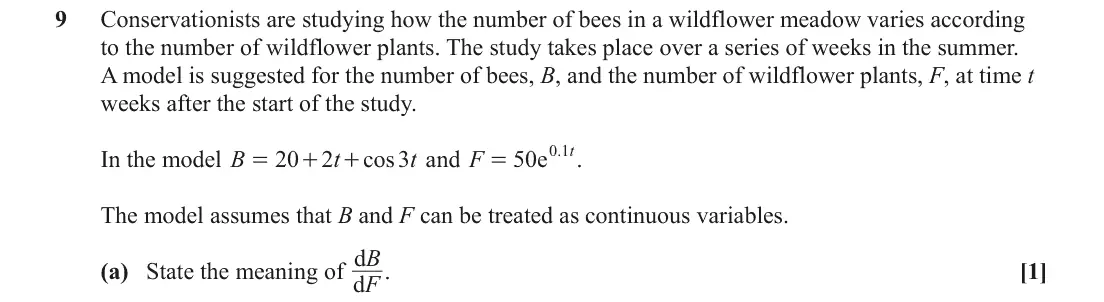
9 Conservationists are studying how the number of bees in a wildflower meadow varies according to the number of wildflower plants. The study takes place over a series of weeks in the summer. A model is suggested for the number of bees, B, and the number of wildflower plants, F, at time t weeks after the start of the study. 50e . t 0 1 In the model B t cos t and F . = + + = The model assumes that B and F can be treated as continuous variables. d . B (a) State the meaning of F [1] d
June 2023 · Paper 1 · Q9(b) 4 marks Easy differentiation rulesdifferentiation
Show the start of this questionEarlier part of this question
d when t = 4. B (b) Determine F [4] d
June 2023 · Paper 1 · Q9(c) 1 mark Medium differentiation rules
Show the start of this questionEarlier part of this question
(c) Suggest a reason why this model may not be valid for values of t greater than 12. [1]
June 2023 · Paper 1 · Q10(a) 1 mark Hard numerical methods
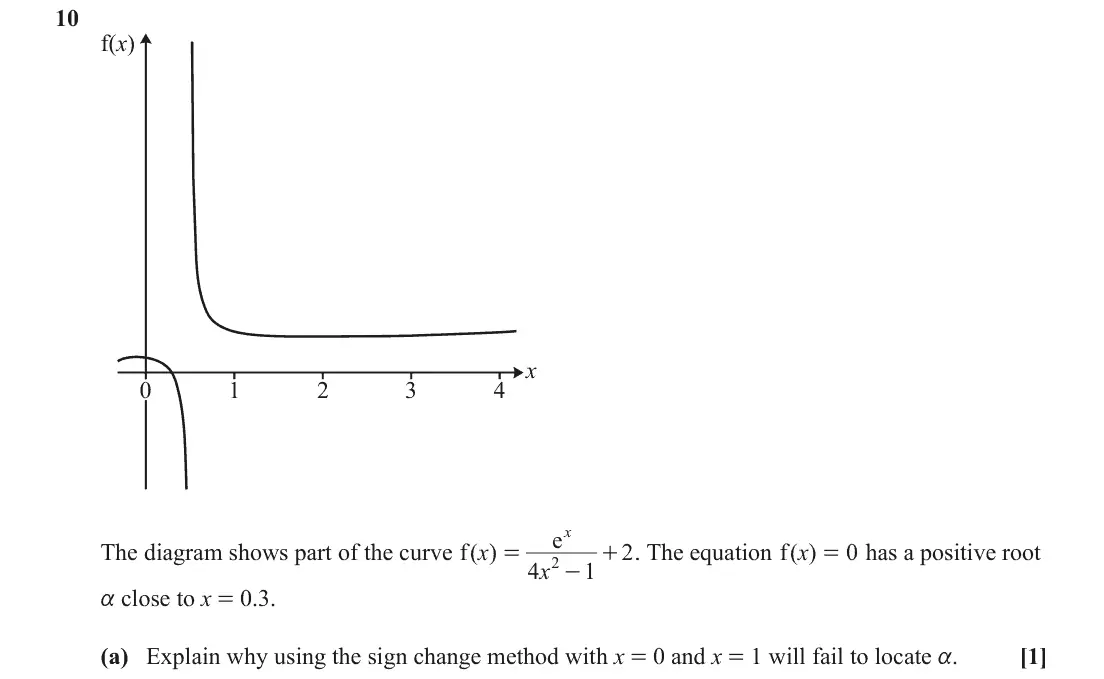
10 f(x) x ex The diagram shows part of the curve ( )x + . The equation ( )x f f has a positive root = = x - a close to x = 0.3. (a) Explain why using the sign change method with x = 0 and x = 1 will fail to locate a. [1]
June 2023 · Paper 1 · Q10(b) 2 marks Medium numerical methodsalgebraic methods
Show the start of this questionEarlier part of this question
2ex (b) Show that the equation f(x) = 0 can be written as x [2] ( ). = -
June 2023 · Paper 1 · Q10(c) 3 marks Easy numerical methods
Show the start of this questionEarlier part of this questionEarlier part of this question
x (c) Use the iterative formula x x to find the ( 2e ) with a starting value of 0 3 . = - 1 = n n + value of a correct to 4 significant figures, showing the result of each iteration. [3]
June 2023 · Paper 1 · Q10(d) 3 marks Medium numerical methodsdifferentiation rulesdifferentiation
Show the start of this questionEarlier part of this question
(d) An alternative iterative formula is x x x x F ( ) , where ( F ) ln ( ) . 1 = = - n n n n + [3] By considering Fl ( . ) 0 3 explain why this iterative formula will not find a.
June 2023 · Paper 1 · Q11(a) 3 marks Medium exponentials and logs
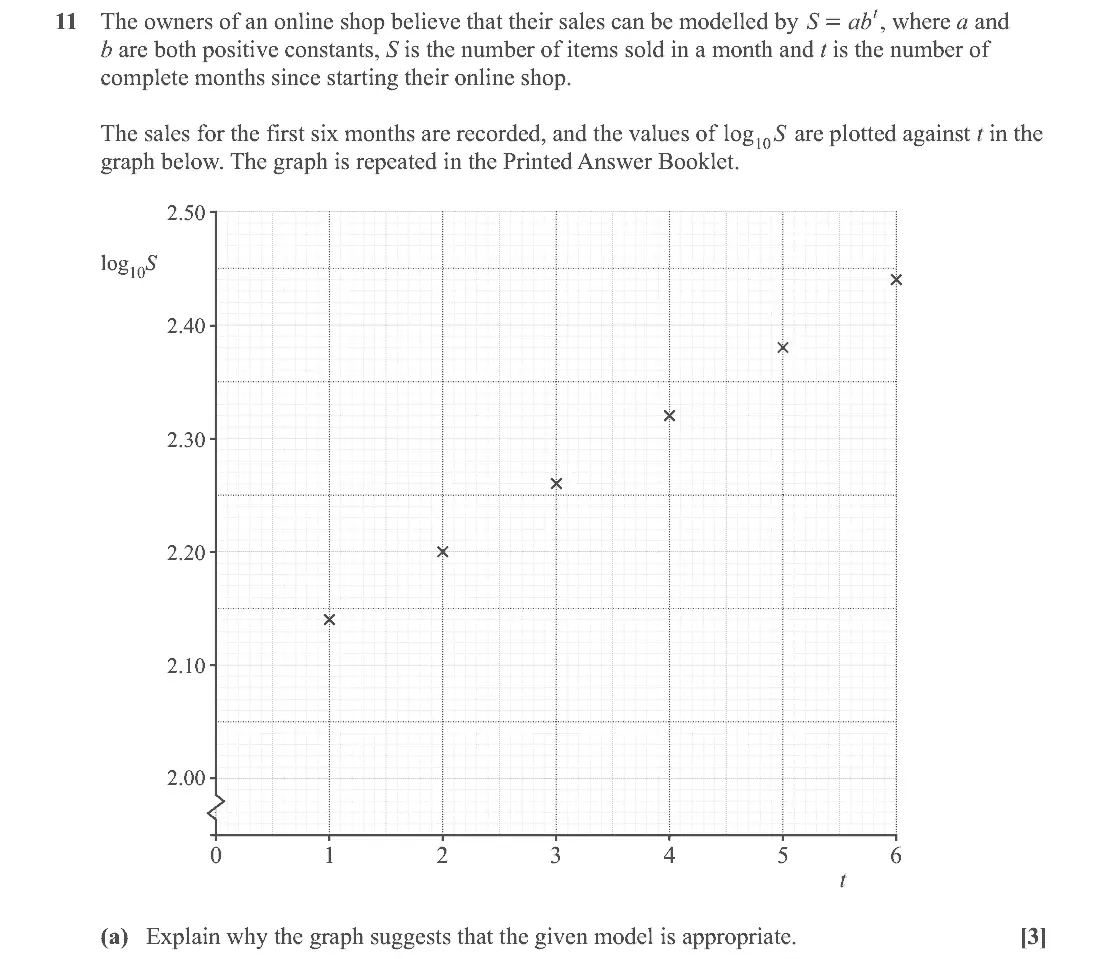
t 11 The owners of an online shop believe that their sales can be modelled by S ab , where a and = b are both positive constants, S is the number of items sold in a month and t is the number of complete months since starting their online shop. The sales for the first six months are recorded, and the values of log 10 are plotted against t in the S graph below. The graph is repeated in the Printed Answer Booklet. 2.50 log10S 2.40 2.30 2.20 2.10 2.00 t (a) Explain why the graph suggests that the given model is appropriate. [3]
June 2023 · Paper 1 · Q11(b) 2 marks Easy exponentials and logs
Show the start of this questionEarlier part of this question
The owners believe that a = 120 and b = 1.15 are good estimates for the parameters in the model. (b) Show that the graph supports these estimates for the parameters. [2]
June 2023 · Paper 1 · Q11(c) 2 marks Easy exponential modelling
Show the start of this questionEarlier part of this question
1 15t (c) Use the model S to predict the number of items sold in the seventh month after 120 . = # [2] opening.
June 2023 · Paper 1 · Q11(d)(i) 4 marks Hard sequences and seriesexponentials and logs
Show the start of this questionEarlier part of this question
1 15t (d) (i) Use the model S 120 . to predict the number of months after opening when the = # total number of items sold after opening will first exceed 70 000. [4]
June 2023 · Paper 1 · Q11(d)(ii) 1 mark Hard sequences and seriesexponential modelling
Show the start of this questionEarlier part of this questionEarlier part of this question
(ii) Comment on how reliable this prediction may be. [1]
June 2023 · Paper 1 · Q12(a) 3 marks Easy integration by parts and substitution
x 12 (a) Use the substitution u e - to show that = c c x e u - + dd d x dd d u . = x ( e ) u ( u ) - + [3] e e
June 2023 · Paper 1 · Q12(b) 7 marks Hard partial fractionsintegrationexponentials and logs
Show the start of this questionEarlier part of this question
(b) Hence show that c ln x e 8 d - dd x a ln b = + x ( e ) - e ln where a and b are rational numbers to be determined. [7]

Find an A-level maths tutor

Want this paper marked and gone through with you? Message us.

Prefer email? Send an enquiry

If you are under 18, please include a parent's contact details. Enquiries go to enquiries@mathsaleveltutor.com and are deleted once handled.