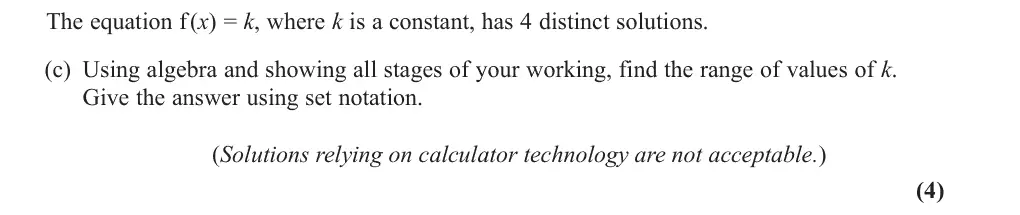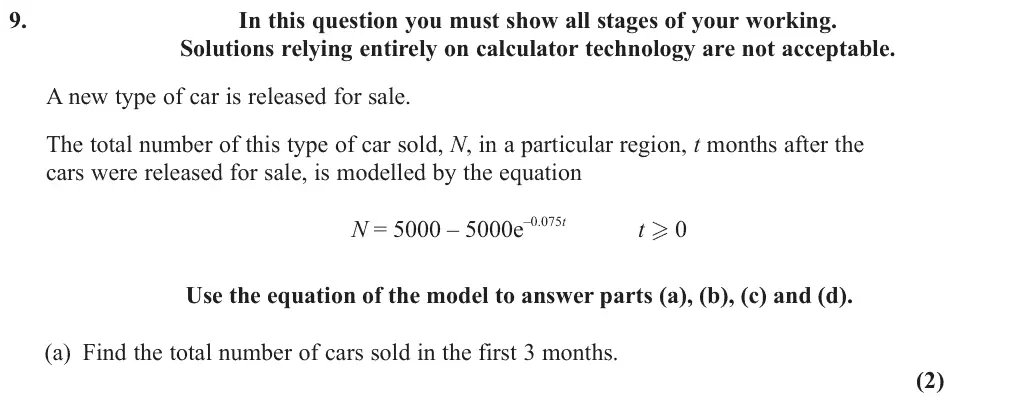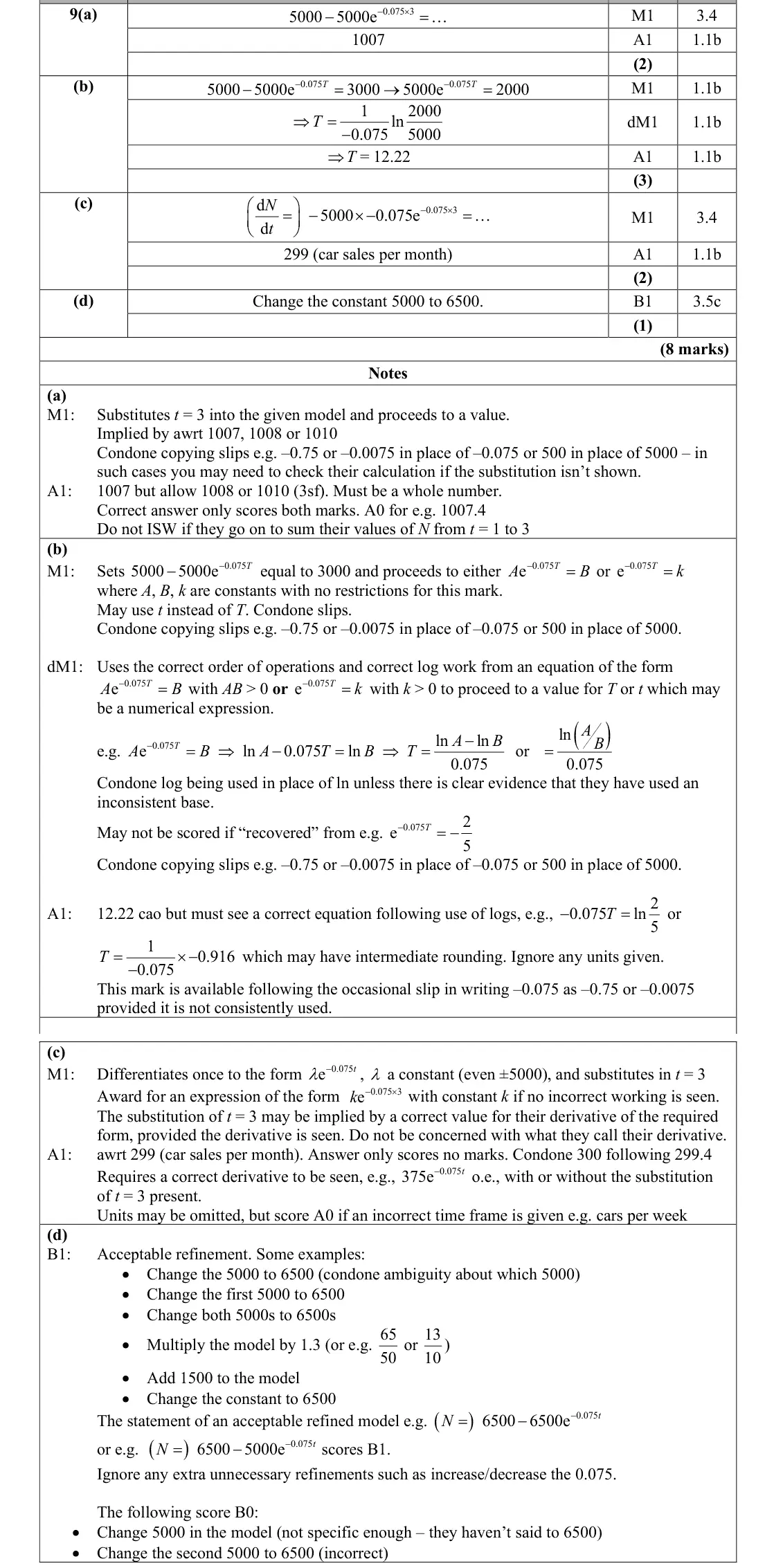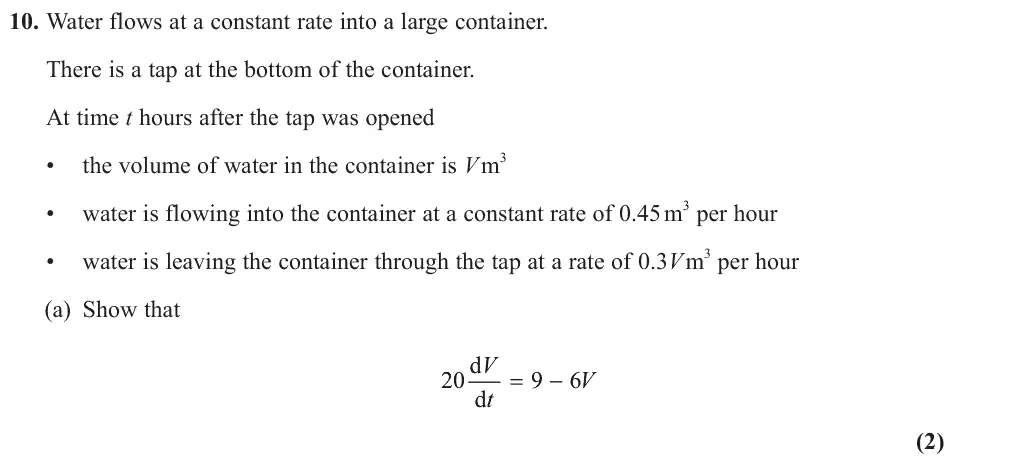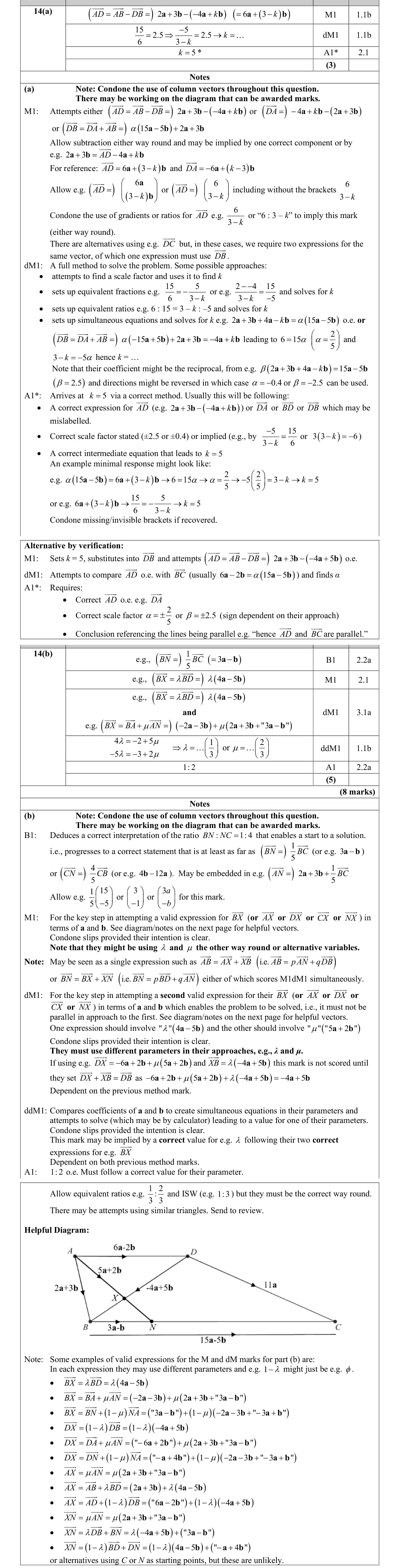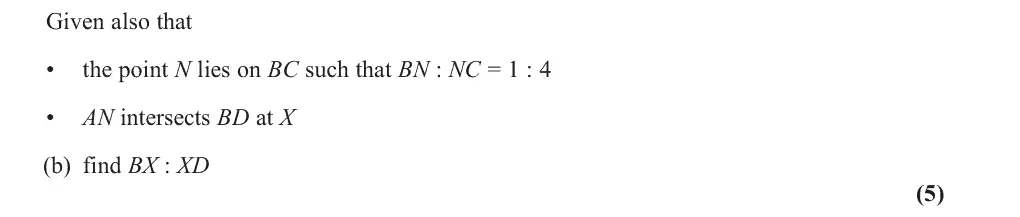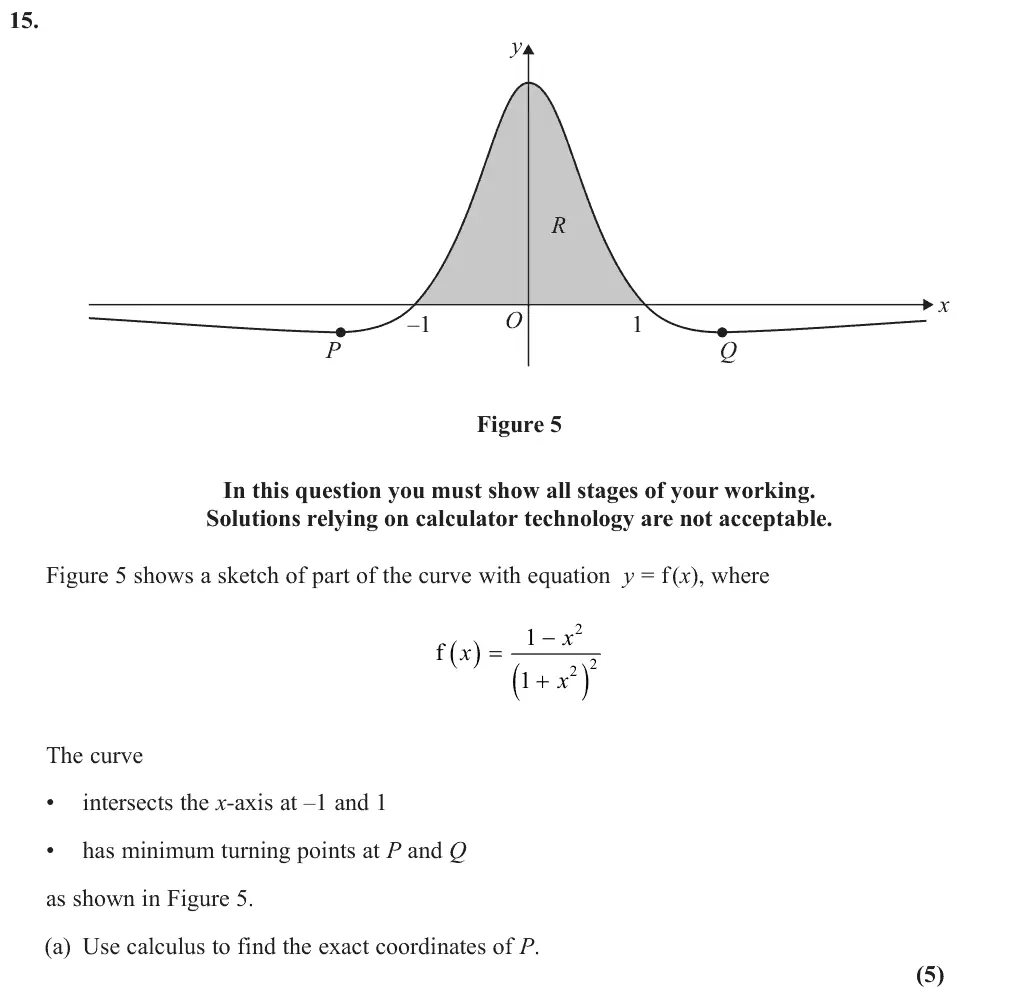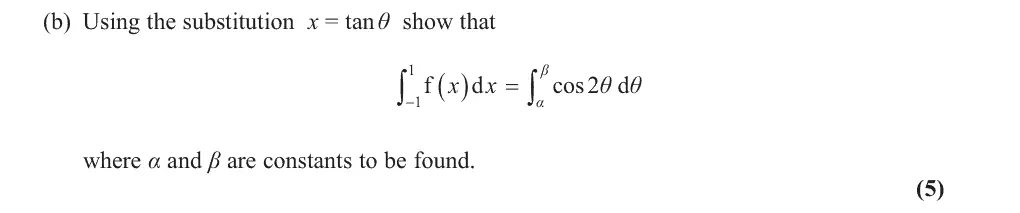
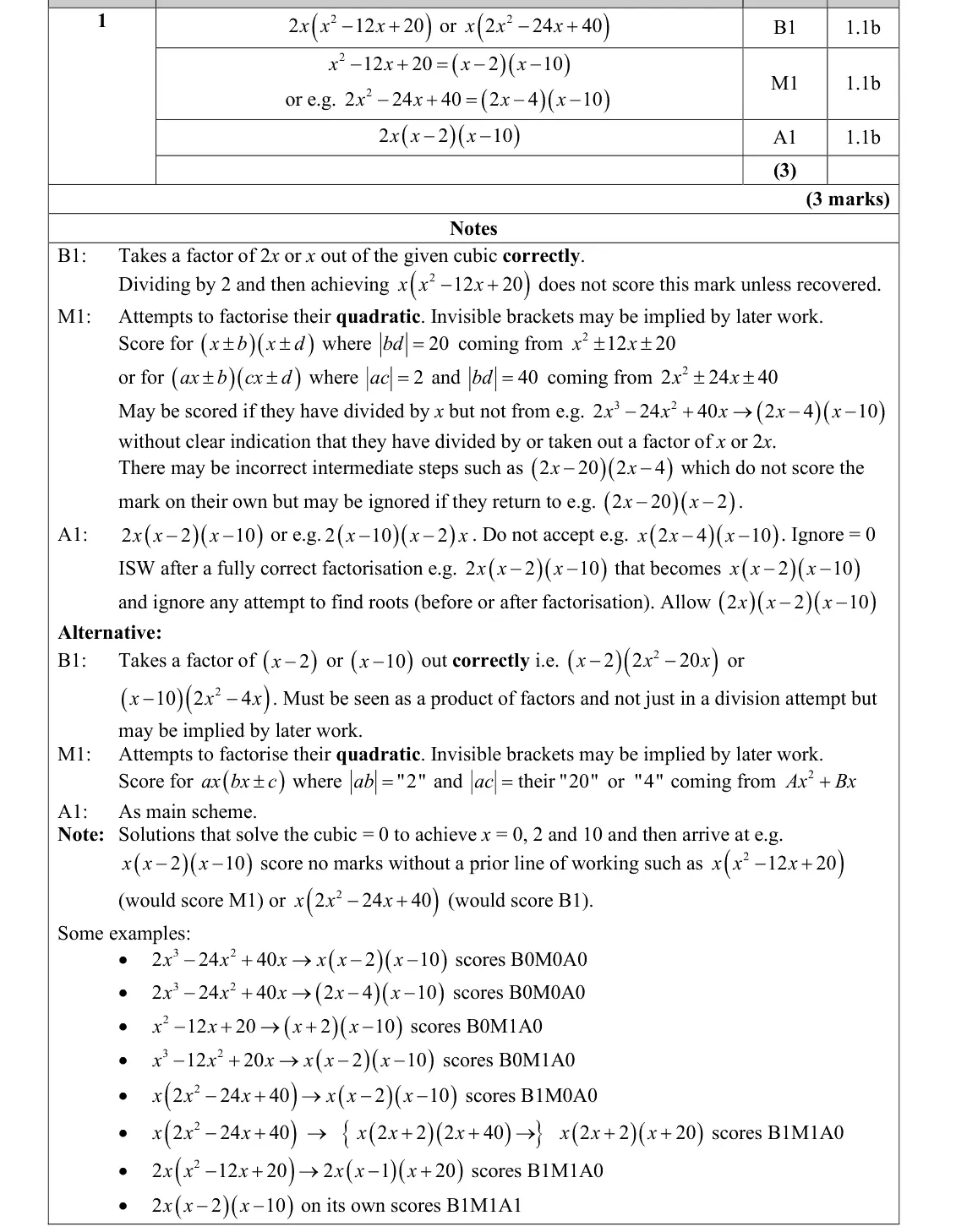
Mark scheme (whole question; this part is marked with the orange bar)
Examiner's comment
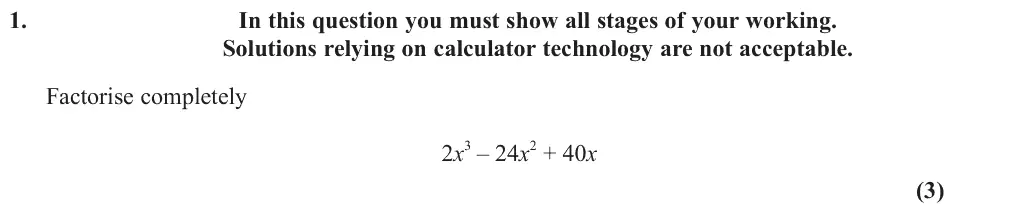
The first question on the paper required learners to factorise a routine cubic expression, of which x was a factor. Designed to be a friendly and straightforward opener, a large number did not factorise the 2x as the first step, hence did not gain the mark. In many cases, either the 2 or the x (or both) were divided out and forgotten about (leading to an incorrect answer) or left in the final answer as either (2x – 4) or (2x – 20) (leading to an incomplete answer). Some learners overcomplicated the question, attempting to use the factor theorem or use algebraic division to take (x – 2) or (x – 10) out as a factor. A significant number appeared unable to distinguish between factorising an expression and solving an equation, with many presenting “x = 0, 2, 10” or similar as their final answer. By itself this was not worthy of any credit. Many seemed to rely on calculators to obtain roots and jumped straight to the incorrect factorisation x(x – 2)(x – 10), which also scored no marks on its own. There were, however, many concise solutions to this question, with responses gaining all 3 marks in two lines of working.
Common mistakes
- take out the common factor 2x first (dividing by 2 or x and losing it, or leaving (2x − 4) or (2x − 20), loses the A mark)
- factorise, do not solve: x = 0, 2, 10 scores nothing
- calculator roots straight to x(x − 2)(x − 10) score 0