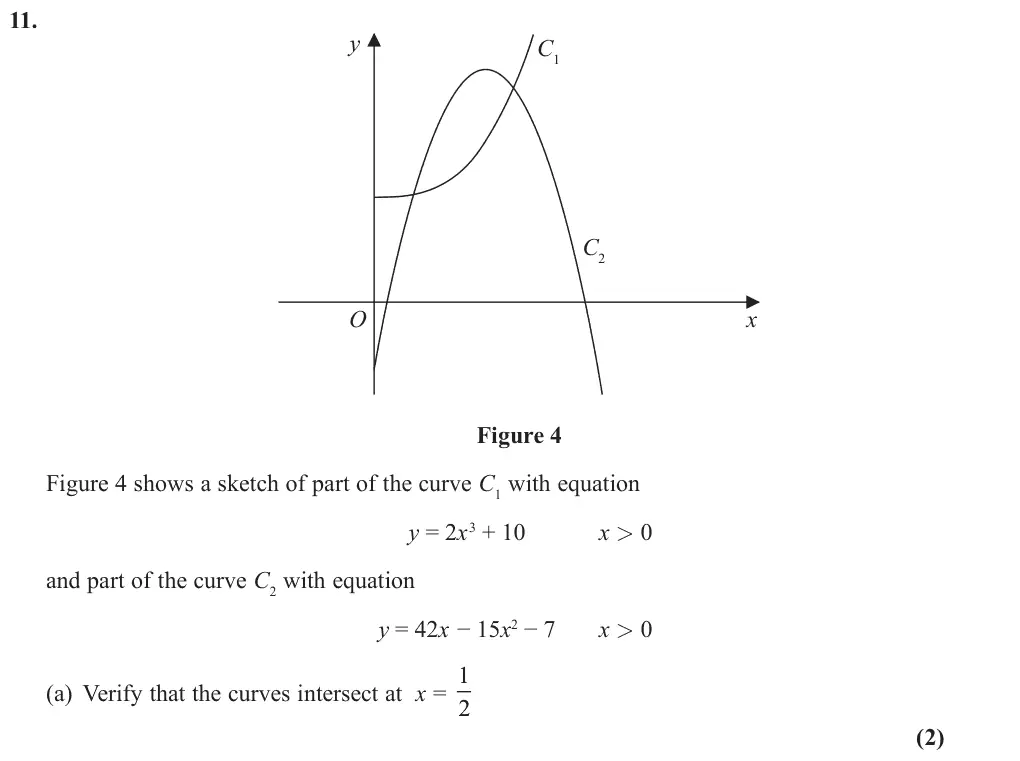
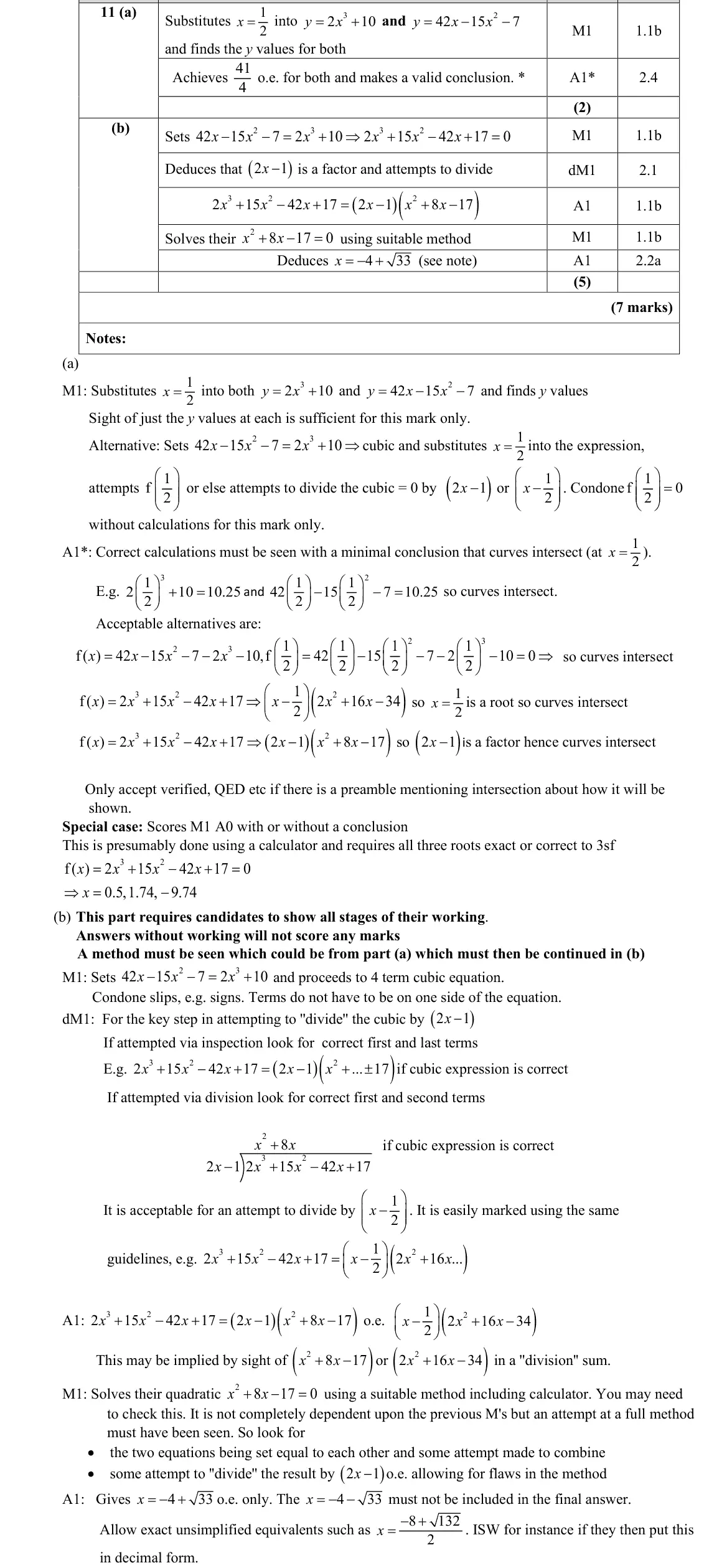
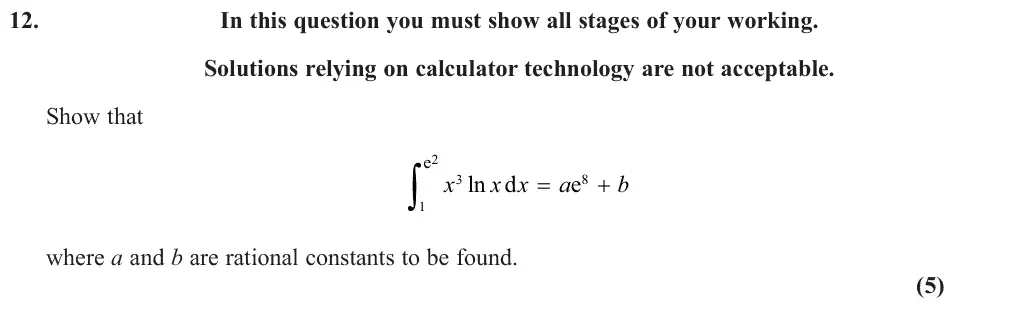
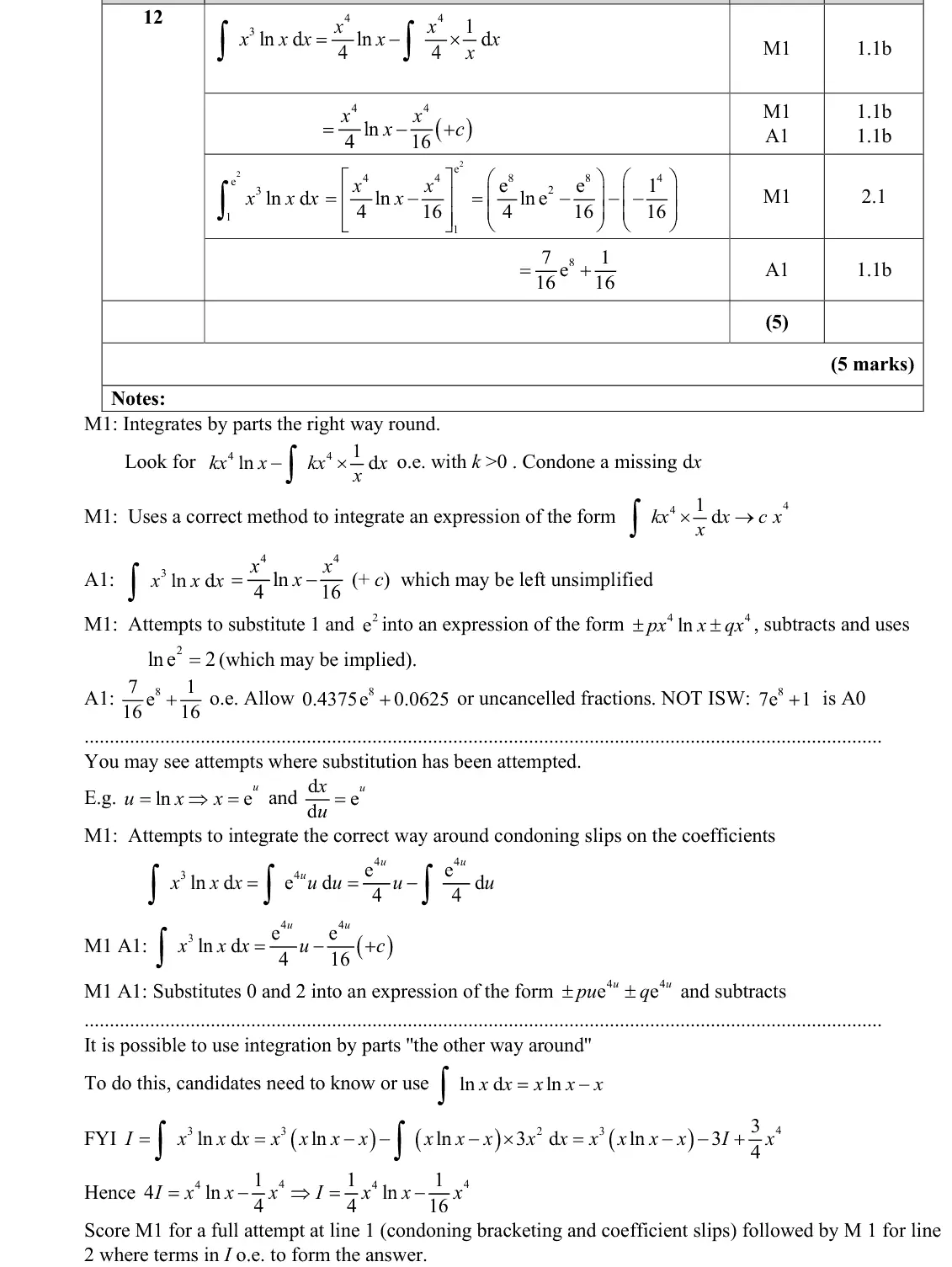
Examiner's comment
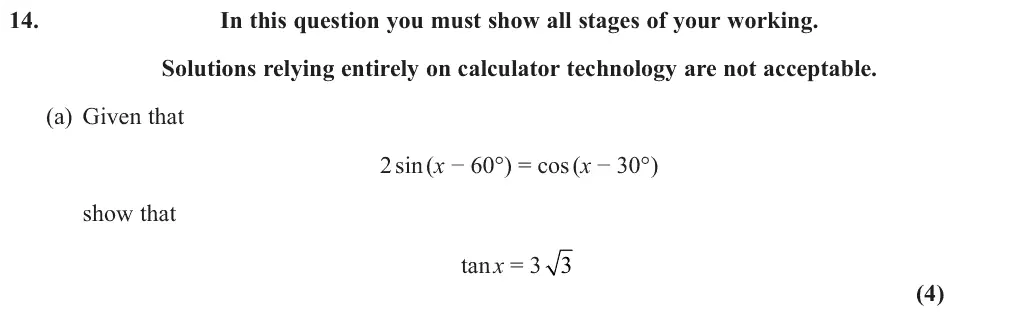
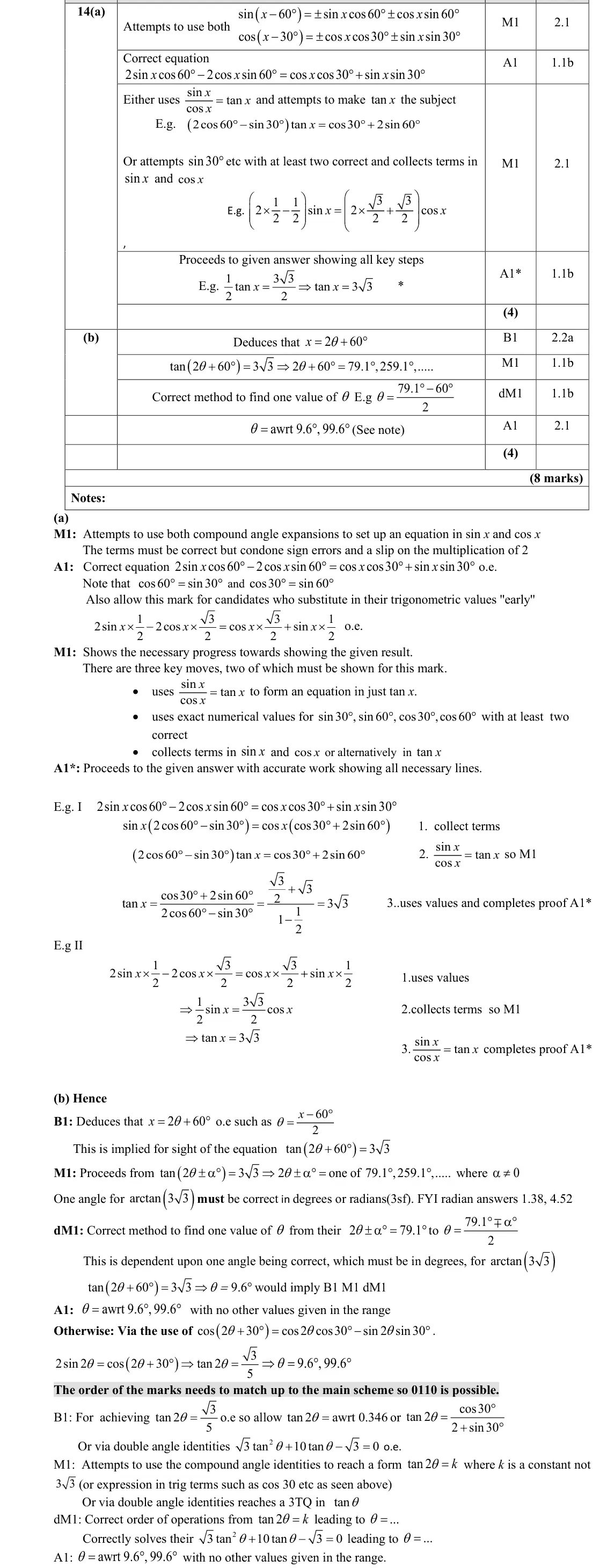
This question was another big discriminator. Good candidates found it familiar and accessible with some 25% scoring full marks. Strangely, for candidates who dropped marks, they seemed to be able to do either part (a) or part (b), but not both. Part (b) could be attempted without having done part (a) and many took up this opportunity. Those who paid attention to the 'hence', deducing that x = 2 theta + 60, were very successful in achieving the correct answers, though quite a few only found one solution. For the many students who did not see the link between parts (a) and (b), generally encountered much more complex, longer algebraic manipulation. Such students re-started the question using the compound angle formulae with a combination of other trigonometric identities, but were often not able to reach an equation in one function, or else made numerous slips. If quadratics in tan 𝜃𝜃 were reached, they were dealt with competently. If the candidate’s efforts led to tan2 theta = k, k≠ 3 sqrt 3 or tan (2 theta ± 60) = 3 sqrt 3 they were generally able to use the correct order of operations to solve their equation to find at least one solution. A fair number of correct answers were seen written down without any correct working. As the question had a warning about the use of calculator technology, these responses gained no marks