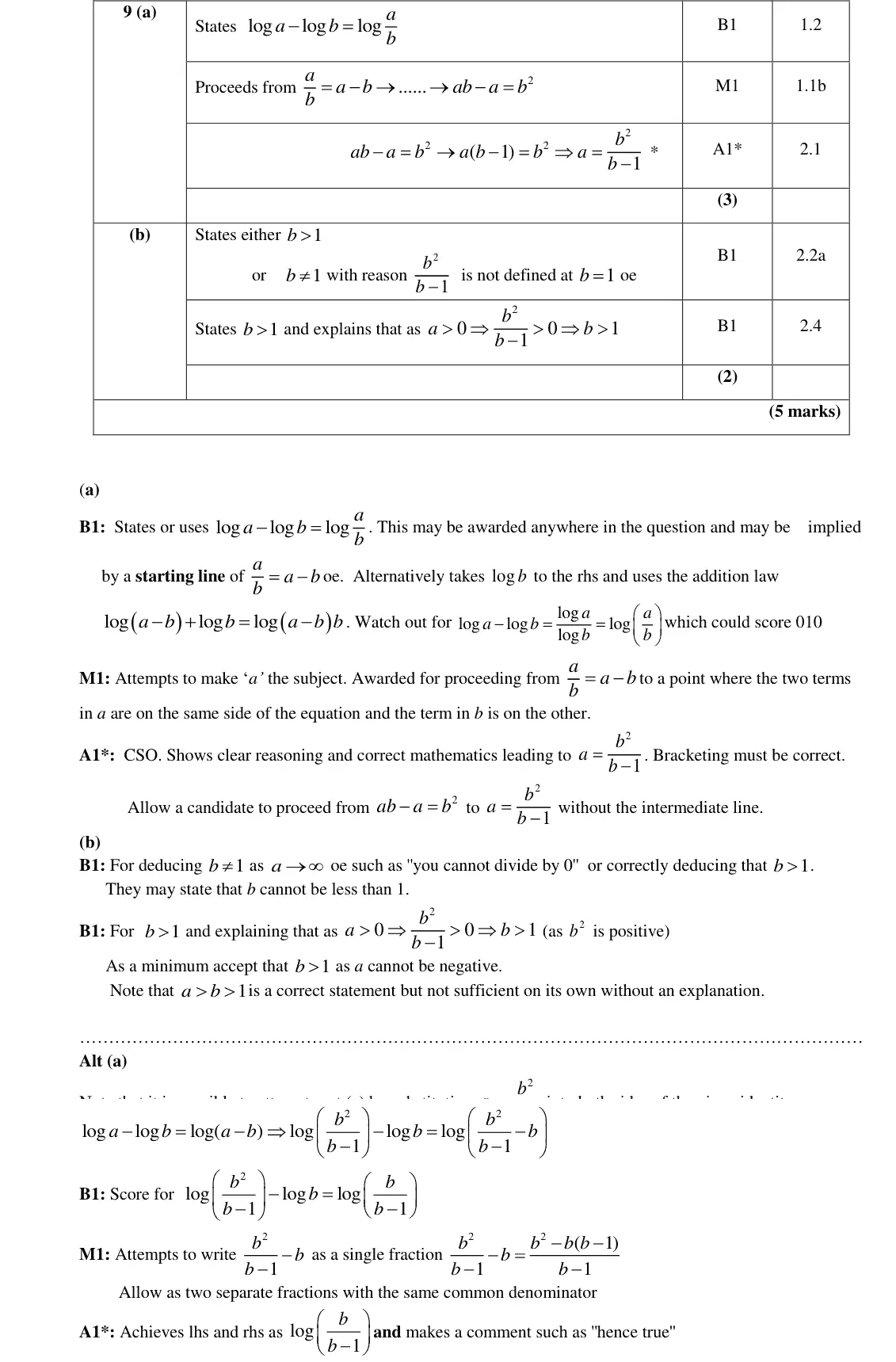
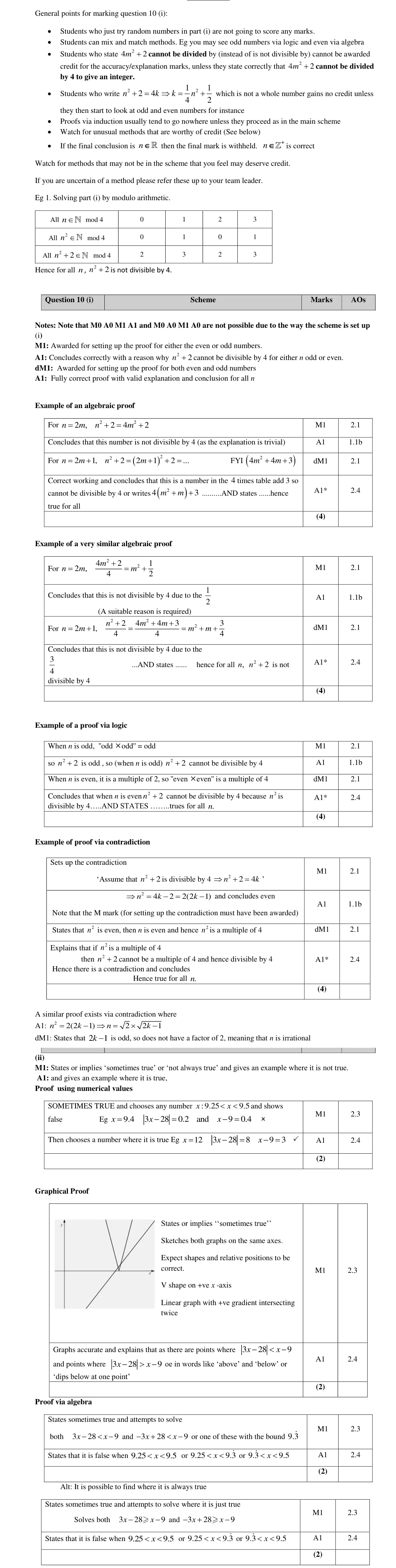
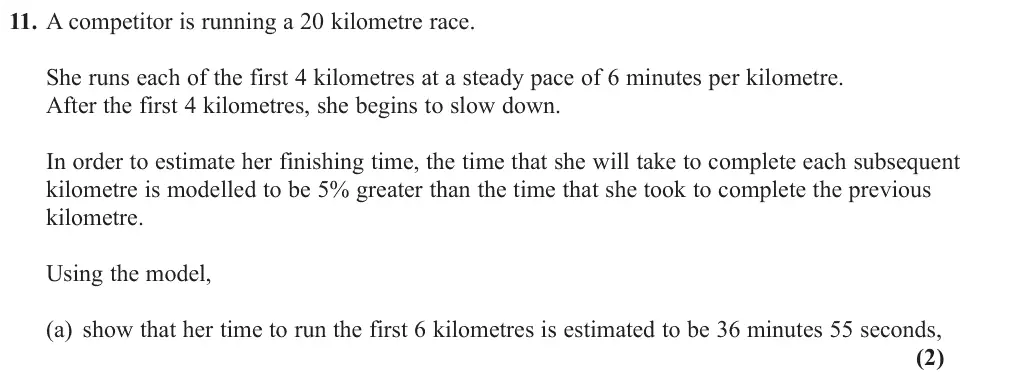
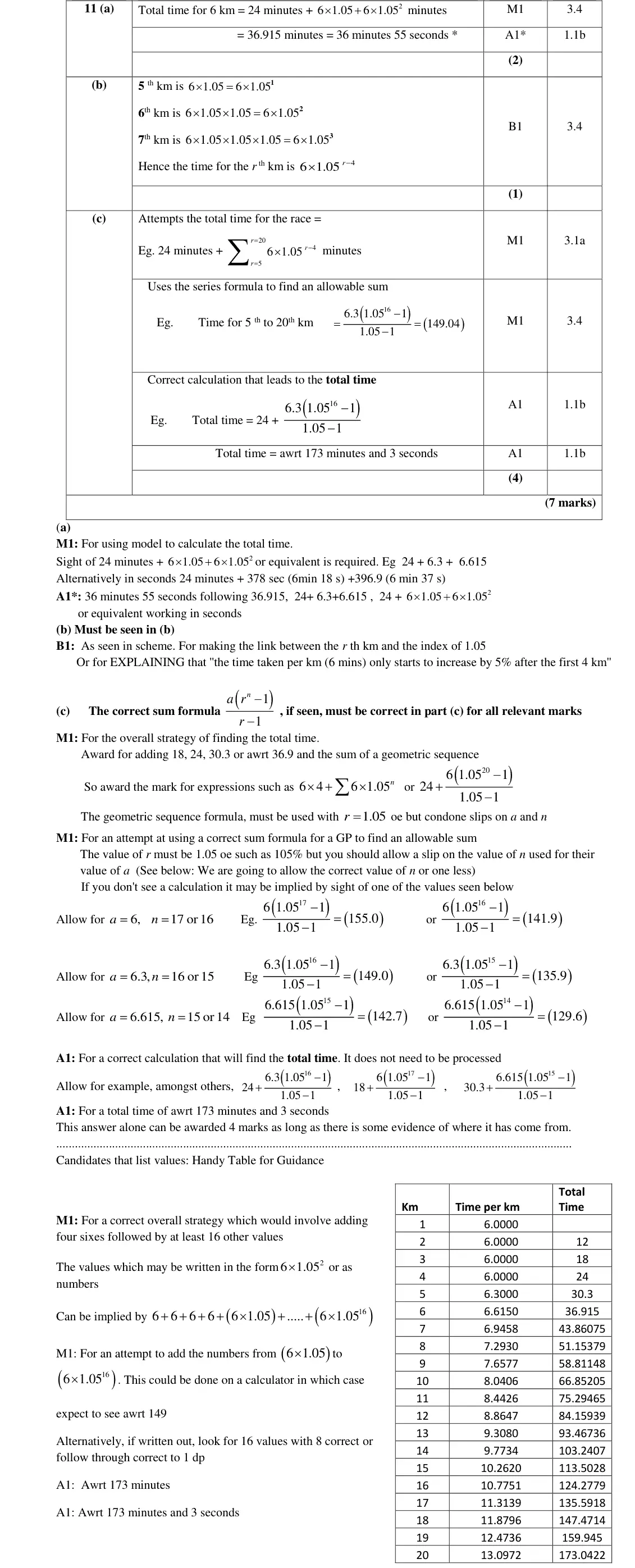
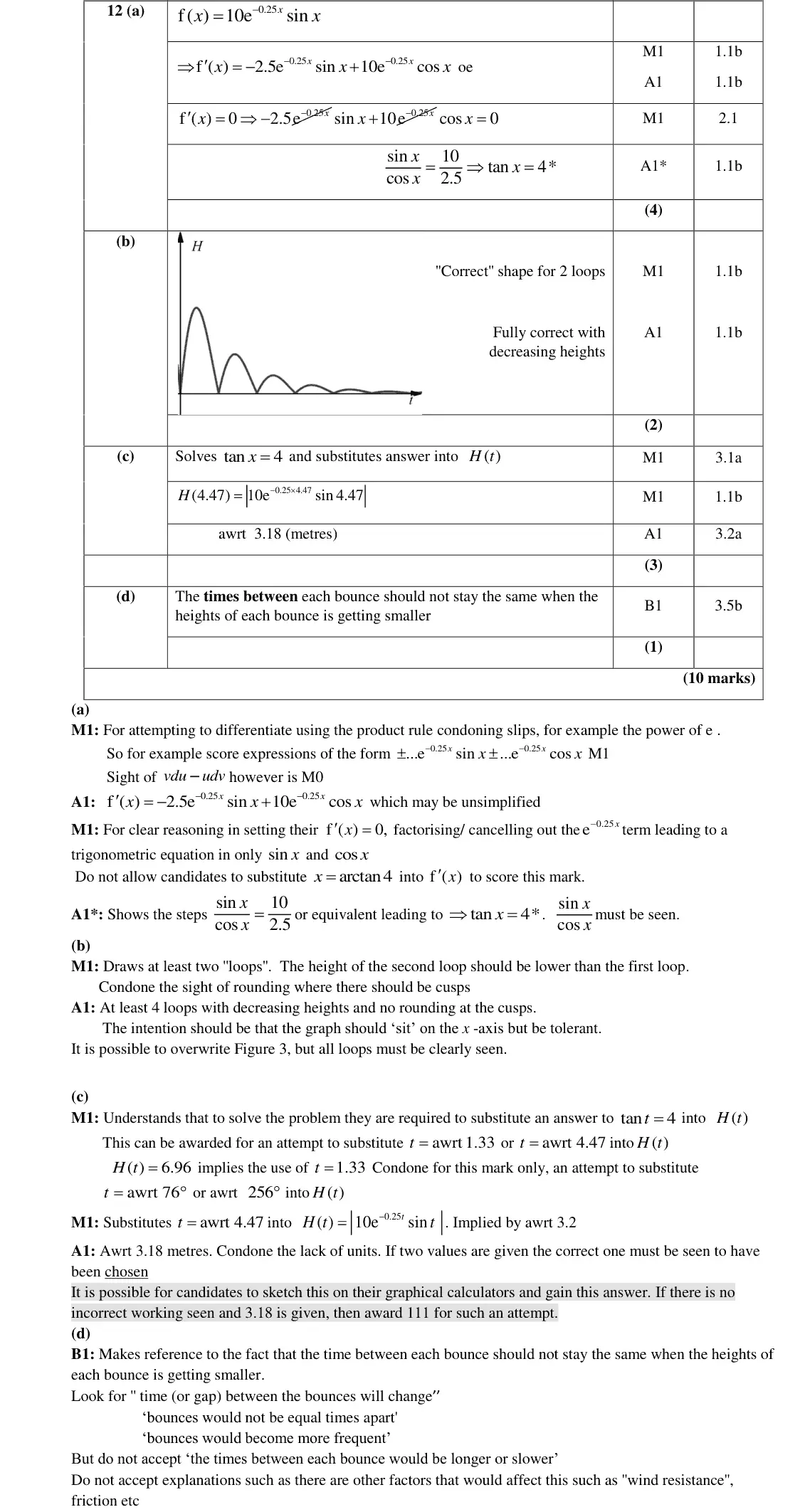
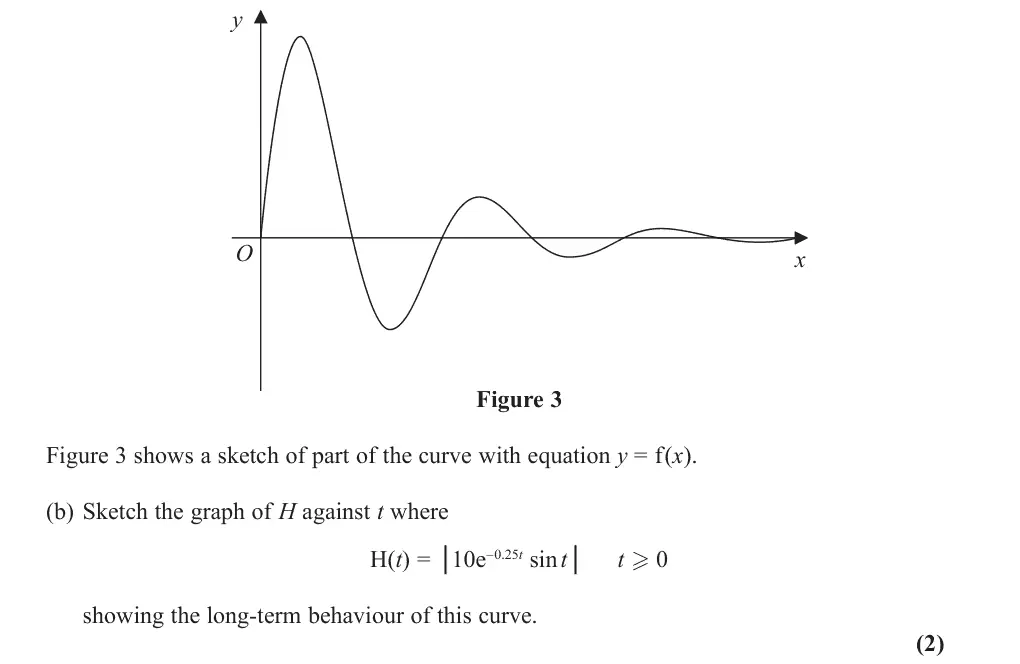
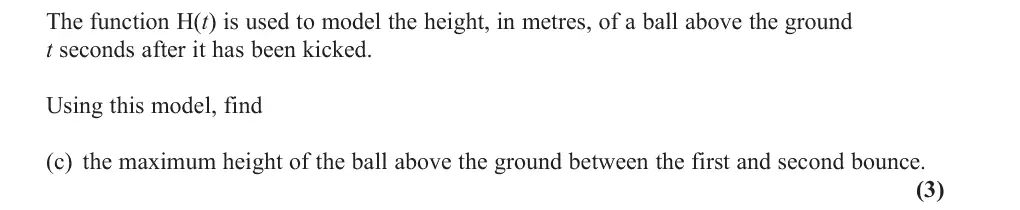
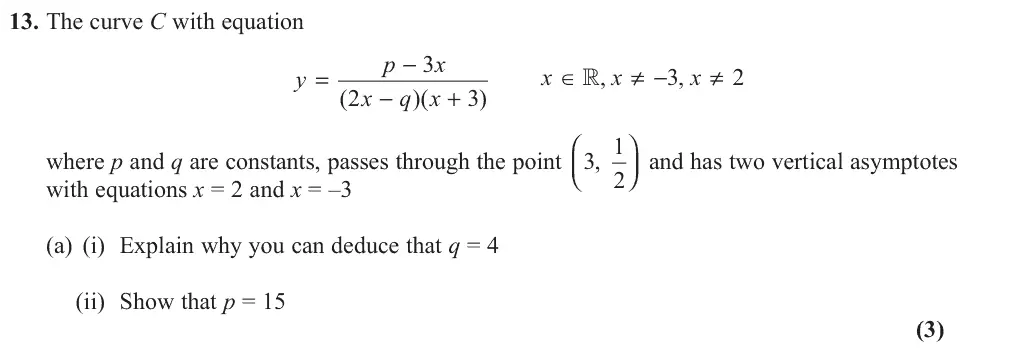
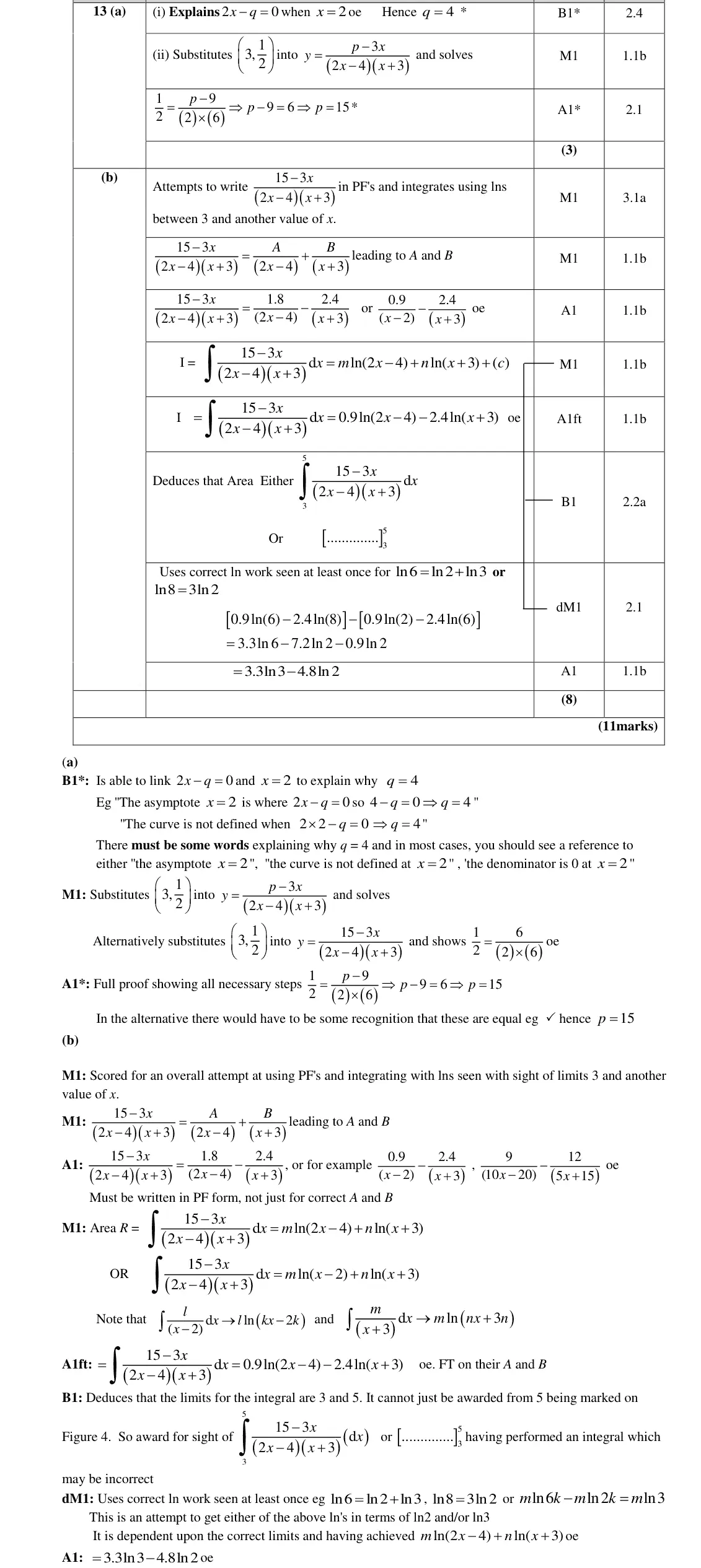
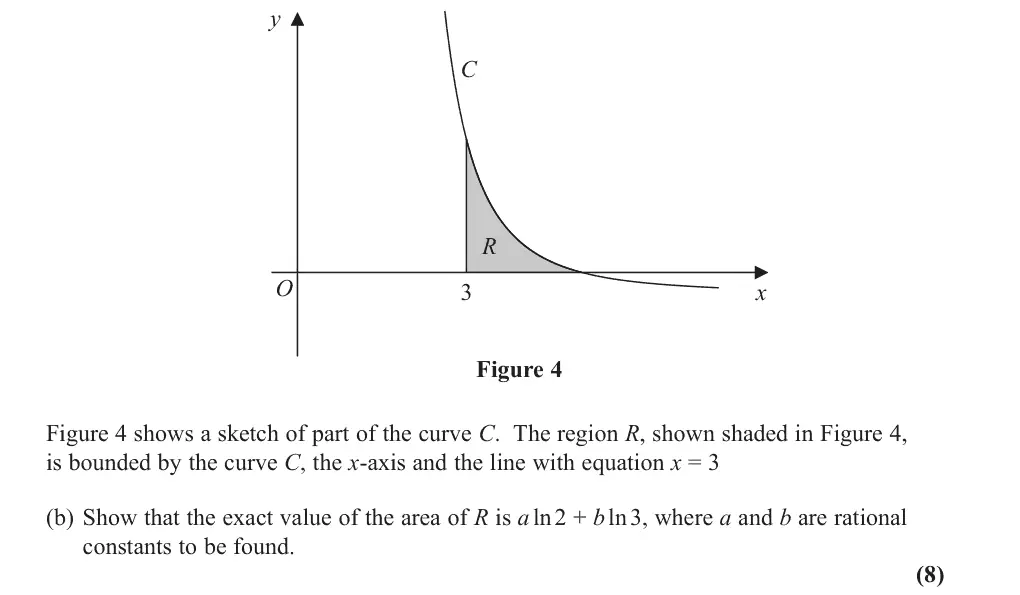
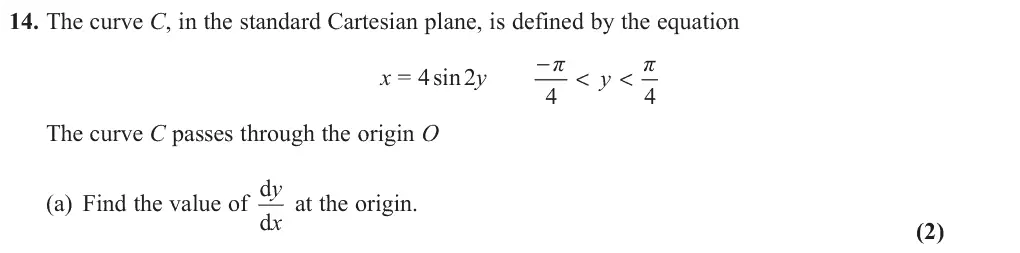
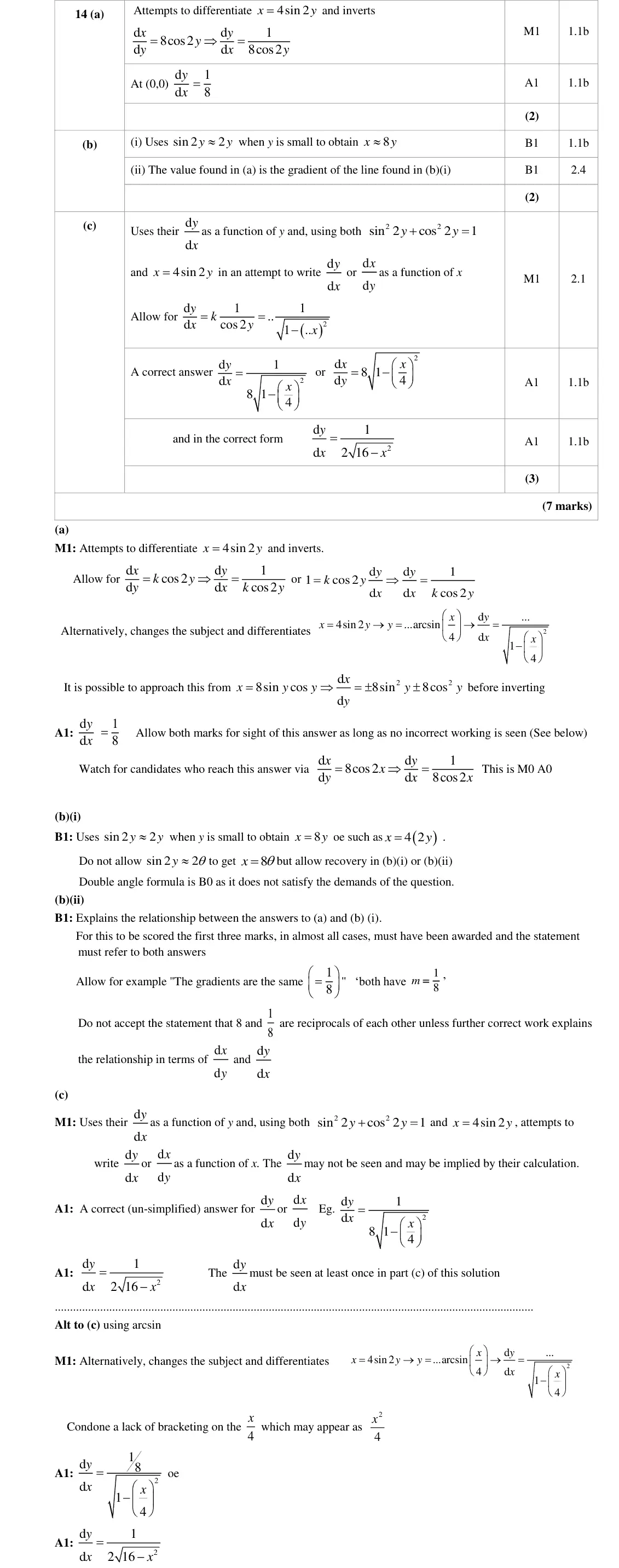
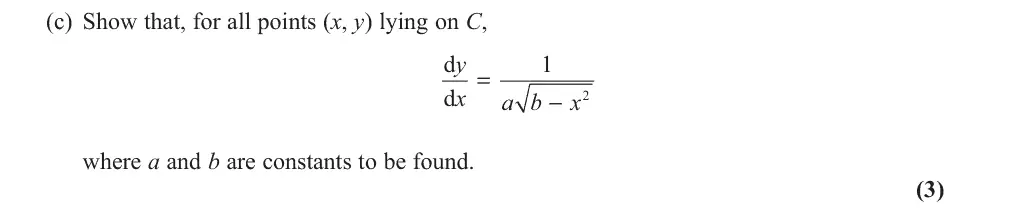
Mark scheme (whole question; this part is marked with the orange bar)
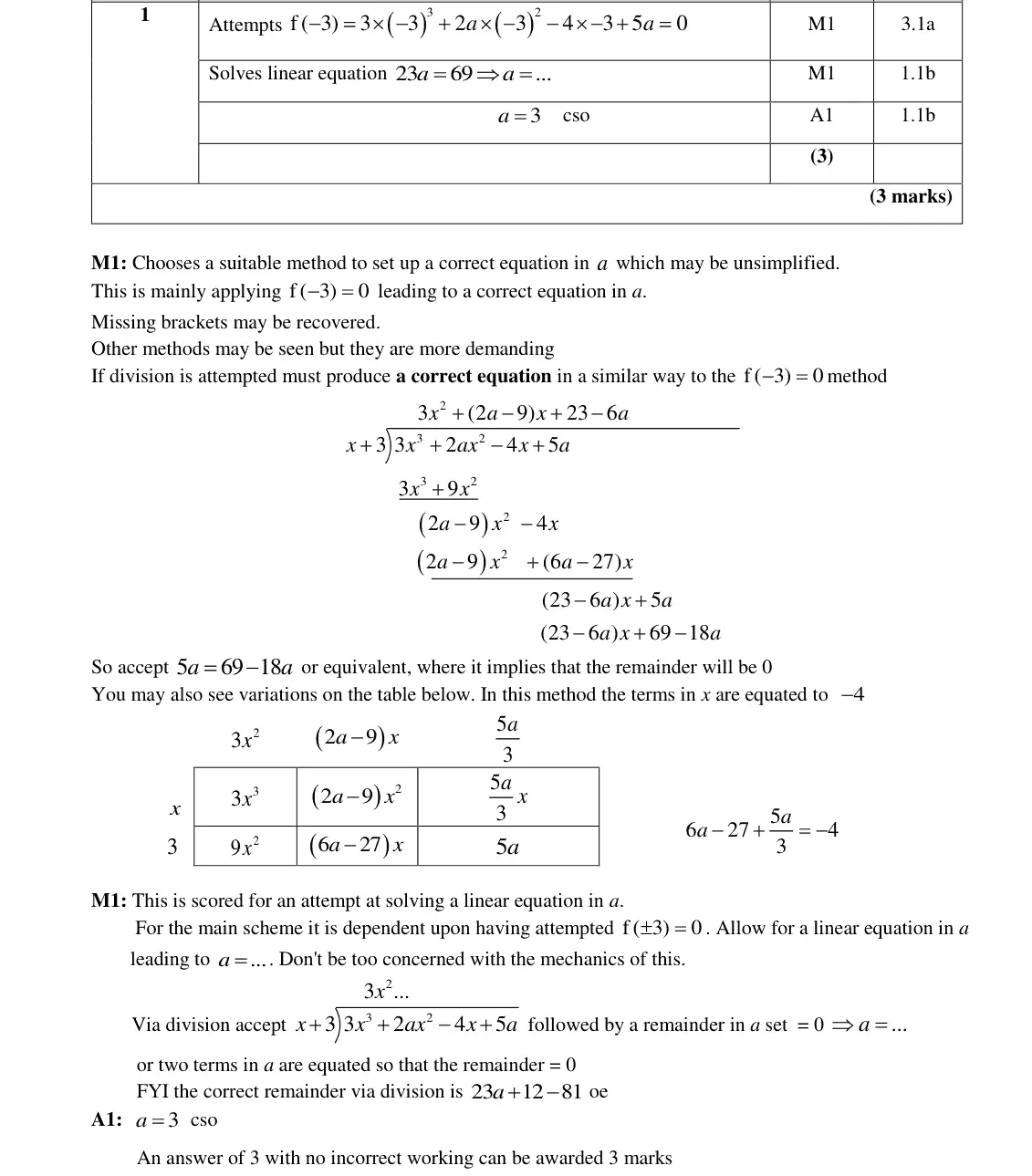
Examiner's comment
This proved to be a very suitable start to the paper. Most candidates used the factor theorem and produced an equation in a by setting f (-3) = 0. Most could then solve their linear equation in a to find its value. Candidates who used this method generally went on to score full marks. Common mistakes tended to be arithmetic or sign errors, for example not cubing (-3) accurately in the first term. Other methods were seen but were generally less efficient and not as effective. Those candidates that started with (x+3)(ax2+bx +c) and equated coefficients were generally successful, however those candidates that tried to solve this problem using long division generally made errors and did not score highly. It was rare to see students scoring zero on this question.
Common mistakes
- factor theorem: set f(−3) = 0 (not f(3))
- cube −3 carefully
- 23a = 69 so a = 3
- long division is error-prone