Examiner's comment
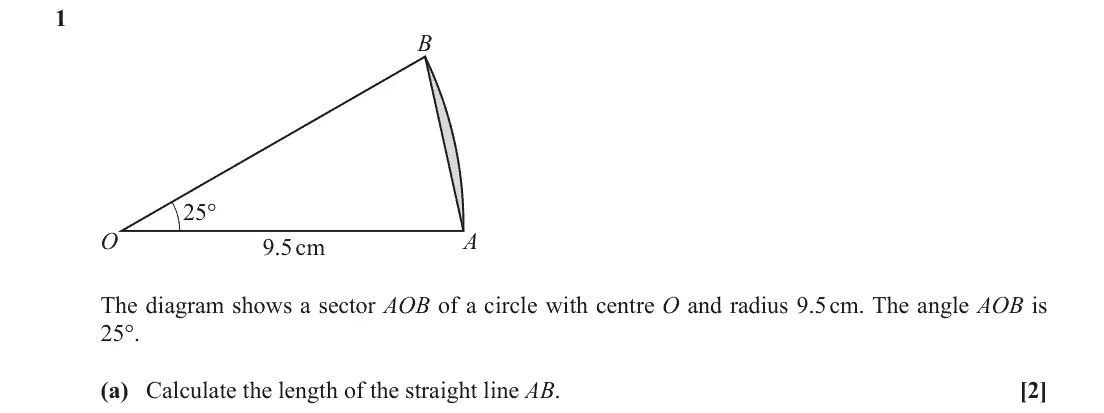
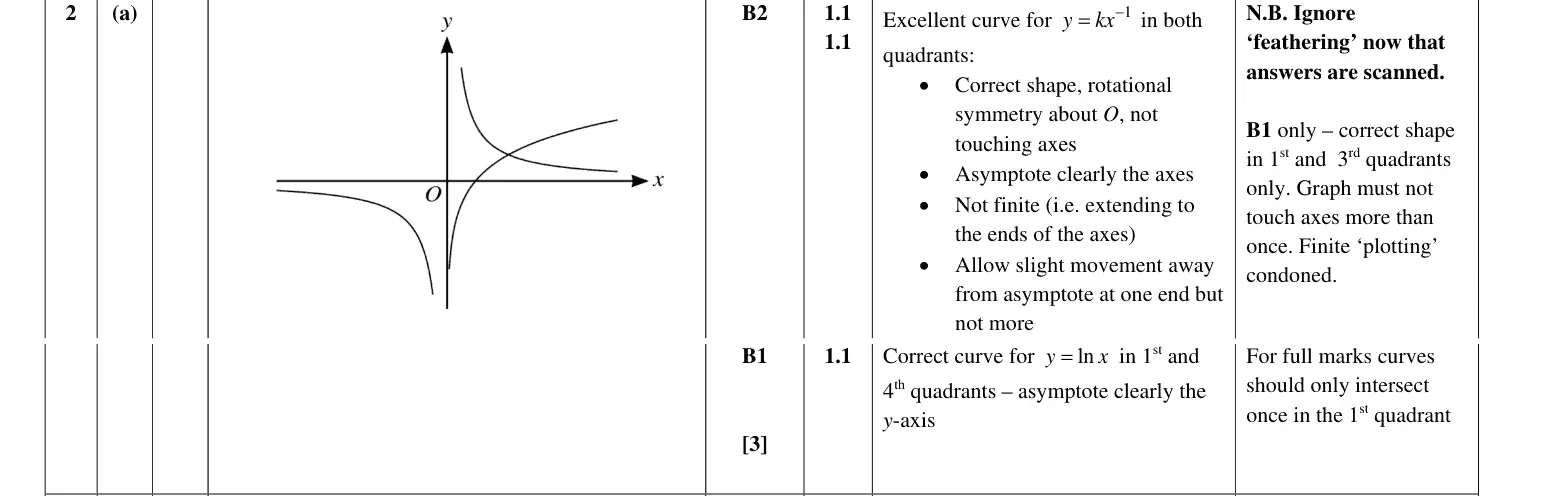
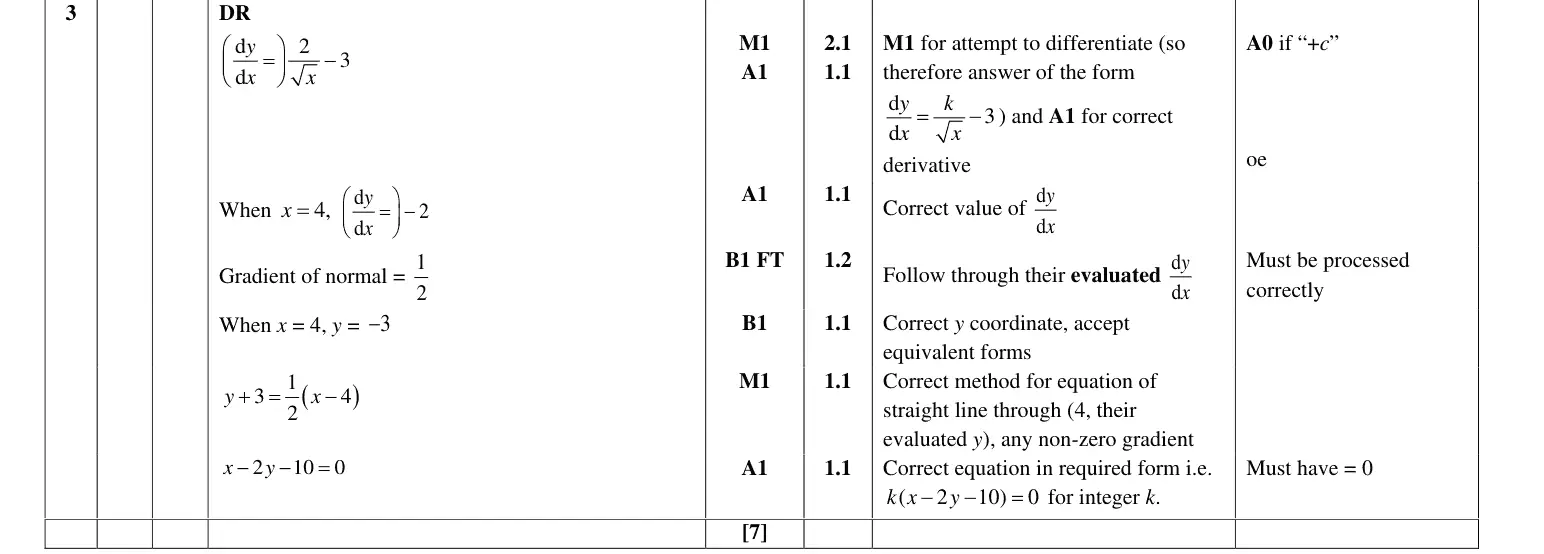
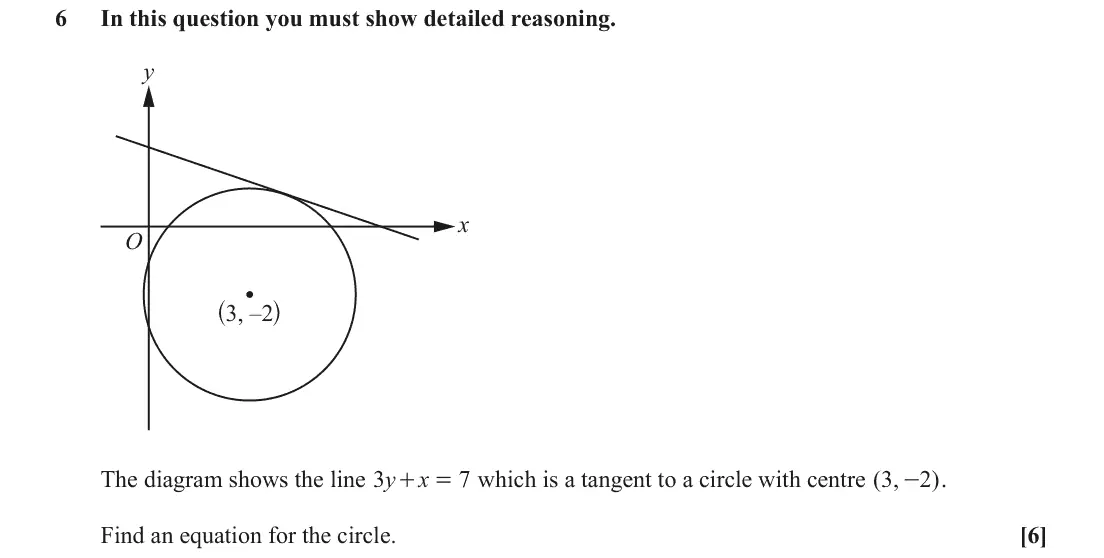
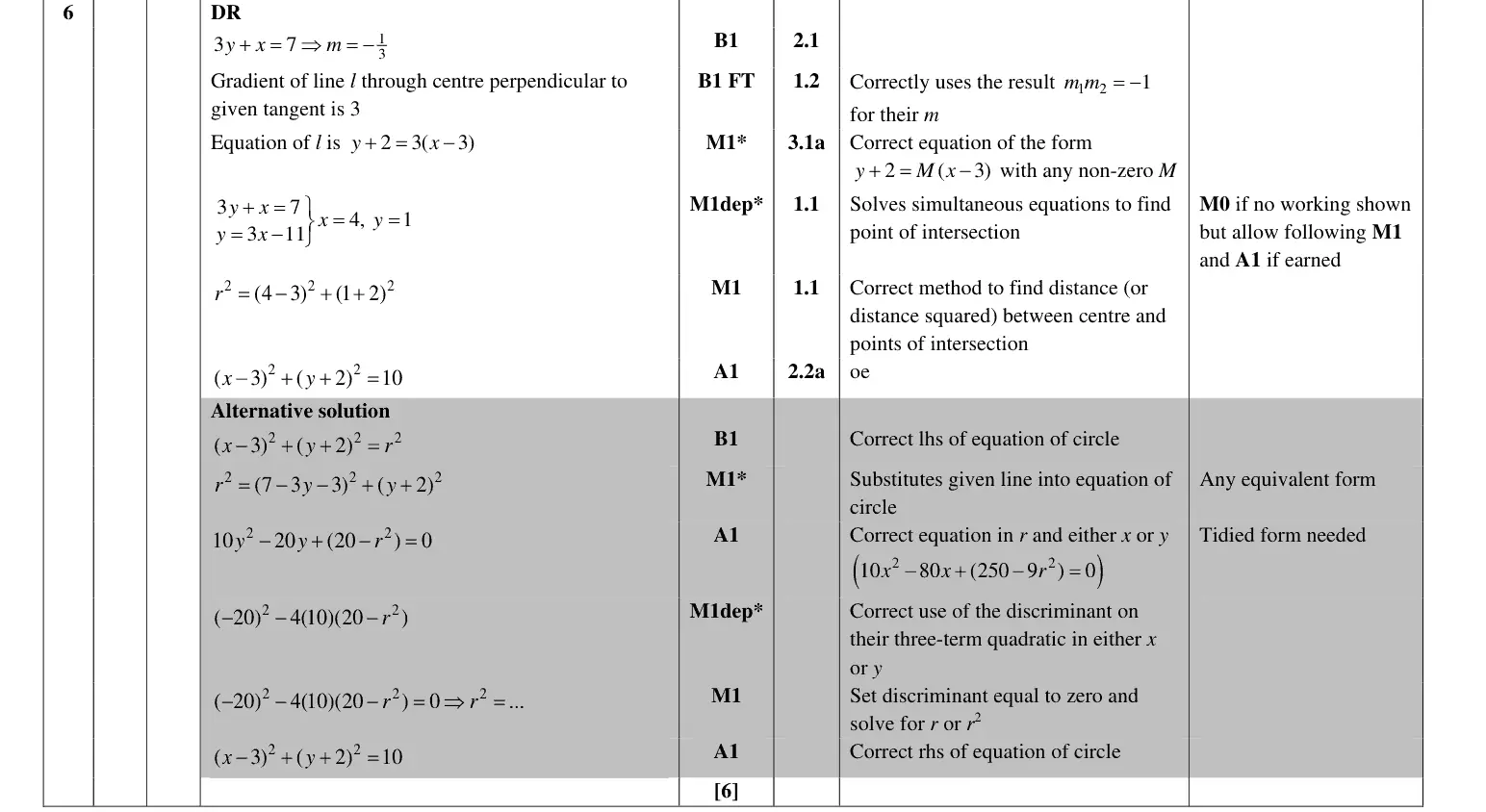
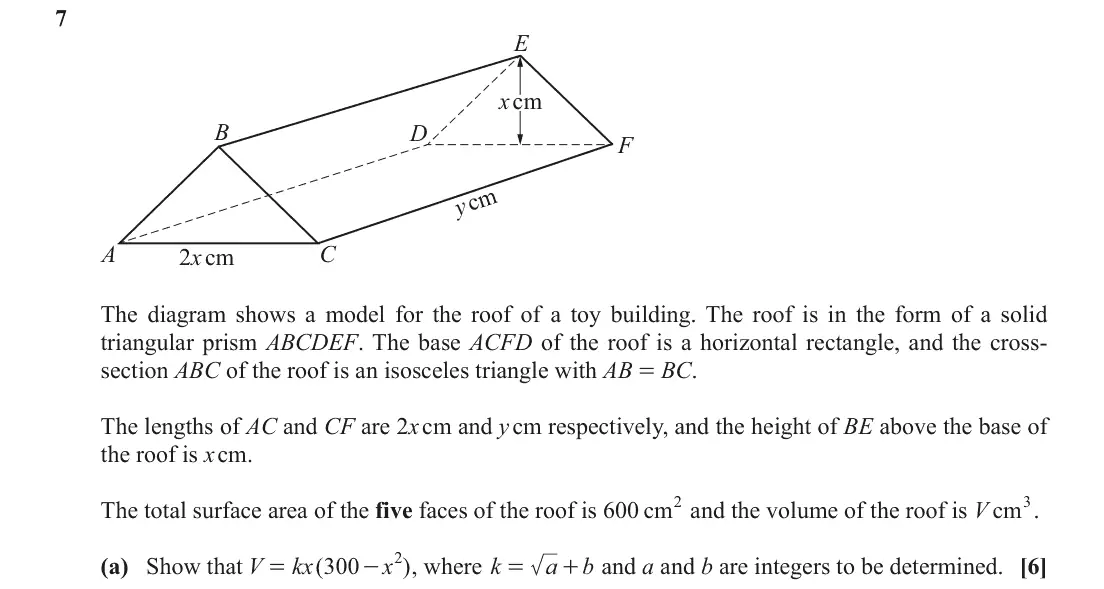
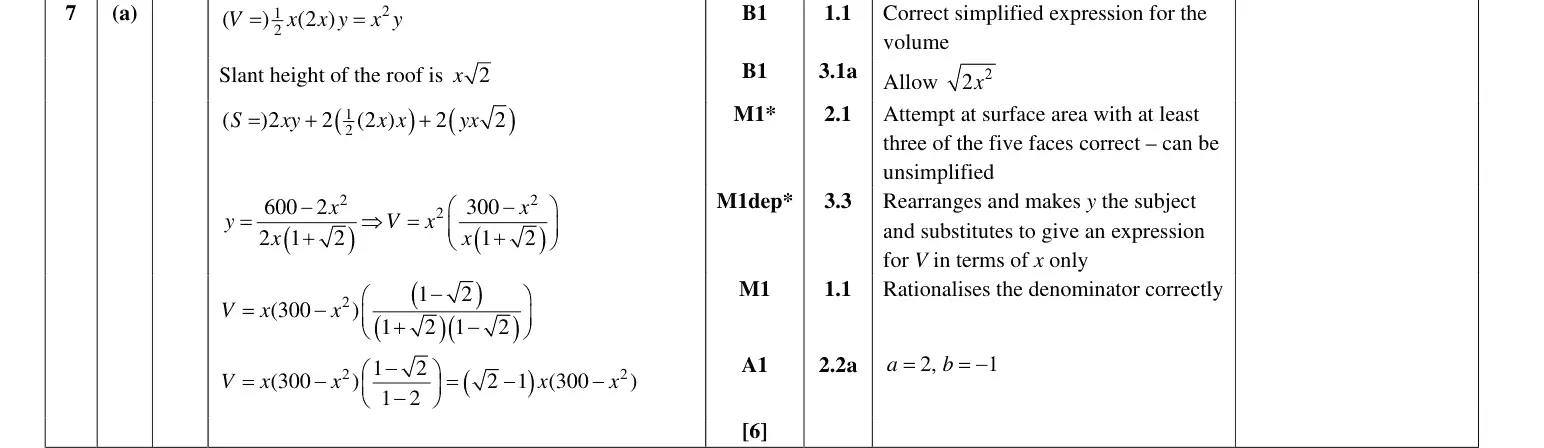
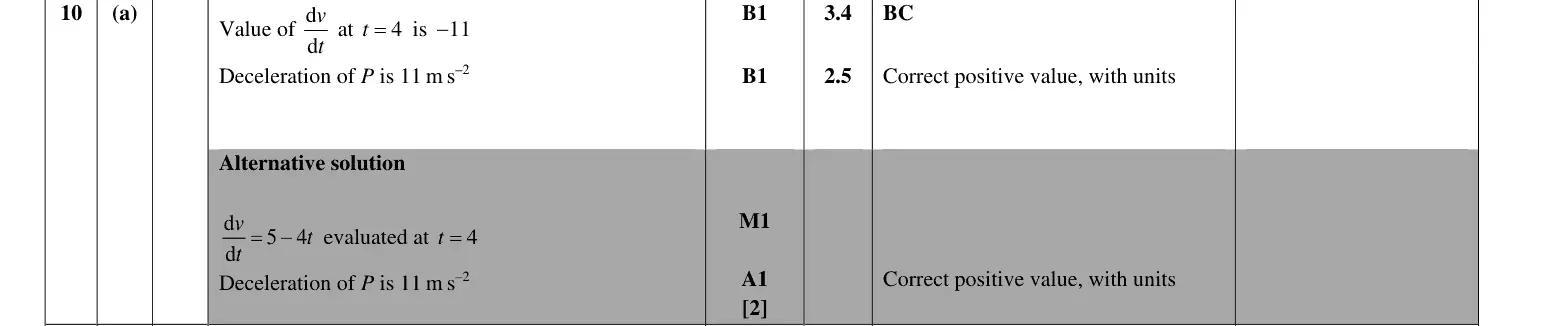
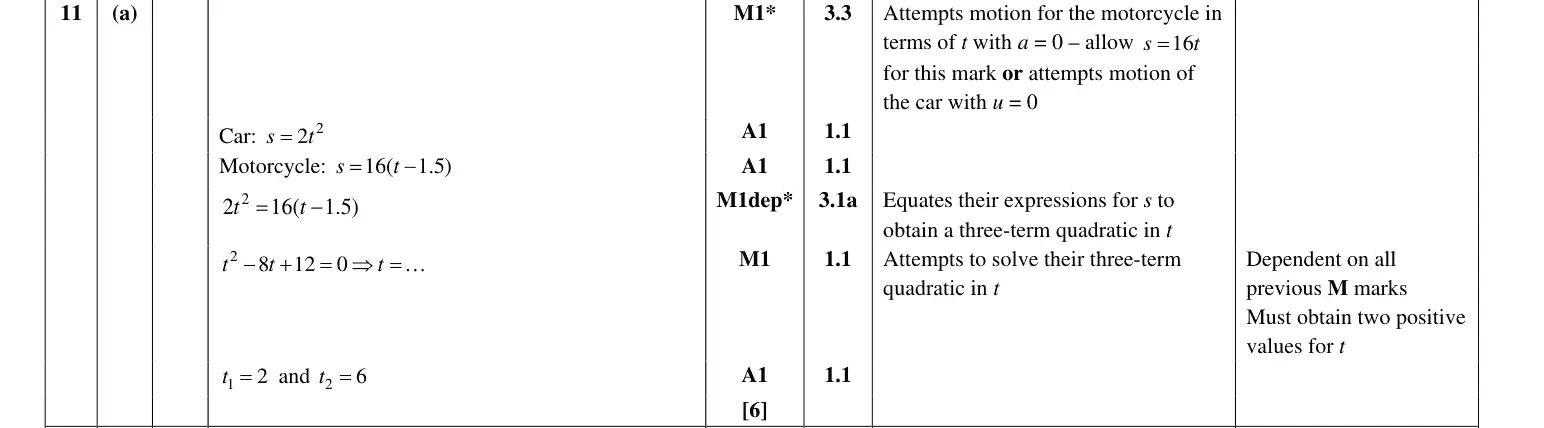
(Comment on Question 11 as a whole) Part (a) - s = 16t used – the need for t – 1.5 was generally not understood. This then led to t = 0 and t = 8 from a two term quadratic and thus gained only M1 A1. Candidates did not seem to realise that t = 0 could not be one of the required times given the problem. t + 1.5 was seen in some working. Part (c) - Most candidates made no useful progress with this part. Common misconceptions Key teaching and learning points – comments on improving performance The following, some of which have been mentioned in previous reports, remain pertinent. 1. Candidates should understand the implication of the ‘In this question you must show detailed reasoning’ instruction. Generally, this means examiners will expect to see how results have been obtained. So, for example, in Question 6 on this paper the method for solving the simultaneous equations was expected and those just doing it on the calculator earned M0 for this skill. 2. BC – a result achieved ‘by calculator’ – can encourage candidates to show little, if any, evidence of how their answer has been produced. To be fair, where this appears on the mark scheme (in Question 10) candidates generally adopted the ‘old-fashioned’ algebraic route but no doubt this will change over time. Inevitably examiners will find it difficult to know where an incorrect answer, presented alone, has come from and it may be hard to credit. It may be wise to encourage candidates to provide some evidence of what they are doing, especially in cases where more than one mark is available. 3. The front cover instructions state ‘Give non-exact numerical answers correct to 3 significant figures unless a different degree of accuracy is specified in the question.’ This should be stressed – some final answers were correct to 2 significant figures only. This may result in a loss of accuracy marks. 4. A question may require units in an answer to gain full credit. It is best to make candidates aware of this and urge them to always include units in answers where relevant. 5. The front cover instruction state ‘When a numerical value is needed use g = 9.8 unless a different value is specified in the question’. This now seems to be well recognised. Guidance on using this paper as a mock This paper covers the following topics : Cosine rule, ½absinC with area of a segment, curve sketching and interpretation of the algebraic solution of an equation graphically, finding the normal to a curve, the factor theorem and factorisation, quadratic functions and graphical transformations, properties of the circle and the circle equation, a maximisation problem with rationalising and algebraic manipulation, use of the laws of logarithms, forces in vector notation in equilibrium, Newton’s second law, variable acceleration and suvat equation use. The Pure section introduces the calculus and various other ideas which require a secure grasp of basic algebra and in the Mechanics section students need a sound understanding of kinematics with both uniform and non-uniform acceleration and Newton’s laws.