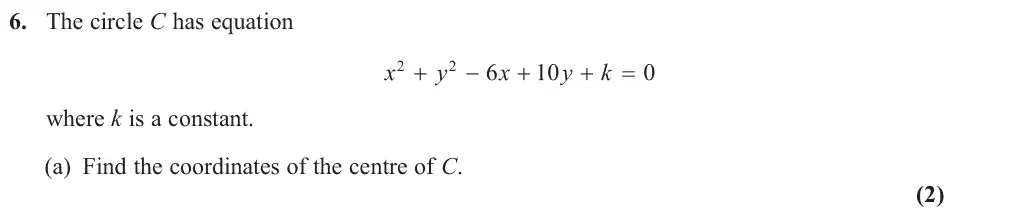
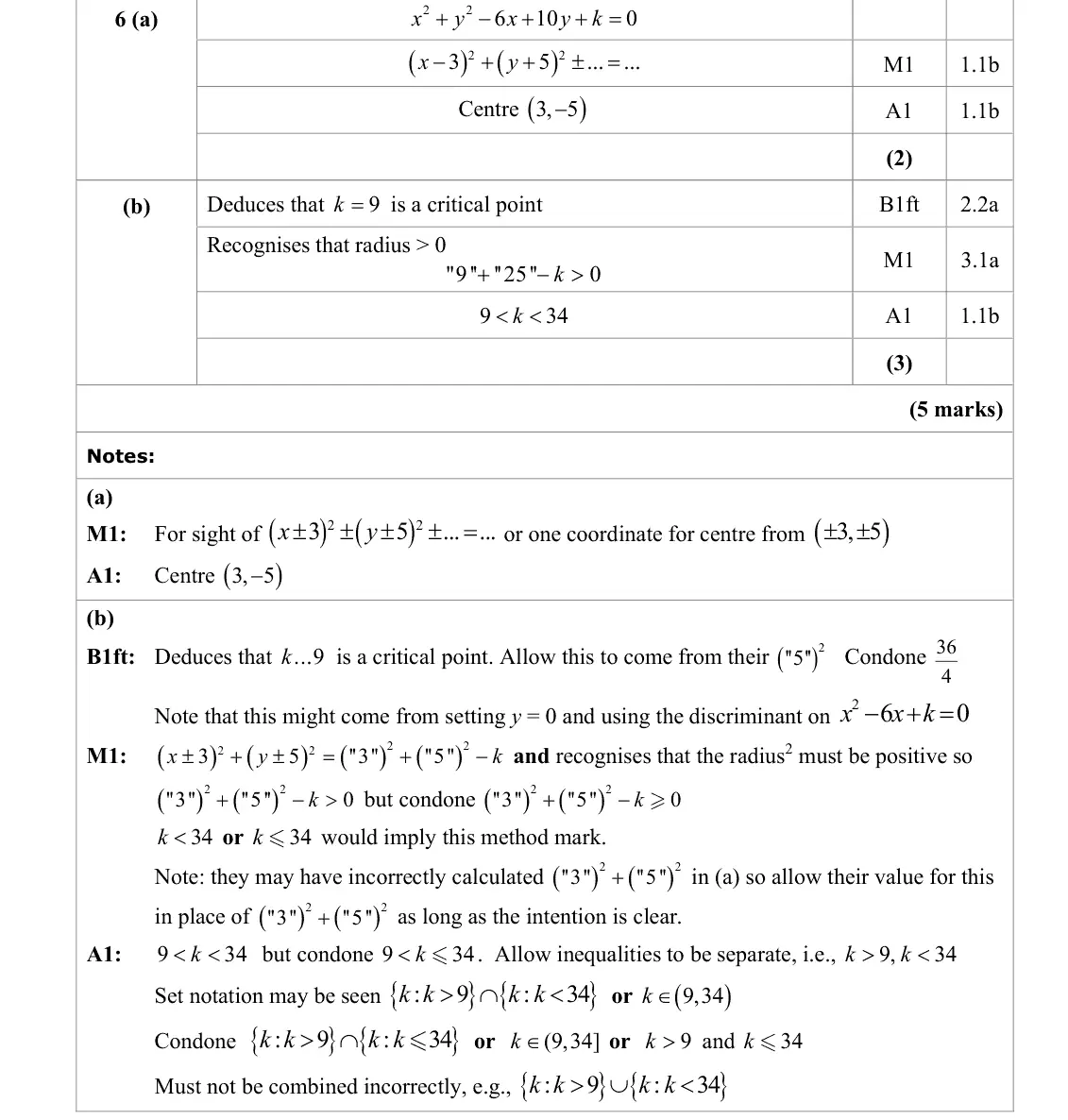
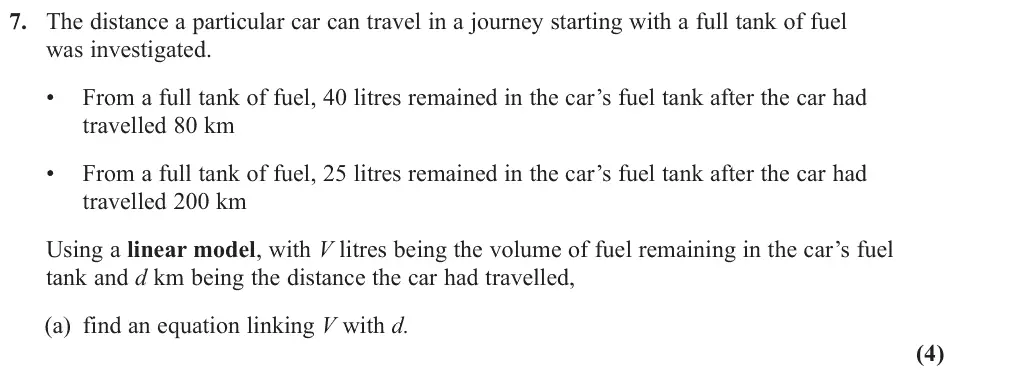
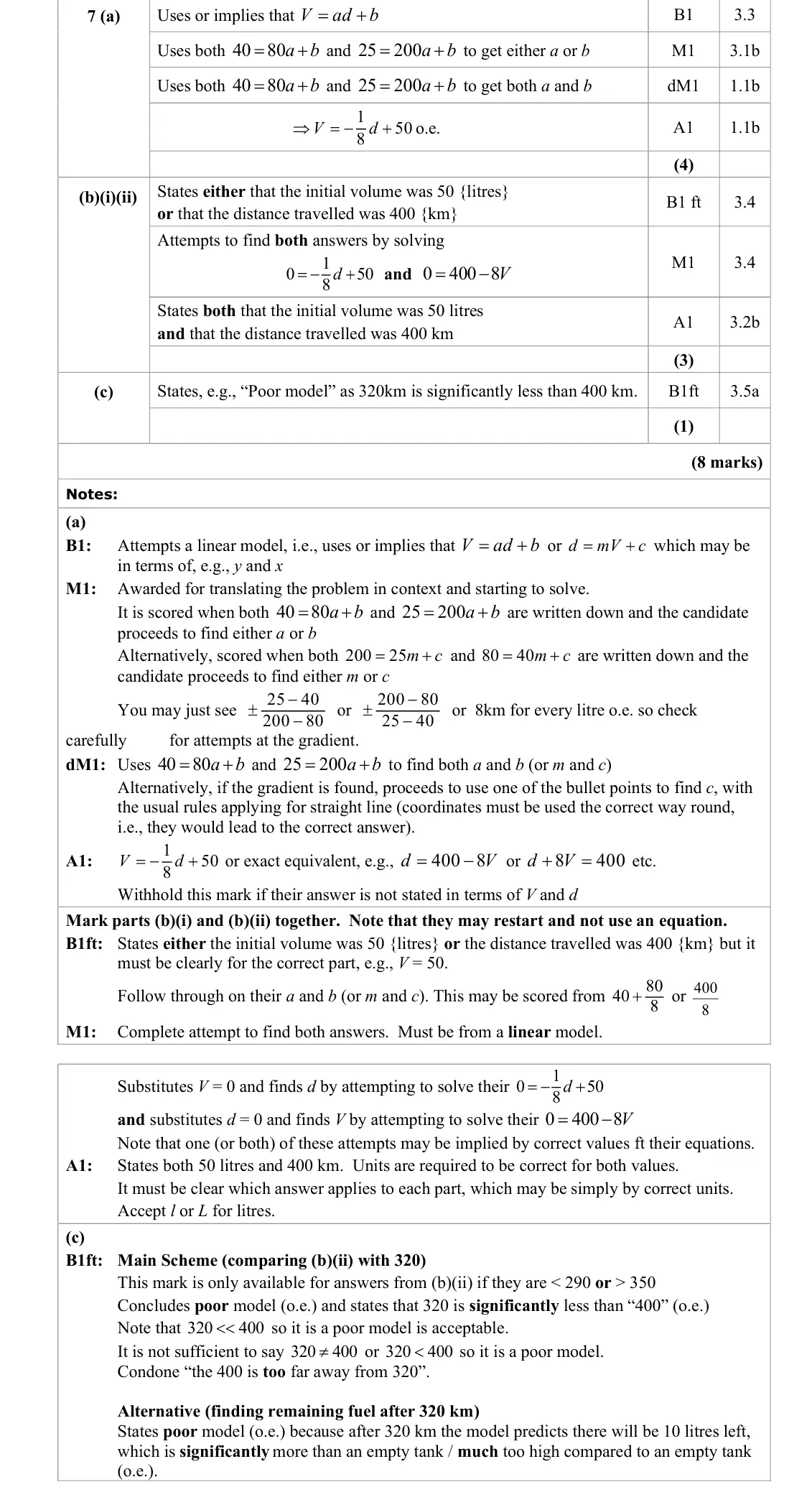
Examiner's comment
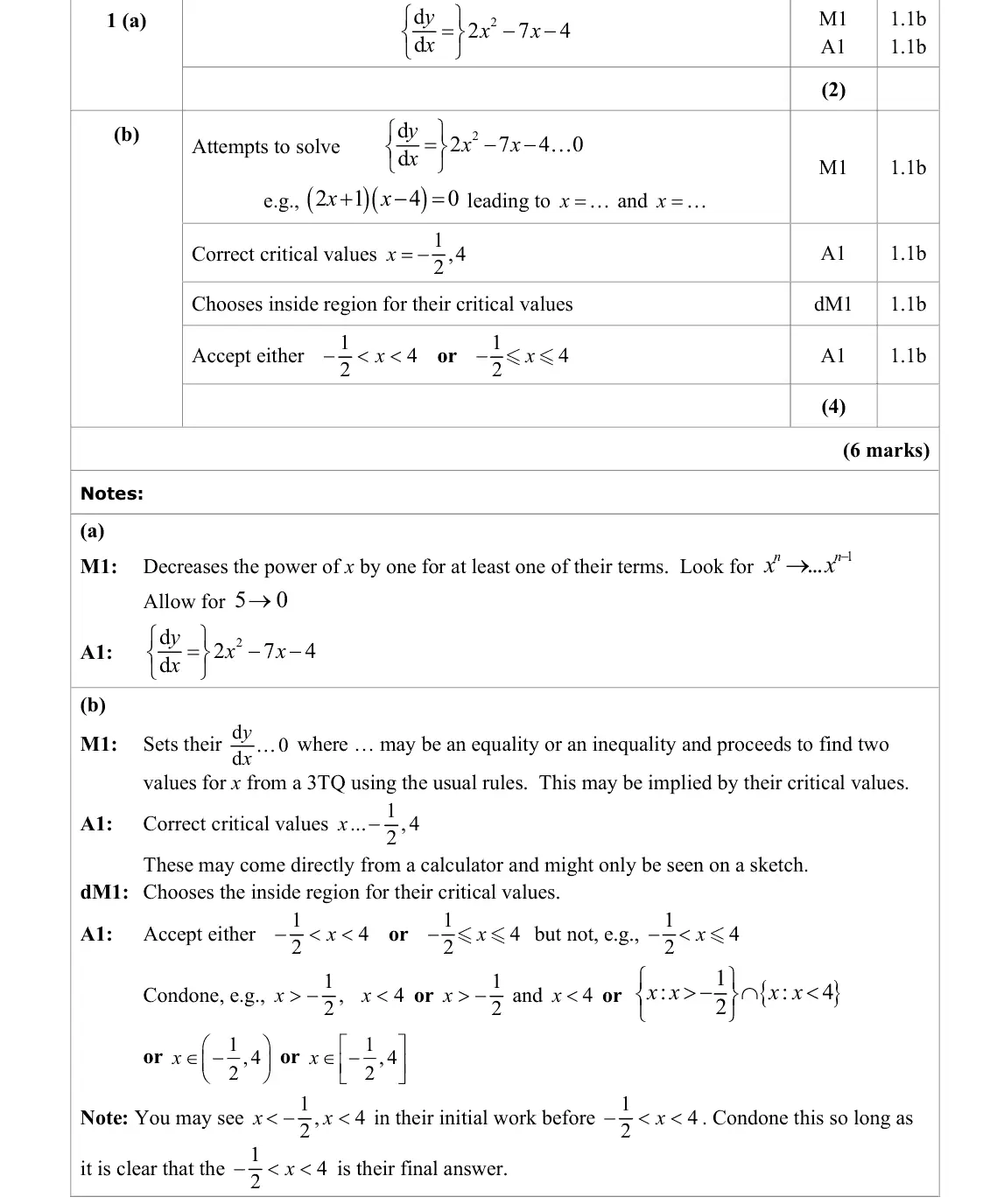
This question was a friendly and well-attempted start to the paper. Most candidates were able to score a high proportion of the marks available here. In part (b), a significant minority of candidates were unclear on the correct way to identify the correct critical values and, as a result, some attempted to solve 2 2 d 0 d y x = in pursuit of a ‘critical value’. Perhaps because the question had asked where y was decreasing, an occasional misconception led candidates to find y values corresponding to the x values resulting from d 0 d y x = followed by an attempt to use these y coordinates to define a range rather than using the values of x. Nonetheless, most candidates recognised the need to set d 0 d y x = to find the turning points of the curve and most were able to solve the three-term-quadratic set equal to zero. Commonly, the use of calculators was apparent. But many others took an algebraic approach with sometimes mixed results. Factorisation was the most successful of these, with errors mainly occurring with the signs within the linear factors. The quadratic formula was sometimes inaccurately applied and omissions of the – sign in front of ‘b’ in the numerator, or the use of ‘2ac’ in the denominator, caused issues and the resulting loss of the M mark. Completing the square was seen but it seemed to be a fairly unreliable approach for the candidates that chose to use it. A significant minority of candidates did not write down their critical values clearly, instead confining them to being labelled only on a graph of the d d y x curve. A significant number of candidates who had found critical values appeared to believe that stating them was sufficient to define the required range, or perhaps they were unable to make further progress in stating the range and so stopped short by simply stating the two values of x. Those candidates who did realise, however, that an interval needed more careful definition, usually did so correctly. This was most often achieved using standard inequality notation. The most successful candidates were those who drew a sketch of the quadratic to accompany their determination of the range for x, but some candidates determined 2 2 d d y x as a means to identifying the correct region. A minority of candidates lost a mark for inconsistent use of inequalities by mixing, for example, and in their statement of the range. Only a relatively small proportion of candidates defined the outside region; a small number of whom wrote non-sensical inequalities such as 1 4 2 x - . Answers such as 1 , 4 2 x x - were also not uncommon. The use of set notation tended to be more problematic for those that used it as there was sometimes some confusion between the union and the intersection symbols.