Examiner's comment
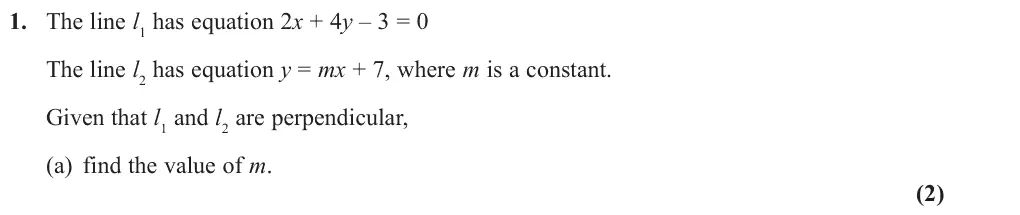
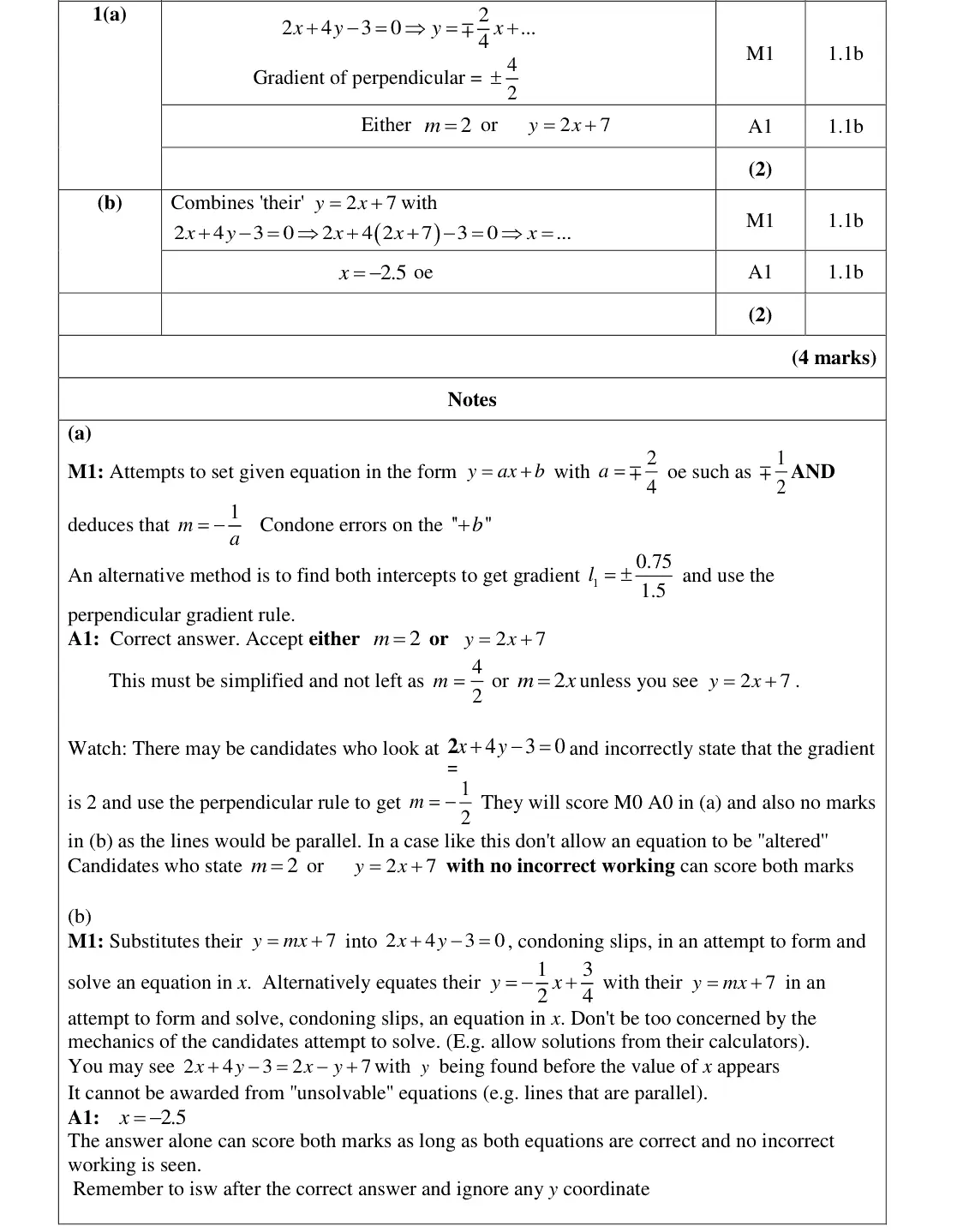
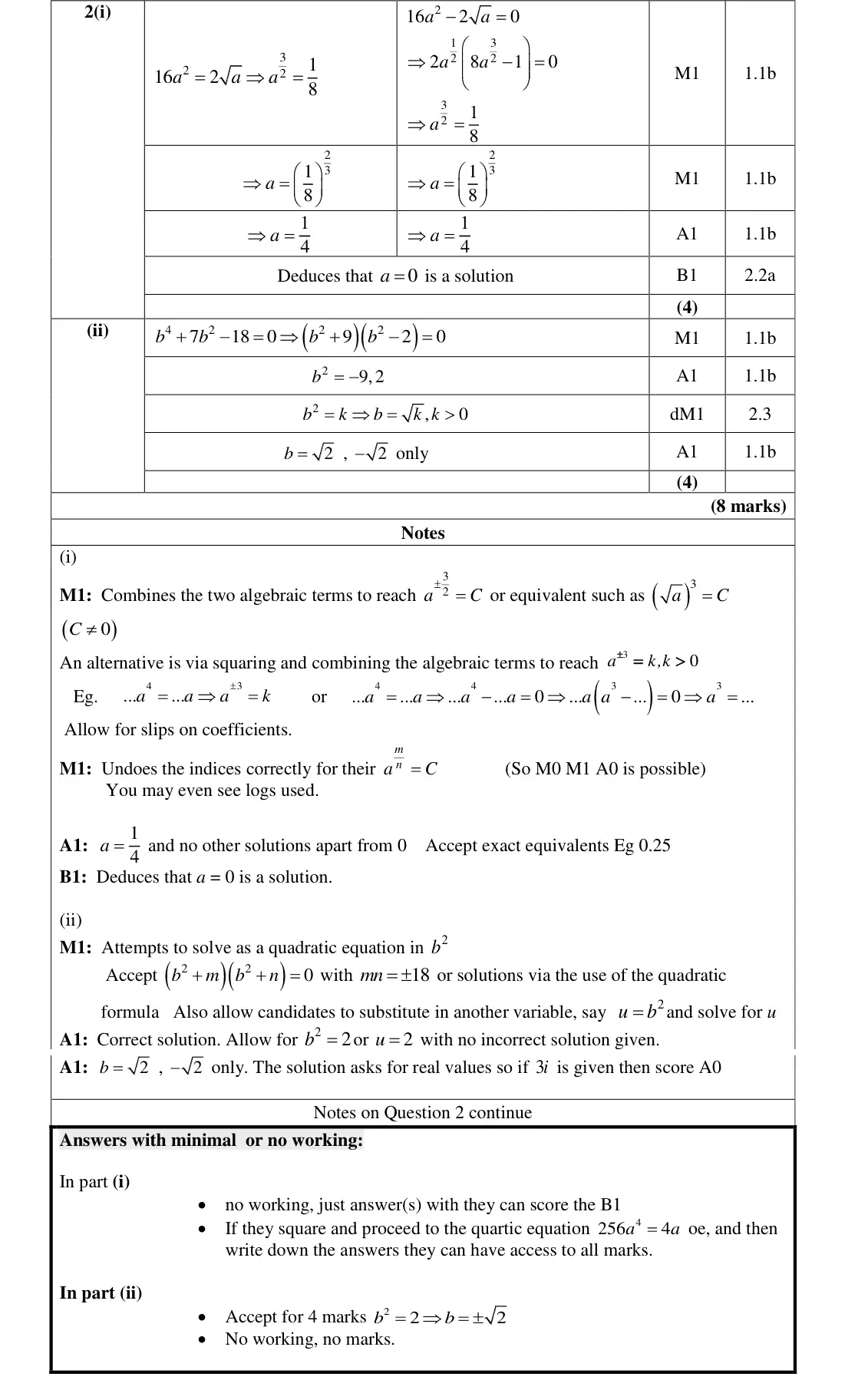
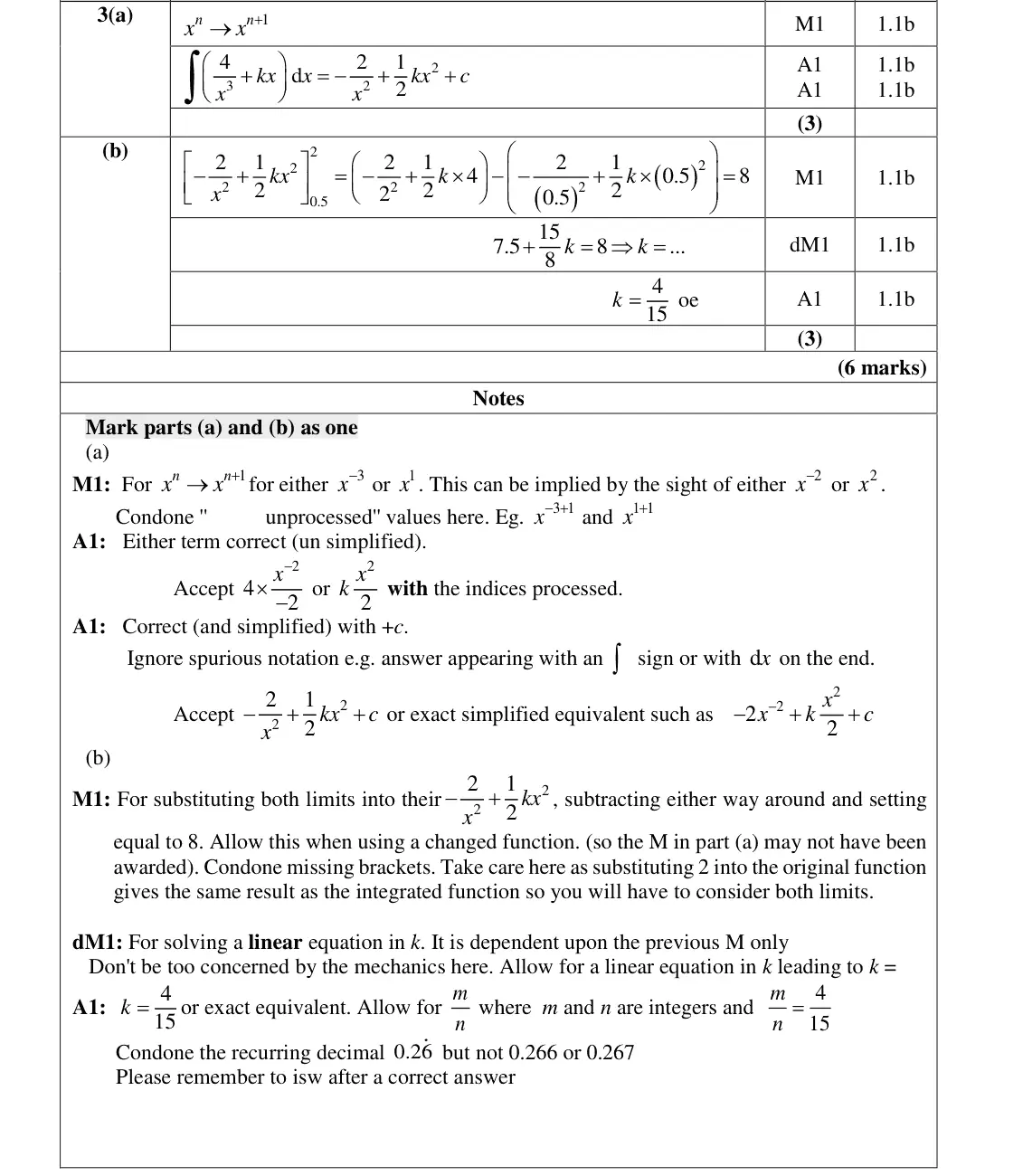
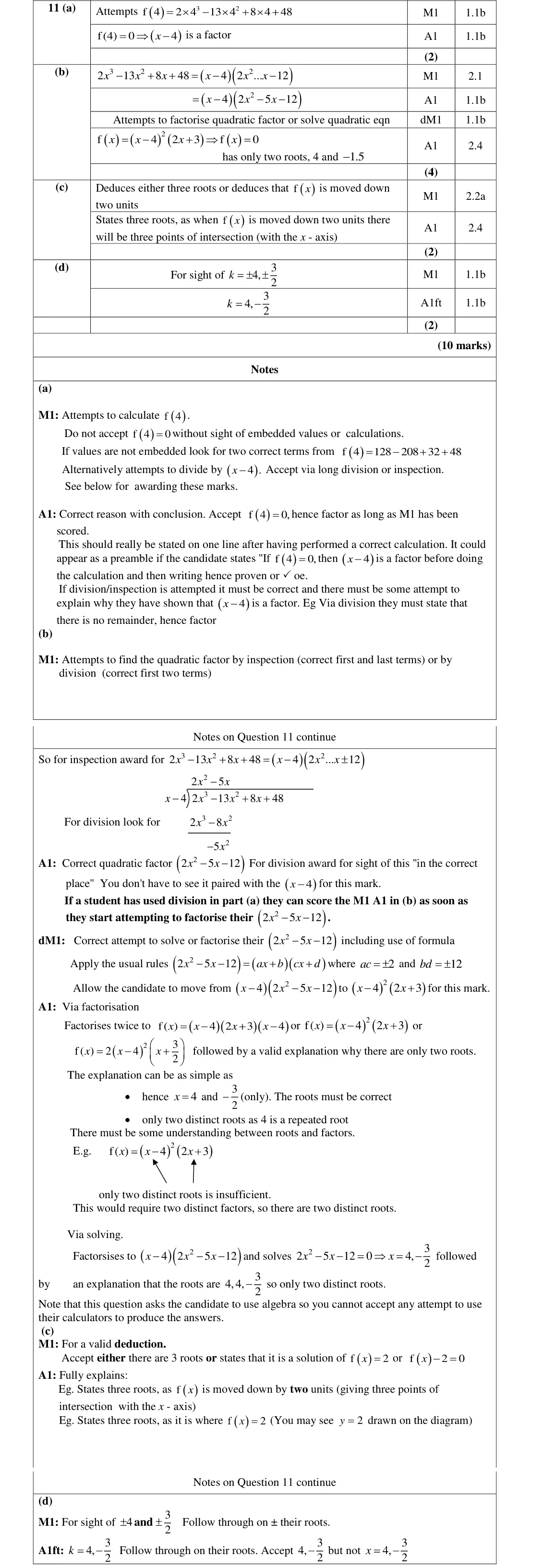
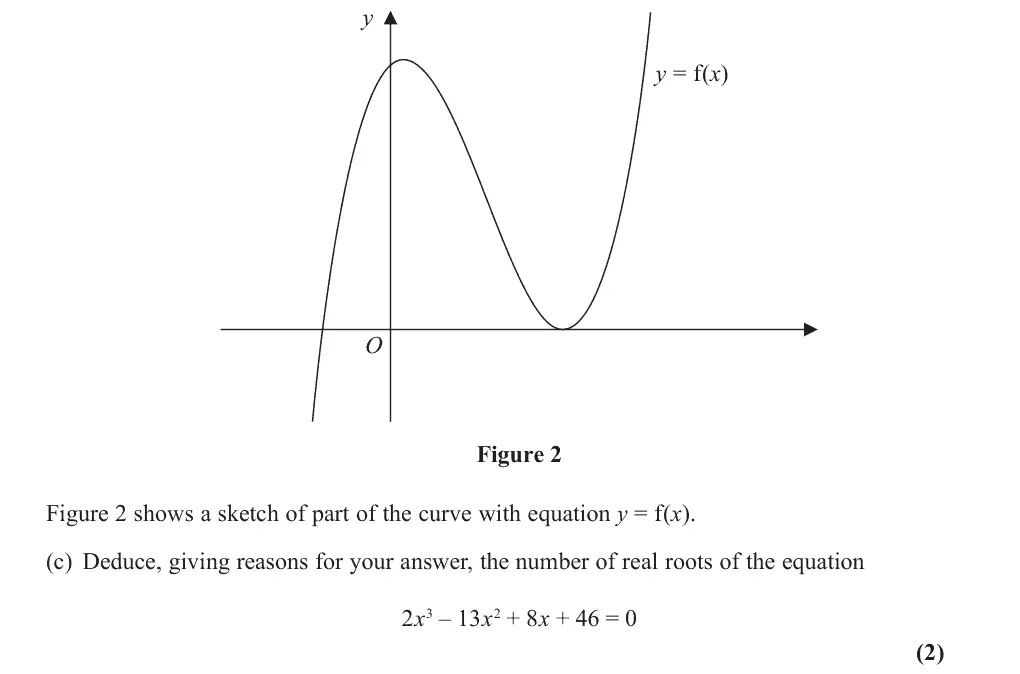
As a general point, it is worth noting that a good examination technique is to look at the mark (a) Almost every candidate gained the first mark by either substituting x = 4 into f(x) and finding that f (4) = 0, or by dividing f(x) by (x – 4) and achieving a remainder of 0. However, in a proof, a conclusion is always required. Therefore, candidates were required to state that (x – 4) is a factor because f(4) = 0. However, it was pleasing to note that many more did follow this protocol than in the preceding year. (b) As in part (a), a ‘show that’ question always needs a concluding statement. Most candidates were very adept in algebraic division and did so clearly and accurately gaining the first two marks. The majority went on to factorise the 3TQ successfully. What too many candidates failed to do at this stage was to refer back to f(x), write it out in its complete factorised form of , and then state that because there was a repeated factor, the equation had only two roots. Confusion between roots and factors cost some candidates the final as a root. Quite a few candidates found b2– 4ac for the mark as they incorrectly referred to quadratic expression, stated that as it was > 0 and therefore two roots, clearly thinking that they had answered the question. There was also clear evidence of use of calculators to find the roots followed by an attempt to work backwards to obtain the factors; this was unacceptable. given. Infact quite a few candidates, who had scored only a few marks in parts (a) (b) and (c) combined, achieved both marks here.