June 2025: AS Paper 2: Pure Mathematics and Mechanics

75 marks · 25 question parts · Question paper, mark scheme and examiner's report on OCR's site

Question by question

QTopicMarksDifficulty
1 Straight lines 3 Easy
2 Indices and surds, Straight lines 4 Medium
3(a) Trigonometric ratios, graphs, radians and the sine and cosine rules 2 Medium
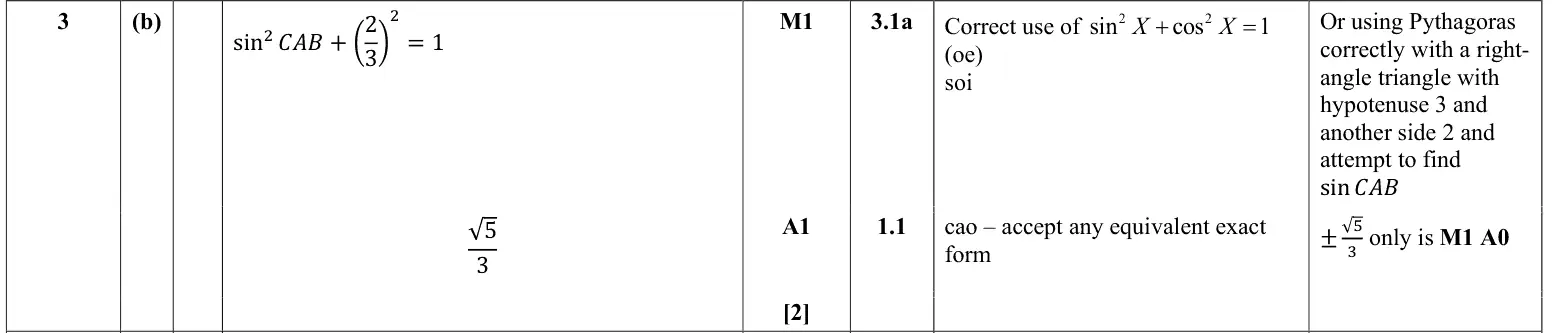
3(b) Trigonometric identities and proofs 2 Hard
3(c) Trigonometric ratios, graphs, radians and the sine and cosine rules 2 Medium
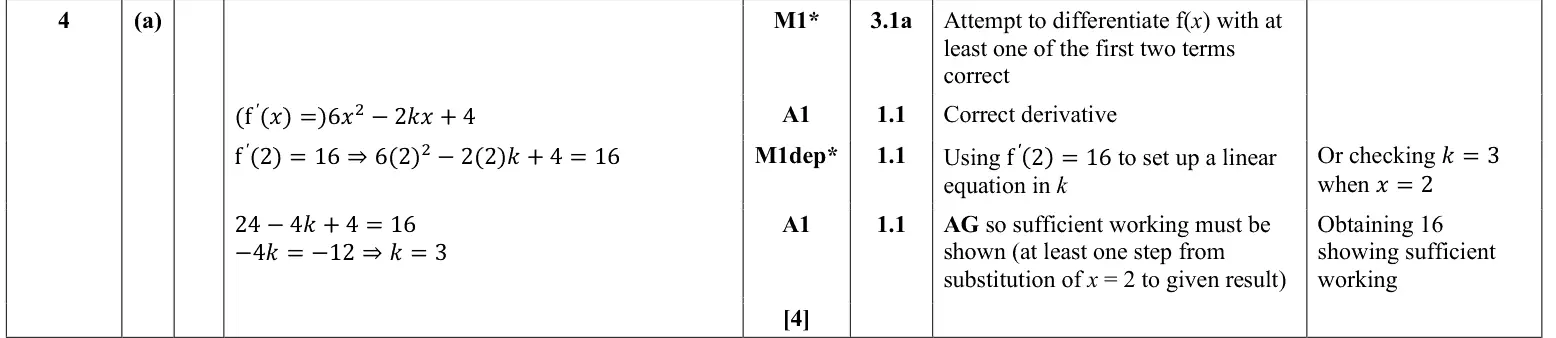
4(a) Differentiation: first principles, gradients, stationary points, Algebraic methods: polynomials, factor theorem and rational expressions 4 Easy
4(b) Algebraic methods: polynomials, factor theorem and rational expressions 2 Easy
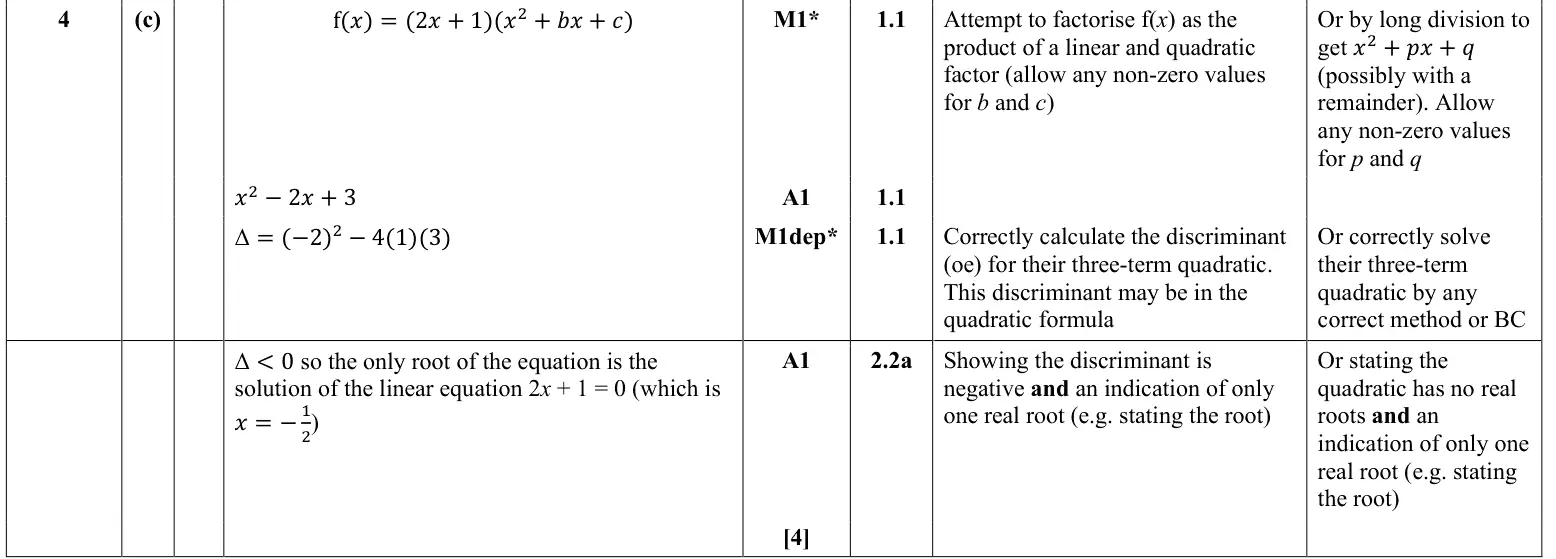
4(c) Algebraic methods: polynomials, factor theorem and rational expressions, Quadratics and the discriminant 4 Medium
5 Inequalities, Algebraic methods: polynomials, factor theorem and rational expressions 5 Hard
6(a) Graphs and transformations, Exponentials and logarithms 2 Medium
6(b) Graphs and transformations, Quadratics and the discriminant 4 Medium
7(a) Quadratics and the discriminant, Graphs and transformations 3 Medium
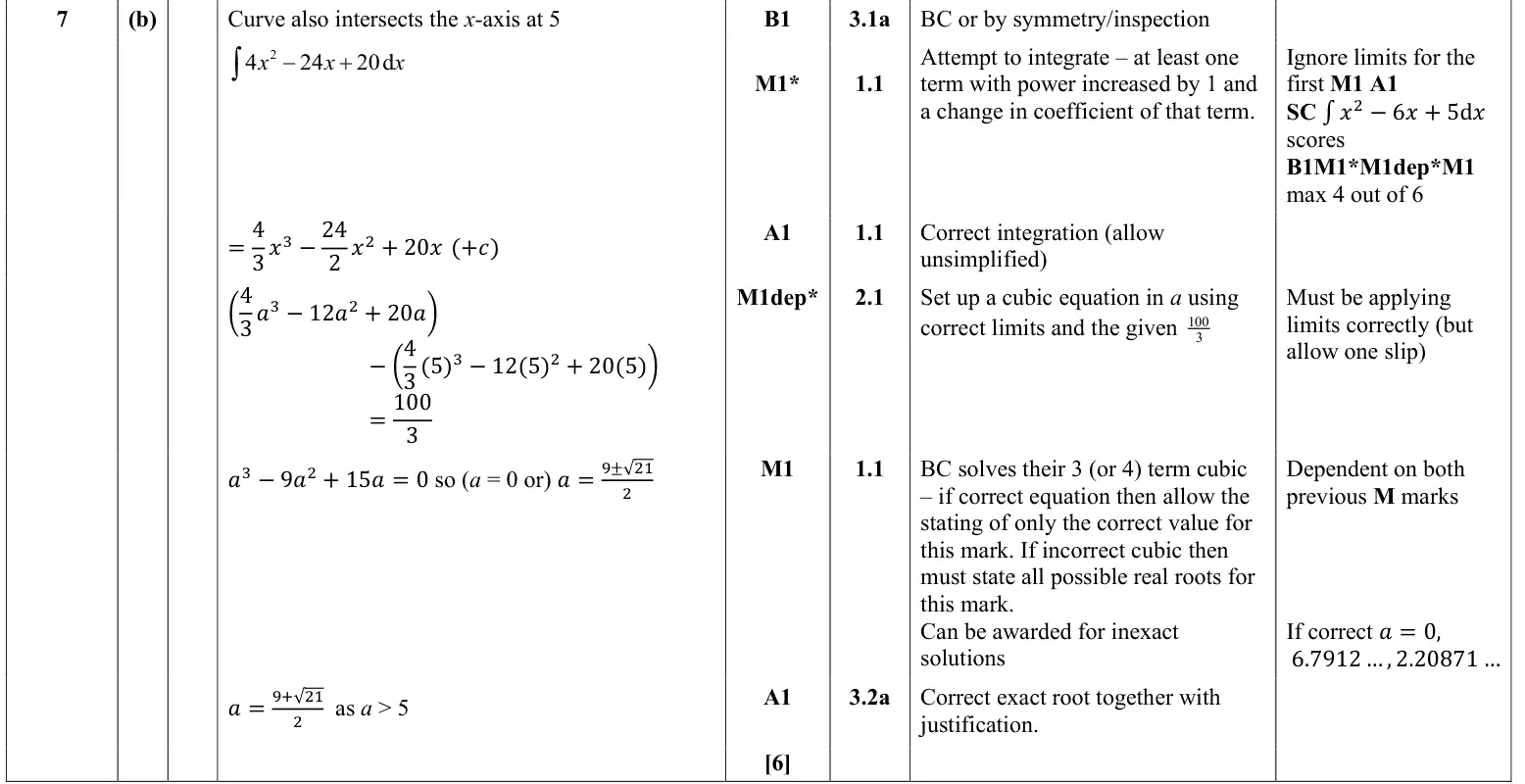
7(b) Integration: standard integrals, definite integrals and areas, Algebraic methods: polynomials, factor theorem and rational expressions 6 Medium
8(a) Exponentials and logarithms, Simultaneous equations 1 Medium
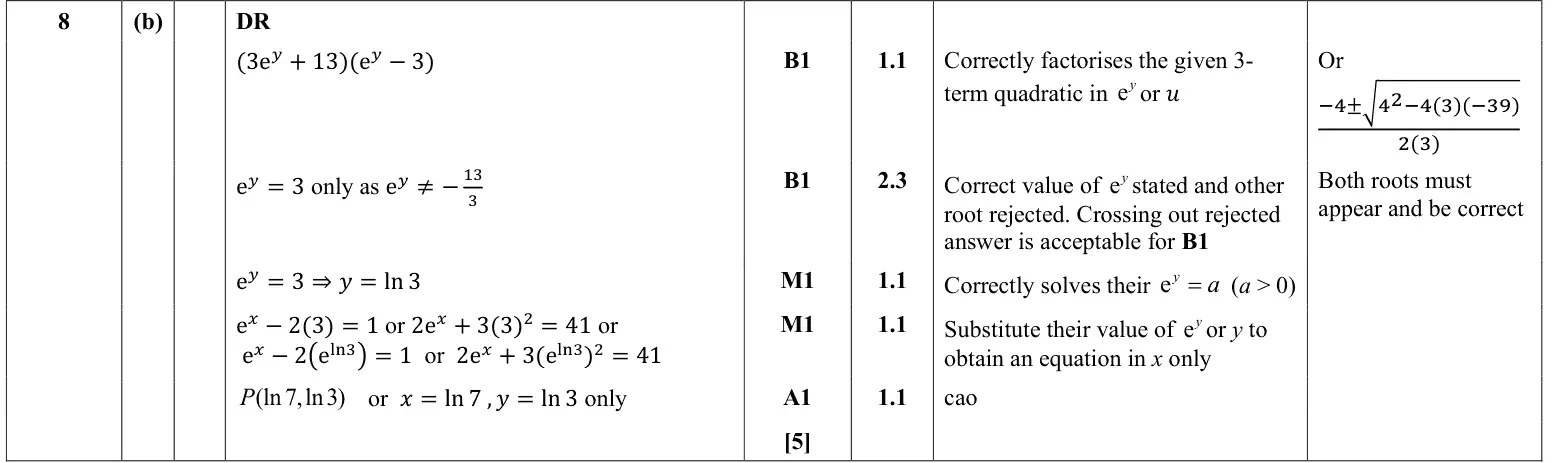
8(b) Quadratics and the discriminant, Exponentials and logarithms 5 Easy
9(a) Variable acceleration, Differentiation: first principles, gradients, stationary points 2 Easy
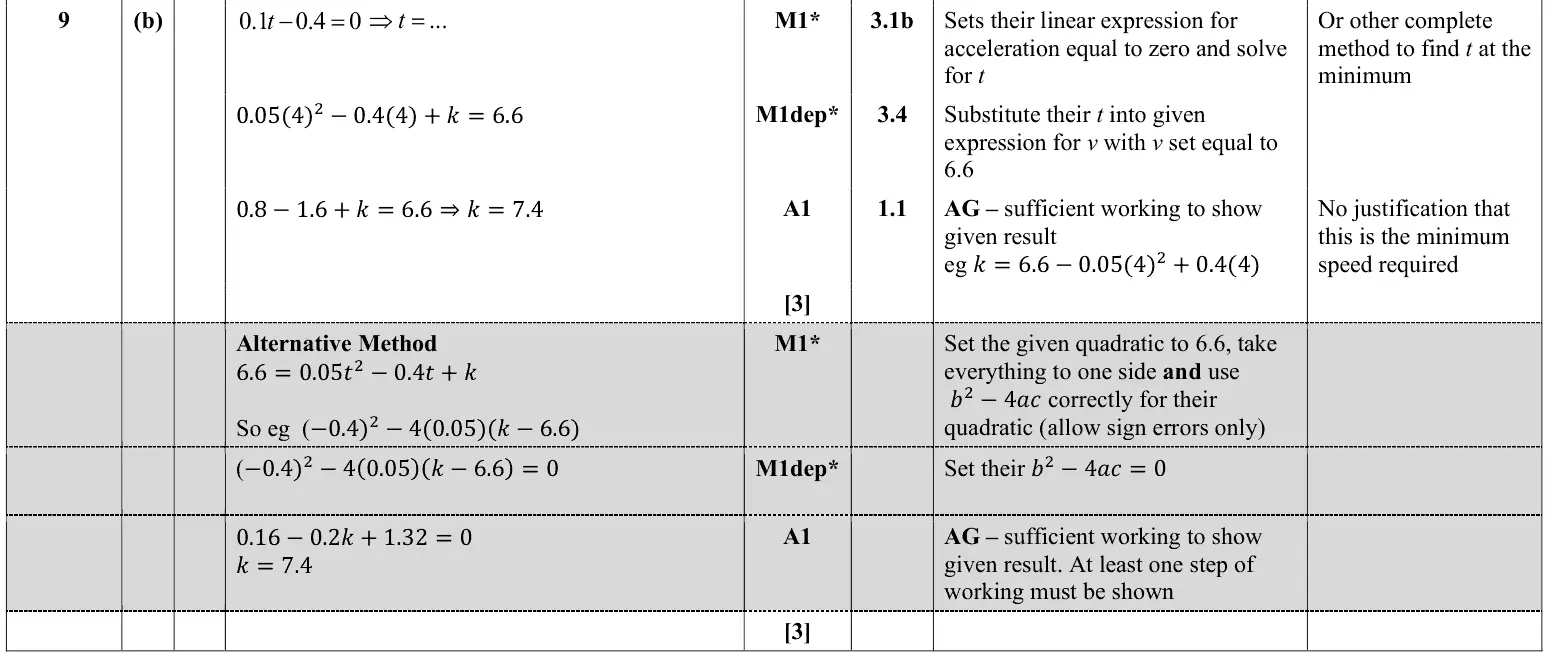
9(b) Variable acceleration, Differentiation: first principles, gradients, stationary points 3 Medium
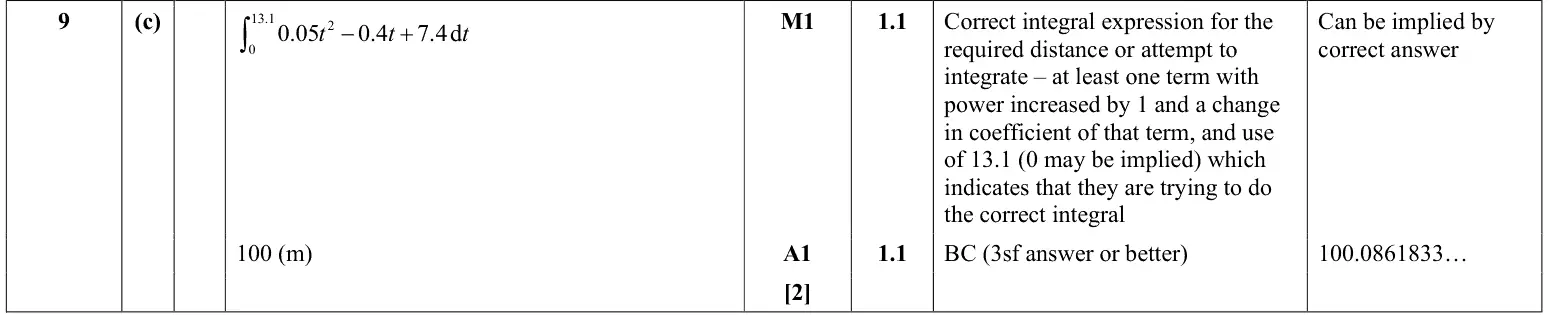
9(c) Variable acceleration, Integration: standard integrals, definite integrals and areas 2 Medium
10(a) Constant acceleration (SUVAT), Kinematics: language and graphs 2 Easy
10(b) Kinematics: language and graphs, Constant acceleration (SUVAT) 4 Hard
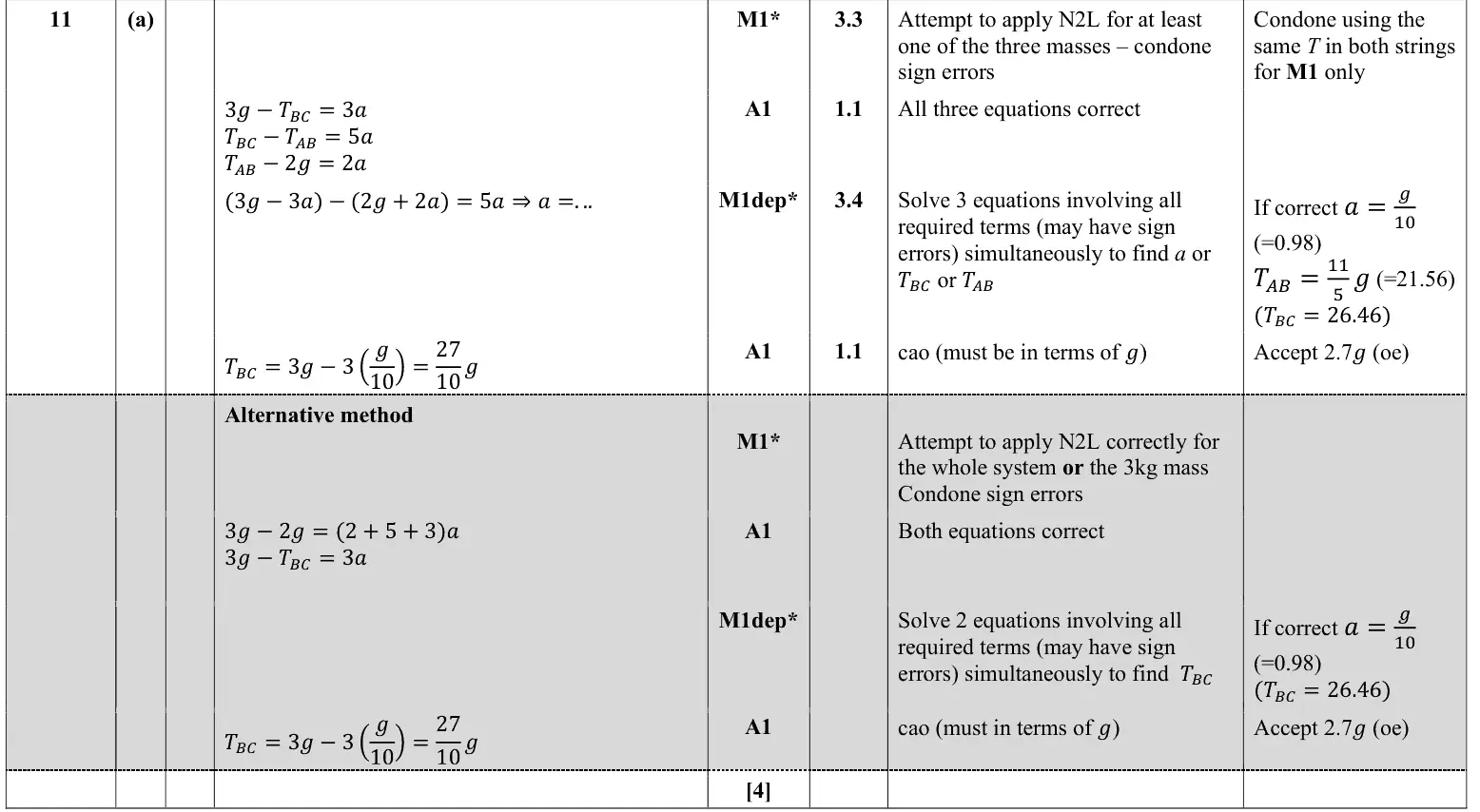
11(a) Forces, Newton's laws and connected particles 4 Medium
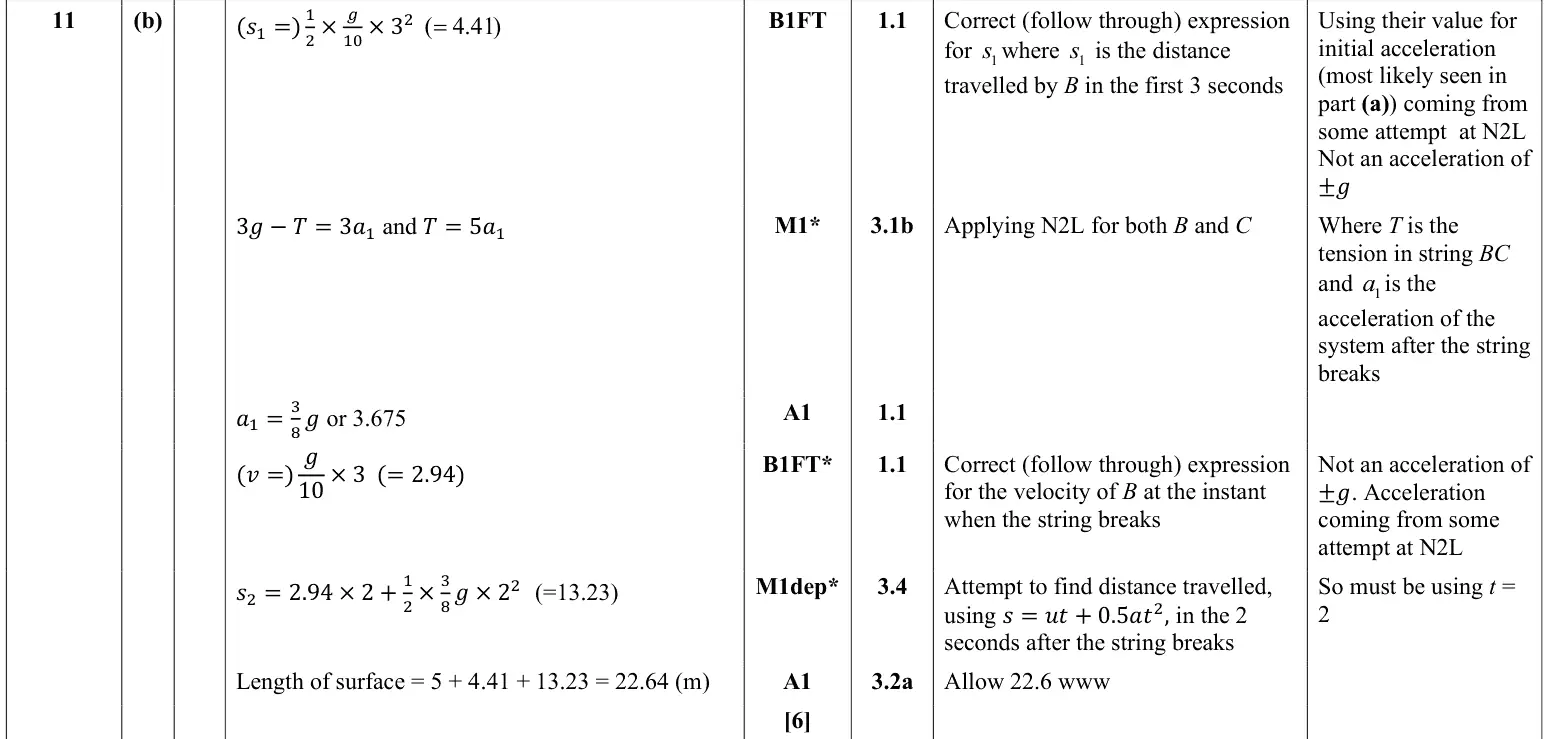
11(b) Forces, Newton's laws and connected particles, Constant acceleration (SUVAT) 6 Hard
11(c) Forces, Newton's laws and connected particles 1 Hard
11(d) Forces, Newton's laws and connected particles, Friction, resultant forces and motion in a plane 1 Medium
11(e) Friction, resultant forces and motion in a plane 1 Hard

The questions

123(a)3(b)3(c)4(a)4(b)4(c)56(a)6(b)7(a)7(b)8(a)8(b)9(a)9(b)9(c)10(a)10(b)11(a)11(b)11(c)11(d)11(e)
June 2025 · AS Paper 2 · Q1 3 marks Easy straight lines
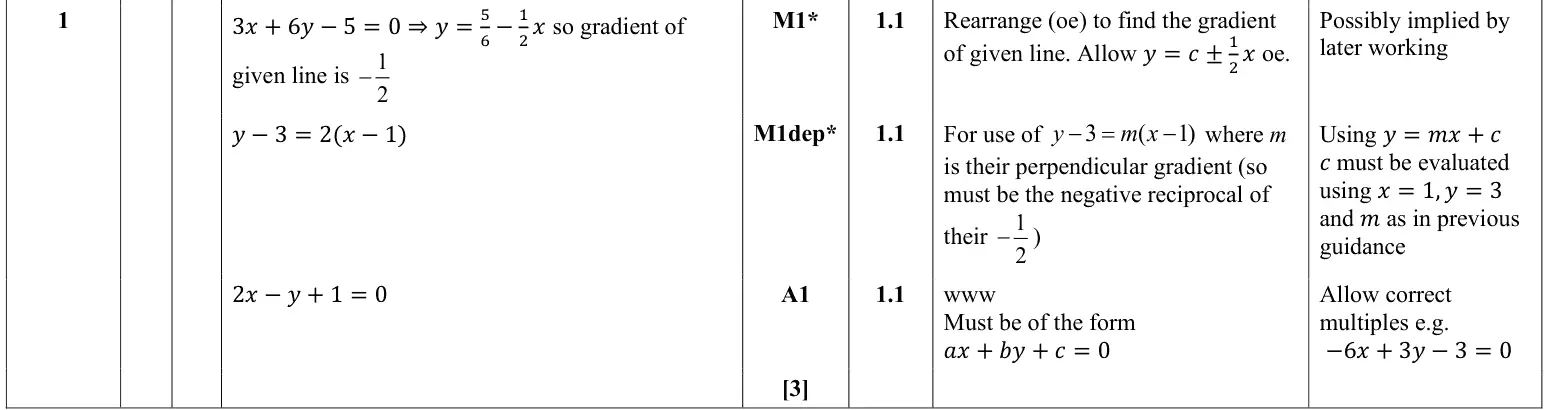
1 Determine the equation of the line that passes through the point (1, 3) and is perpendicular to the line with equation x y . Give your answer in the form ax by c where a, b and c + - = + + = are integers to be determined. [3]
June 2025 · AS Paper 2 · Q2 4 marks Medium indices and surdsstraight lines
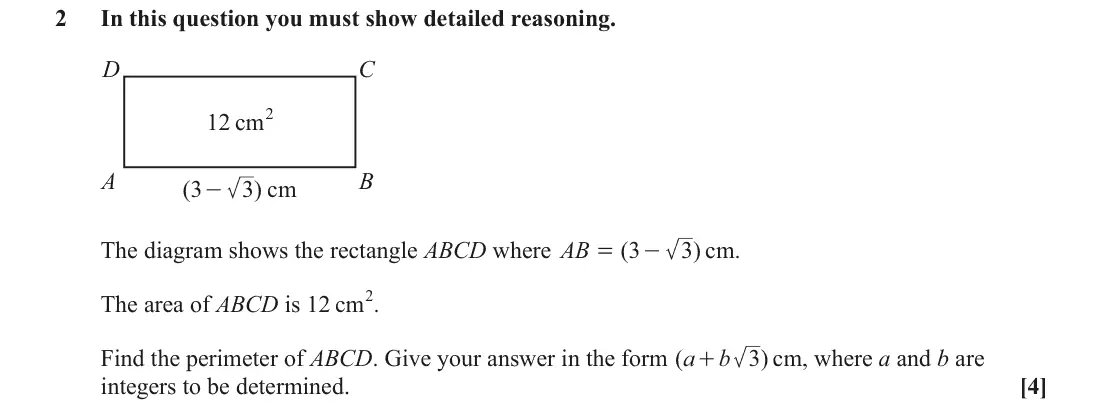
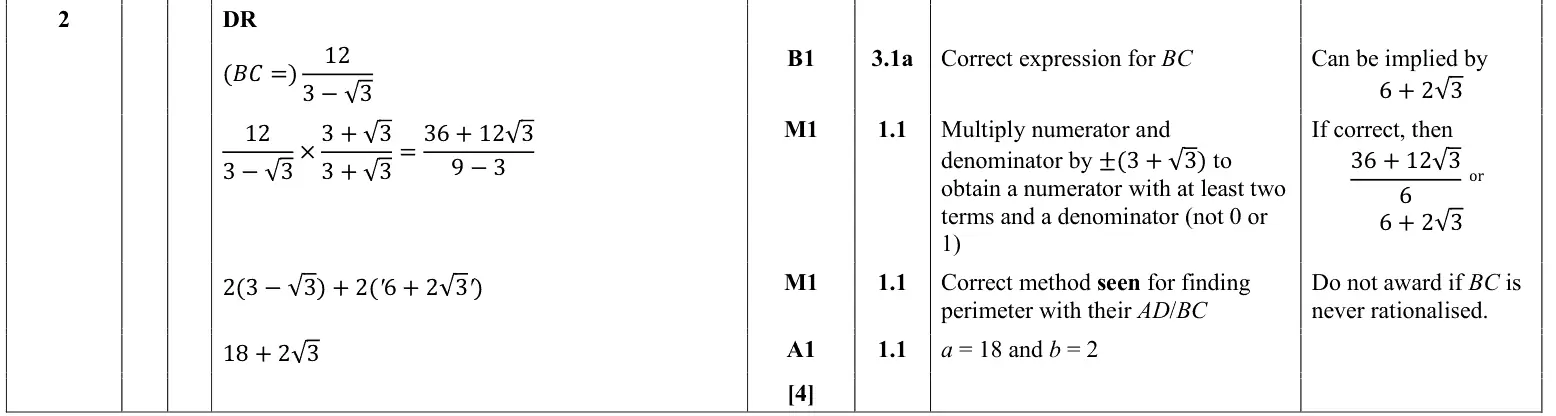
2 In this question you must show detailed reasoning. D C cm A B ( 3 cm ) - The diagram shows the rectangle ABCD where AB ( ) cm. = - cm2 The area of ABCD is 12 . Find the perimeter of ABCD. Give your answer in the form ( a b 3 ) cm, where a and b are + integers to be determined. [4]
June 2025 · AS Paper 2 · Q3(a) 2 marks Medium trigonometric ratios
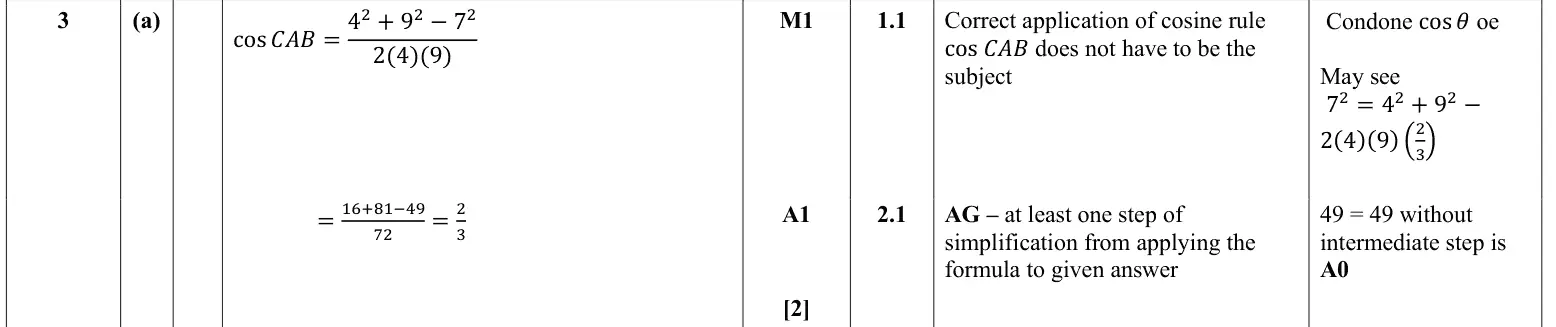
3 In a triangle ABC, AB = 9 cm, BC = 7 cm and AC = 4 cm. (a) Show that cosCAB . [2] =
June 2025 · AS Paper 2 · Q3(b) 2 marks Hard trig identities
Show the start of this questionEarlier part of this question
(b) Hence find the exact value of sinCAB. [2]
June 2025 · AS Paper 2 · Q3(c) 2 marks Medium trigonometric ratios
Show the start of this questionEarlier part of this question
(c) Find the exact area of triangle ABC. [2]
June 2025 · AS Paper 2 · Q4(a) 4 marks Easy differentiationalgebraic methods
4 The cubic polynomial x kx x + , where k is a constant, is denoted by ( )x k f . - + It is given that f ( ) . l = (a) Show that k = 3. [4]
June 2025 · AS Paper 2 · Q4(b) 2 marks Easy algebraic methods
Show the start of this questionEarlier part of this question
For the remainder of the question, you should use this value of k. (b) Use the factor theorem to show that ( x ) is a factor of ( )x f . [2] +
June 2025 · AS Paper 2 · Q4(c) 4 marks Medium algebraic methodsquadratics
Show the start of this questionEarlier part of this questionEarlier part of this question
(c) Hence show that the equation ( )x f has only one real root. [4] =
June 2025 · AS Paper 2 · Q5 5 marks Hard inequalitiesalgebraic methods
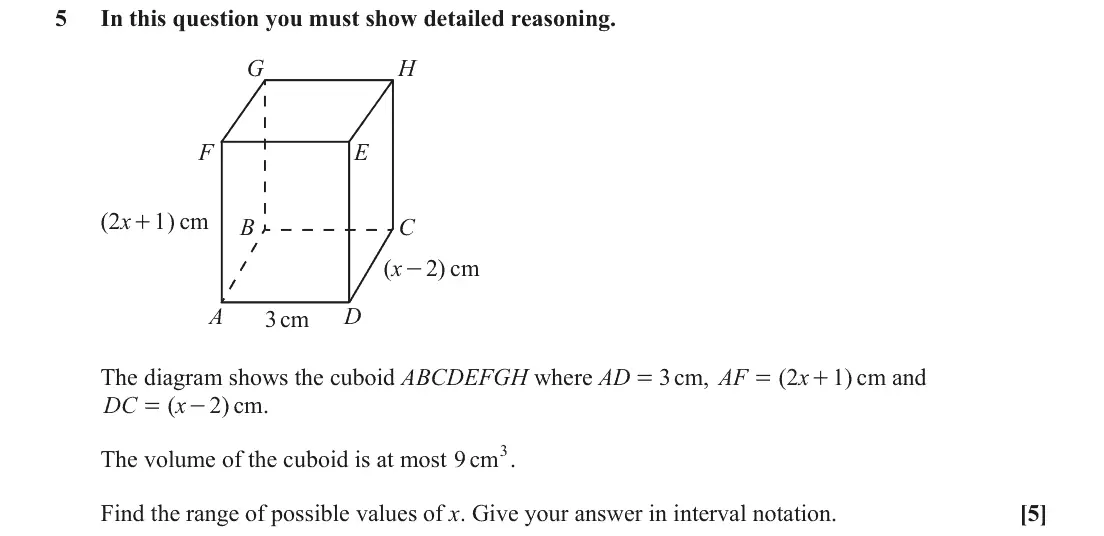
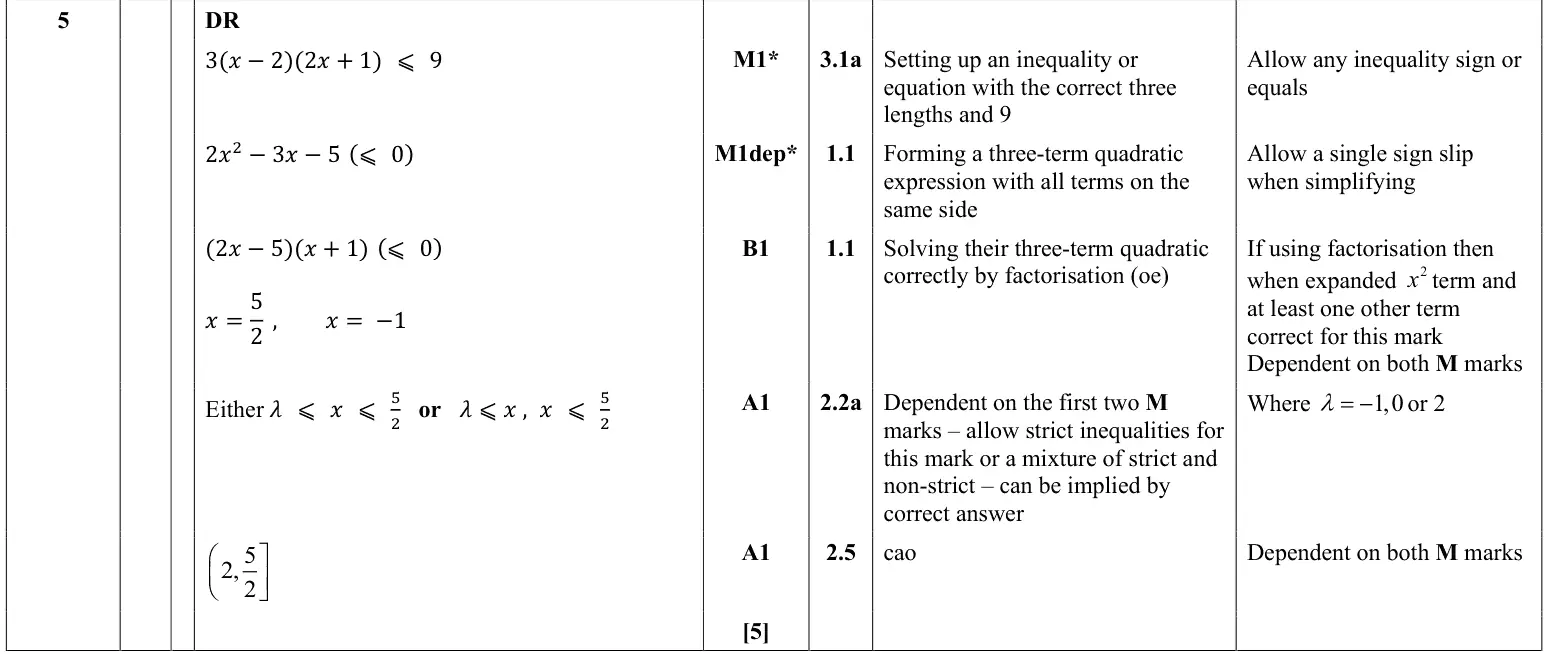
5 In this question you must show detailed reasoning. G H F E ( x ) cm + B C ( x ) cm - A D 3 cm The diagram shows the cuboid ABCDEFGH where AD = 3 cm, AF ( x ) cm and = + DC ( x ) cm. = - 3. The volume of the cuboid is at most cm Find the range of possible values of x. Give your answer in interval notation. [5]
June 2025 · AS Paper 2 · Q6(a) 2 marks Medium graphs and transformationsexponentials and logs
6 (a) The curve y ln x is stretched by a scale factor 3 in the x-direction. = State the equation of the curve after it has been stretched. [2]
June 2025 · AS Paper 2 · Q6(b) 4 marks Medium graphs and transformationsquadratics
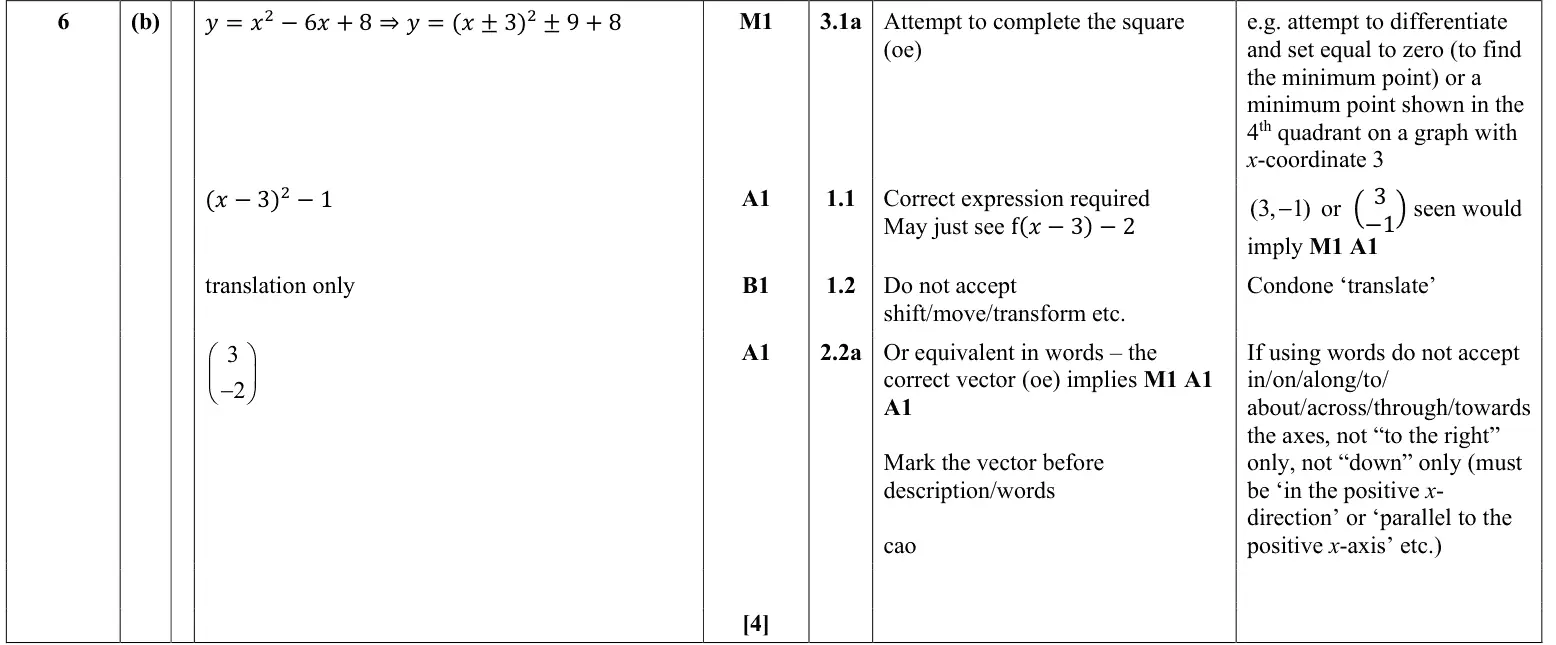
(b) Describe fully the single transformation that transforms the curve y x + to the curve = y x x + . [4] = -
June 2025 · AS Paper 2 · Q7(a) 3 marks Medium quadraticsgraphs and transformations
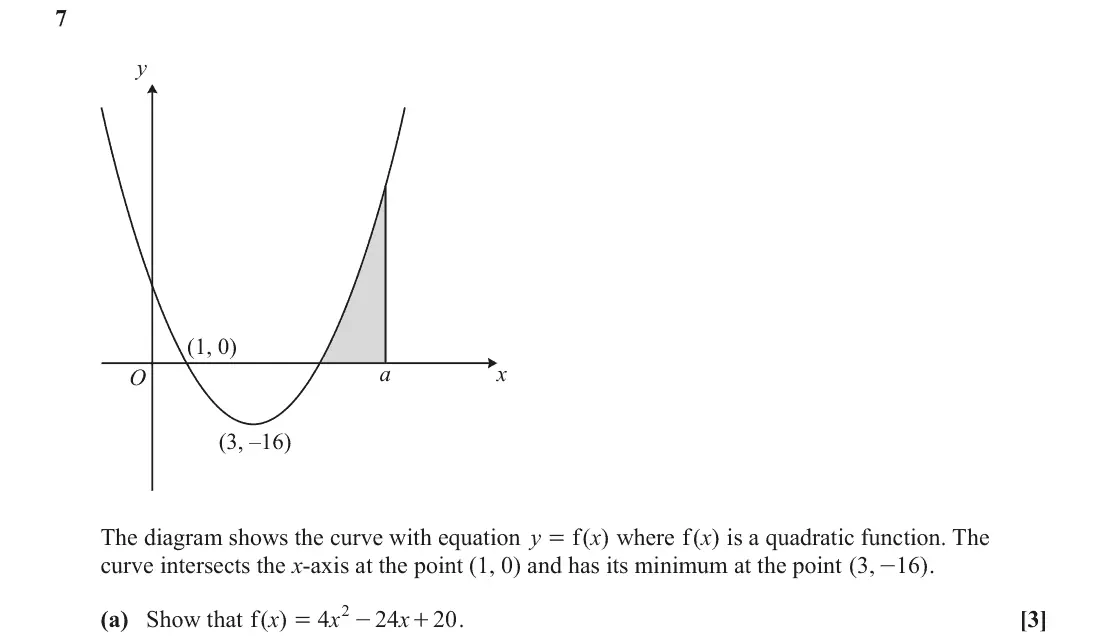
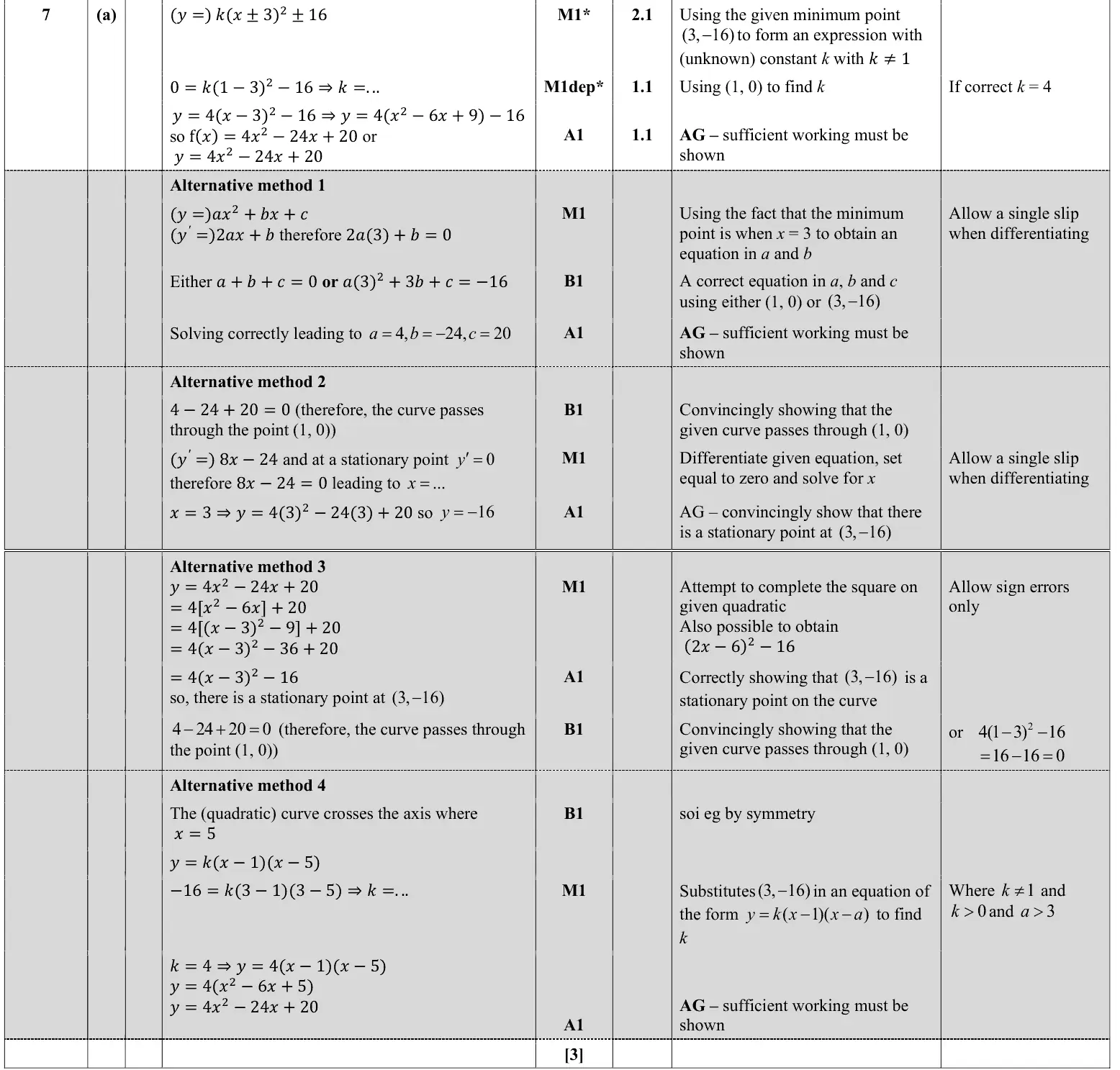
7 y (1, 0) a x O (3, –16) The diagram shows the curve with equation y f ( ) x where ( ) f x is a quadratic function. The = curve intersects the x-axis at the point (1, 0) and has its minimum at the point ( , ) . - (a) Show that ( ) f x x x . [3] = - +
June 2025 · AS Paper 2 · Q7(b) 6 marks Medium integrationalgebraic methods
Show the start of this questionEarlier part of this question
The shaded region is enclosed by the curve, the x-axis, and the line x = a. The area of the shaded 100 2. region is units (b) Determine the exact value of the constant a. [6]
June 2025 · AS Paper 2 · Q8(a) 1 mark Medium exponentials and logssimultaneous equations
x y x y 8 The curves e e = and 2 e e intersect at the point P. - + = 2 + y y (a) Show that the y-coordinate of P satisfies the equation 3 e e . [1] - =
June 2025 · AS Paper 2 · Q8(b) 5 marks Easy quadraticsexponentials and logs
Show the start of this questionEarlier part of this question
(b) In this question you must show detailed reasoning. Hence find the exact coordinates of P. [5]
June 2025 · AS Paper 2 · Q9(a) 2 marks Easy variable accelerationdifferentiation
An athlete runs with velocity v m s 1 9 - along a horizontal straight running track AB. At time t seconds after passing A, v 0 05 . t 0 4 . t + , where k is a constant. k = - (a) Find the acceleration of the athlete when t = 6. [2]
June 2025 · AS Paper 2 · Q9(b) 3 marks Medium variable accelerationdifferentiation
- , show that k = 7.4. (b) Given that the minimum velocity of the athlete is 6.6 m s 1 [3]
June 2025 · AS Paper 2 · Q9(c) 2 marks Medium variable accelerationintegration
Show the start of this questionEarlier part of this question
The athlete runs in a straight line from A to B in 13.1 seconds. (c) Calculate the distance AB. [2]
June 2025 · AS Paper 2 · Q10(a) 2 marks Easy constant accelerationkinematics
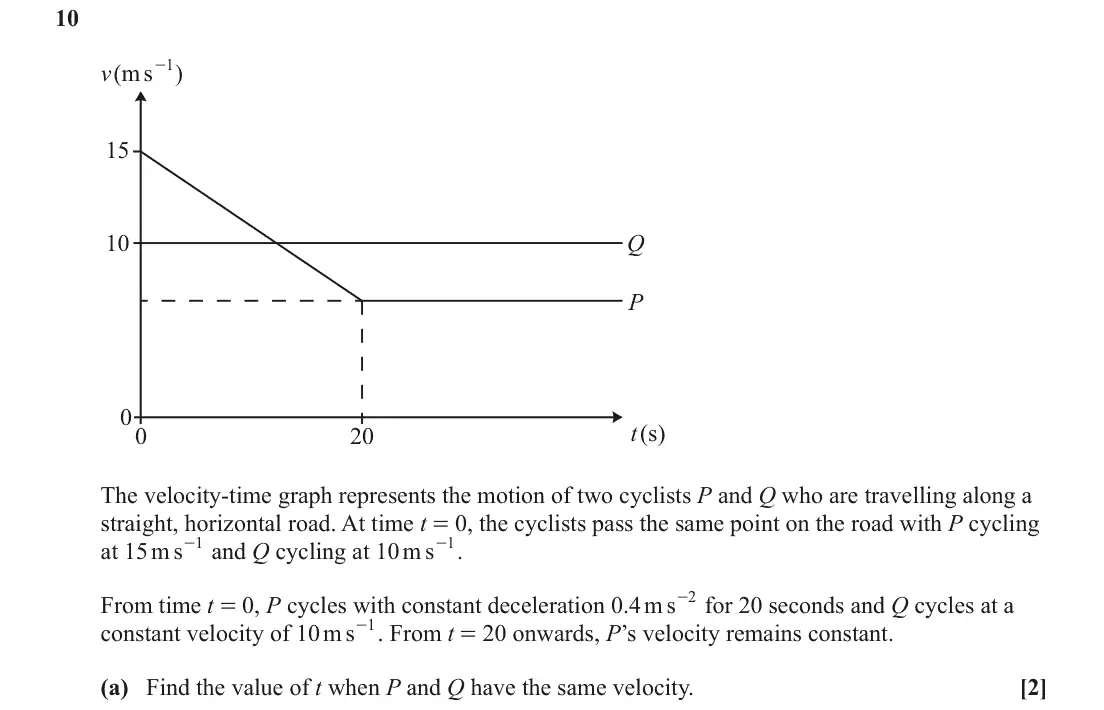
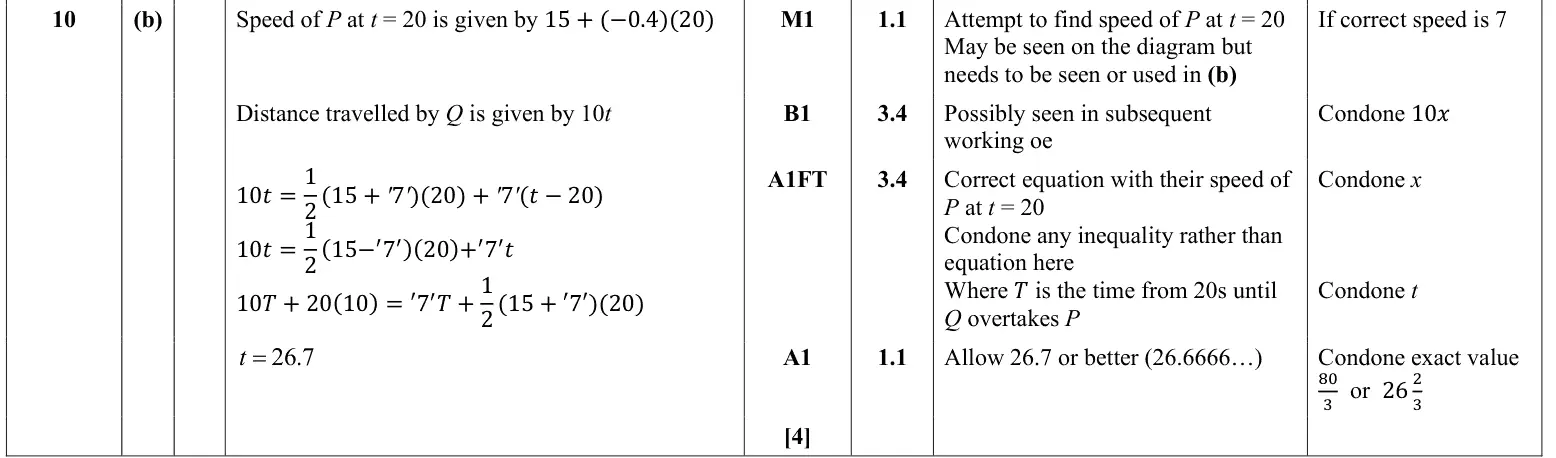
10 v (m s ( ) - Q P t (s) The velocity-time graph represents the motion of two cyclists P and Q who are travelling along a straight, horizontal road. At time t = 0, the cyclists pass the same point on the road with P cycling - . at 15 m s 1 - and Q cycling at 10 m s 1 From time t = 0, P cycles with constant deceleration 0.4 m s 2 - for 20 seconds and Q cycles at a - . From t = 20 onwards, P’s velocity remains constant. constant velocity of 10 m s 1 (a) Find the value of t when P and Q have the same velocity. [2]
June 2025 · AS Paper 2 · Q10(b) 4 marks Hard kinematicsconstant acceleration
Show the start of this questionEarlier part of this question
(b) Determine the value of t when Q overtakes P. [4]
June 2025 · AS Paper 2 · Q11(a) 4 marks Medium forces and newtons laws
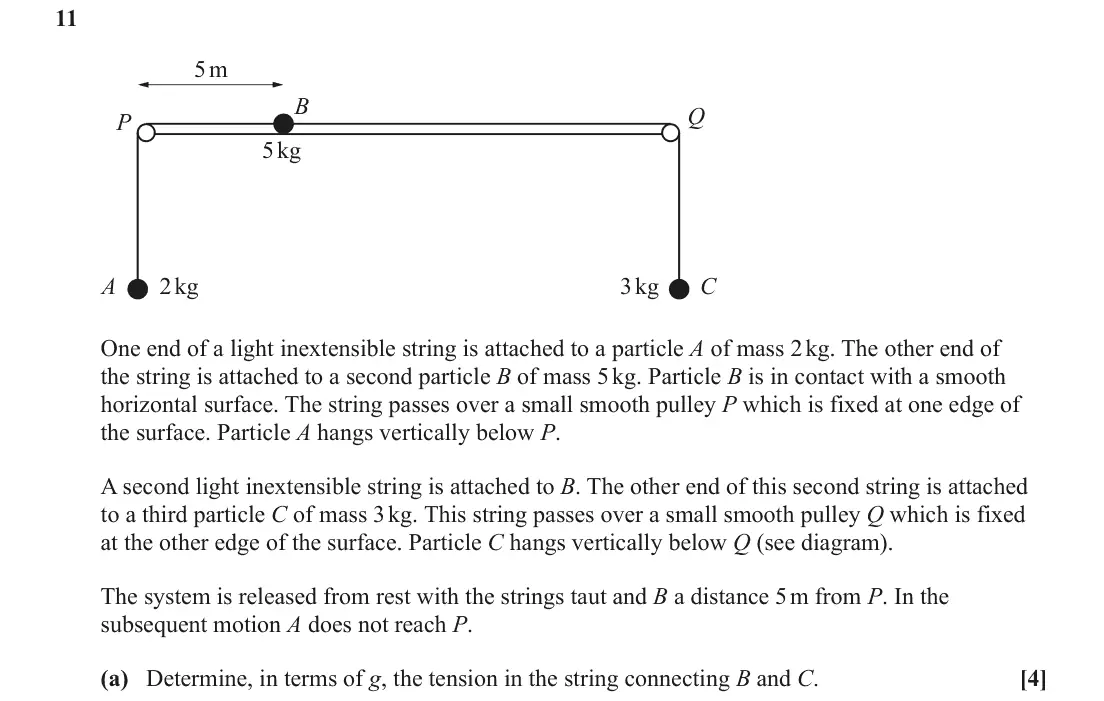
11 5 m B Q P 5 kg A 2 kg 3 kg C One end of a light inextensible string is attached to a particle A of mass 2 kg. The other end of the string is attached to a second particle B of mass 5 kg. Particle B is in contact with a smooth horizontal surface. The string passes over a small smooth pulley P which is fixed at one edge of the surface. Particle A hangs vertically below P. A second light inextensible string is attached to B. The other end of this second string is attached to a third particle C of mass 3 kg. This string passes over a small smooth pulley Q which is fixed at the other edge of the surface. Particle C hangs vertically below Q (see diagram). The system is released from rest with the strings taut and B a distance 5 m from P. In the subsequent motion A does not reach P. (a) Determine, in terms of g, the tension in the string connecting B and C. [4]
June 2025 · AS Paper 2 · Q11(b) 6 marks Hard forces and newtons lawsconstant acceleration
Show the start of this questionEarlier part of this question
When the particles have been in motion for 3 seconds the string connecting A and B breaks. Particle B reaches Q after a further 2 seconds. (b) Determine the distance PQ. [6]
June 2025 · AS Paper 2 · Q11(c) 1 mark Hard forces and newtons laws
Show the start of this questionEarlier part of this question
(c) State what it would mean about the tension in the string connecting B and C if pulley Q could not be assumed to be smooth. [1]
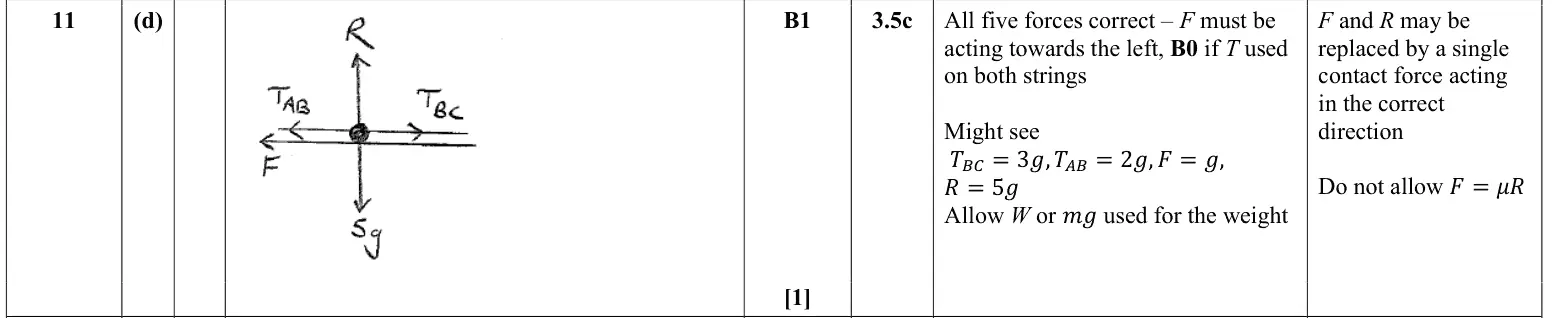
June 2025 · AS Paper 2 · Q11(d) 1 mark Medium forces and newtons lawsfriction and forces in a plane
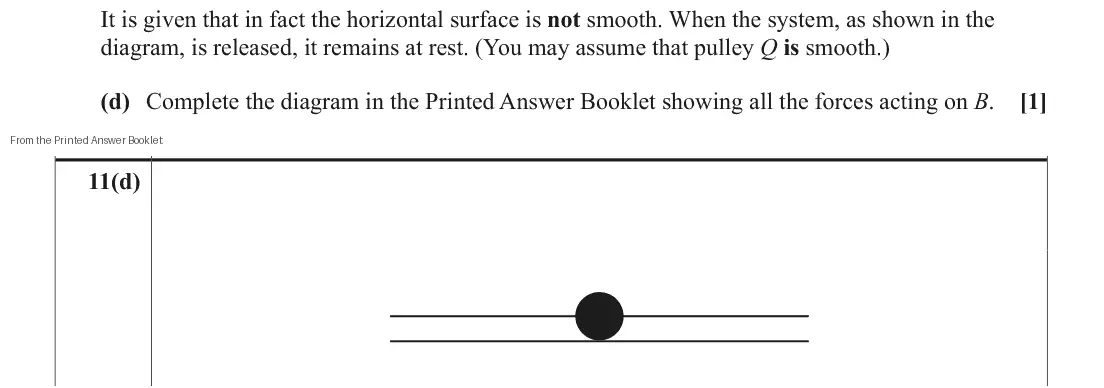
It is given that in fact the horizontal surface is not smooth. When the system, as shown in the diagram, is released, it remains at rest. (You may assume that pulley Q is smooth.) (d) Complete the diagram in the Printed Answer Booklet showing all the forces acting on B. [1]
June 2025 · AS Paper 2 · Q11(e) 1 mark Hard friction and forces in a plane
Show the start of this questionEarlier part of this question
(e) State the magnitude of the frictional force acting on B. Give a brief justification for your [1] answer.

Find an A-level maths tutor

Want this paper marked and gone through with you? Message us.

Prefer email? Send an enquiry

If you are under 18, please include a parent's contact details. Enquiries go to enquiries@mathsaleveltutor.com and are deleted once handled.