June 2024: AS AS Paper 1: Pure Mathematics

100 marks · 35 question parts · Question paper, mark scheme and examiner's report on Pearson's site

Question by question

QTopicMarksDifficulty
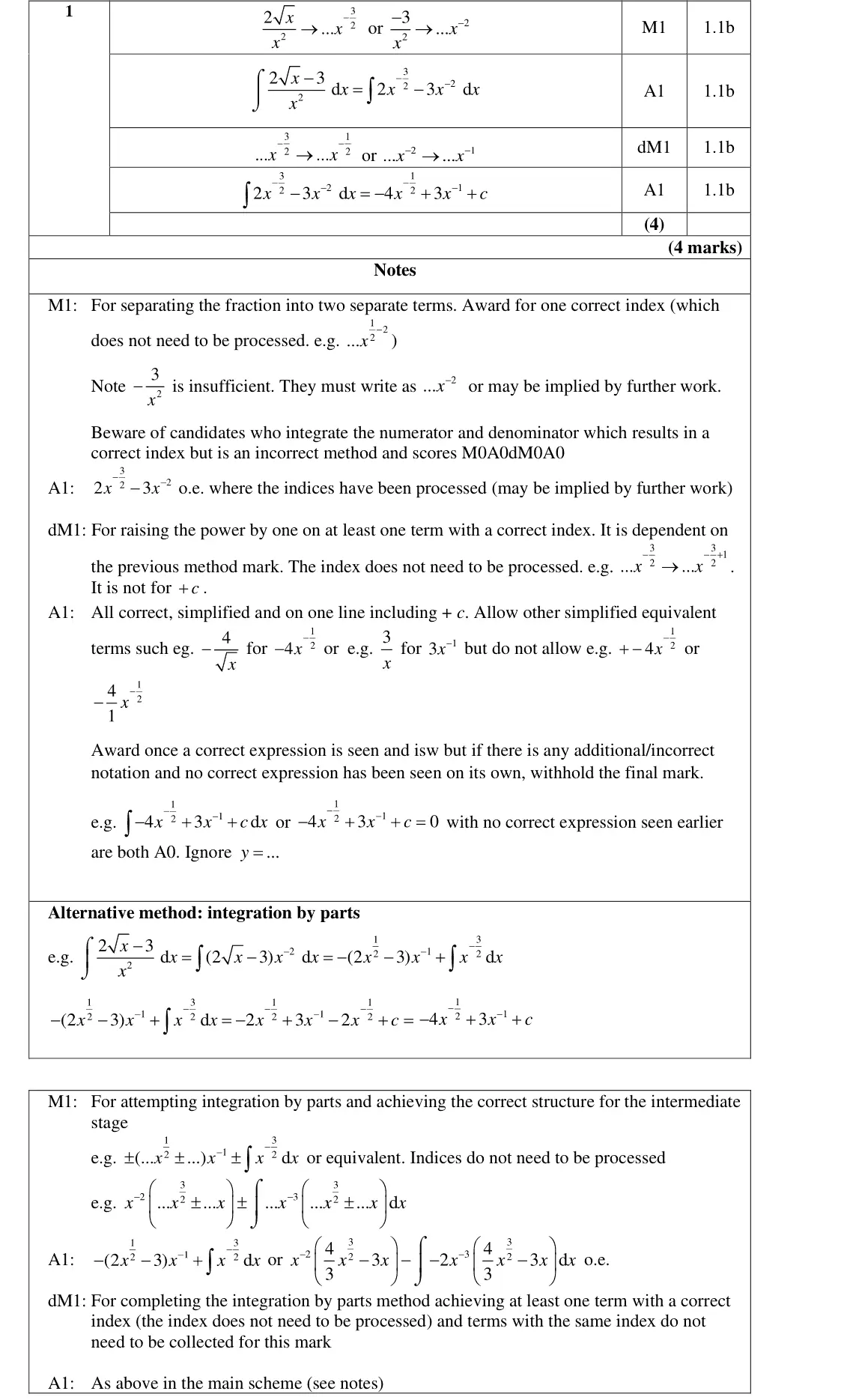
1 Integration: standard integrals, definite integrals and areas, Indices and surds 4 —
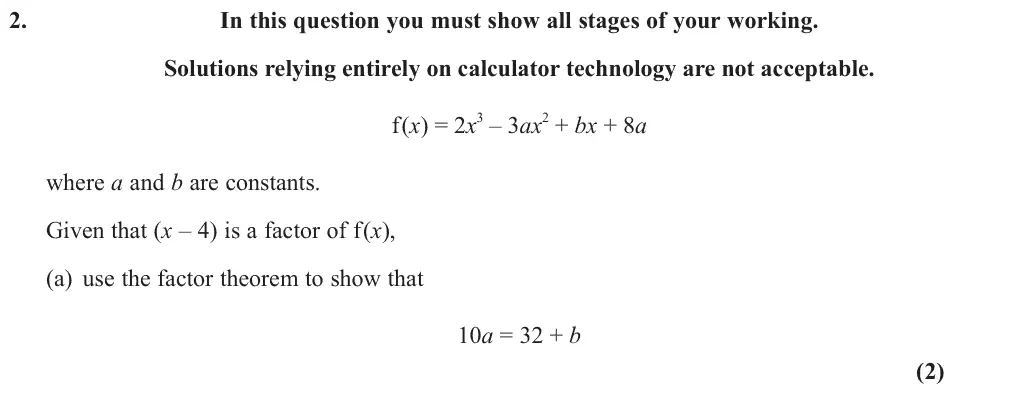
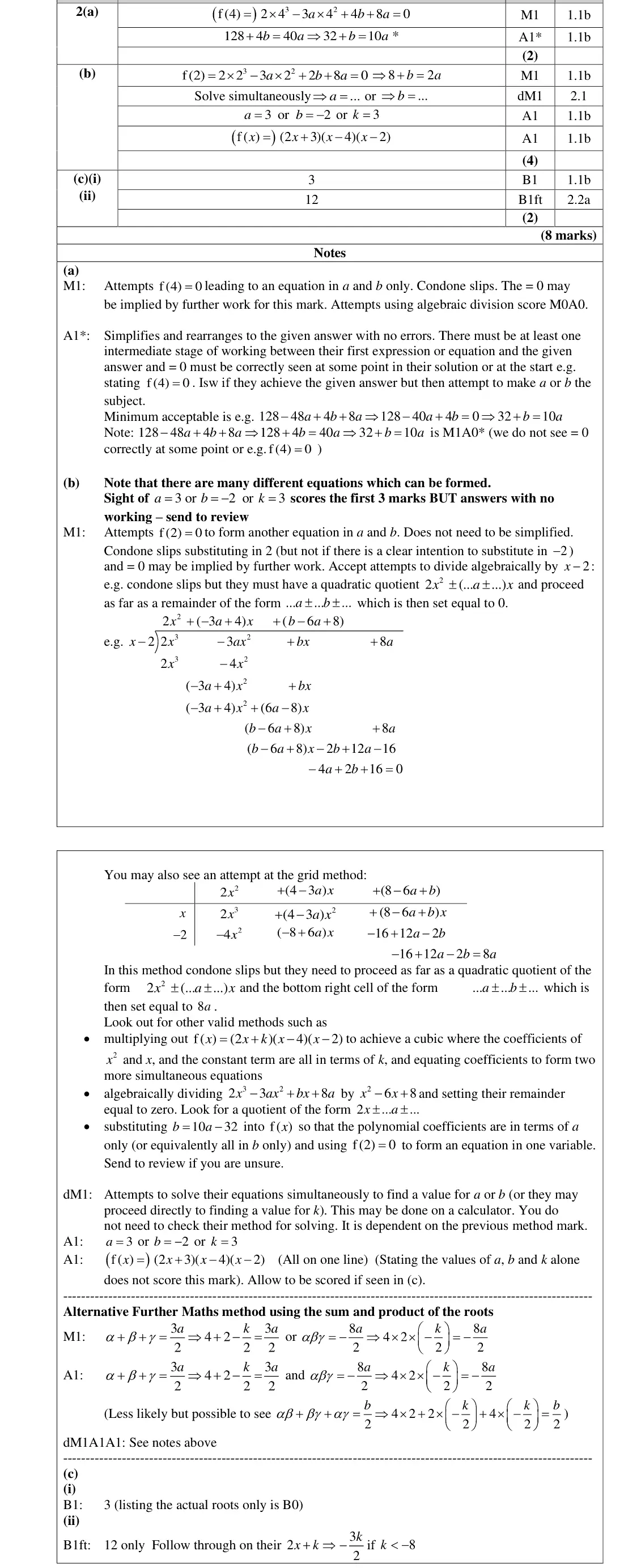
2(a) Algebraic methods: polynomials, factor theorem and division 2 —
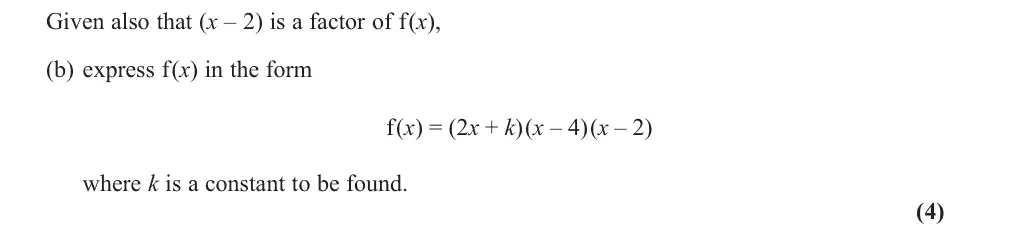
2(b) Algebraic methods: polynomials, factor theorem and division, Simultaneous equations 4 —
2(c) Algebraic methods: polynomials, factor theorem and division, Graphs and transformations 2 —
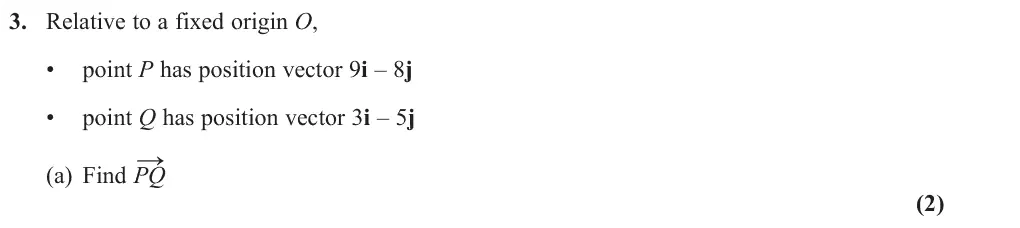
3(a) Vectors 2 —
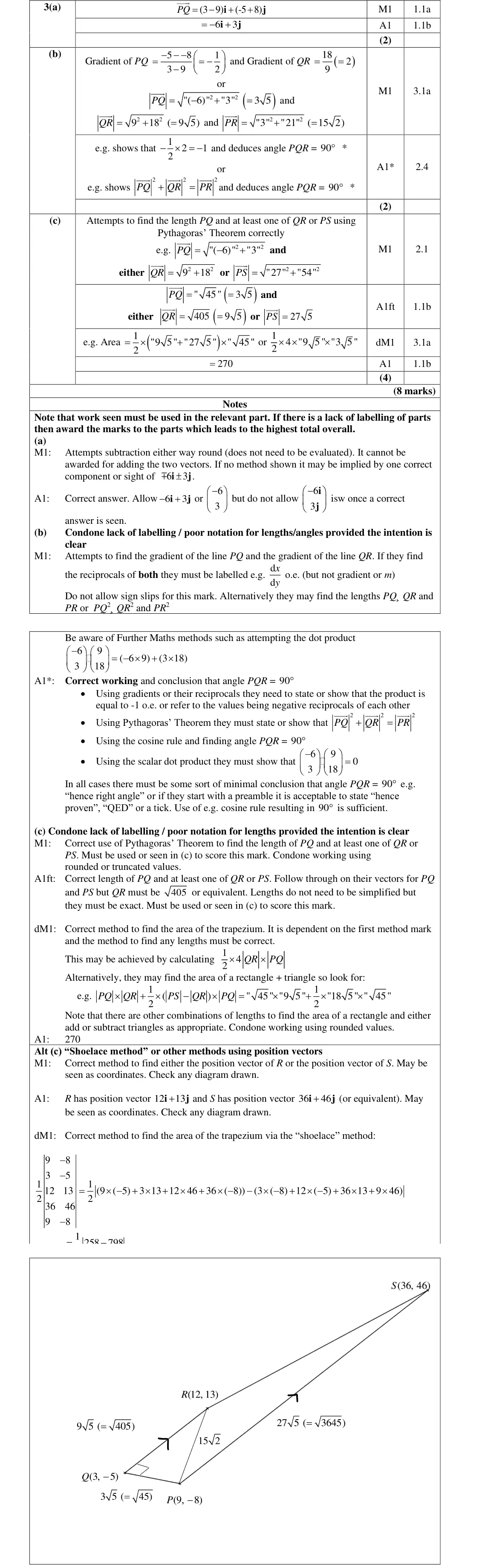
3(b) Straight lines, Vectors 2 —
3(c) Vectors 4 —
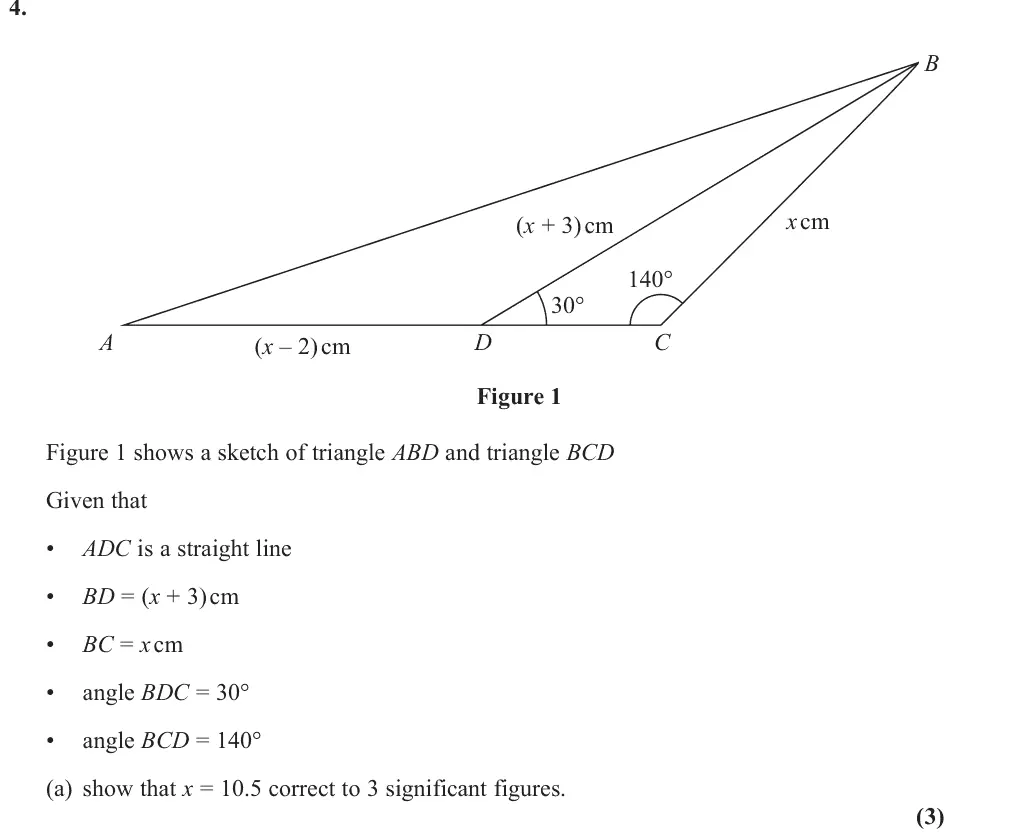
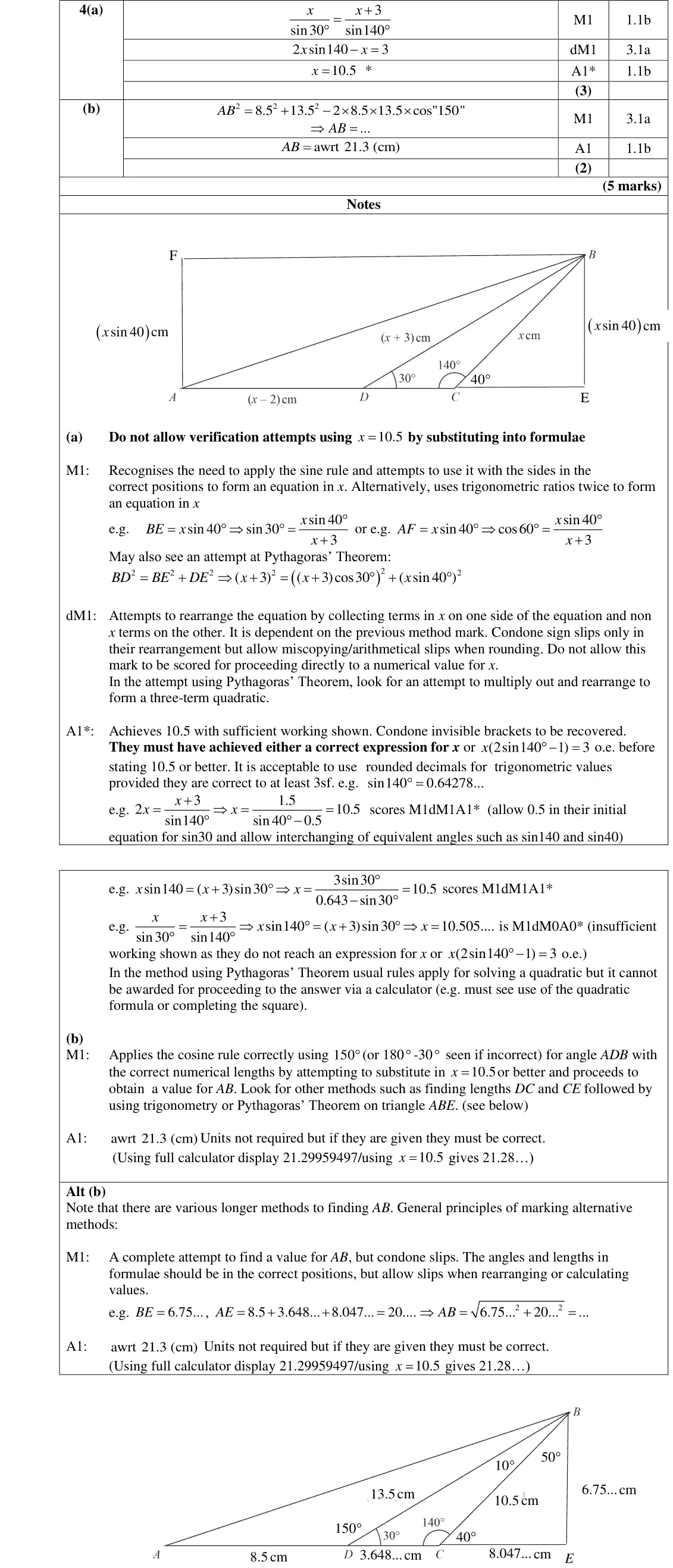
4(a) Trigonometric ratios, graphs, radians and the sine and cosine rules 3 —
4(b) Trigonometric ratios, graphs, radians and the sine and cosine rules 2 —
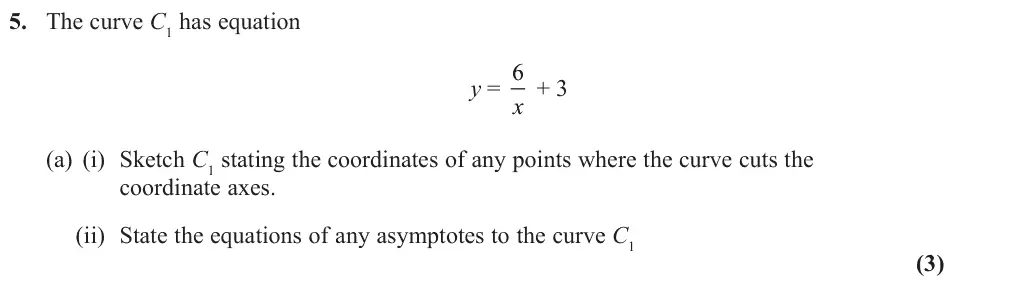
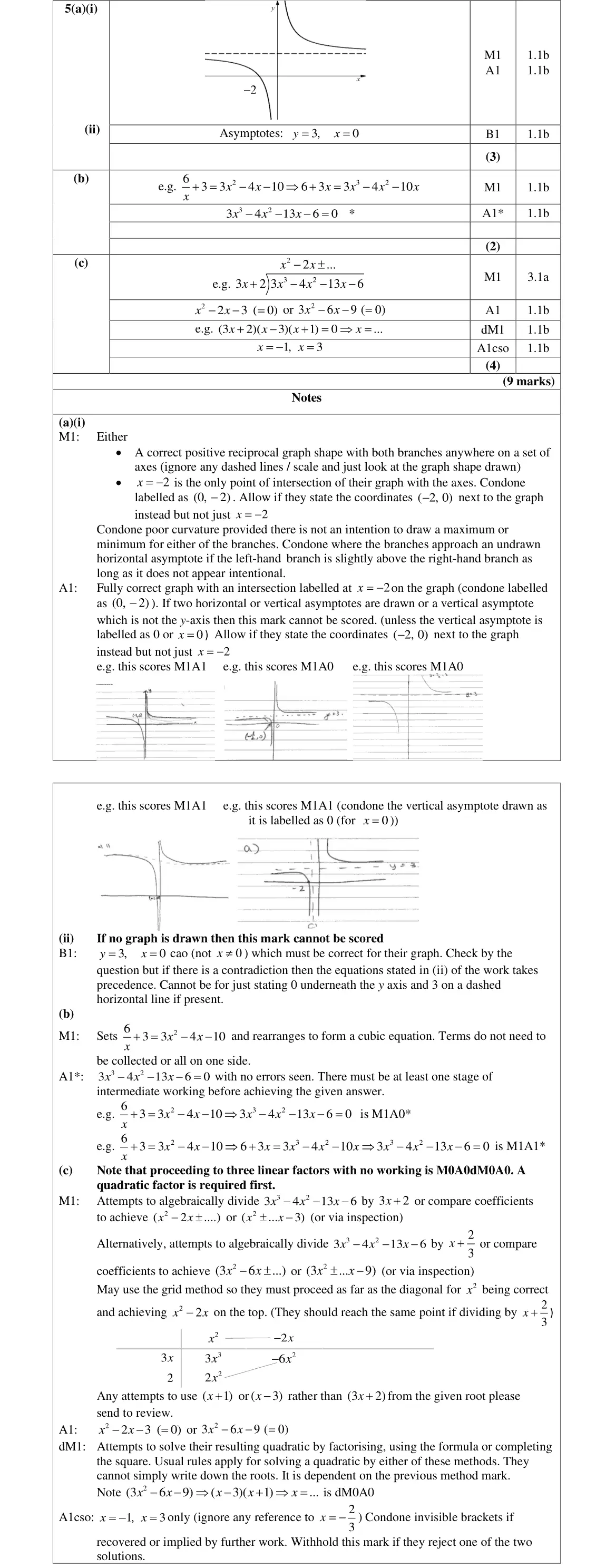
5(a) Graphs and transformations 3 —
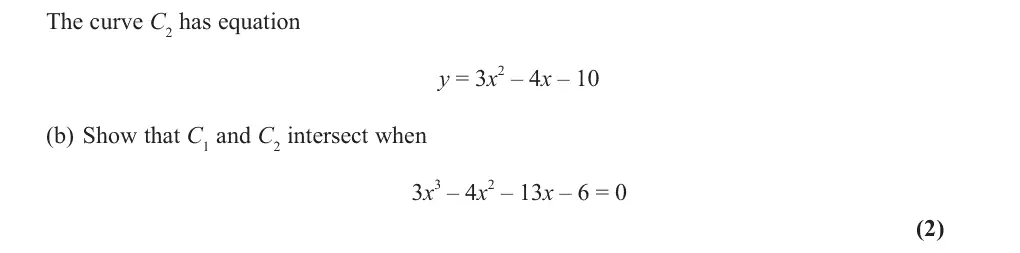
5(b) Algebraic methods: polynomials, factor theorem and division, Graphs and transformations 2 —
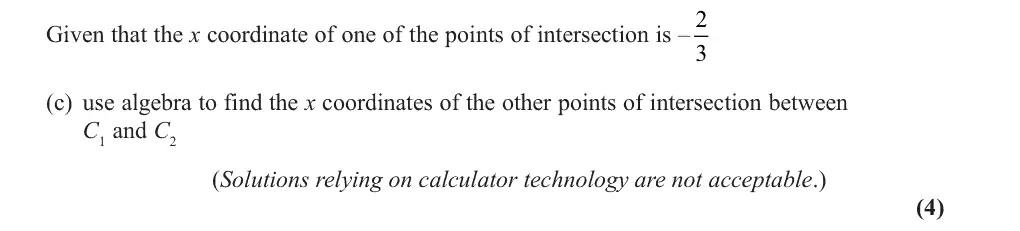
5(c) Algebraic methods: polynomials, factor theorem and division, Quadratics and the discriminant 4 —
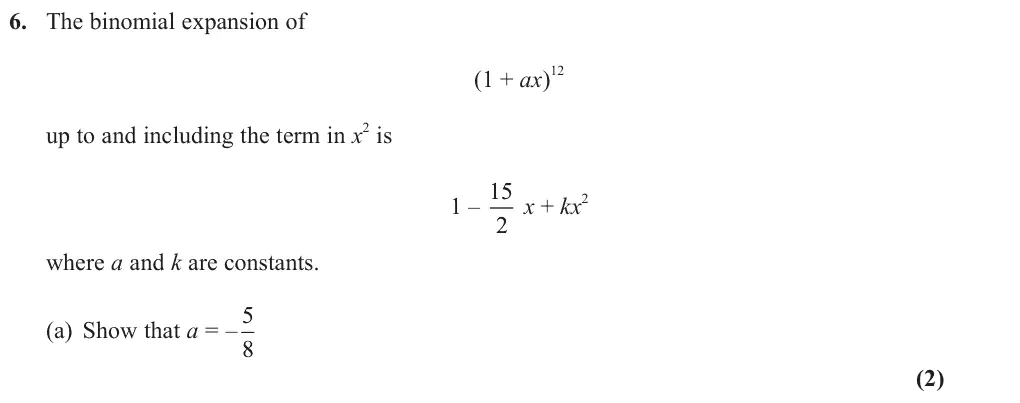
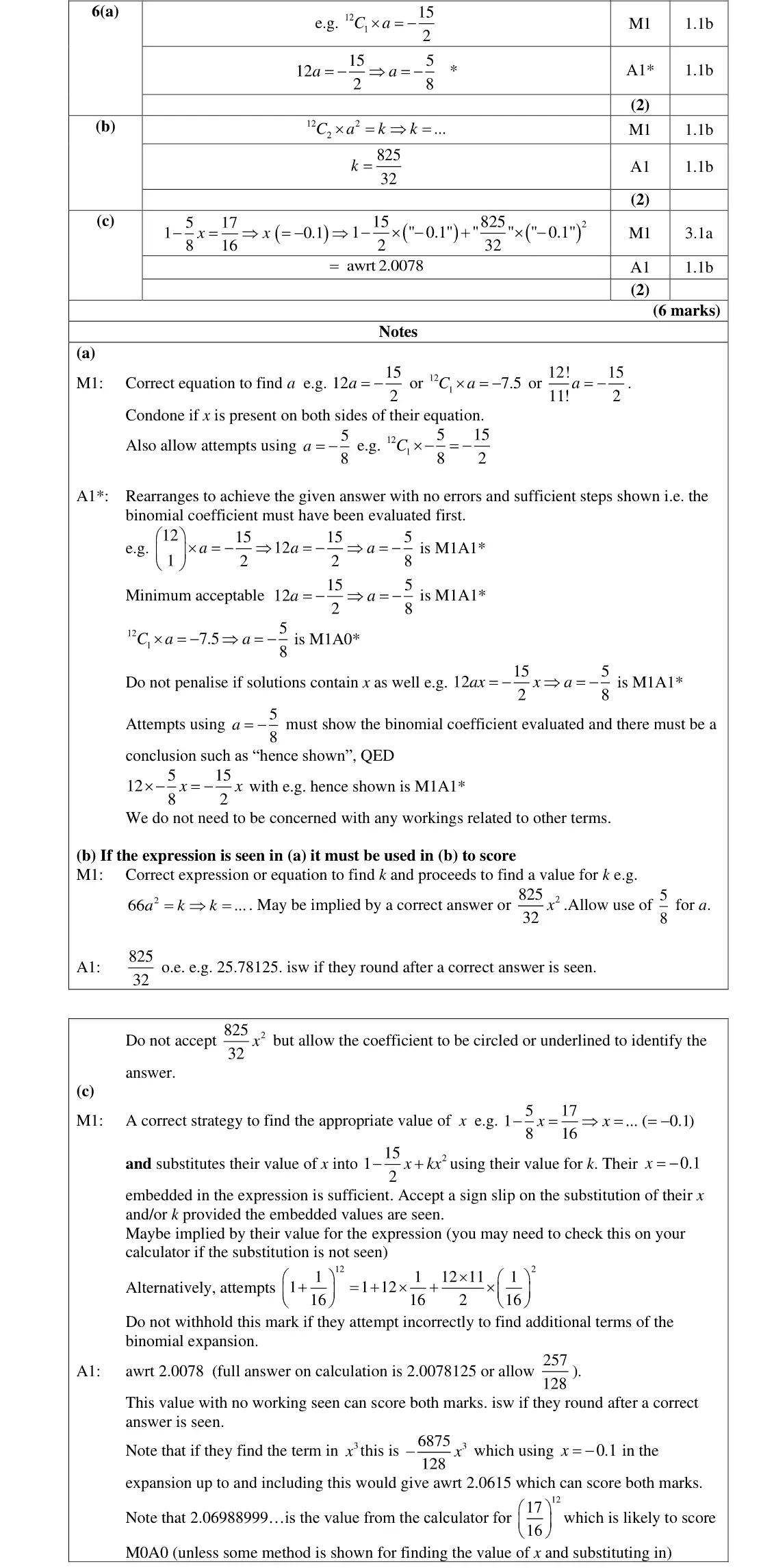
6(a) Binomial expansion 2 —
6(b) Binomial expansion 2 —
6(c) Binomial expansion 2 —
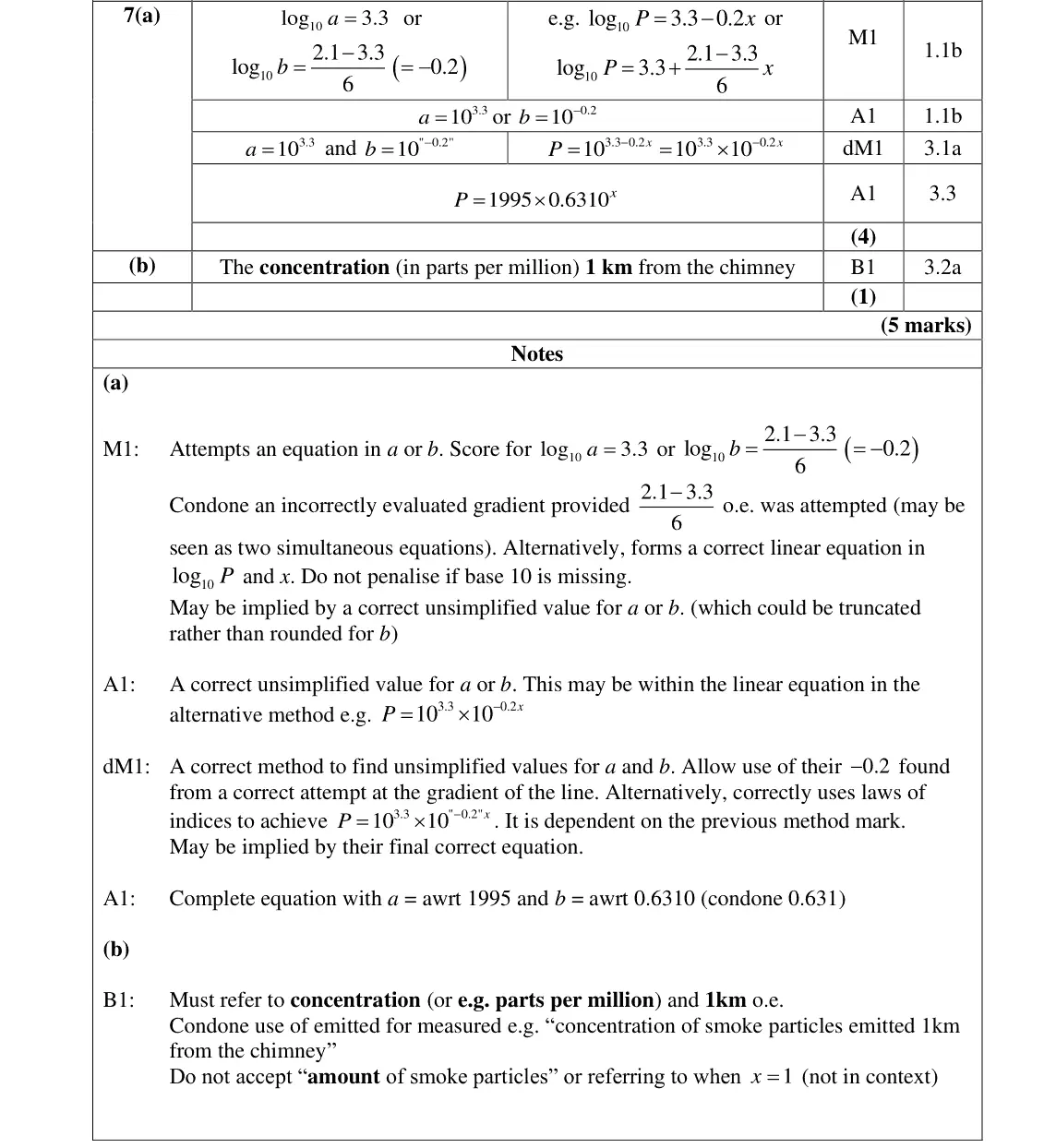
7(a) Exponentials and logarithms, Straight lines, Exponential growth, decay and modelling 4 —
7(b) Exponential growth, decay and modelling, Exponentials and logarithms 1 —
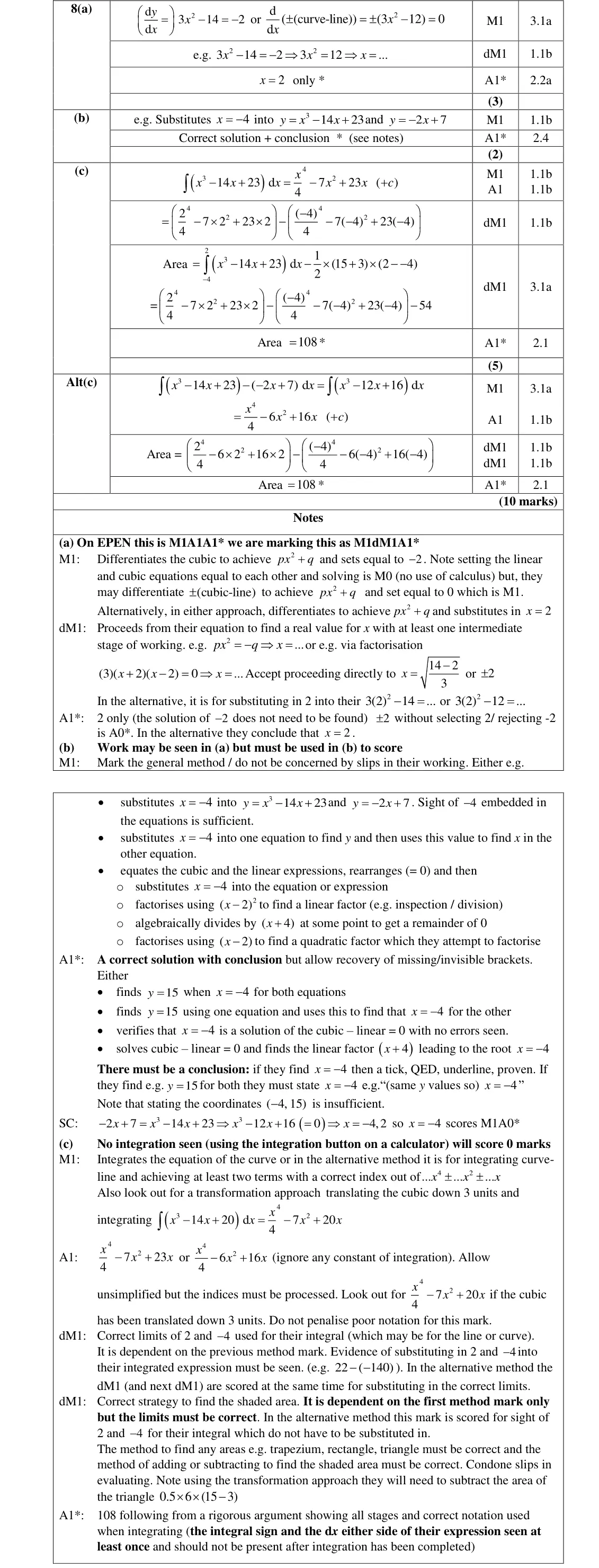
8(a) Differentiation: first principles, gradients, stationary points 3 —
8(b) Algebraic methods: polynomials, factor theorem and division, Graphs and transformations 2 —
8(c) Integration: standard integrals, definite integrals and areas 5 —
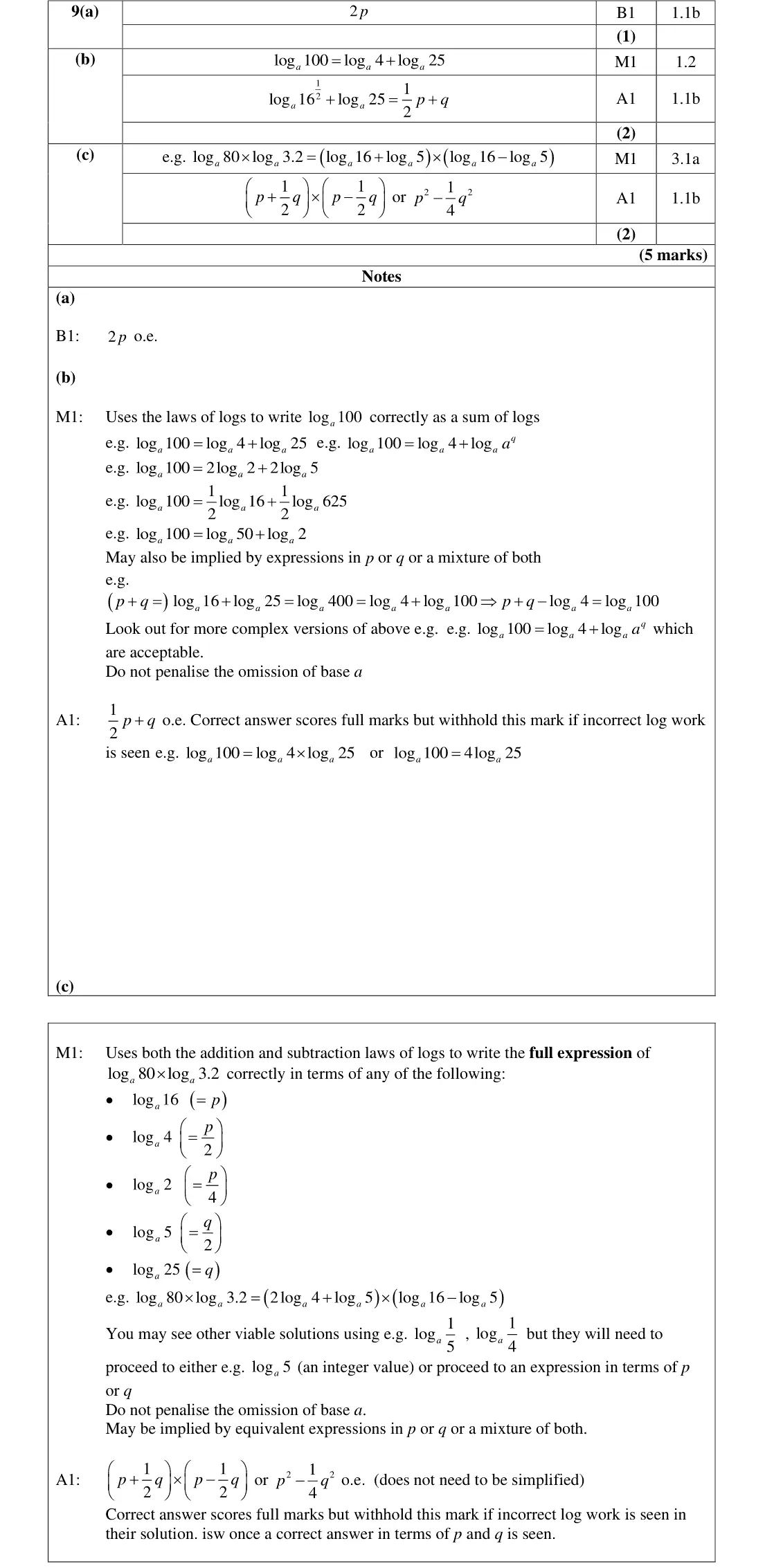
9(a) Exponentials and logarithms 1 —
9(b) Exponentials and logarithms 2 —
9(c) Exponentials and logarithms 2 —
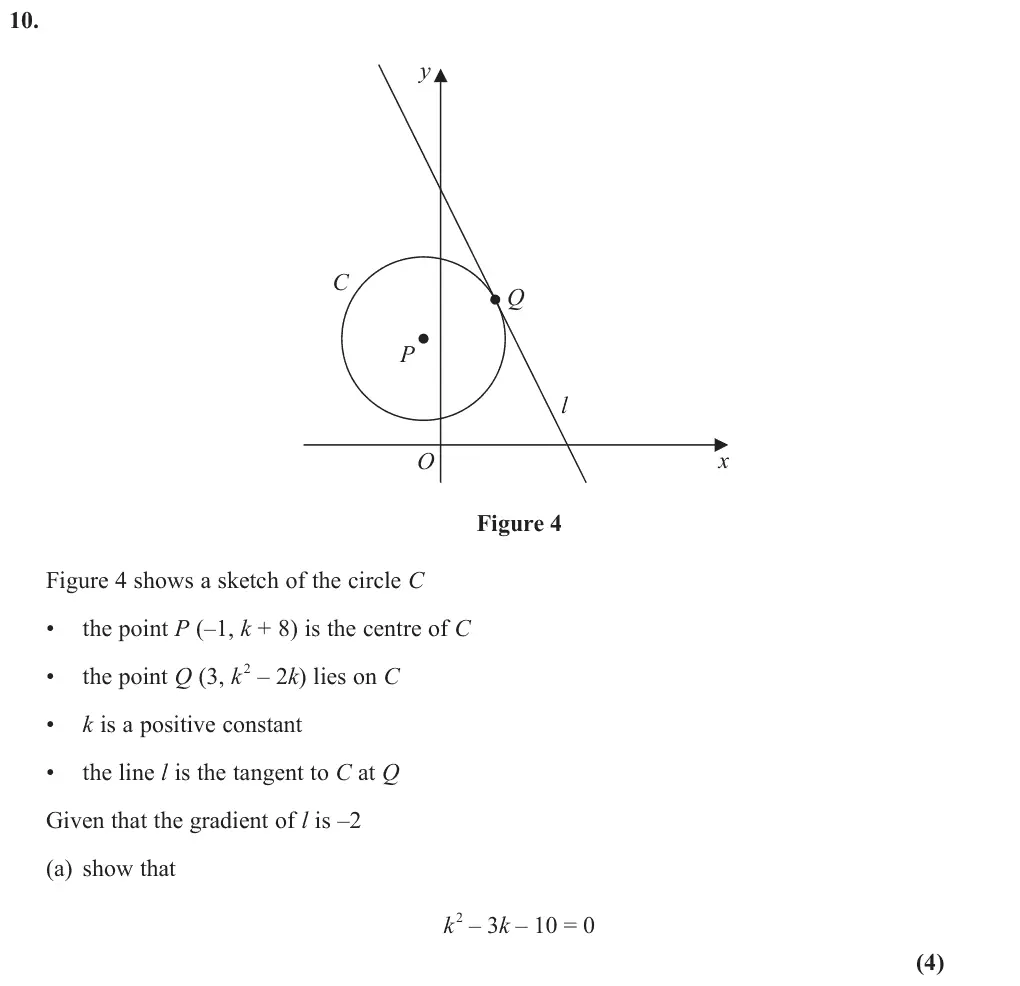
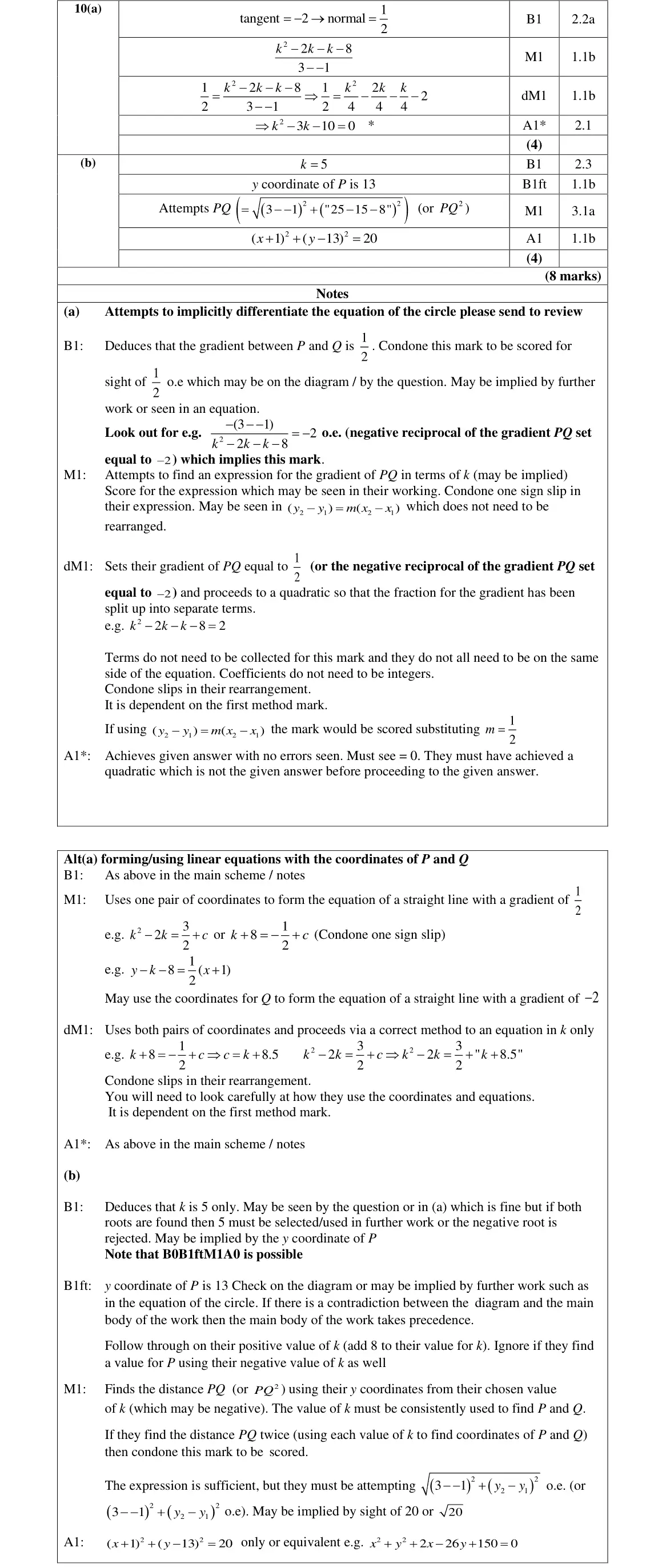
10(a) Circles, Straight lines 4 —
10(b) Circles, Quadratics and the discriminant, Vectors 4 —
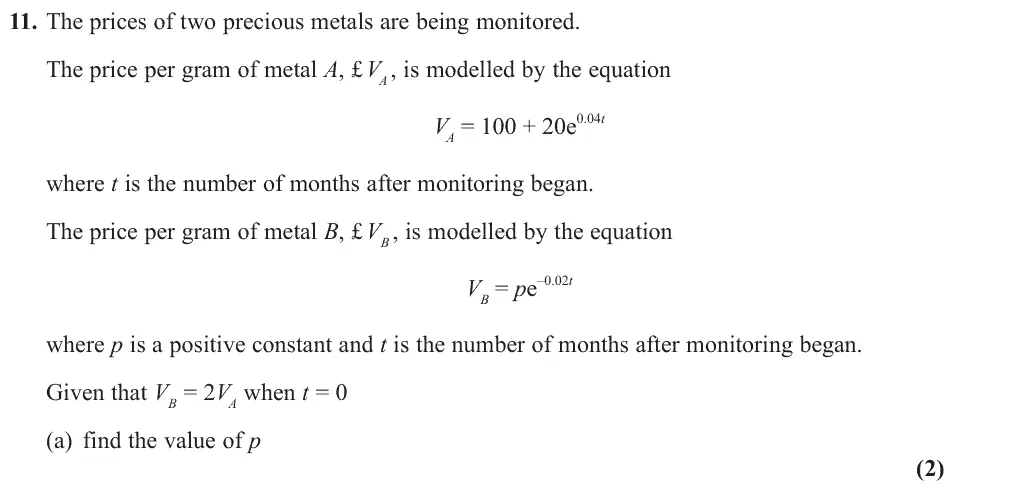
11(a) Exponential growth, decay and modelling 2 —
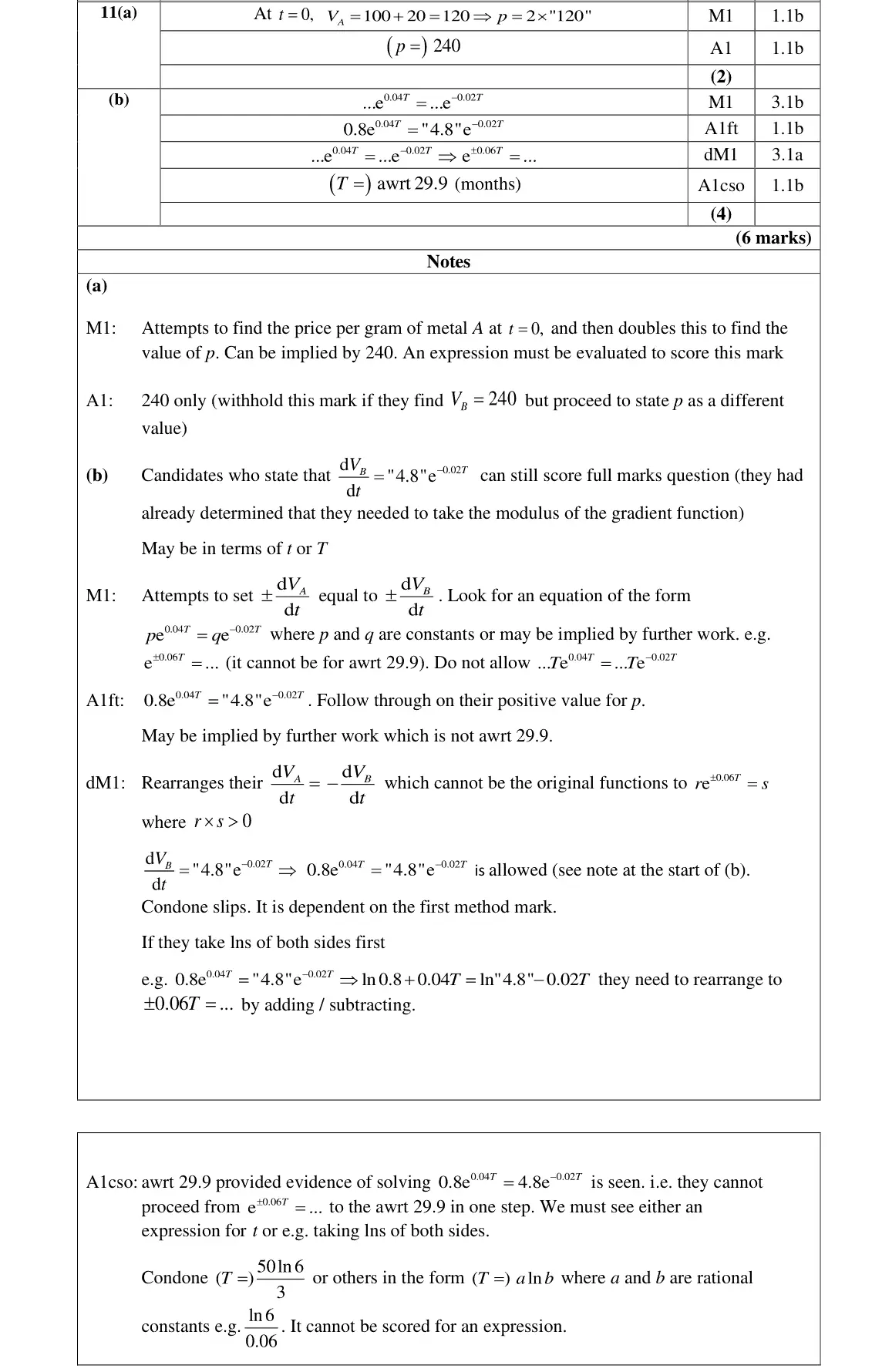
11(b) Exponentials and logarithms, Exponential growth, decay and modelling 4 —
12(a) Algebraic methods: polynomials, factor theorem and division, Indices and surds 5 —
12(b) Differentiation: first principles, gradients, stationary points 4 —
12(c) Differentiation: first principles, gradients, stationary points 2 —
12(d) Functions, composite and inverse functions, modulus, Differentiation: first principles, gradients, stationary points 2 —
13(a) Trigonometric identities and proofs 4 —
13(b) Solving trigonometric equations, Quadratics and the discriminant 4 —
13(c) Trigonometric ratios, graphs, radians and the sine and cosine rules, Solving trigonometric equations 1 —
14 Proof, including contradiction, Algebraic methods: polynomials, factor theorem and division 4 —

The questions

12(a)2(b)2(c)3(a)3(b)3(c)4(a)4(b)5(a)5(b)5(c)6(a)6(b)6(c)7(a)7(b)8(a)8(b)8(c)9(a)9(b)9(c)10(a)10(b)11(a)11(b)12(a)12(b)12(c)12(d)13(a)13(b)13(c)14
June 2024 · AS Paper 1 · Q1 4 marks integrationindices and surds
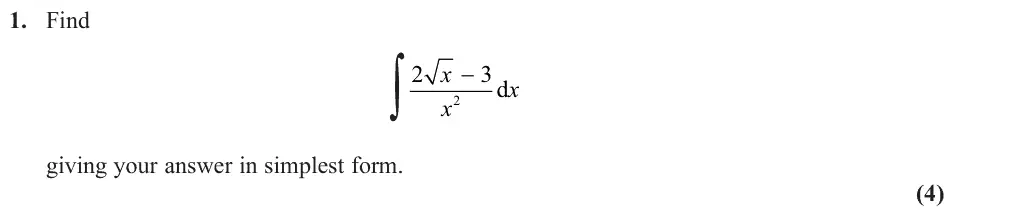
1. Find ∫ x - x d x giving your answer in simplest form. (4)
June 2024 · AS Paper 1 · Q2(a) 2 marks algebraic methods
2. In this question you must show all stages of your working. Solutions relying entirely on calculator technology are not acceptable. 3 – 3ax 2 + bx + 8a f (x) = 2x where a and b are constants. Given that (x – 4) is a factor of f (x), (a) use the factor theorem to show that 10a = 32 + b (2)
June 2024 · AS Paper 1 · Q2(b) 4 marks algebraic methodssimultaneous equations
Given also that (x – 2) is a factor of f (x), (b) express f (x) in the form f (x) = (2x + k) (x – 4) (x – 2) where k is a constant to be found. (4)
June 2024 · AS Paper 1 · Q2(c) 2 marks algebraic methodsgraphs and transformations
(c) Hence, (i) state the number of real roots of the equation f (x) = 0 < (ii) write down the largest root of the equation f 1 3 x 87= 0 ;: (2)
June 2024 · AS Paper 1 · Q3(a) 2 marks vectors
3. Relative to a fixed origin O, • point P has position vector 9i – 8j • point Q has position vector 3i – 5j → (a) Find PQ (2)

June 2024 · AS Paper 1 · Q3(b) 2 marks straight linesvectors
→ = 9i + 18j Given that R is the point such that QR (b) show that angle PQR = 90° (2)
June 2024 · AS Paper 1 · Q3(c) 4 marks vectors
→ = 3QR → Given also that S is the point such that PS (c) find the exact area of PQRS (4)
June 2024 · AS Paper 1 · Q4(a) 3 marks trigonometric ratios
4. B x cm (x + 3) cm 140° 30° A C (x – 2) cm Figure 1 Figure 1 shows a sketch of triangle ABD and triangle BCD Given that • ADC is a straight line • BD = (x + 3) cm • BC = x cm • angle BDC = 30° • angle BCD = 140° (a) show that x = 10.5 correct to 3 significant figures. (3)
June 2024 · AS Paper 1 · Q4(b) 2 marks trigonometric ratios
Given also that AD = (x – 2) cm (b) find the length of AB, giving your answer to 3 significant figures. (2)
June 2024 · AS Paper 1 · Q5(a) 3 marks graphs and transformations
5. The curve C1 has equation y = 6 x + 3 (a) (i) Sketch C1 stating the coordinates of any points where the curve cuts the coordinate axes. (ii) State the equations of any asymptotes to the curve C1 (3)
June 2024 · AS Paper 1 · Q5(b) 2 marks algebraic methodsgraphs and transformations
The curve C2 has equation 2 – 4x – 10 y = 3x (b) Show that C1 and C2 intersect when 3x 3 – 4x 2 – 13x – 6 = 0 (2)
June 2024 · AS Paper 1 · Q5(c) 4 marks algebraic methodsquadratics
Given that the x coordinate of one of the points of intersection is – 2 (c) use algebra to find the x coordinates of the other points of intersection between C1 and C2 (Solutions relying on calculator technology are not acceptable.) (4)
June 2024 · AS Paper 1 · Q6(a) 2 marks binomial expansion
6. The binomial expansion of (1 + ax) up to and including the term in x 2 is 1 – 15 2 x + kx where a and k are constants. (a) Show that a = – 5 (2)
June 2024 · AS Paper 1 · Q6(b) 2 marks binomial expansion
(b) Hence find the value of k (2)
June 2024 · AS Paper 1 · Q6(c) 2 marks binomial expansion
Using the expansion and making your method clear, < (c) find an estimate for the value of 17 87 , giving your answer to 4 decimal places. ;: (2)
June 2024 · AS Paper 1 · Q7(a) 4 marks exponentials and logsstraight linesexponential modelling
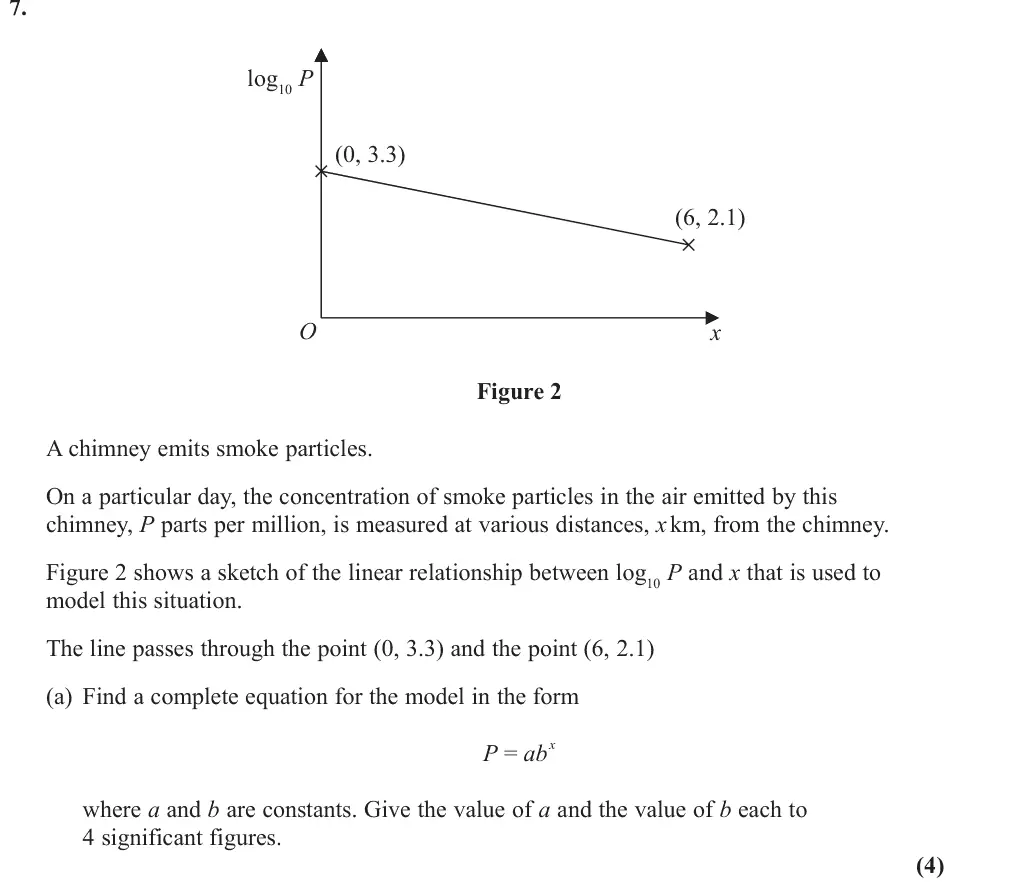
7. log10 P (0, 3.3) (6, 2.1) x Figure 2 A chimney emits smoke particles. On a particular day, the concentration of smoke particles in the air emitted by this chimney, P parts per million, is measured at various distances, x km, from the chimney. Figure 2 shows a sketch of the linear relationship between log10 P and x that is used to model this situation. The line passes through the point (0, 3.3) and the point (6, 2.1) (a) Find a complete equation for the model in the form P = ab x where a and b are constants. Give the value of a and the value of b each to 4 significant figures. (4)
June 2024 · AS Paper 1 · Q7(b) 1 mark exponential modellingexponentials and logs
(b) With reference to the model, interpret the value of ab (1)
June 2024 · AS Paper 1 · Q8(a) 3 marks differentiation
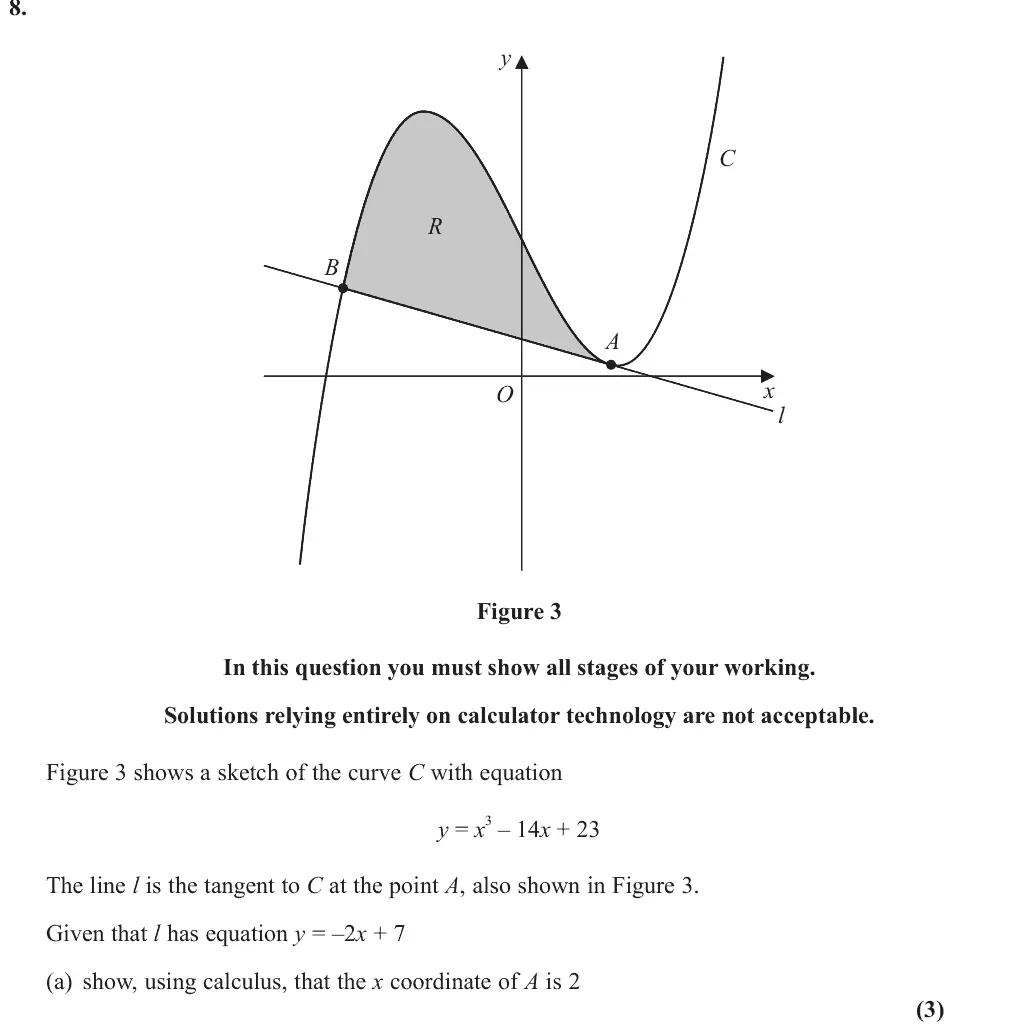
8. y C R B A x l Figure 3 In this question you must show all stages of your working. Solutions relying entirely on calculator technology are not acceptable. Figure 3 shows a sketch of the curve C with equation 3 – 14x + 23 y = x The line l is the tangent to C at the point A, also shown in Figure 3. Given that l has equation y = –2x + 7 (a) show, using calculus, that the x coordinate of A is 2 (3)
June 2024 · AS Paper 1 · Q8(b) 2 marks algebraic methodsgraphs and transformations
The line l cuts C again at the point B. (b) Verify that the x coordinate of B is –4 (2)
June 2024 · AS Paper 1 · Q8(c) 5 marks integration
The finite region, R, shown shaded in Figure 3, is bounded by C and l. Using algebraic integration, (c) show that the area of R is 108 (5)
June 2024 · AS Paper 1 · Q9(a) 1 mark exponentials and logs
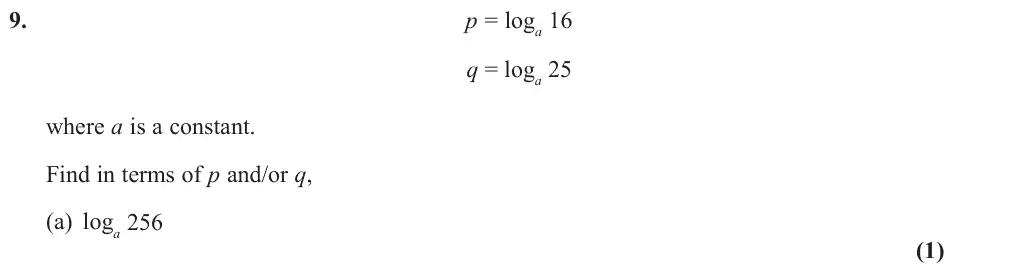
9. p = loga 16 q = loga 25 where a is a constant. Find in terms of p and/or q, (a) loga 256 (1)
June 2024 · AS Paper 1 · Q9(b) 2 marks exponentials and logs
(b) loga 100 (2)
June 2024 · AS Paper 1 · Q9(c) 2 marks exponentials and logs
(c) loga 80 x loga 3.2 (2)
June 2024 · AS Paper 1 · Q10(a) 4 marks circlesstraight lines
10. y C Q P l x Figure 4 Figure 4 shows a sketch of the circle C • the point P (–1, k + 8) is the centre of C • the point Q (3, k 2 – 2k) lies on C • k is a positive constant • the line l is the tangent to C at Q Given that the gradient of l is –2 (a) show that 2 – 3k – 10 = 0 k (4)
June 2024 · AS Paper 1 · Q10(b) 4 marks circlesquadraticsvectors
(b) Hence find an equation for C (4)
June 2024 · AS Paper 1 · Q11(a) 2 marks exponential modelling
11. The prices of two precious metals are being monitored. The price per gram of metal A, £ VA , is modelled by the equation 0.04t VA = 100 + 20e where t is the number of months after monitoring began. The price per gram of metal B, £ VB , is modelled by the equation –0.02t VB = pe where p is a positive constant and t is the number of months after monitoring began. Given that VB = 2VA when t = 0 (a) find the value of p (2)
June 2024 · AS Paper 1 · Q11(b) 4 marks exponentials and logsexponential modelling
When t = T, the rate of increase in the price per gram of metal A was equal to the rate of decrease in the price per gram of metal B (b) Find the value of T, giving your answer to one decimal place. (Solutions based entirely on calculator technology are not acceptable.) (4)
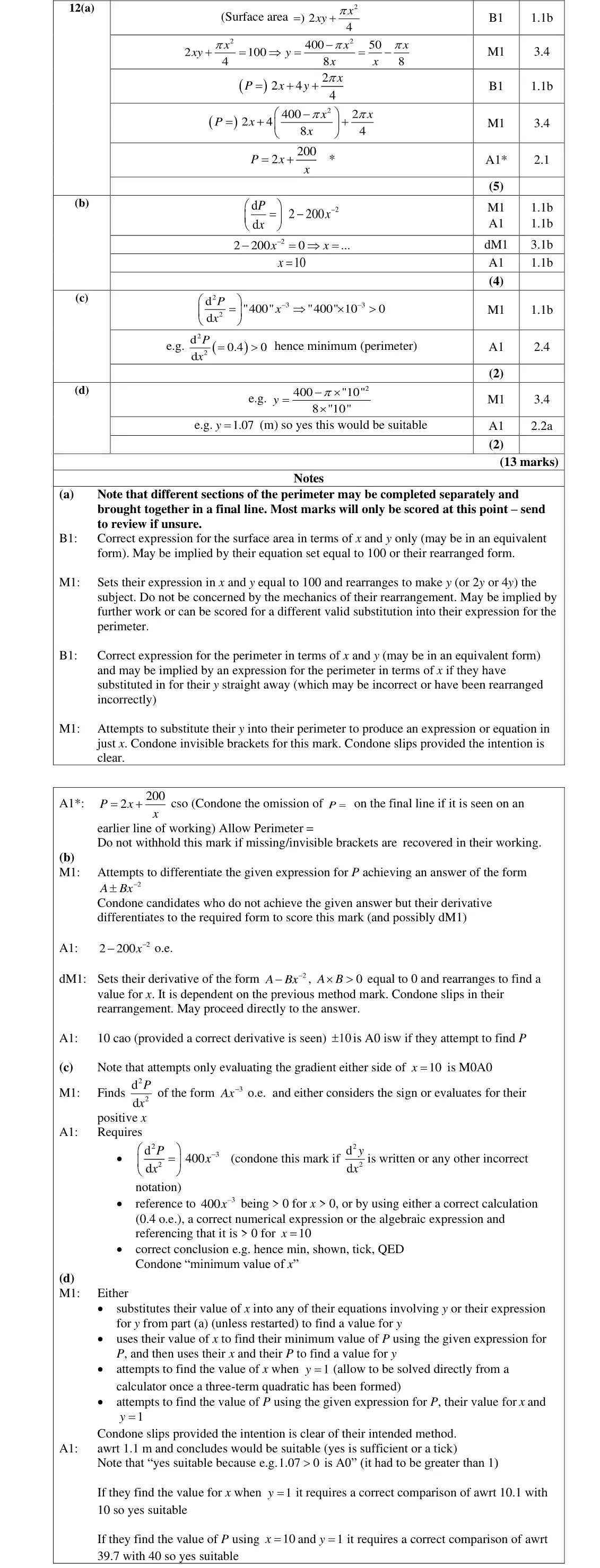
June 2024 · AS Paper 1 · Q12(a) 5 marks algebraic methodsindices and surds
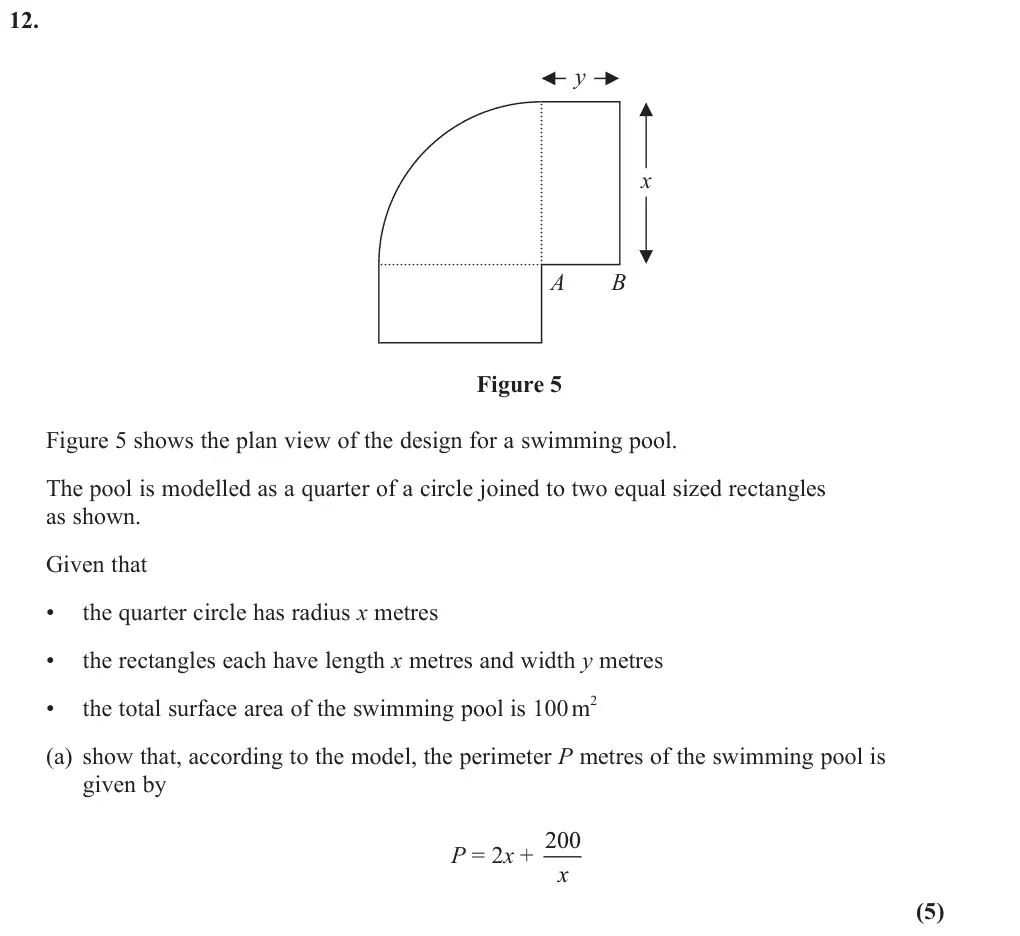
12. y x A B Figure 5 Figure 5 shows the plan view of the design for a swimming pool. The pool is modelled as a quarter of a circle joined to two equal sized rectangles as shown. Given that • the quarter circle has radius x metres • the rectangles each have length x metres and width y metres • the total surface area of the swimming pool is 100 m (a) show that, according to the model, the perimeter P metres of the swimming pool is given by P = 2x + 200 x (5)
June 2024 · AS Paper 1 · Q12(b) 4 marks differentiation
(b) Use calculus to find the value of x for which P has a stationary value. (4)
June 2024 · AS Paper 1 · Q12(c) 2 marks differentiation
(c) Prove, by further calculus, that this value of x gives a minimum value for P (2)
June 2024 · AS Paper 1 · Q12(d) 2 marks functionsdifferentiation
Access to the pool is by side AB shown in Figure 5. Given that AB must be at least one metre, (d) determine, according to the model, whether the swimming pool with the minimum perimeter would be suitable. (2)
June 2024 · AS Paper 1 · Q13(a) 4 marks trig identities
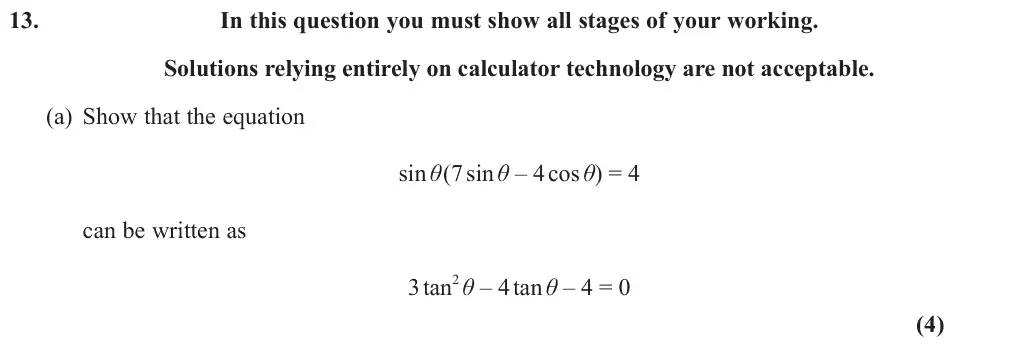
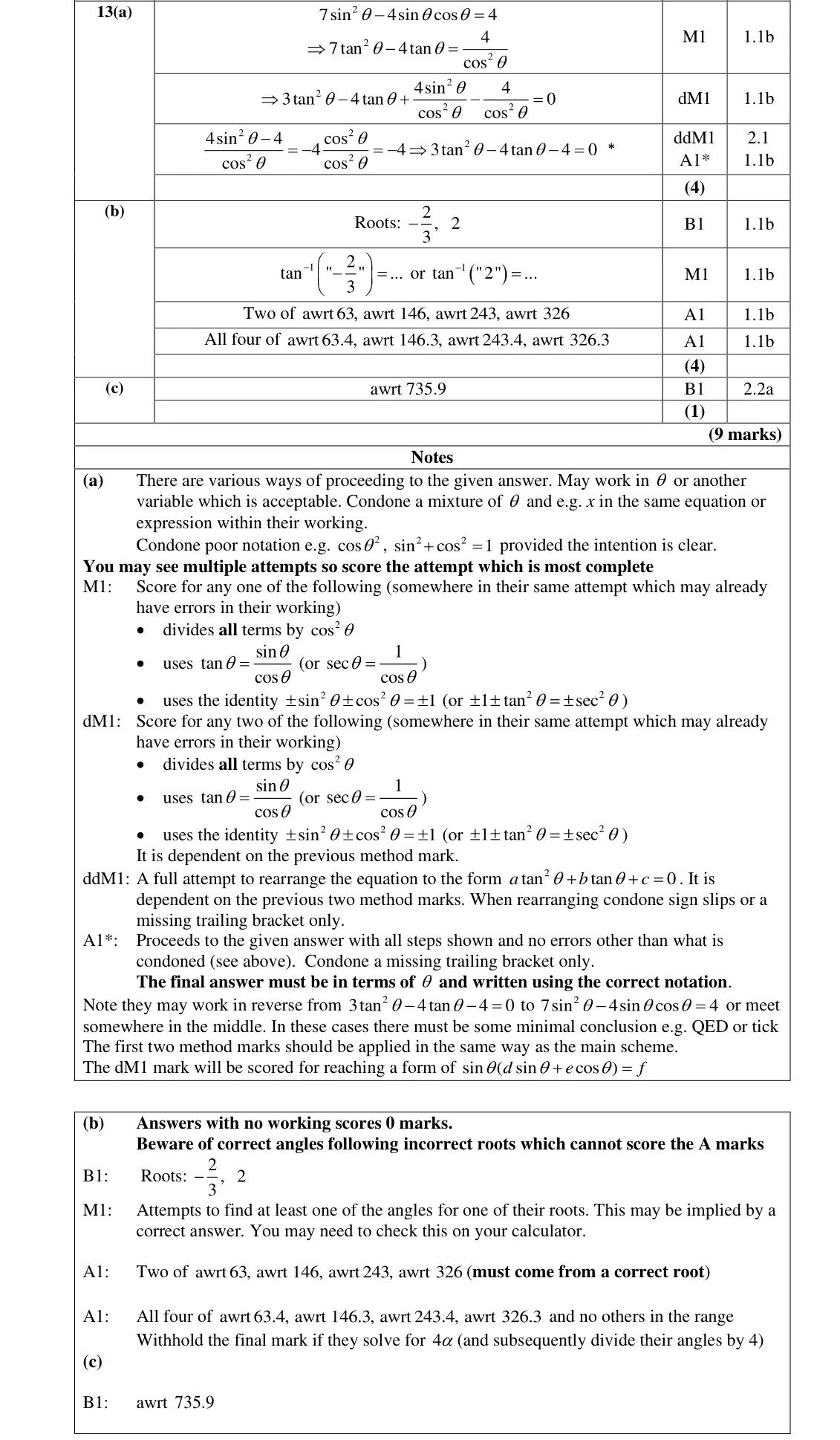
13. In this question you must show all stages of your working. Solutions relying entirely on calculator technology are not acceptable. (a) Show that the equation sin theta (7 sin theta – 4 cos theta ) = 4 can be written as 2 theta – 4 tan theta – 4 = 0 3 tan (4)
June 2024 · AS Paper 1 · Q13(b) 4 marks trigonometric equationsquadratics
(b) Hence solve, for 0 < x < 360° sin x (7 sin x – 4 cos x) = 4 giving your answers to one decimal place. (4)
June 2024 · AS Paper 1 · Q13(c) 1 mark trigonometric ratiostrigonometric equations
(c) Hence find the smallest solution of the equation sin 4 alpha (7 sin 4 alpha – 4 cos 4 alpha ) = 4 in the range 720° < alpha < 1080°, giving your answer to one decimal place. (1)
June 2024 · AS Paper 1 · Q14 4 marks proofalgebraic methods
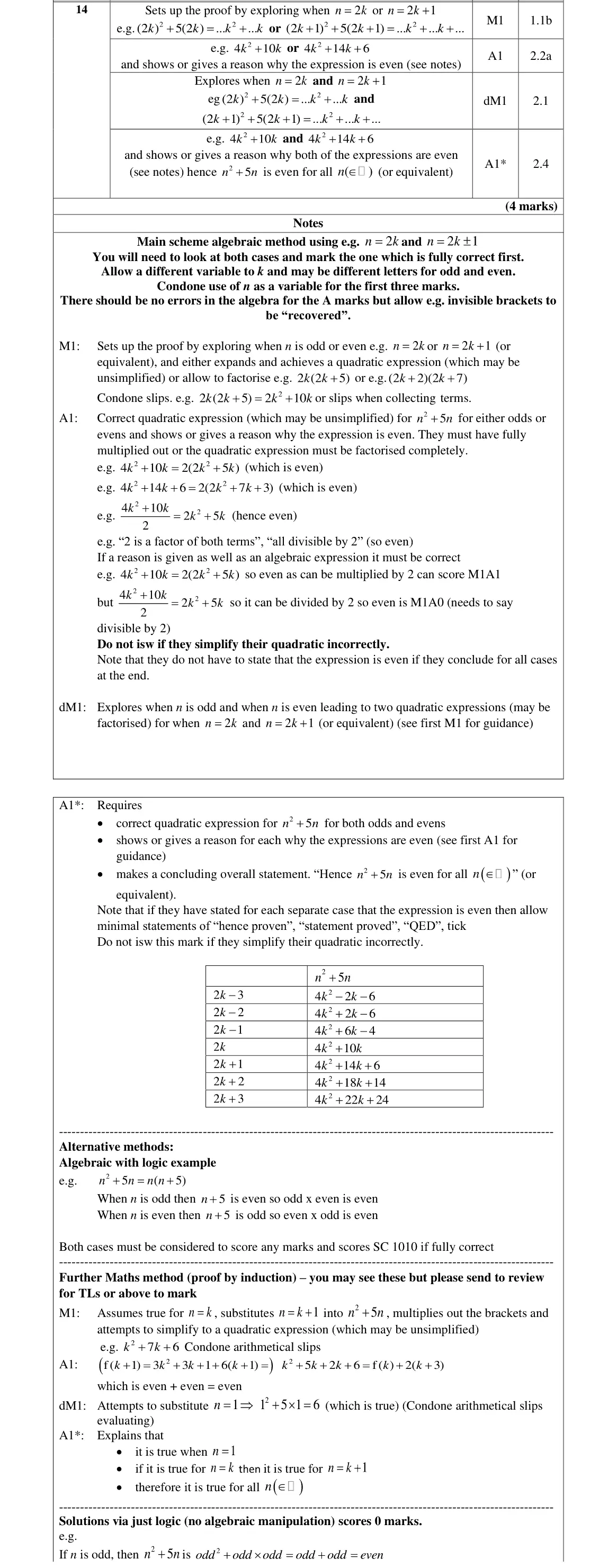
14. Prove, using algebra, that 2 + 5n n is even for all n ∈ (4)

Find an Edexcel maths tutor

Want this paper marked and gone through with you? Message us.

Prefer email? Send an enquiry

If you are under 18, please include a parent's contact details. Enquiries go to enquiries@mathsaleveltutor.com and are deleted once handled.