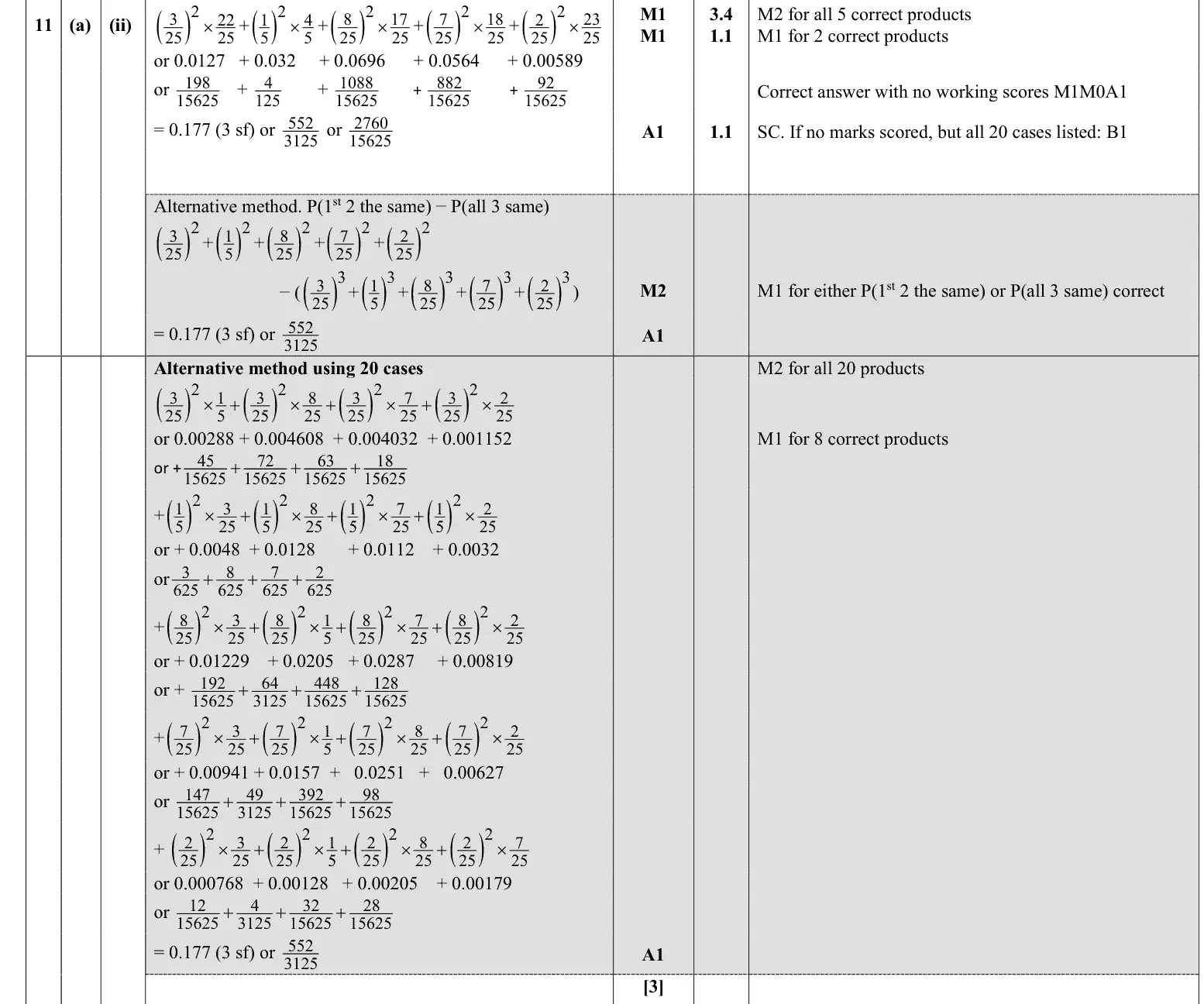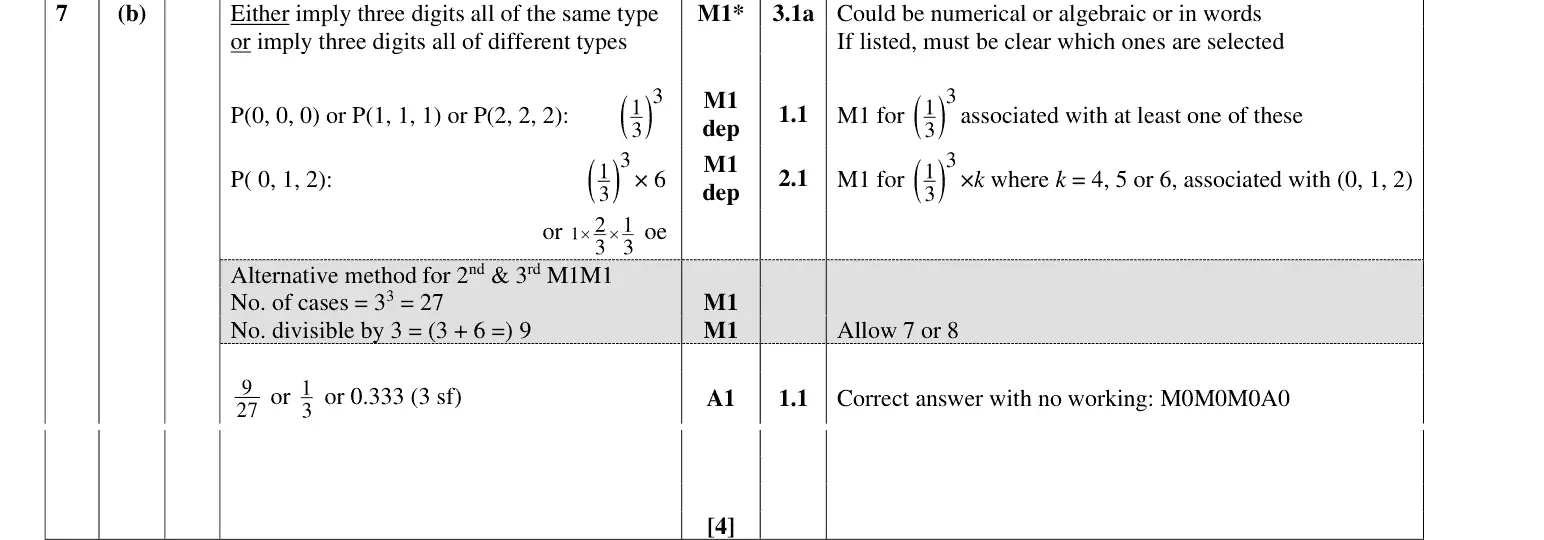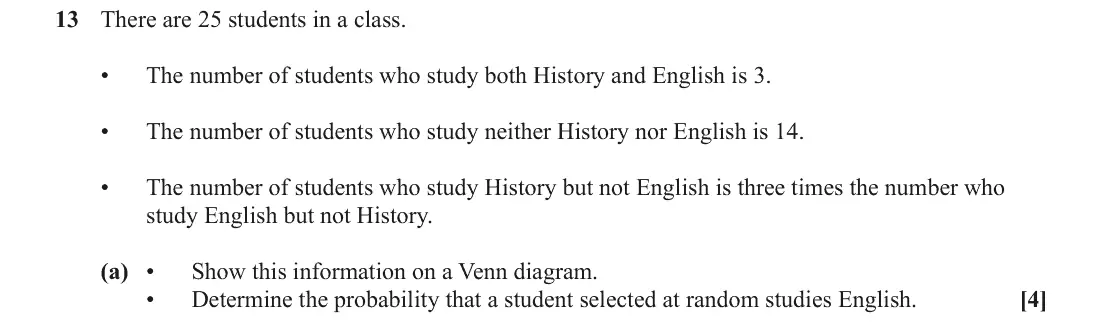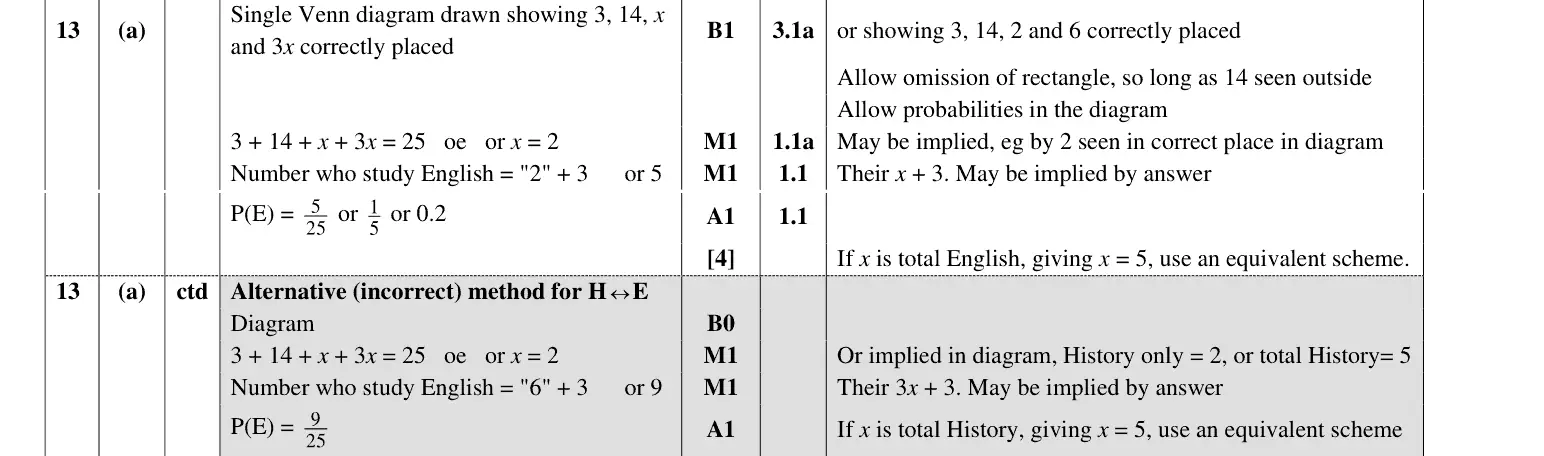
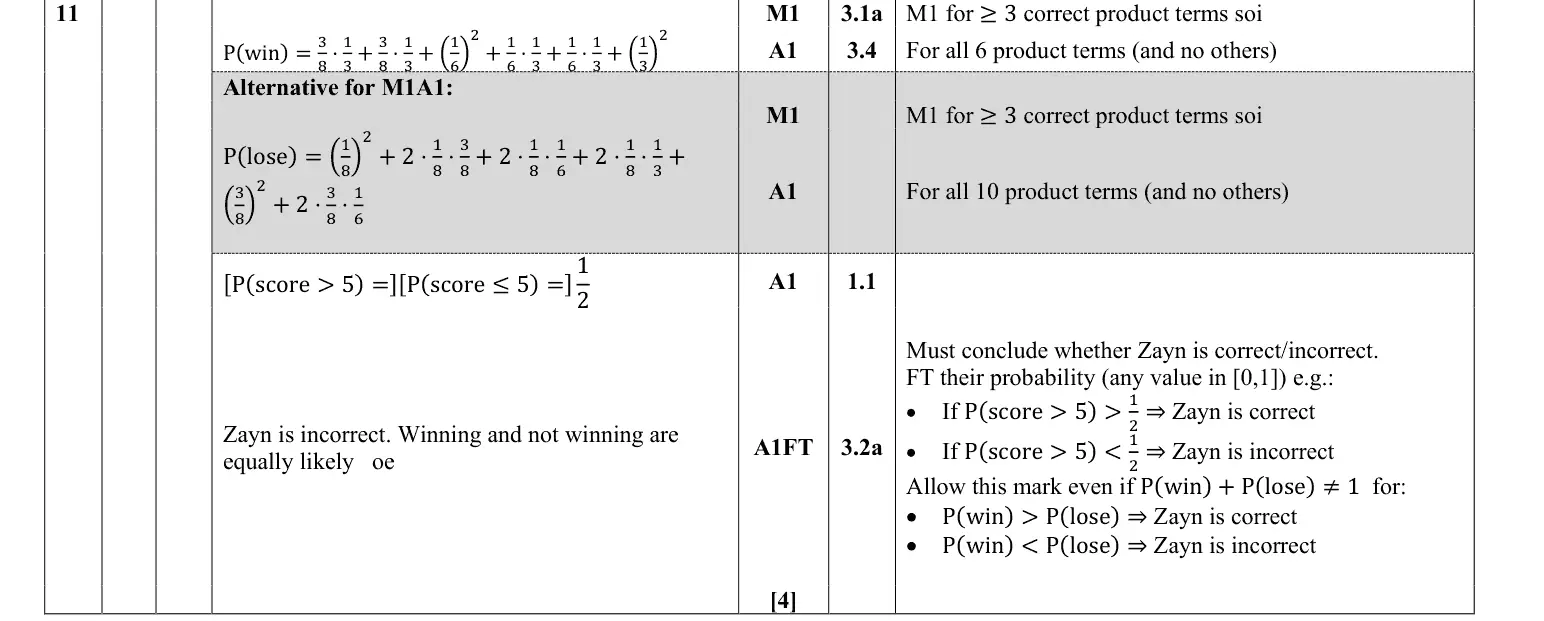
Mark scheme for this part
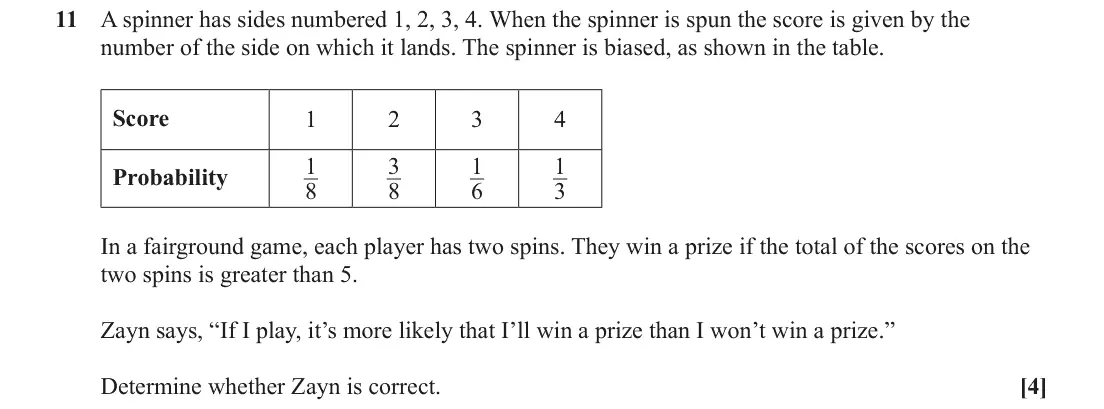
Examiner's comment
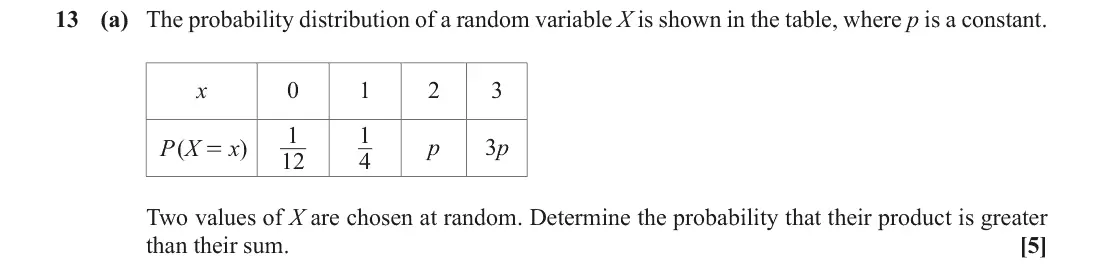
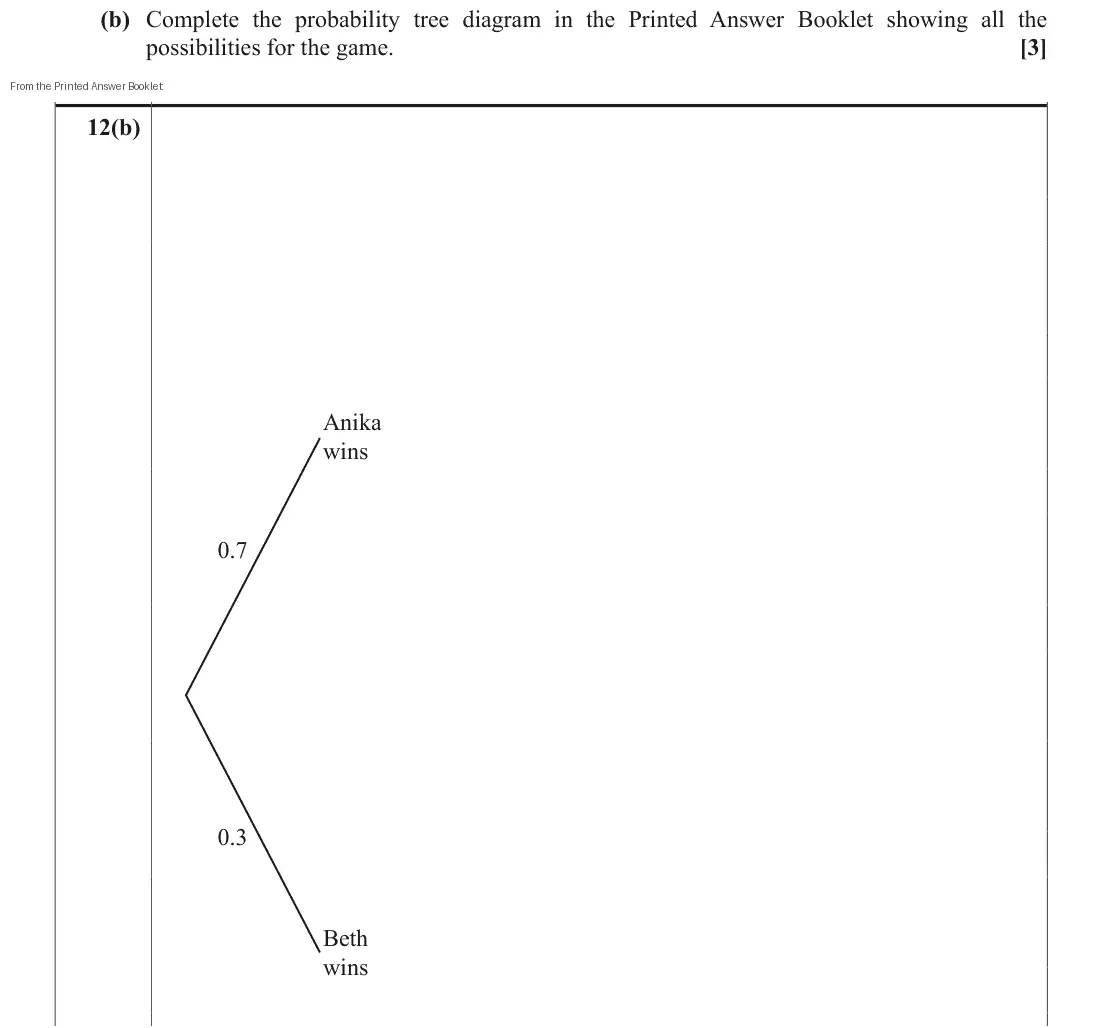
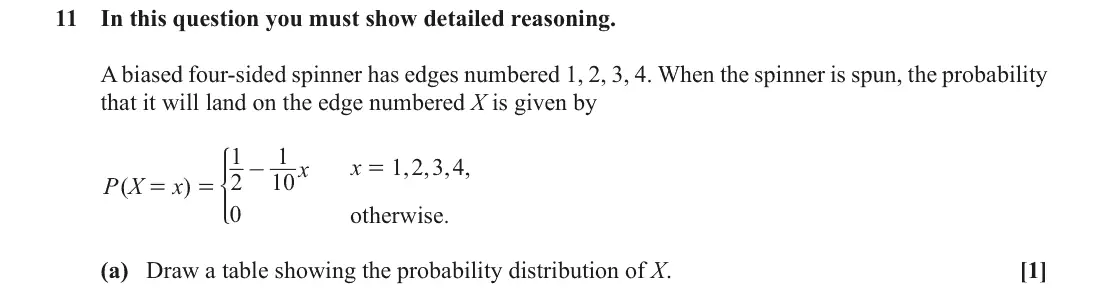
Some candidates scored full marks on this probability question. In order to determine whether Zayn’s statement is correct, candidates needed to calculate the probability of a ‘win’ (i.e. score greater than 5) or ‘lose’ and then make an appropriate conclusion. Most candidates recognised the need to combine the probabilities for two spins, and some drew a tree diagram to represent these. Provided candidates had three or more correct products (for either ‘win’ or ‘lose’) then they could score M1, but they needed all 6 (or 10 for ‘lose’) to be correct for the first A mark, which very few candidates achieved. Candidates could score the final A mark as FT provided that they gave a conclusion (following three or more correct products) that was correct for their values. Candidates who denoted the sample space with a grid tended to have more success in identifying the correct pairs of probabilities. Candidates should be encouraged to make full use of the answer space available and to use systematic methods to make sure they have the right number of terms in their summation. Most candidates gave an appropriate conclusion, but (as in Question 10(a) ) candidates needed to clearly and unambiguously state whether they were saying that Zayn is correct or incorrect.
Key points and common errors
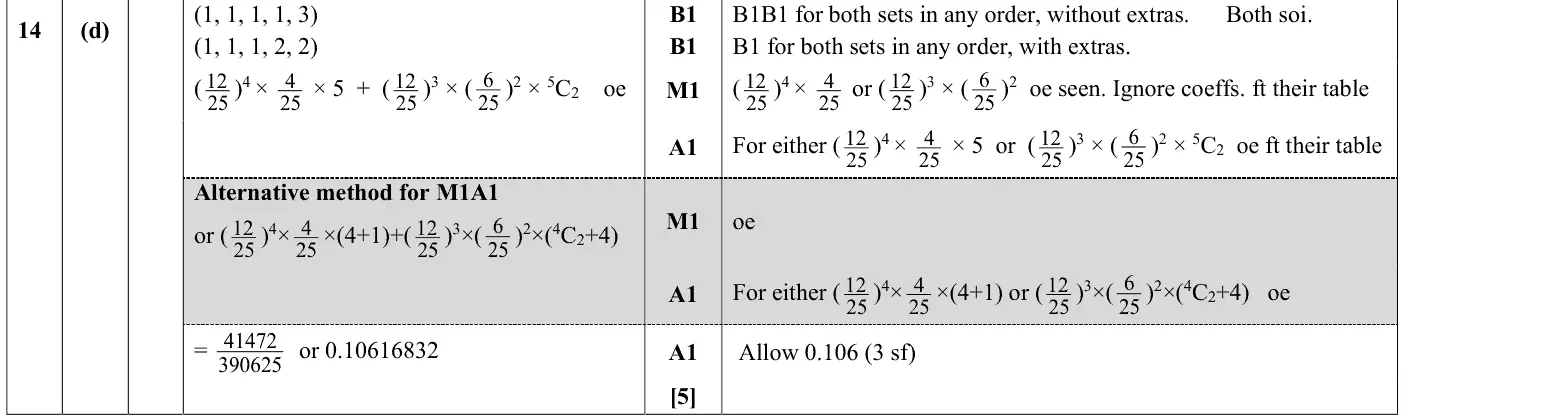
- list all pairs with total > 5 (6 products) or ≤ 5 (10 products)
- P(win) = ½, so winning and not winning are equally likely and Zayn is incorrect
- a sample-space grid helps
- very few got all products