1.05l Double angle formulae and the formulae for sin(A ± B), cos(A ± B)…

Section
1.05 Trigonometry
Level
A level only
Statement
Understand and be able to use double angle formulae and the formulae for sin(A ± B), cos(A ± B) and tan(A ± B).
Guidance
Learners may be required to use the formulae to prove trigonometric identities, simplify expressions, evaluate expressions exactly, solve trigonometric equations or find derivatives and integrals.
Since 2018
19 parts, 71 marks · topic pages: Addition and double-angle formulae, harmonic form, Trigonometric identities and proofs, Reciprocal and inverse trigonometric functions, Differentiation: first principles, gradients, stationary points, Chain, product and quotient rules; connected rates of change, Exponentials and logarithms, Trigonometric ratios, graphs, radians and the sine and cosine rules, Integration: standard integrals, definite integrals and areas, Integration by parts and by substitution, Indices and surds, Small-angle approximations, Circles, Solving trigonometric equations, Quadratics and the discriminant, Friction, resultant forces and motion in a plane

Back to the checklist

June 2025 · Paper 1 · Q9(a) 3 marks Easy
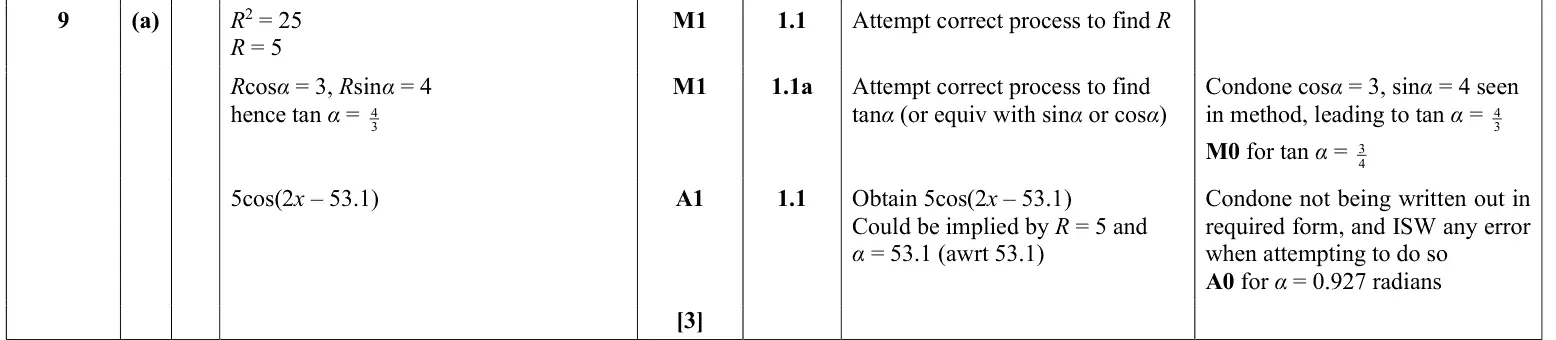
9 (a) Express cos x sin x in the form R cos ( x ) , where R and ° ° . [3] + - a a
June 2025 · Paper 2 · Q4(a) 2 marks Easy
2 / 4 (a) Prove that ( cos sin ) sin . [2] + + i i i
June 2025 · Paper 2 · Q4(b) 4 marks Easy
Show the start of this questionEarlier part of this question
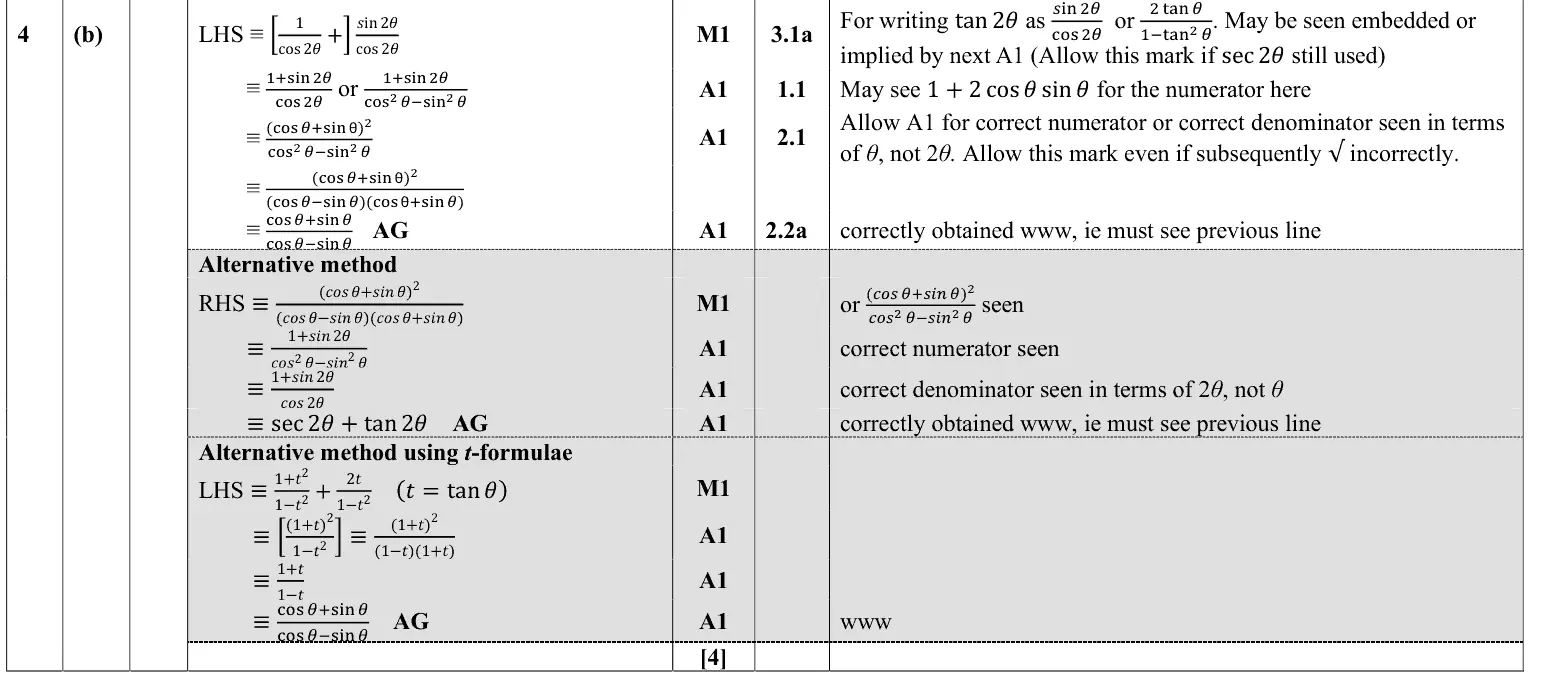
cos sin + i i (b) Hence or otherwise prove that sec tan . [4] + i i / cos sin i - i
June 2025 · Paper 3 · Q6(a) 1 mark Hard
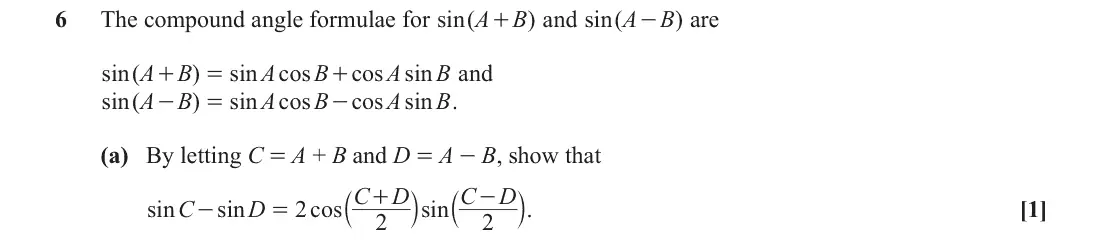
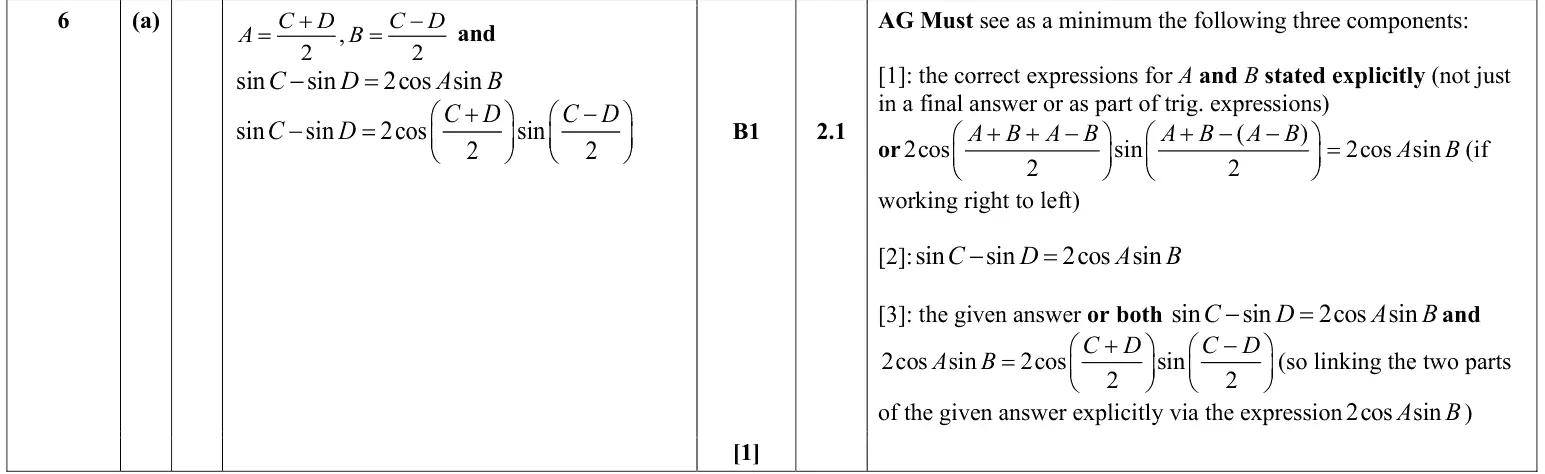
6 The compound angle formulae for sin A ( B ) and sin A ( B ) are + - sin ( A B ) sin A cos B cos A sin B and + = + sin ( A B ) sin A cos B cos A sin B . - = - (a) By letting C = A + B and D = A - B, show that a k a k. C D C D + - sin C sin D cos sin [1] - =
June 2025 · Paper 3 · Q6(d) 4 marks Medium
Show the start of this questionEarlier part of this questionEarlier part of this question
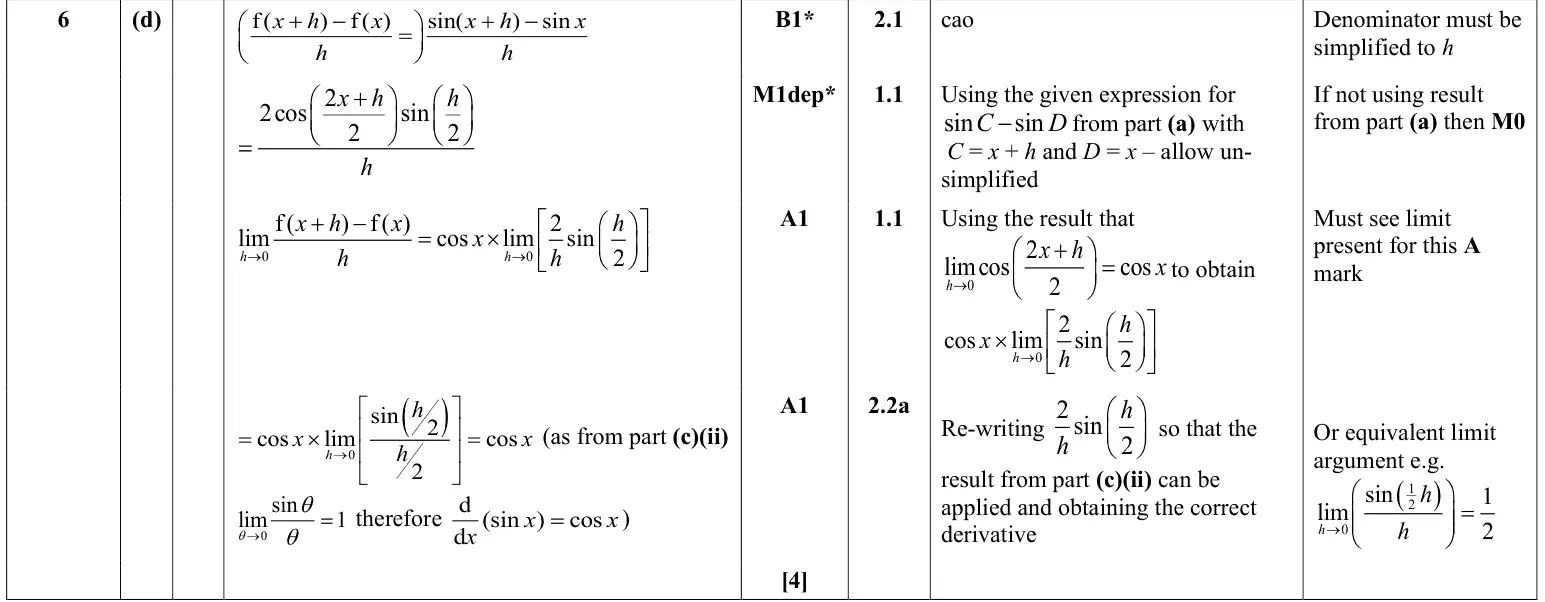
(d) Using parts (a) and (c)(ii), show from first principles that the derivative of sinx is cosx, where x is measured in radians. [4]
June 2024 · Paper 1 · Q11(c)(i) 5 marks Medium
Show the start of this questionEarlier part of this questionEarlier part of this question
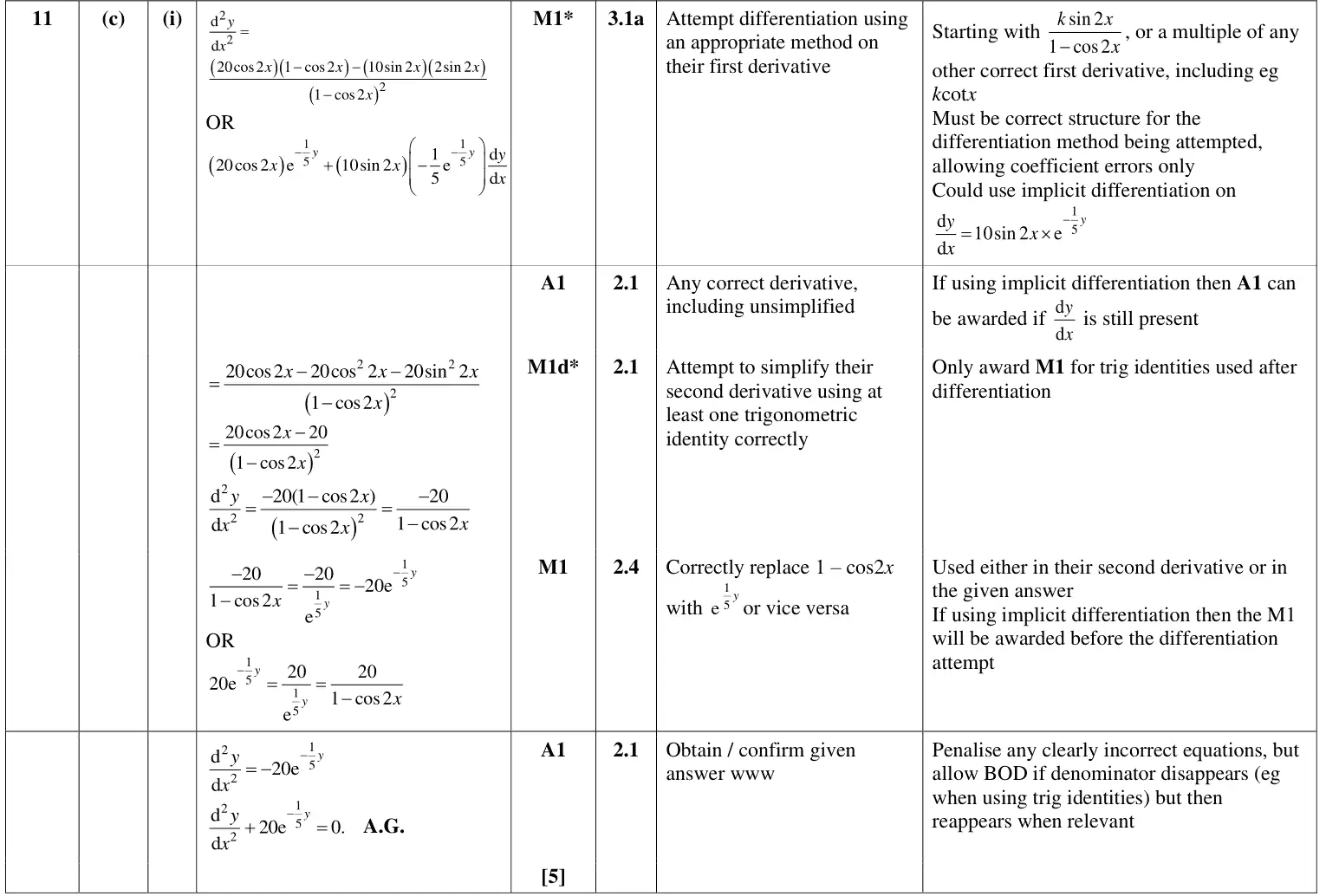
d y y (c) (i) Show that x e - . [5] + = d
June 2024 · Paper 2 · Q6(a)(i) 2 marks Easy
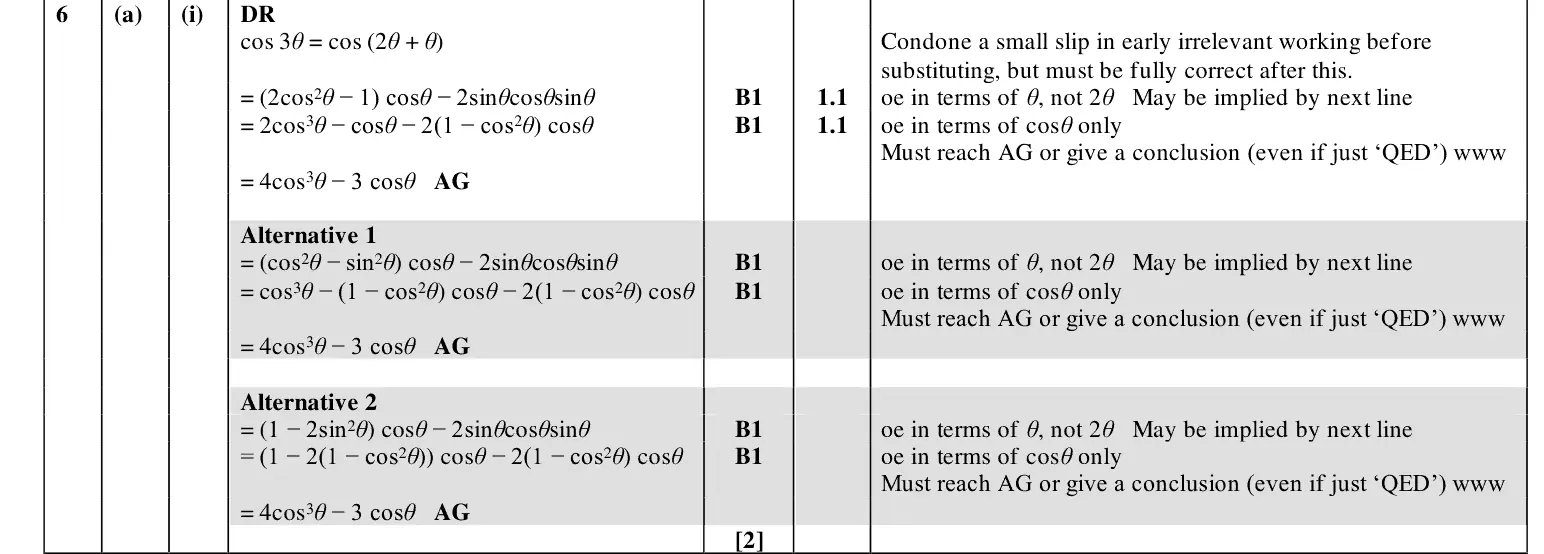
6 In this question you must show detailed reasoning. (a) (i) Use the formula for cos A ( B ) , and the double angle formulae, to show that + 3i cos cos cos . [2] i = - i
June 2023 · Paper 1 · Q7(a) 2 marks Hard
7 (a) Use the result cos ( A B ) cos A cos B sin A sin B to show that + = - cos ( A B ) cos A cos B sin A sin B . [2] - = +
June 2023 · Paper 1 · Q7(b) 3 marks Easy
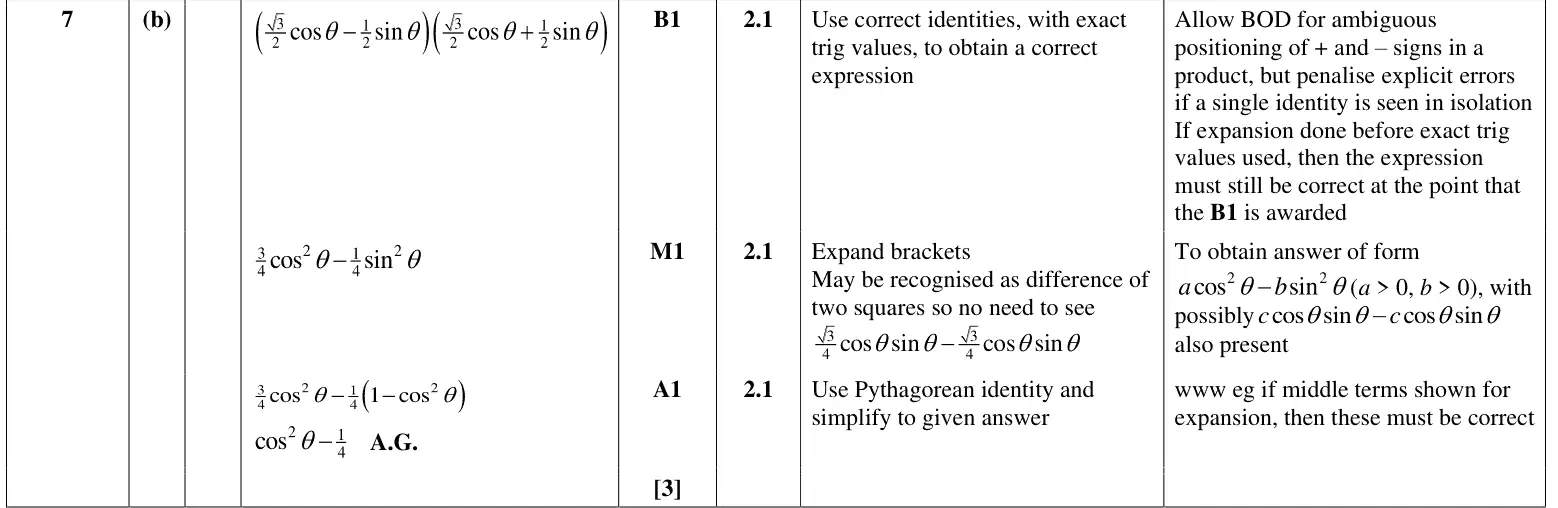
The function ( ) f i is defined as cos ( ° ) cos ( ° ) , where i is in degrees. i i + - (b) Show that ( ) f cos . [3] i = i -
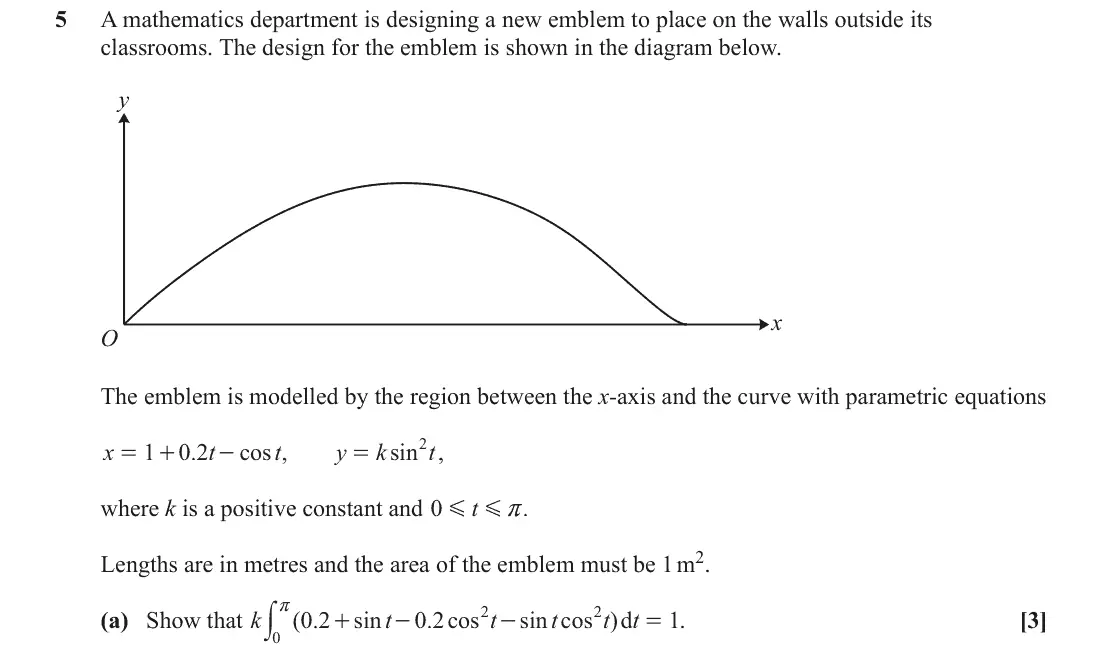
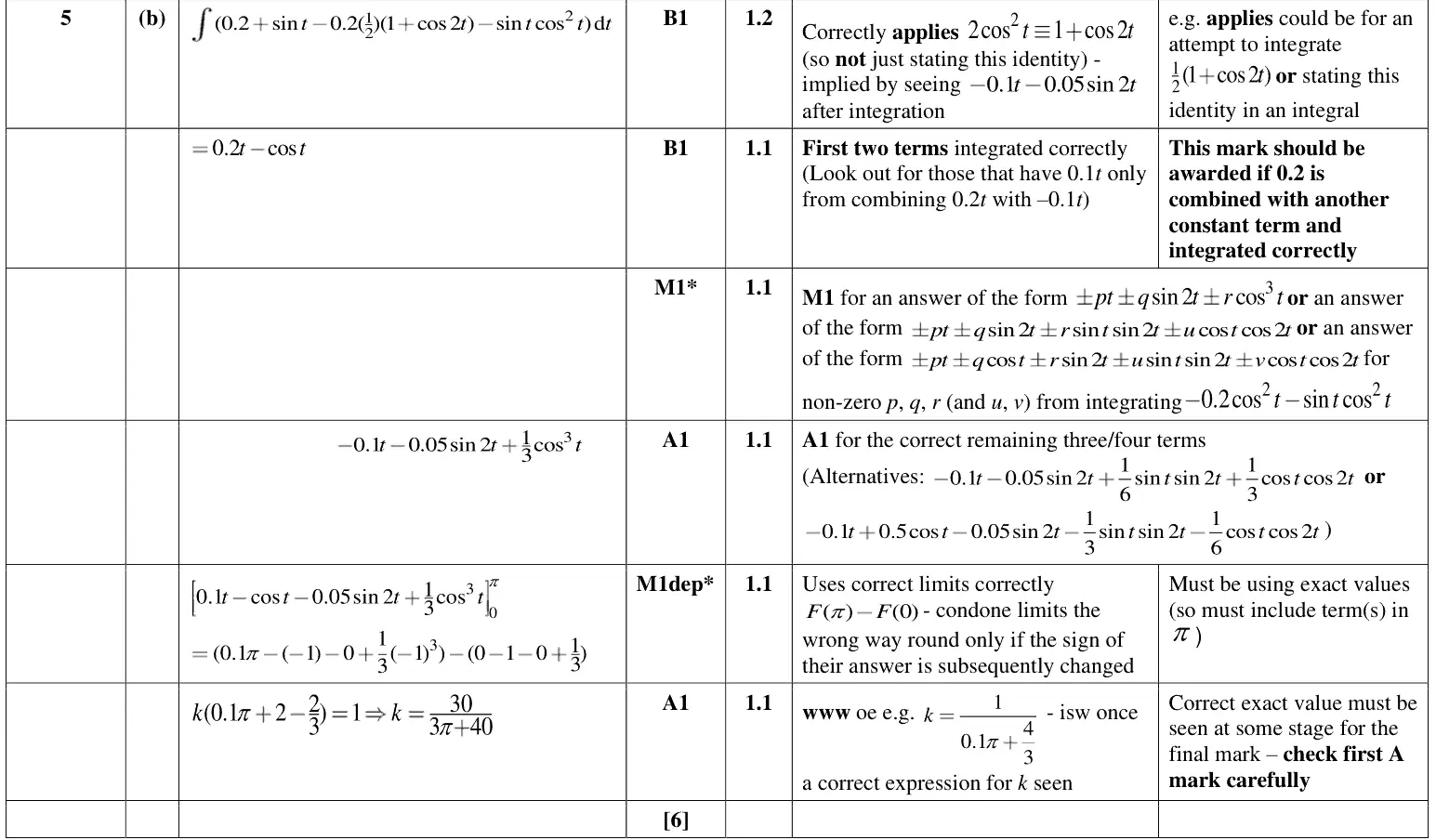
June 2023 · Paper 3 · Q5(b) 6 marks Hard
Show the start of this questionEarlier part of this question
(b) Determine the exact value of k. [6]
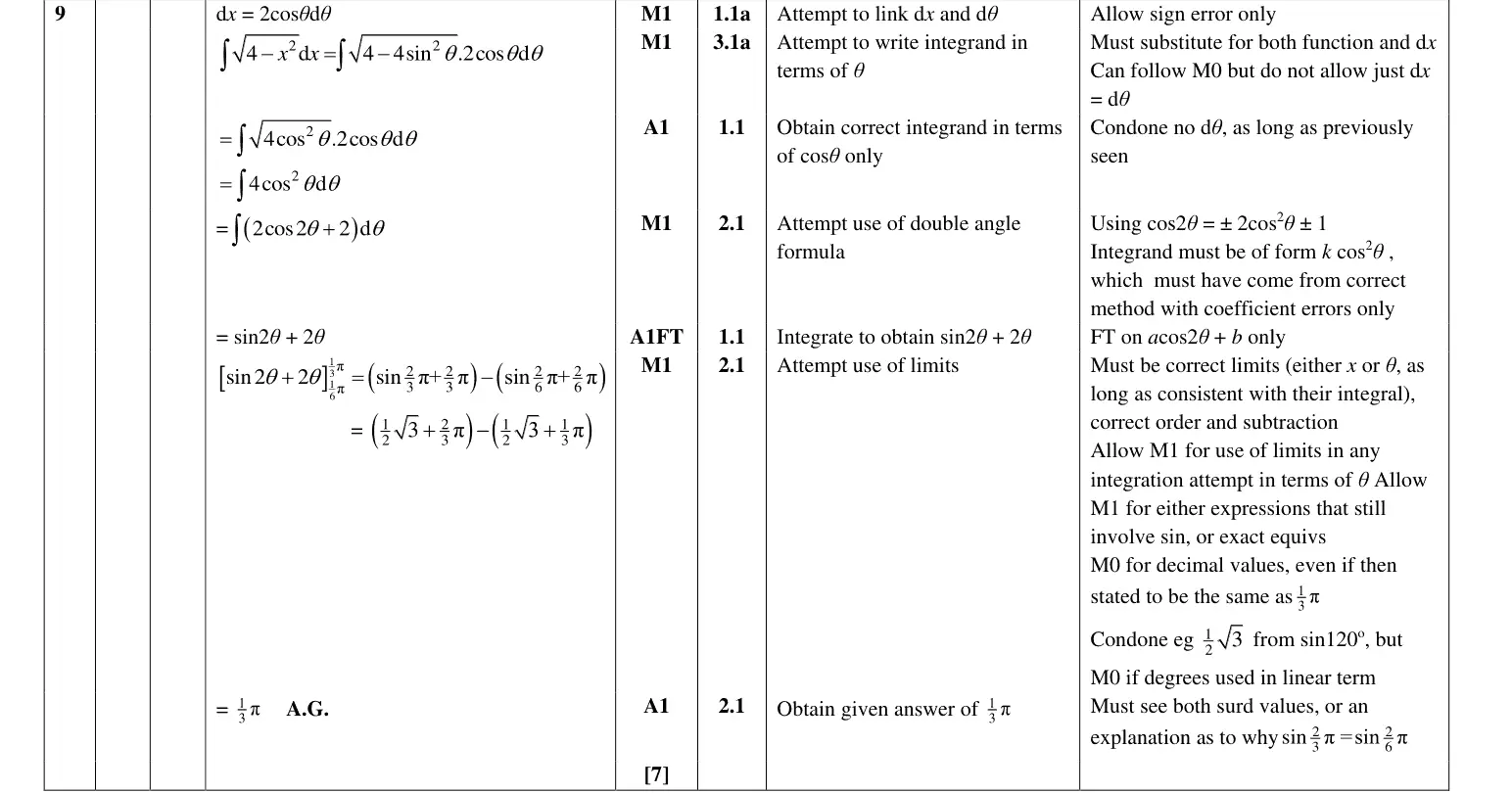
June 2022 · Paper 1 · Q9 7 marks Hard
y 9 Use the substitution x sin to show that x d x . [7] = i - = r
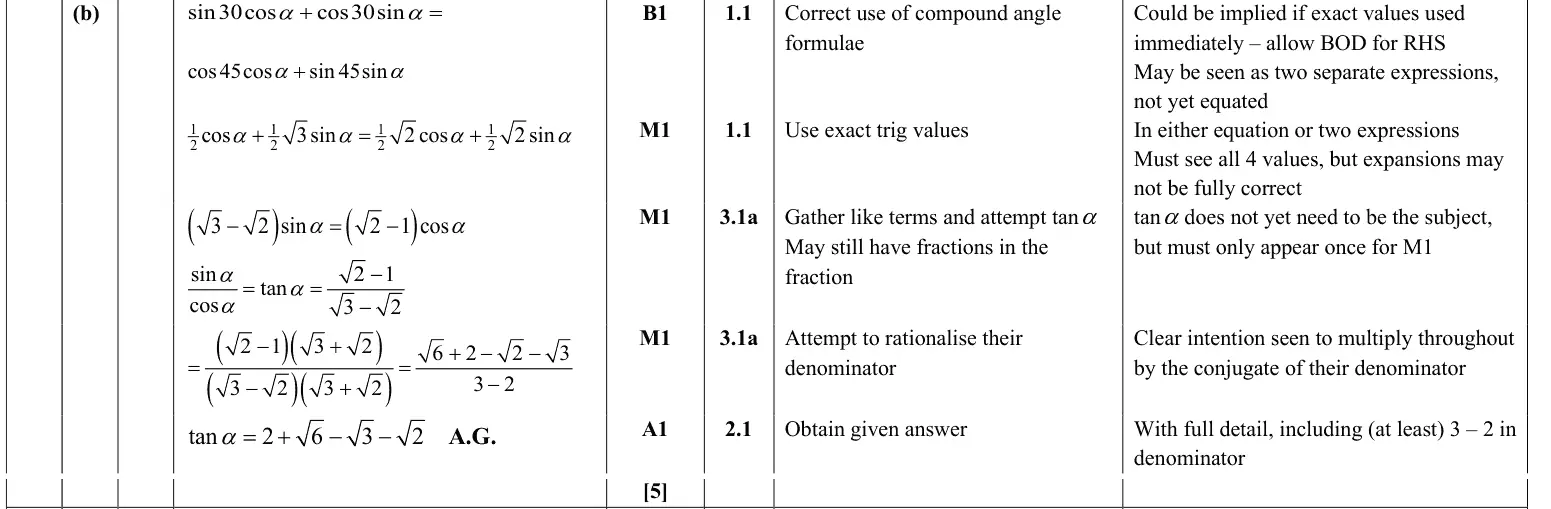
Autumn 2021 · Paper 1 · Q10(b) 5 marks Medium
(b) Given that sin ( ° ) cos ( ° ) , show that tan . [5] + = - a = + - - a a
Autumn 2021 · Paper 2 · Q7 4 marks Medium
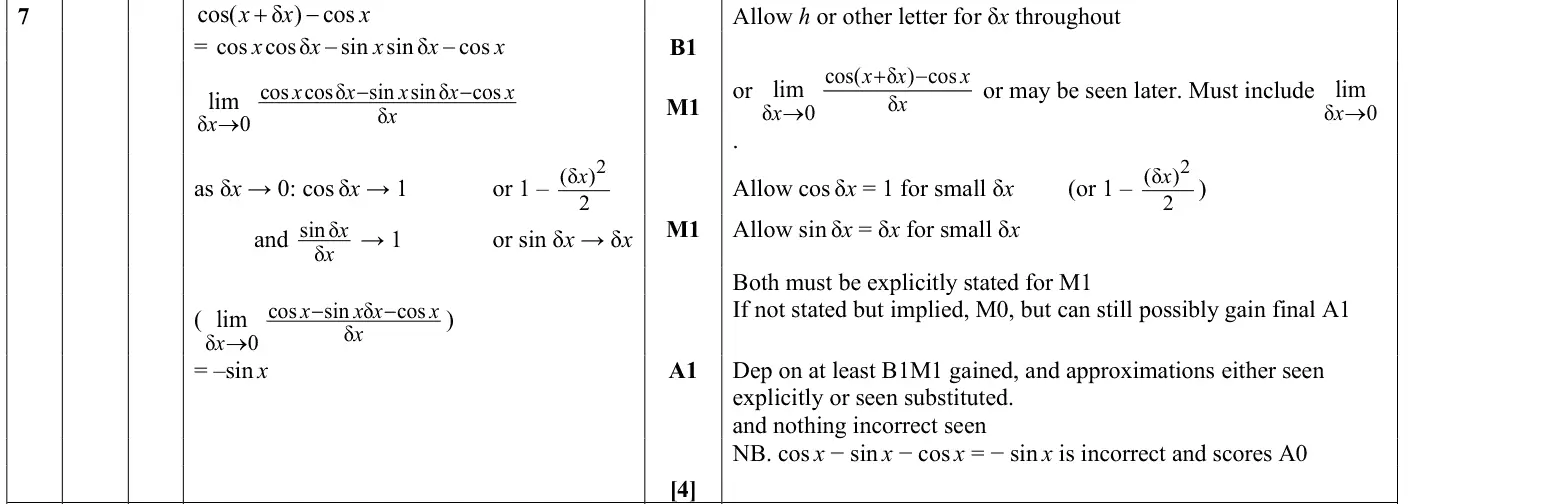
7 Differentiate cosx with respect to x, from first principles. [4]
Autumn 2020 · Paper 1 · Q11(b) 4 marks Hard
Show the start of this questionEarlier part of this questionEarlier part of this question
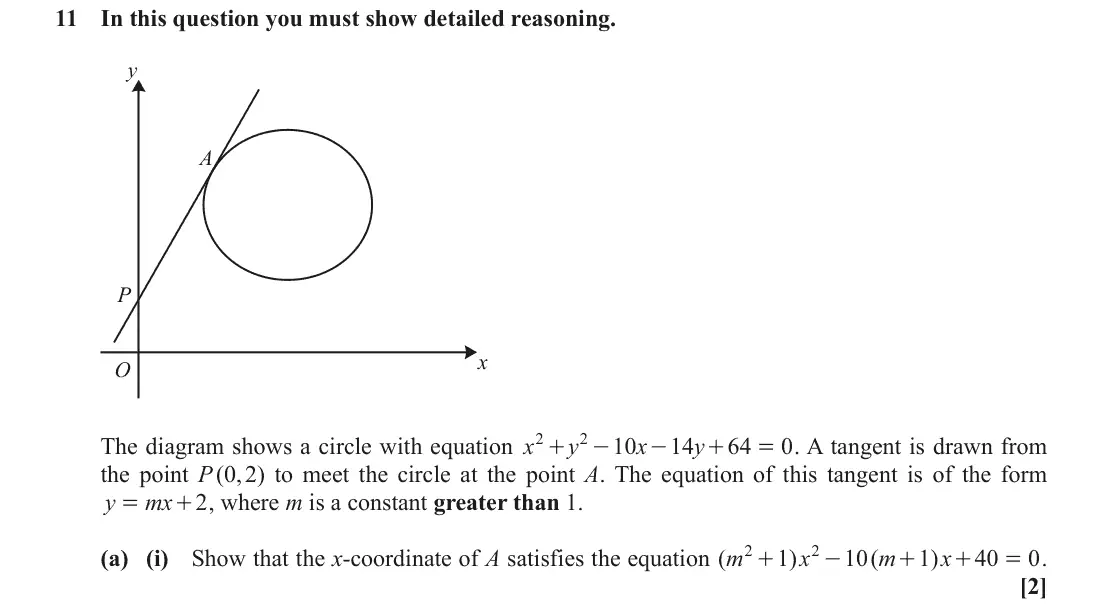
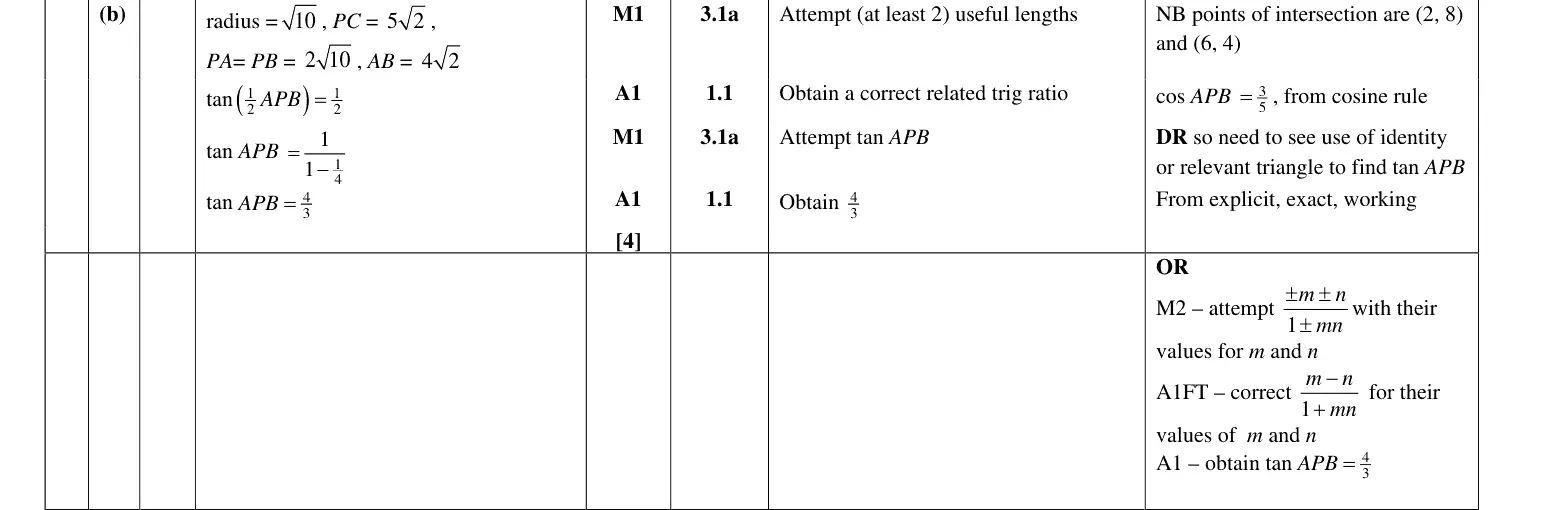
A second tangent is drawn from P to meet the circle at a second point B. The equation of this tangent is of the form y n x + , where n is a constant less than 1. = (b) Determine the exact value of tan APB. [4]
Autumn 2020 · Paper 2 · Q6 3 marks Easy
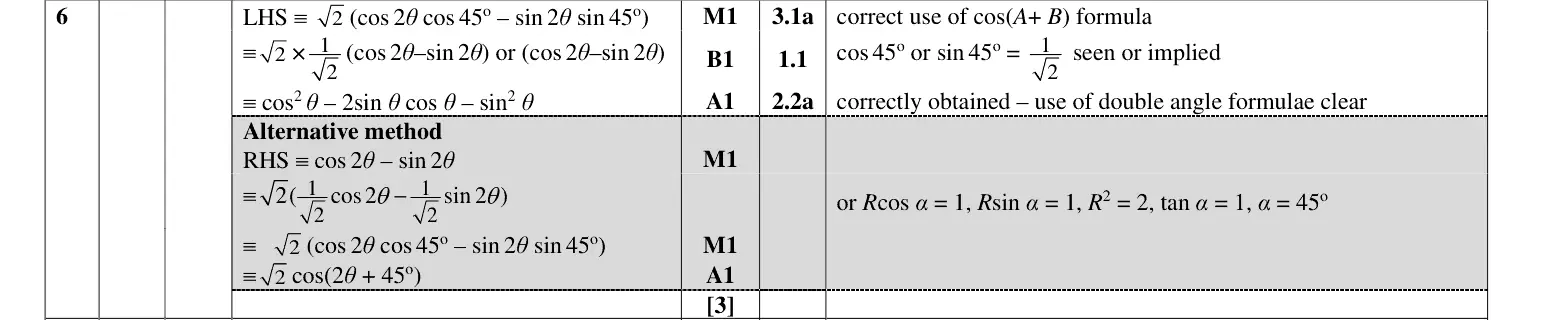
6 Prove that cos ( °) cos sin cos sin , where i is measured in degrees. [3] + - - i / i i i i
June 2018 · Paper 2 · Q4 4 marks Medium
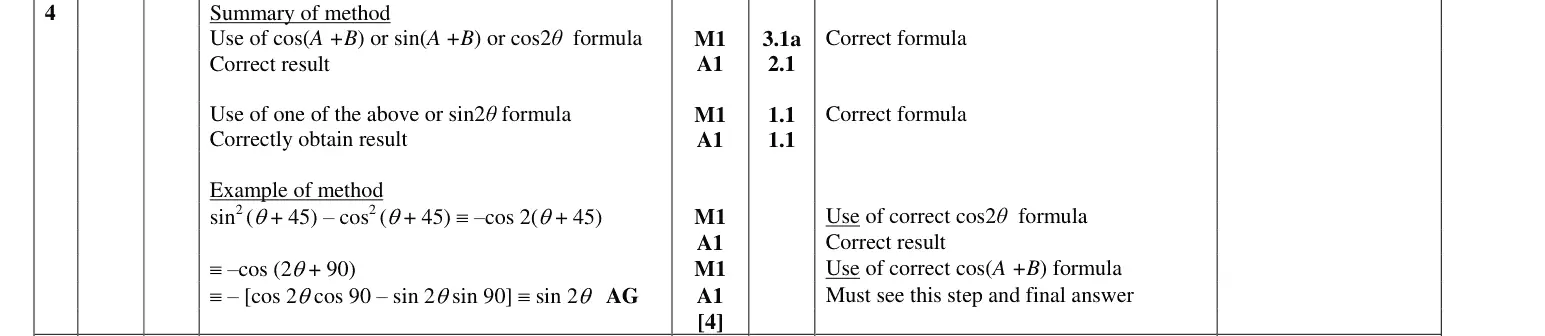
Prove that sin2(i + 45)° - cos2(i + 45)° / sin 2i °. 4 [4]
June 2018 · Paper 3 · Q6(i) 3 marks Medium
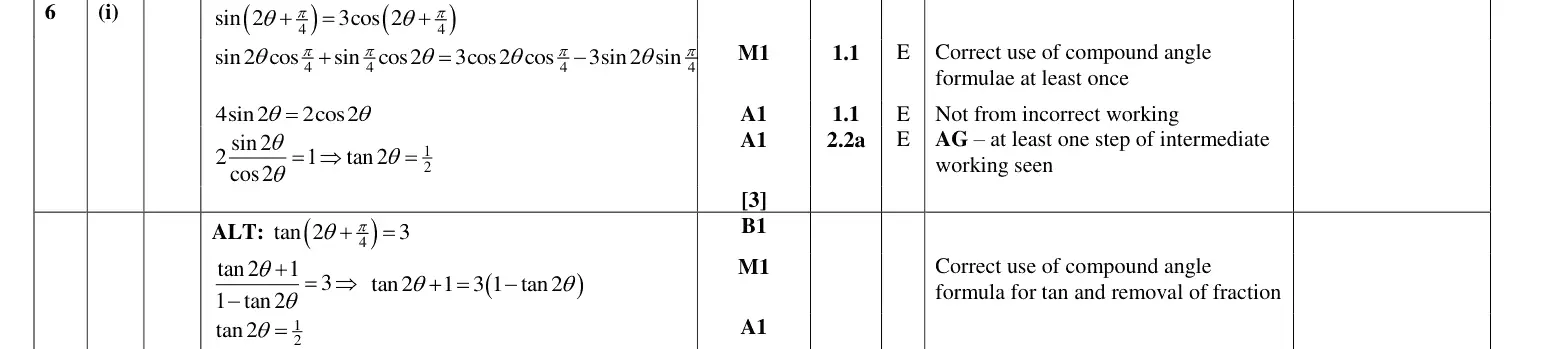
a k a k. 6 It is given that the angle i satisfies the equation sin cos i + r = i + r (i) Show that tan2 [3] . i =
June 2018 · Paper 3 · Q6(ii) 5 marks Medium
Show the start of this questionEarlier part of this question
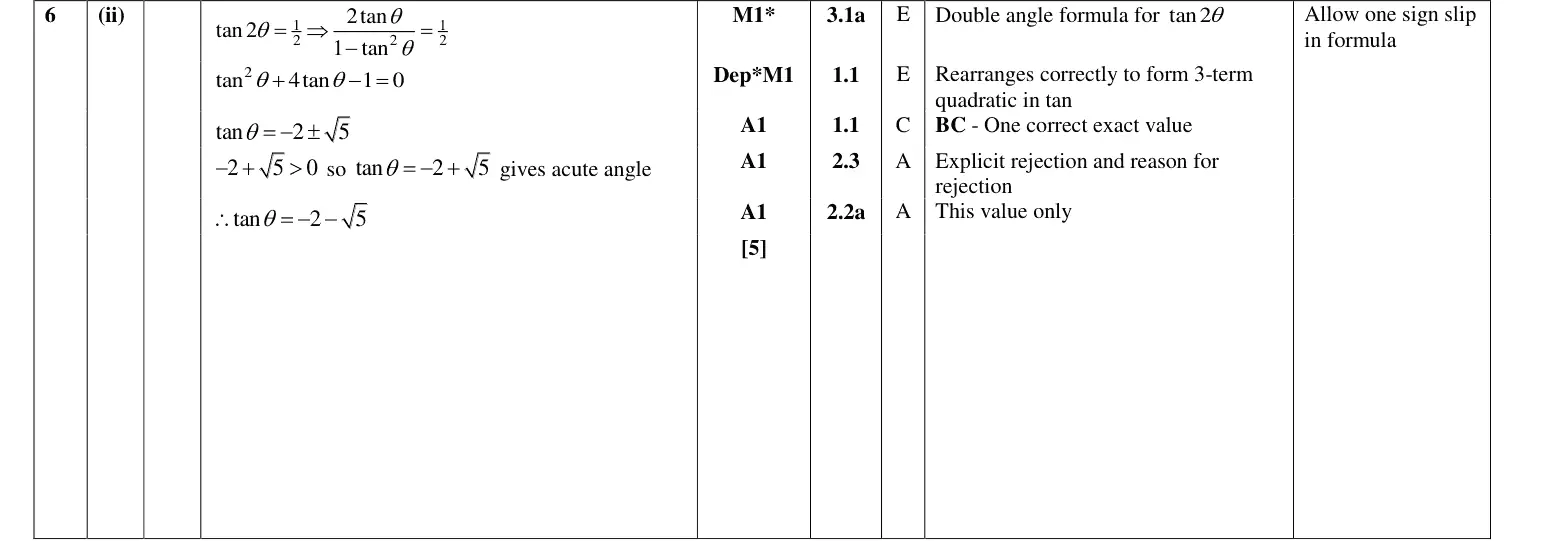
(ii) Hence find, in surd form, the exact value of tan i, given that i is an obtuse angle. [5]
June 2018 · Paper 3 · Q10(i) 4 marks Medium
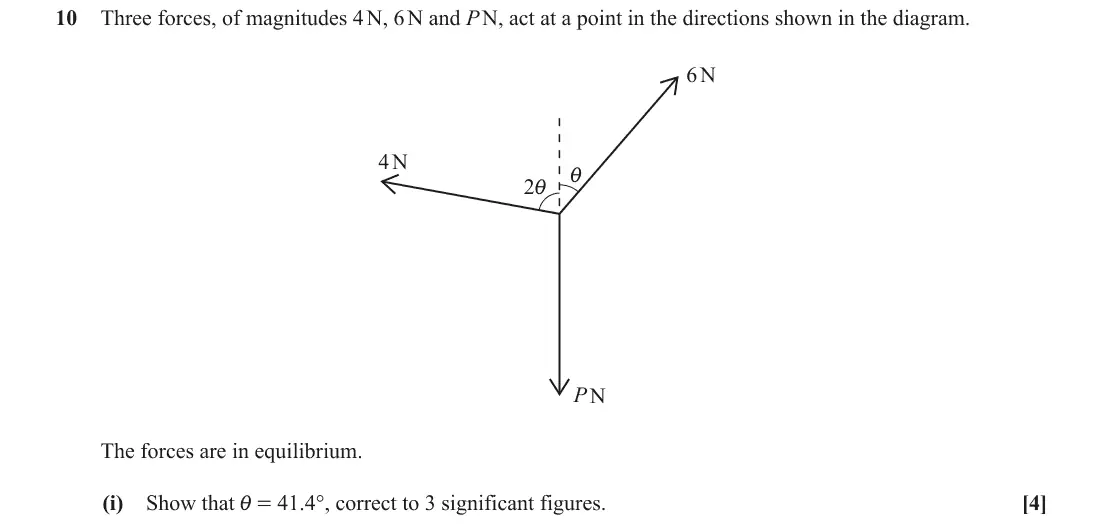
10 Three forces, of magnitudes 4 N, 6 N and P N, act at a point in the directions shown in the diagram. 6 N 4 N i 2i P N The forces are in equilibrium. (i) Show that i = 41.4°, correct to 3 significant figures. [4]

Find an A-level maths tutor

Stuck on this? Book a trial session with an A-level maths tutor.

Prefer email? Send an enquiry

If you are under 18, please include a parent's contact details. Enquiries go to enquiries@mathsaleveltutor.com and are deleted once handled.