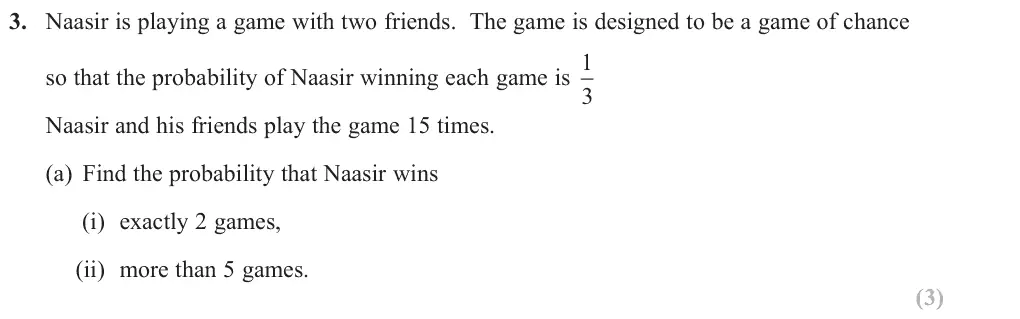
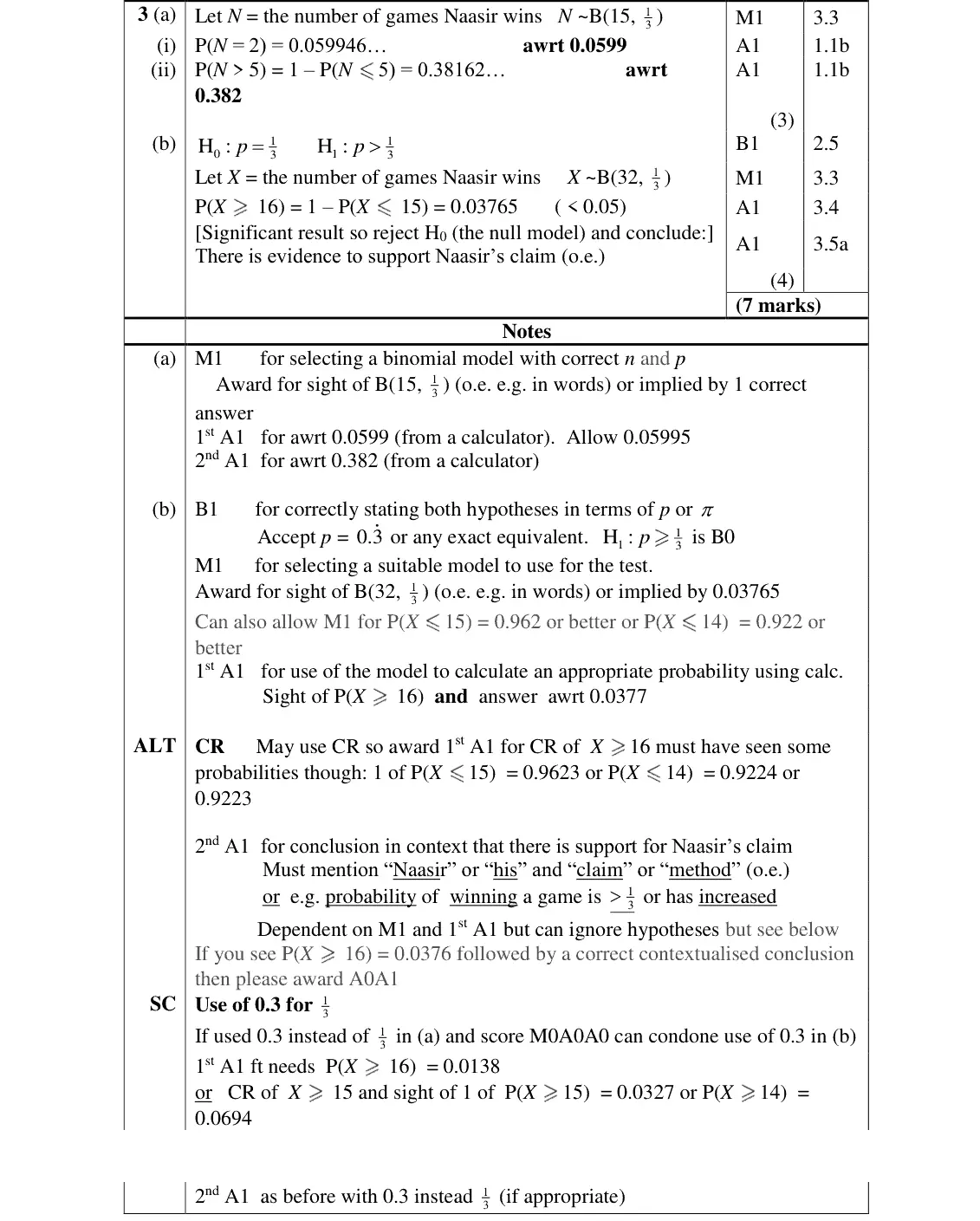
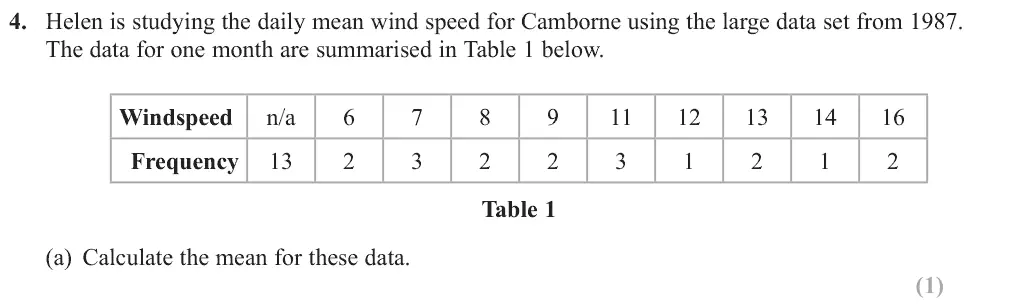
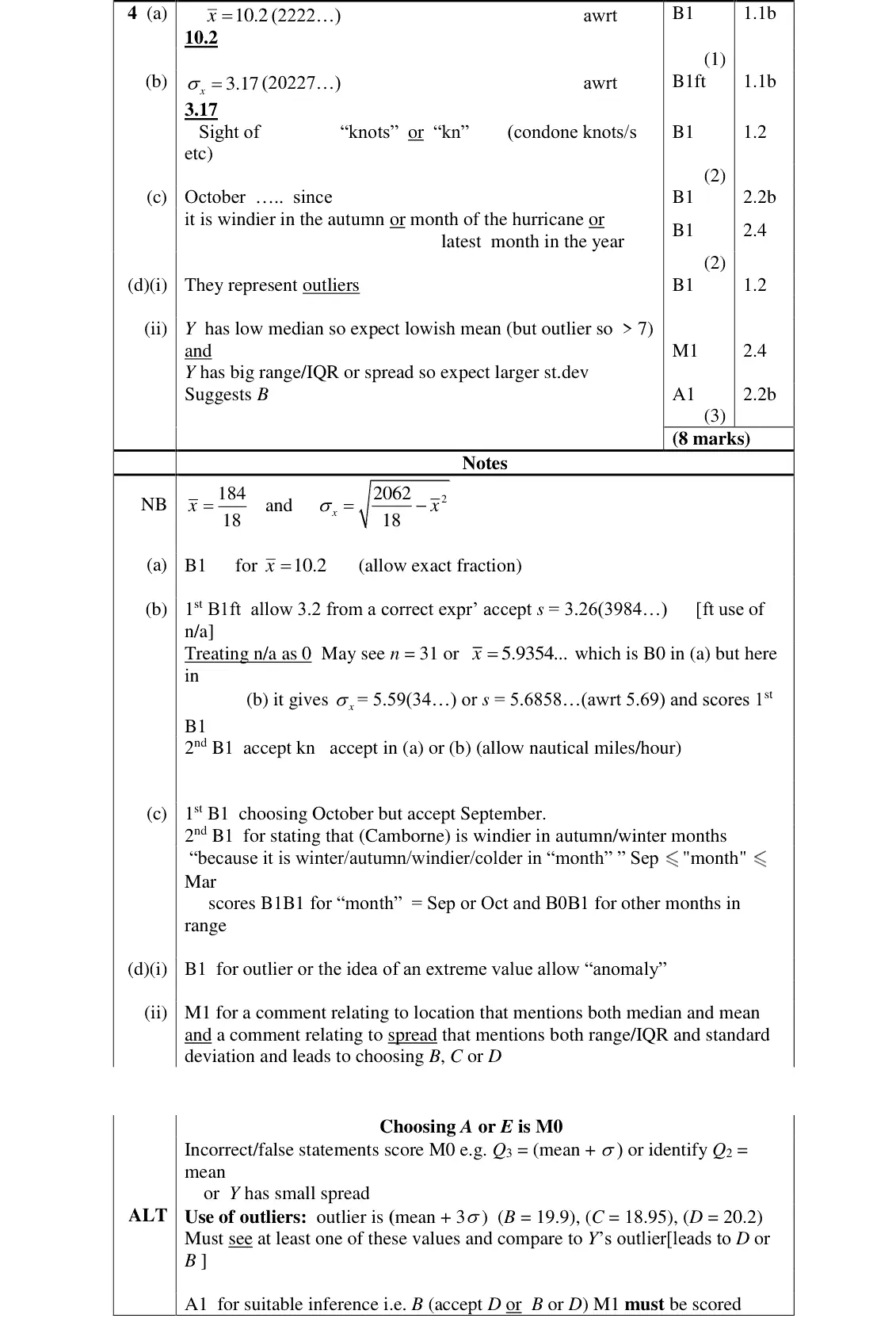
Examiner's comment
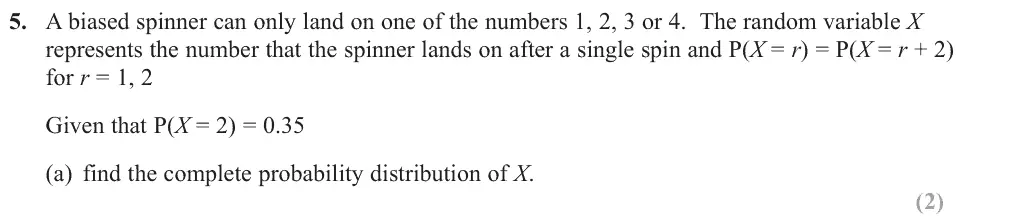
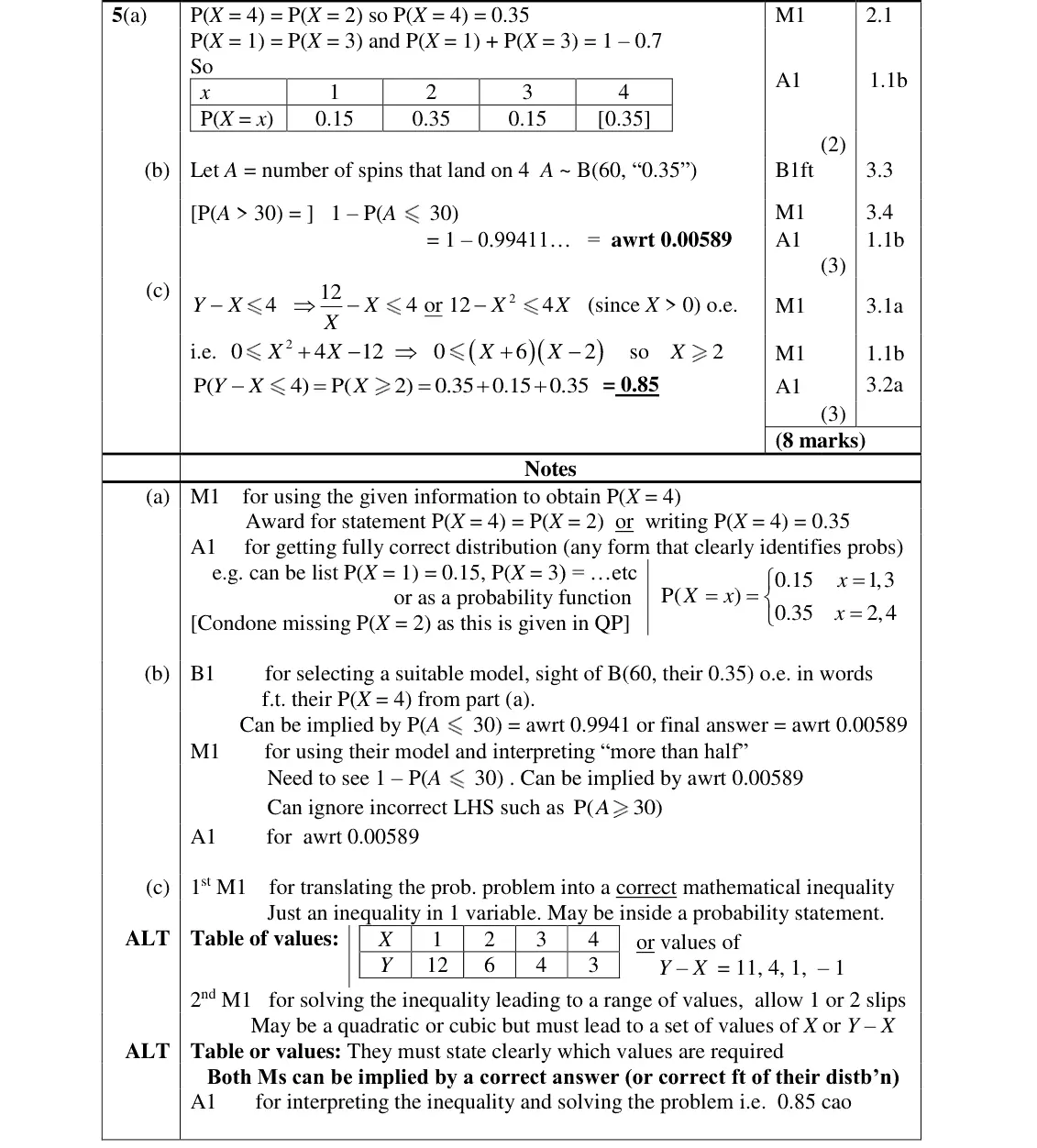
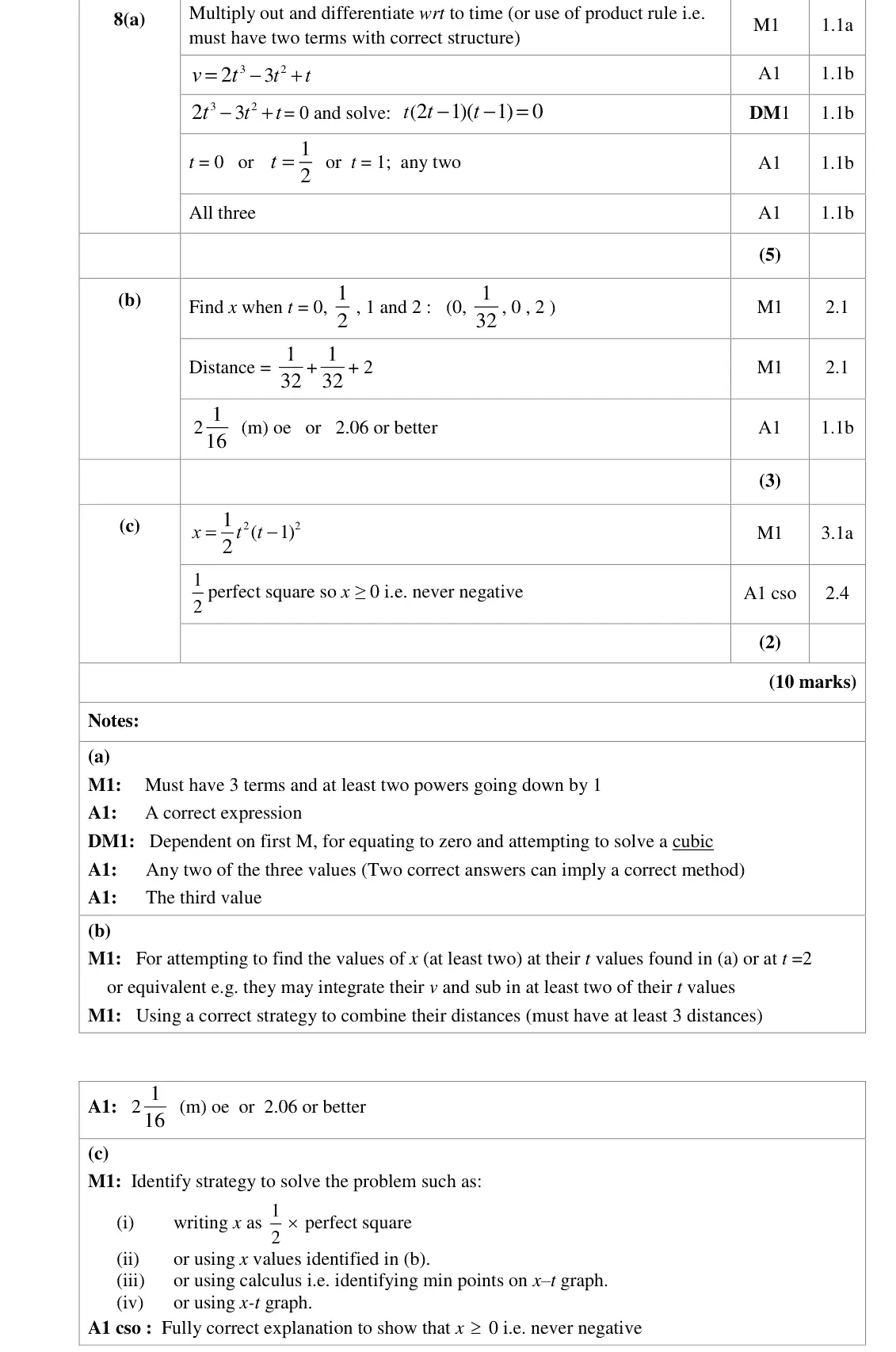
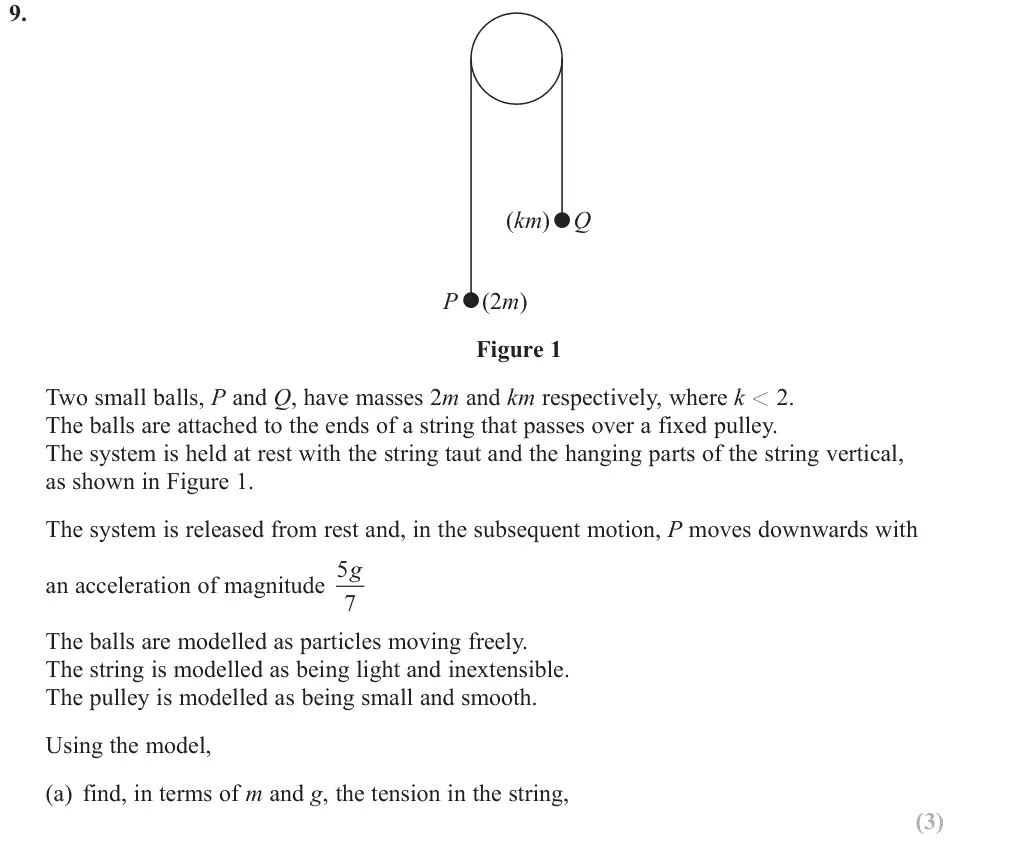
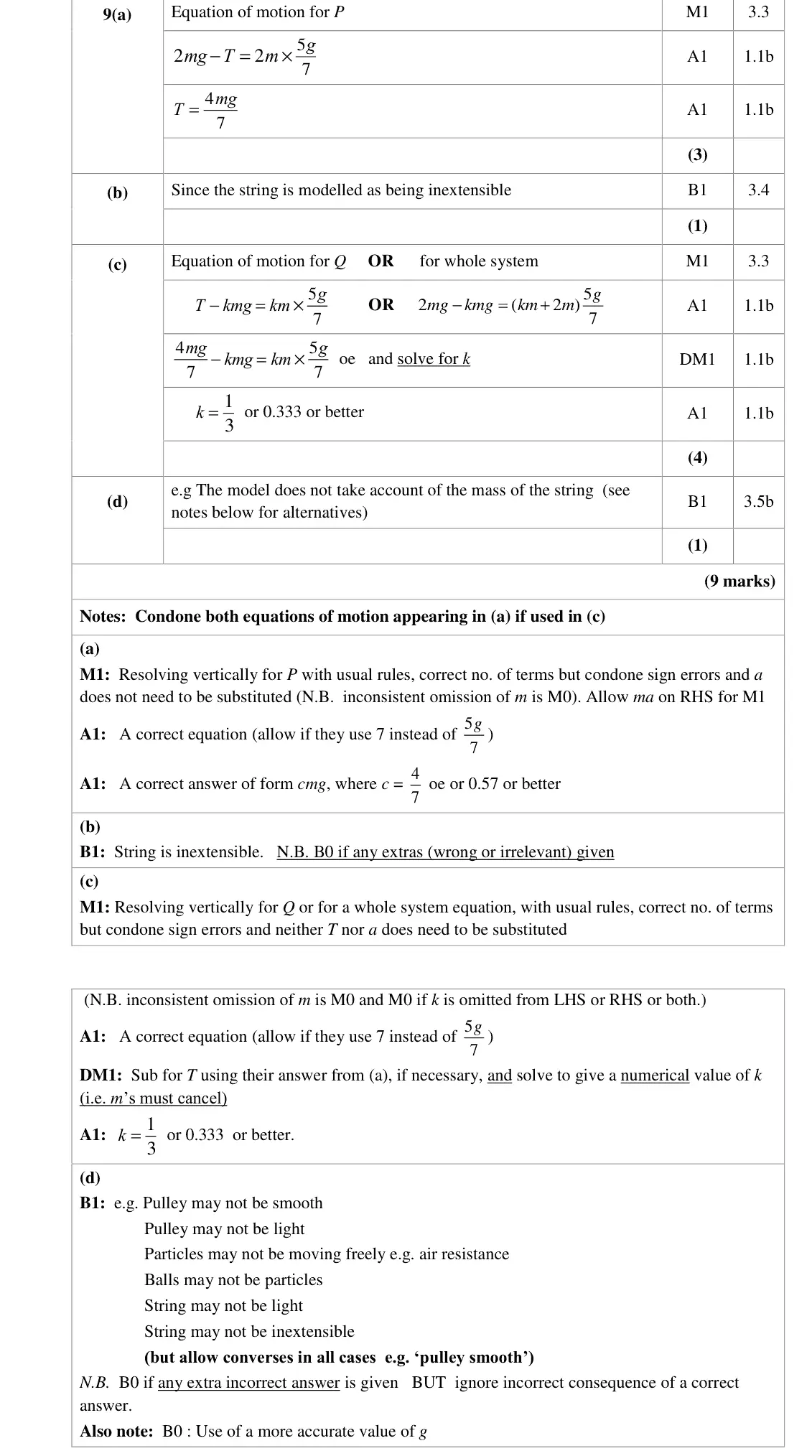
again we expect answers to be given to 3 significant figures. The final part required students to either form a list of values for Y , or even Y – X, or solve an inequality to realise that they needed P(X …2). Some were able to do this and this proved to be a good discriminator on this section. SECTION B: MECHANICS Introduction A significant proportion of the students were poorly prepared and showed little understanding of basic mechanics and displayed poor algebraic/numerical skills. There were a number of blank or incomplete responses to question 9 but it was difficult to determine whether this was due to a lack of time or a lack of knoeledge. Question 7 was by far the most successfully answered with just under a third of students scoring 6 out of 7 but the last two questions worked well as discriminator questions for the more able students. Just under 30% of the students scored nothing on question 8 and about a quarter failed to score on question 9. In calculations the numerical value of g which should be used is 9.8, unless otherwise stated. Final answers should then be given usually to 3 significant figures (unless otherwise stated) – more accurate answers will be penalised, including fractions but exact multiples of g are usually accepted. If there is a printed answer to show then students need to ensure that they show sufficient detail in their working to warrant being awarded all of the marks available. In all cases, as stated on the front of the question paper, students should show sufficient working to make their methods clear to the examiner and correct answers without working may not score all, or indeed, any of the marks available. If a student runs out of space in which to give his/her answer than he/she is advised to use a supplementary sheet.