Examiner's comment
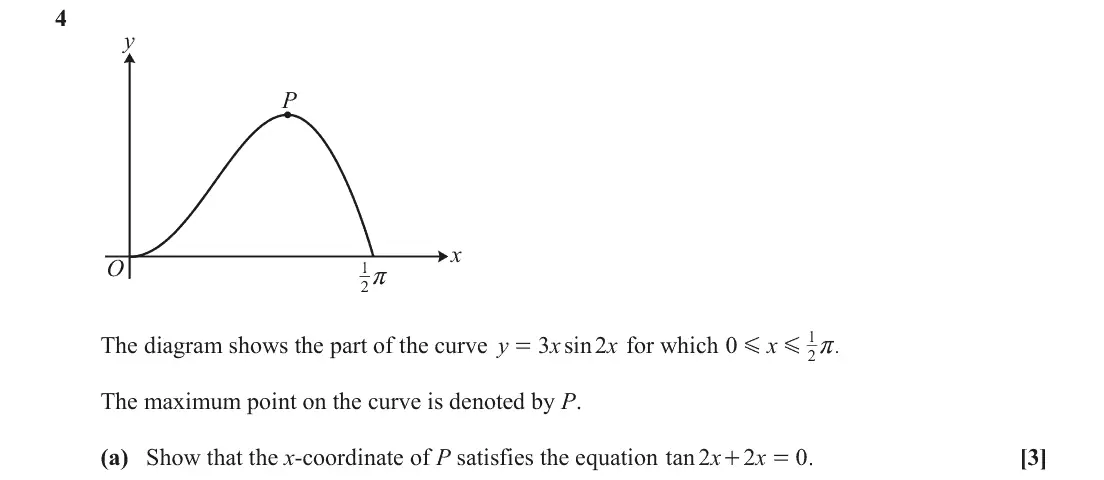
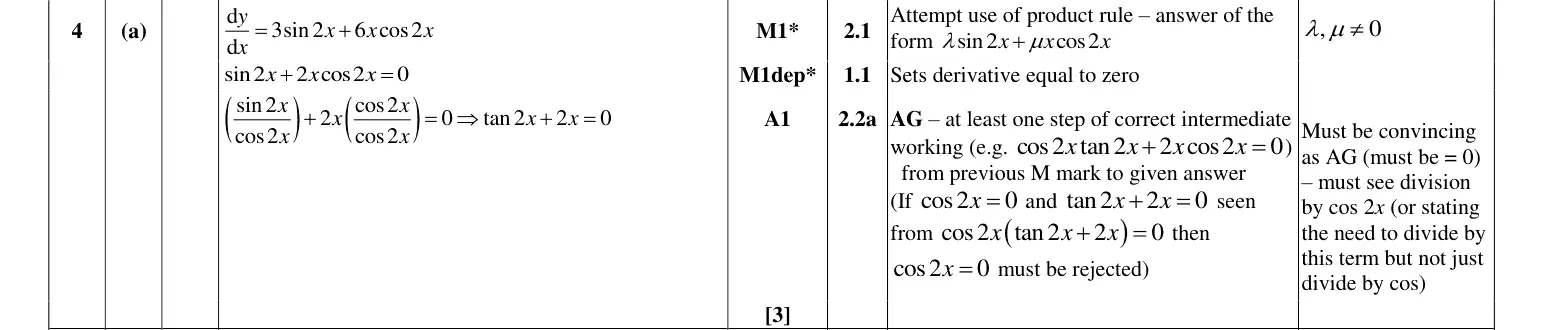
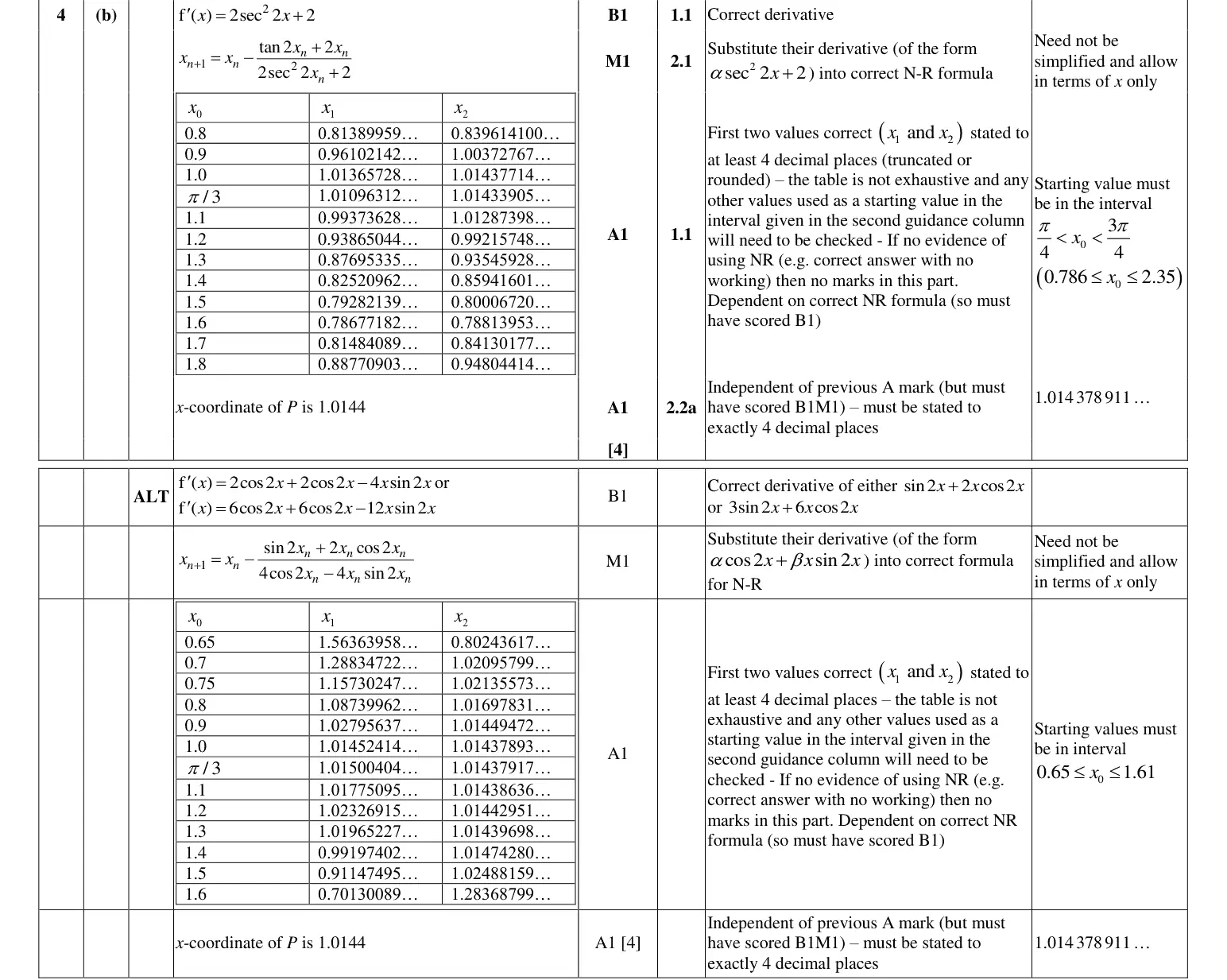
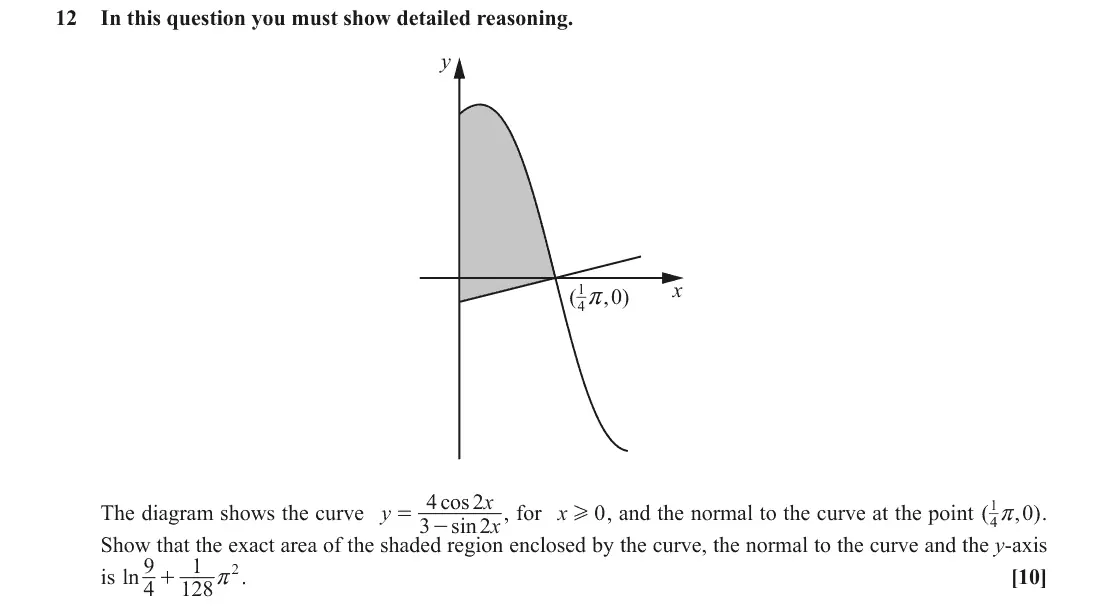
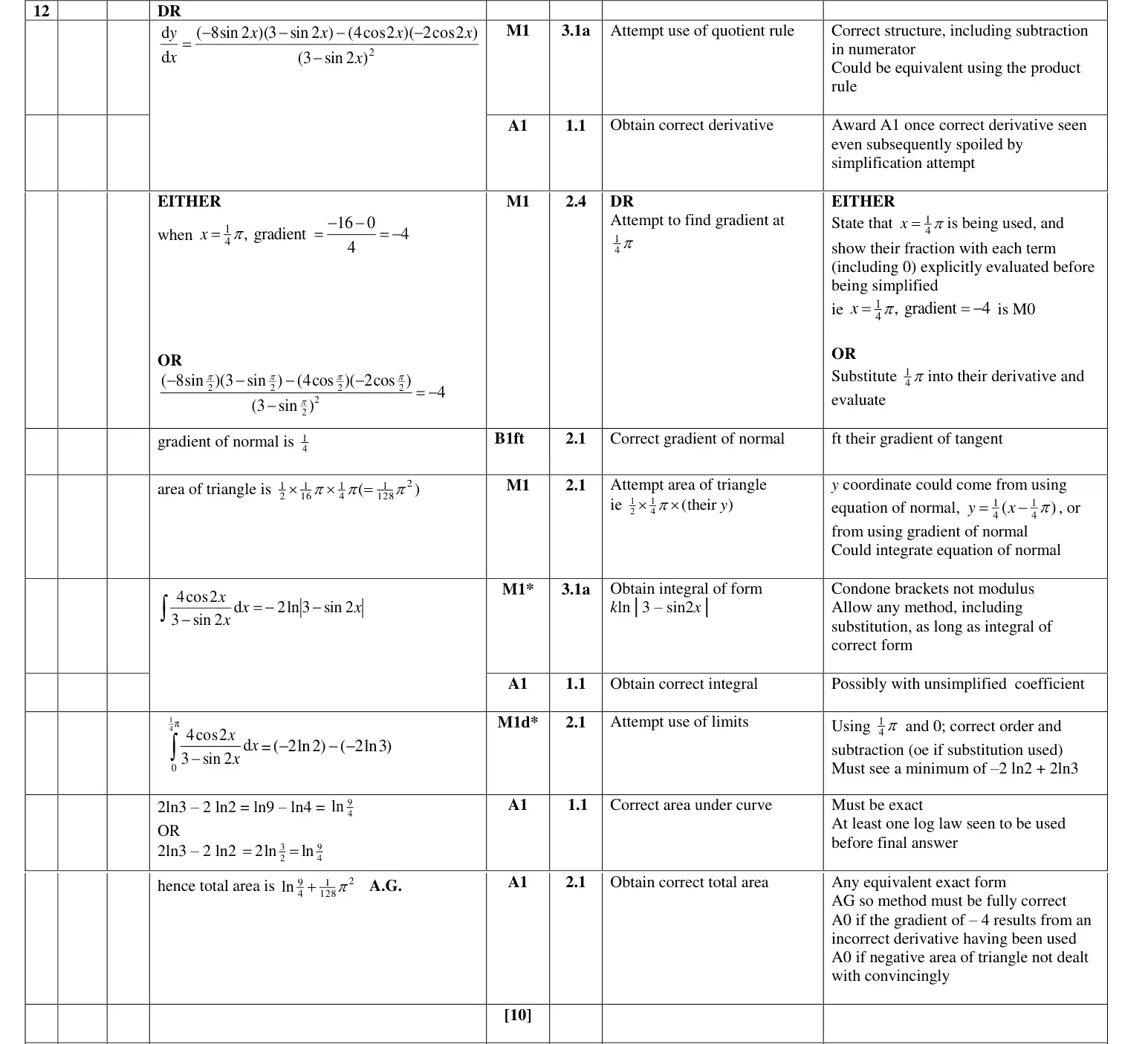
This was a question requiring detailed reasoning, so candidates were expected to show sufficient evidence of method throughout which not seen on all scripts. Candidates were generally successful when using the quotient rule to find the gradient of the curve. They were then expected to show evidence of finding the gradient at the given point; whilst some showed clear detail, others just stated the gradient with no justification. There were a variety of methods seen when finding the area of the triangle; the most common was to find the y intercept from the equation of the normal whereas others used integration. Some candidates identified that the 128π in the given answer must be the area of the triangle and attempted to fudge their answer to obtain this, in some cases deleting correct work and replacing it with a solution that was now worth less credit. Most candidates were able to correctly integrate the equation of the curve, some by inspection and others by using a substitution of their choosing. The limits were usually used correctly, but not all candidates provided sufficient evidence of use of logarithms before the appearance of ln 9 4 . This response gained full credit for a correct solution with sufficient justification seen throughout. The derivative is correct, and there is clear evidence of substitution to find the gradient at x = 1 4 π . Had the gradient of – 4 just been stated, but with no evidence, then this would have been penalised. The equation of the normal is used to find the intercept on the y-axis, and this is used to find the area of the triangle. The integration is also correct and limits are used correctly. There is then clear evidence of at least one log law being used to obtain the correct area under the curve. The two areas are then summed to justify the given answer.