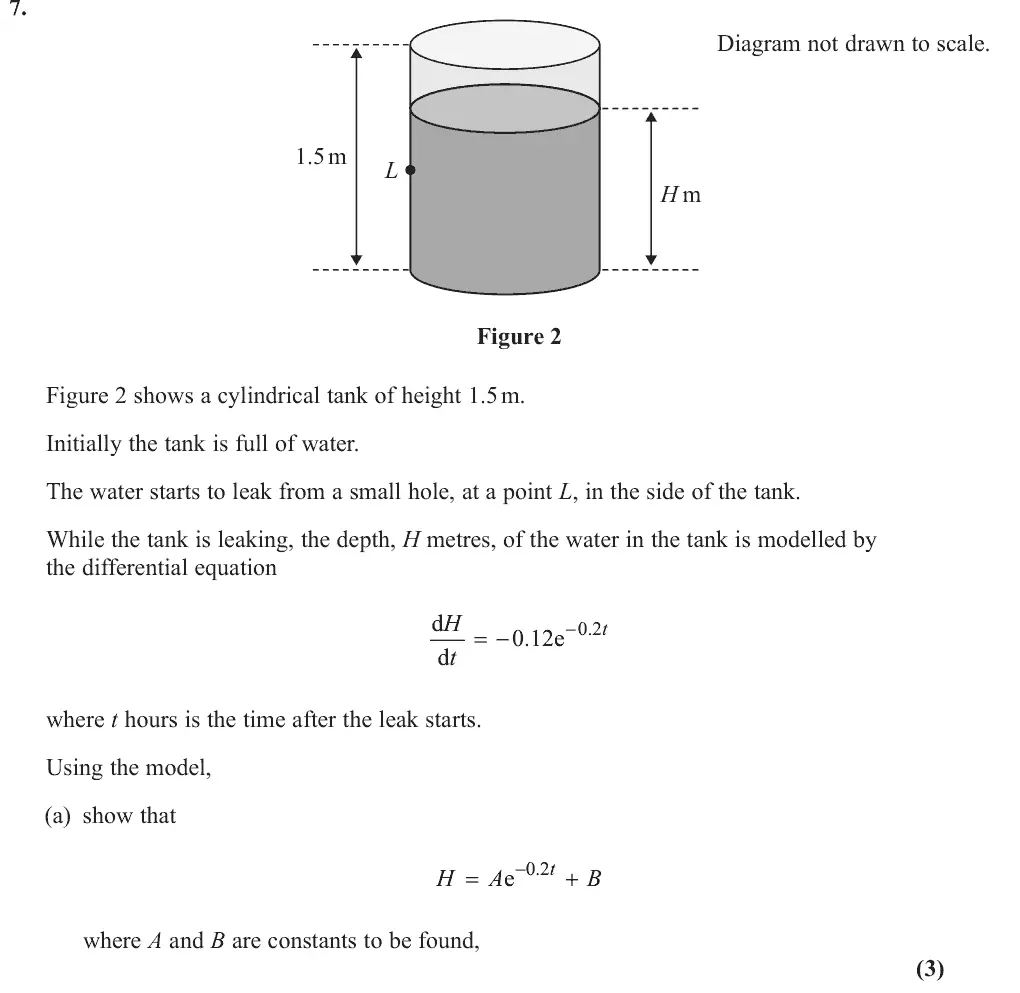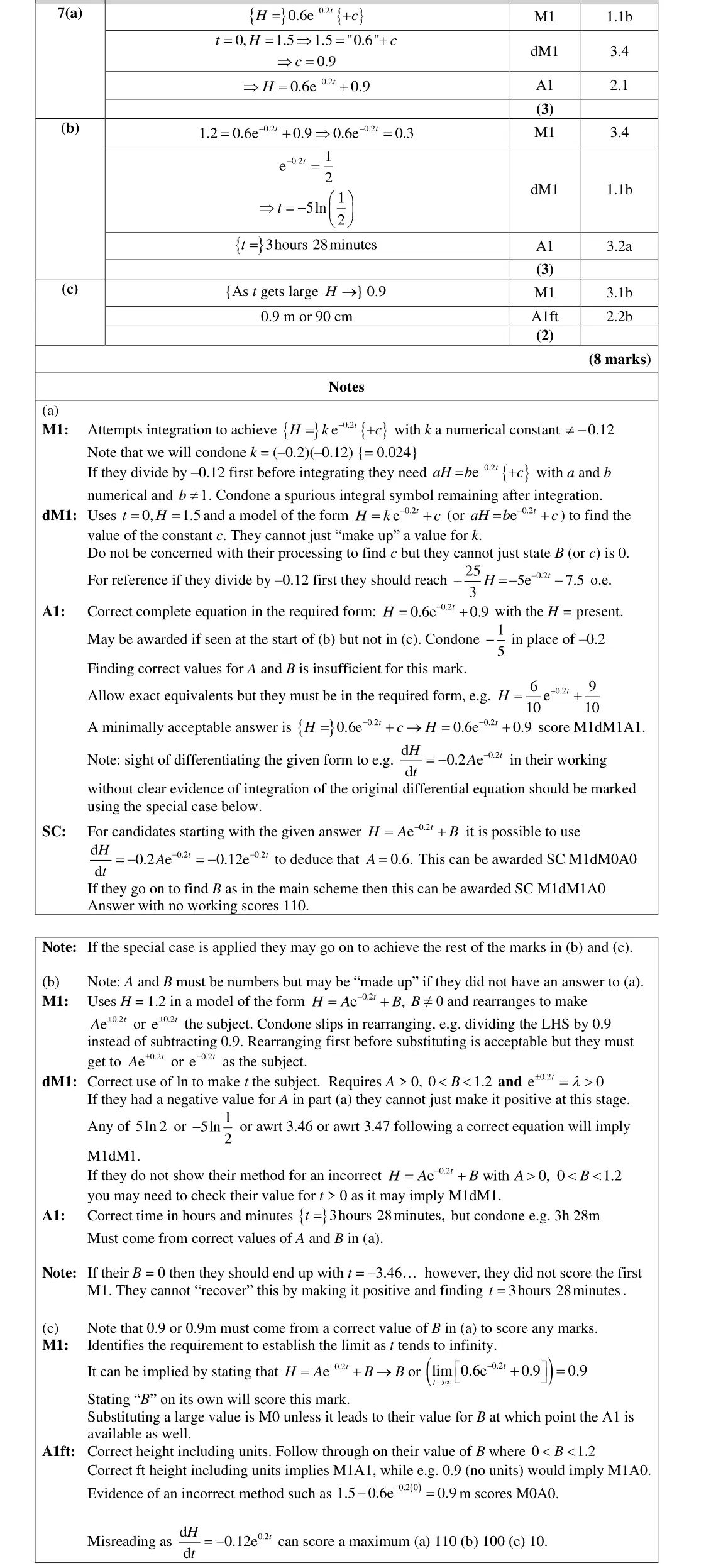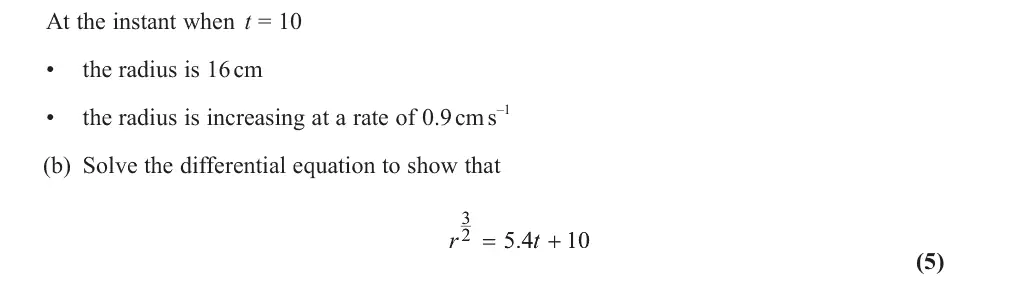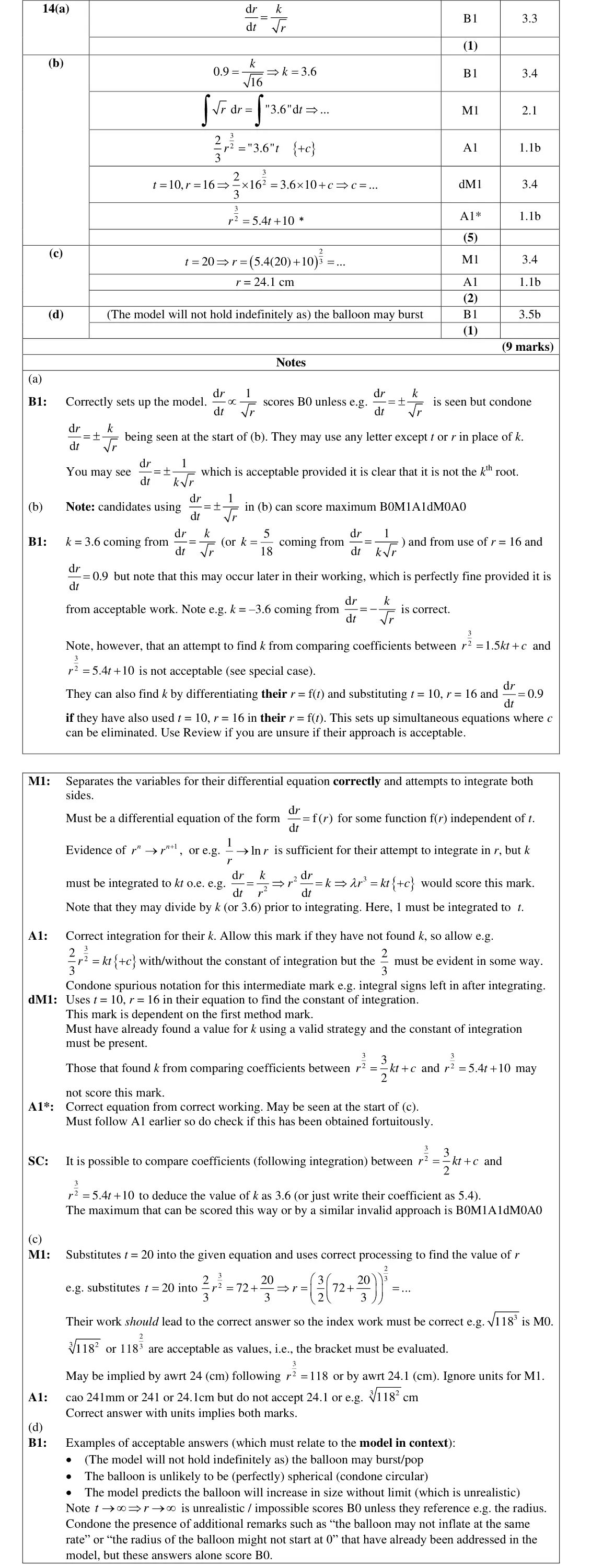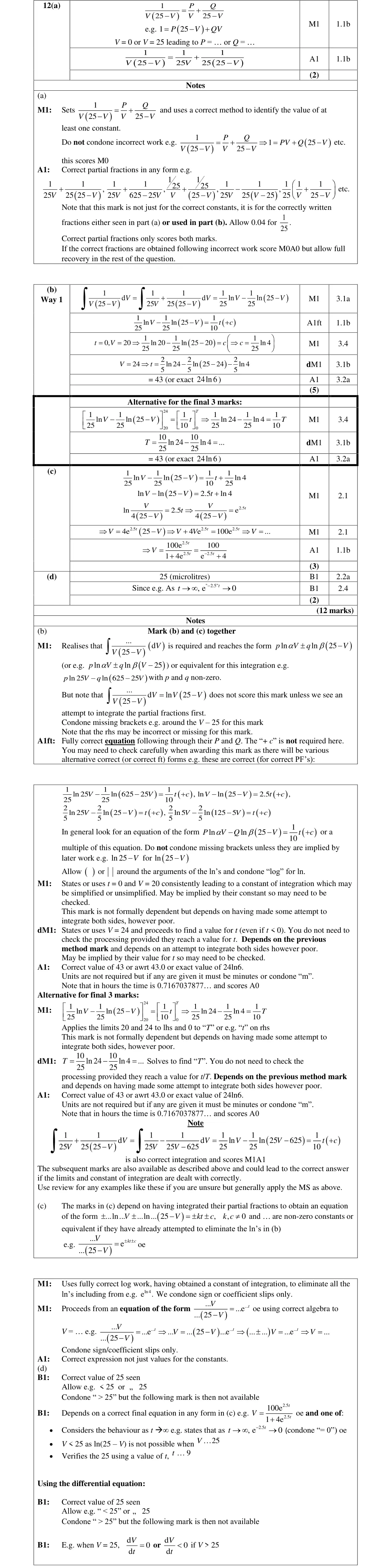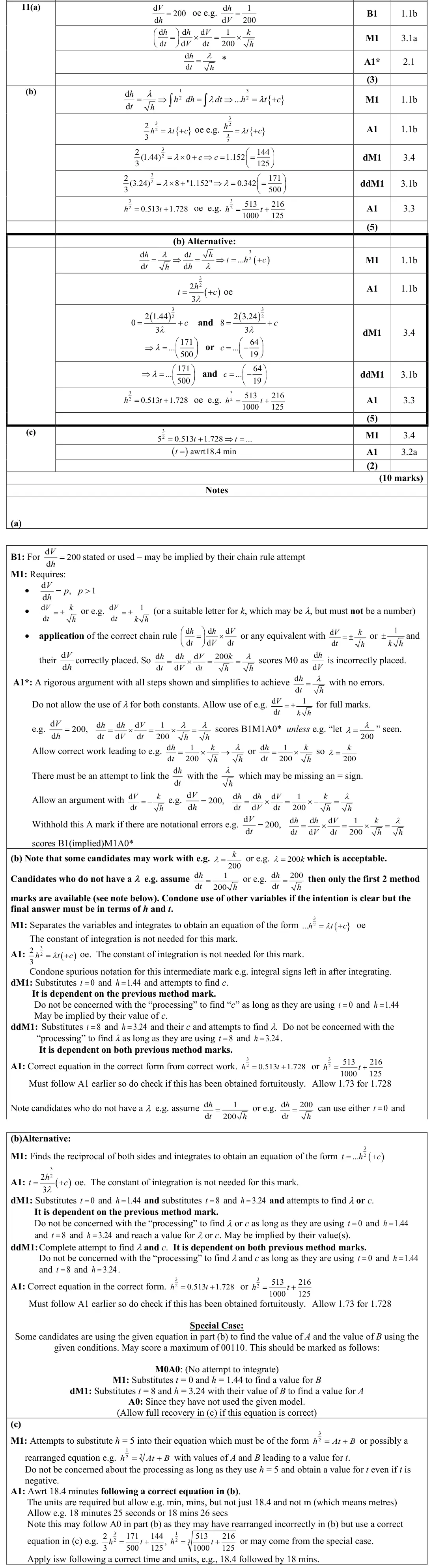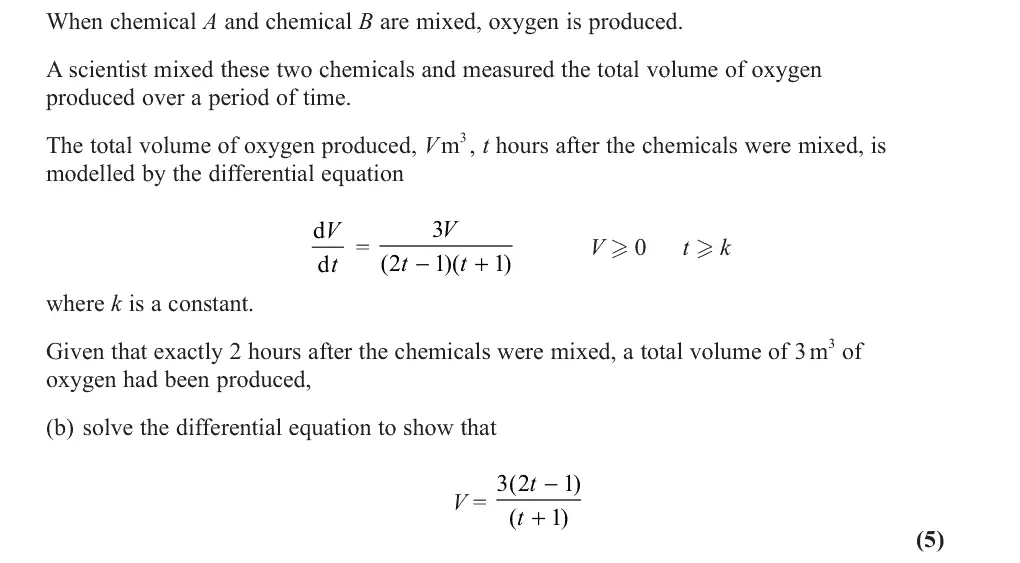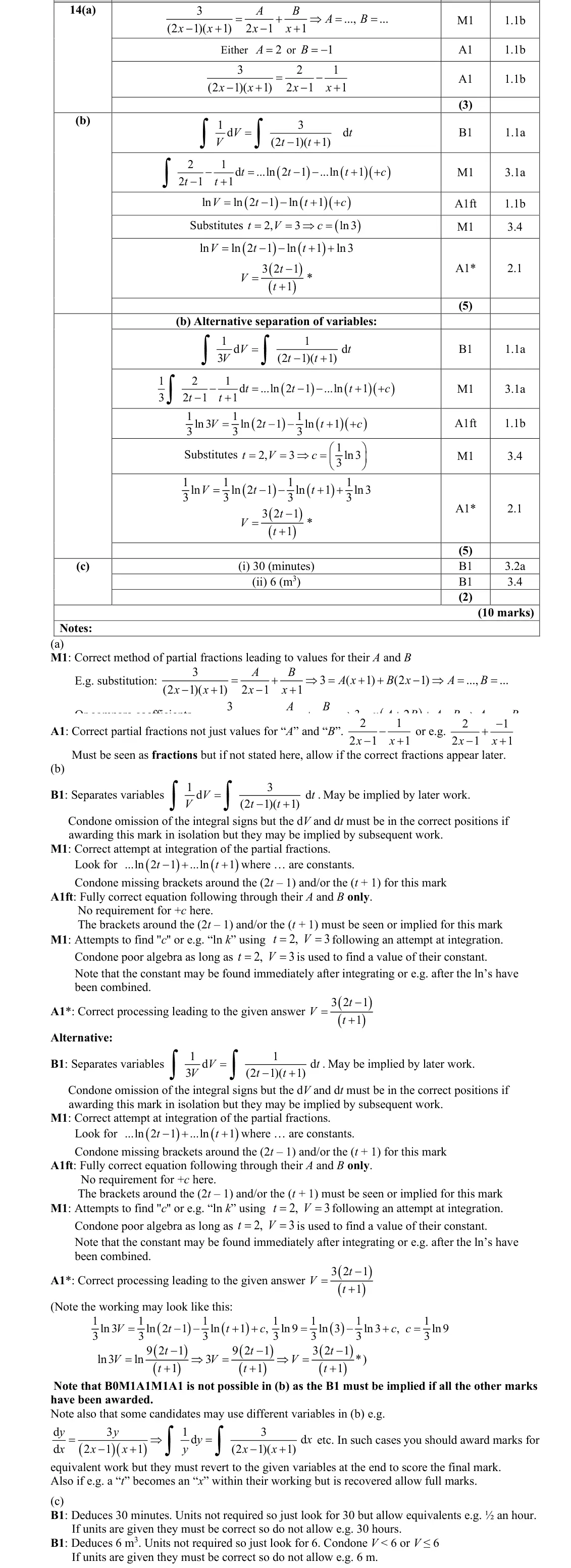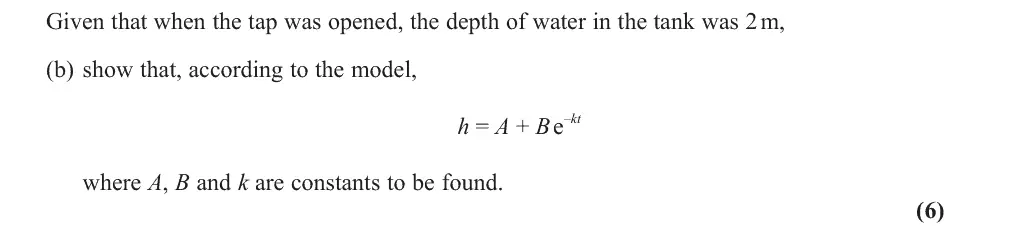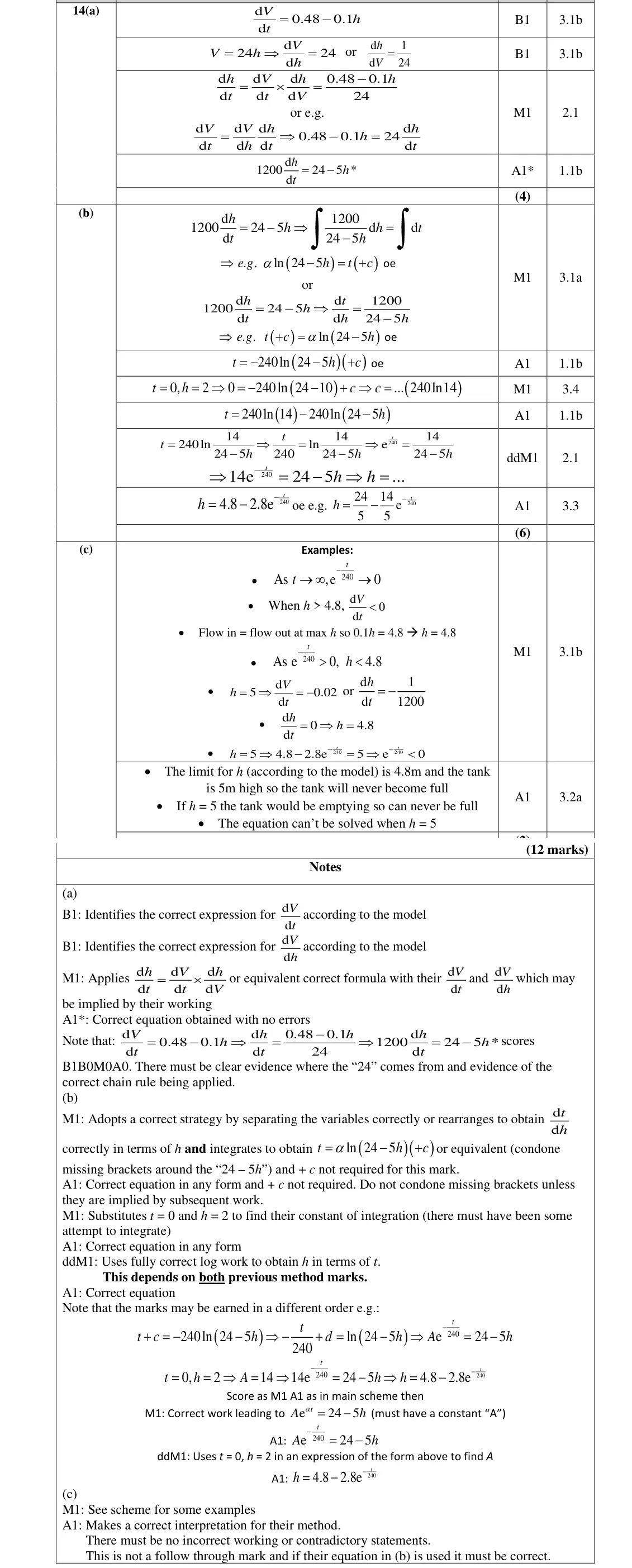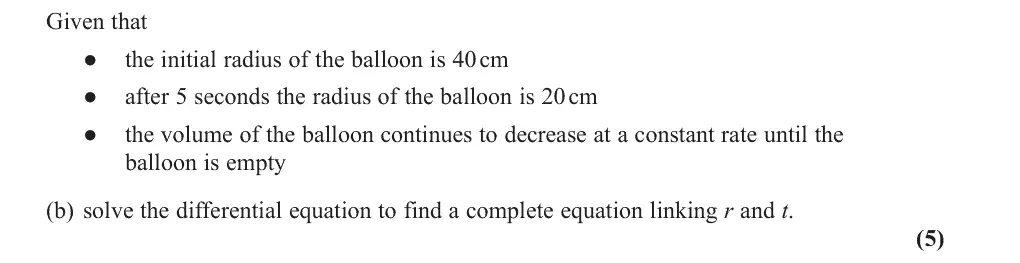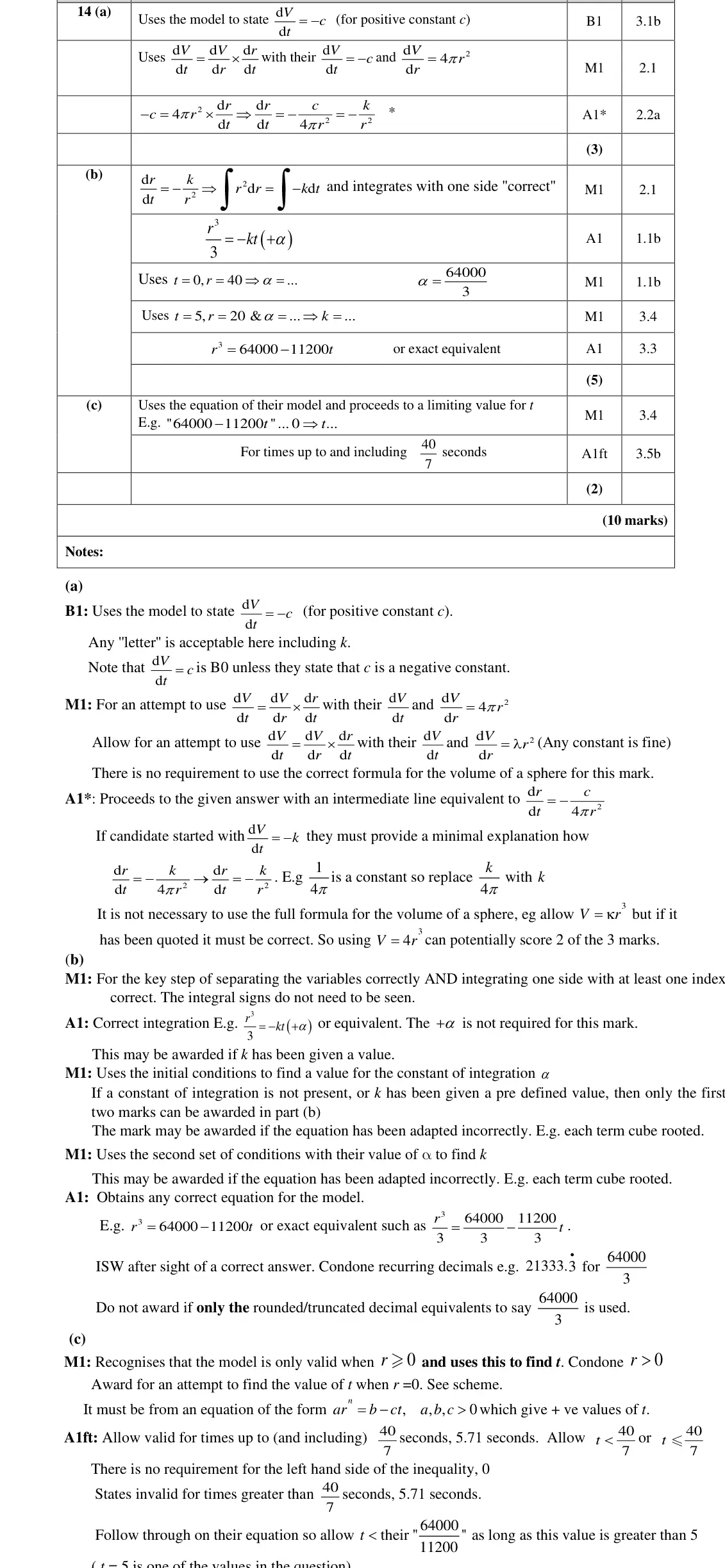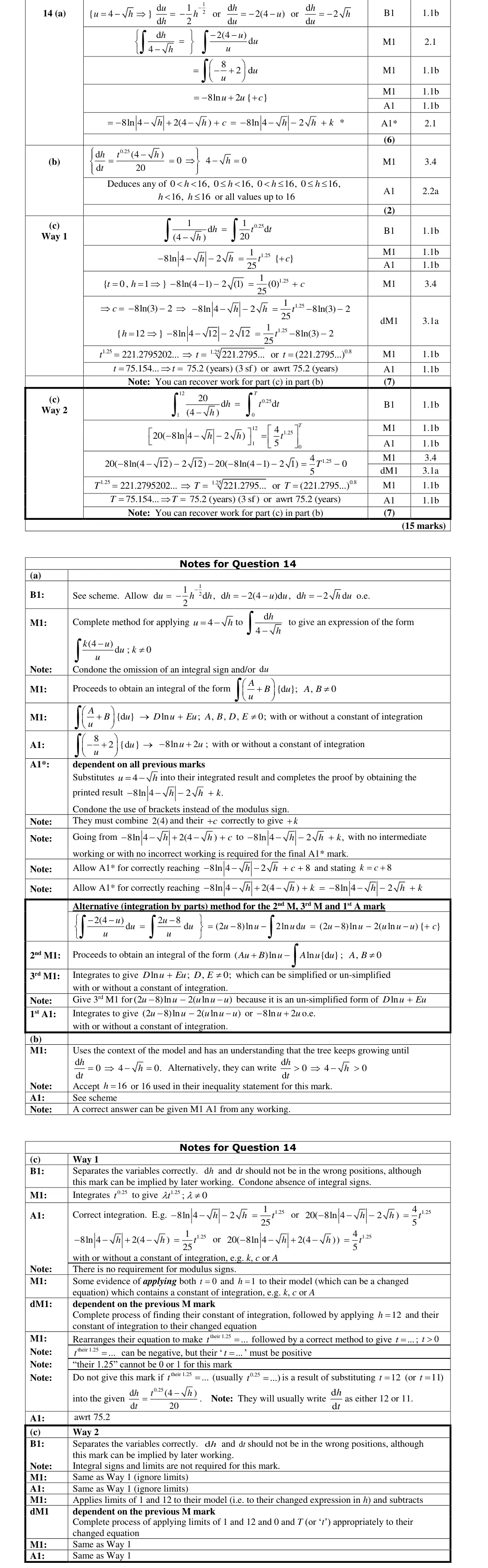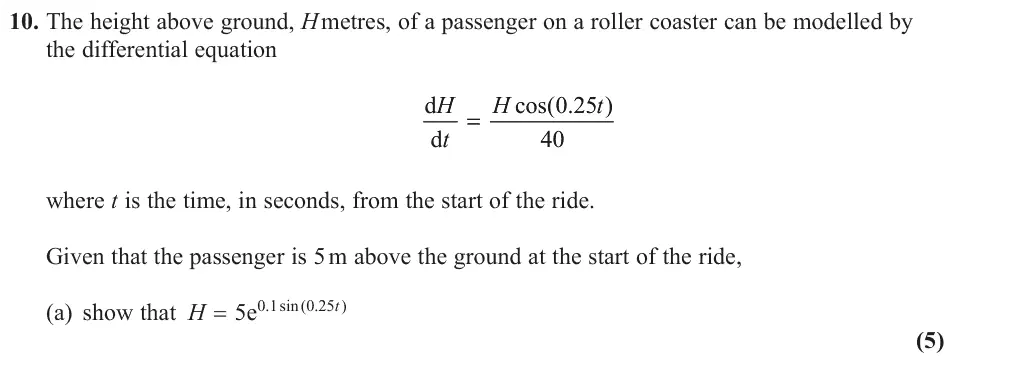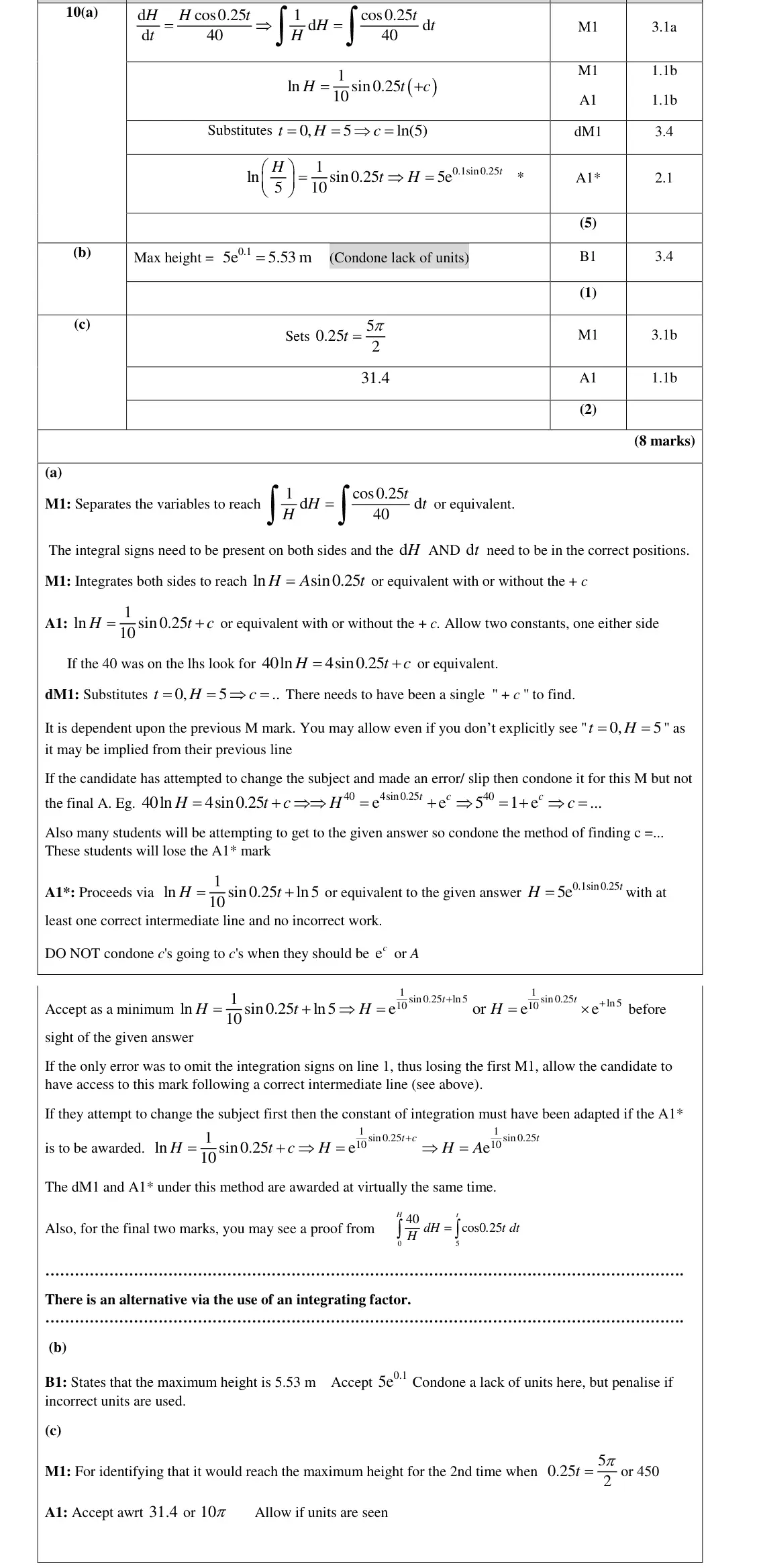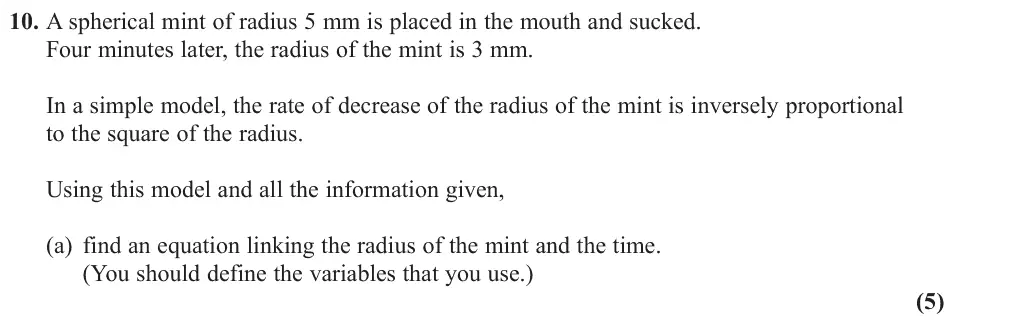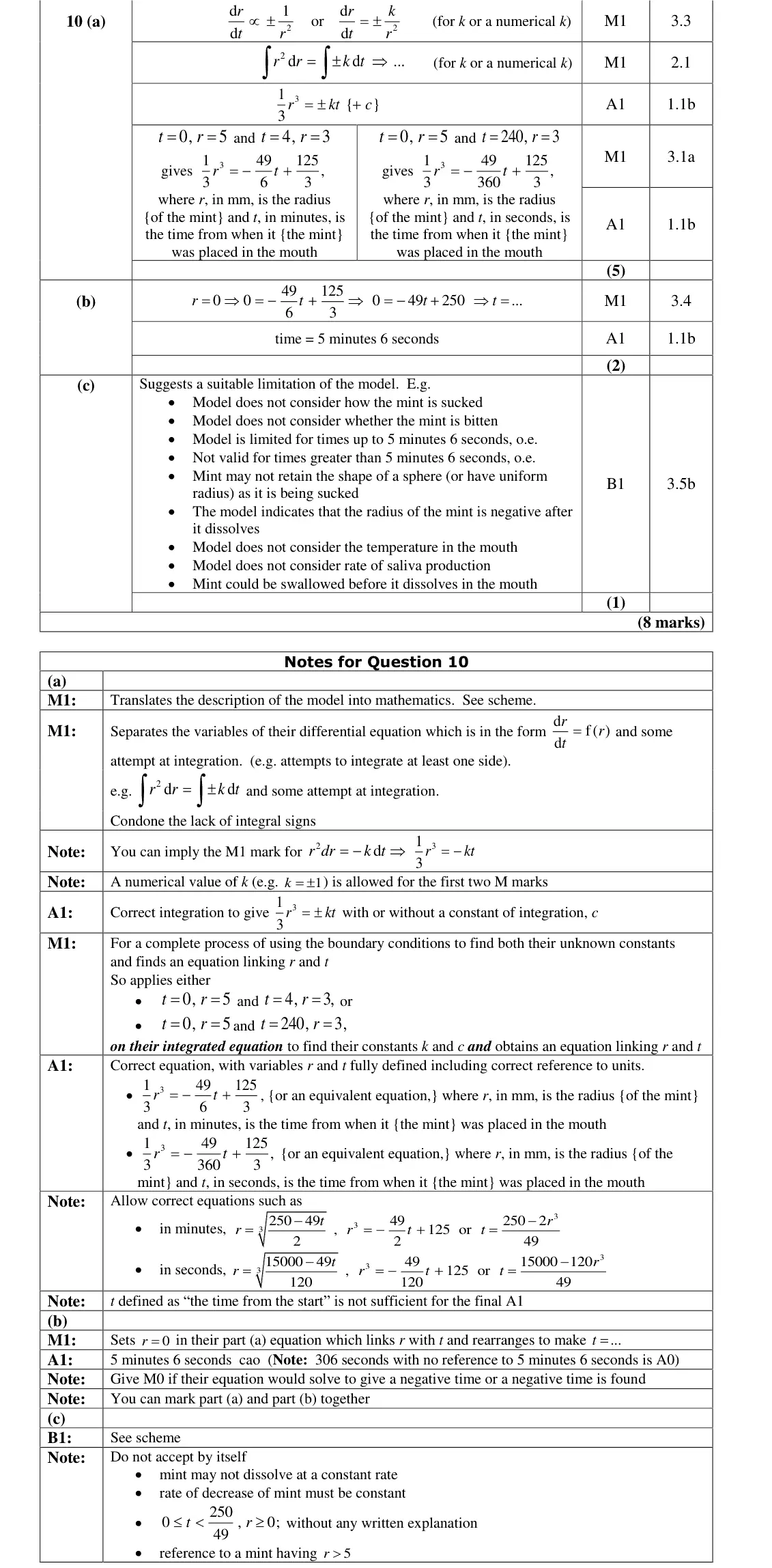
Mark scheme (whole question; this part is marked with the orange bar)
Examiner's comment
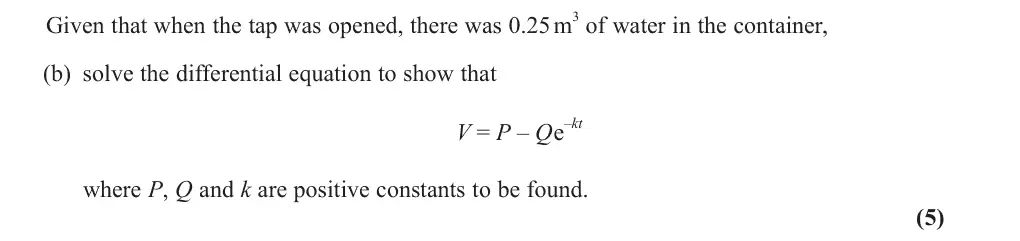
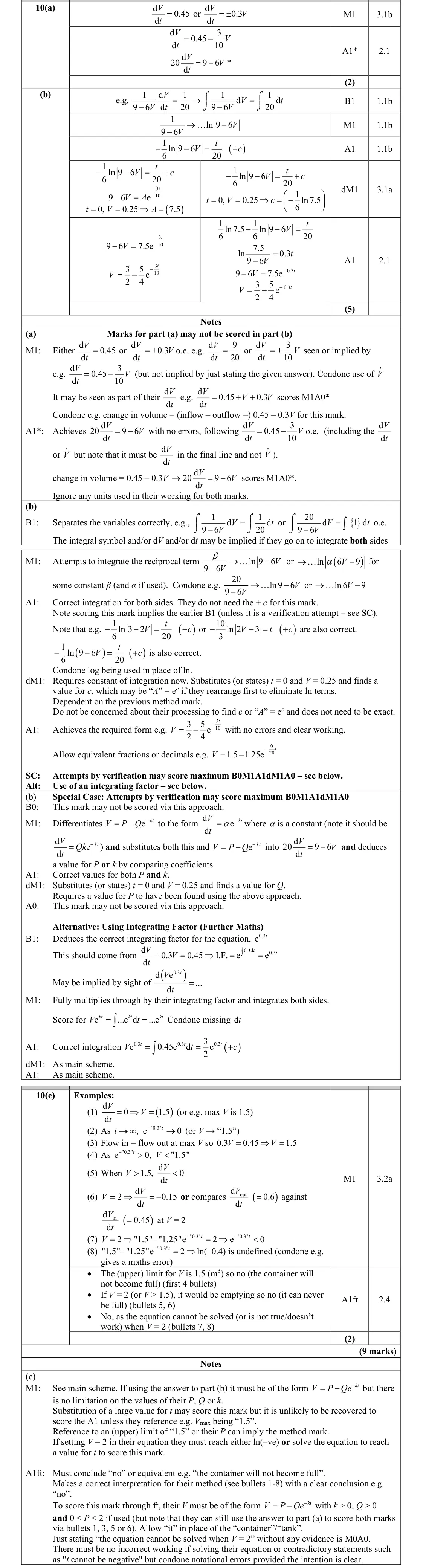
This question, which involved setting up and solving a differential equation using separation of variables, proved to discriminate across the cohort, with a wide range in quality of responses seen. The restart opportunities provided were well used, allowing many learners to access later parts of the question even if they had struggled in earlier parts. In part (b), some learners recognised the need to separate the variables and were able to do this successfully. A significant number placed the 20 incorrectly and others struggled to separate correctly into the reciprocal form which limited access to further marks. Those who separated the variables were generally able to score the method mark for the integration at the beginning of the process. Common mistakes were omitting the 1 6 - , not including the minus sign or multiplying by –6. Most learners included a constant of integration, and most learners recognised the need to use the given initial conditions to find it - those who made it this far generally made the correct substitution of V = 0.25 and t = 0 and obtained a value for the constant. The final mark proved challenging for many, with errors in rearranging their equation to the given form being particularly common. Many struggled with the logarithm work, not applying sum/product or difference/quotient rules correctly, often taking e to the power of individual terms rather than the whole expression on each side of the equation.
Common mistakes
- separate correctly: ∫ 1/(9 − 6V) dV = ∫ 1/20 dt
- −⅙ ln(9 − 6V) (missing −⅙ or sign)
- use t = 0, V = 0.25 for the constant
- exponentiate the whole of each side, not term by term
- V = 3/2 − (5/4)e^(−0.3t)