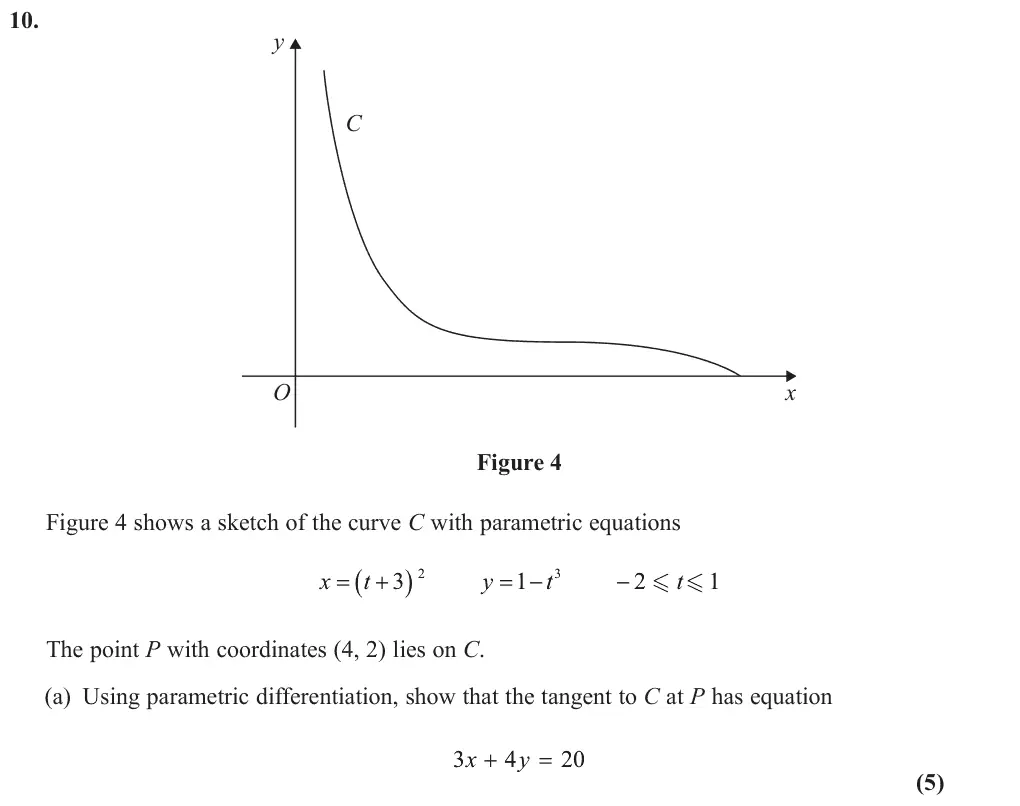
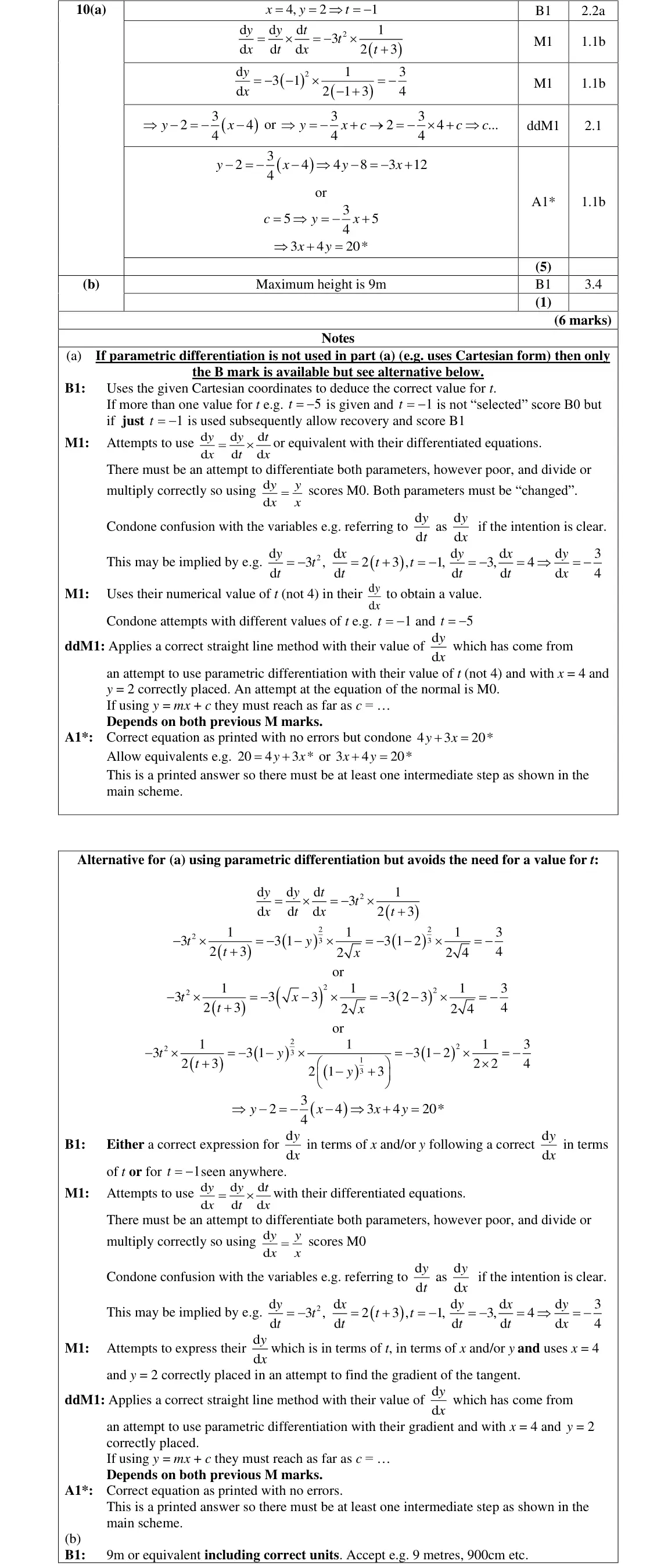
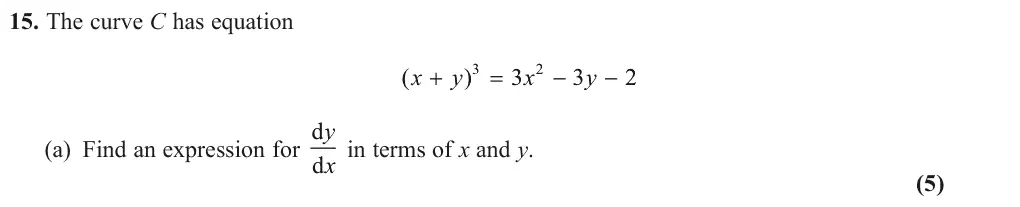
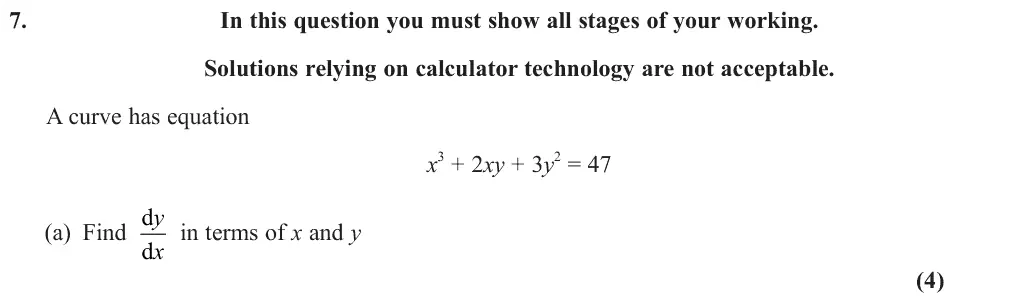
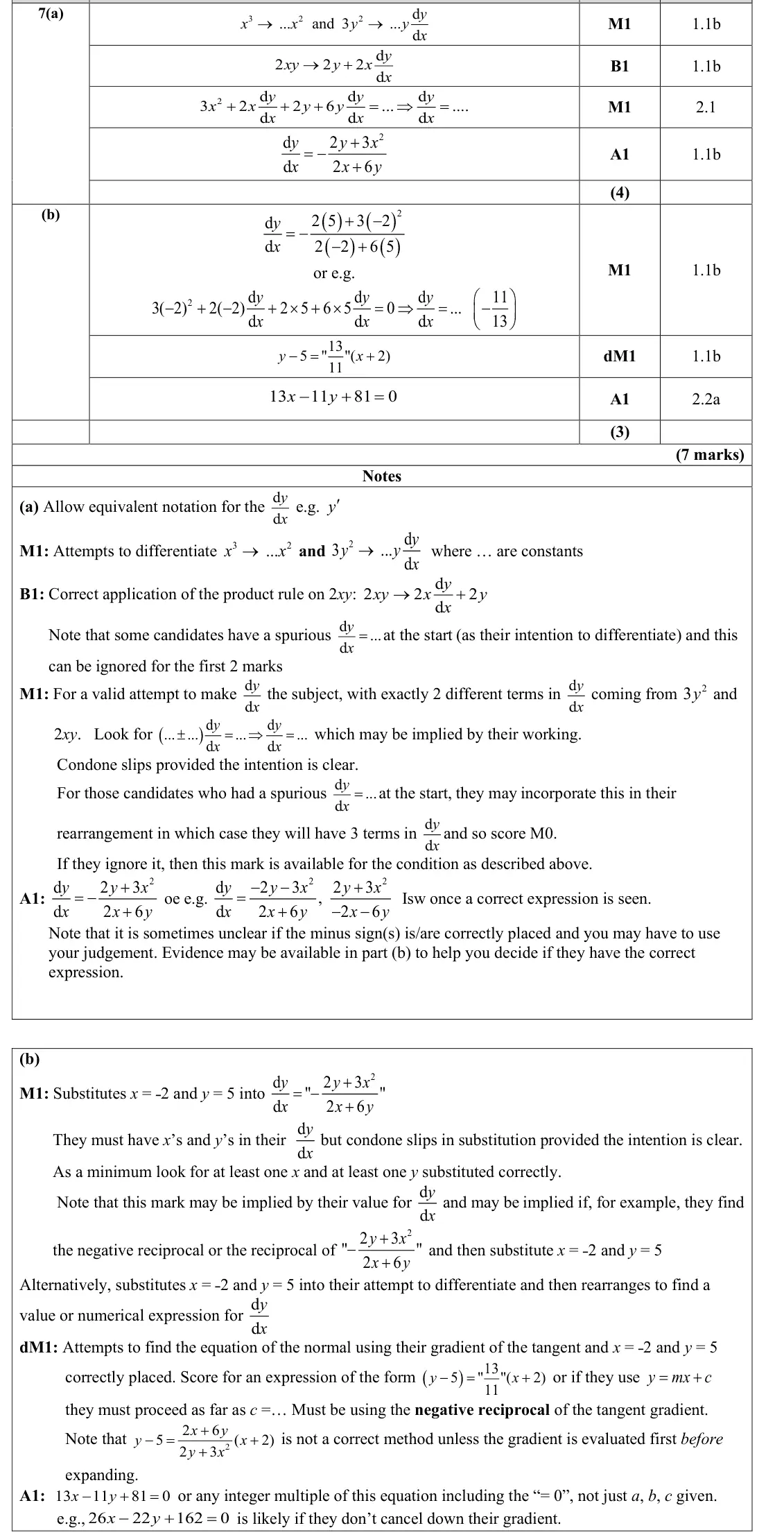
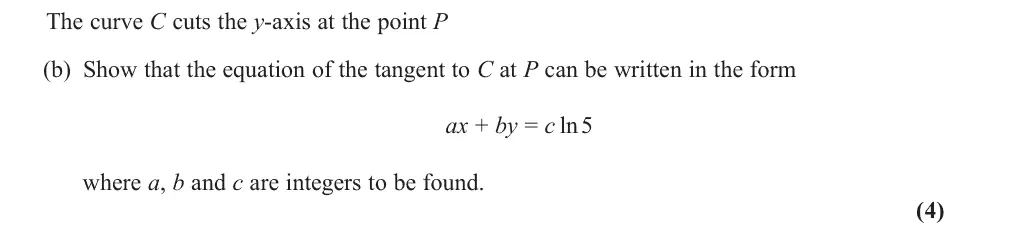
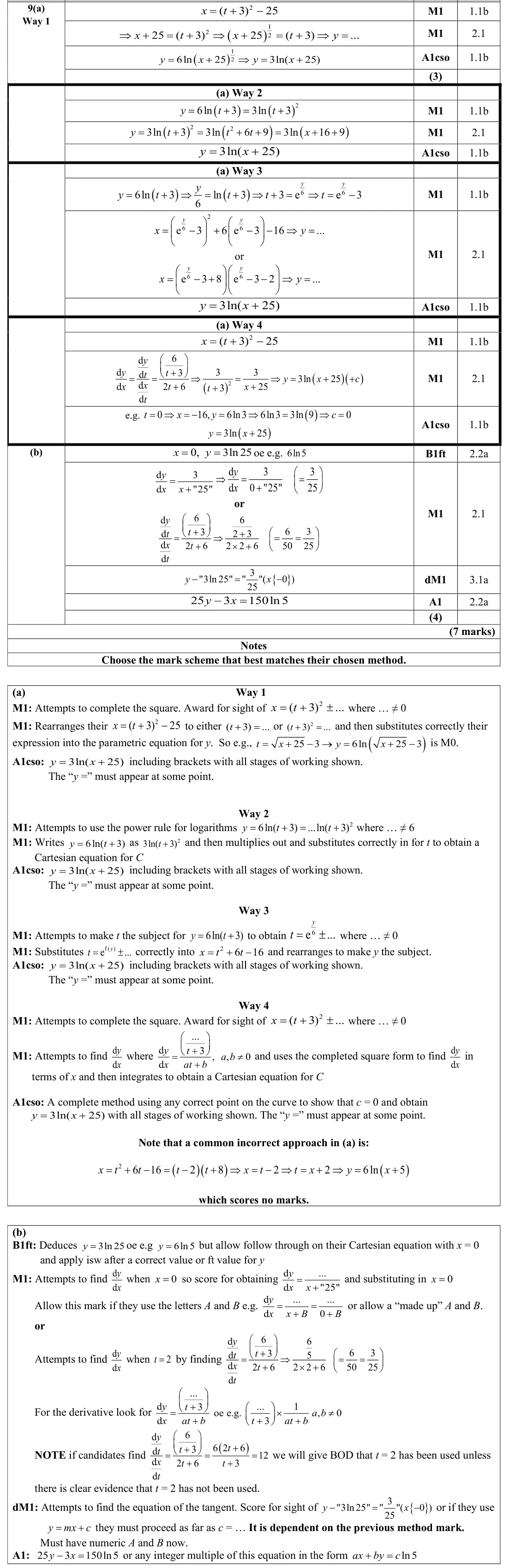
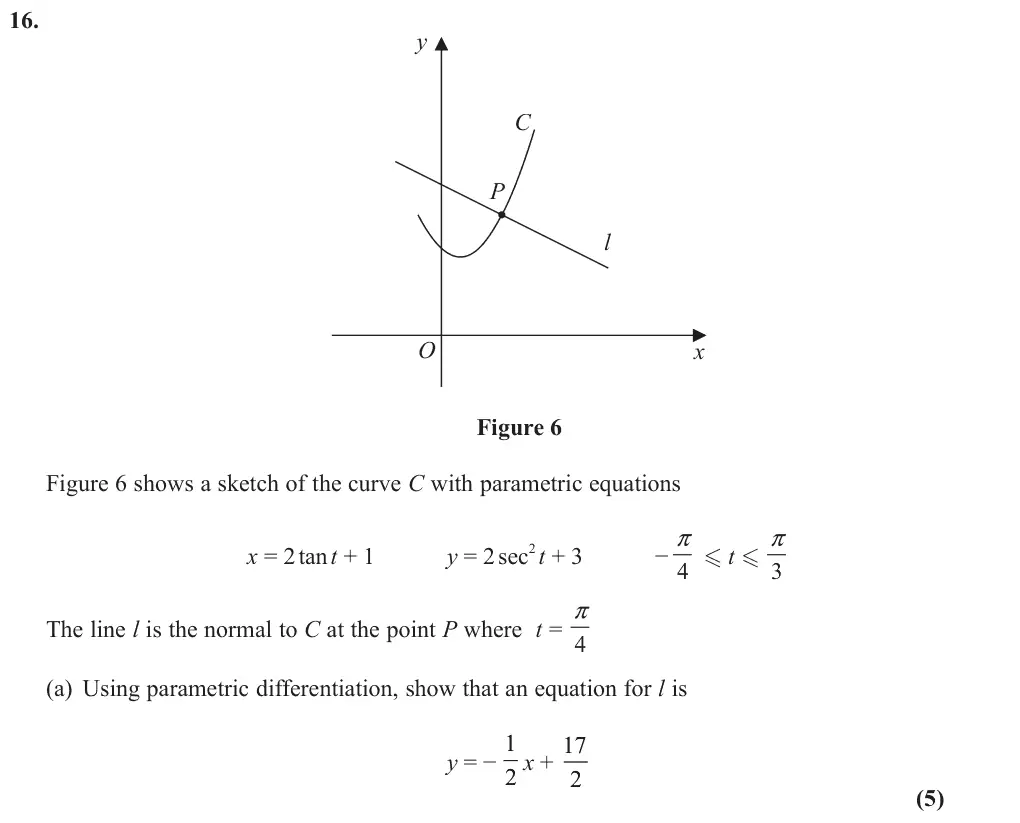
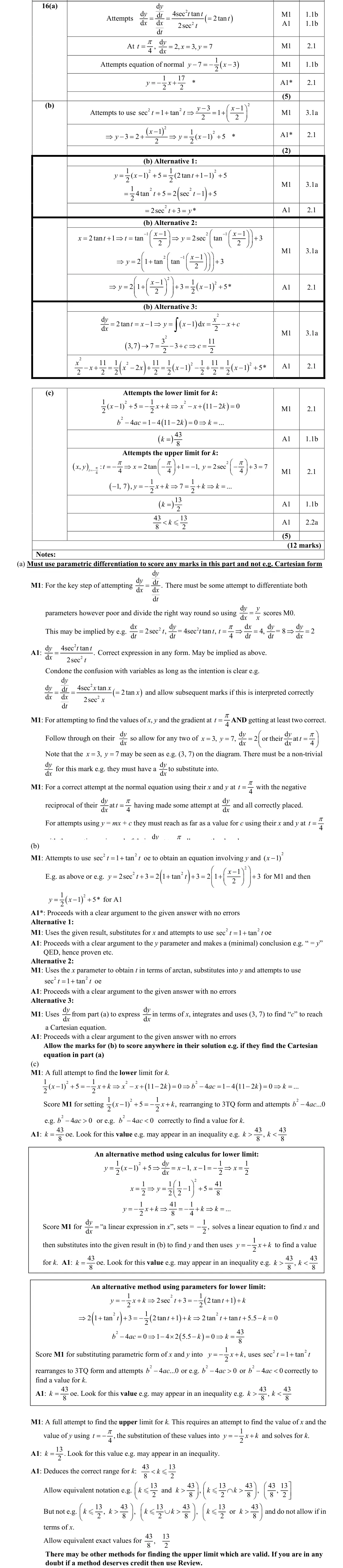
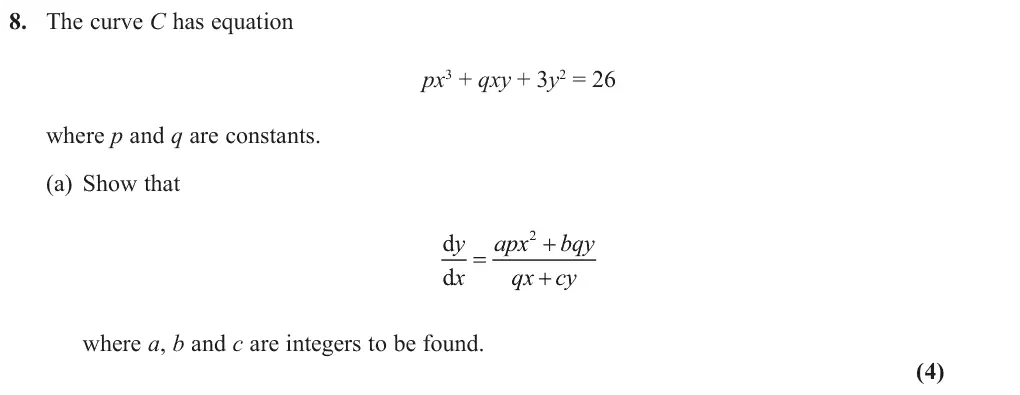
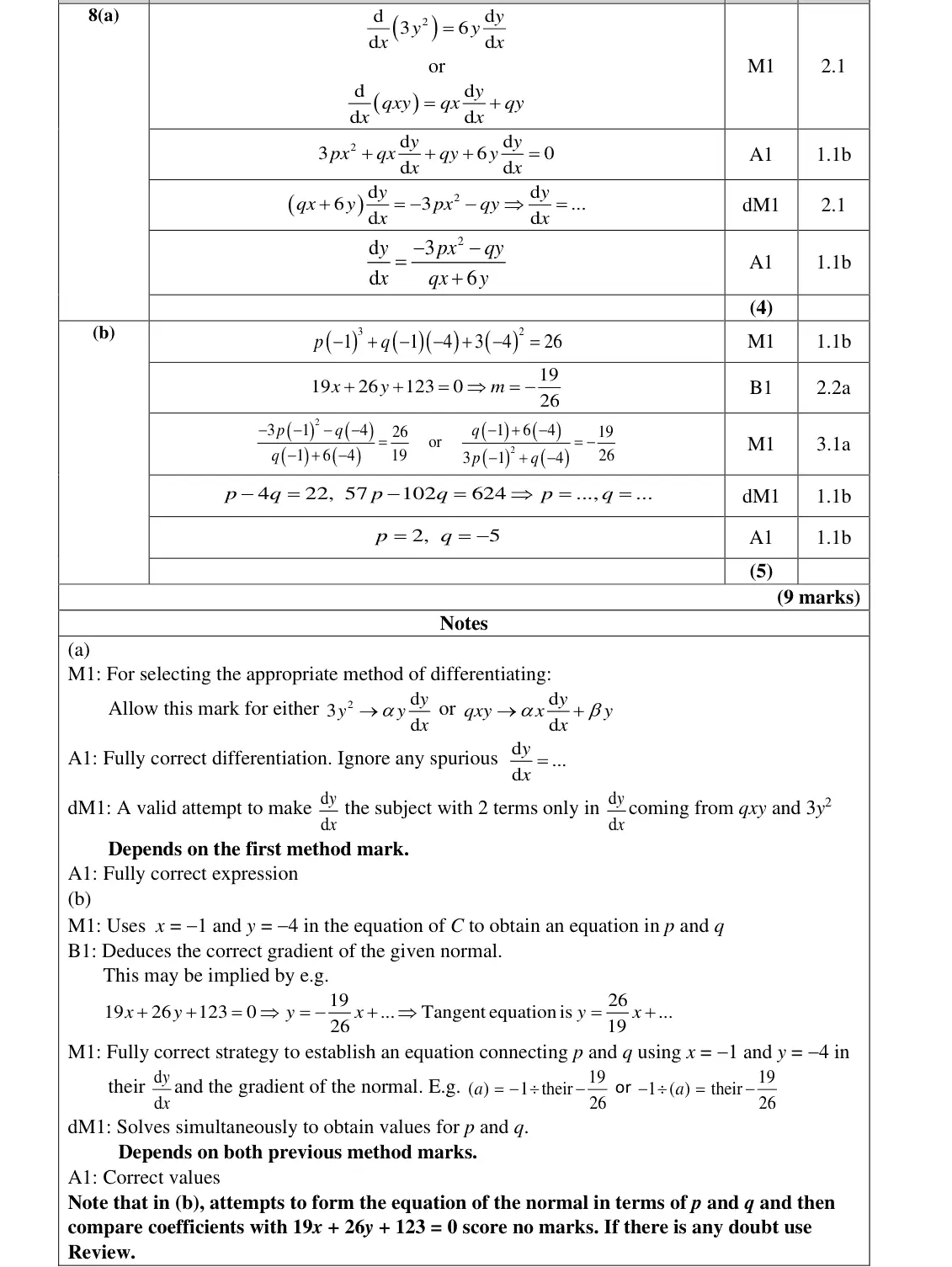
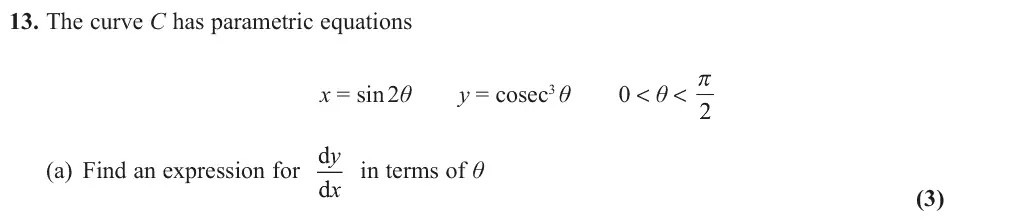
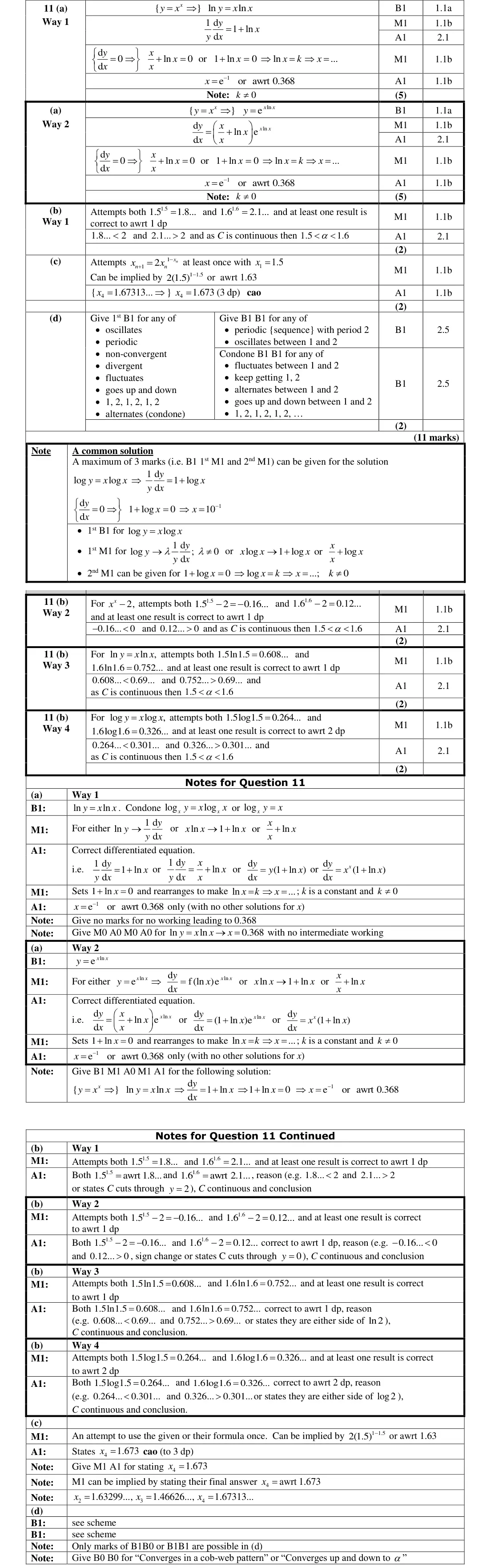
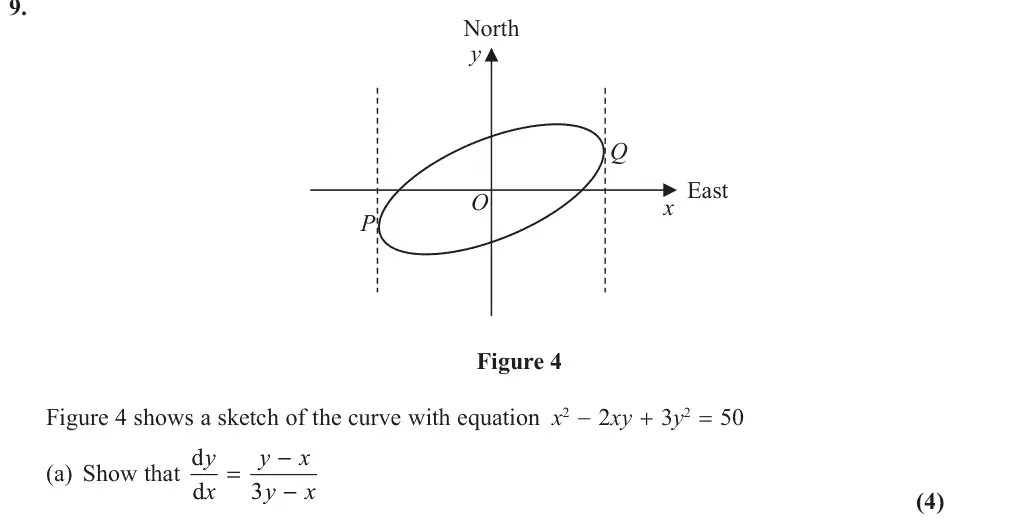
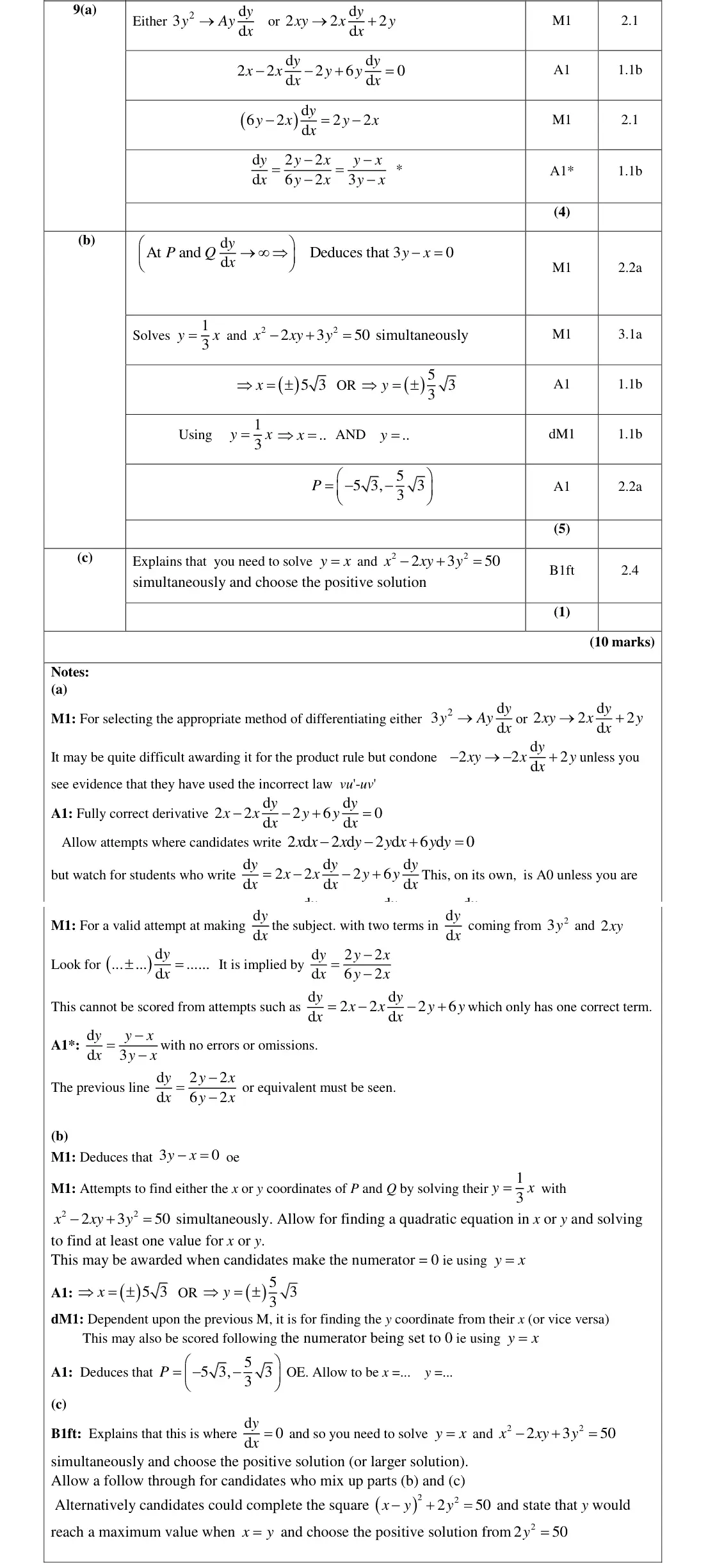
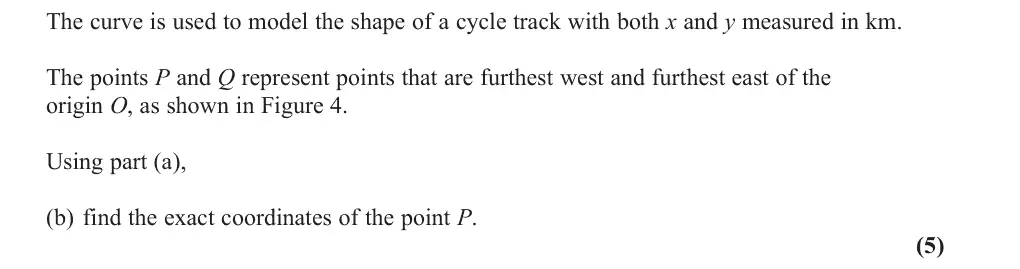
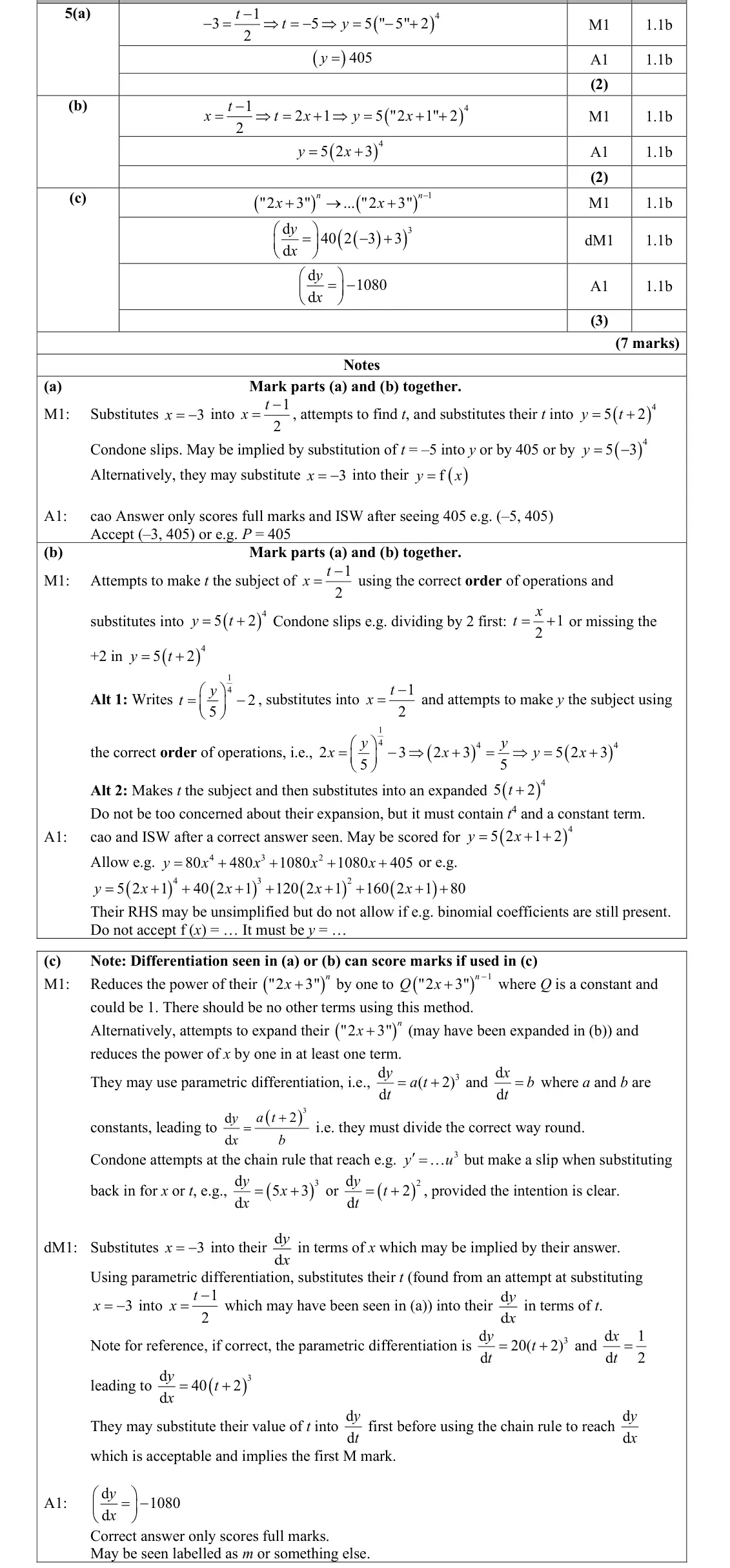
Mark scheme (whole question; this part is marked with the orange bar)
Examiner's comment
This question involved a simple parametric equation, and learners generally performed very well across all three parts. The structure of the question offered a steady progression through substitution, rearranging and then differentiating, with each part building on the previous one. This allowed learners to approach each part confidently, with the majority performing well in parts (a) and (b), even if they did encounter difficulties with part (c). Part (c) was the most variable in terms of performance. Learners who applied the chain rule to differentiate the Cartesian equation generally did well. Those who attempted parametric differentiation were more prone to errors, especially in dividing derivatives in the wrong order d d d d x y t t ÷ or multiplying by 1 2 instead of dividing by 1 2 or substituting x = -3 instead of the correct t value. Responses that tried to expand their cartesian equation from (b) tended to make errors in accuracy in their expansion. Quite a few responses did not recognise that x was a simple linear function of t and used approaches such as the quotient rule, often incorrectly. A very small number did not link the idea of finding the gradient to differentiation at all and instead attempted to use a linear method such as y = mx + c, which gained no credit.
Common mistakes
- chain rule on 5(2x + 3)⁴ then x = −3
- parametric route: dy/dx = (dy/dt) ÷ (dx/dt) = 40(t + 2)³ with t = −5, not x = −3
- dividing the wrong way round or multiplying by ½
- answer −1080