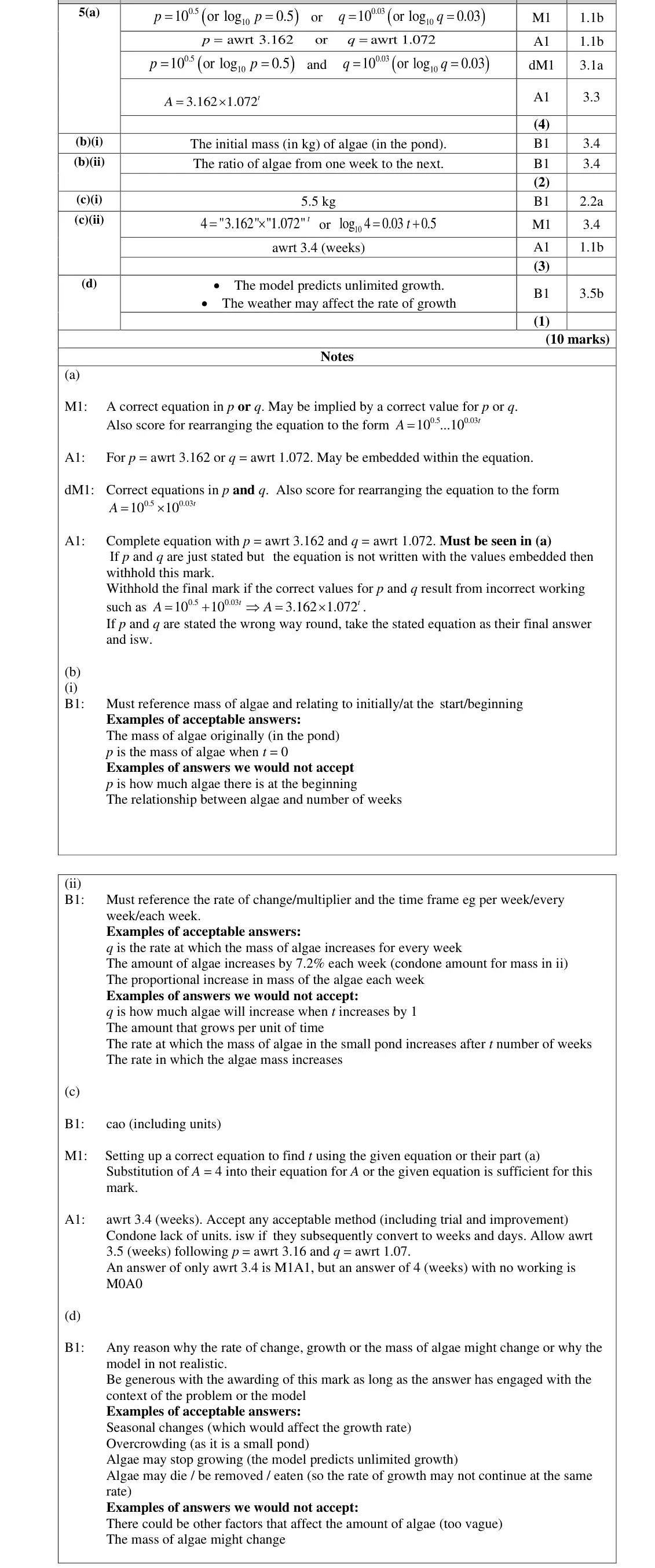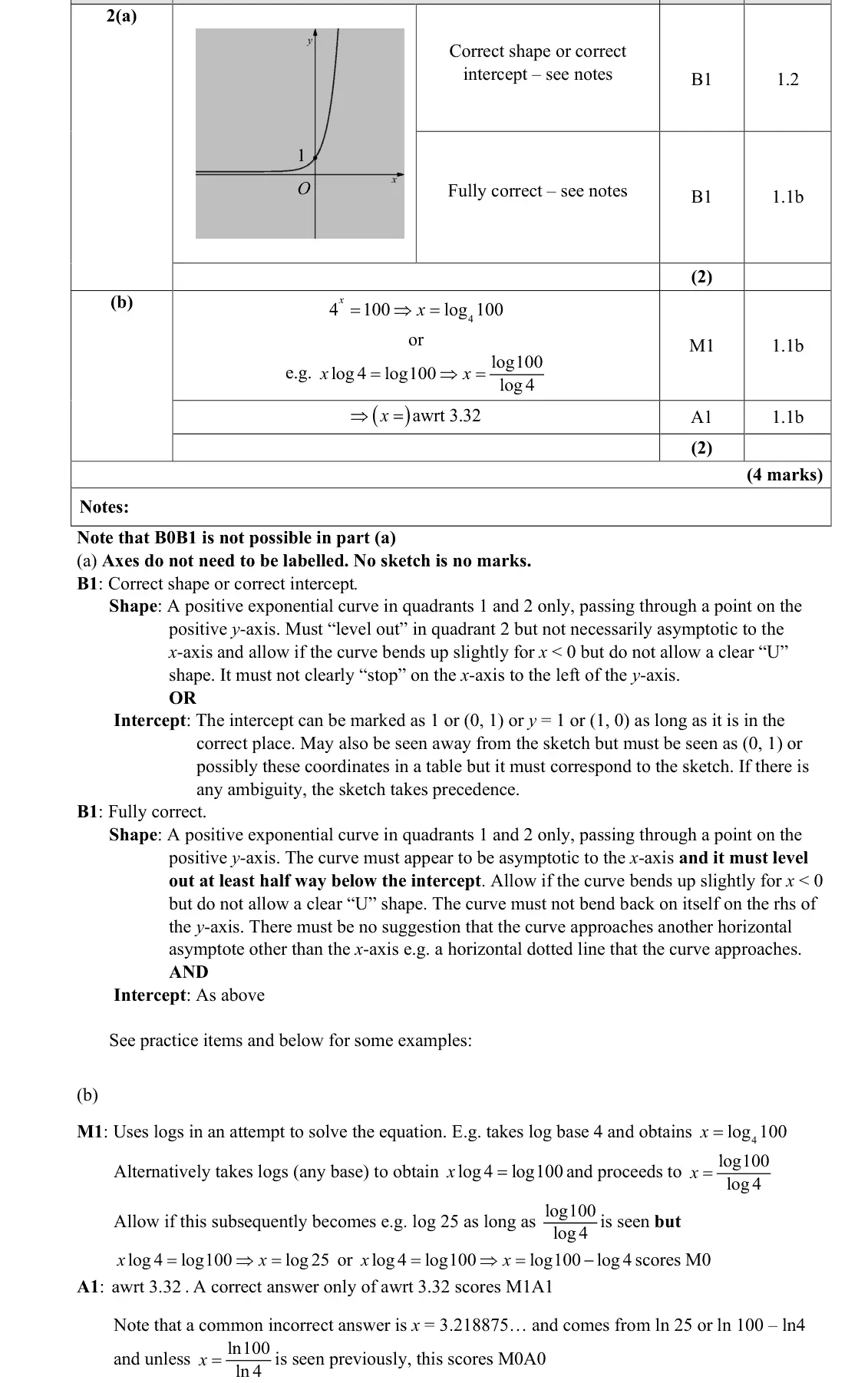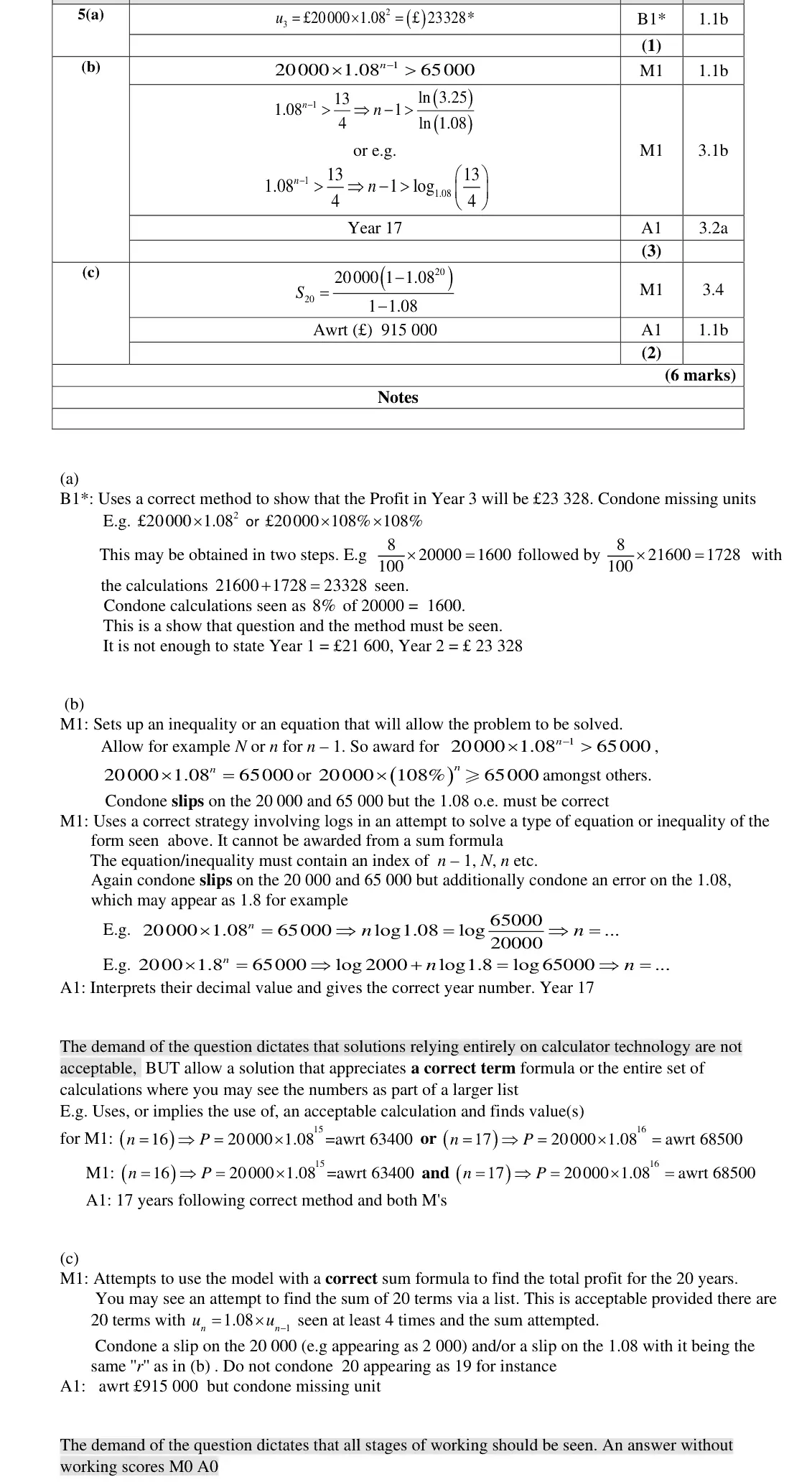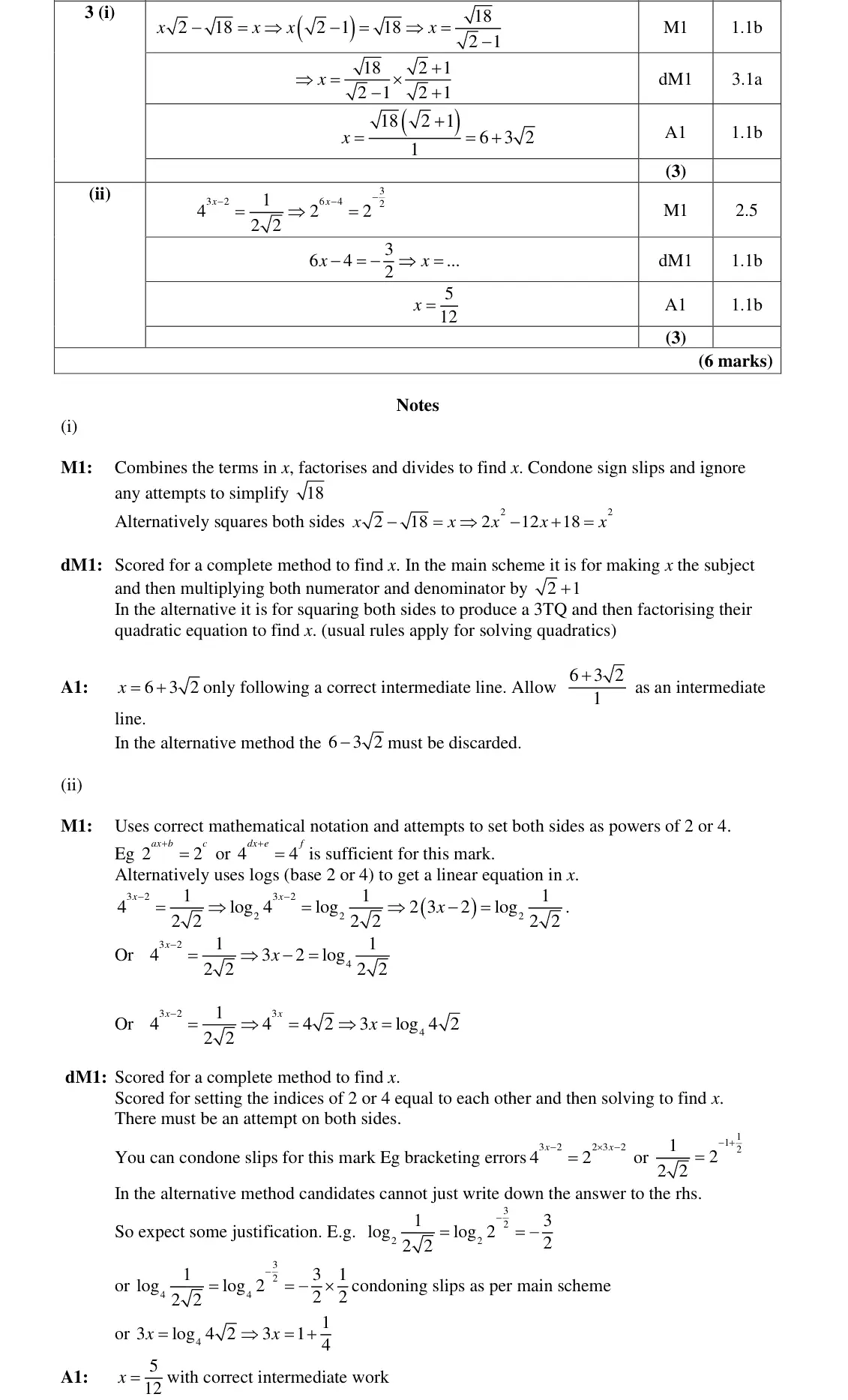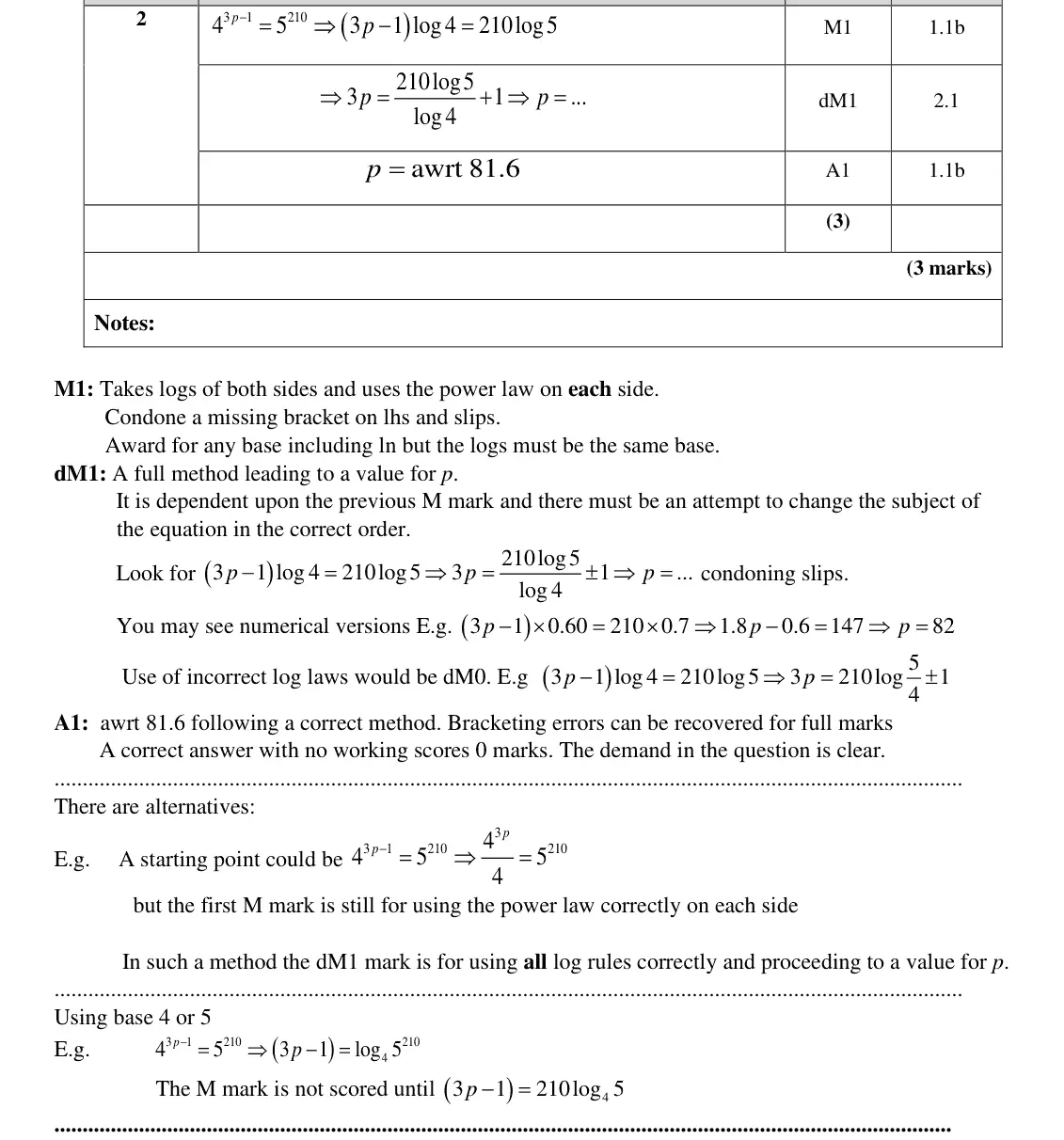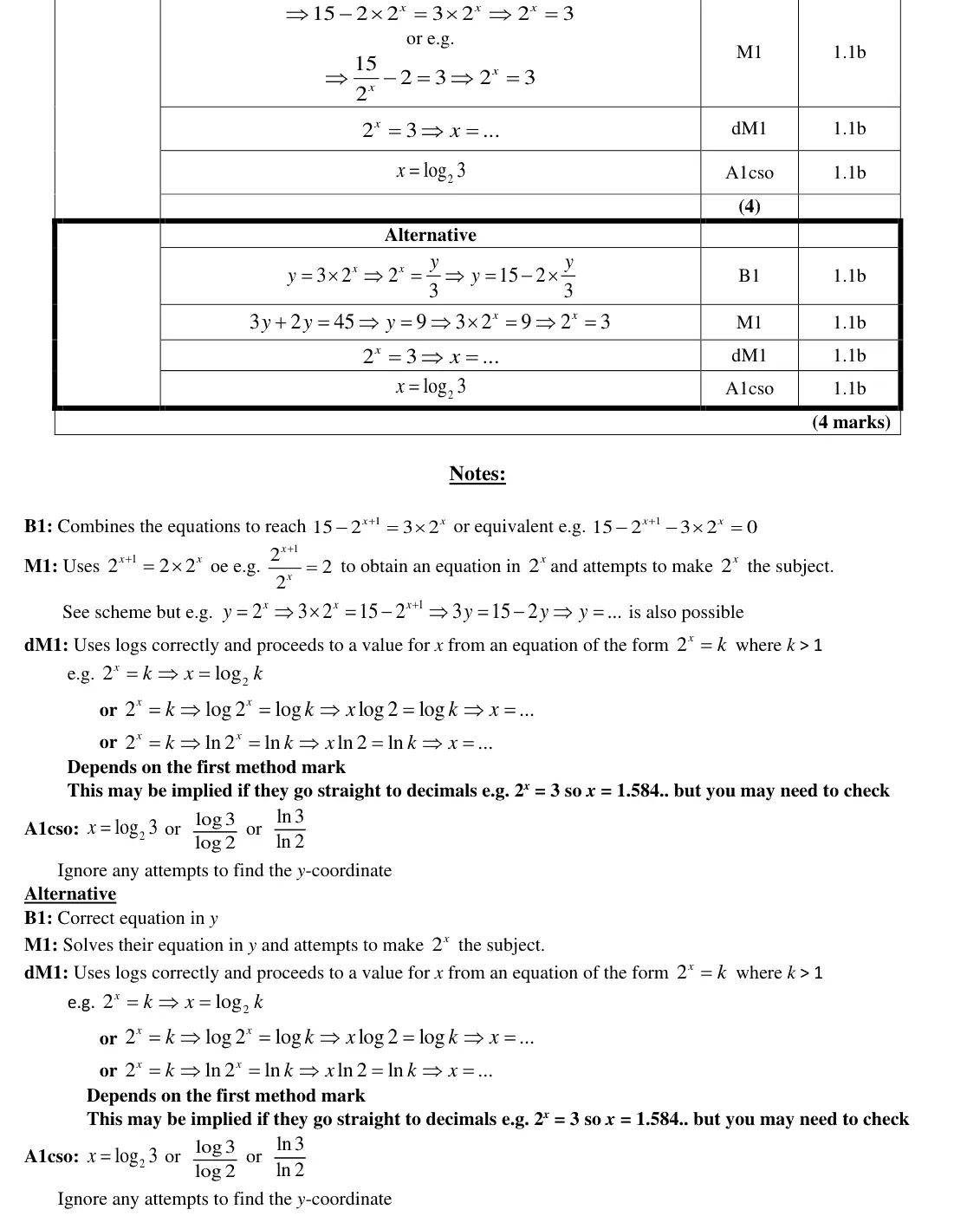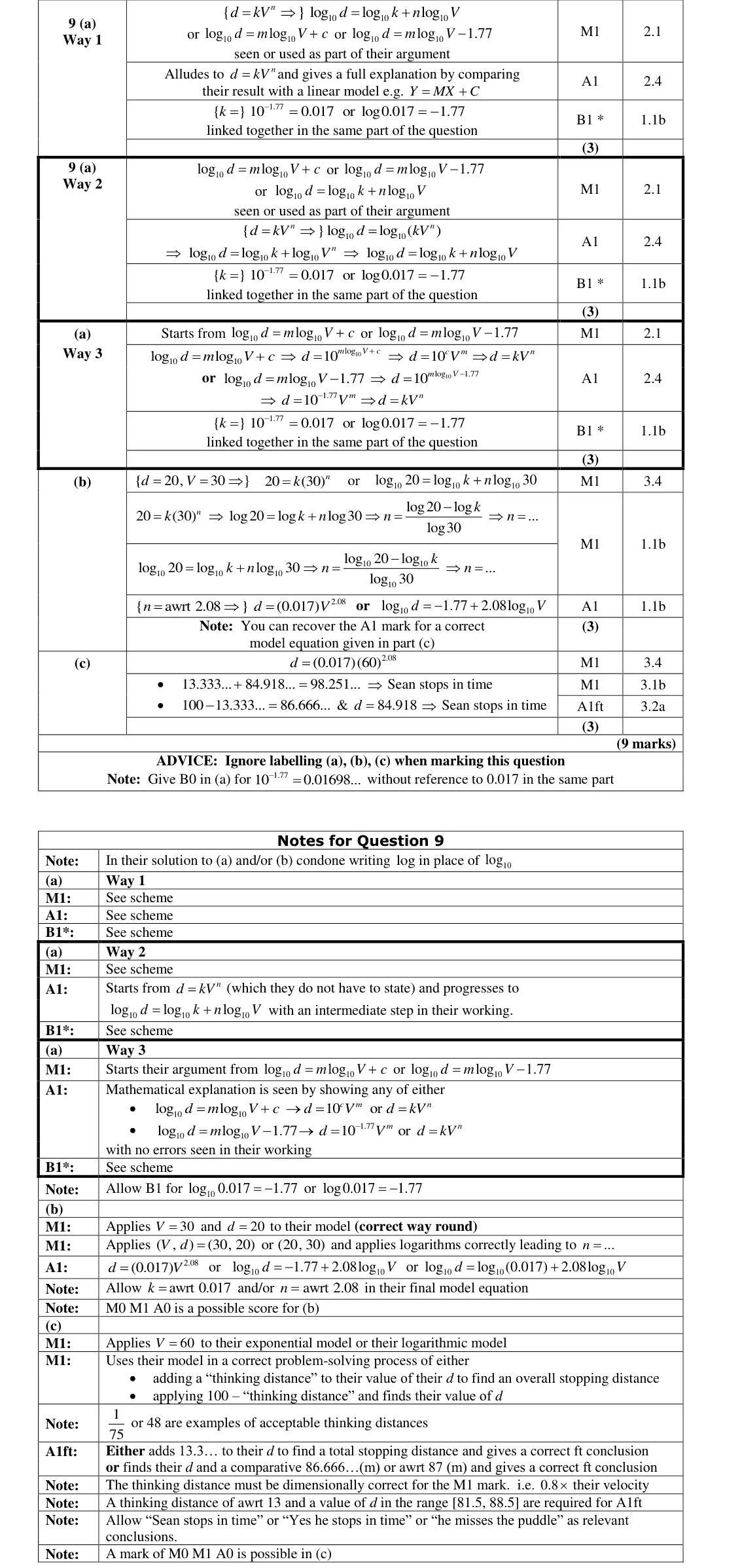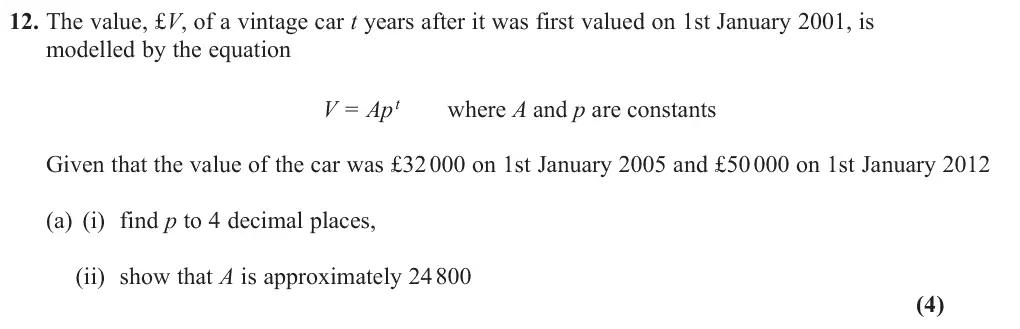
Mark scheme (whole question; this part is marked with the orange bar)
Examiner's comment
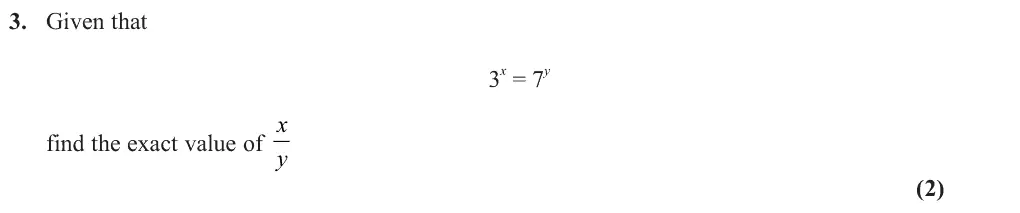
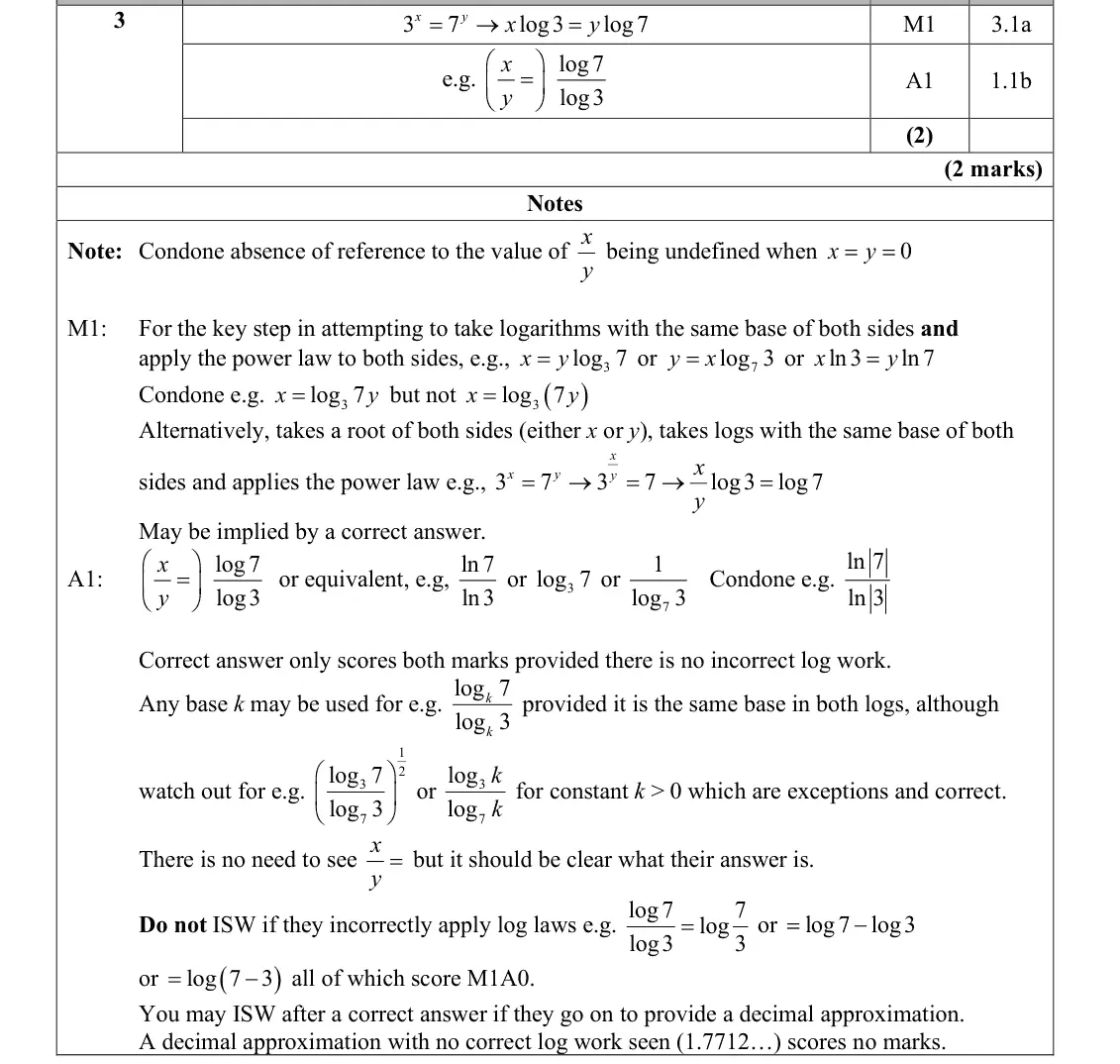
The vast majority of learners found this question, which involved an understanding of indices and logarithms, to be accessible. Most were able to take logarithms with the same base of each side and apply the power law to both sides in one step. It was common in responses to take natural logarithms or logarithms to base 10; sometimes logarithms to base 3 or, on rarer occasions, base 7 were used. Usually, this was followed by correct division to achieve x y as the subject and gaining the accuracy mark. A few divided incorrectly and obtained the reciprocal of the correct answer and so lost the A mark. Some proceeded from a correct answer with incorrect logarithm work, such as to 7 ln 3 or ( ) ln 7 3 - , and did not gain the accuracy mark. A number of concise responses attempted to take logarithms of base 3 and achieved 3 log 7 x y = , gaining both marks. On rare occasions, responses took logarithms of base 3 and logarithms of base 7 of the original equation separately to produce 3 log 7 y x = and 7 log 3x y = and simply divided from here. Having not dealt with the powers appropriately, they left x and y variables on both sides of the equation and so scored no marks. Others took the same approach but did deal with the powers to produce 3 log 7 x y = and 7 log 3 y x = but did not recognise how to combine the equations to achieve x y as the subject by square rooting. Many learners appeared unclear about what “exact value” means and following a correct answer provided a decimal approximation. However, such responses were condoned.
Common mistakes
- take logs of the same base of both sides and use the power law: x log 3 = y log 7
- x/y = log 7 / log 3 (not the reciprocal)
- log 7/log 3 is not log(7/3) or log 7 − log 3
- a decimal alone scores 0