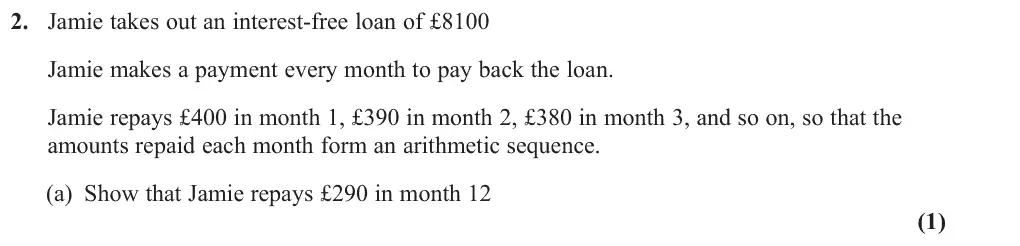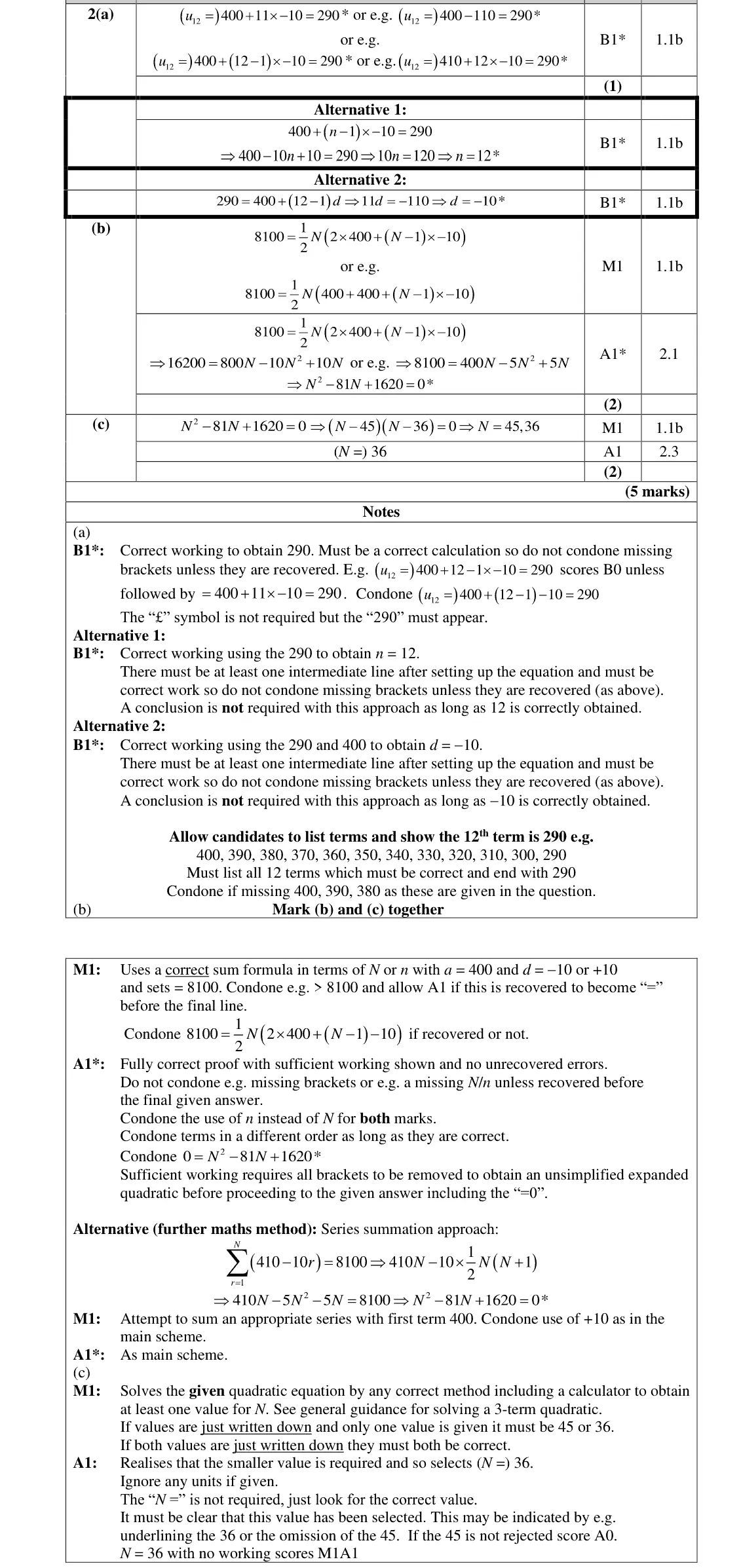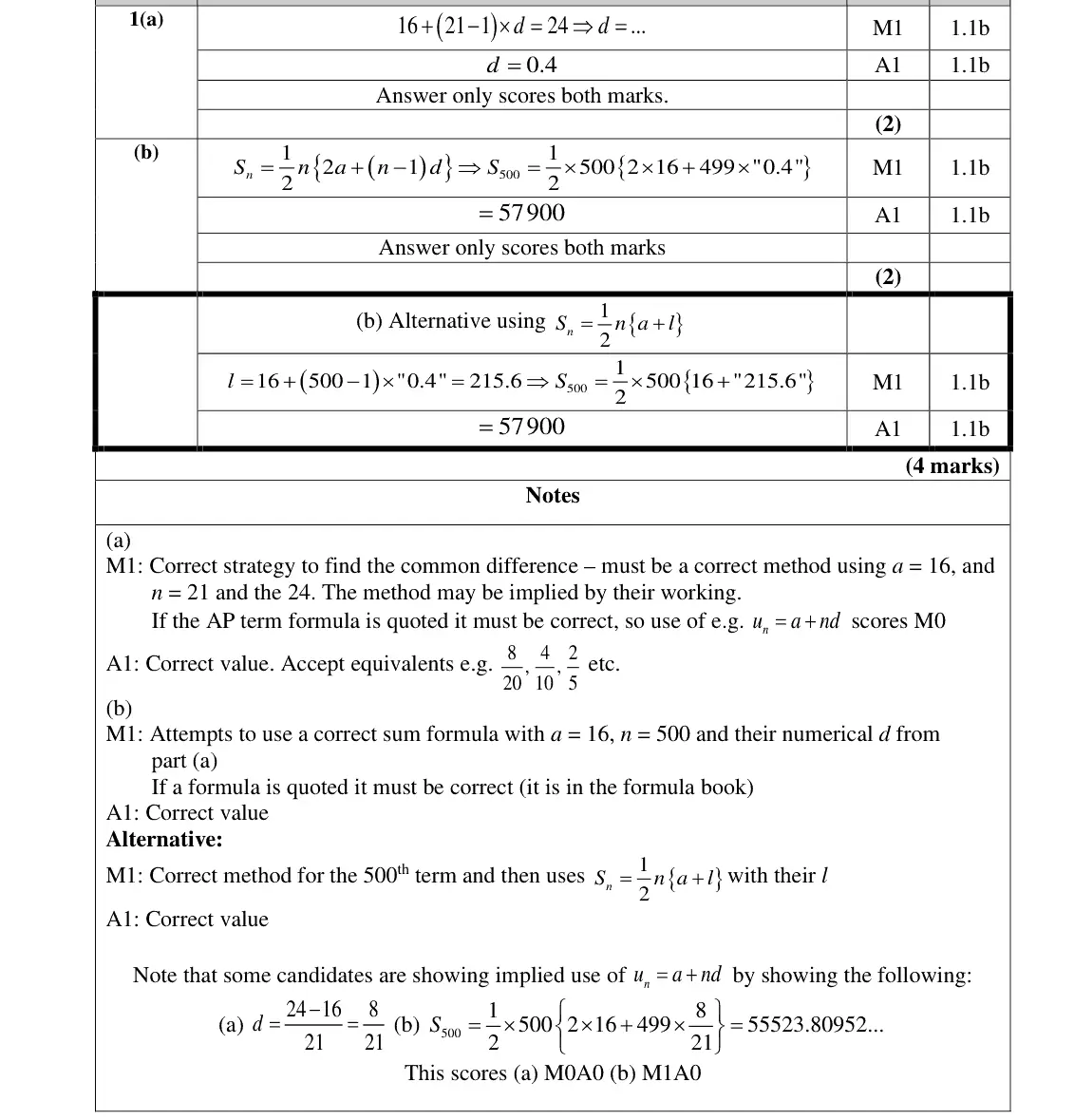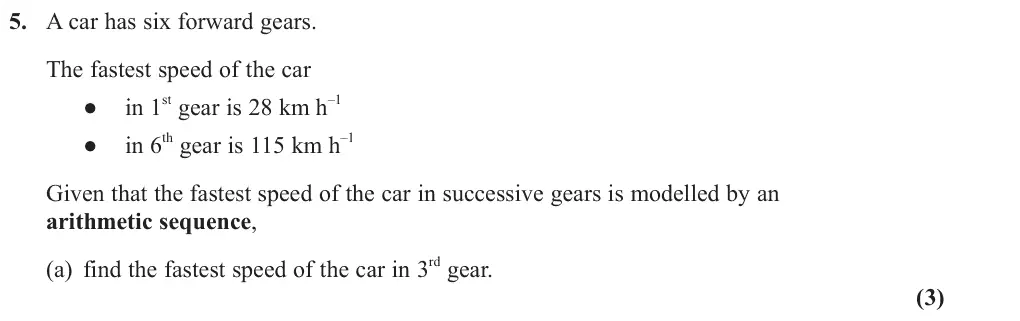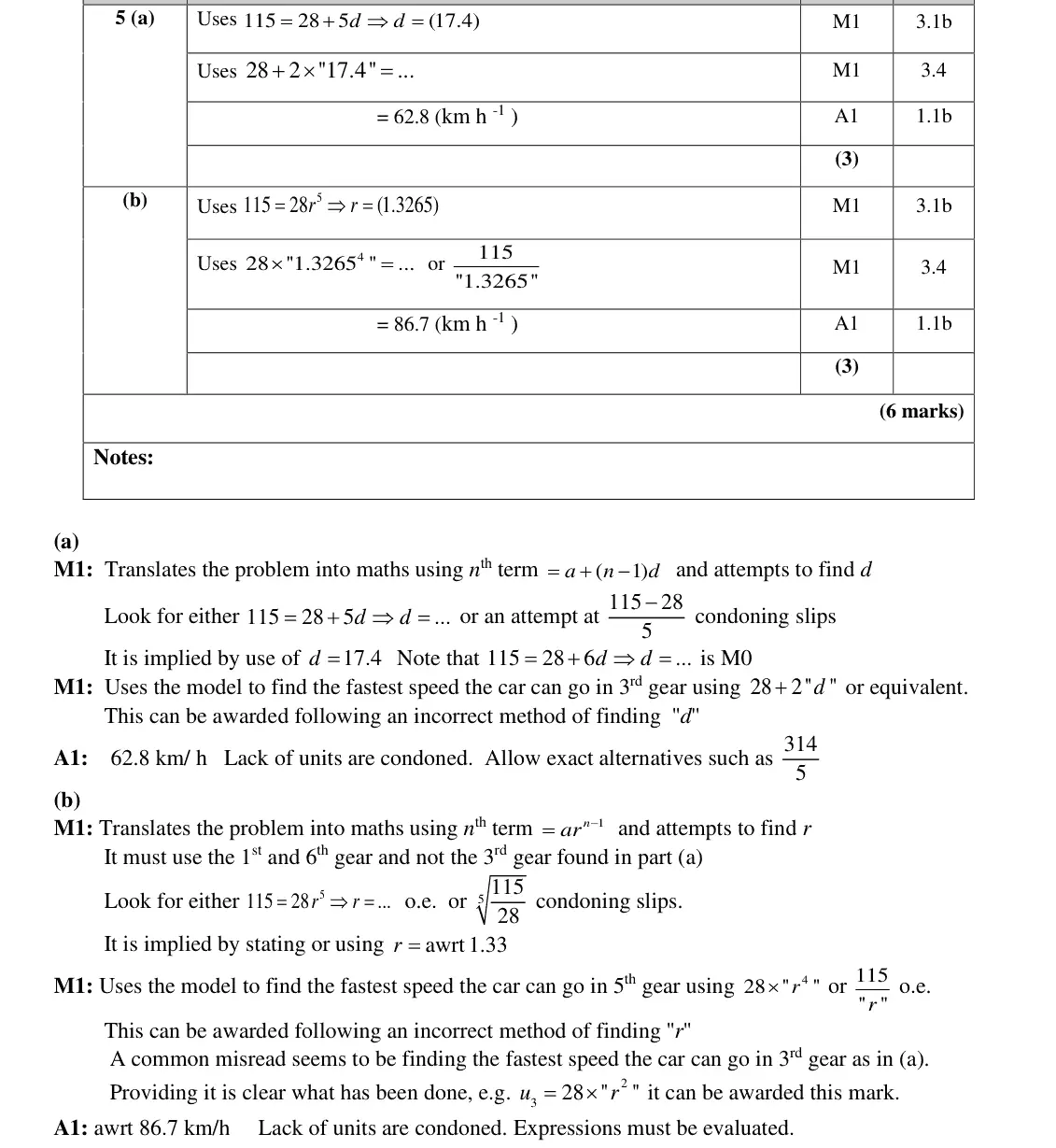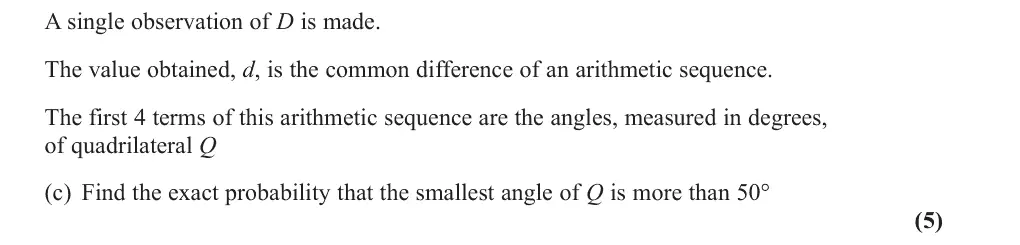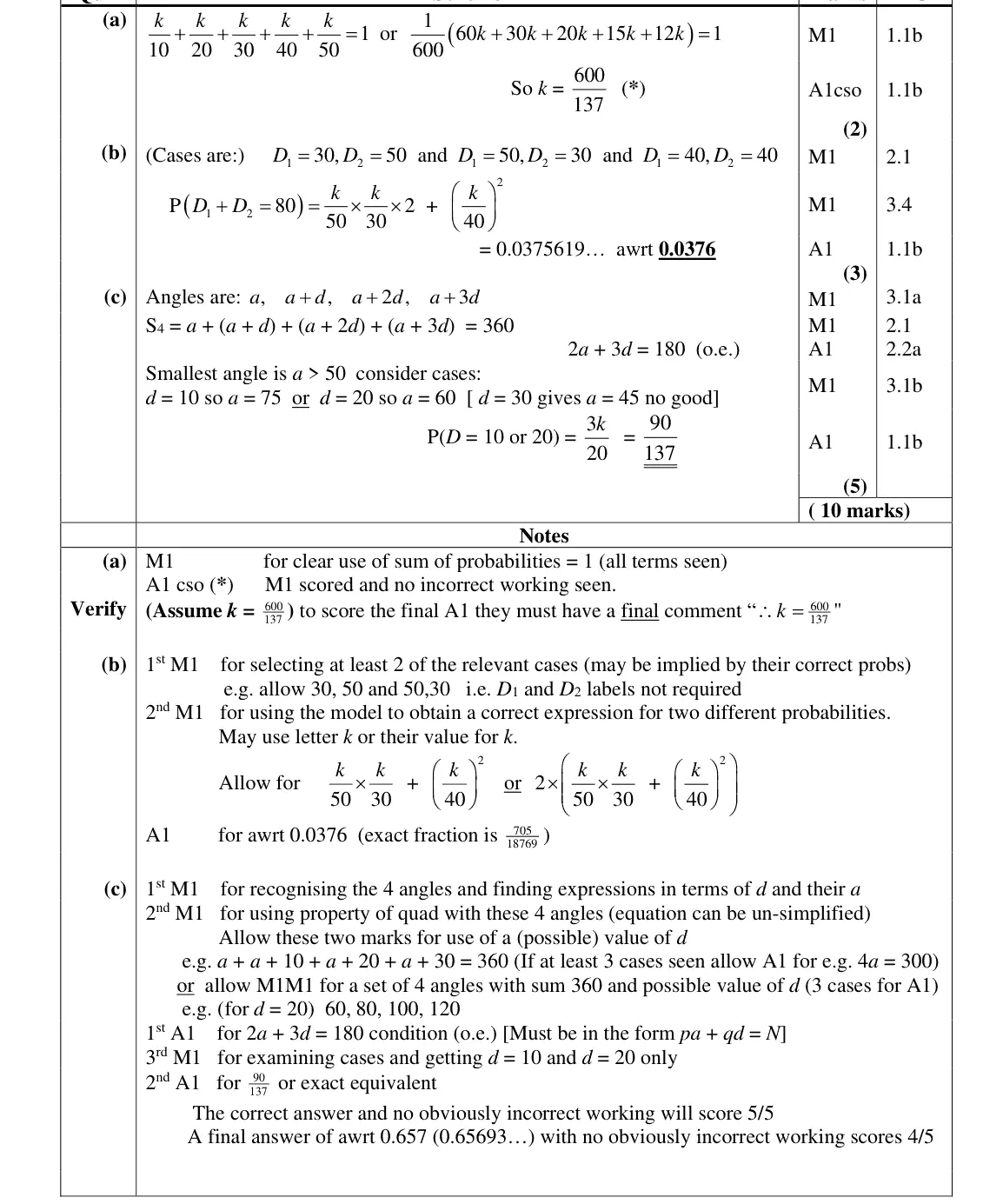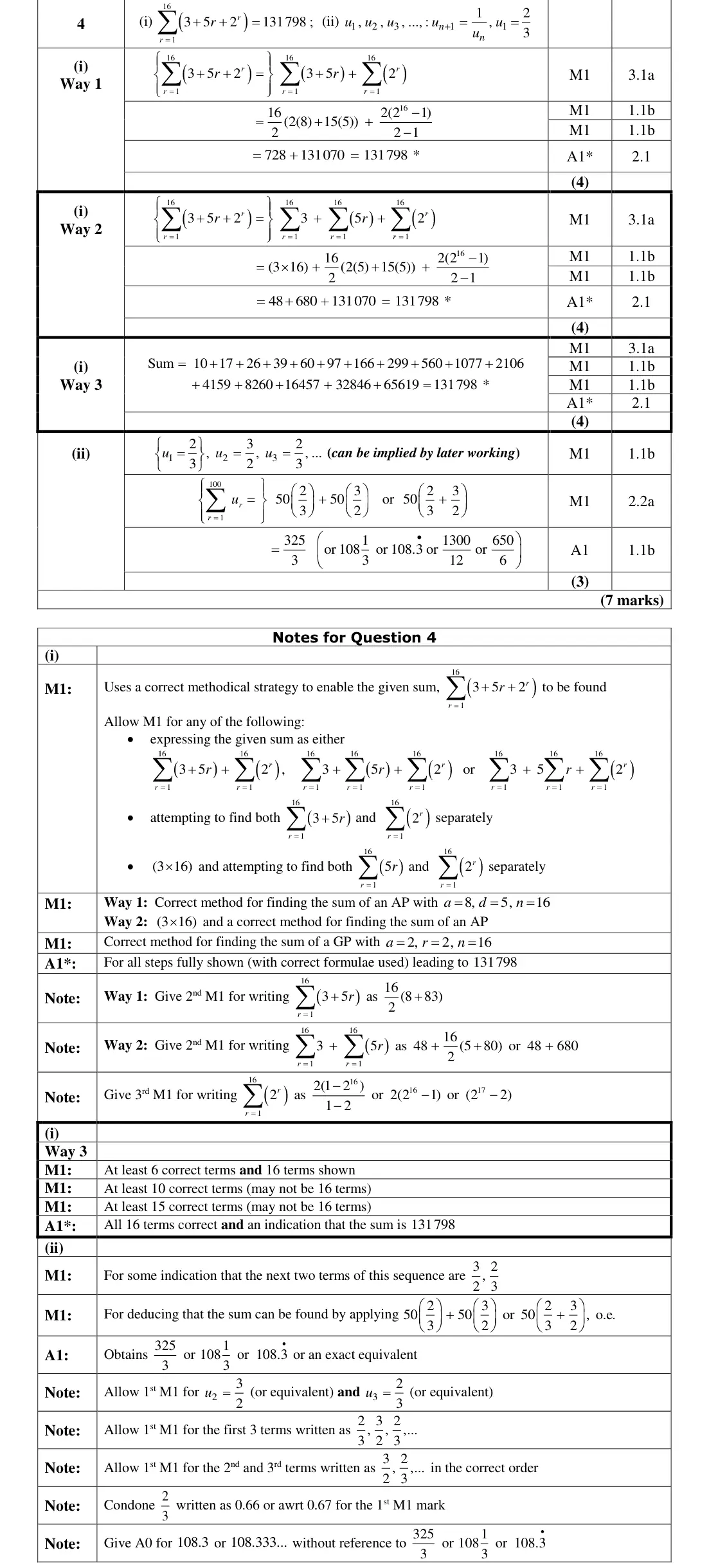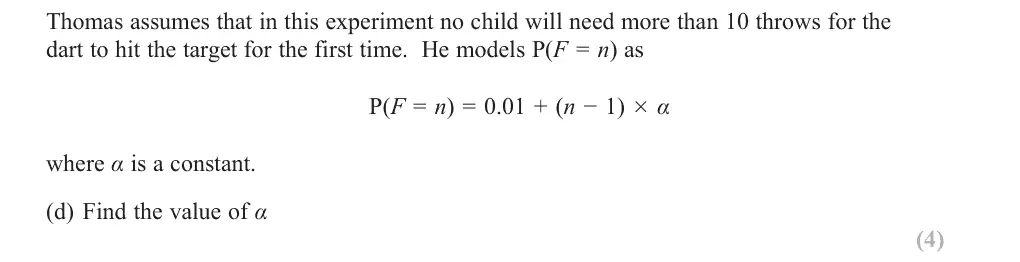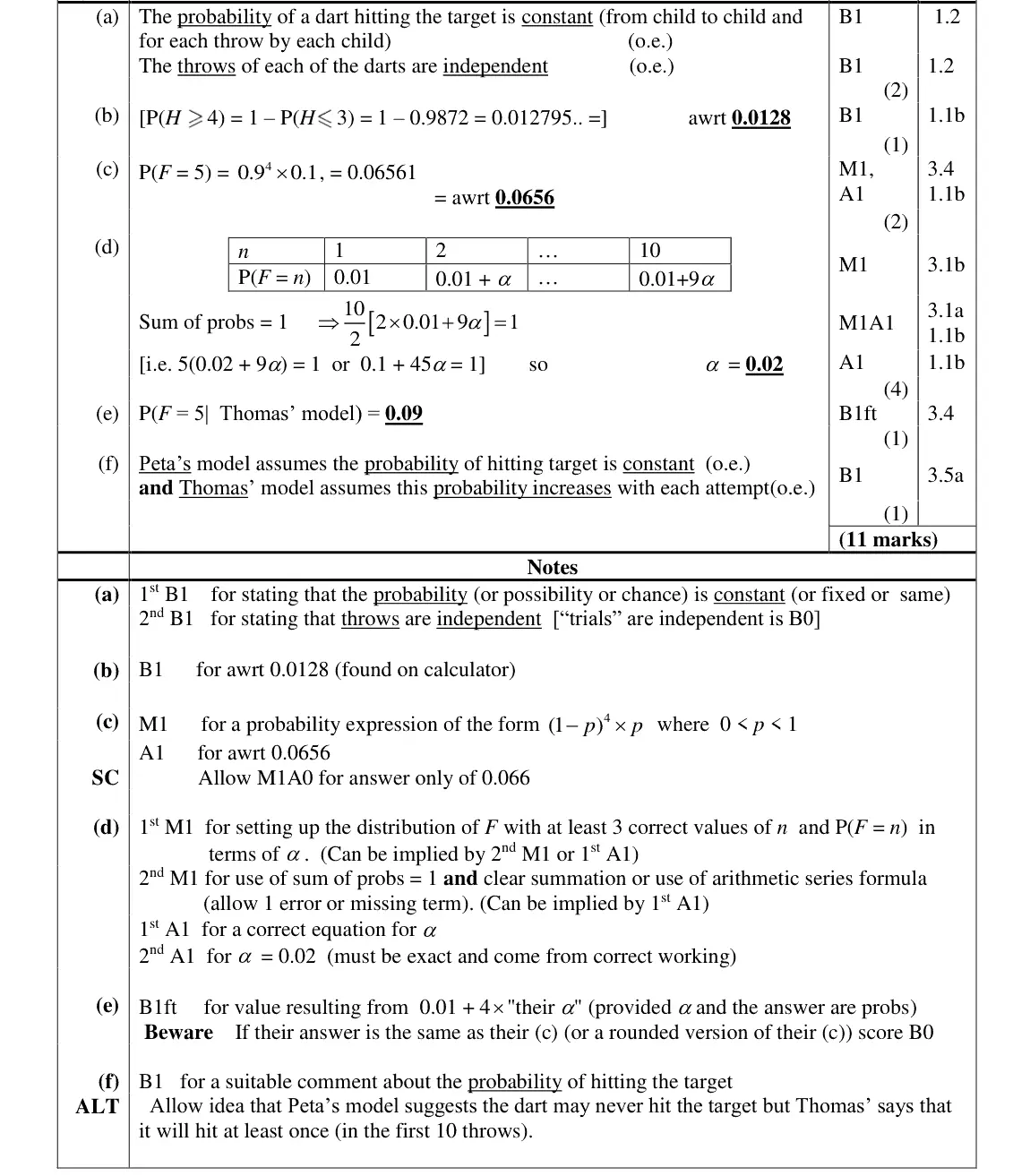
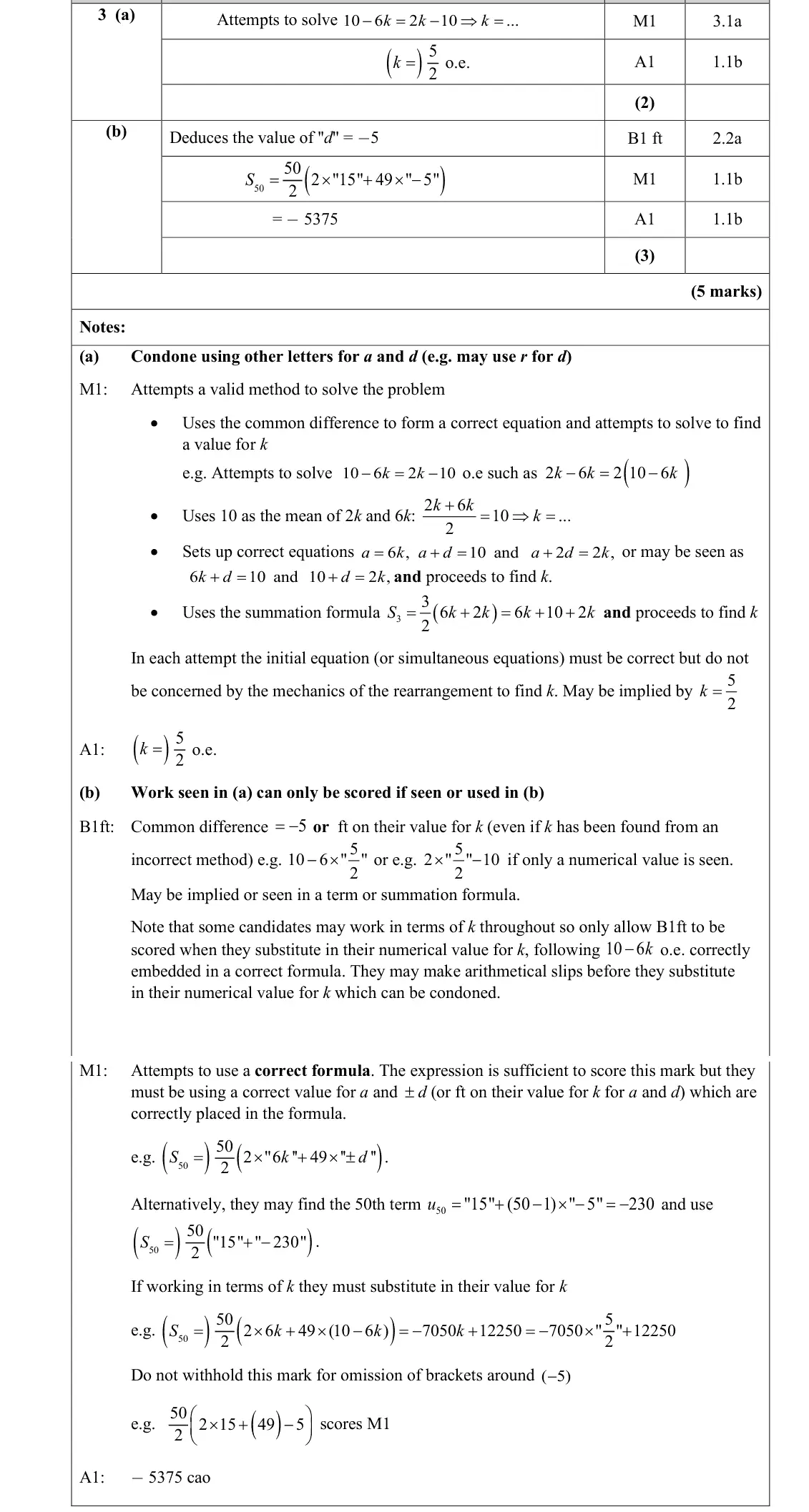
Mark scheme (whole question; this part is marked with the orange bar)
Examiner's comment
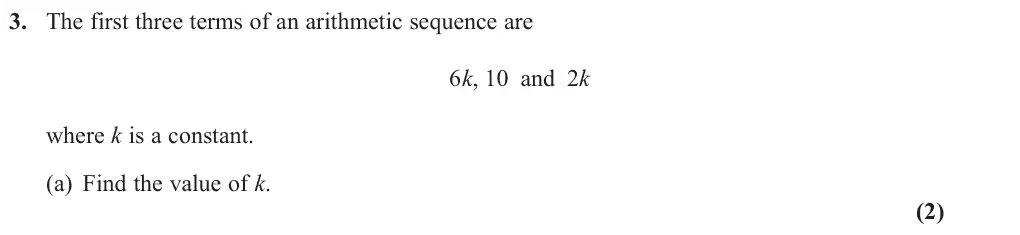
This question tested arithmetic sequences, followed by finding the sum for a given number of terms. Part (a) was usually answered well. There was a variety of ways which could be used to set up a valid equation or equations from the information given. The most common method was equating the common difference between consecutive terms resulting in a single linear equation that was easily solved for k. Some responses used slightly less efficient methods by using the nth term formula which created two linear equations in k and the common difference, d, which they then solved simultaneously. A few responses used the sum formula in addition to an nth term formula which proved quite time consuming and often incurred errors when solving. A minority of responses mistakenly treated the sequence as geometric and gained no marks. Occasionally learners deduced the value of k with little or no working by spotting that the second term must be 4k in order that the sequence was arithmetic (2k, 4k, 6k) and then simply divided 10 by 4.
Common mistakes
- equal common differences 10 − 6k = 2k − 10 (or 10 is the mean of 6k and 2k) gives k = 5/2
- treating it as geometric scores 0