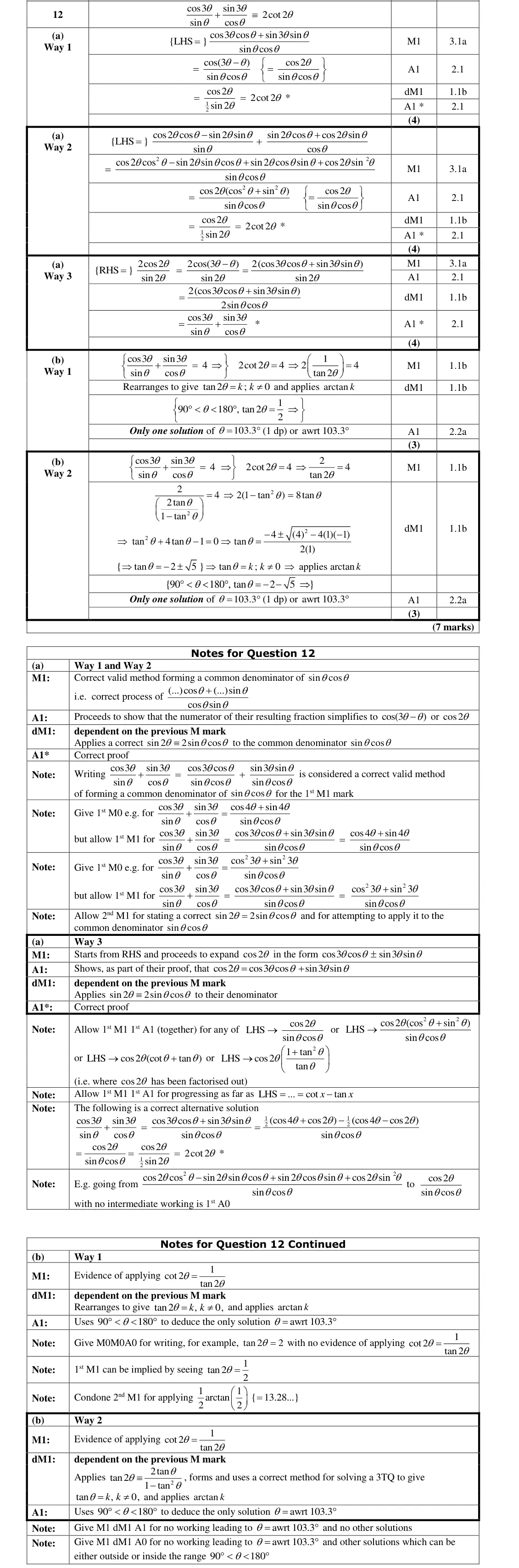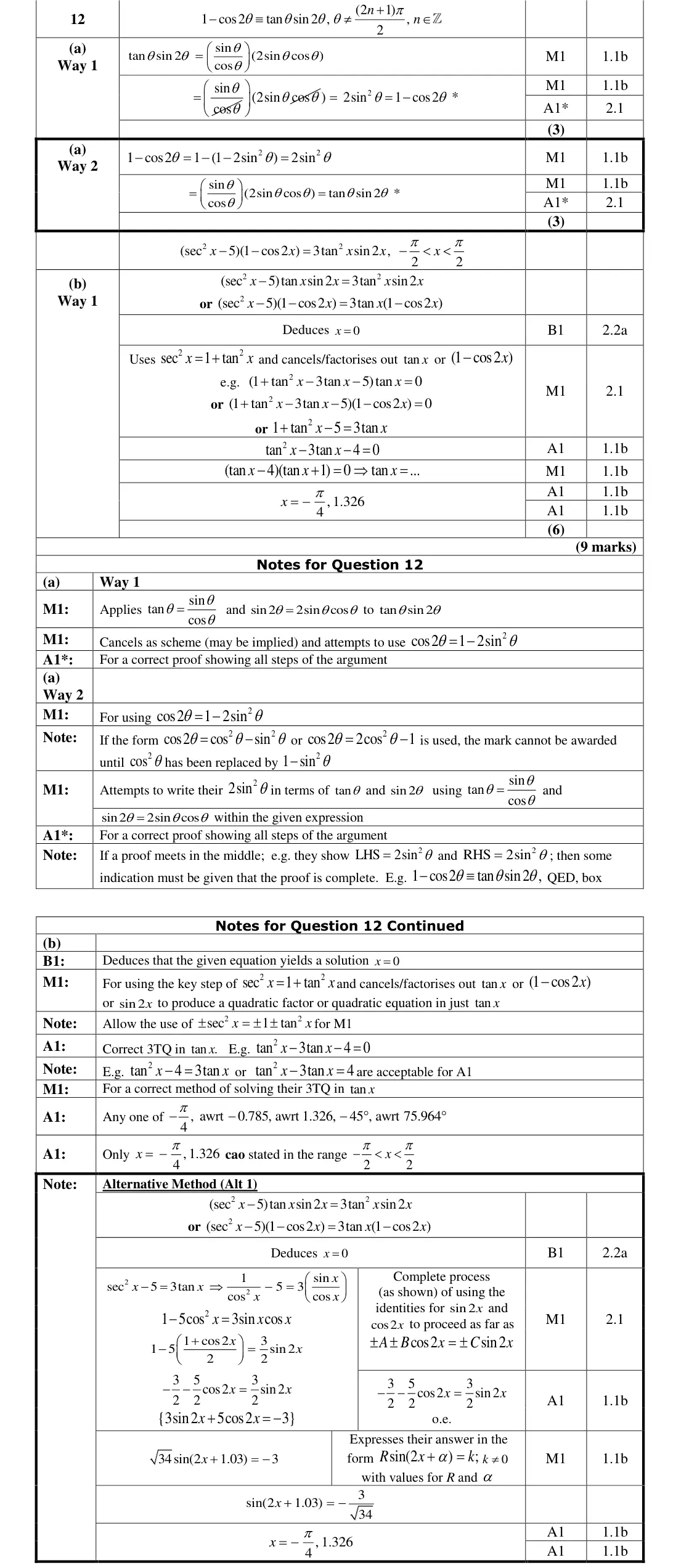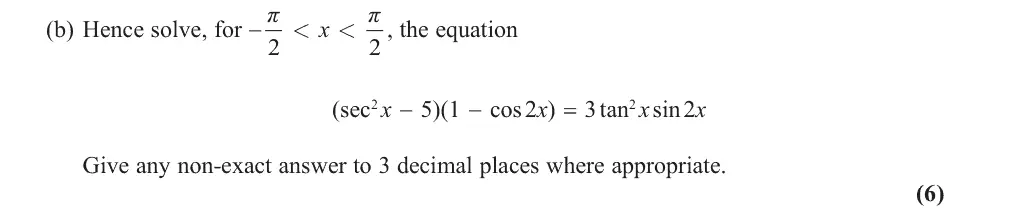
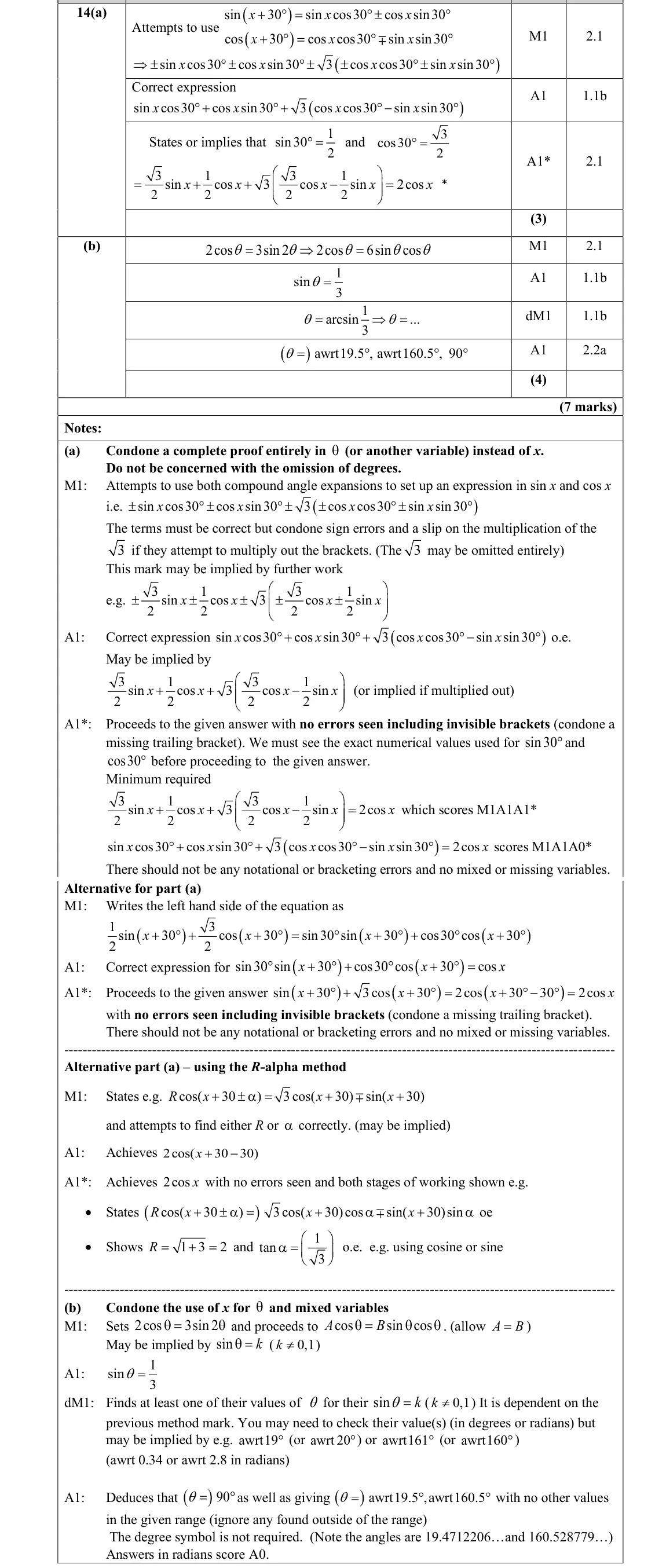
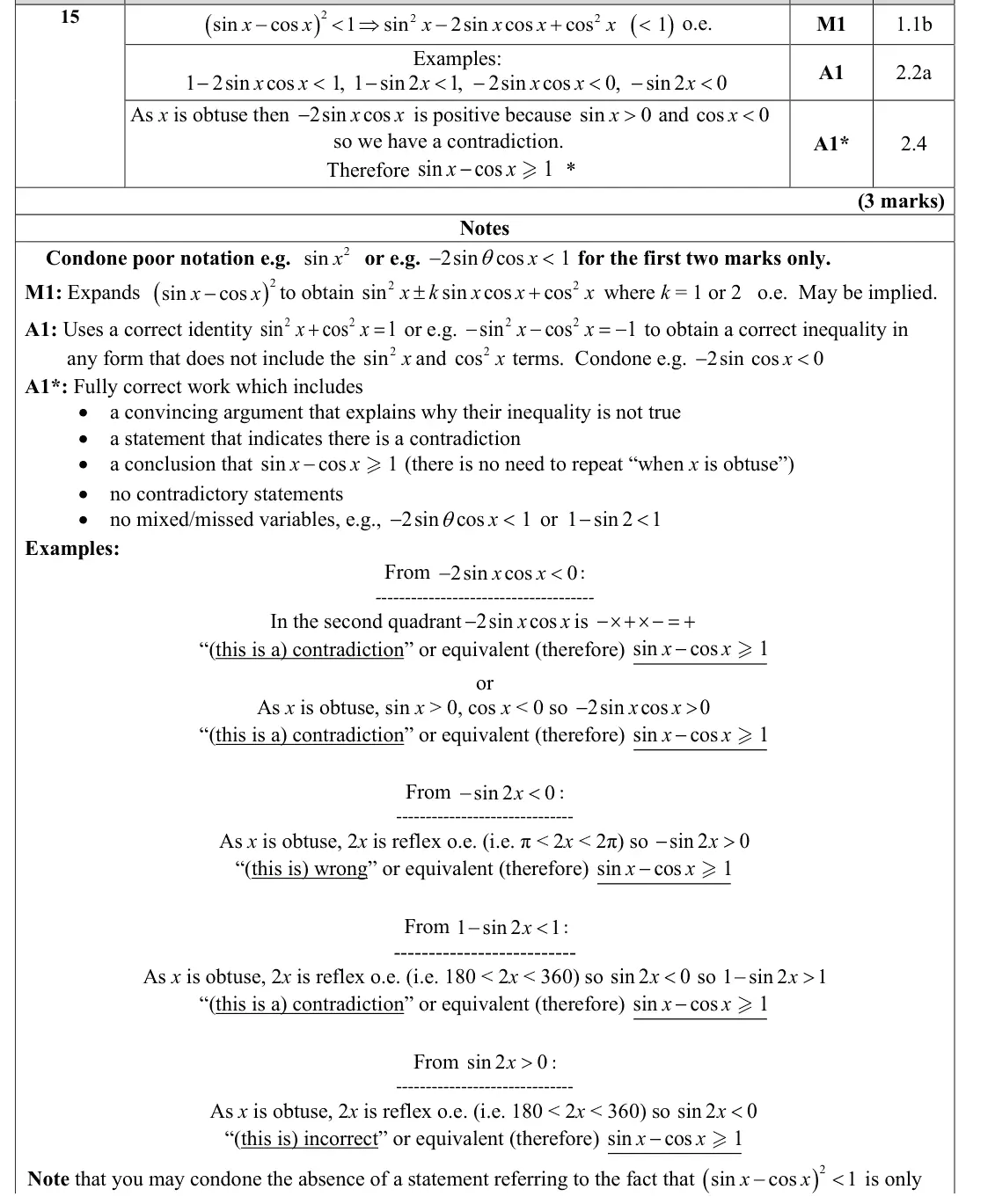
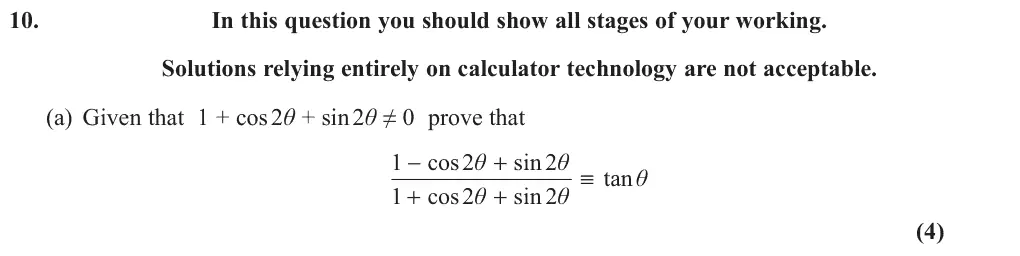
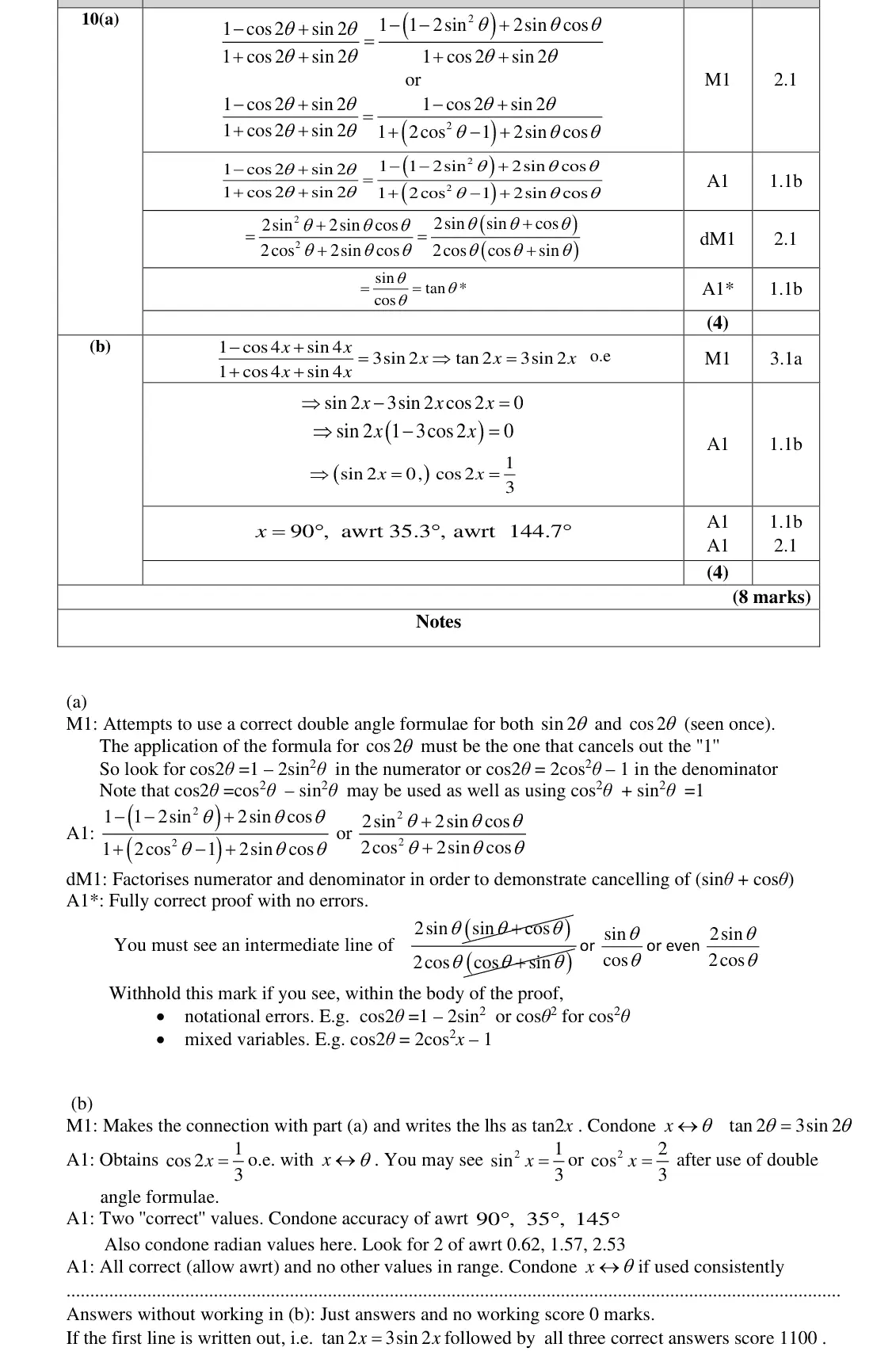
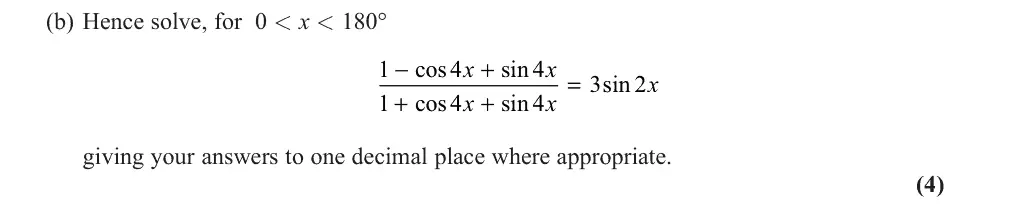
Mark scheme (whole question; this part is marked with the orange bar)
Examiner's comment
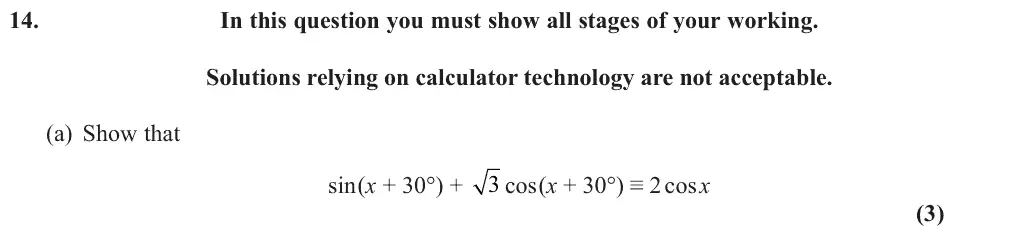
This question was a good differentiator at the later end of the paper. Success with this question was somewhat mixed, with some learners scoring most marks in part (b), whilst part (a) proved to be more challenging as it tested not only their knowledge of trigonometric identities but also their algebraic manipulation skills. In part (a), most responses attempted the proof by using both compound angle expansions to reach an expression in sin x and cos x, usually gaining the method mark and in most cases also the first accuracy mark. Once a correct expression was achieved, some stronger responses reached the given result by simplifying the terms. The most common mistakes committed while implementing this approach, were sign errors, especially for the compound angle expansion of ( ) cos 30 x + ° , incorrect multiplication by 3 and bracketing errors, which were not condoned in this ‘show’ question. A smaller proportion of responses used the R-alpha method with ( ) cos 30 R x + °± alpha , which required learners to find both R and alpha correctly to reach ( ) 2cos 30 30 2cos x x + °- ° = as requested.
Common mistakes
- expand both compound angles (sign of cos(x + 30°) expansion), use sin 30° = ½ and cos 30° = √3/2 exactly
- bracket errors not condoned
- R-alpha method needs R = 2 and the angle

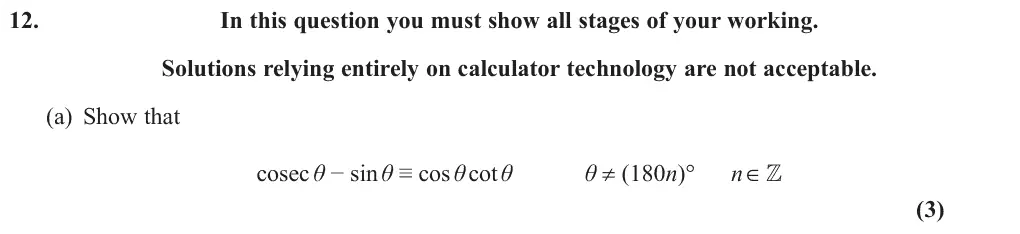
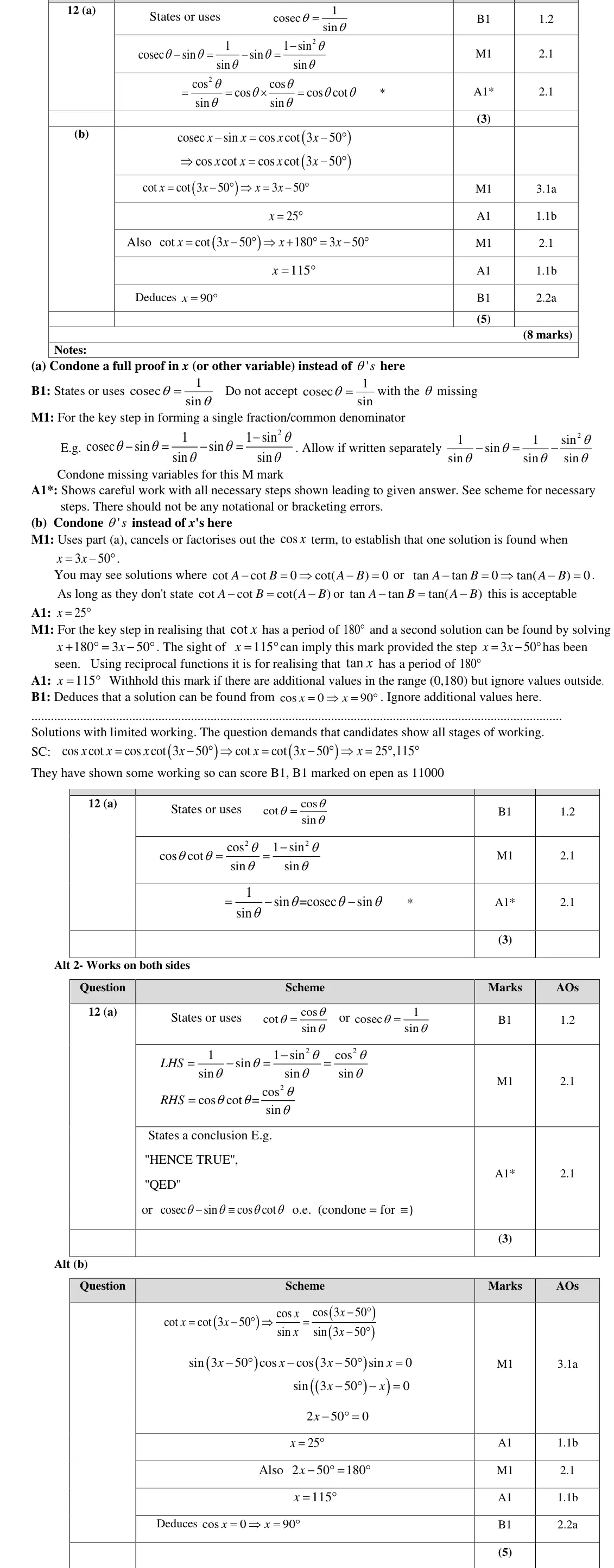
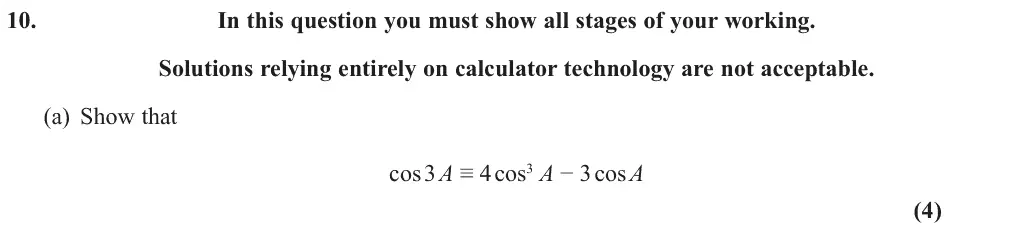
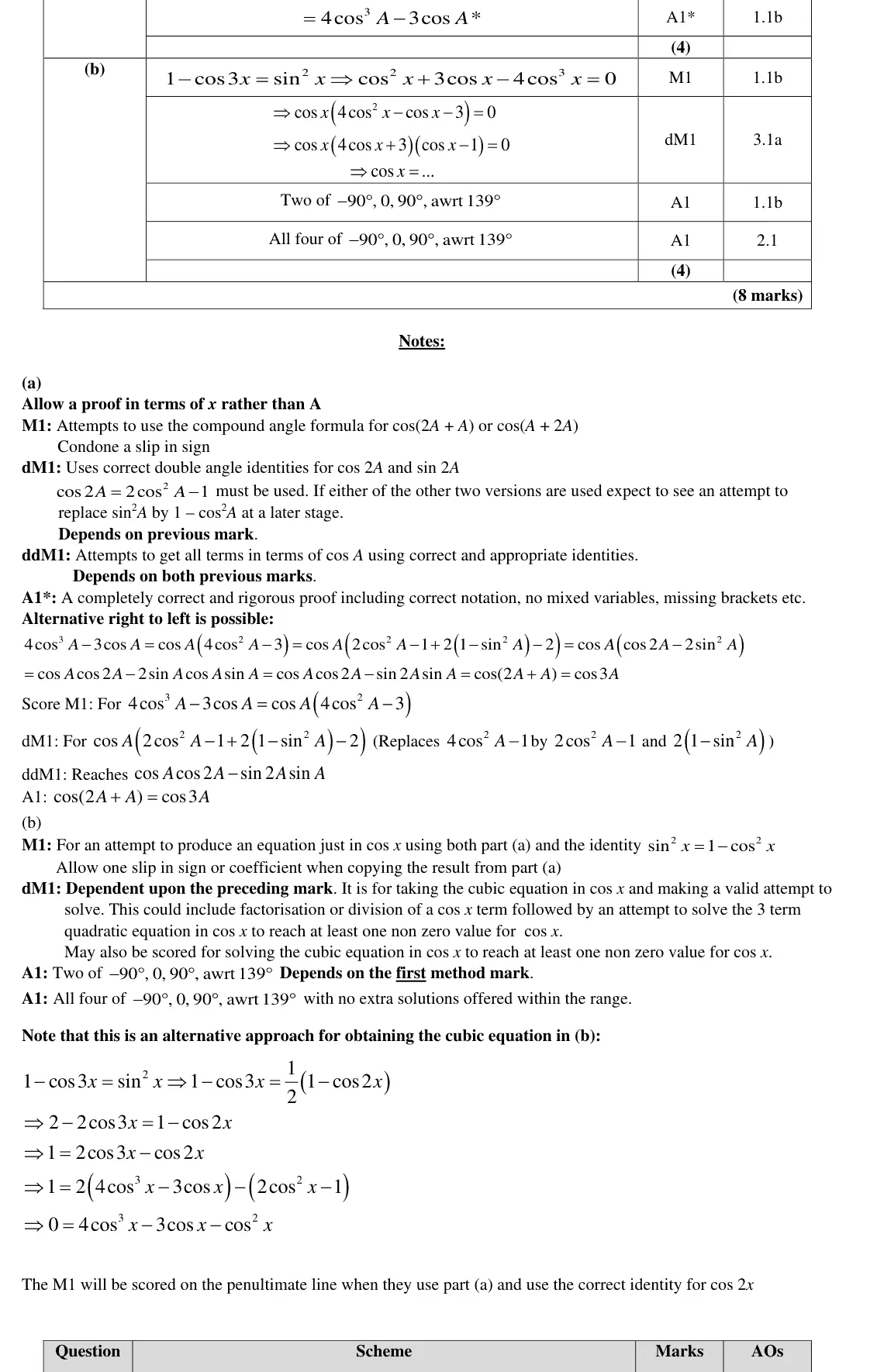
![12. (a) Prove cos3 theta + sin3 theta theta theta { 2cot 2ș ș z (90n)°, n ] sin cos (4)](/img/JUN19_9MA002/JUN19_9MA002_12(a).webp)