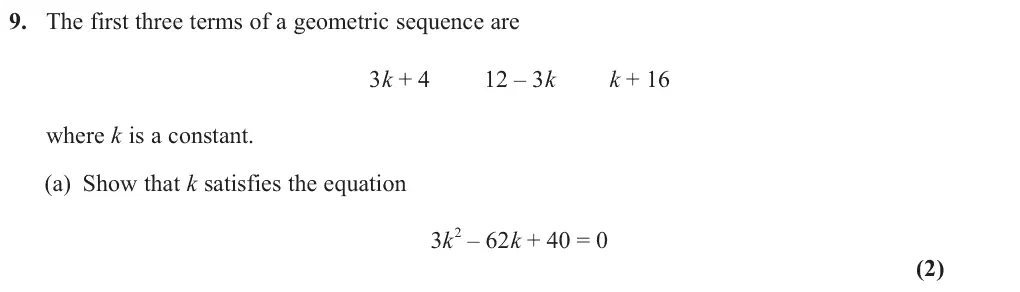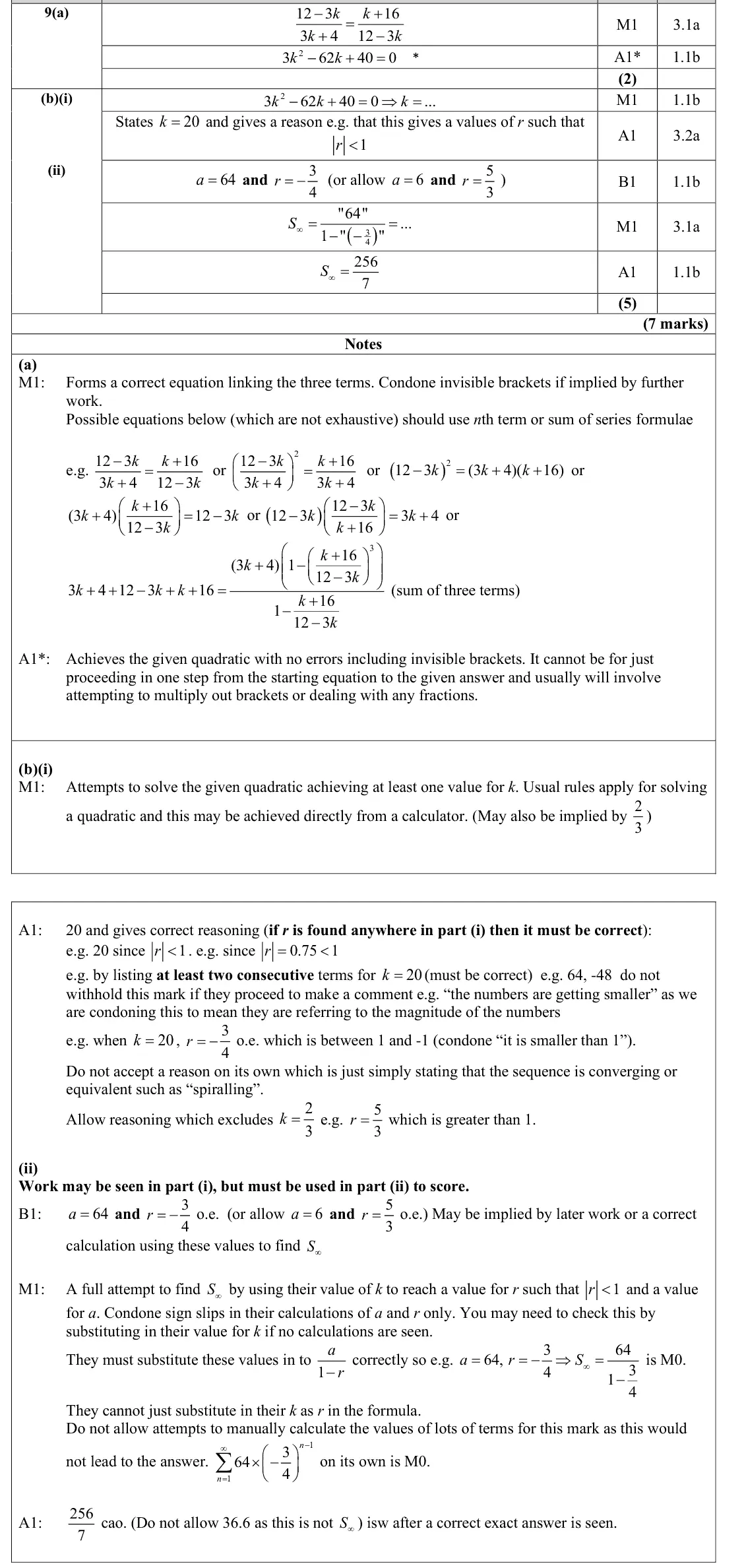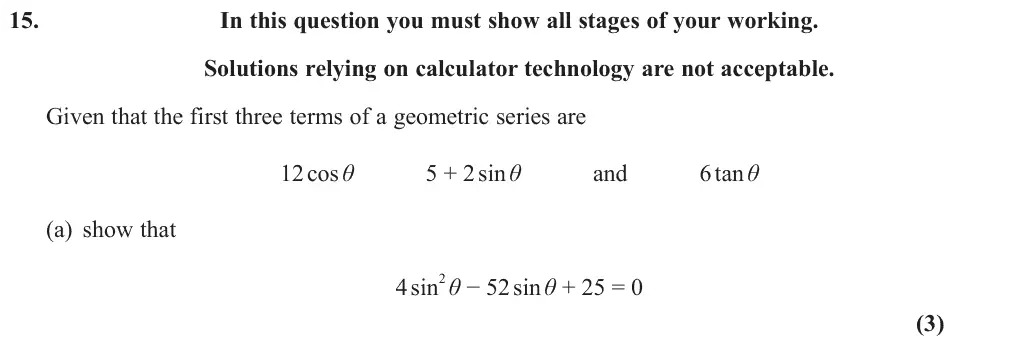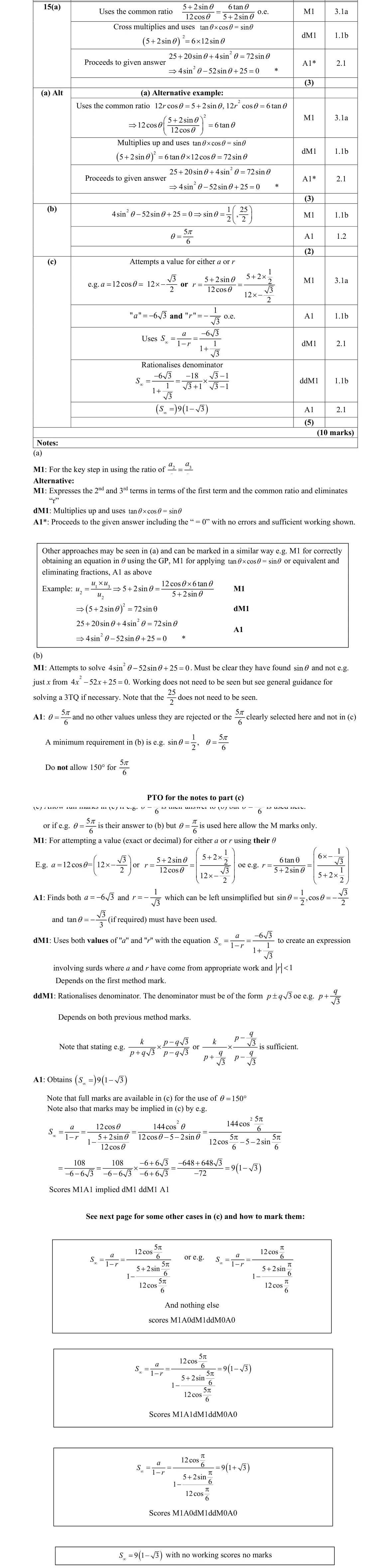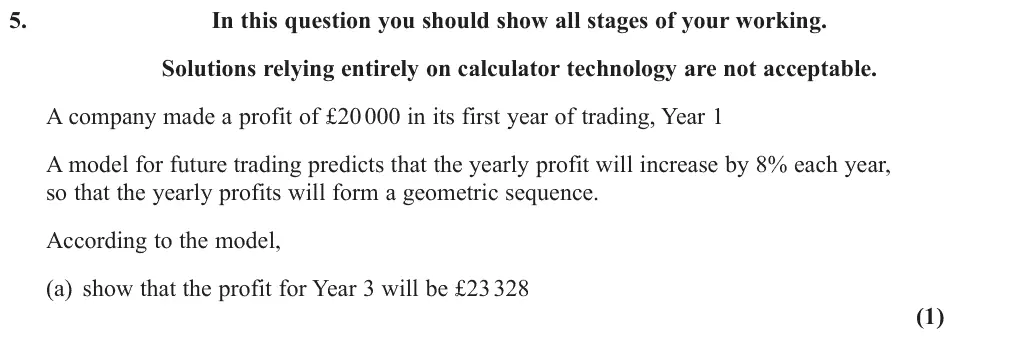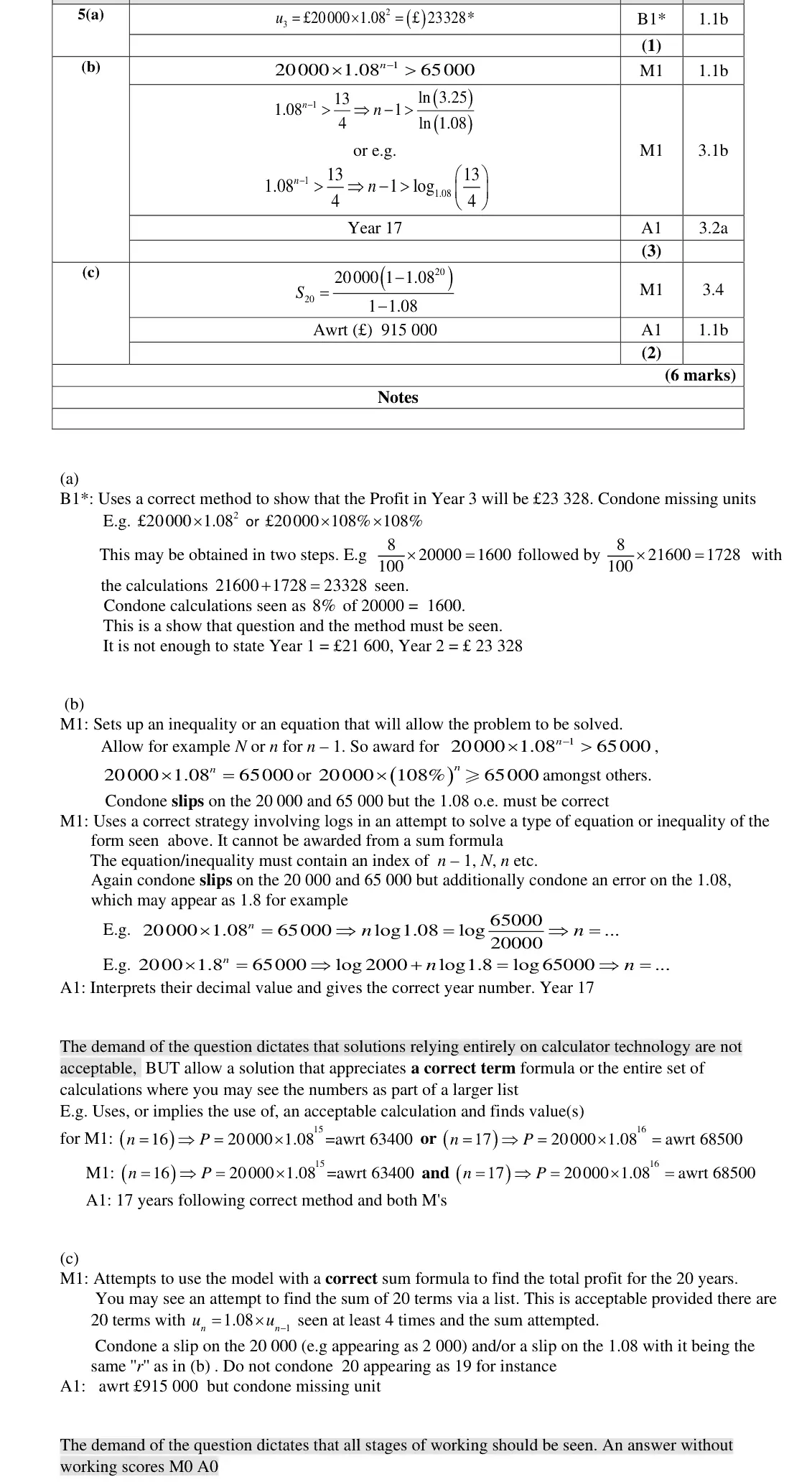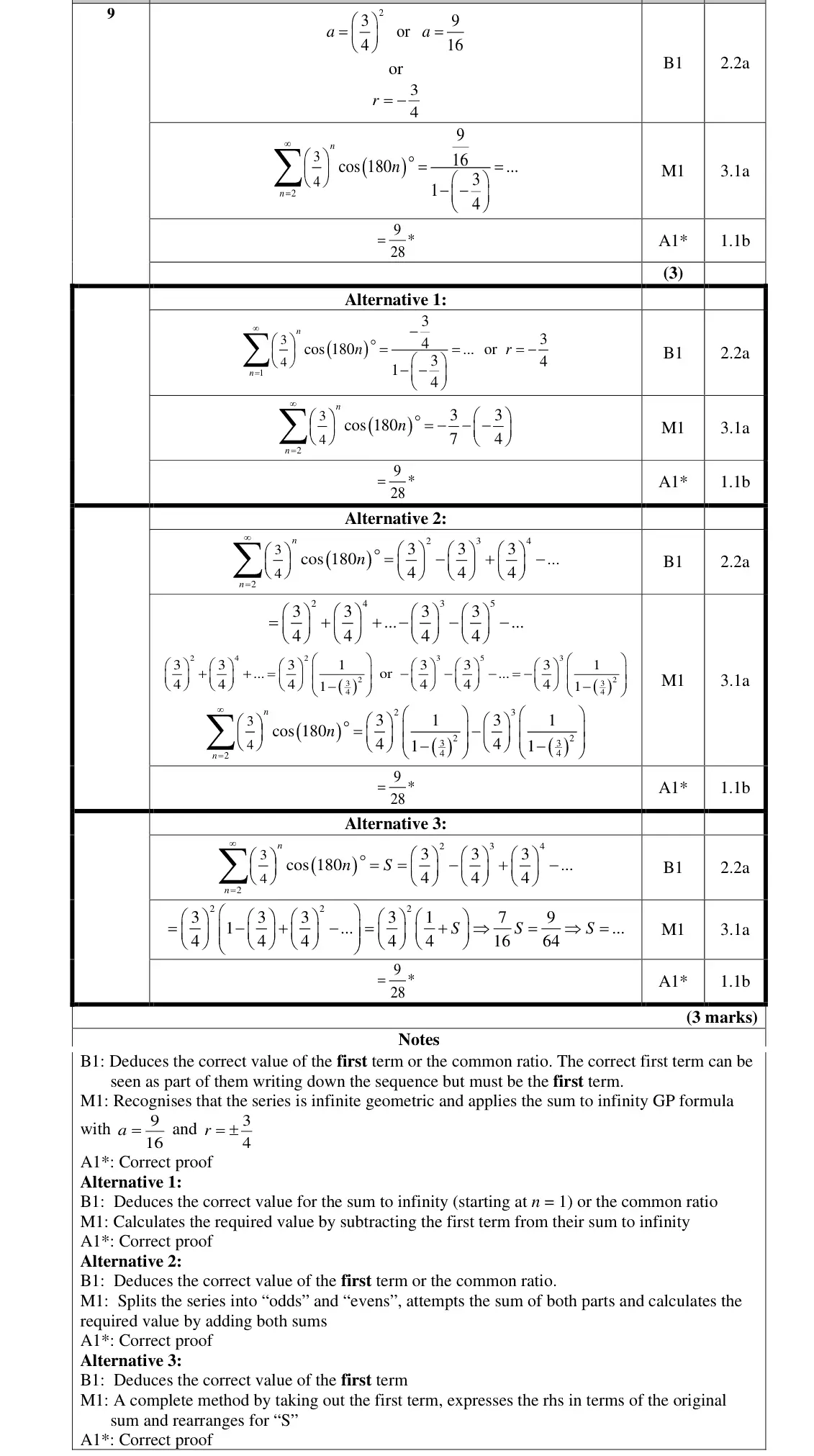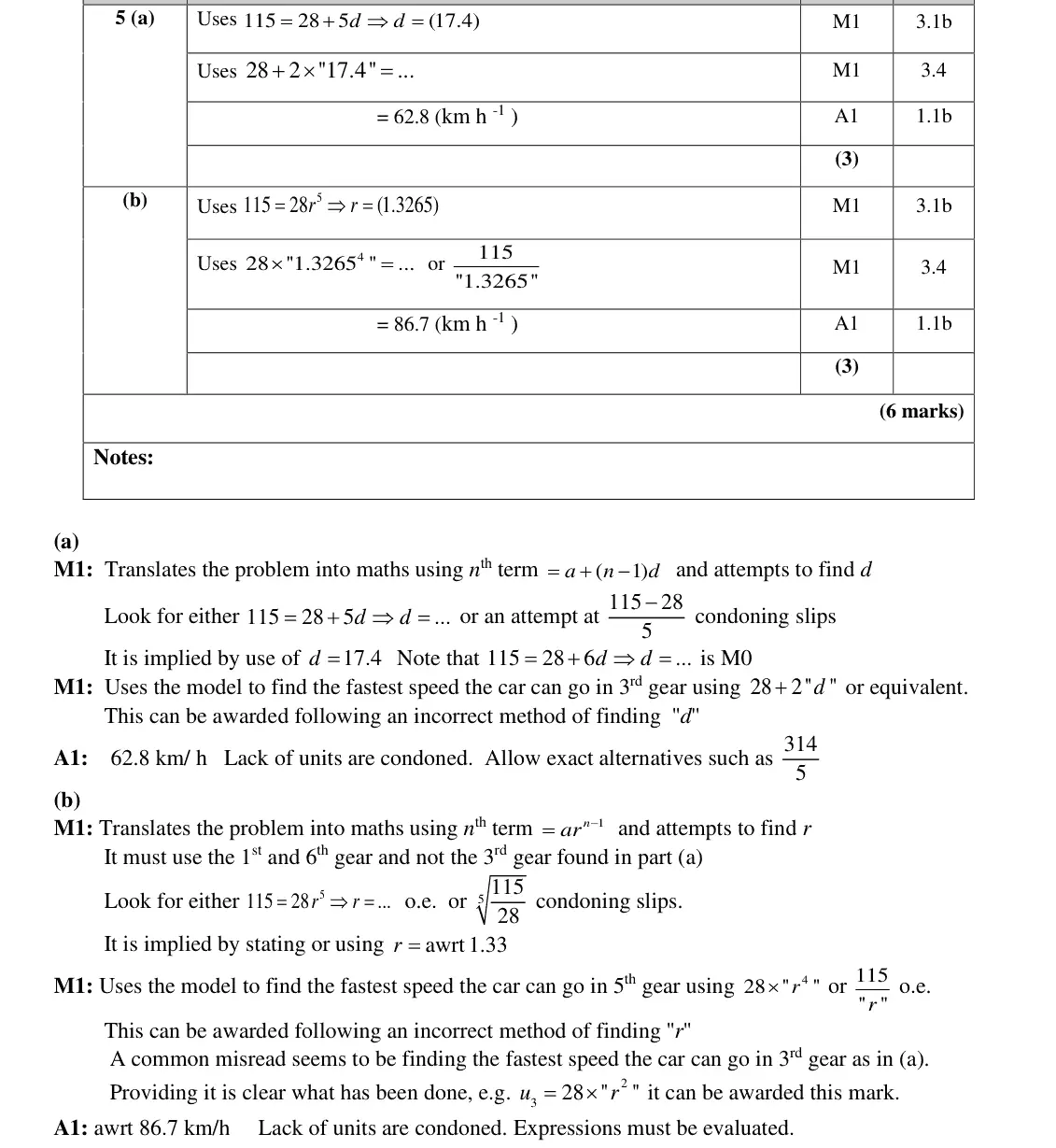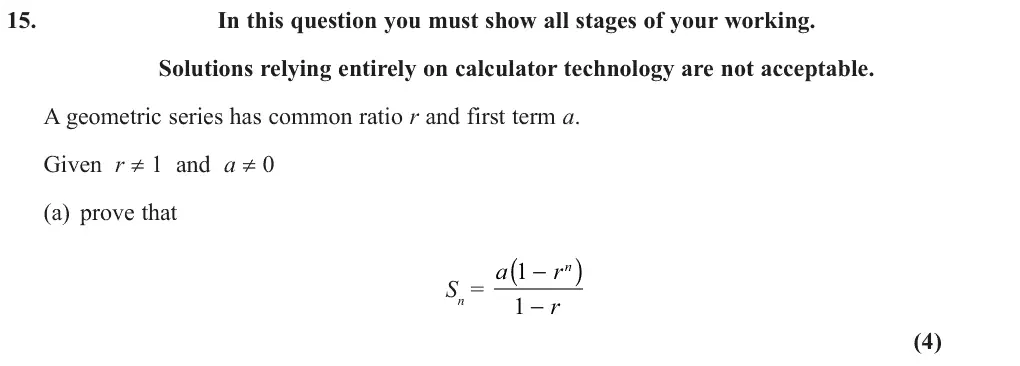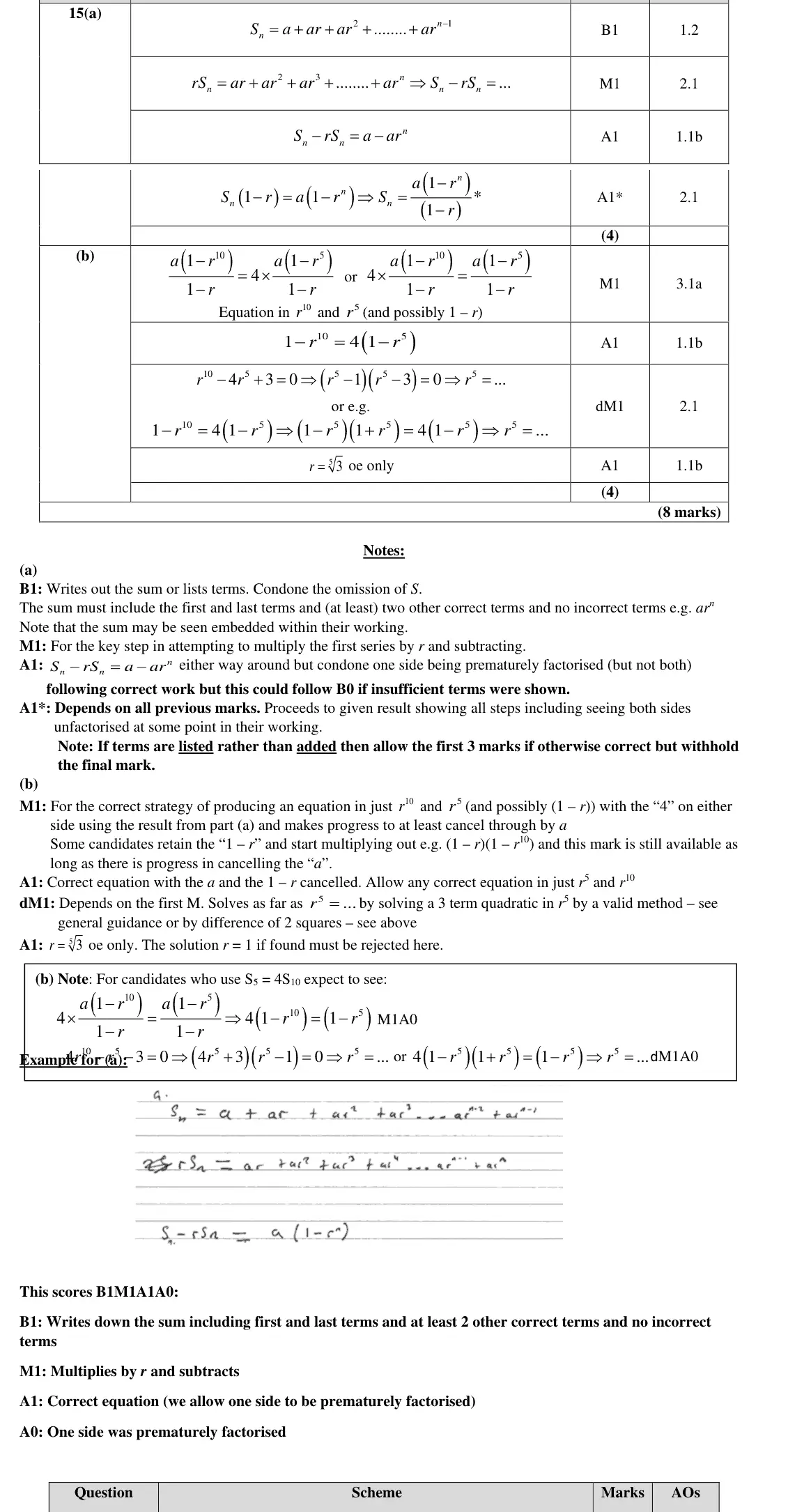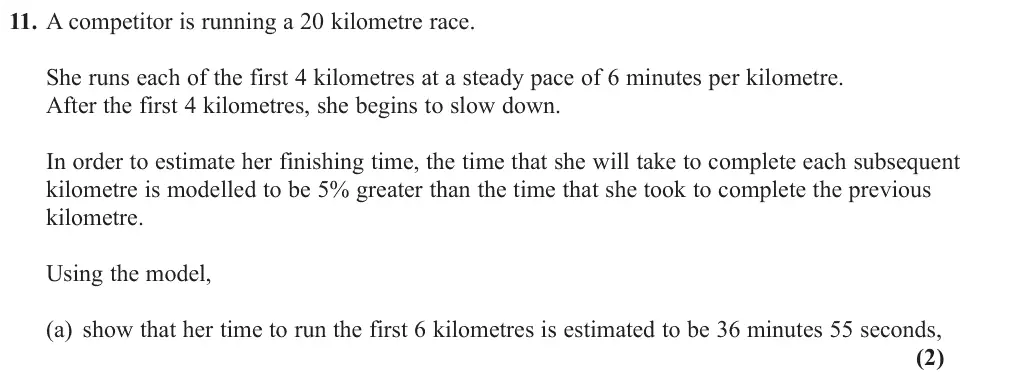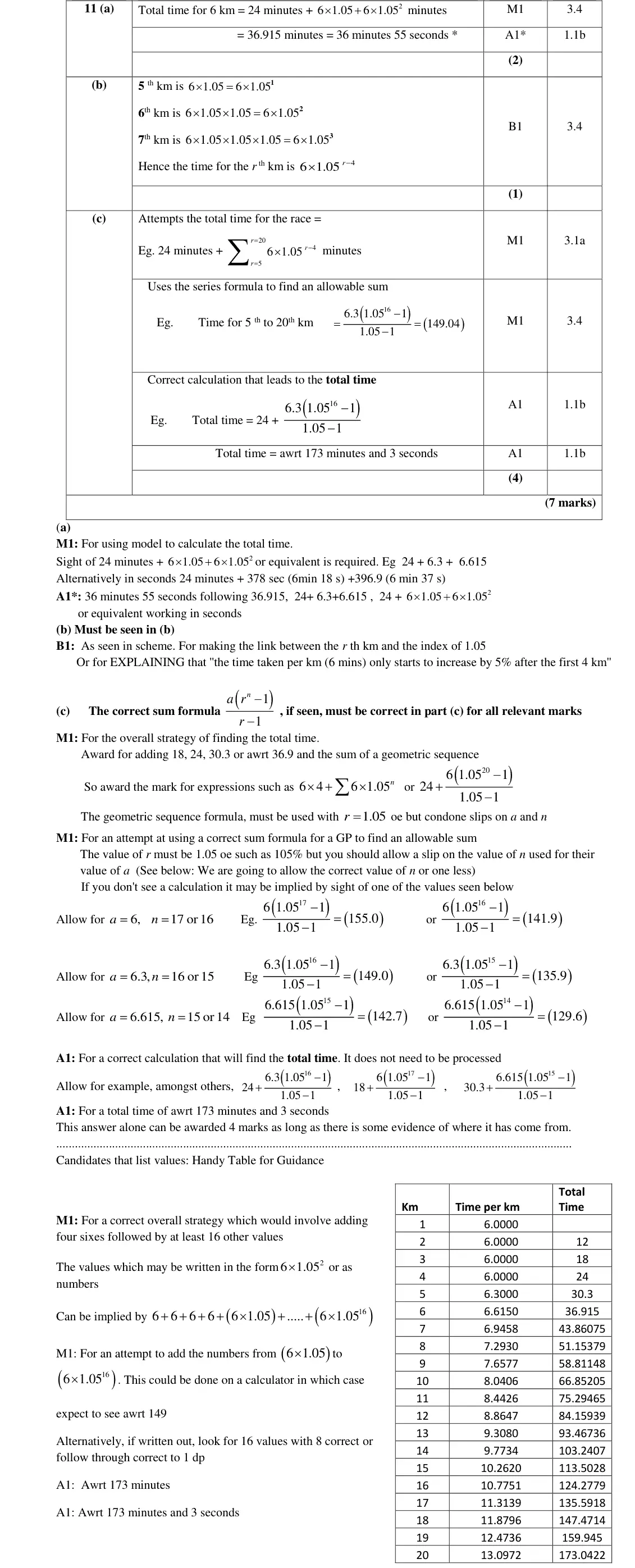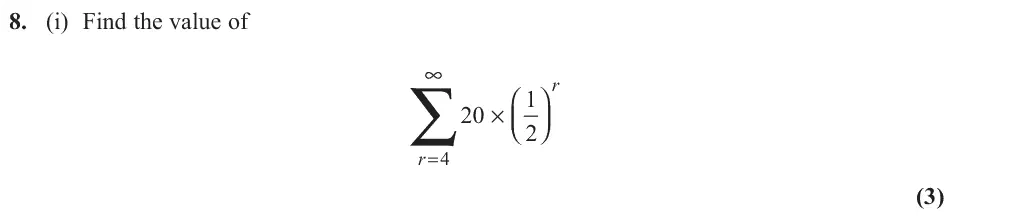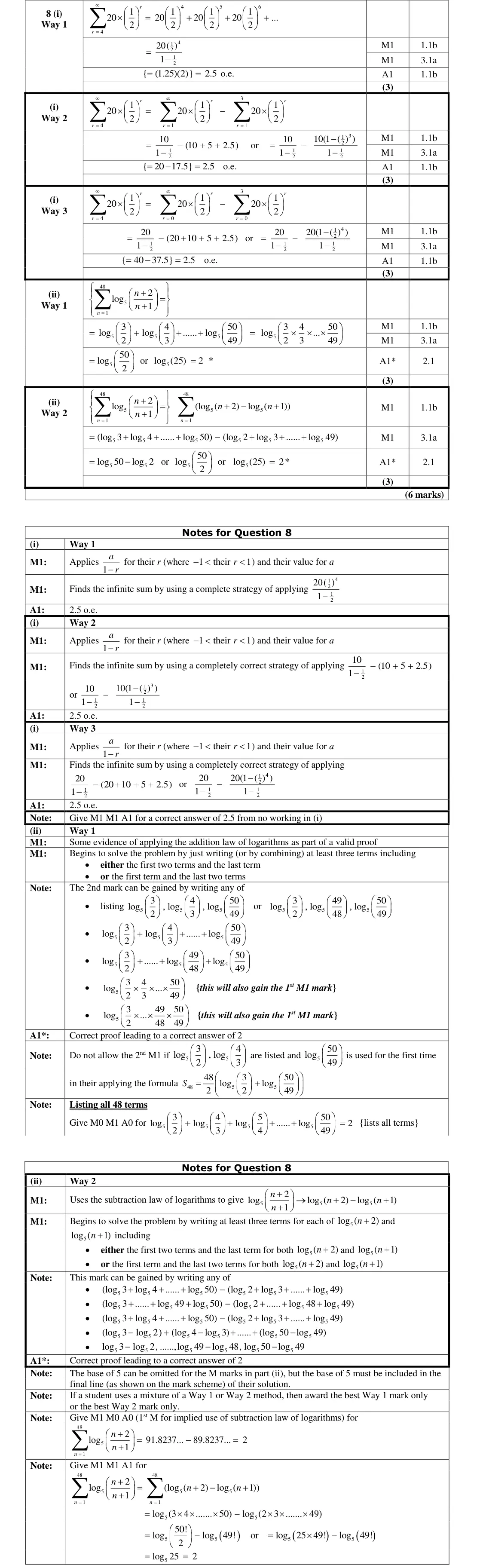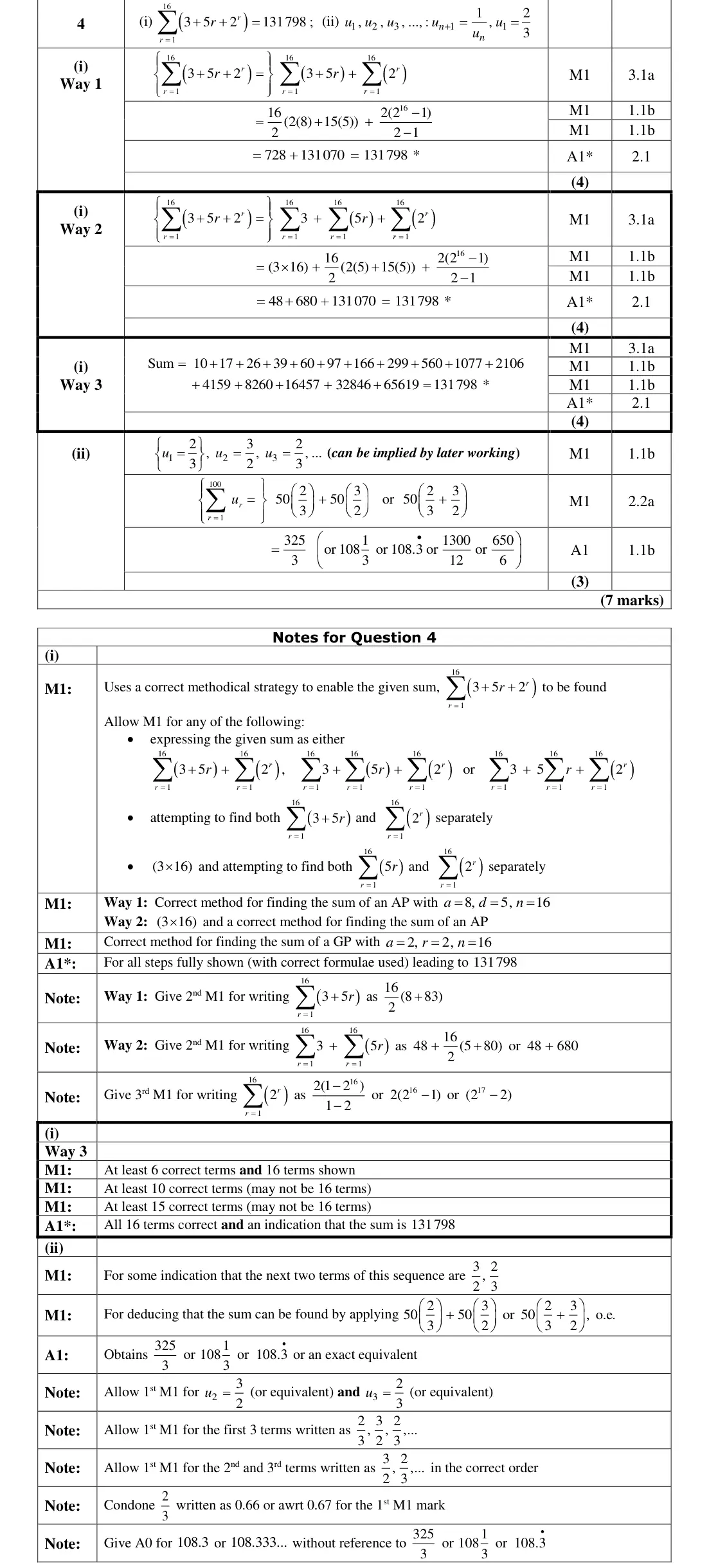
Mark scheme (whole question; this part is marked with the orange bar)
Examiner's comment
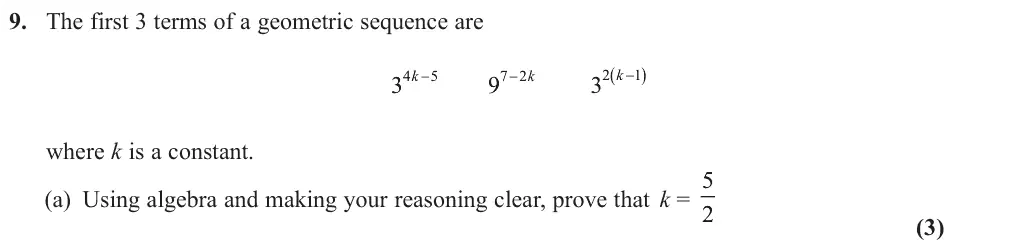
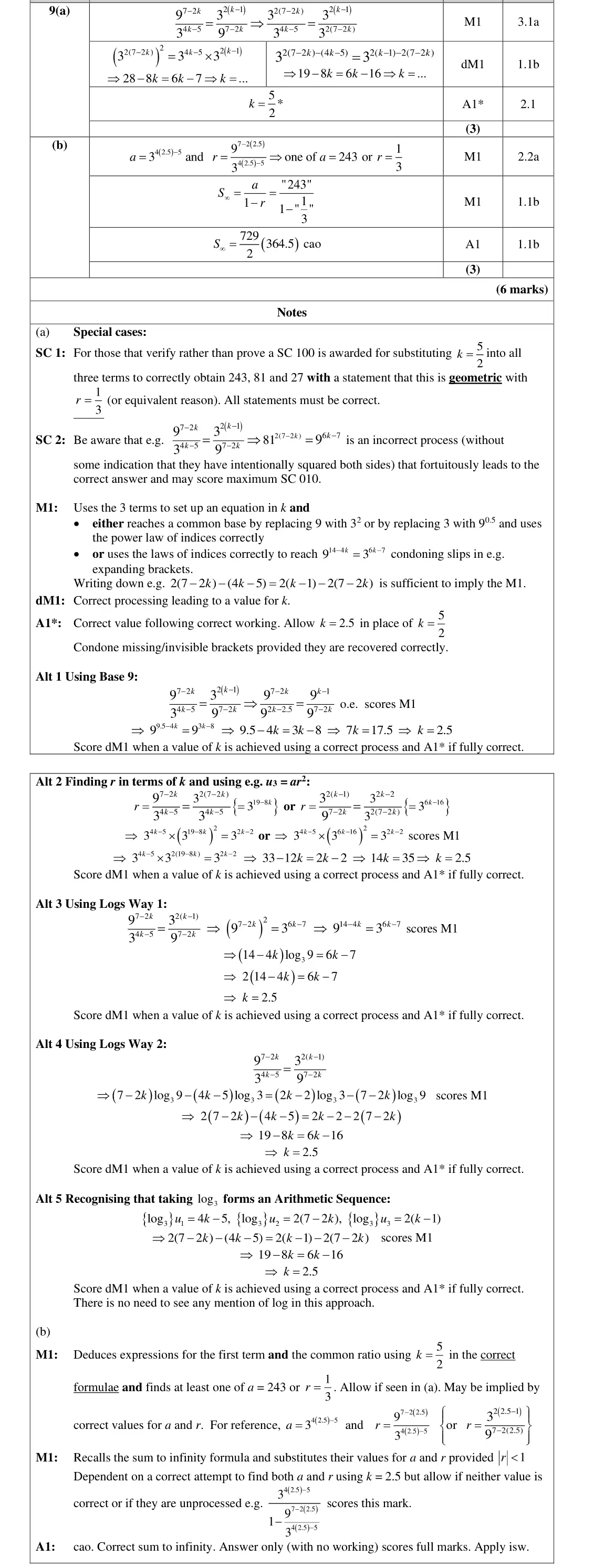
Part (a) was a discriminatory question with many different approaches seen; the mix of algebraic indices coupled with a geometric sequence caused problems for many candidates and often work lacked structure. It was evident that many candidates are not as familiar with the laws of indices as they should be and are not practised in the set-up of proof questions. The layout of candidates work varied enormously and they should be encouraged to practice showing a proof that flows and that is not interrupted by their thought processes. Despite the challenges many faced in part (a), the majority of candidates found part (b) to be accessible due to the given answer in (a) providing a restart opportunity. In part (a), many candidates were able to achieve full marks by setting up an appropriate equation, changing to the common base of 3 and using the index laws to form a linear equation in k and then solving. The most common (and successful) method was using 2 ar ar a ar = and then changing to the common base of 3, using the power law of indices and, either subtracting the indices or by cross-multiplying and then adding the indices. The most common error, which was highly prevalent, was incorrect use of the division/subtraction law of indices – whereby they divided indices rather than subtracted and then formed quadratic equations in k, resulting in no further marks being awarded. Most initial difficulties arose from not understanding how to use the power law correctly for 7 2 9 k - or failing to notice that the bases needed changing at all and many simply subtracted the indices regardless of the differing bases. Changing the base to 9 was rarely seen and attempts at using logarithms were mostly unsuccessful as again, the laws were not generally adhered to. Some candidates demonstrated a lack of understanding of indices by multiplying the bases but adding the indices to achieve ( ) 2 7 2 6 7 81 9 k k - - = . These were given some benefit of doubt and awarded one mark by a special case in the mark scheme, provided the rest of their processing was correct. Other candidates tried to verify the sequence being geometric by substituting in the given value of k, which did not satisfy the demand of the question. These attempts were allowed to score a maximum of 1 mark but were often unsuccessful as not enough of a conclusion was made. It is also worth noting that candidates should pay attention to the form of the given value and realise that this is what is required; an equivalent fraction 35 14 k = was not accepted for the final mark.
Common mistakes
- equate ratios (u₂² = u₁u₃)
- write 9 as 3² and use index laws to get a linear equation in k
- index-law errors very common
- verifying k = 5/2 earns only a special case