Examiner's comment
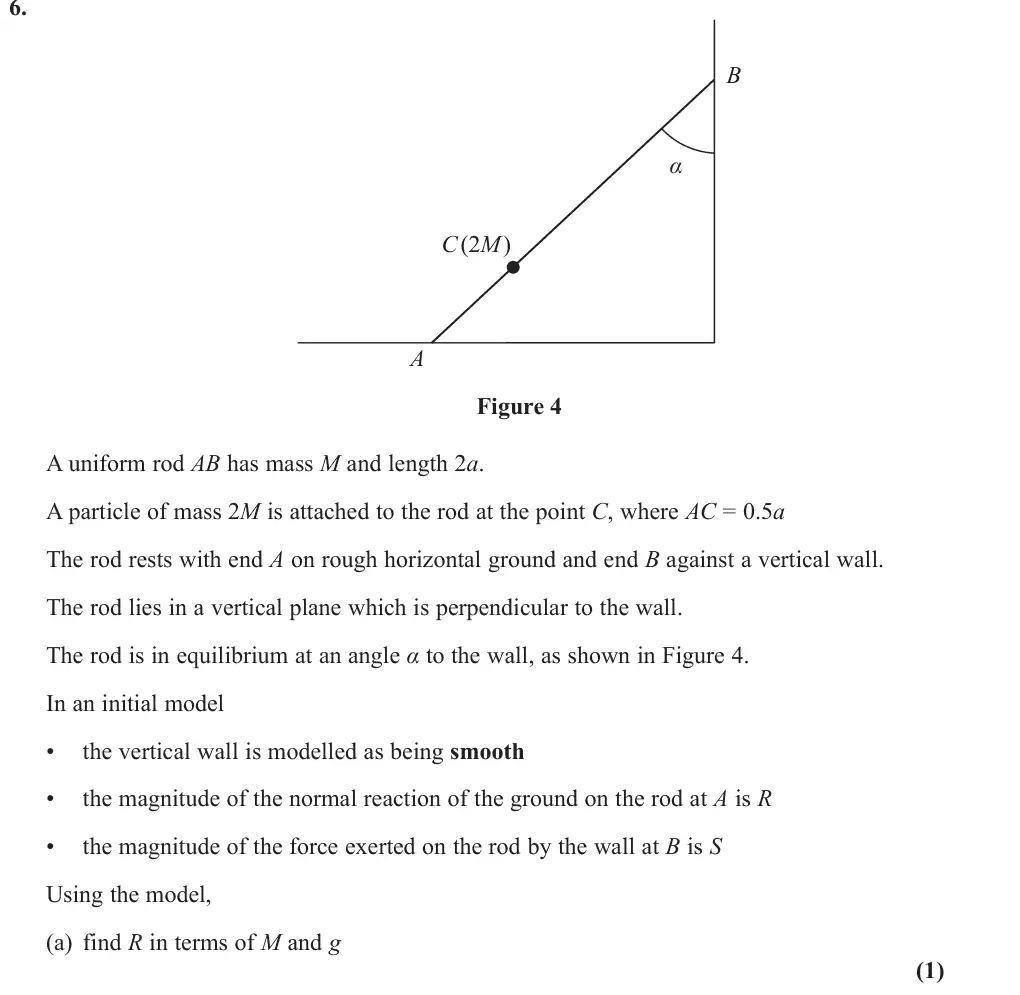
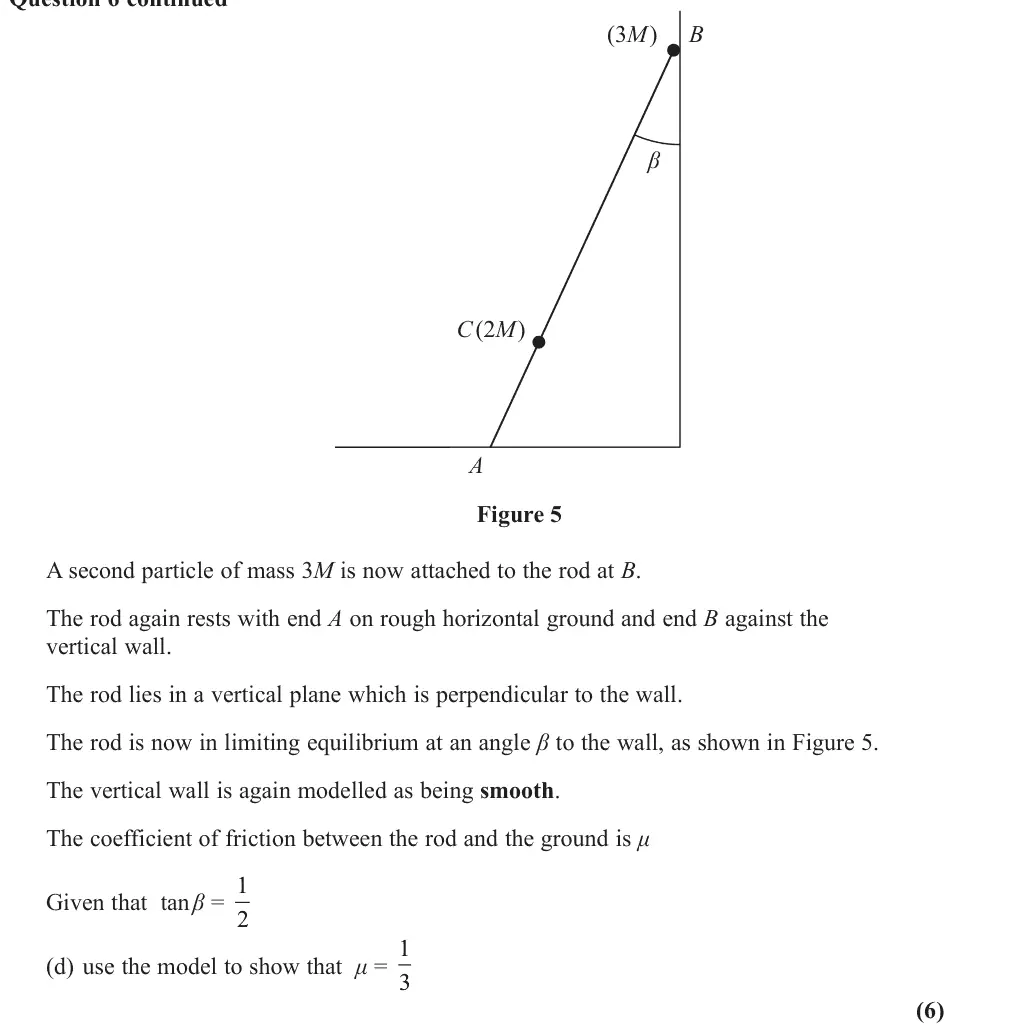
In part (b) the most popular and simplest approach was to take moments about A to derive the given expression for the normal reaction at B. The angle was given between the vertical and the rod, rather than the possibly more familiar case of between the horizontal plane and the rod. Although this was not a problem for the vast majority, a significant number used (90o - alpha ) for their angle which sometimes led to confusion, particularly for those who did not recognise the equivalence with sin alpha /cos alpha and instead tried to use the addition formula to write this in terms of alpha only. In addition to sin/cos confusion, errors seen included total omission or inconsistent inclusion of a, slips in copying from one line to the next and occasional omission of the weight of the rod. Since the requirement was to ‘show that tan S Mg ’ it was essential that working was complete and correct to achieve all the alpha = marks. A very small minority attempted to take moments about B but they often did not complete their solution by resolving forces in order to eliminate F and R. In the third part although many learners recognised that R (with no friction acting at B) was take moments about A, to follow from the work in part (b). Responses that did this usually scored some marks for their horizontal and/or vertical resolutions even if their moments equation was incorrect. Occasionally the reaction at the wall was considered to be perpendicular to the rod rather than to the wall which generally resulted in no marks being achieved. Errors in the moments equation included sin/cos confusion, inconsistent inclusion of a and incorrect perpendicular distances. Some omitted the weight of the rod leading to a missing term in both the moments equation and the vertical resolution. Fragmented respondes, simplifying terms before writing down a full moments equation, sometimes made slips in the process. Those who attempted to take moments about B often achieved the mark for their vertical resolution but often did not gain all the marks for their moments equation. Attempts to resolve parallel or perpendicular to the rod were rare and tended to have a term missing. Nevertheless, there were a fair number of entirely correct solutions seen with clear and concise working.