Examiner's comment
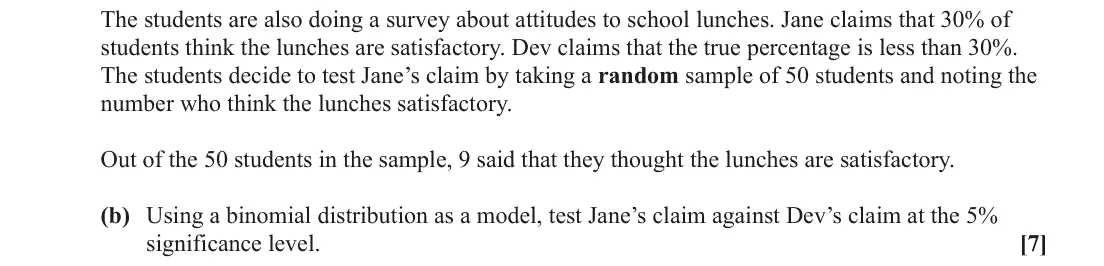
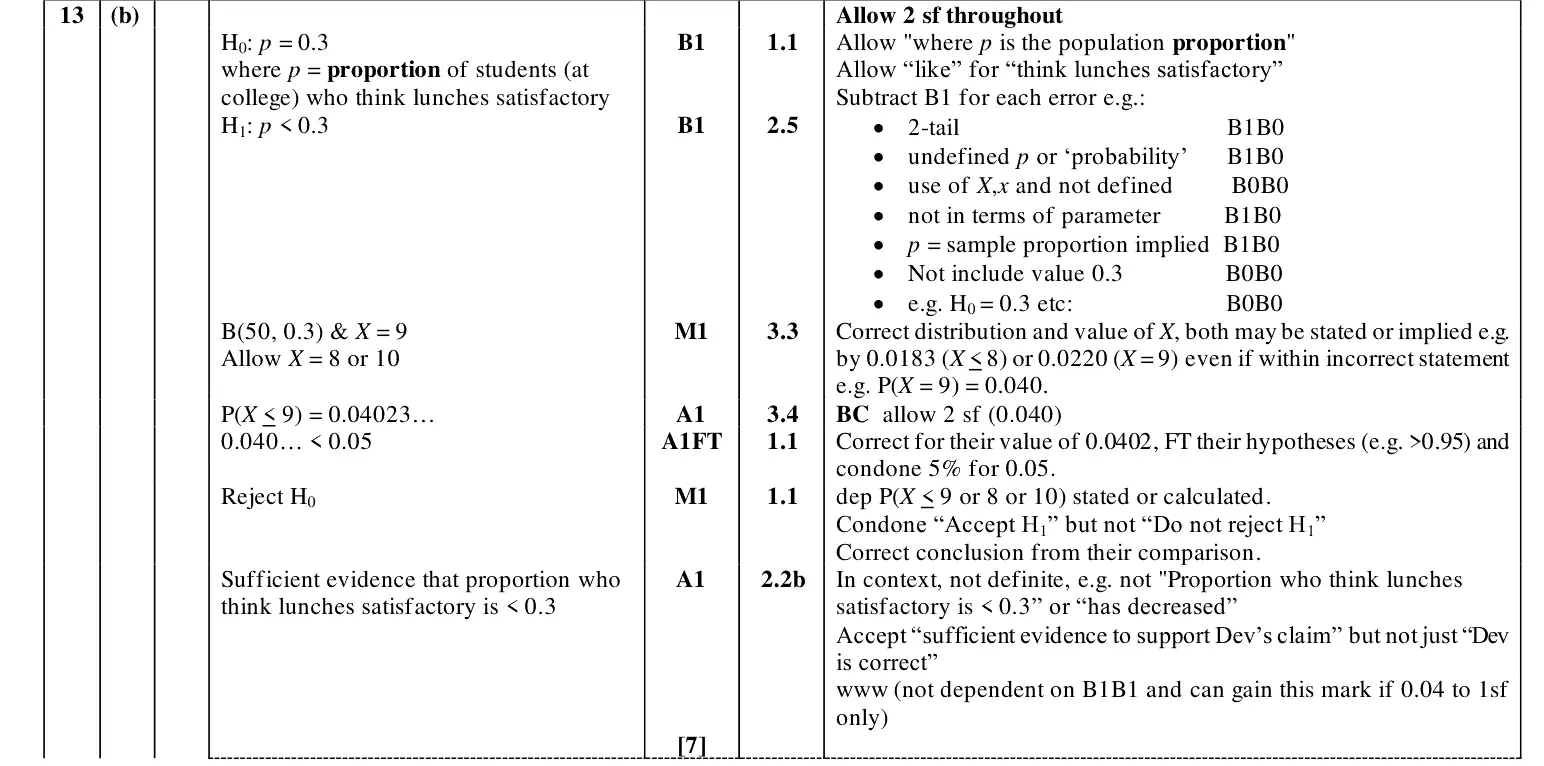
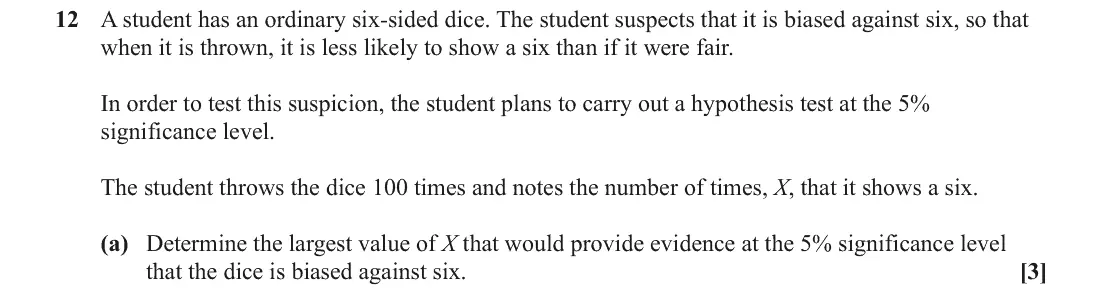
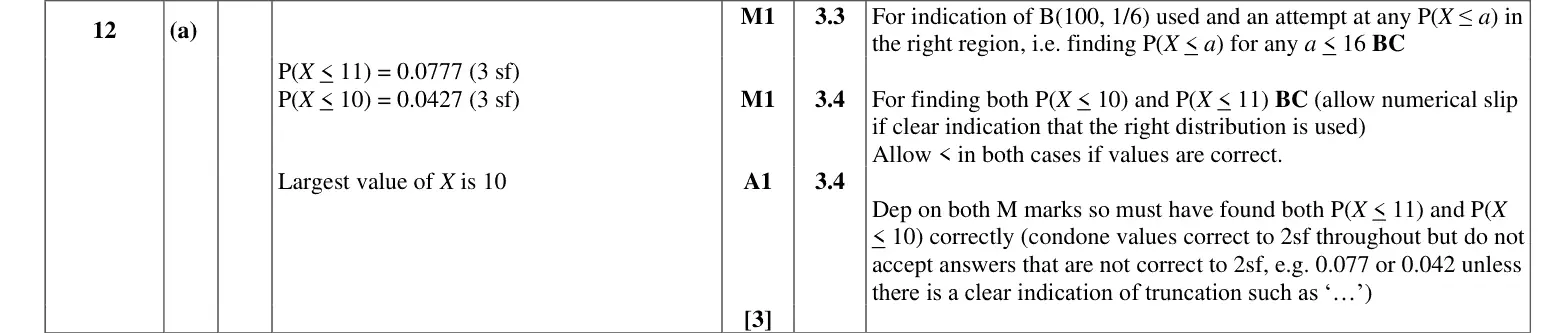
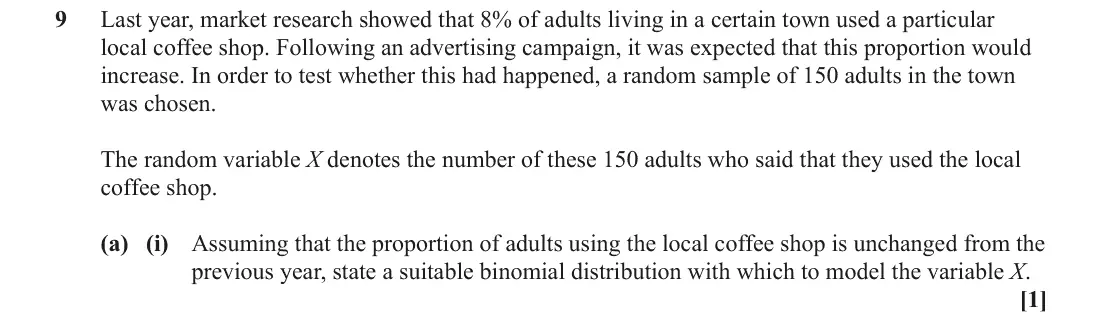
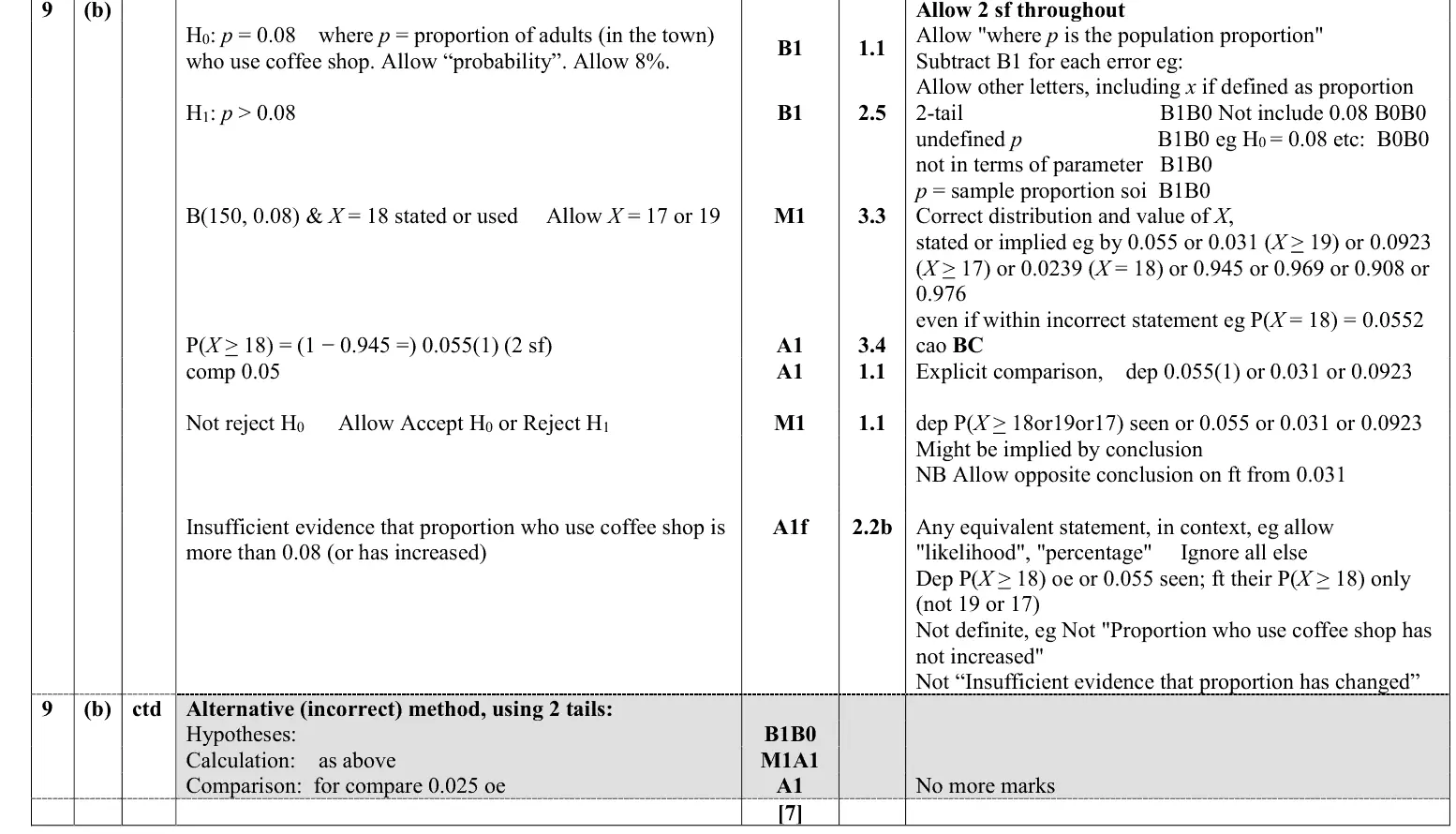
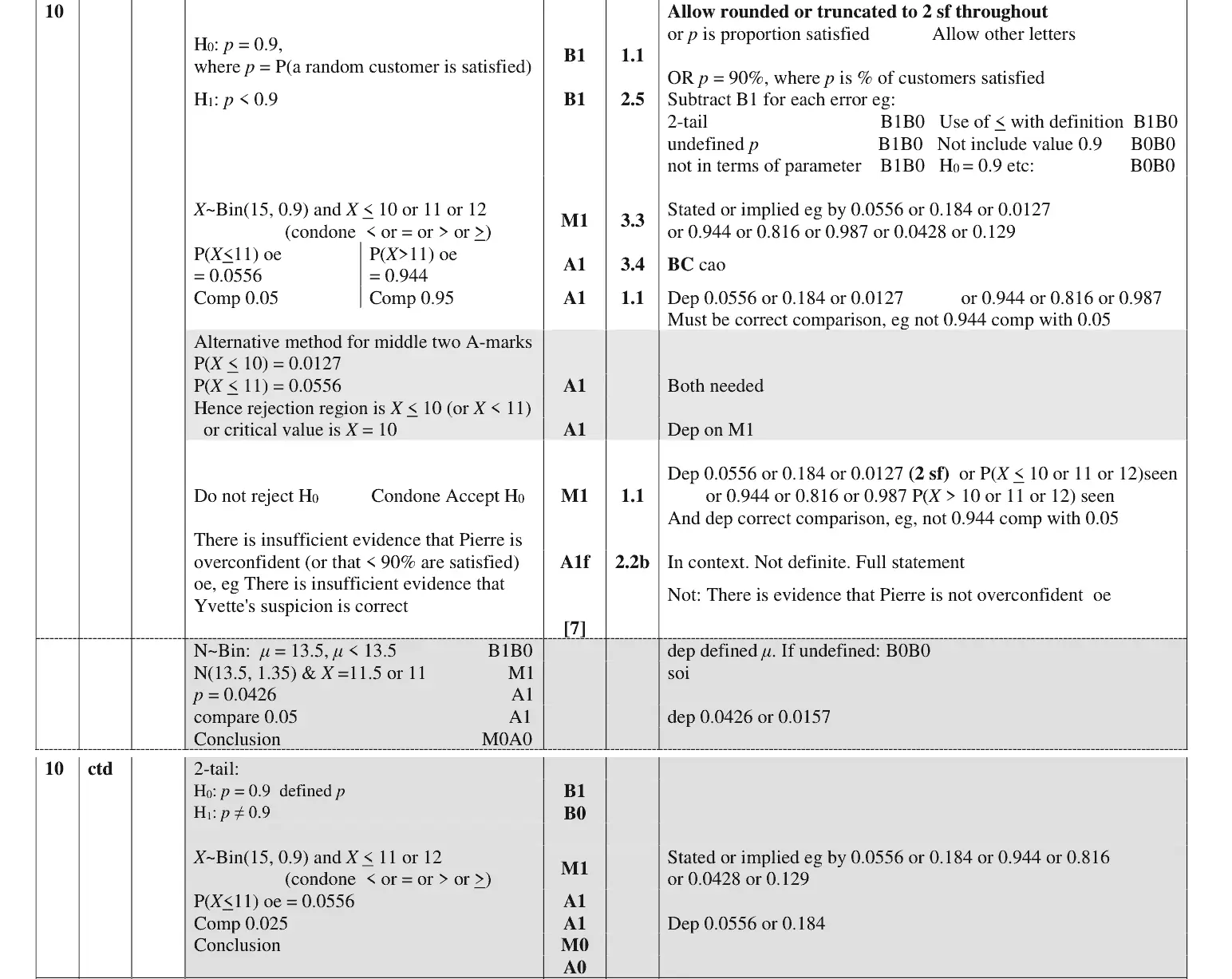
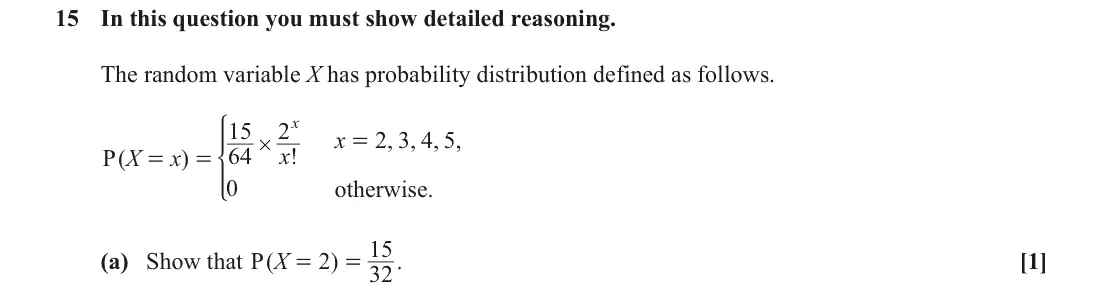
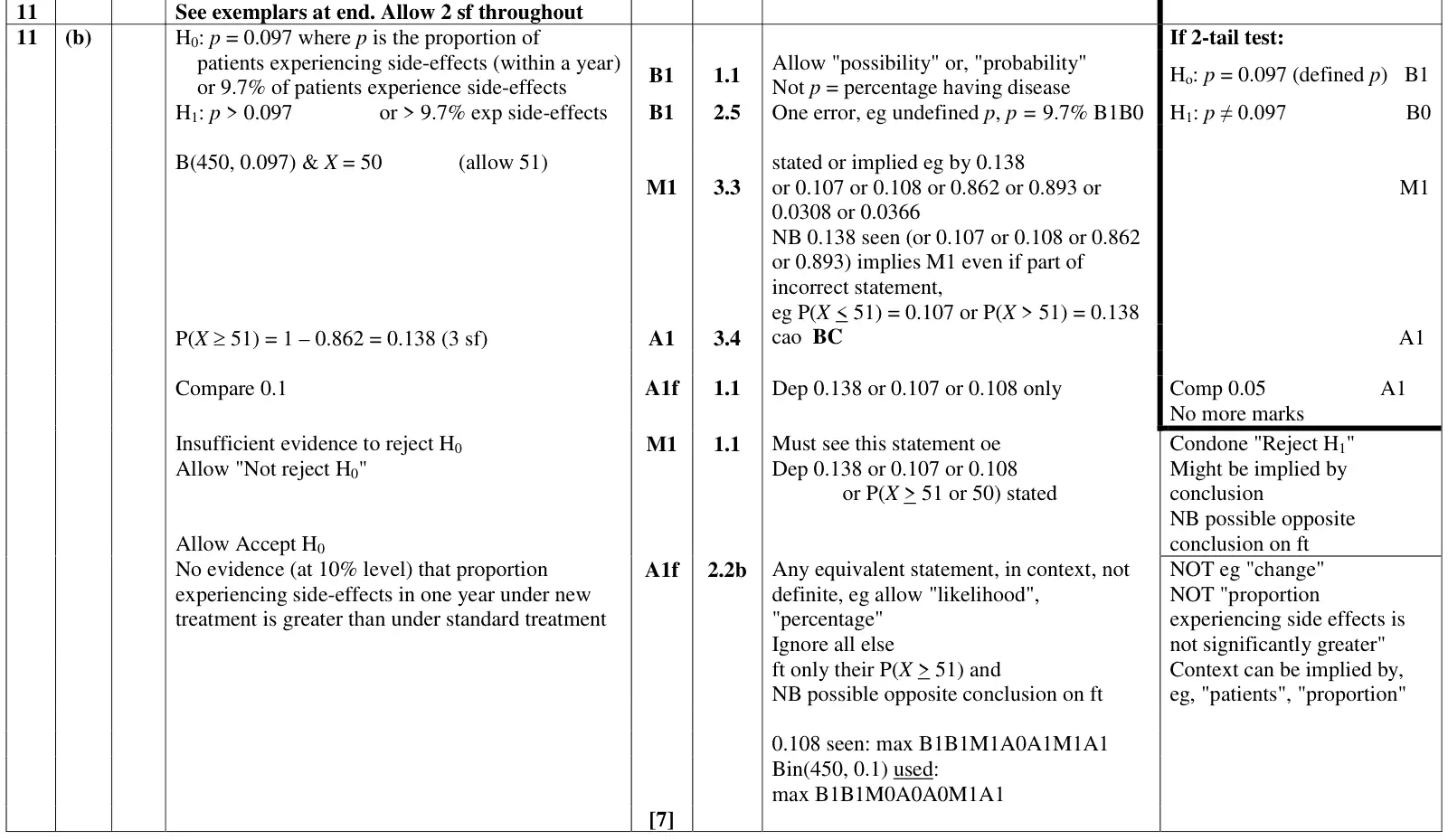
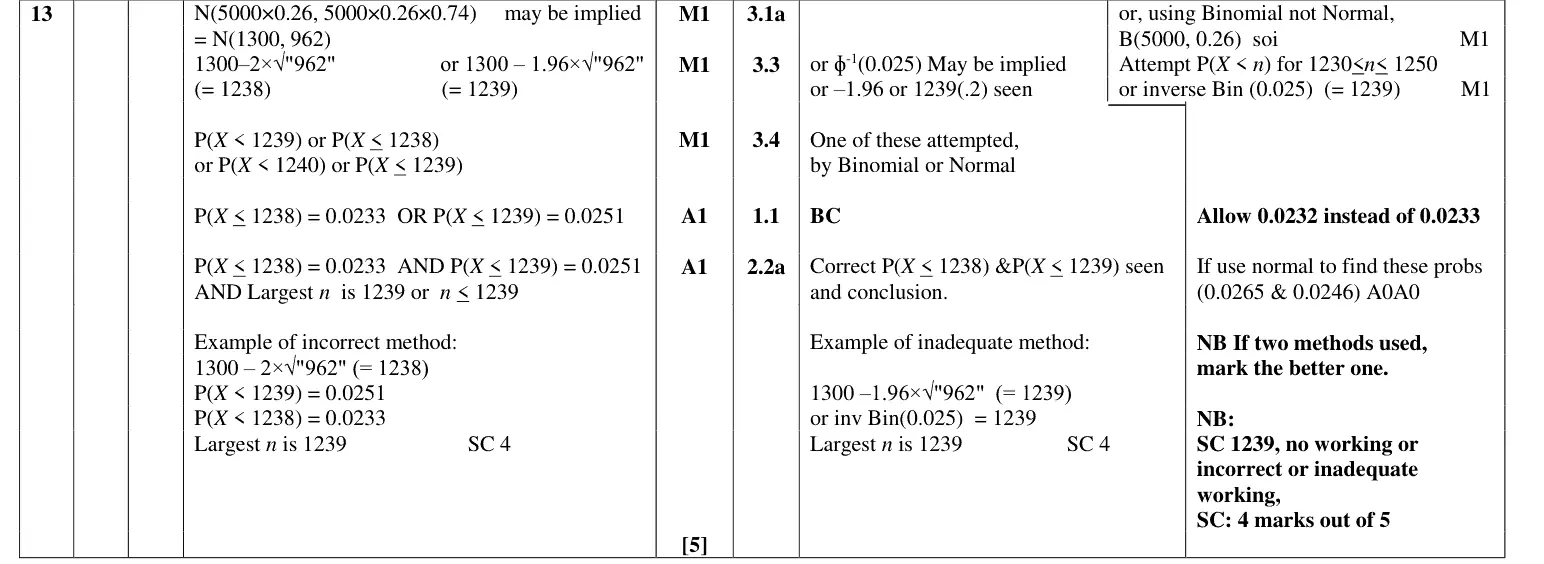
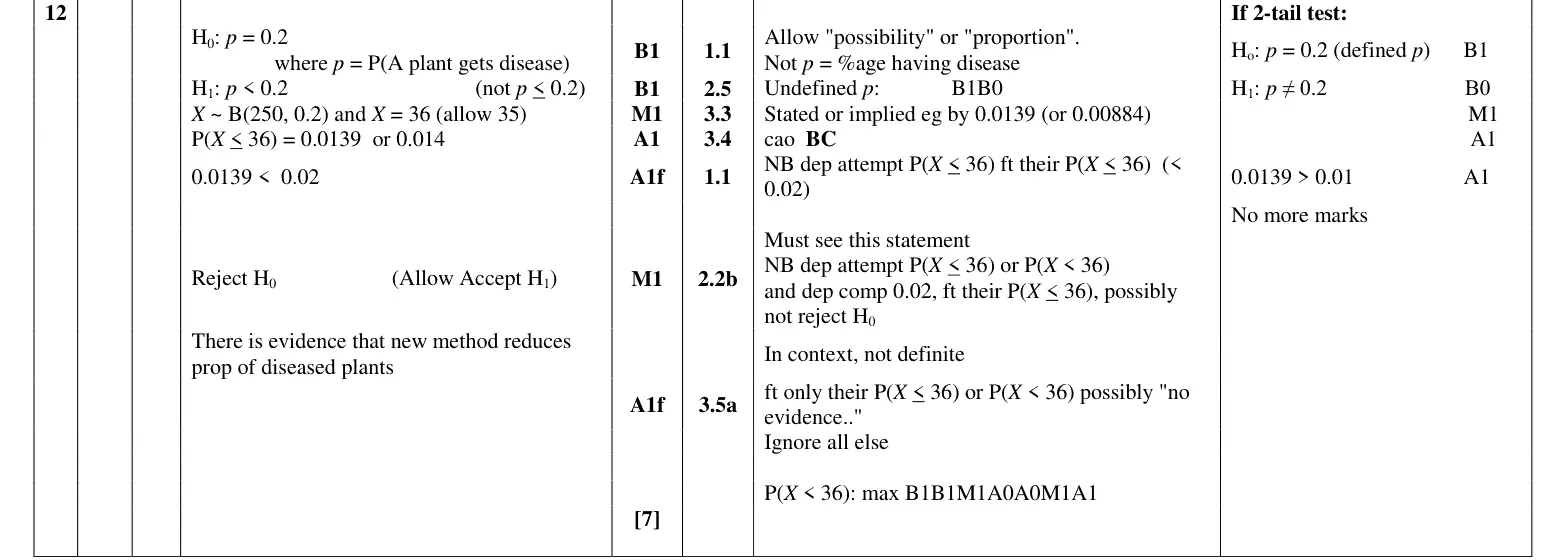
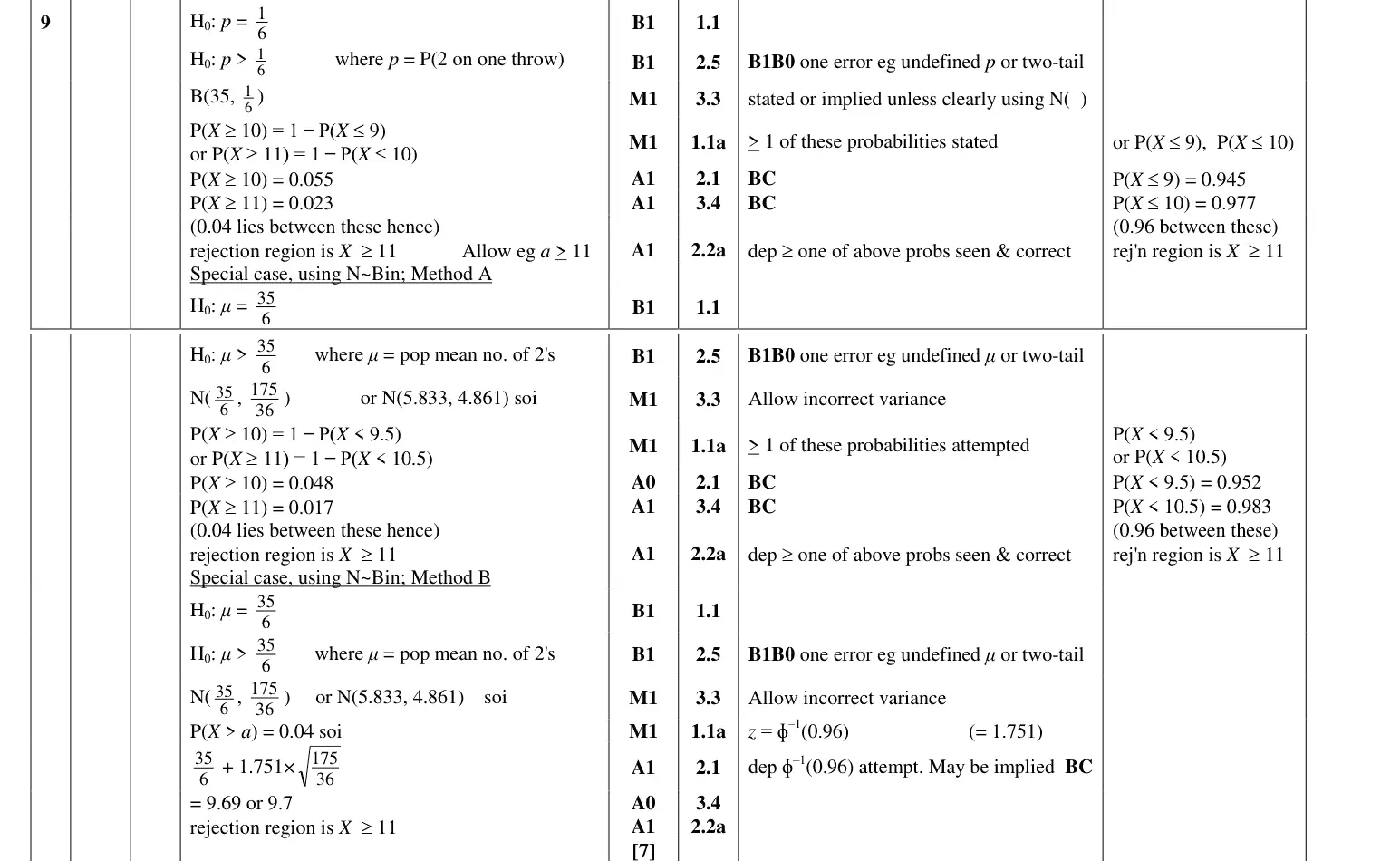
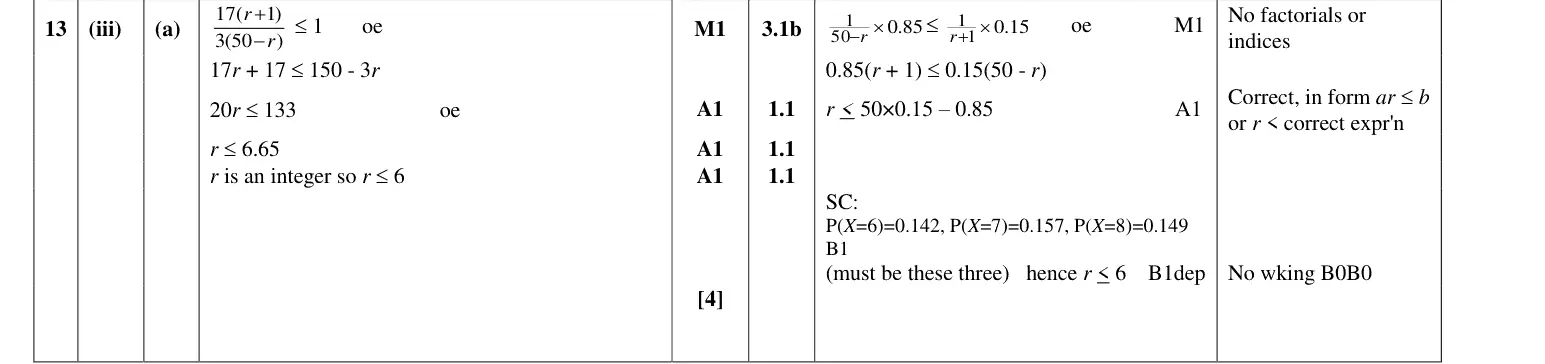
Most candidates did not recognise the need to consider the first 9 values separately before considering the 10th. Some candidates seemed unfamiliar with the binomial distribution. Common misconceptions Key teaching and learning points – comments on improving performance One way to answer hypothesis test questions successfully can be taught as a simple list of steps to be learnt by rote. For more information, see the OCR Maths blog A Level Maths – hypothesis tests and the art of being non-assertive. It is difficult to teach candidates how to answer questions requiring deduction from data. Perhaps the best strategy is to look carefully at all the past papers and practice papers, for both AS and A Level. In particular, a close study of the published mark schemes, and examiner's reports, will help teachers and candidates to understand what kinds of answers are acceptable. Brevity is of the essence. Teachers should advise candidates carefully about the meanings of the command words given in section 2d of the specification, such as ‘Detailed reasoning’, ‘Exact’, ‘Determine’, ‘State’ and ‘Hence’. These words are intended to be pointers as to how particular questions should be approached, so candidates need to be familiar with these before sitting the exam. As an example, in Question 3(c), attention to the word "hence" made the question fairly simple, but most candidates missed this. Factorisation of polynomials by means of the factor theorem is almost always useful in this type of exam paper. Careful explanation of the need for the modulus sign when integrating 1 x would be useful to candidates. Question such as 15(b) are common, involving the need to considers a list of all possible cases. It is necessary to recognise, for example, that 2, 2, 5 can be arranged in three different orders, but 2, 3, 4 can be arranged in six different orders. Practice of this type of question in the classroom would yield dividends. Guidance on using this paper as a mock This paper covers the following pure topics: simple calculus, algebraic factorisation and simplification, the binomial expansion for non-positive integer n, geometrical progressions, trigonometrical equations and identities, algebraic proof, vectors (position vectors, modulus, distance between points, mid-point), the cartesian equation of a circle, differential equations, This paper covers the follow statistics topics: histograms, hypothesis tests for μ and for p, rejection region, calculation of mean and standard deviation, properties of the normal distribution, addition and multiplication of probabilities, inference from data and discrete probability distributions. In general, the paper tested algebraic manipulation and application of calculus in several contexts, together with various statistical concepts and understanding of probability.