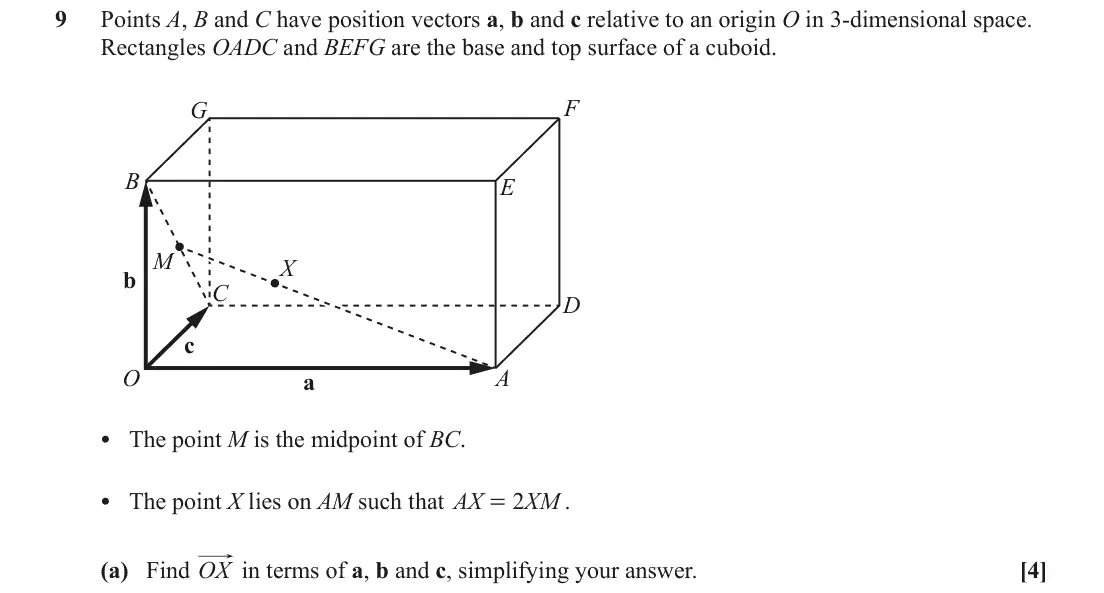
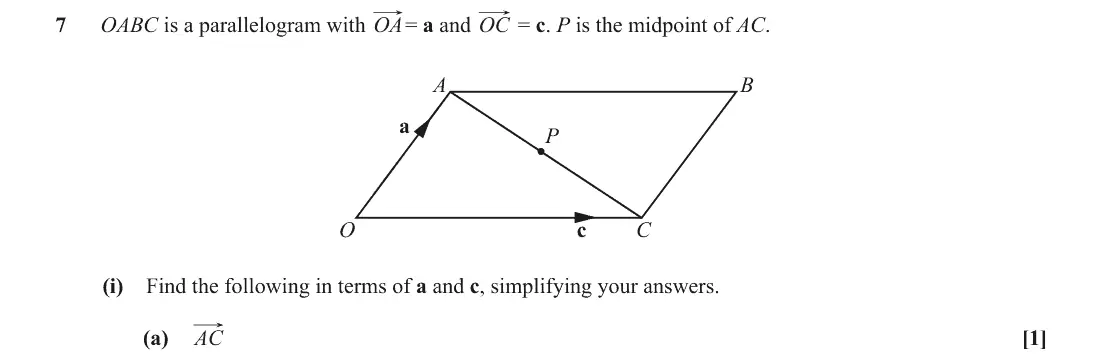
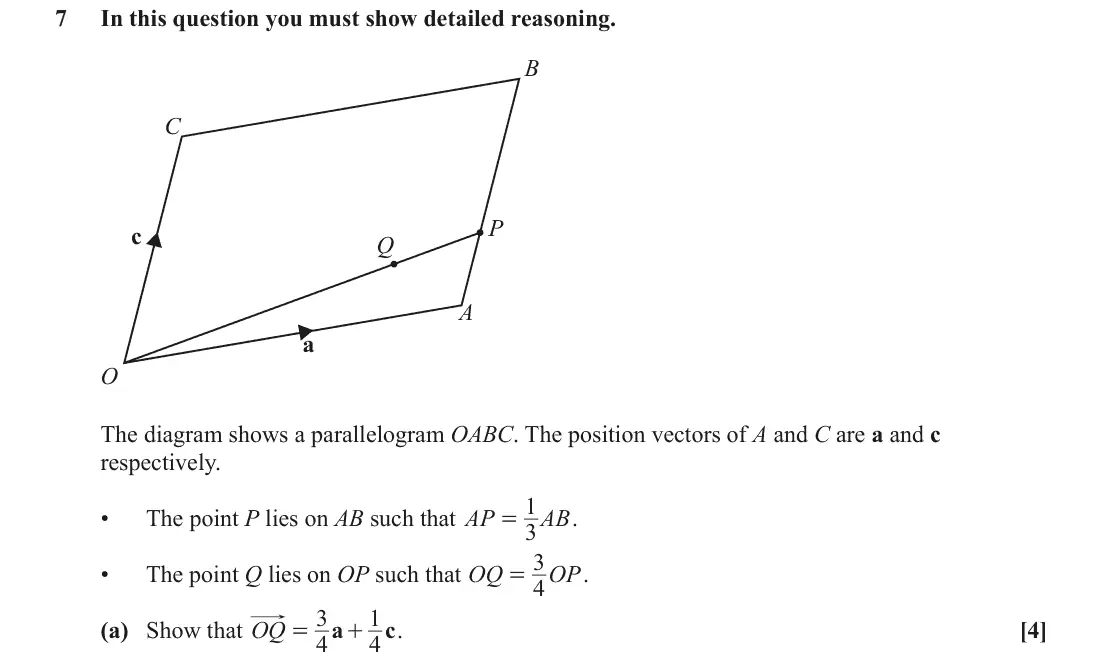
Show the start of this question

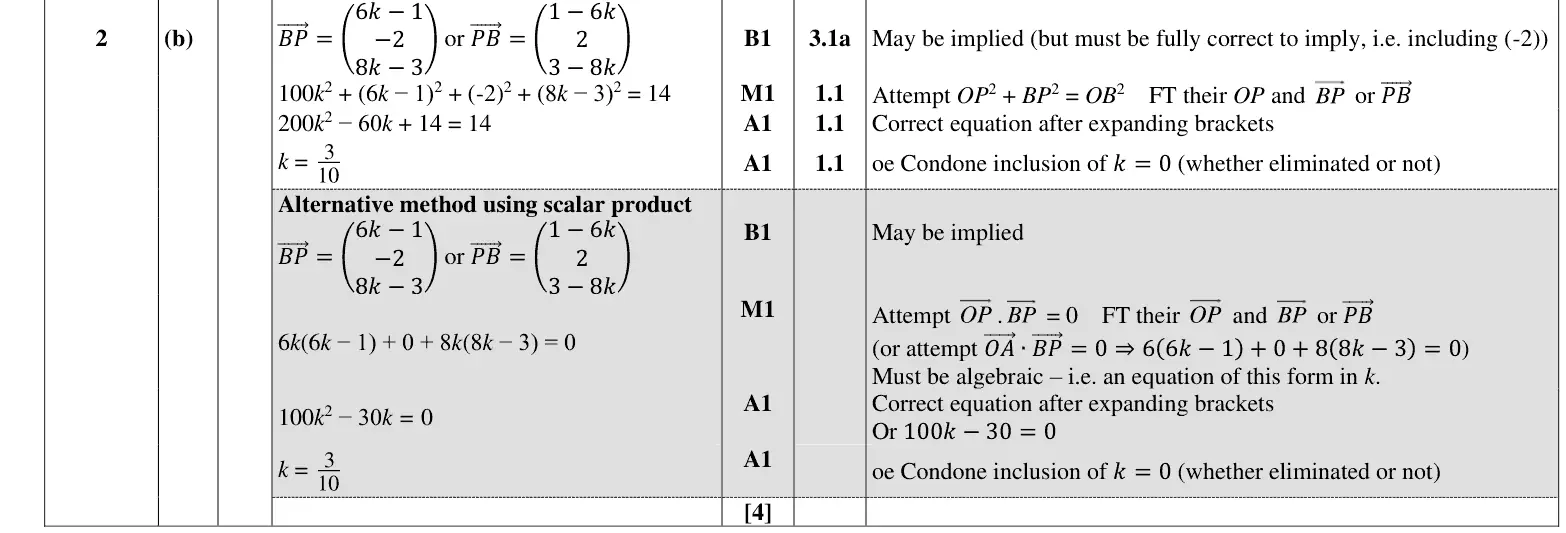
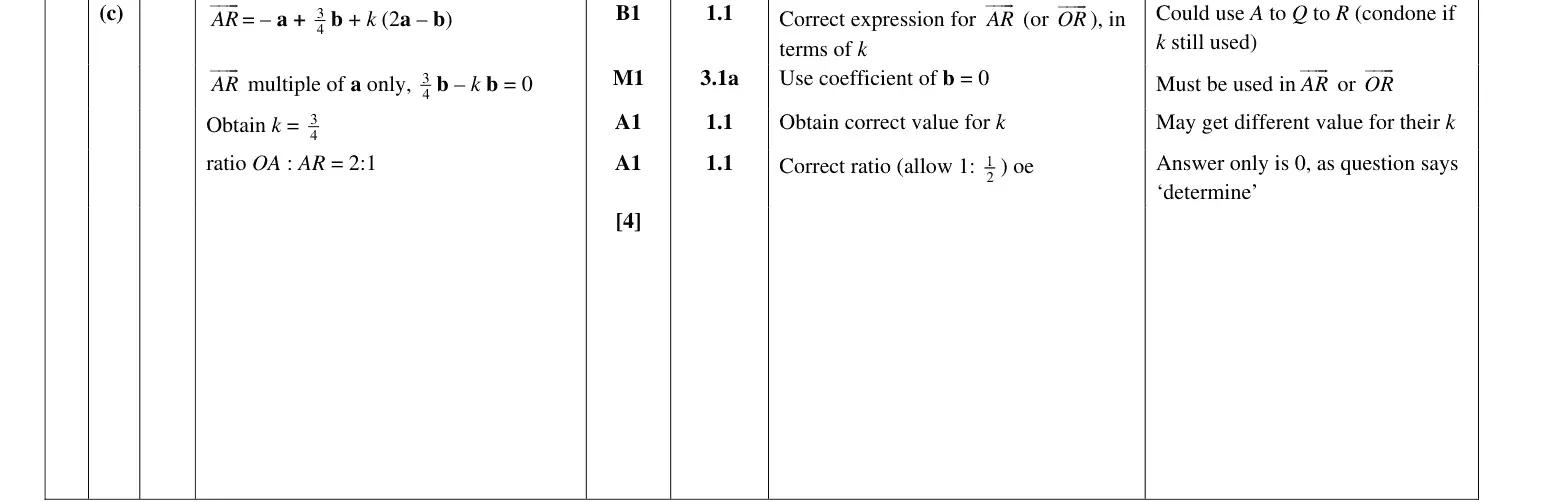
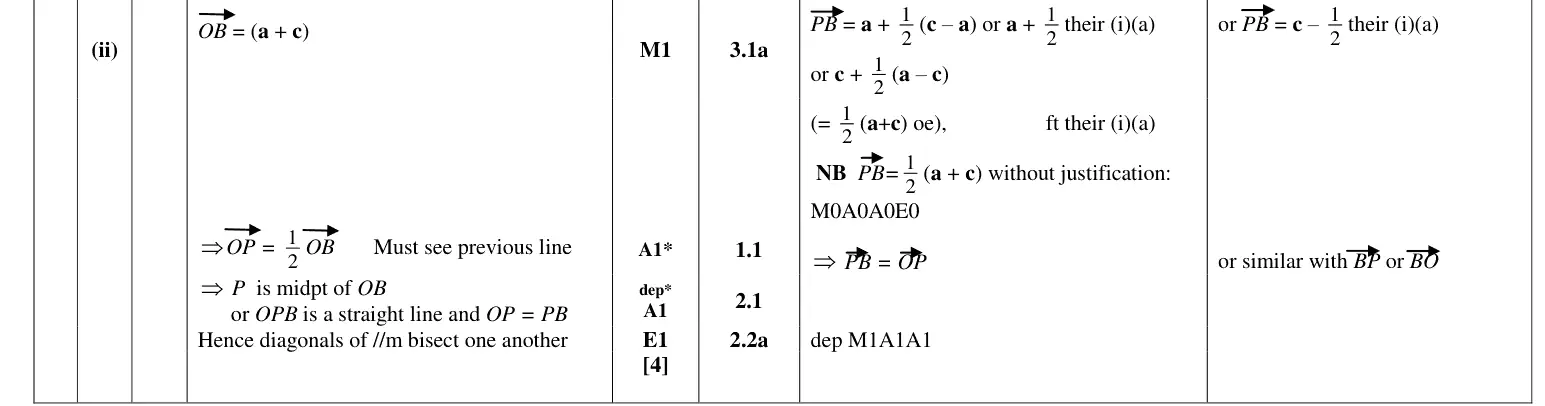
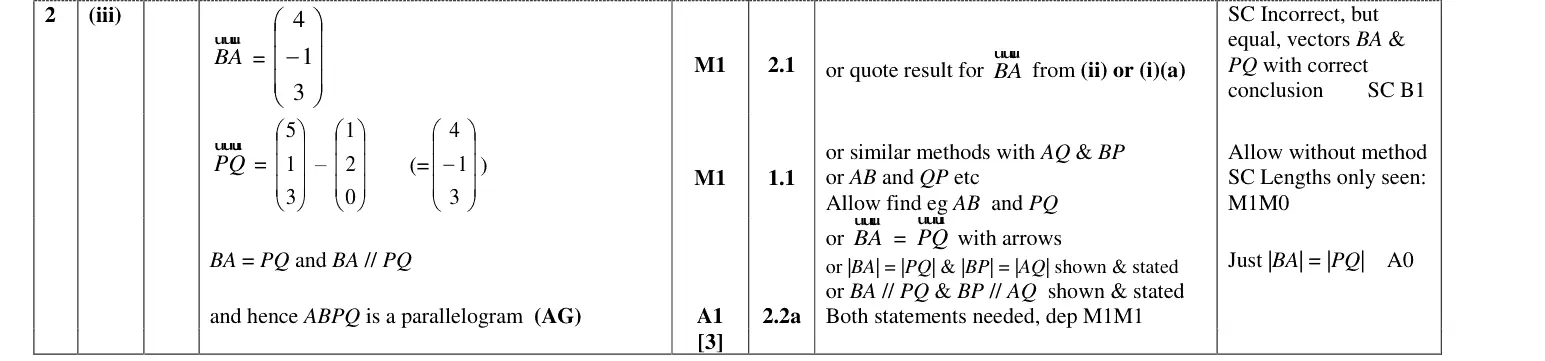
Mark scheme for this part
Examiner's comment
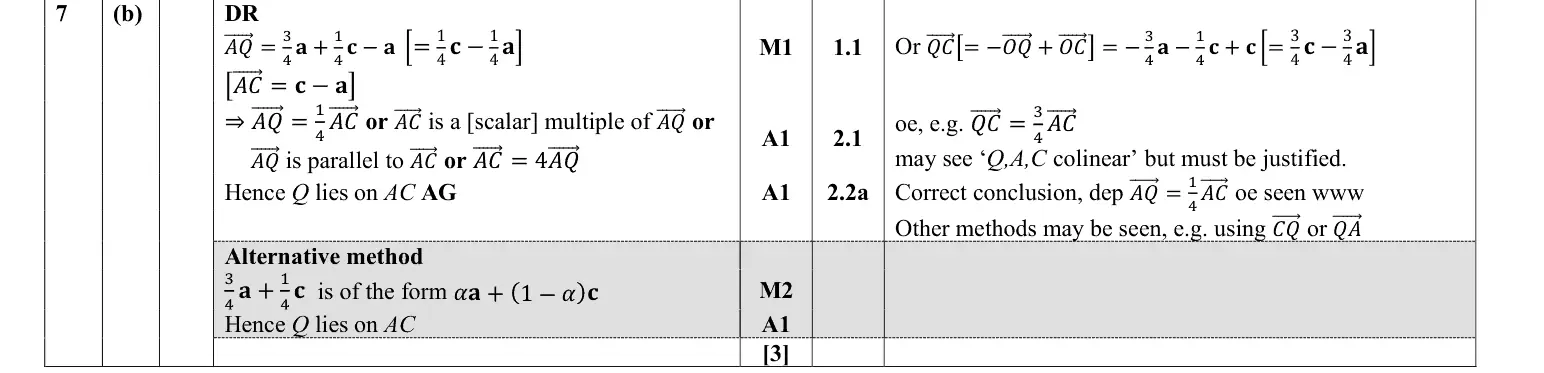
Most candidates started well here, finding a vector expression for 𝐴𝑄⃗⃗⃗⃗⃗ or 𝑄𝐶⃗⃗⃗⃗⃗ , etc. and scoring M1. However, many candidates then did not score either A mark by either trying to state that this first line is sufficient to prove the required fact, or by demonstrating that 𝐴𝑄⃗⃗⃗⃗⃗ + 𝑄𝐶⃗⃗⃗⃗⃗ = 𝐴𝐶⃗⃗⃗⃗⃗ (which is true, but not sufficient to prove that Q lies on AC). On this occasion, the scheme condoned statements which omitted the word ‘scalar’ or used less precise wording, but candidates should be reminded that – especially in a DR question – they should expect to show that the given fact meets all of the requirements. Strictly, to show that Q lies on AC via this method requires that 𝐴𝐶⃗⃗⃗⃗⃗ is a scalar multiple of 𝐴𝑄⃗⃗⃗⃗⃗ and that these two vectors share a common point (A). The latter point was not required but candidates did need to state a clear conclusion to demonstrate understanding of what they have shown. The alternative method was rarely seen.
Key points and common errors
- AQ = (1/4)c − (1/4)a = (1/4)AC, a scalar multiple with A common, so Q lies on AC
- showing AQ + QC = AC is not enough
- clear conclusion needed