Examiner's comment
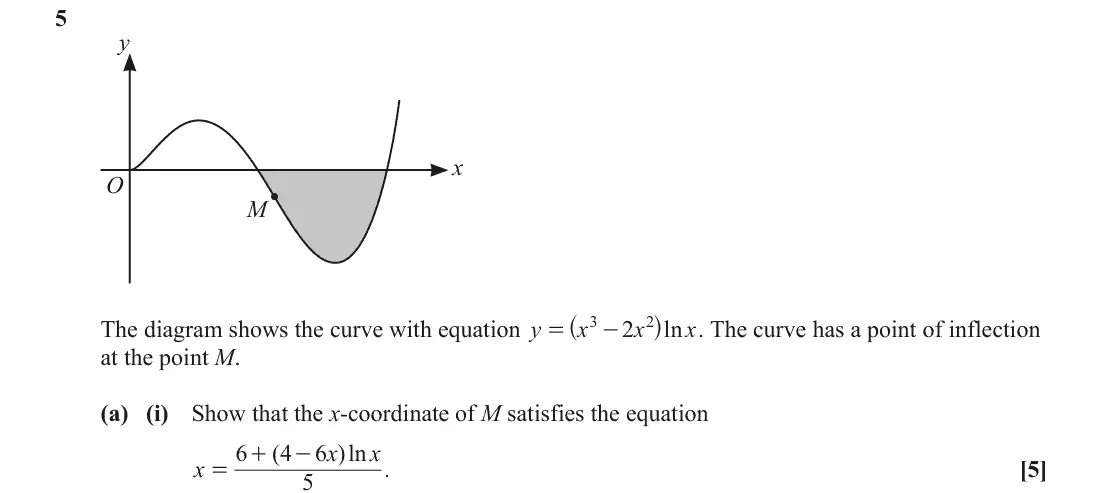
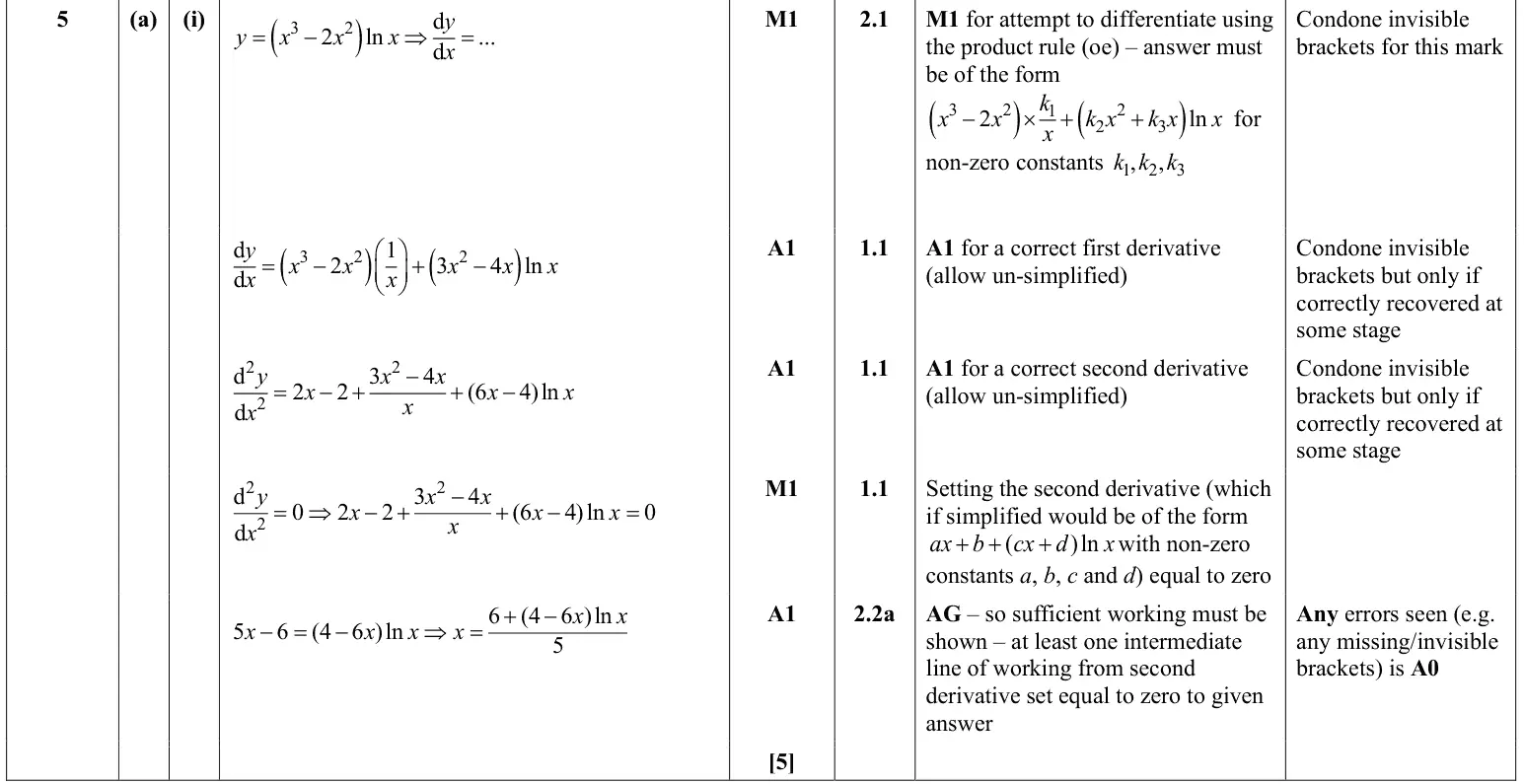
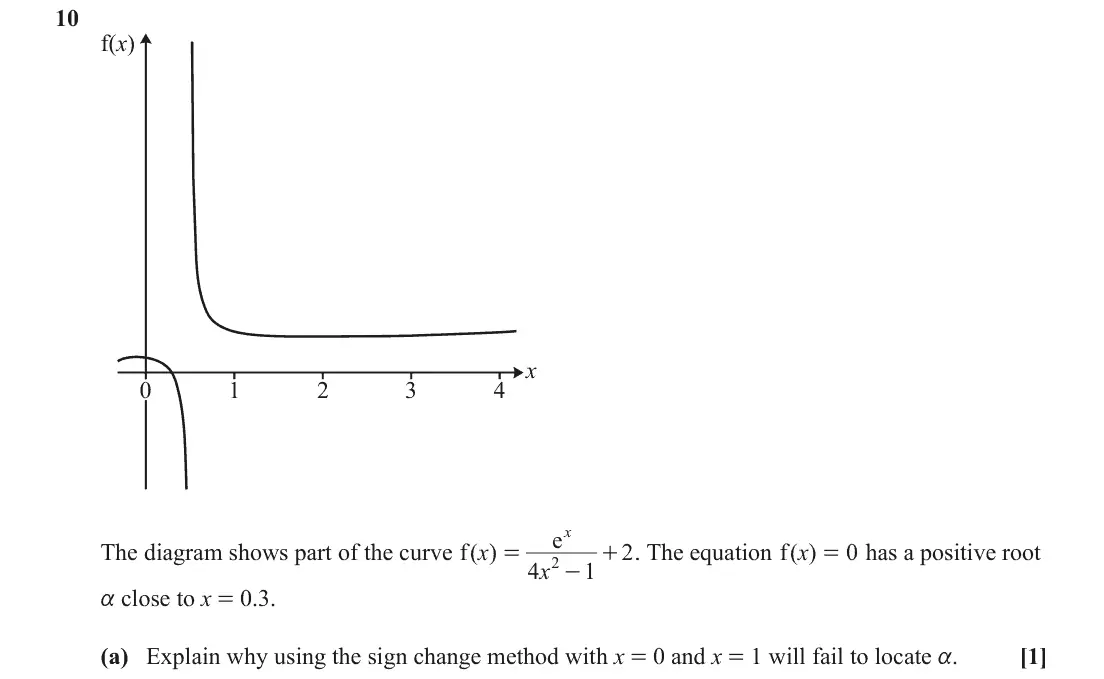
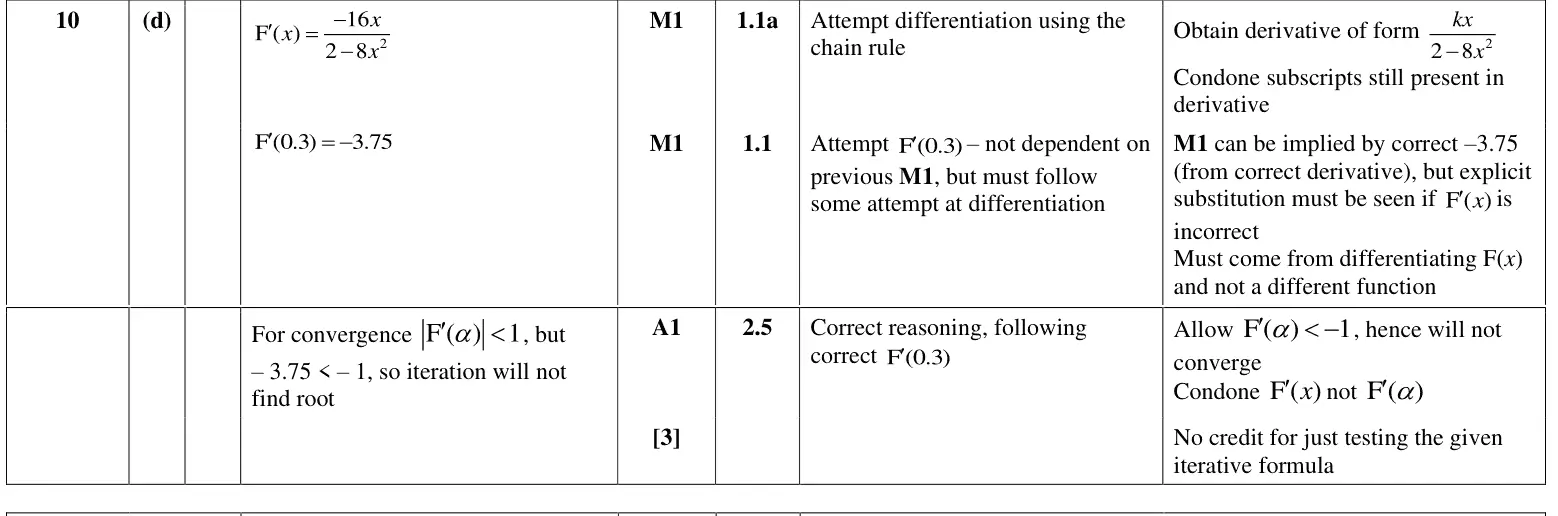
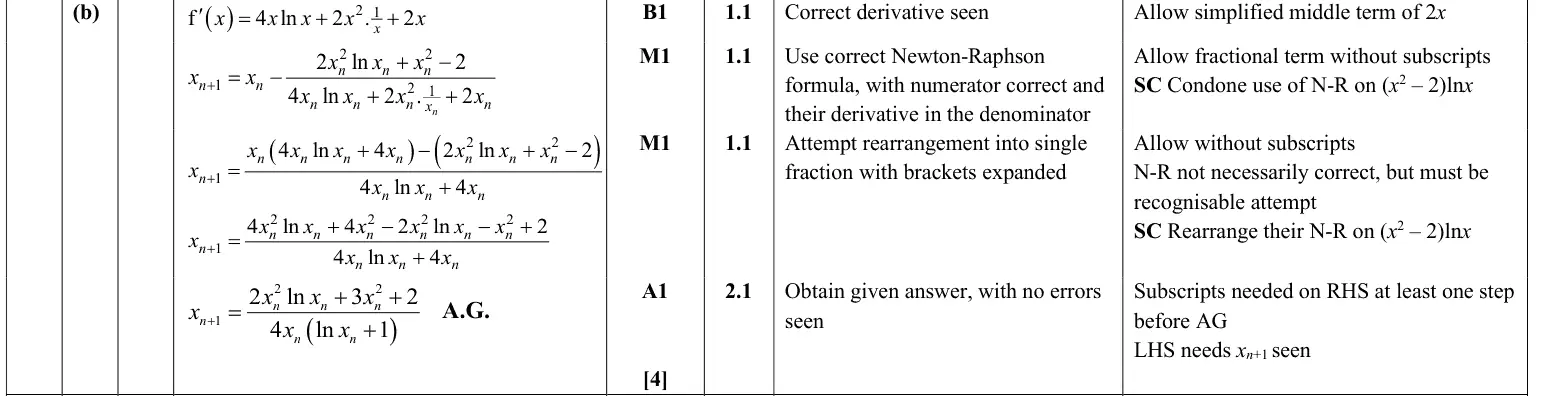
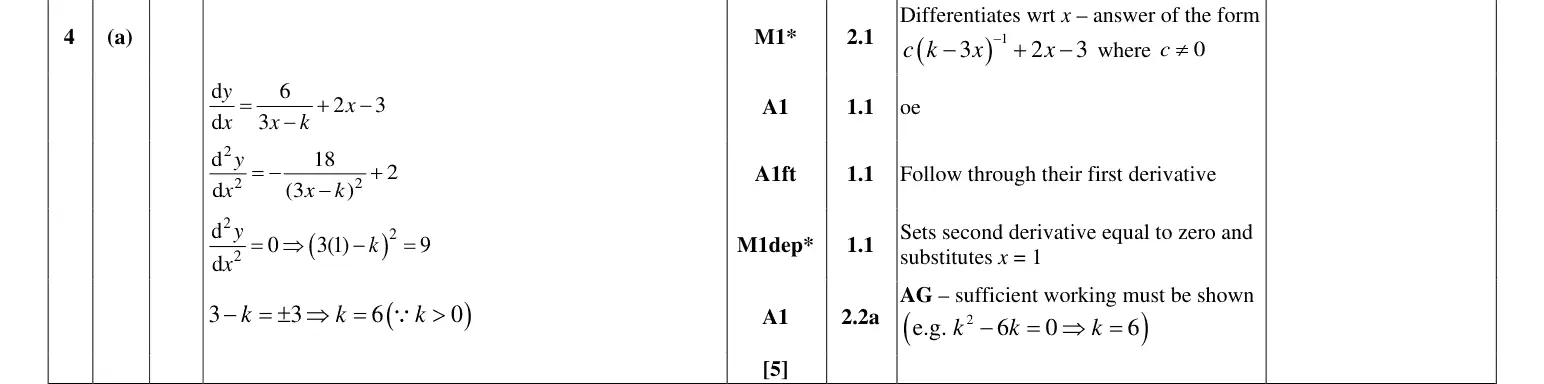
(Comment on Question 04 as a whole) In part (a) it was seen that a significant number of candidates only showed that the curve had a turning d y d y point at x = using 1 x = 0 rather than that the curve had a point of inflection at x = using 1 = 0 . d d x d y Some candidates substituted the values of x = and 1 k = 6 to ‘verify’ that = 0 and did not provide d x sufficient evidence to ‘show that k = 6 ’. Where questions ask for candidates to solve a problem to ‘show that’ a given answer is correct then it is good practice that the working leads to that answer and does not make use of the answer as part of the working. In part (b) the examiners were looking for actual numerical values with an explanation that the change of sign indicates that the x-intercept is between those values. Some candidates simply provided a generic explanation of what a change in sign would represent, but no numerical confirmation in the context of this question, which was not sufficient for the request ‘Show by calculation …’. Part (c) was generally done well, although some candidates dropped marks when imprecise notation resulted in subsequent substitution errors. In order to demonstrate that the Newton – Raphson method has indeed been used, it is good practice to write out the iteration formulae, taking care with the x and x + notation. Candidates that gave their results to the iterations to an accuracy greater than the specified 6 dp were not penalised, but the final accuracy mark required the answer to be quoted to the specified 5 dp. Part (d) was generally answered well by those that had successfully completed part (c). Most verified their 5 dp answer by checking for the sign change 0 000005 ± . , although a few investigated smaller interval bounds. Those candidates that did not gain credit either investigated 0 00001 ± . or did not explain how their calculations verified the result.