Examiner's comment
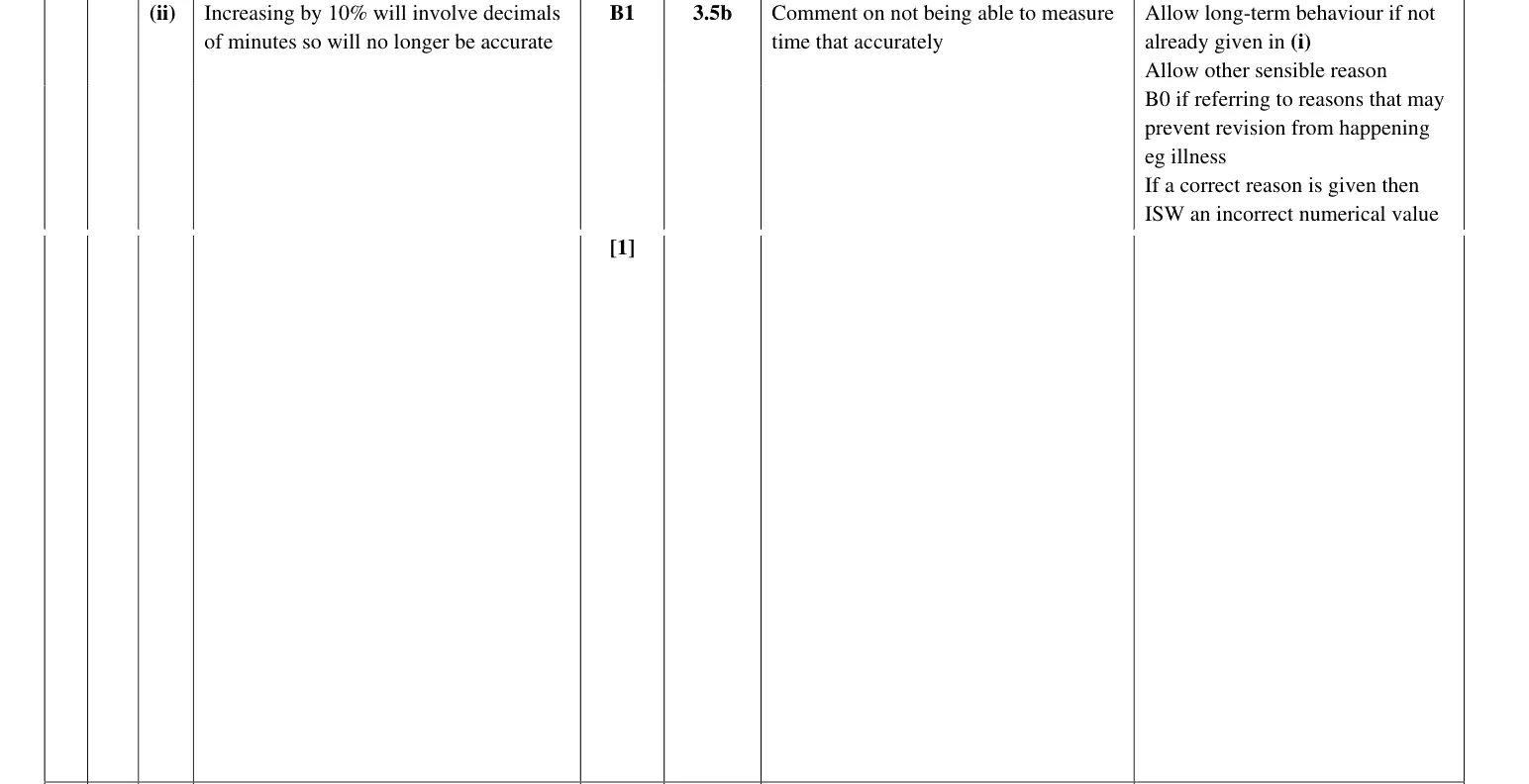
Candidates were required to consider the limitations of the model, focusing both on the variations between each run and the long term implications. For the first limitation, some candidates were able to give a clear explanation along with an example, often mentioning injury or weather conditions, whereas others explanations were too vague to be given credit. Candidates would be well advised in such questions to give specific examples to support their answer. For the second mark there had to be some consideration that Chris would eventually reach a point where no further improvements would be possible. Once again, there were some eloquently phrased explanations, sometimes giving a specific example. Candidates should ensure that their handwriting is legible, and their phrasing clear, in order to convey their intent to an examiner. This response gains one mark for identifying that external factors could affect Chris’ performance and gives three examples. Any one of these factors would have been sufficient to gain the mark, but a specific example was required. The second mark is credited for identifying that eventually the model would predict very small times, which is not realistic. This response identifies that times could fluctuate but does not give a specific example so the first mark is not credited. The candidate states that the model assumes that Chris gets faster but does not comment on how realistic this is so the second mark is not credited either. In fact the final part of the sentence suggests that this is actually supporting the idea of fluctuating times, but it is still not specific.