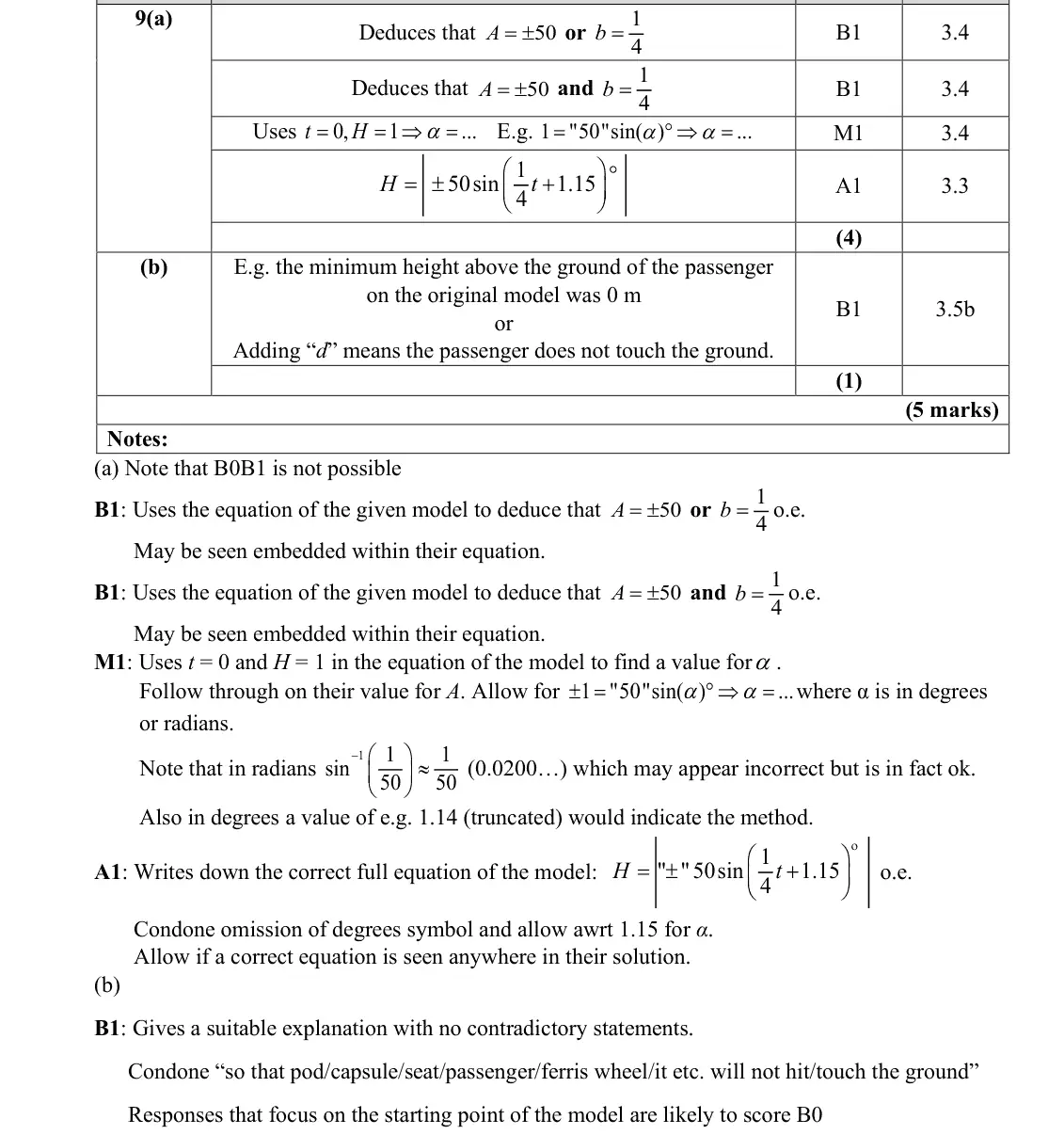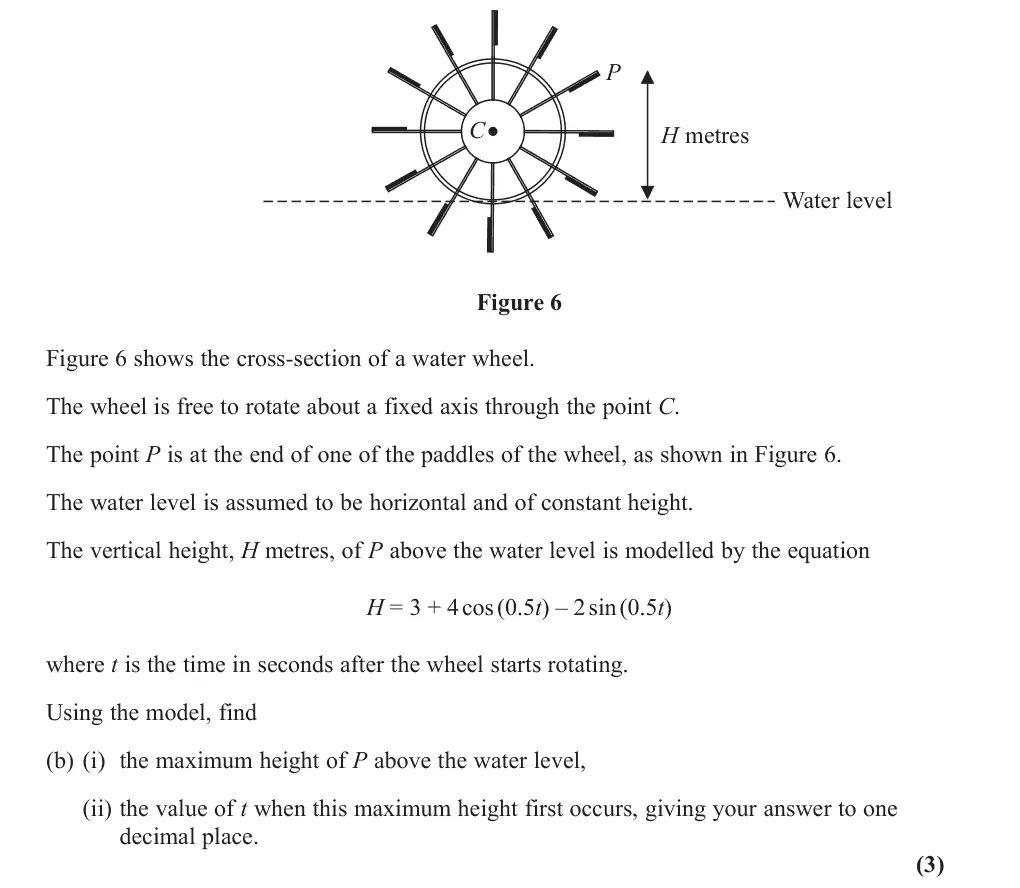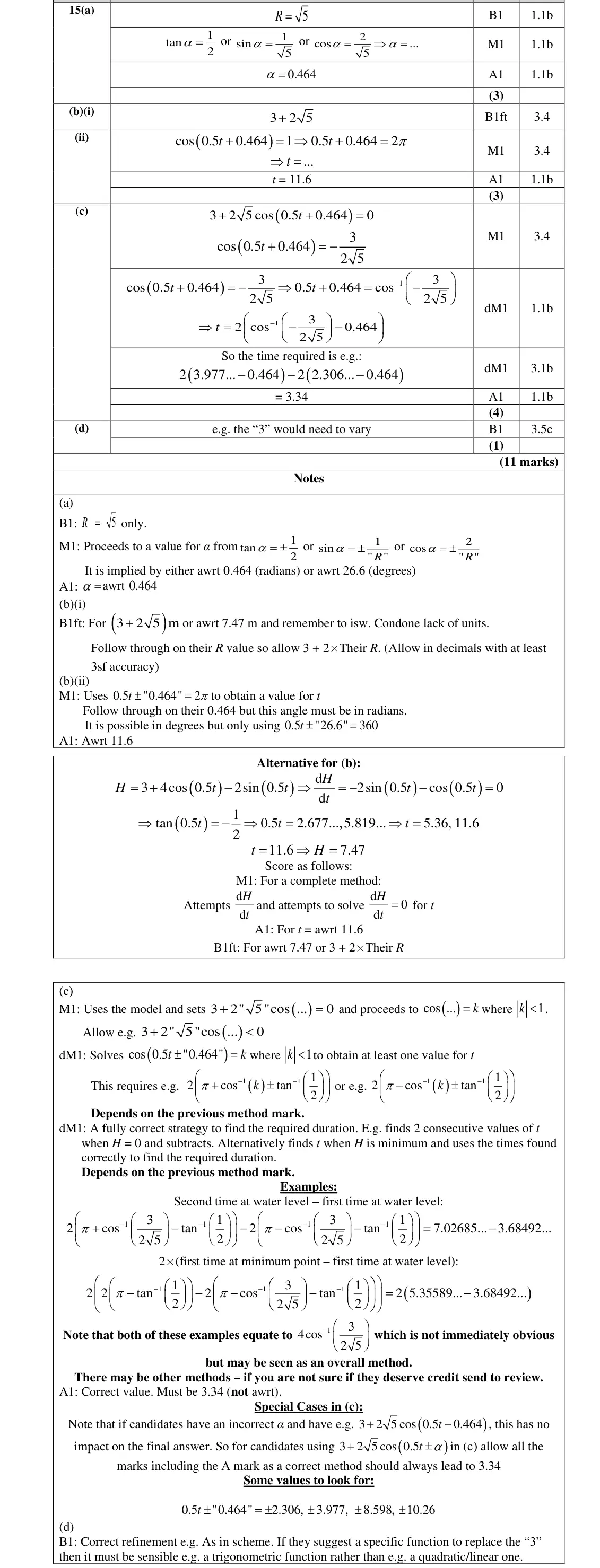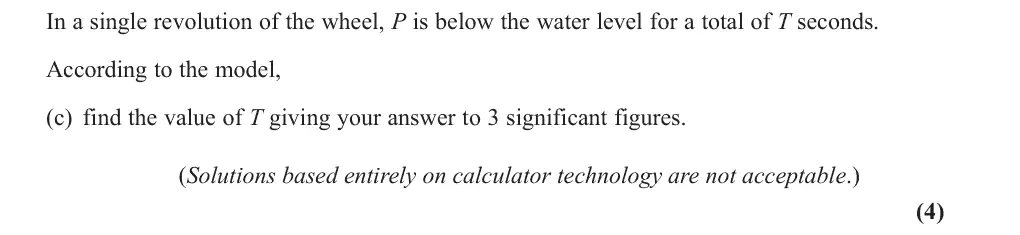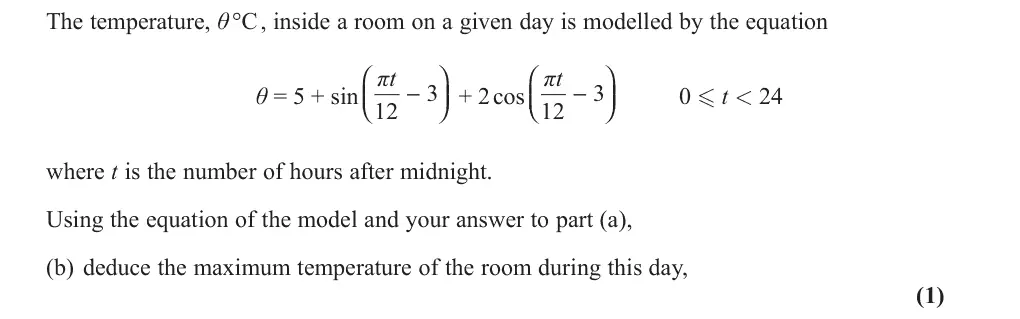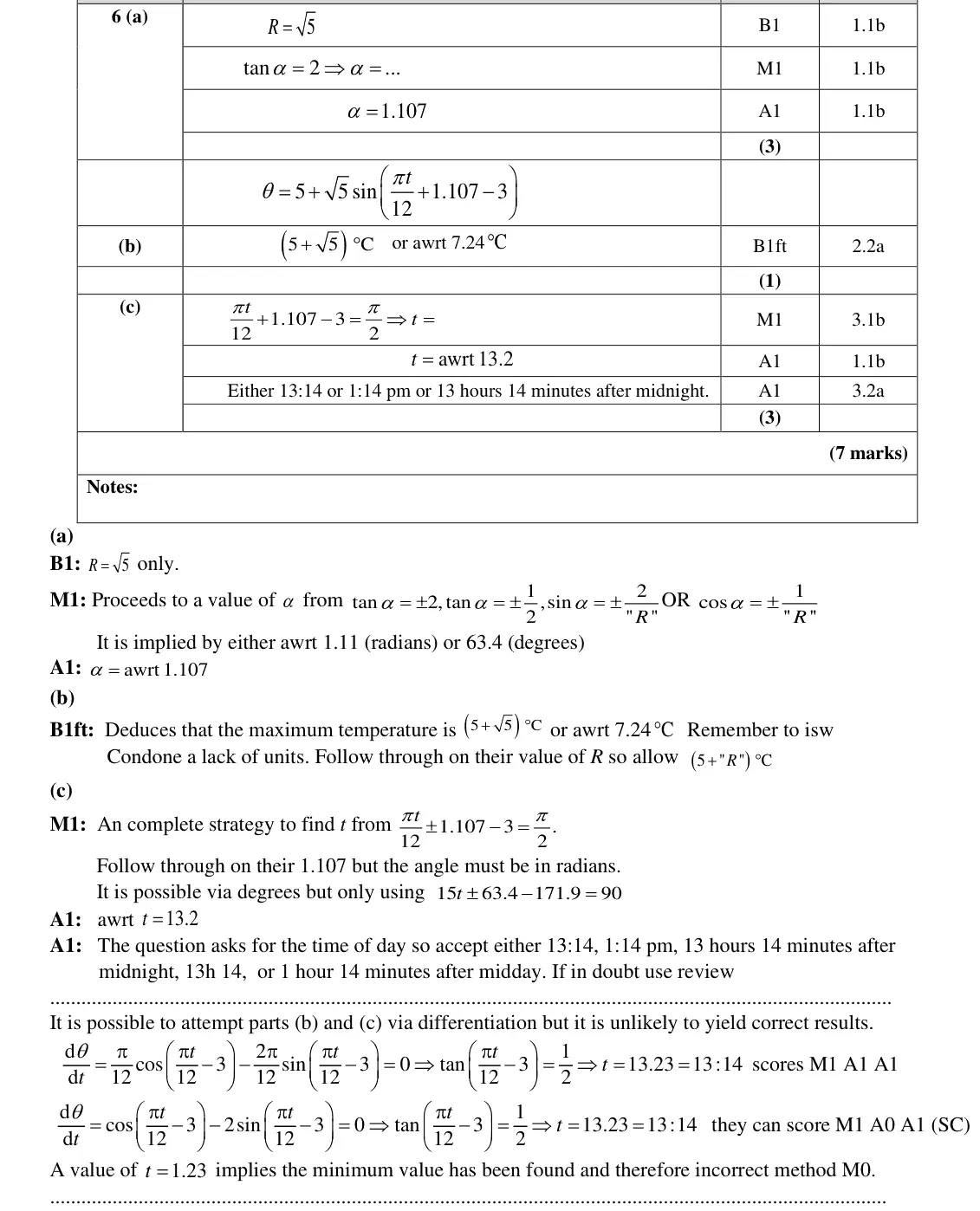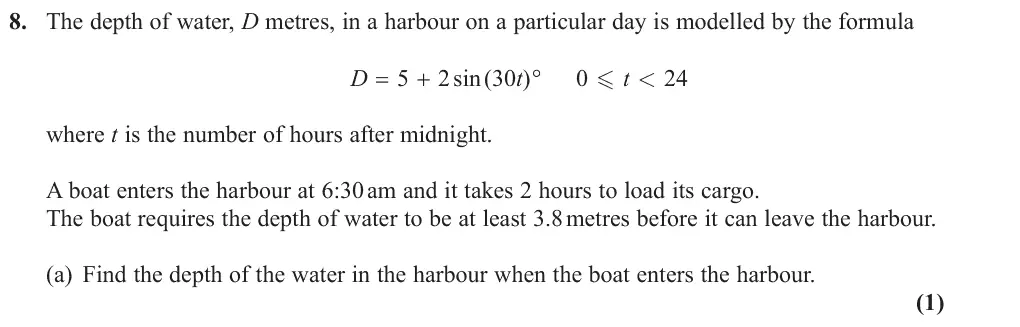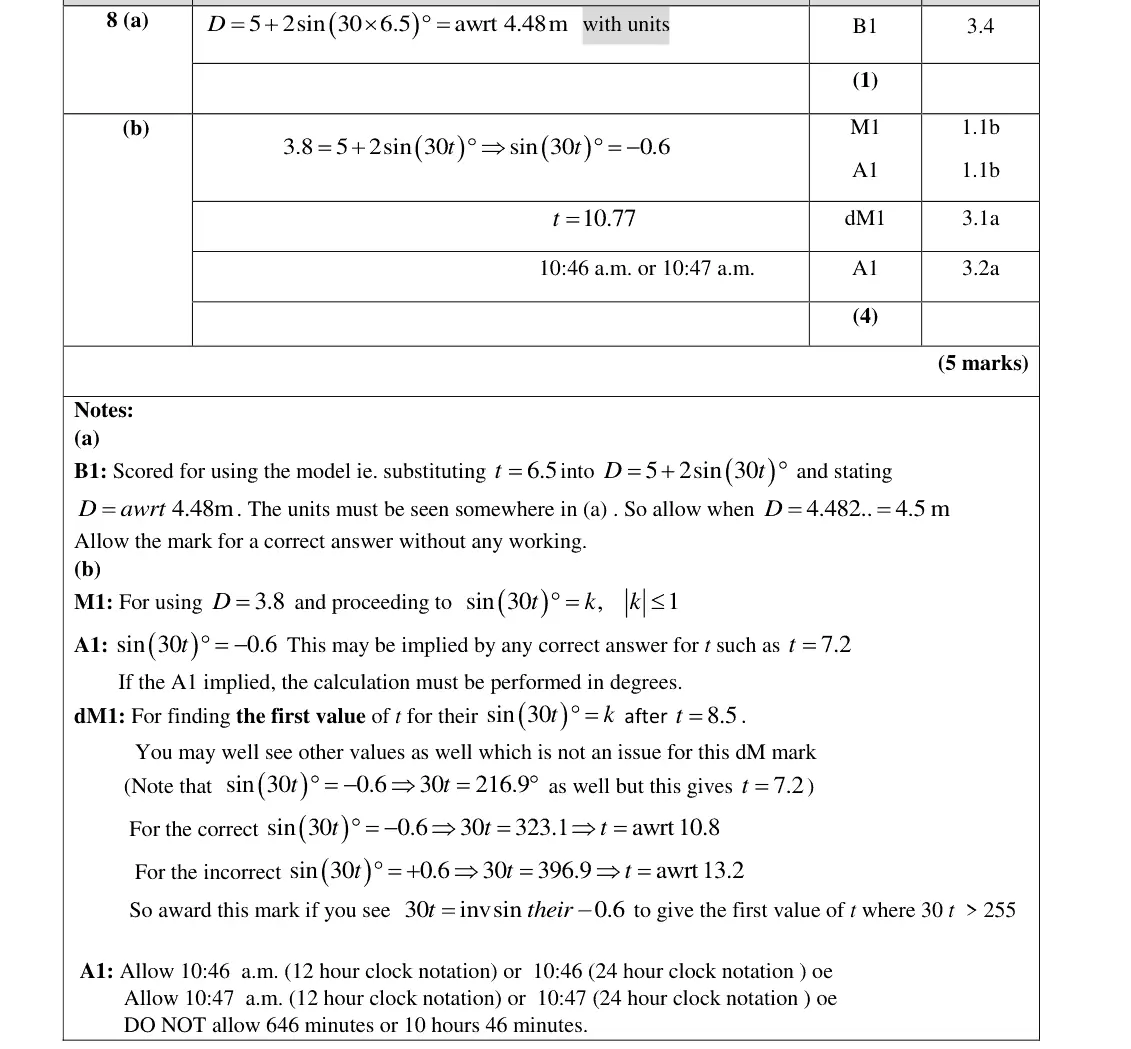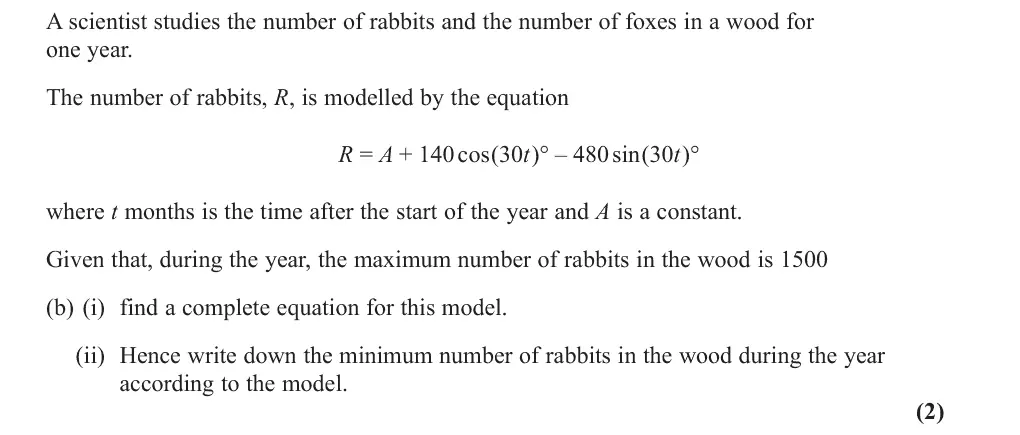
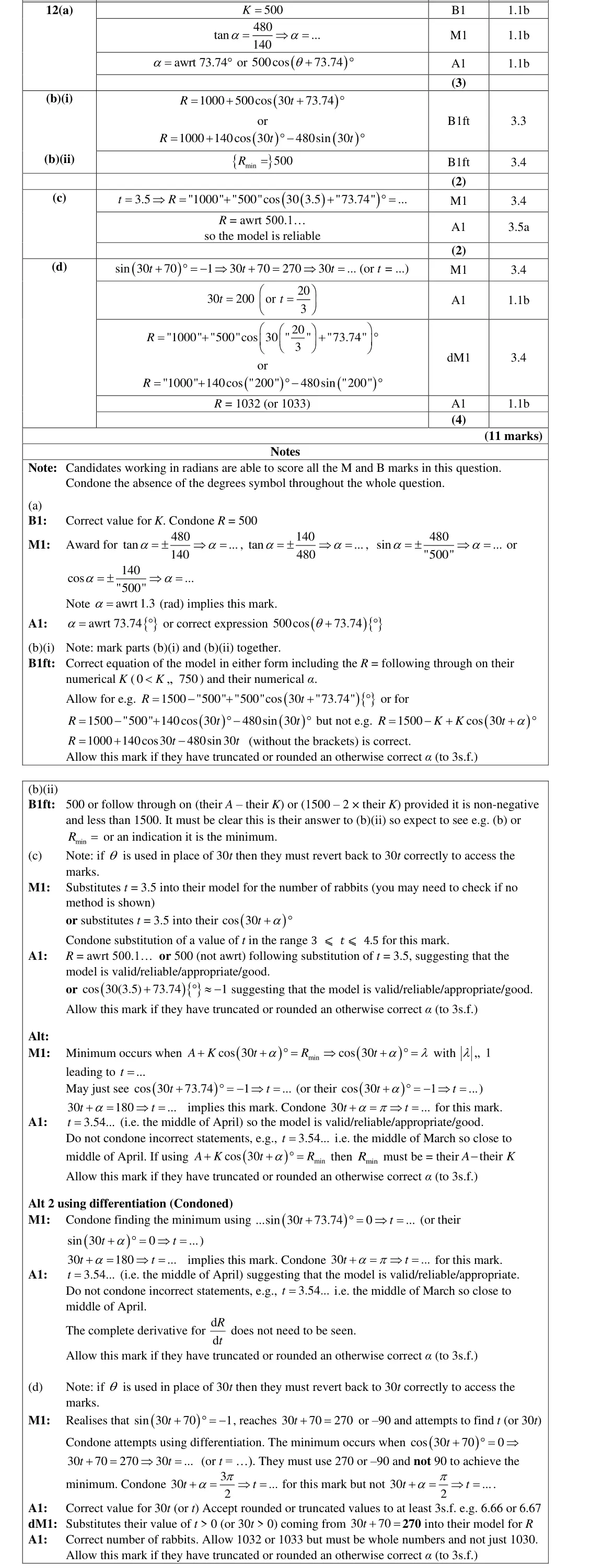
Mark scheme (whole question; this part is marked with the orange bar)
Examiner's comment
This harmonic form question was seen to be relatively challenging, despite similar questions being seen on several previous exam papers. That said, many candidates were able to attempt all parts of the question, and many follow through marks were available to those that made errors early on in their attempt. It was pleasing that most candidates identified that this question used degrees rather than radians. It was also pleasing to see many candidates continue to work through all parts of this modelling question despite having errors or not attempting previous parts. Responses to part (b)(i) suggested that candidates are not as confident at using the harmonic form as they are at forming it. Far too many candidates ignored their work from part (a) even if it was correct. Although given the maximum value for R, it was not uncommon to see candidates failing to use their harmonic form from part (a), but instead simultaneously setting 1500 R = , ( ) cos 30 1 t = - and ( ) sin 30 0 t = to obtain an incorrect value for A. Most of those who correctly identified that 1000 A = did then proceed to write down the full equation of the model, although many left this part with just a value for A. In part (b)(ii), some candidates struggled to calculate the value of min R as they did not recognise the link between their min R and the values of K and A. There were a few who added their values of A and K and hence did not score this B mark. Those who had found the correct value, 1000 A = , generally went on to identify the minimum value of R, but the follow through allowed those who understood the required method to gain this mark with an incorrect value for A.
Common mistakes
- use the harmonic form: max = A + K so A = 1000 (not cos = −1 and sin = 0 together)
- give the full equation, not just A
- min = A − K = 500