Examiner's comment
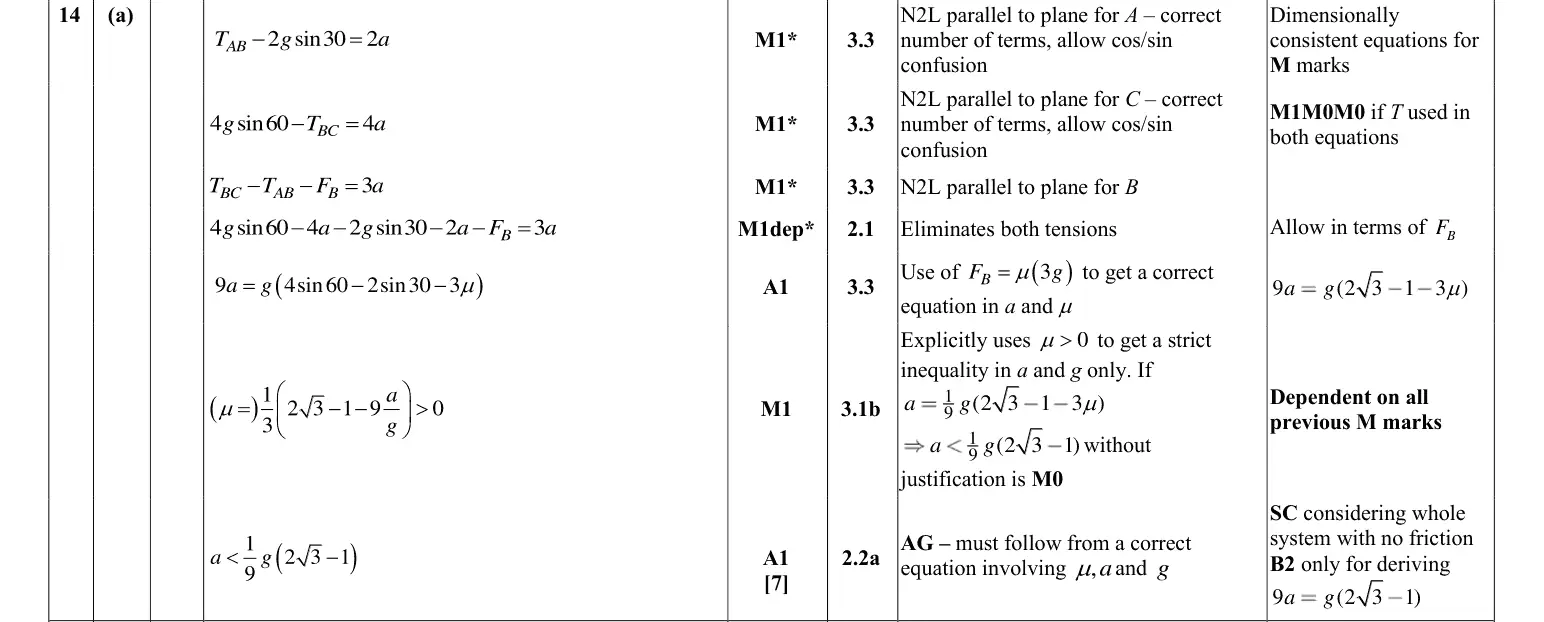
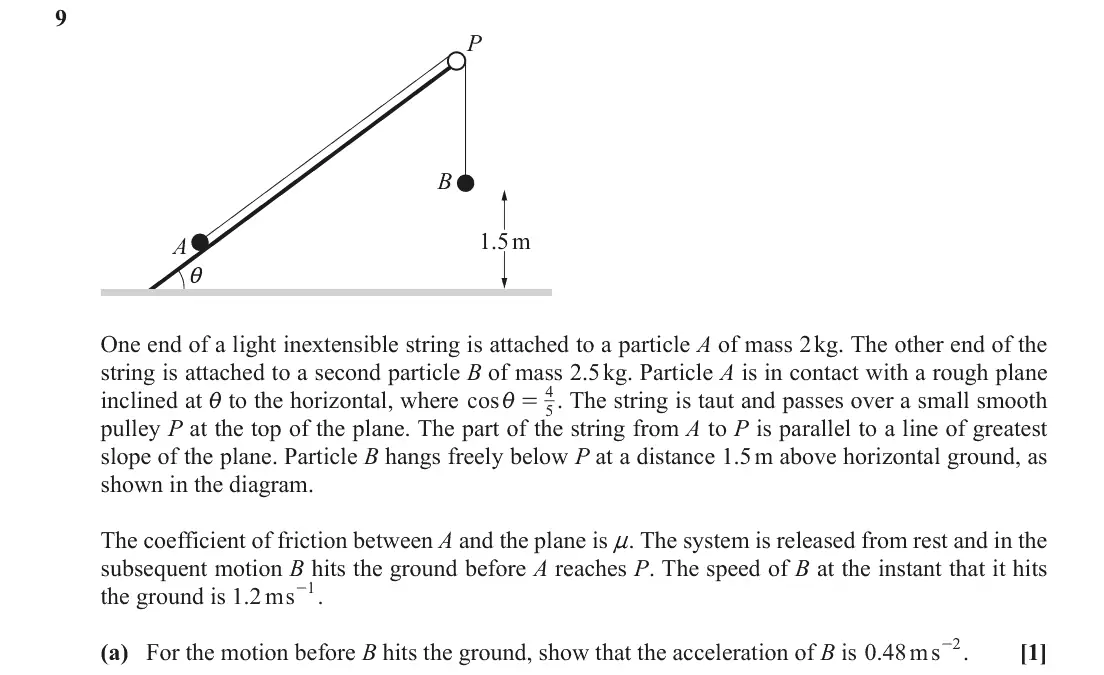
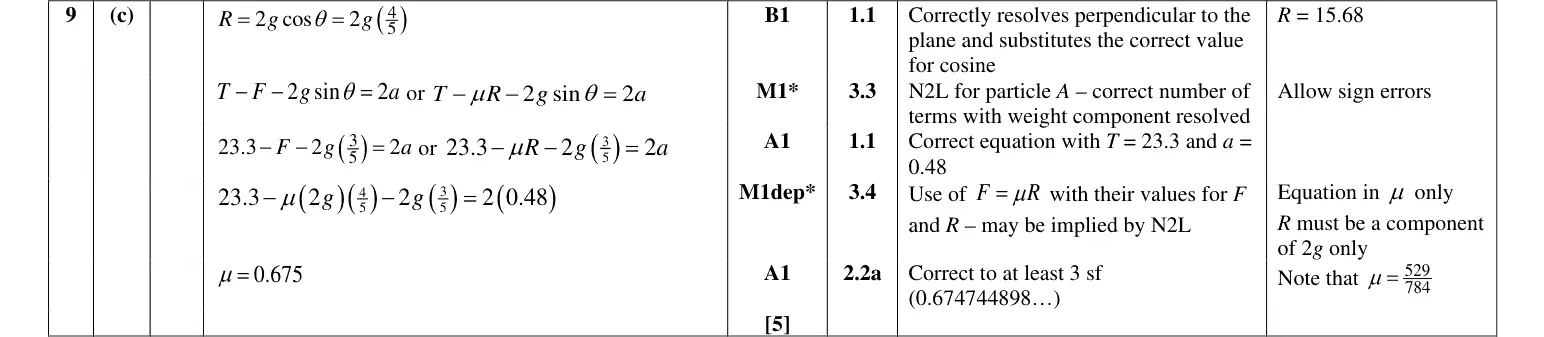
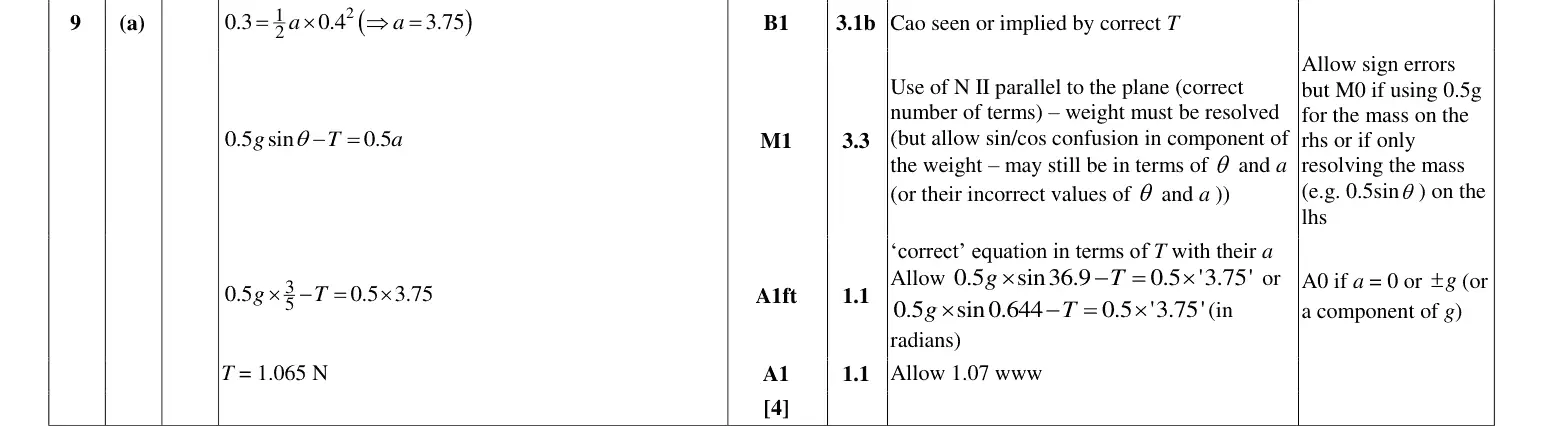
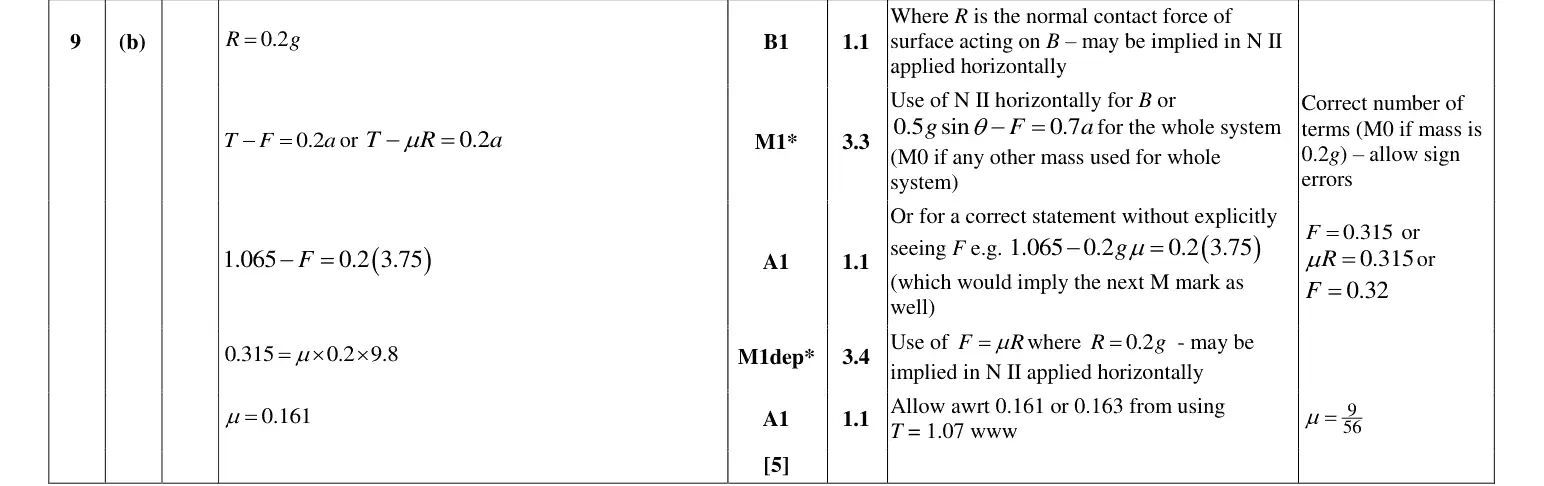
(Comment on Question 09 as a whole) 4 In this question the angle θ was defined as cosθ = . Candidates should resist the temptation to 5 calculate the decimal approximation for θ and instead use their knowledge of Pythagoras Triples to state the exact values for sinθ (and tanθ if required). The exact values have been chosen to make the arithmetic easier. Similarly, some questions will use the values of θ that candidates are expected to know the exact values for, and these should be used rather than the decimal approximation. If the examiner wants the decimal approximations to be used, then the angle θ will simply be defined as a numerical value. Most candidates showed sufficient working using for part (a). There was evidence that most candidates understood how to obtain the given answer in part (b), but some responses did not fully justify their working. A few students used mass rather than weight and did not include g in their equations. Part (c) was attempted by all candidates but one or more of the following mistakes were made: ● Assumed a = 0 . ● Used rather than using components. R = 2g ● Sine/Cosine confusion when stating the components of any force. 4 3 ● Rounding errors with calculated values of θ rather than using cosθ = and sinθ = . 5 5 ● Incorrect directions used leading to sign errors. ● Under-specifying the final answer given to less than 3 sf. Although a fairly standard question, part (d) is traditionally expected to be a challenge for most candidates. For this reason, it was pleasing to see the number of fully correct answers. Common mistakes included: ● Tension was still applied. ● Incorrect acceleration; either the same a = 0 48 . , or a > 0 , or even a = 9 8. . ● Distance = speed × time used rather than ‘suvat’.