Examiner's comment
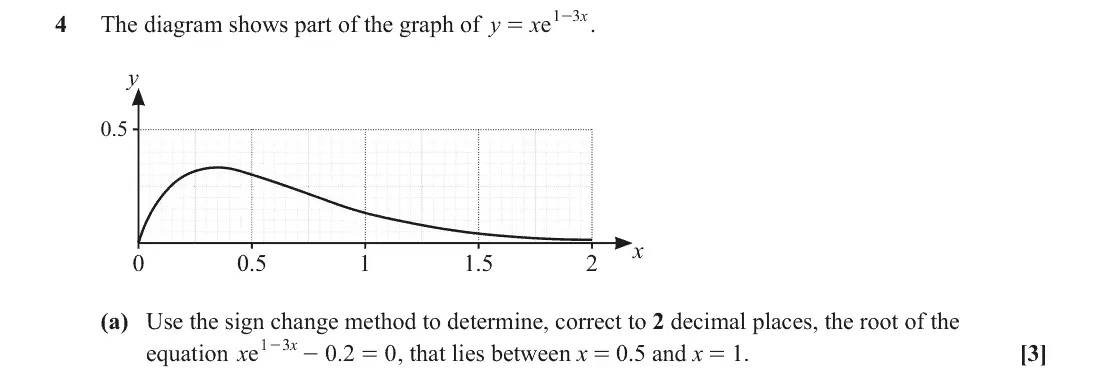
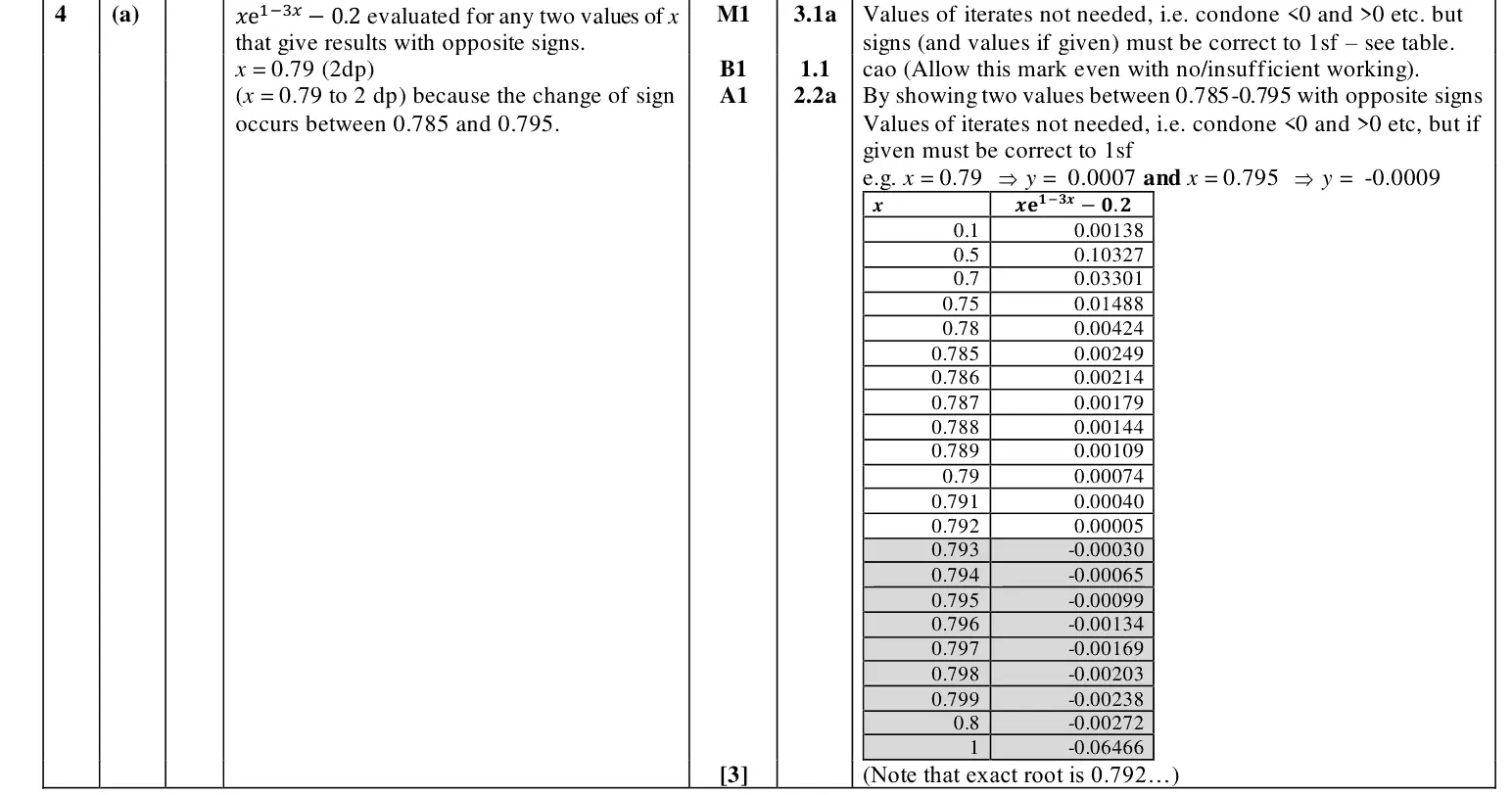
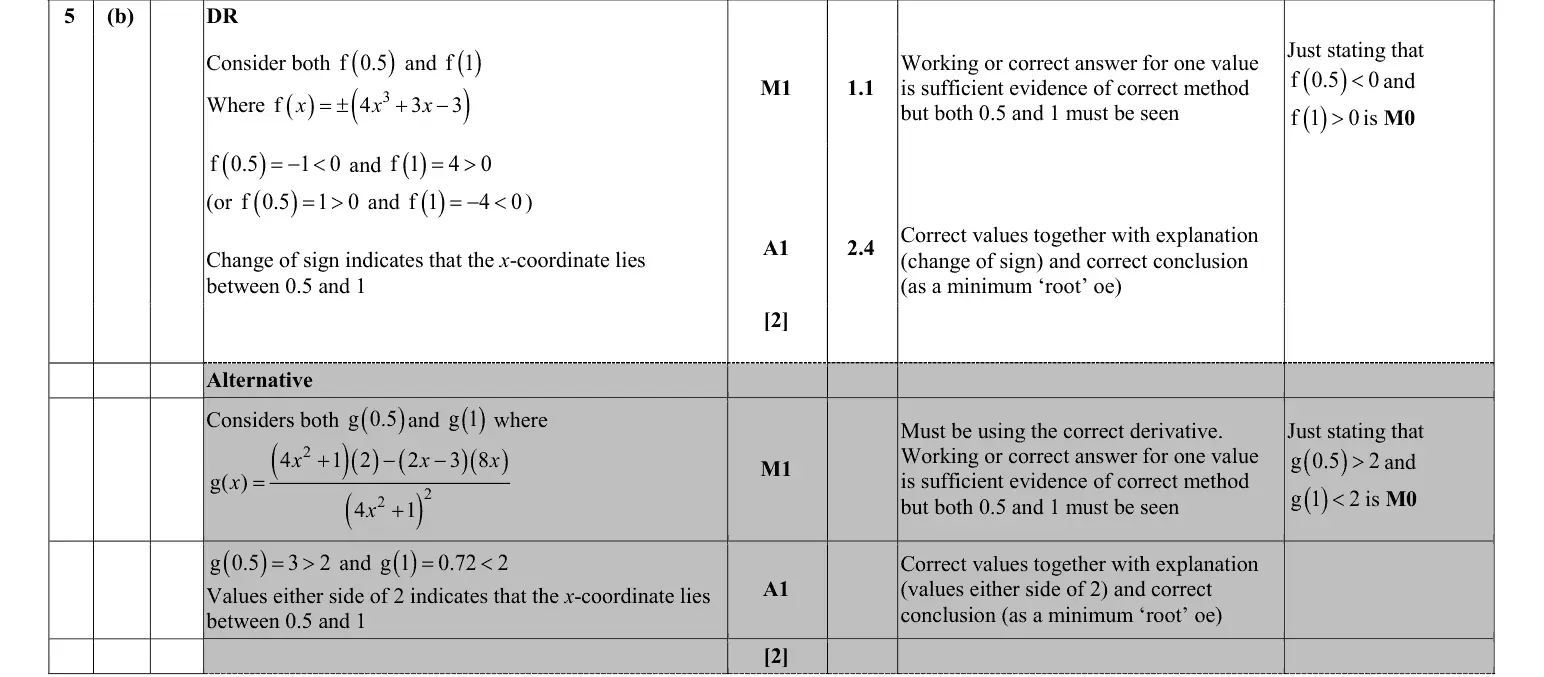
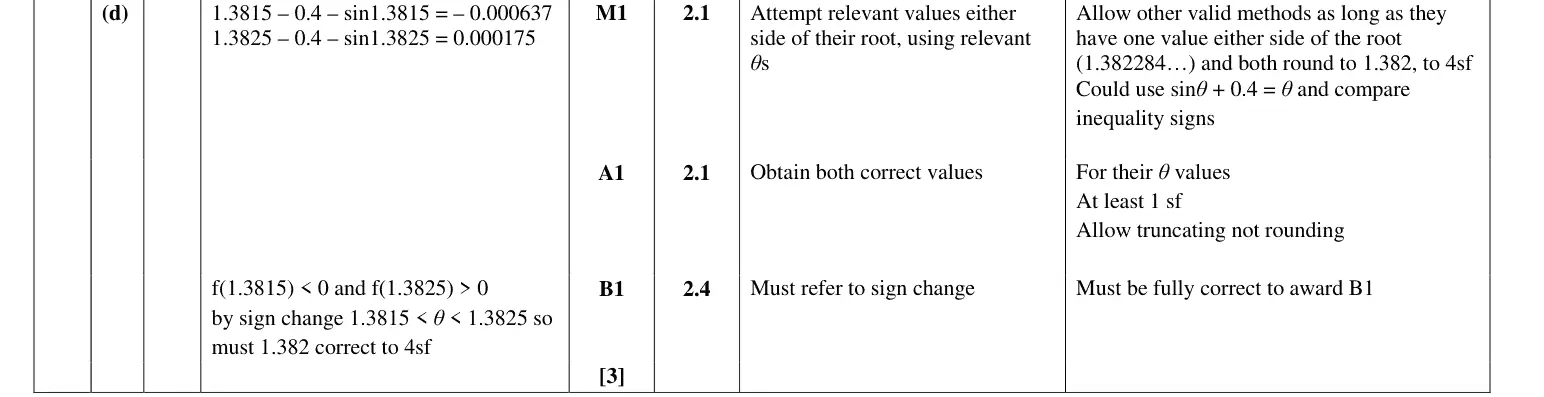
A minority of candidates scored all 3 marks in this part, although many candidates scored at least 1 and often 2. Most candidates correctly substituted 0.5 and 1 into the given expression to show a change of sign within the given interval, although quite a few stopped at this point (which could only score M1). Many candidates gave the correct value x=0.79 to 2dp - and this is an excellent example of a question where a calculator can be used effectively to verify a solution (or to give an idea of where to ‘look’ for the root). However, this root alone could only score B1. In order to achieve the final accuracy mark (and demonstrate that this is the correct root to 2dp) candidates needed to show a change of sign using a pair of iterates within the interval [0.785,0.795] with opposite signs, which very few did. Quite a few candidates gave a collection of iterates and claimed that led them to this conclusion but could only gain credit for two correct iterates in that interval. Note that informed choices of iterates, e.g. 0.79 and 0.793 could be credited, as could the boundary values of 0.785 and 0.795. Some candidates used Newton- Raphson to obtain an initial value (which is of course acceptable, but earned no credit on its own as the question specified a sign change). Candidates did not need to write down the value of the expression for their iterates, but if they did it needed to be correct to 1sf - some made a place value error when copying. This is a (typical) example of a candidate’s response where they have made a very good attempt at their sign change, with many correct iterates and the correct value to 2dp given. However, their iterates do not fully justify the solution to 2dp (there is only one in the range [0.785,0.795] and their explanation ‘closer to’ is not sufficient) so this response scores M1B1A0 for a total of 2/3.