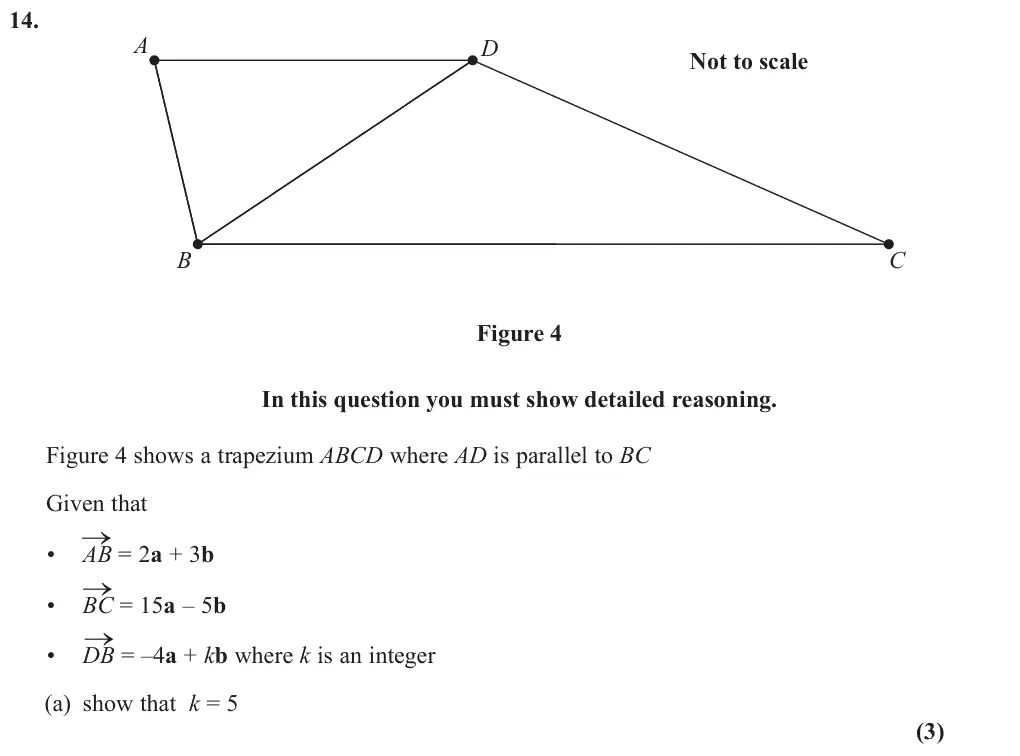
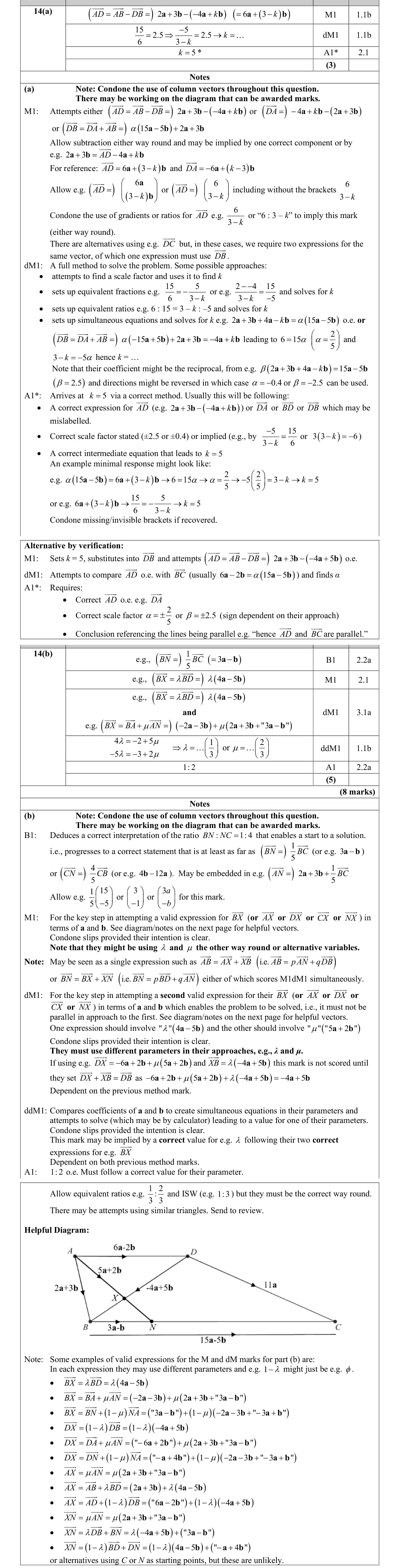
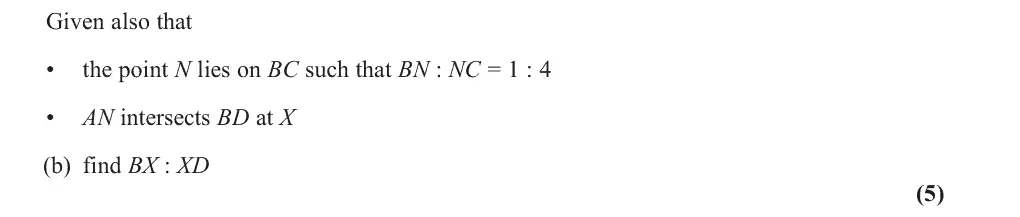
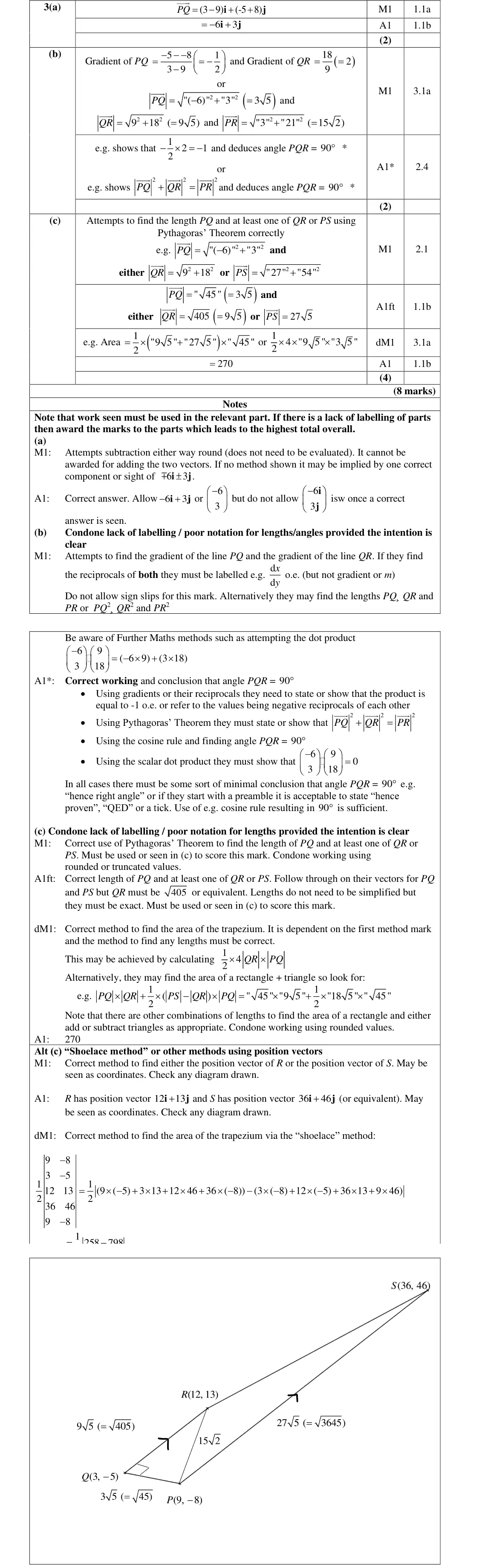
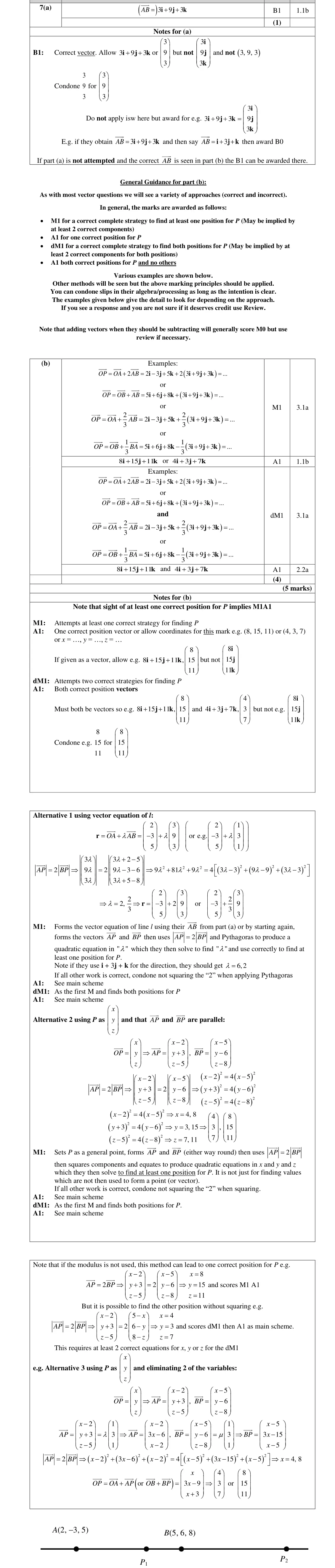
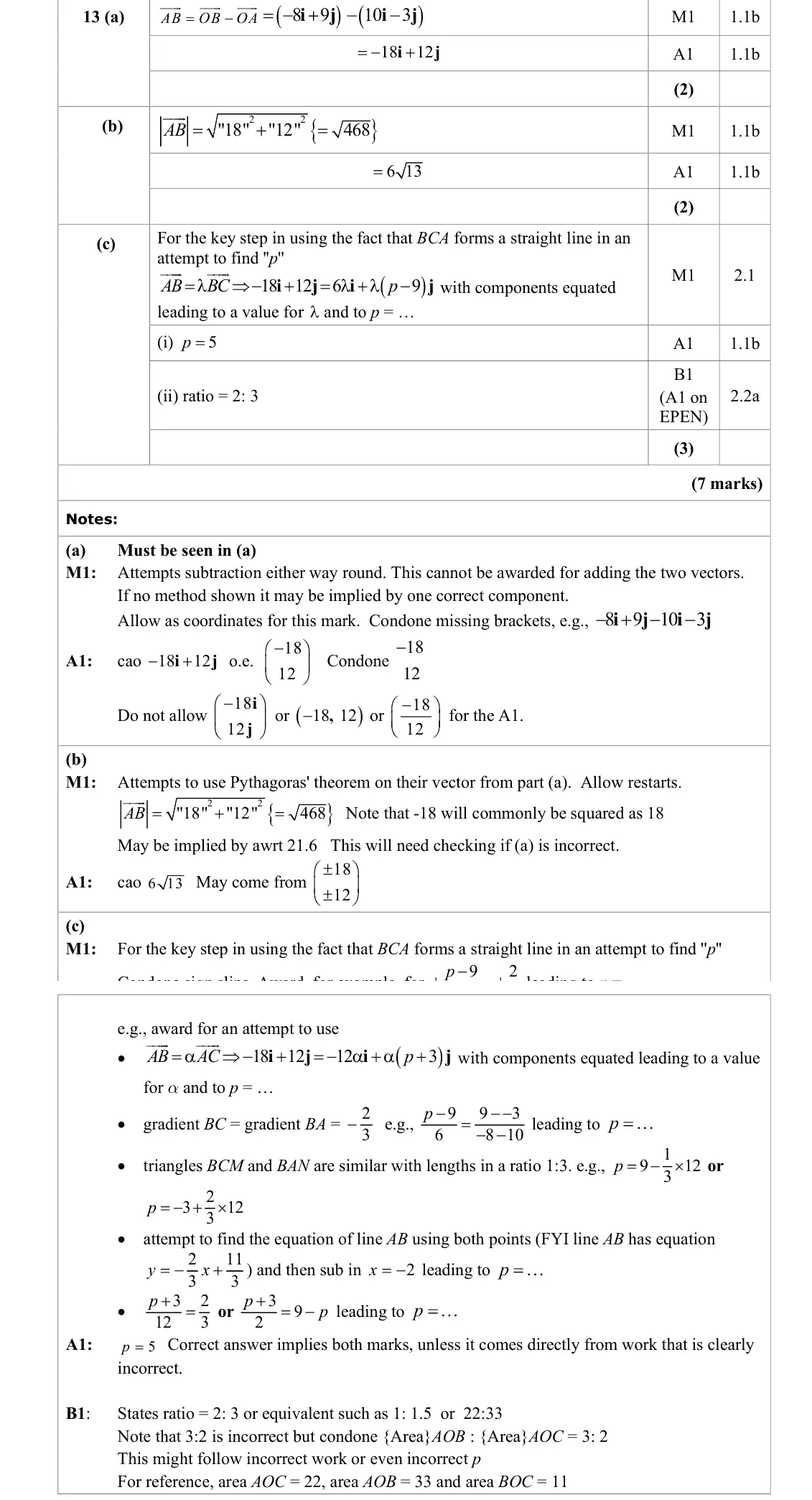
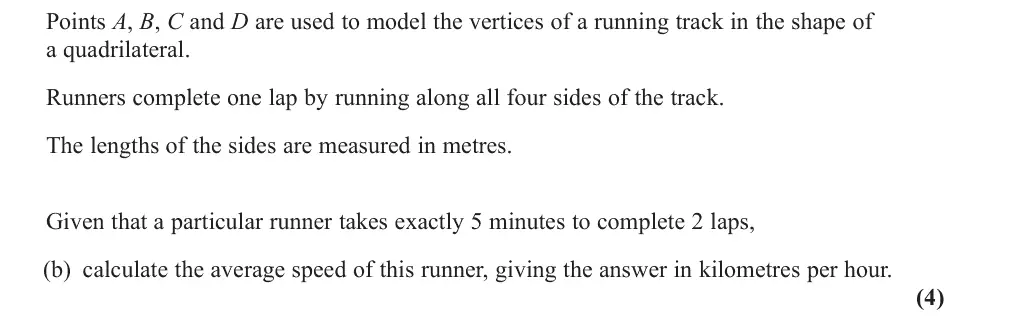
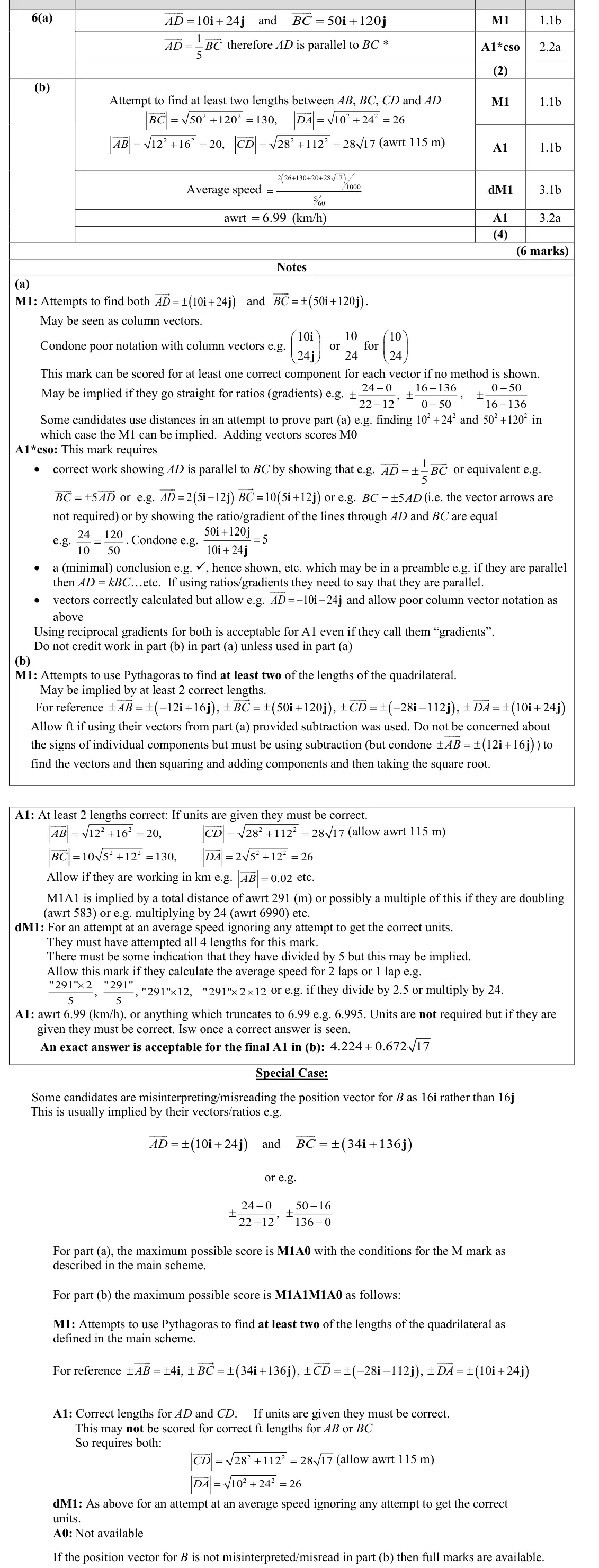
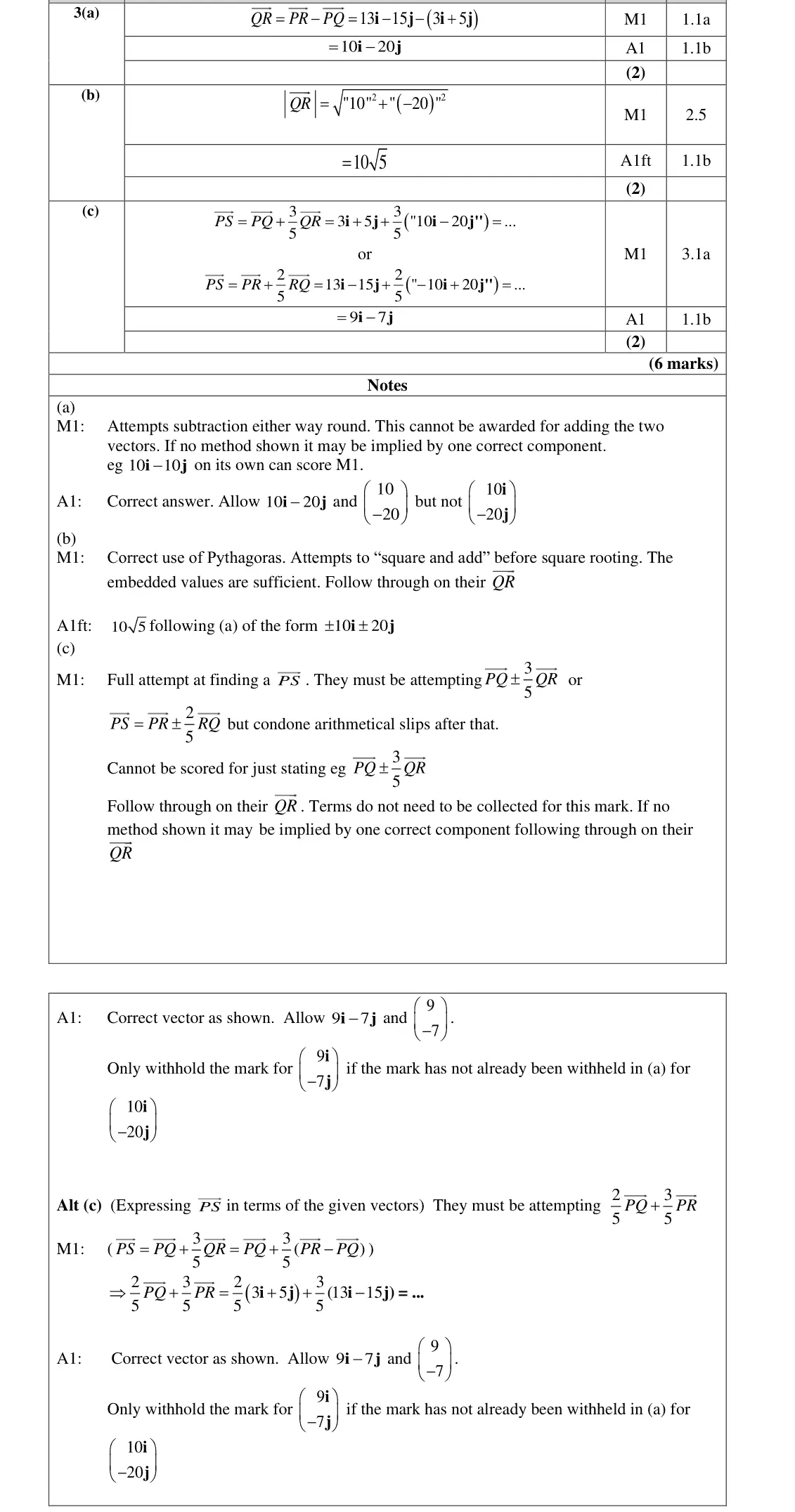
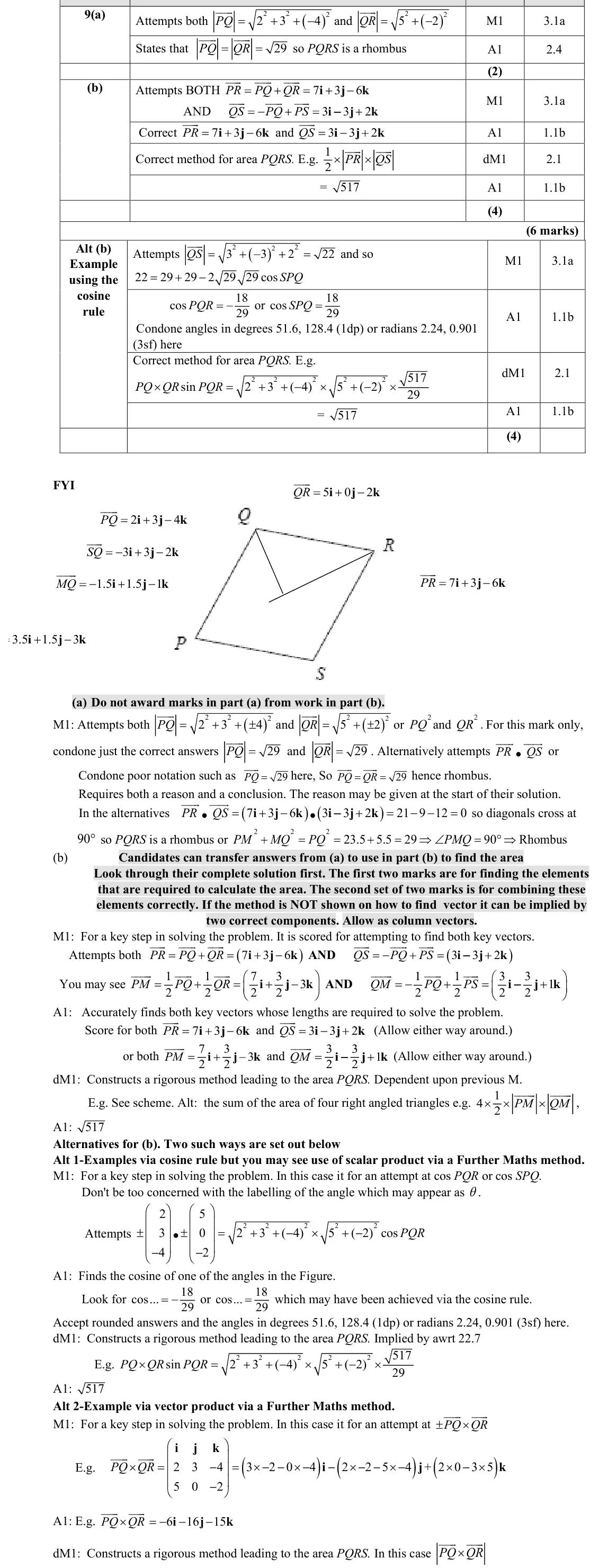
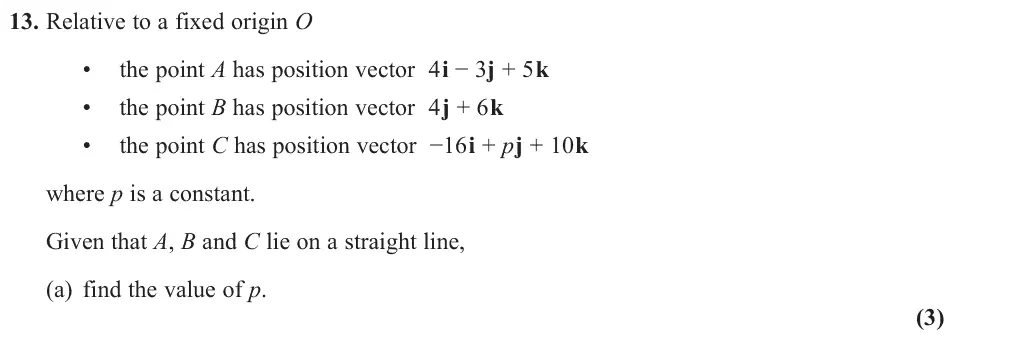
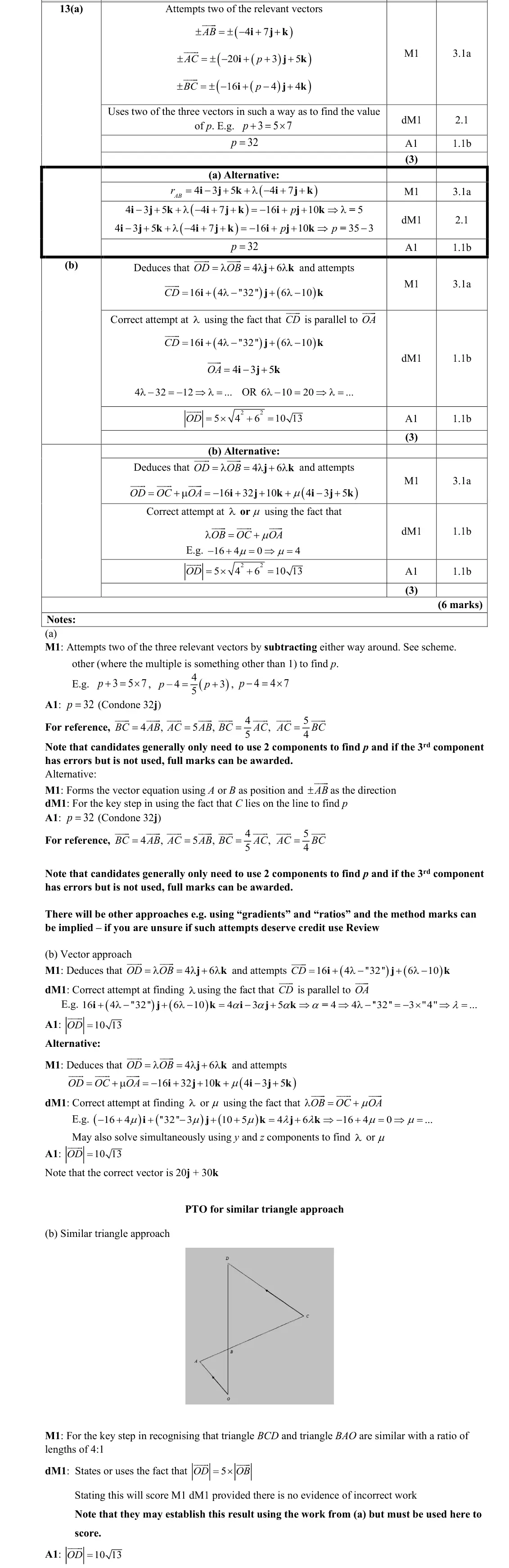
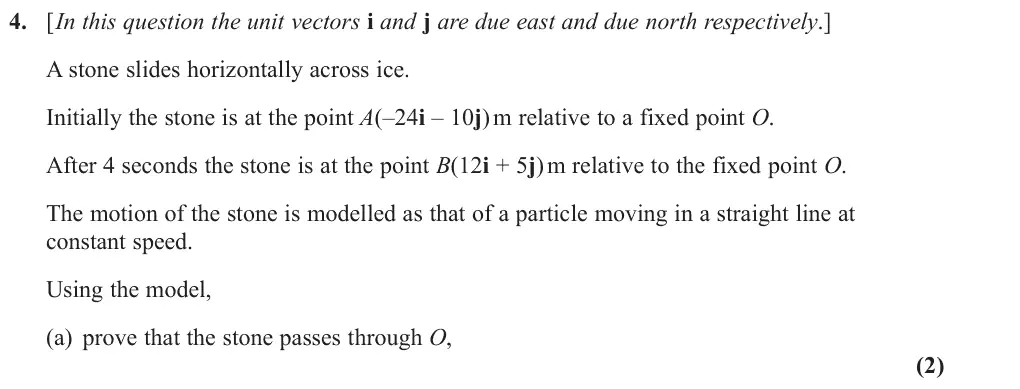
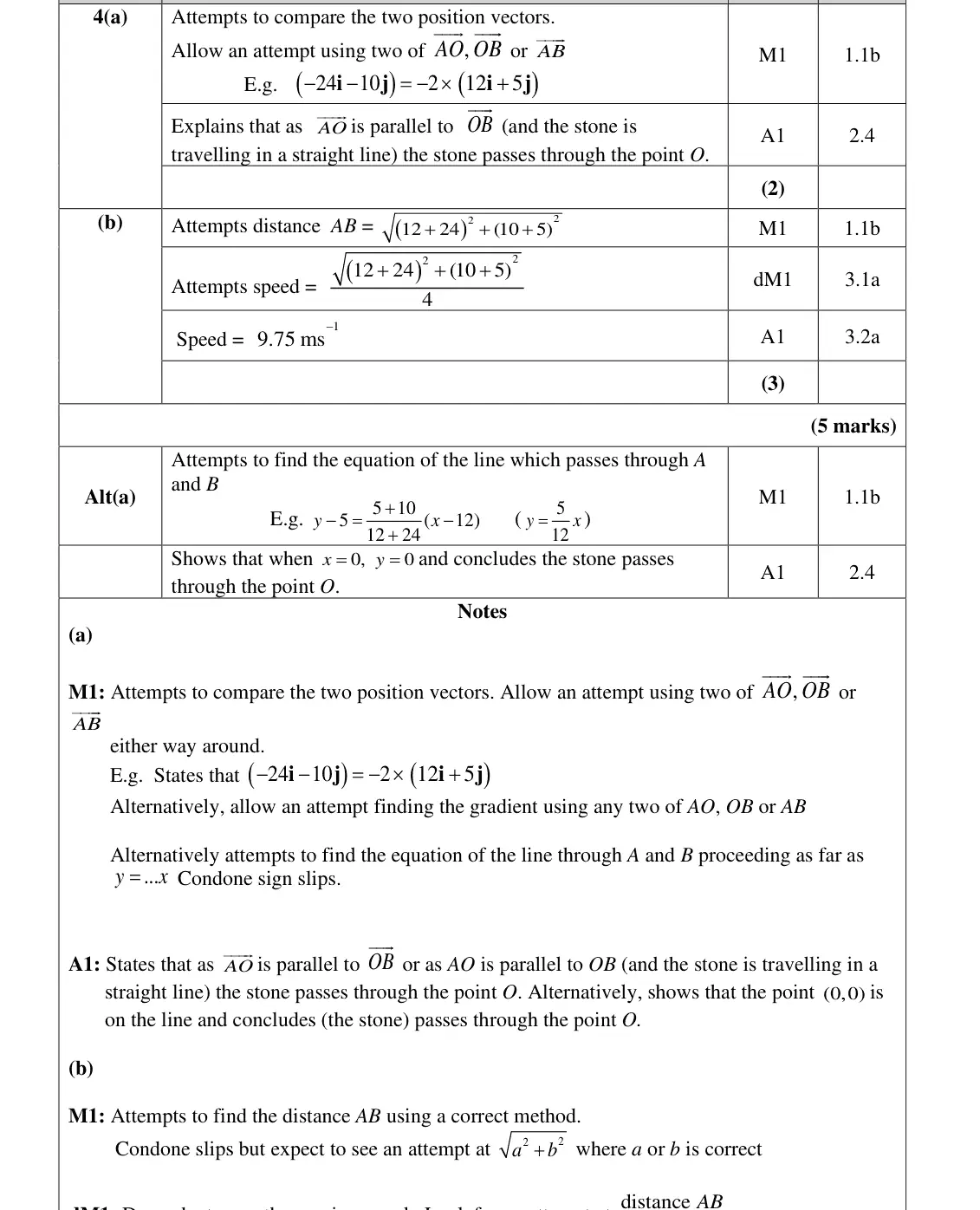
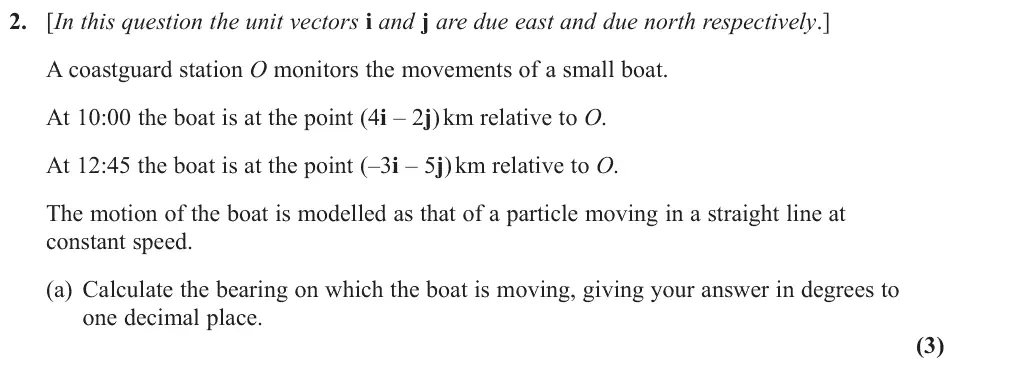
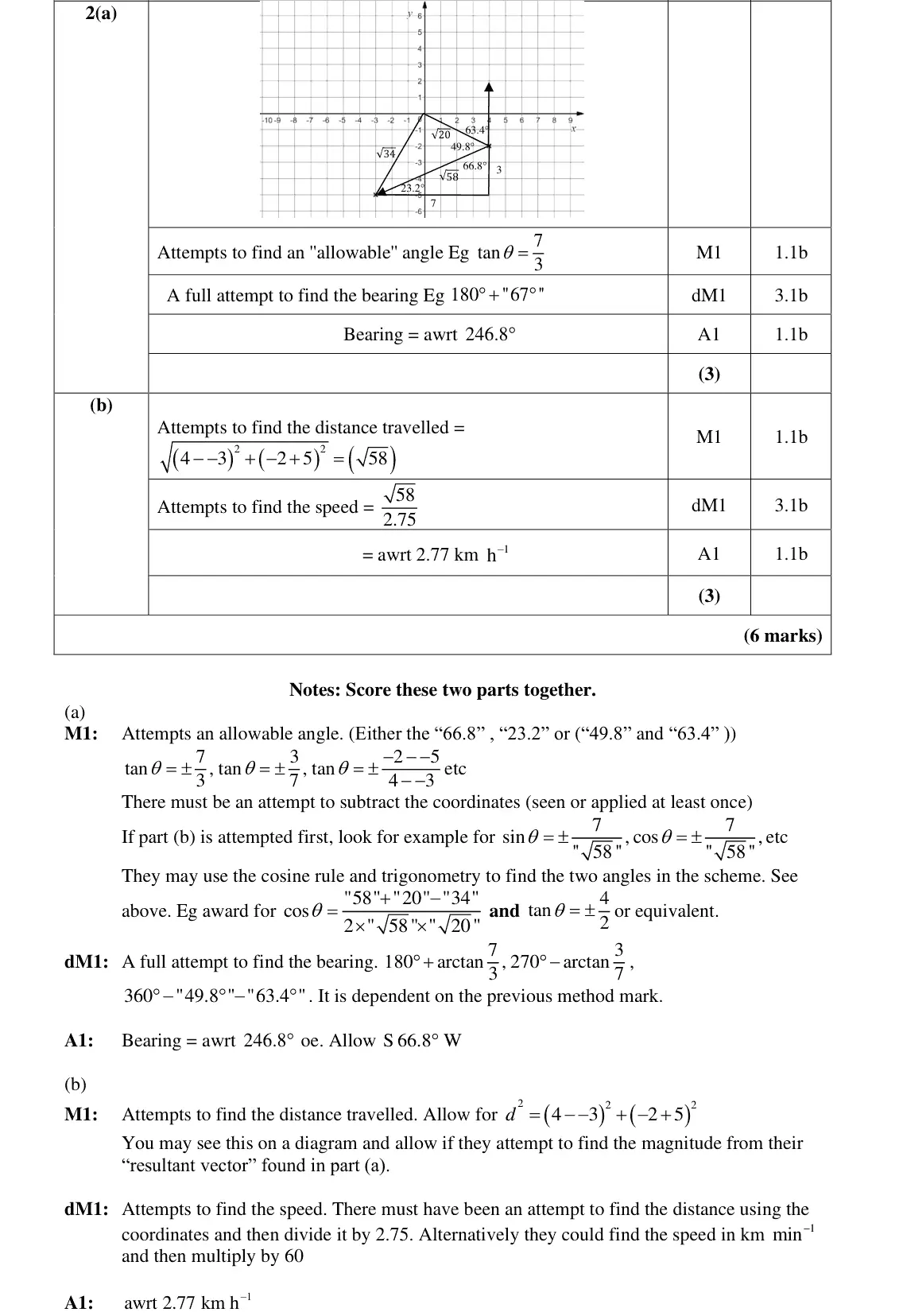
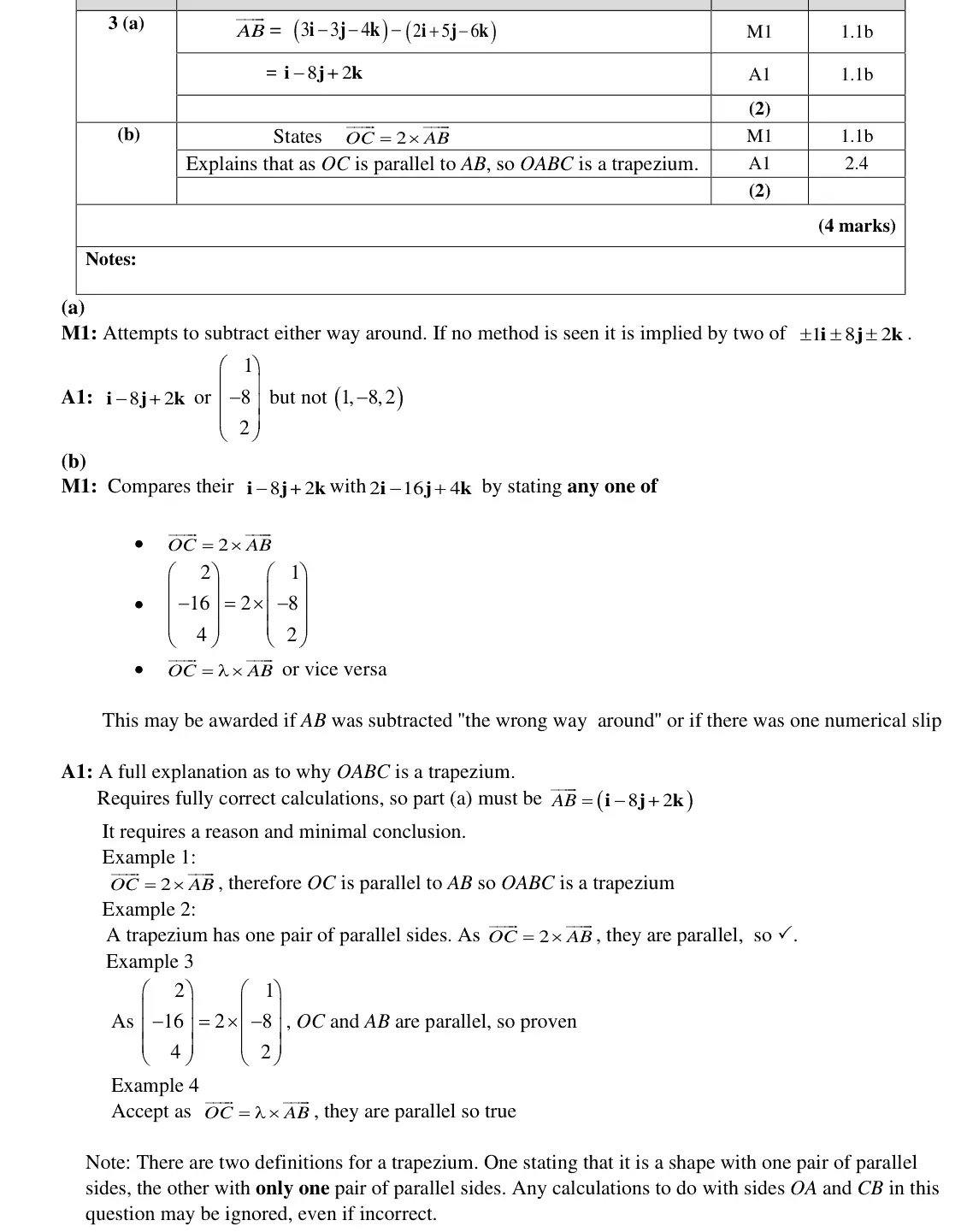
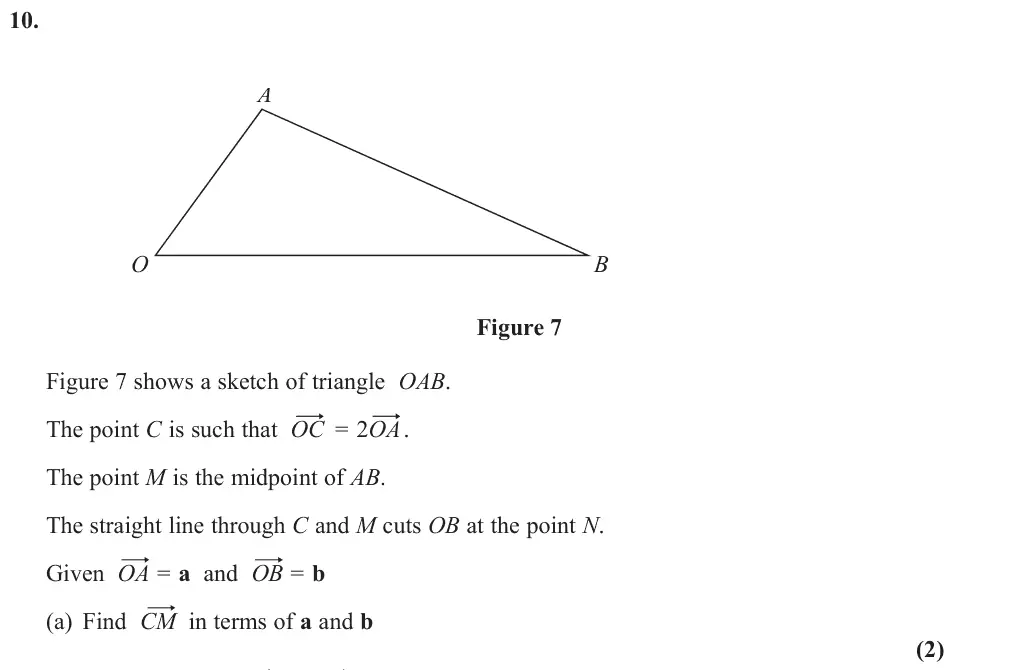
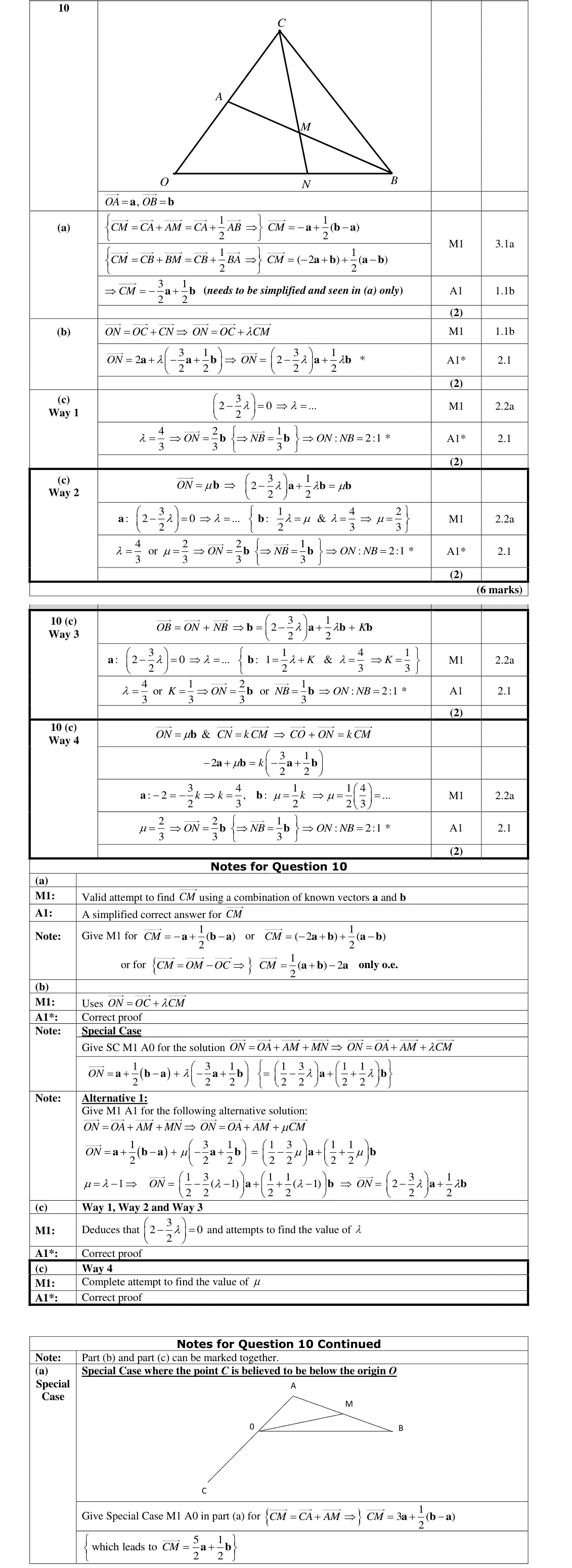
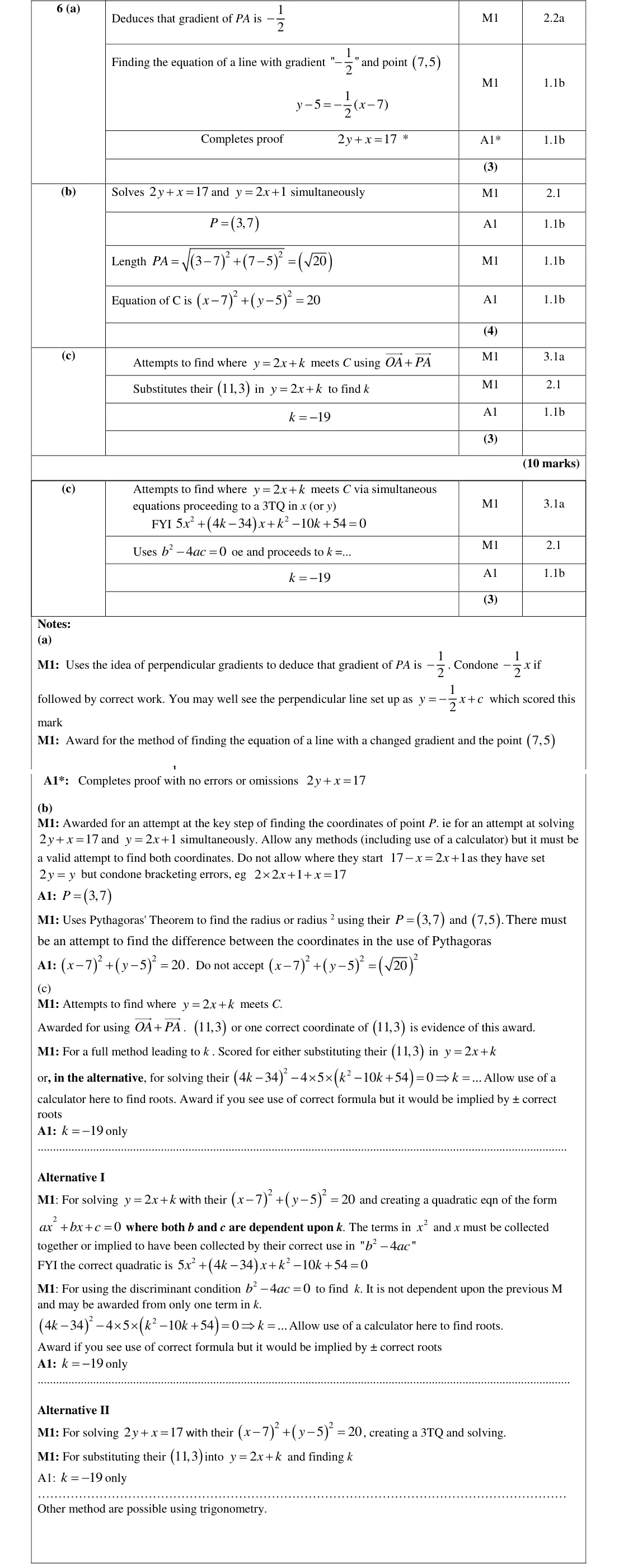
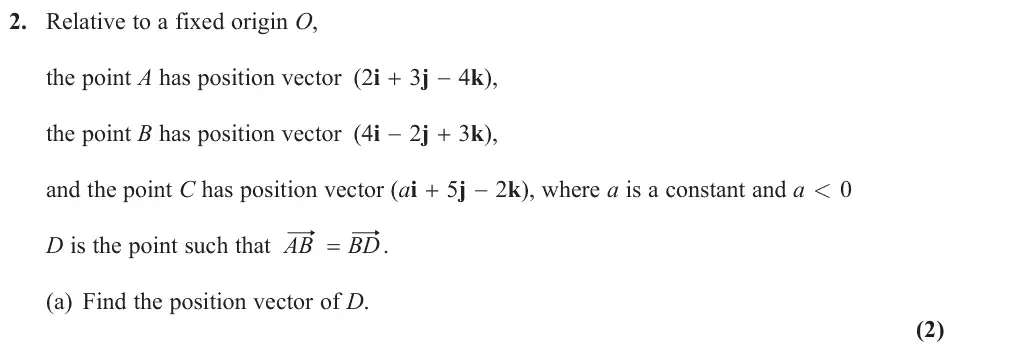
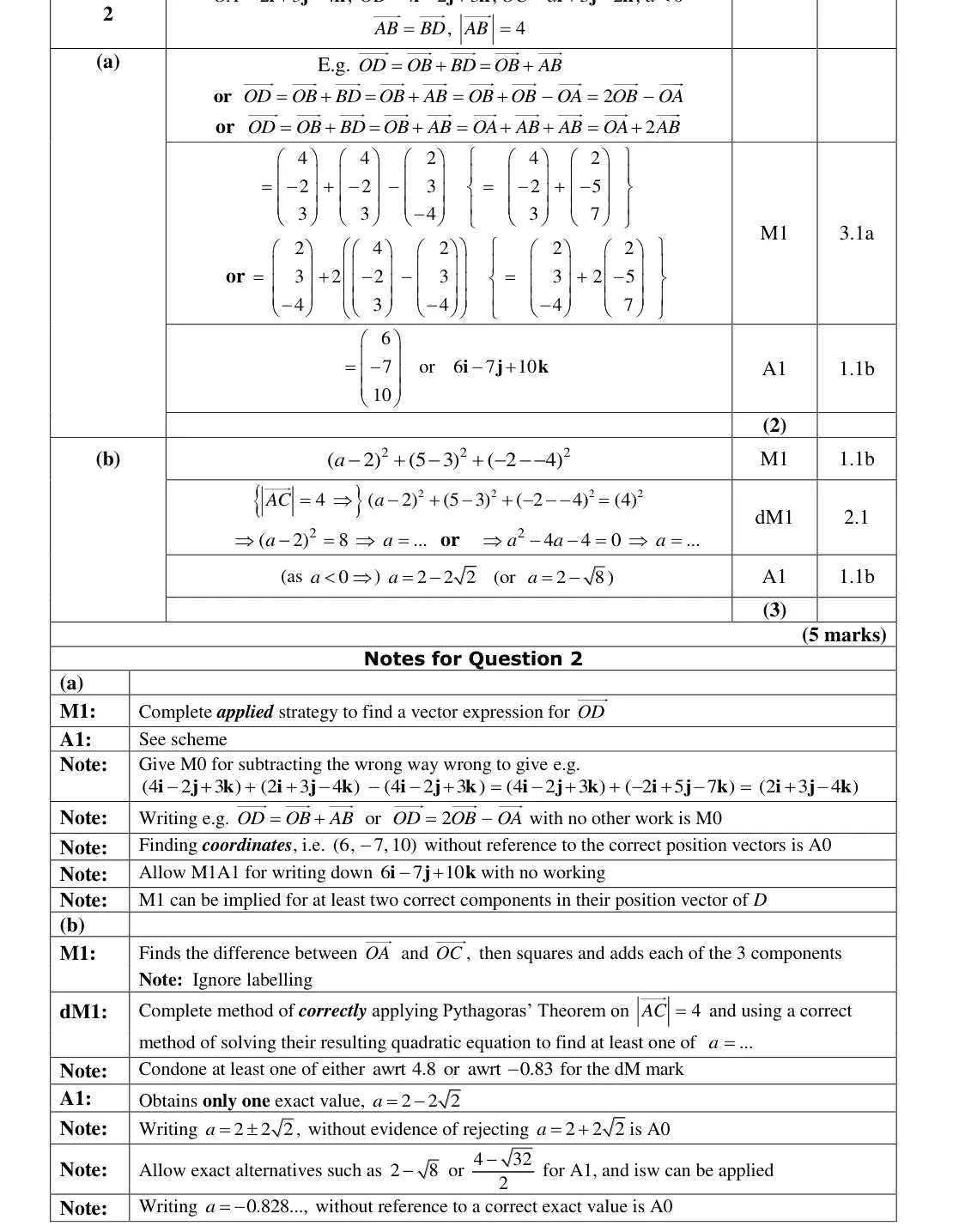
Mark scheme (whole question; this part is marked with the orange bar)
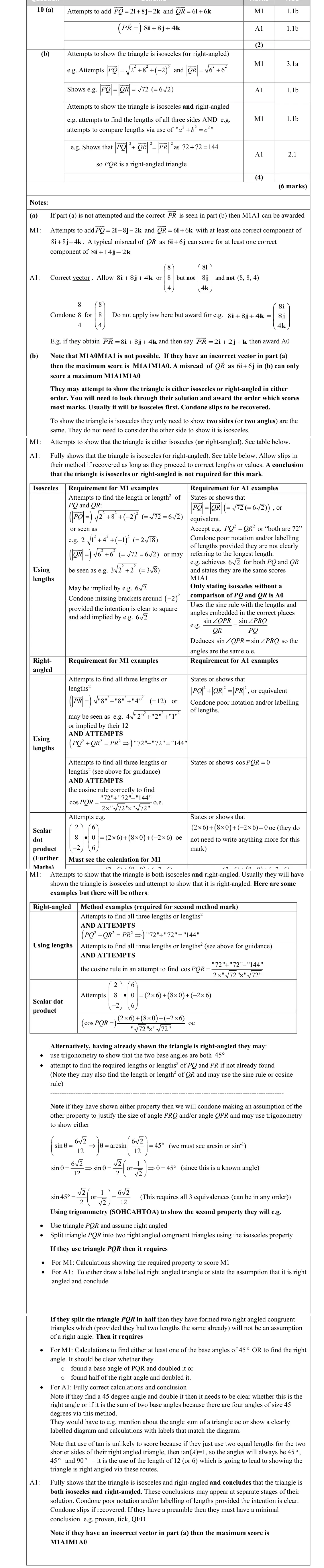
Examiner's comment
This question tested learners’ knowledge of vectors and proof of the properties of a triangle. It should be noted that in part (b) that, despite it being possible to gain full credit by finding the length of vectors and Pythagoras’ Theorem in a few lines, many learners chose to use more involved methods. This often led to them not gaining full marks due to errors in their working. Part (b) was well answered by most learners. Many responses lacked clarity when attempting to prove that the triangle was both isosceles and right-angled. In demonstrating that the triangle is isosceles, some calculated the magnitudes of the sides correctly but did not gain the accuracy mark as they just stated it was isosceles without reference two sides being equal. It seemed that learners found it harder to prove the triangle was right-angled. Most successful responses used Pythagoras’ Theorem to show that the triangle was right-angled and most of these responses gained full marks. When learners used the scalar dot product method, many of them did not show the calculation and therefore did not gain credit, whilst others were not very successful in showing the triangle was right-angled, with some learners incorrectly using it to show a perpendicular gradient of 1 - instead of 0. The least successful responses tended to involve SOHCAHTOA, mainly because this approach was more involved and thus required a fuller explanation, which was not always in evidence. As this was a ‘show’ question, a conclusion (either overall or separate for each property) and an assumption that the triangle was-right angled was required to score full marks. There were lots of incorrect attempts at the cosine rule, which learners either could not remember correctly, or did not rearrange correctly. A significant minority of responses attempted to show the right-angled property by splitting the triangle in half to create two right angled triangles and then used trigonometry. 15
Common mistakes
- magnitudes PQ = QR = √72 = 6√2 (state that two sides are equal) and PR = 12 with 72 + 72 = 144 (Pythagoras) or scalar product = 0 shown
- conclusion for both properties needed
- longer cosine-rule or trigonometry methods led to errors