Examiner's comment
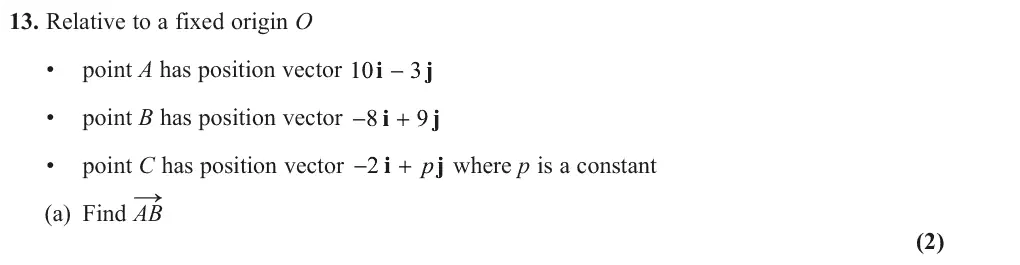
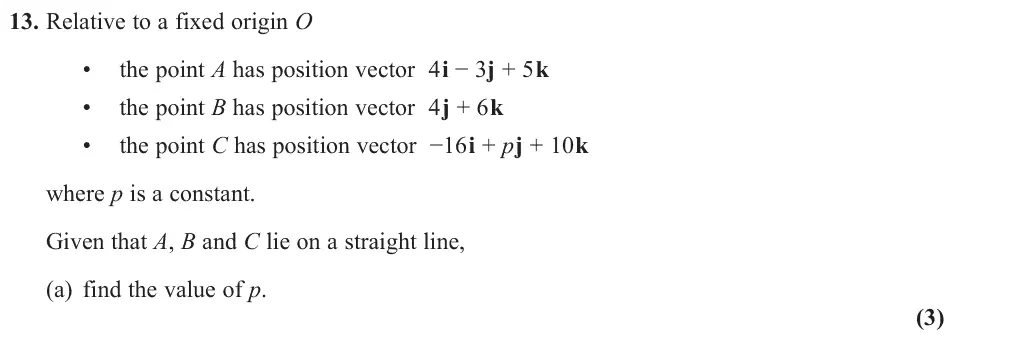
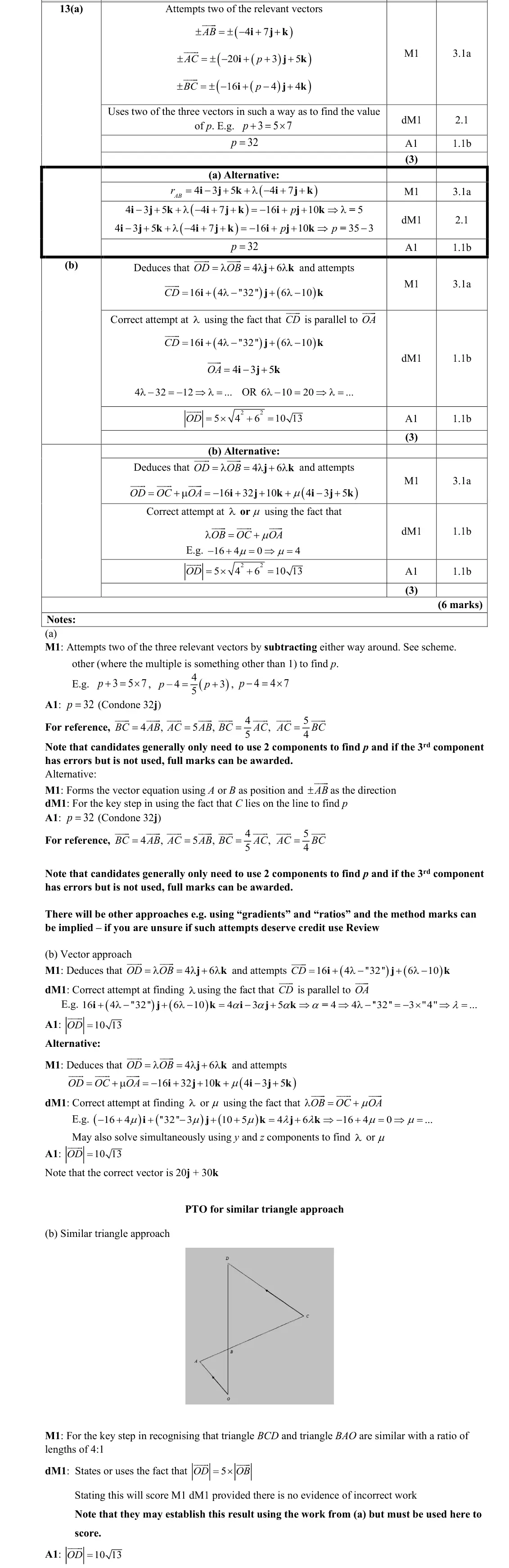
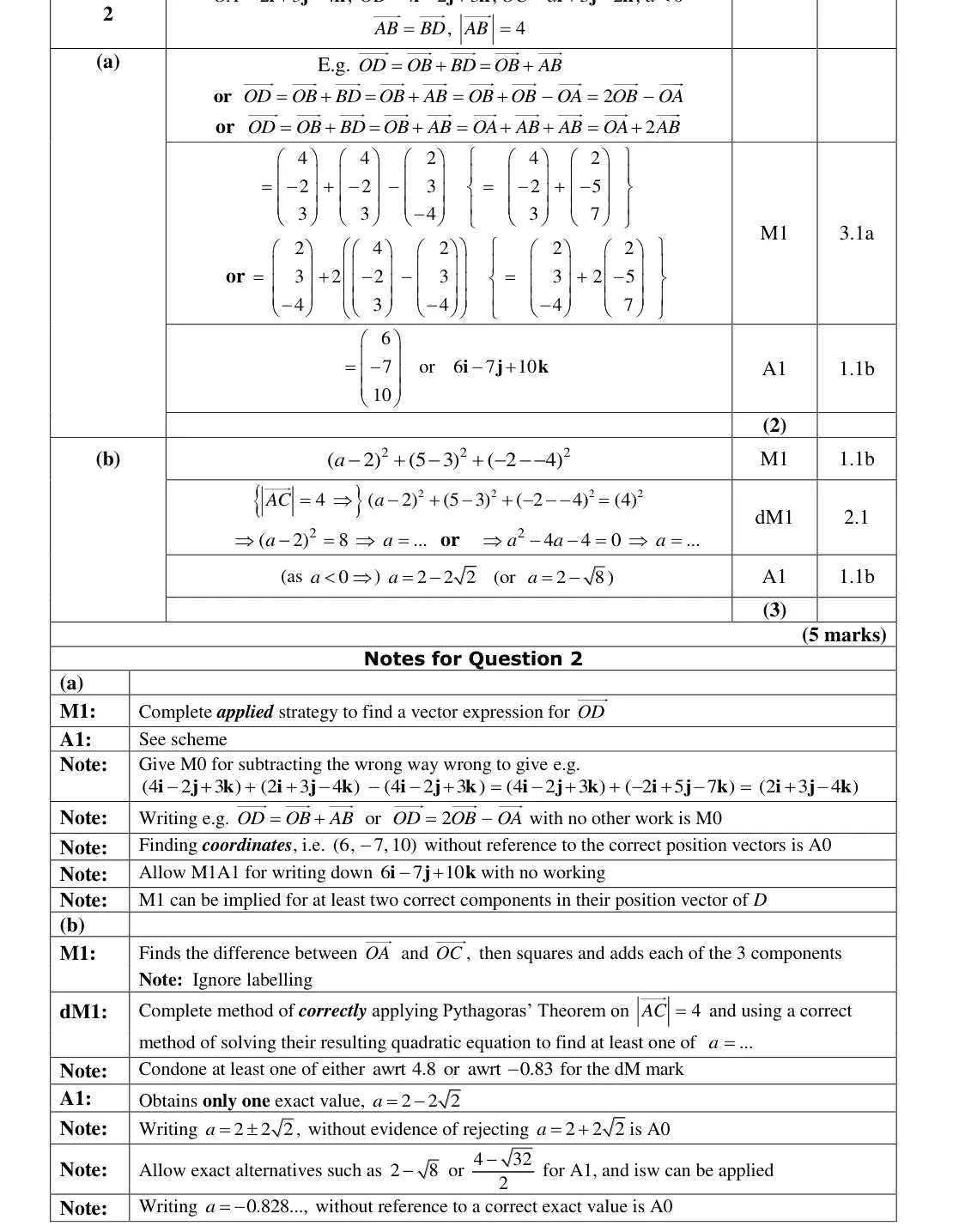
This question was a good differentiator, with the majority of candidates gaining some credit, but only the strongest achieving full marks. Overall, candidates often demonstrated good reasoning skills and were rewarded with good marks on this question but a significant number of candidates struggled with this topic. Throughout, methods of solution were many and varied, and often involved non vector approaches that were sometimes difficult to follow. In part (a) candidates using a vector method often attempted to subtract the given position vectors to form at least two of the vectors ±𝐴𝐴𝐴𝐴 ሬሬሬሬሬ⃗, ±𝐴𝐴𝐴𝐴 ሬሬሬሬሬ⃗ or ± 𝐵𝐵𝐵𝐵 ሬሬሬሬሬ⃗ although errors in their components were common. Candidates unfortunately often misread 𝑂𝑂𝑂𝑂 ሬሬሬሬሬ⃗ as ൭ 4 0 6 ൱ or ൭ 4 6 0 ൱. This was as far as many candidates reached, but some were able to successfully complete this approach by establishing 𝐵𝐵𝐵𝐵 ሬሬሬሬሬ⃗= 4𝐴𝐴𝐴𝐴 ሬሬሬሬሬ⃗, 𝐴𝐴𝐴𝐴 ሬሬሬሬሬ⃗= 5𝐴𝐴𝐴𝐴 ሬሬሬሬሬ⃗ or 5𝐵𝐵𝐶𝐶 ሬሬሬሬሬሬሬሬ⃗= 4𝐴𝐴𝐴𝐴 ሬሬሬሬሬ⃗ and reached p = 32. Some candidates incorrectly used methods like 𝐴𝐴𝐴𝐴 ሬሬሬሬሬ⃗= 𝐴𝐴𝐴𝐴 ሬሬሬሬሬ⃗ or assumed that the original position vectors were parallel. Candidates attempting to work out the magnitudes of vectors usually gained no marks. Others who made progress with vector methods, established the vector equation of the straight line through A, B and C and used this to find p. Candidates often used non vector methods as well. A common approach was to ignore one component and compare ‘gradients’ using the other two e.g. 4-(-3) 0-4 = 𝑝𝑝-4 -16-0 . This was judged to be an acceptable approach, although errors with the substitution of values were common. Some even established an ‘equation’ such as 𝑦𝑦= - 7 4 𝑥𝑥+ 4 and then substituted in 𝑥𝑥= -16 to find p, which, again, was acceptable, but it was a shame that so many candidates resorted to such methods and seemed to lack confidence in their ability to construct a solution using vectors. In some cases where the first method mark was awarded, candidates went on to an incorrect equation such as 𝑝𝑝= 4 x 7 and were much less likely to be awarded the second method mark, as it was often unclear which vector they were working with for this step. Many fully correct answers for (a) were seen, sometimes with minimal working. It should be noted here that candidates should try to make their intention clear, as there were many occasions where examiners struggled to follow the structure of candidates’ work and were unable to award marks as a result.