3.04b When a rigid body is in equilibrium the resultant moment is zero…

Section
3.04 Moments
Level
A level only
Statement
Understand that when a rigid body is in equilibrium the resultant moment is zero and the resultant force is zero.
Since 2018
9 parts, 35 marks · topic pages: Moments, Friction, resultant forces and motion in a plane, Trigonometric ratios, graphs, radians and the sine and cosine rules

Back to the checklist

June 2025 · Paper 3 · Q10(c) 5 marks Medium
Show the start of this questionEarlier part of this questionEarlier part of this question
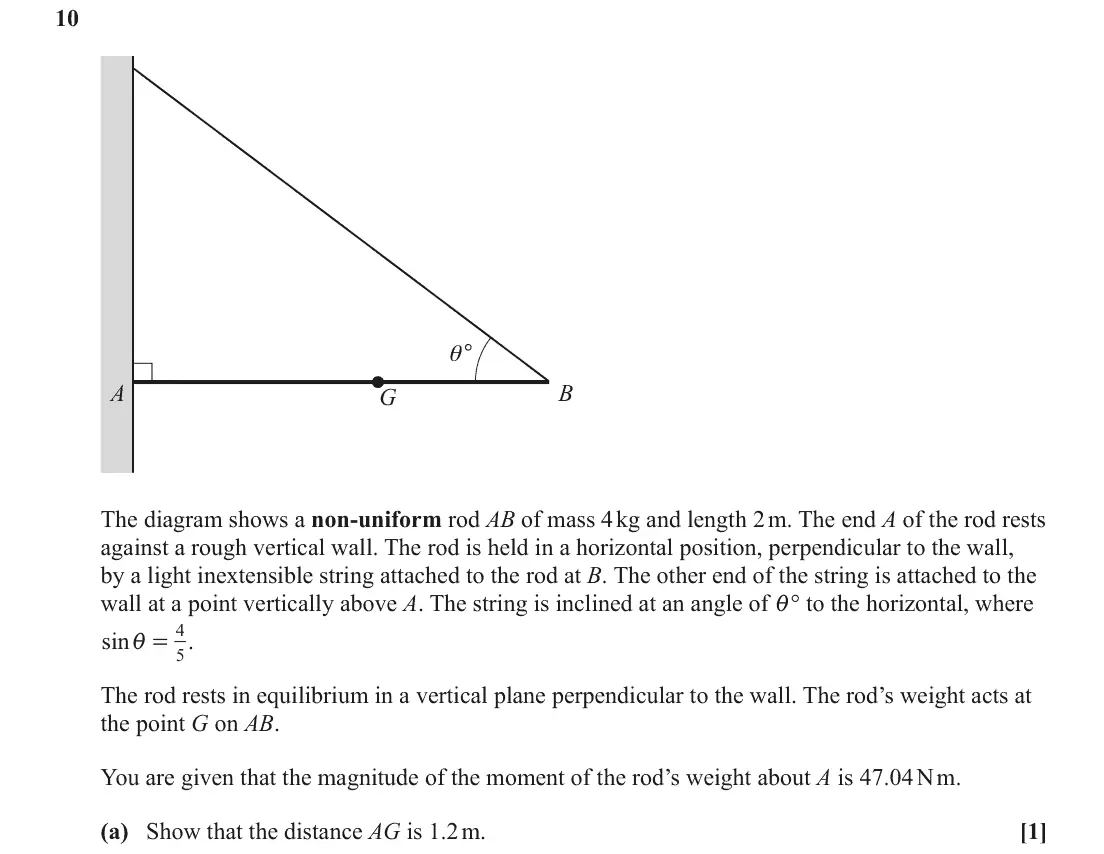
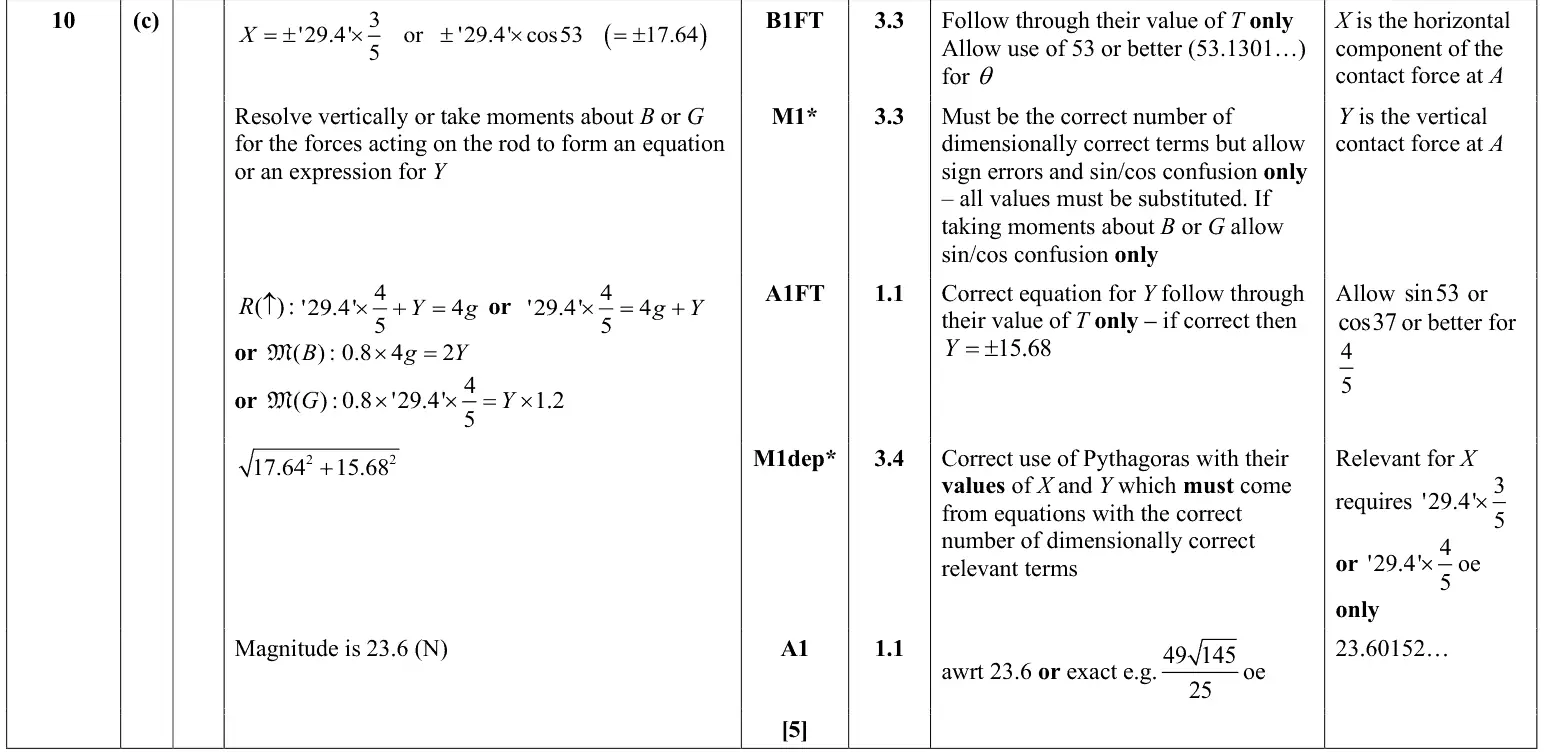
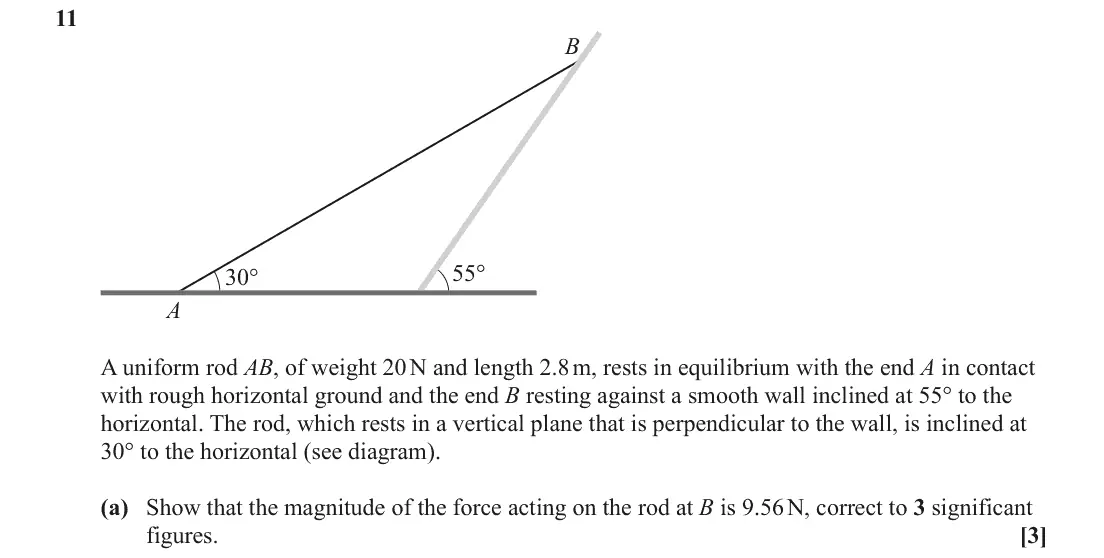
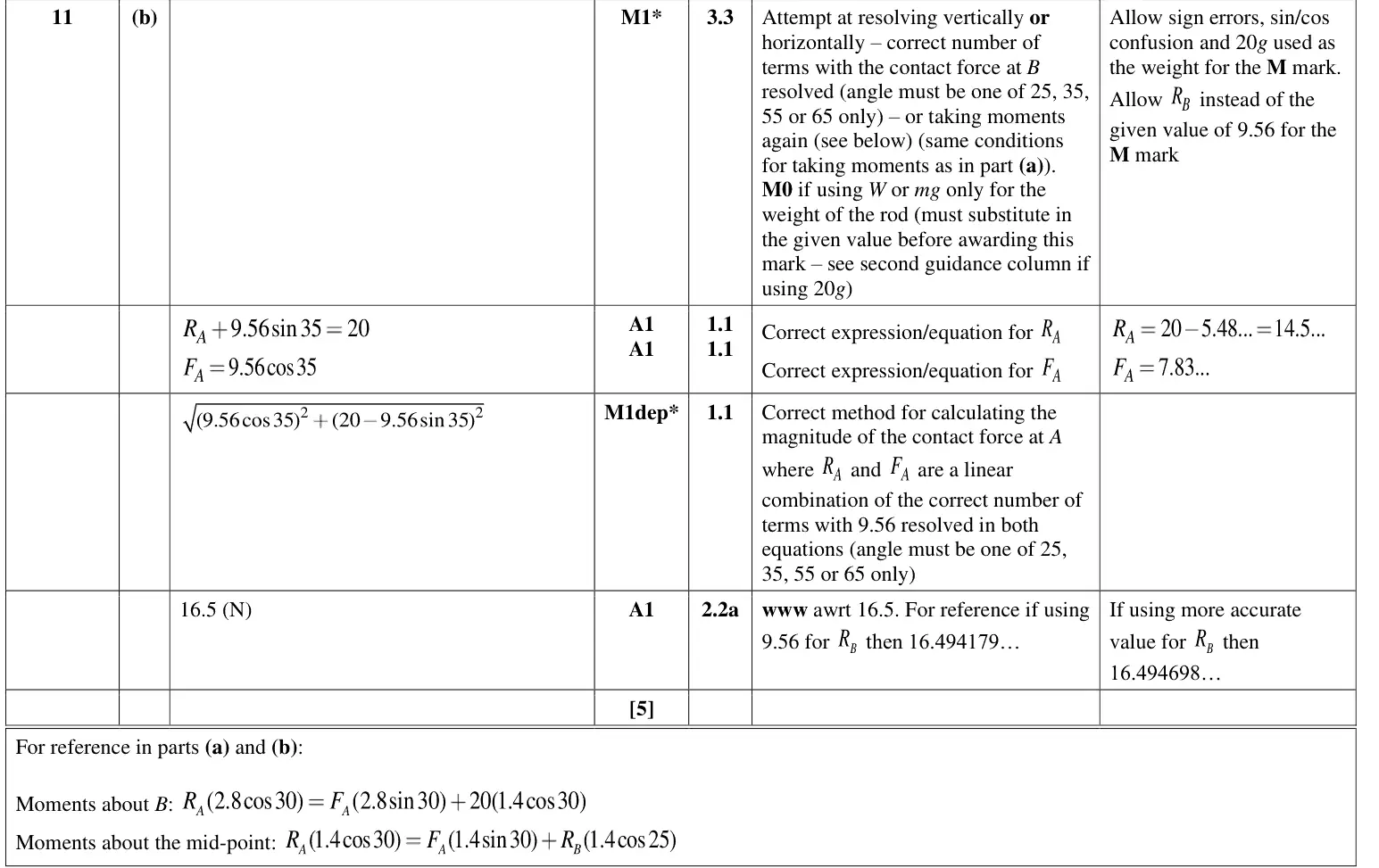
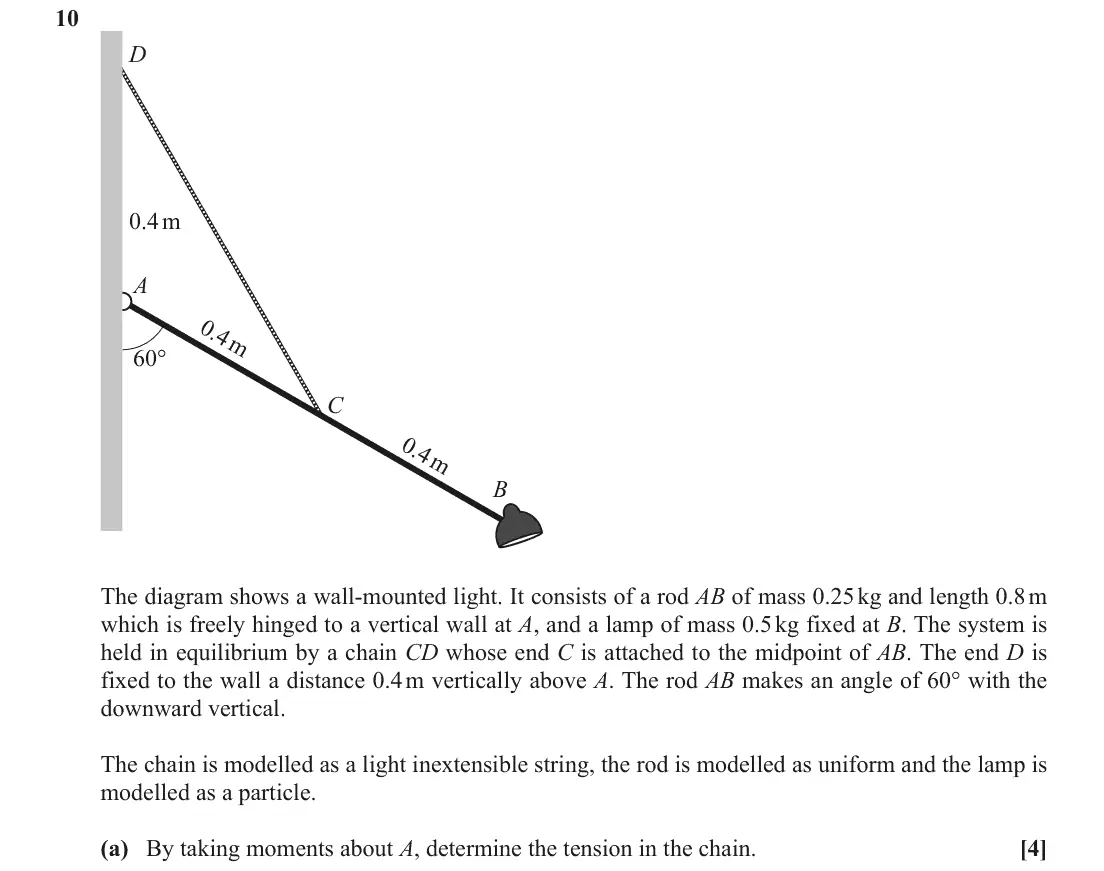
(c) Determine the magnitude of the contact force exerted on the rod by the wall at A. [5]
June 2024 · Paper 3 · Q11(b) 3 marks Hard
Show the start of this questionEarlier part of this question
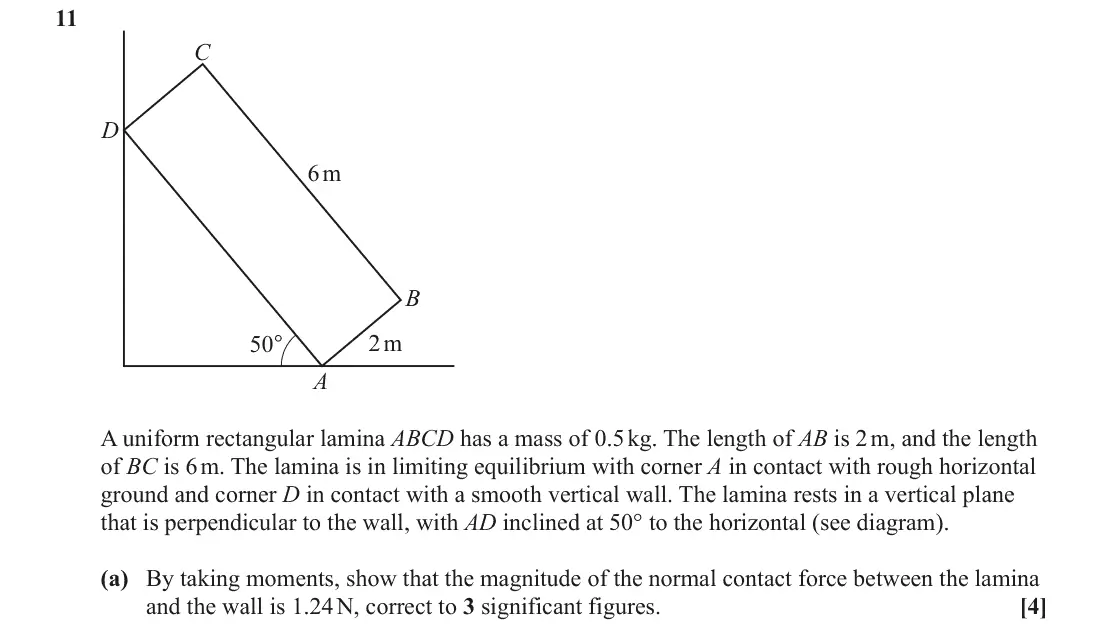
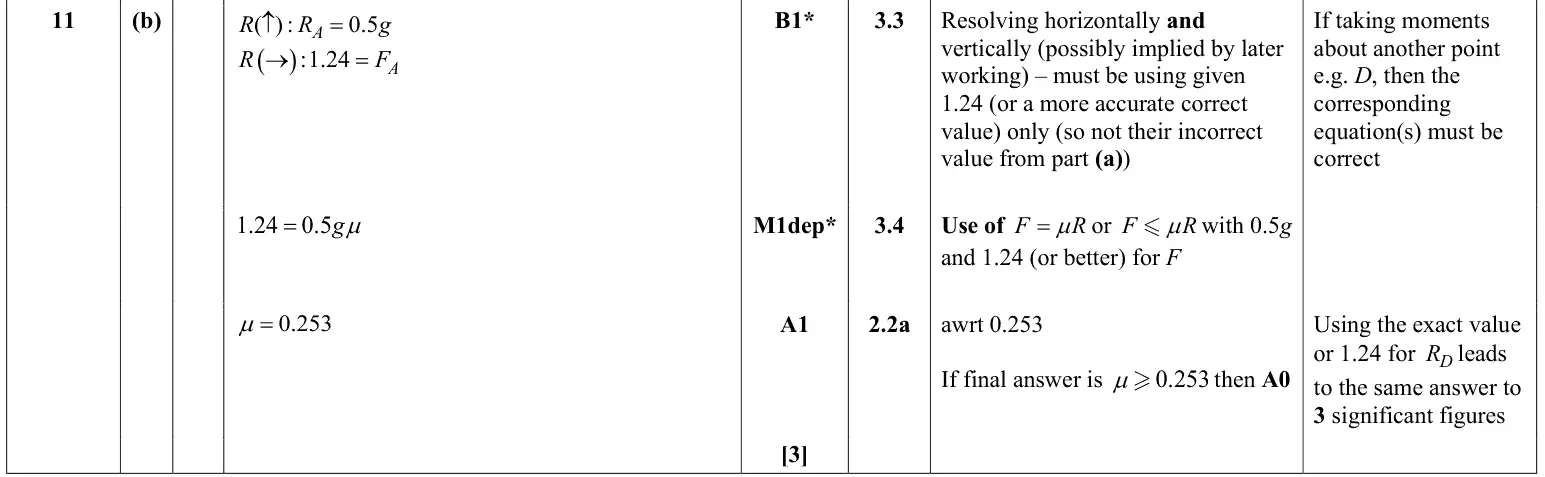
(b) Determine the coefficient of friction between the lamina and the ground. [3]
June 2023 · Paper 3 · Q11(b) 5 marks Hard
Show the start of this questionEarlier part of this question
(b) Determine the magnitude of the contact force between the rod and the ground. Give your answer correct to 3 significant figures. [5]
June 2022 · Paper 3 · Q11(a) 3 marks Medium
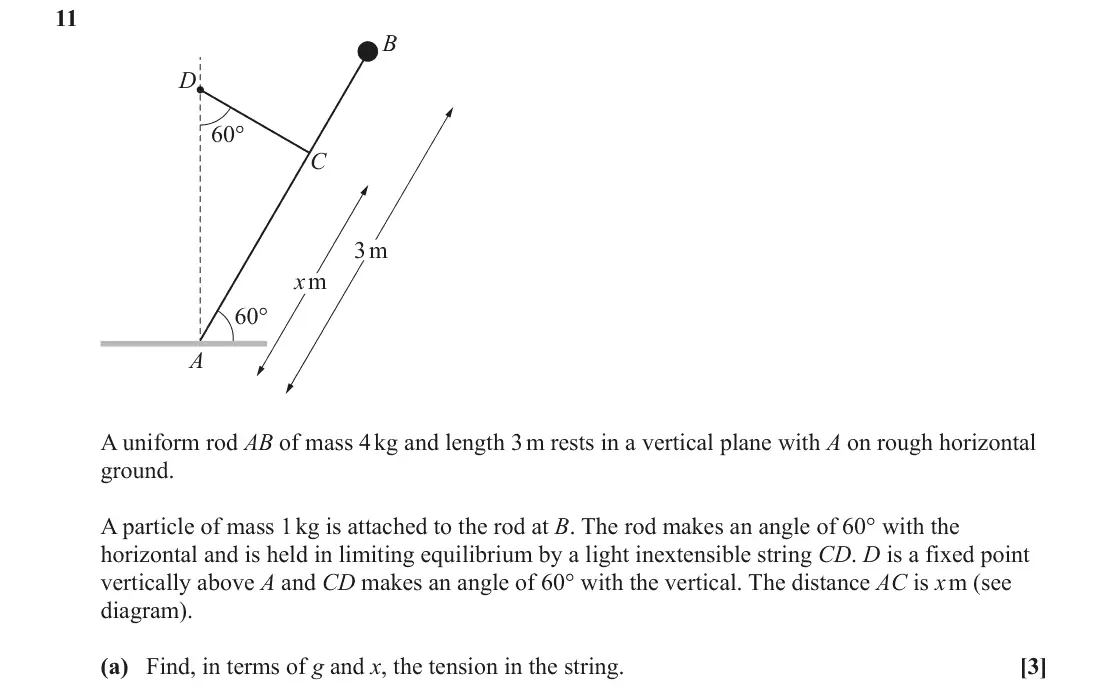
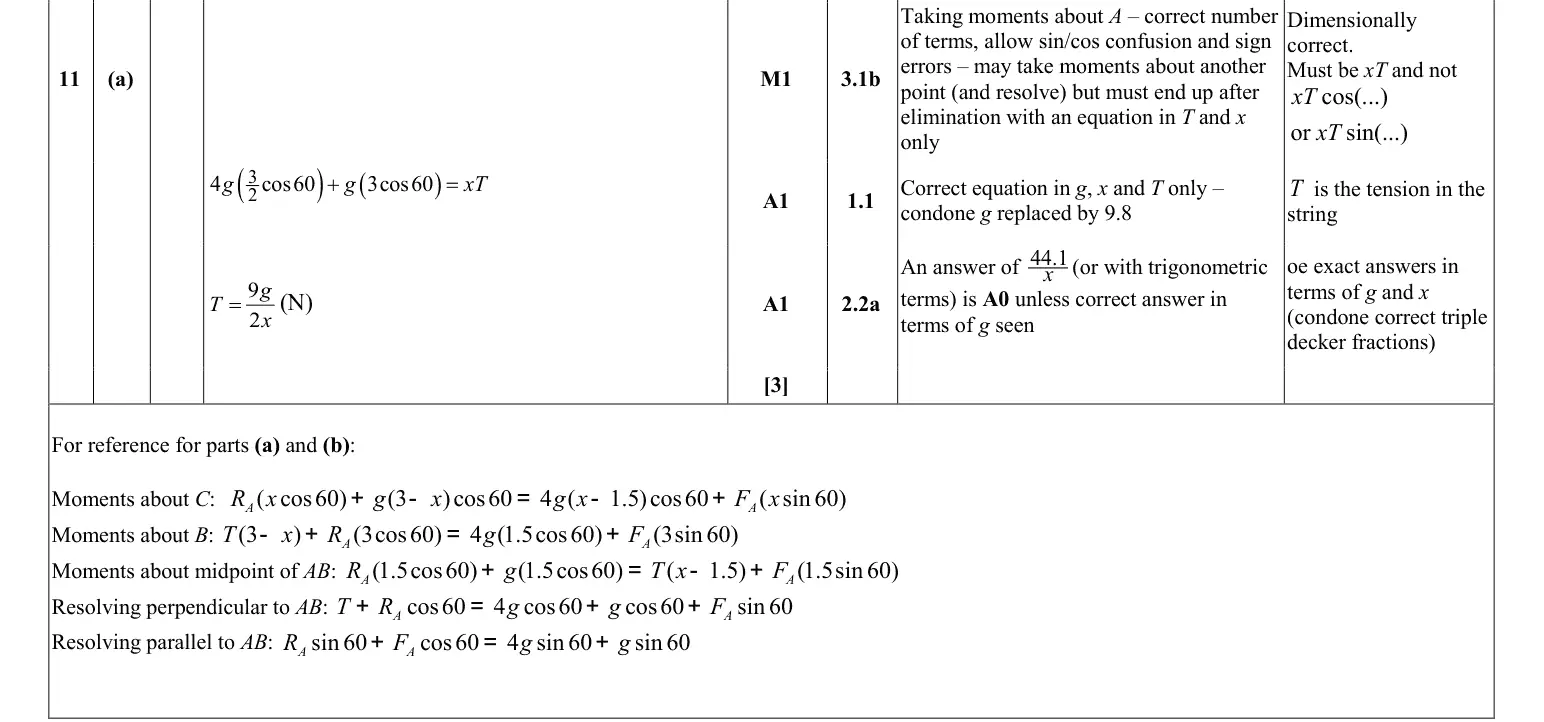
11 B D 60° C 3 m x m 60° A A uniform rod AB of mass 4 kg and length 3 m rests in a vertical plane with A on rough horizontal ground. A particle of mass 1 kg is attached to the rod at B. The rod makes an angle of 60° with the horizontal and is held in limiting equilibrium by a light inextensible string CD. D is a fixed point vertically above A and CD makes an angle of 60° with the vertical. The distance AC is x m (see diagram). (a) Find, in terms of g and x, the tension in the string. [3]
Autumn 2021 · Paper 3 · Q12(a) 5 marks Medium
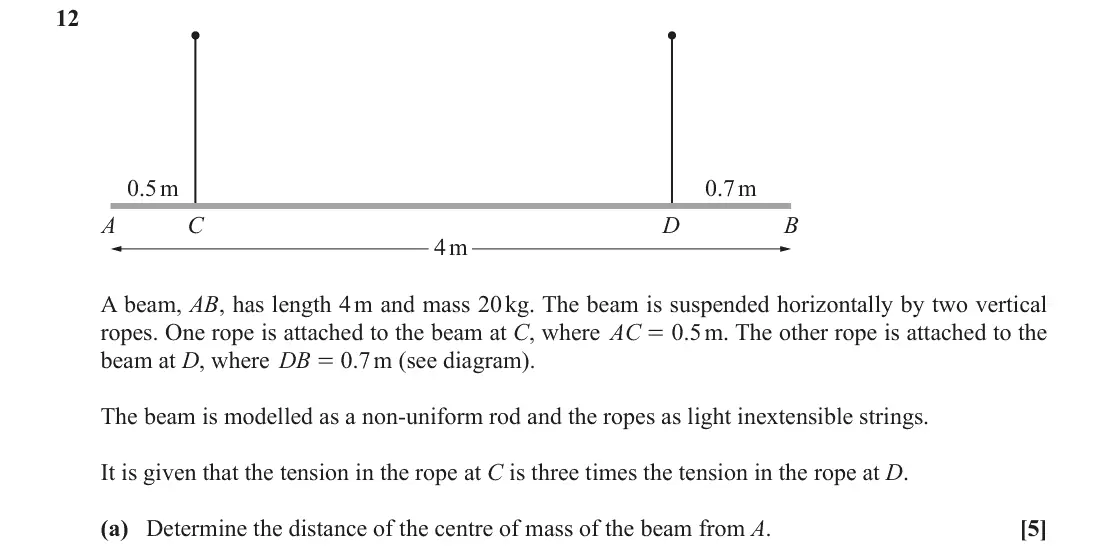
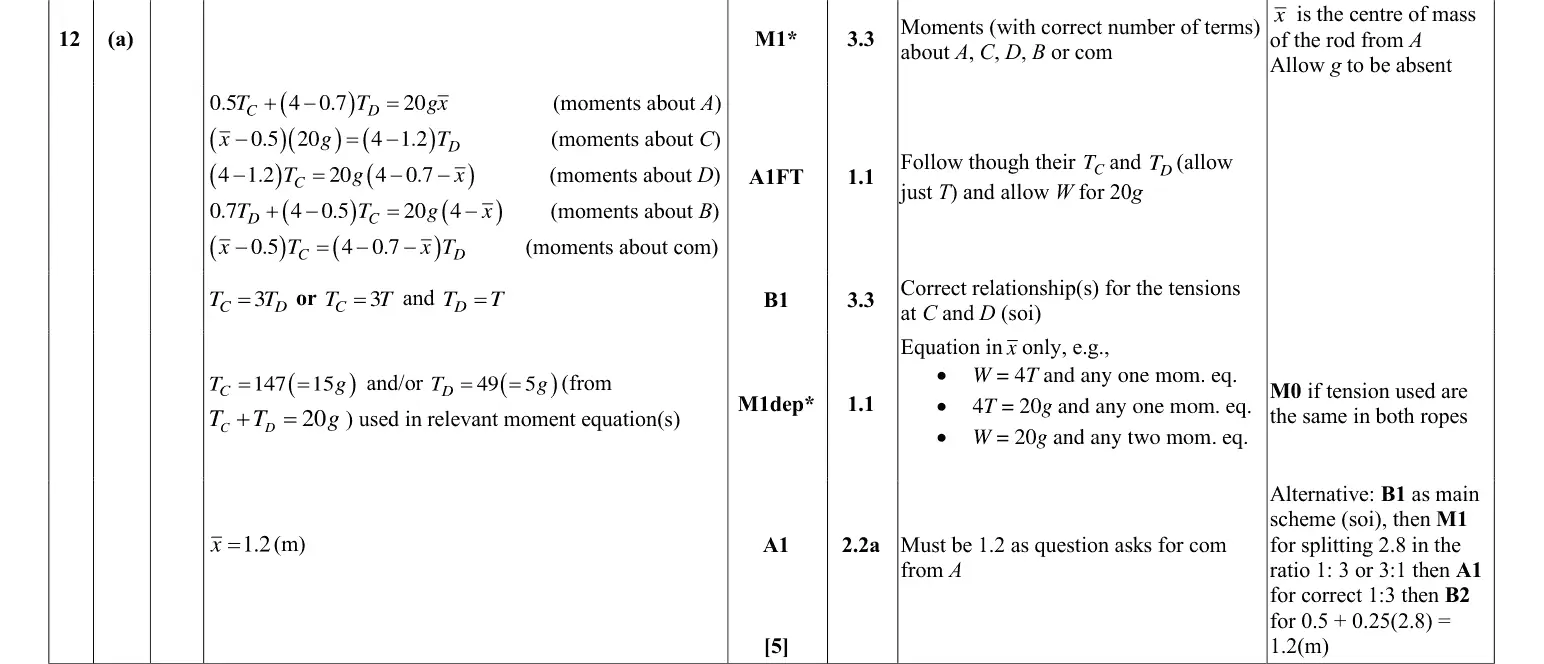
12 0.5 m 0.7 m A C D B 4 m A beam, AB, has length 4 m and mass 20 kg. The beam is suspended horizontally by two vertical ropes. One rope is attached to the beam at C, where AC = 0.5 m. The other rope is attached to the beam at D, where DB = 0.7 m (see diagram). The beam is modelled as a non-uniform rod and the ropes as light inextensible strings. It is given that the tension in the rope at C is three times the tension in the rope at D. (a) Determine the distance of the centre of mass of the beam from A. [5]
Autumn 2021 · Paper 3 · Q12(b) 2 marks Hard
Show the start of this questionEarlier part of this question
A particle of mass m kg is now placed on the beam at a point where the magnitude of the moment of the particle’s weight about C is . mg 3 5 N m. The beam remains horizontal and in equilibrium. (b) Determine the largest possible value of m. [2]
Autumn 2020 · Paper 3 · Q10(b)(i) 4 marks Medium
Show the start of this questionEarlier part of this question
(b) (i) Determine the magnitude of the force exerted on the rod at A. [4]
June 2019 · Paper 3 · Q11(b) 7 marks Hard
Show the start of this questionEarlier part of this question
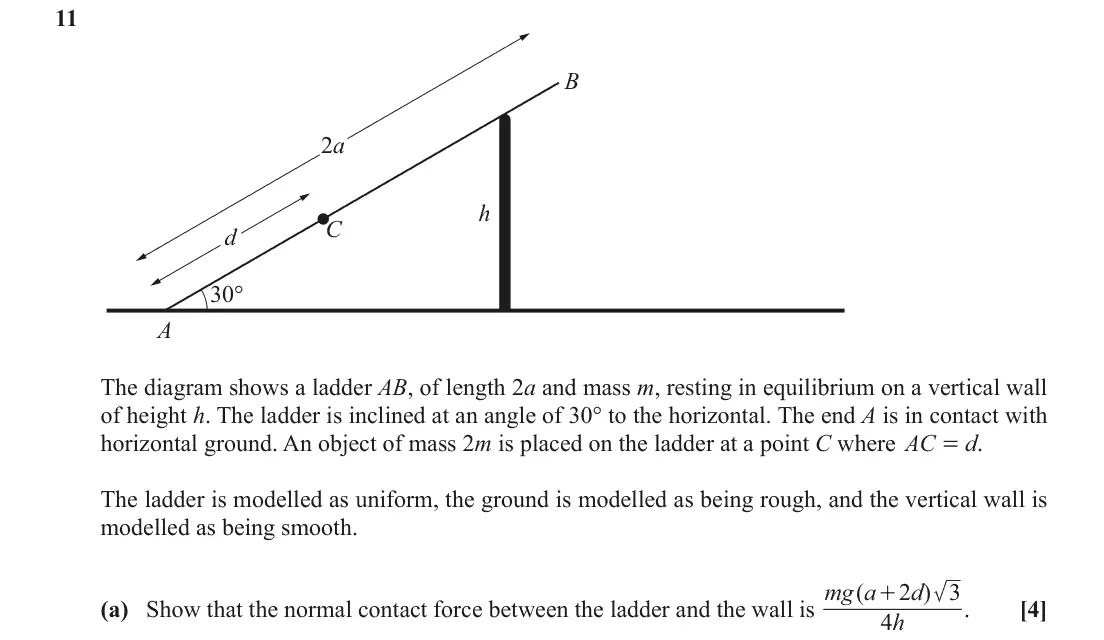
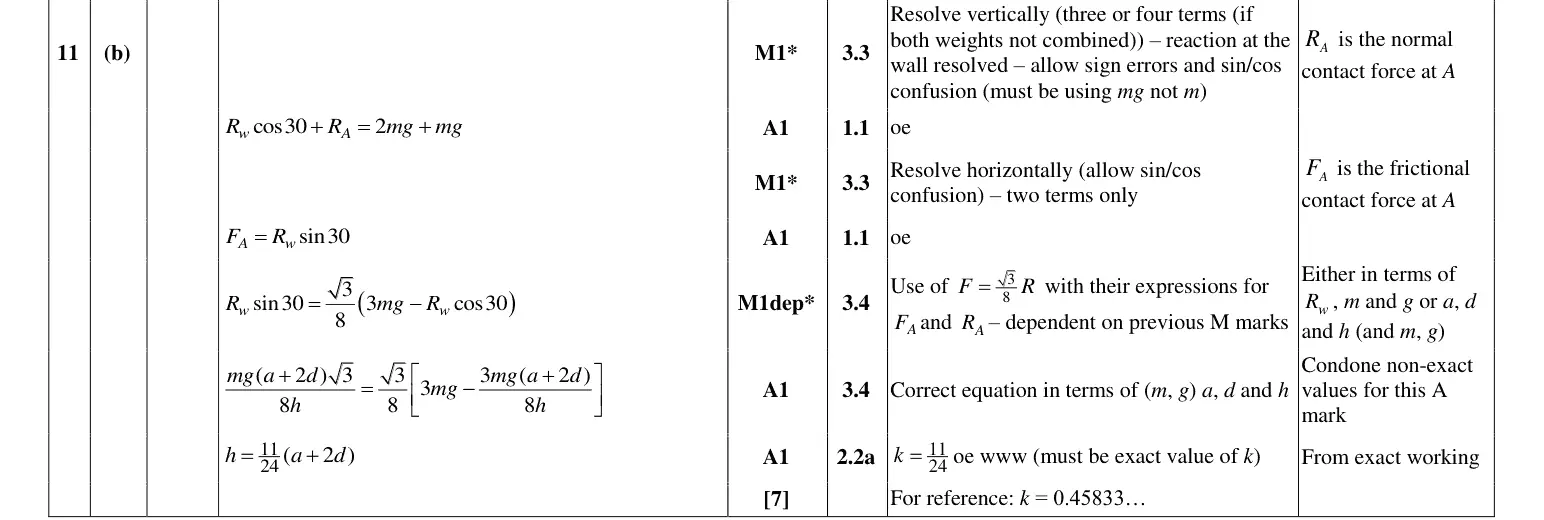
It is given that the equilibrium is limiting and the coefficient of friction between the ladder and the ground is 3. (b) Show that h k a ( d ) , where k is a constant to be determined. [7] = +
June 2018 · Paper 3 · Q9(i) 1 mark Easy
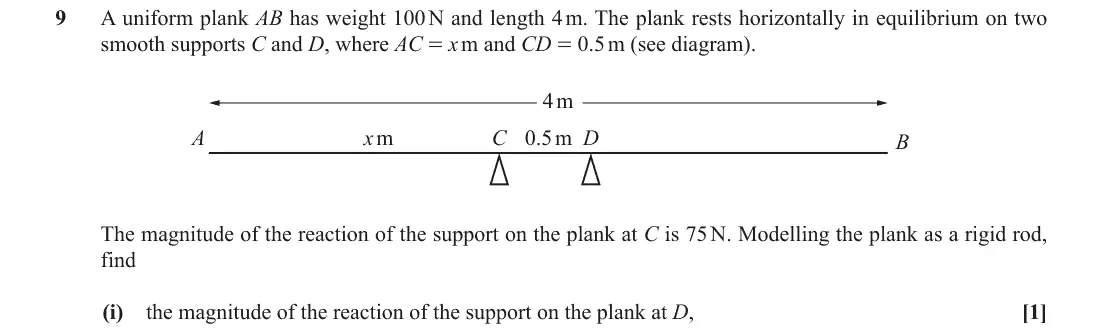
9 A uniform plank AB has weight 100 N and length 4 m. The plank rests horizontally in equilibrium on two smooth supports C and D, where AC = x m and CD = 0.5 m (see diagram). 4 m A x m C 0.5 m D B The magnitude of the reaction of the support on the plank at C is 75 N. Modelling the plank as a rigid rod, find (i) the magnitude of the reaction of the support on the plank at D, [1]

Find an A-level maths tutor

Stuck on this? Book a trial session with an A-level maths tutor.

Prefer email? Send an enquiry

If you are under 18, please include a parent's contact details. Enquiries go to enquiries@mathsaleveltutor.com and are deleted once handled.