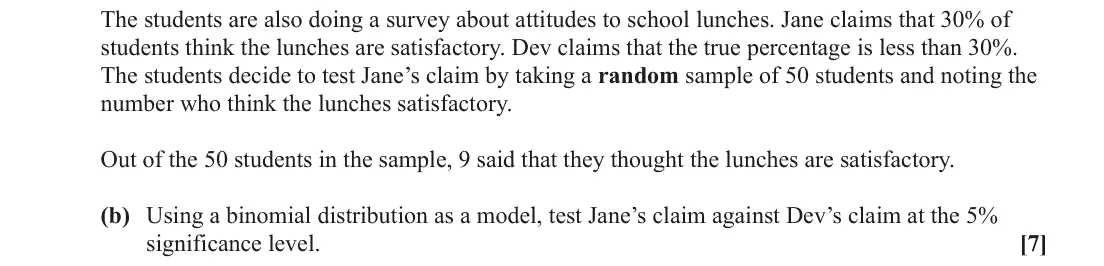
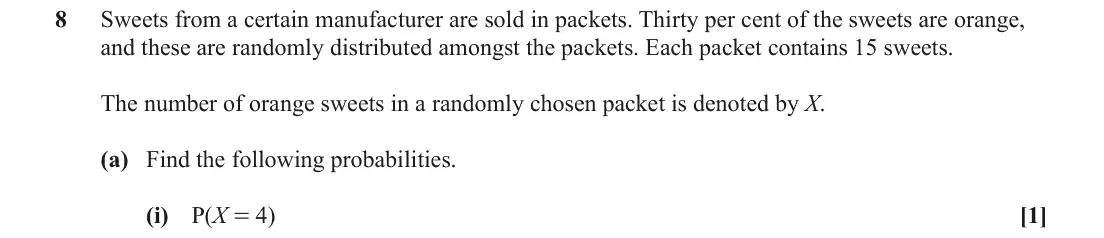
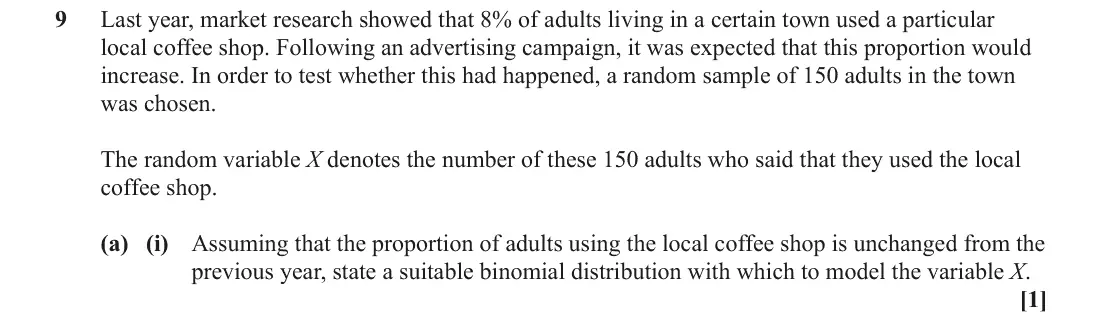
Show the start of this question


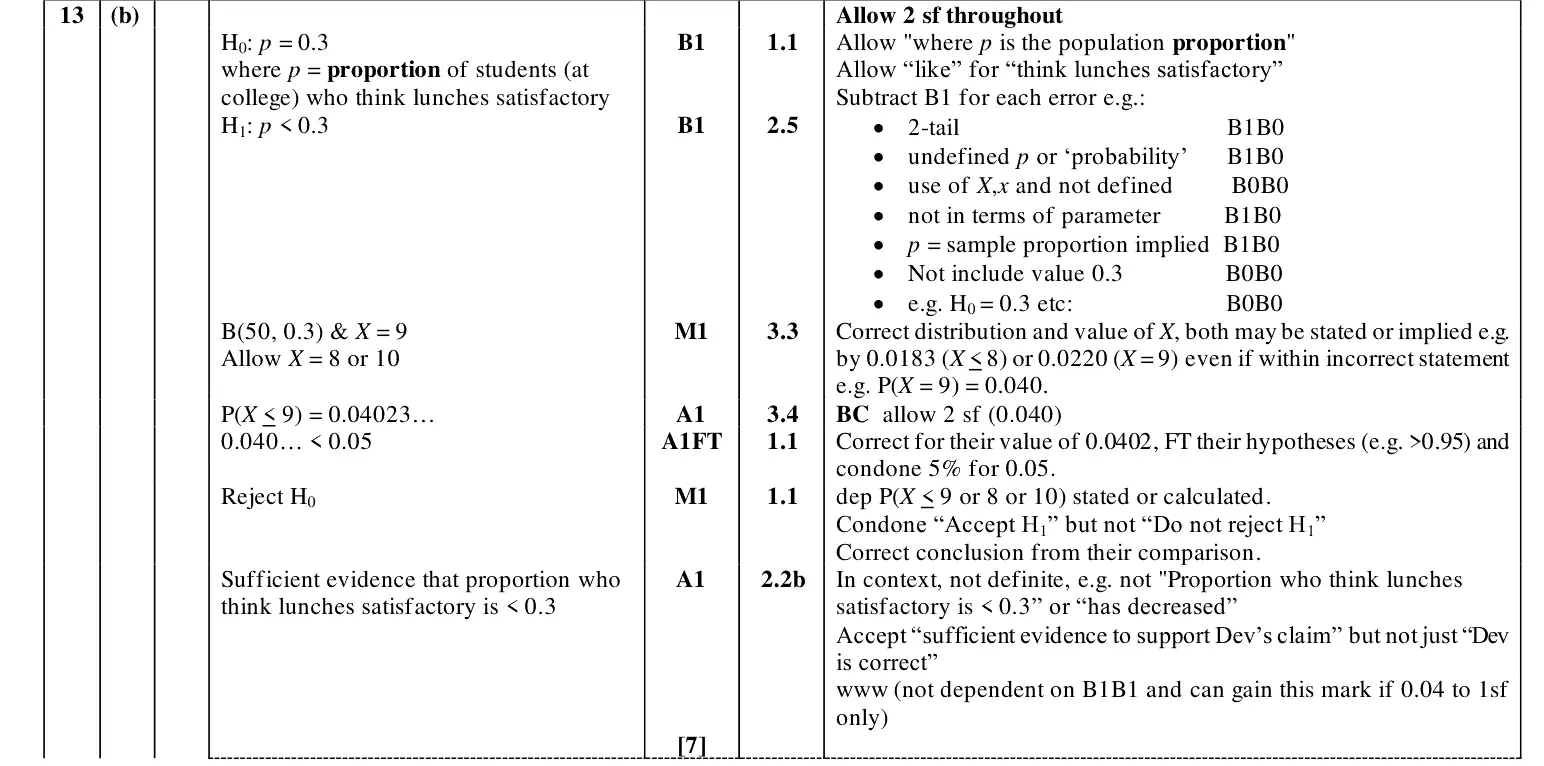
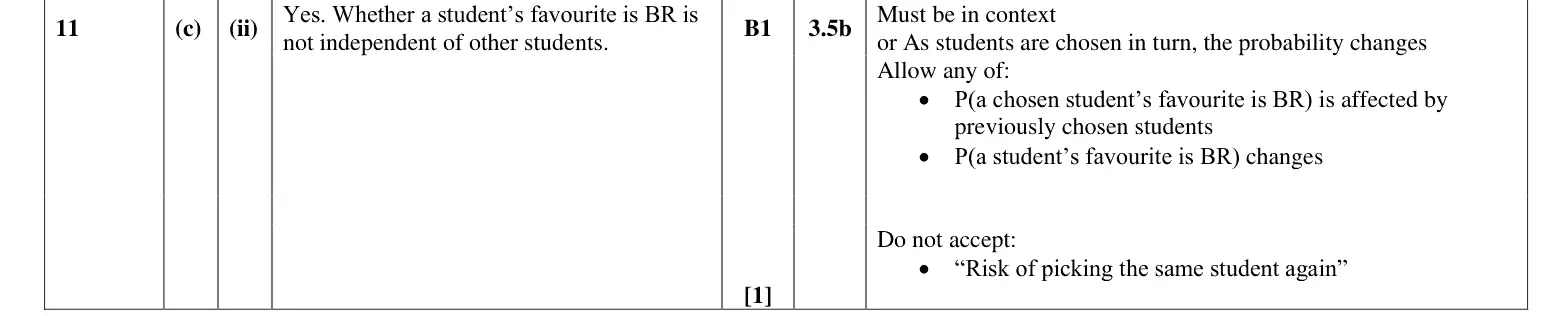
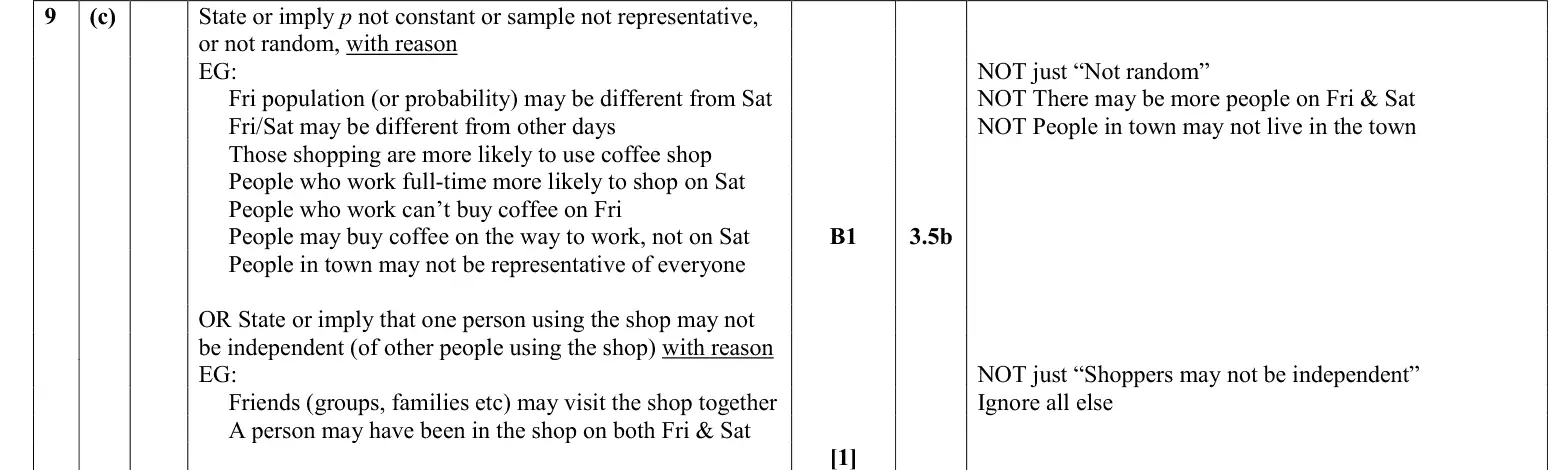
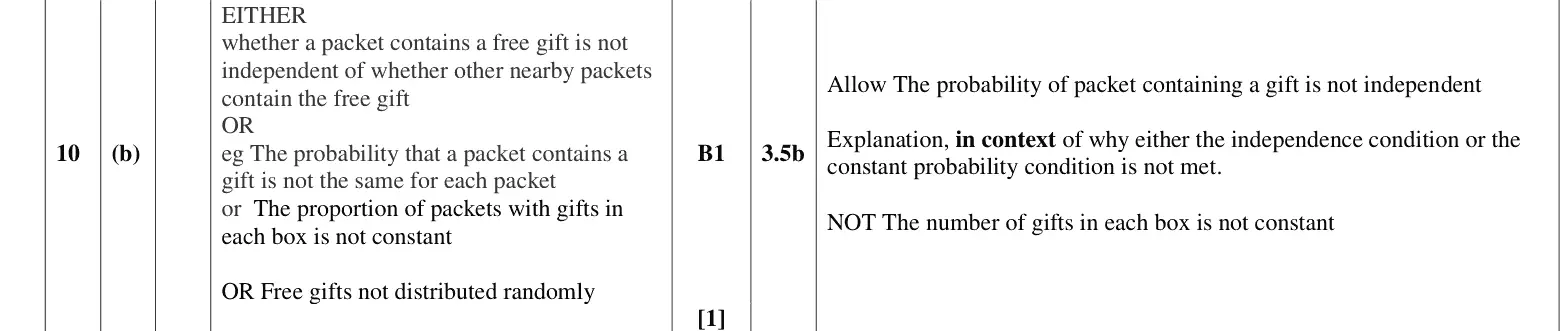
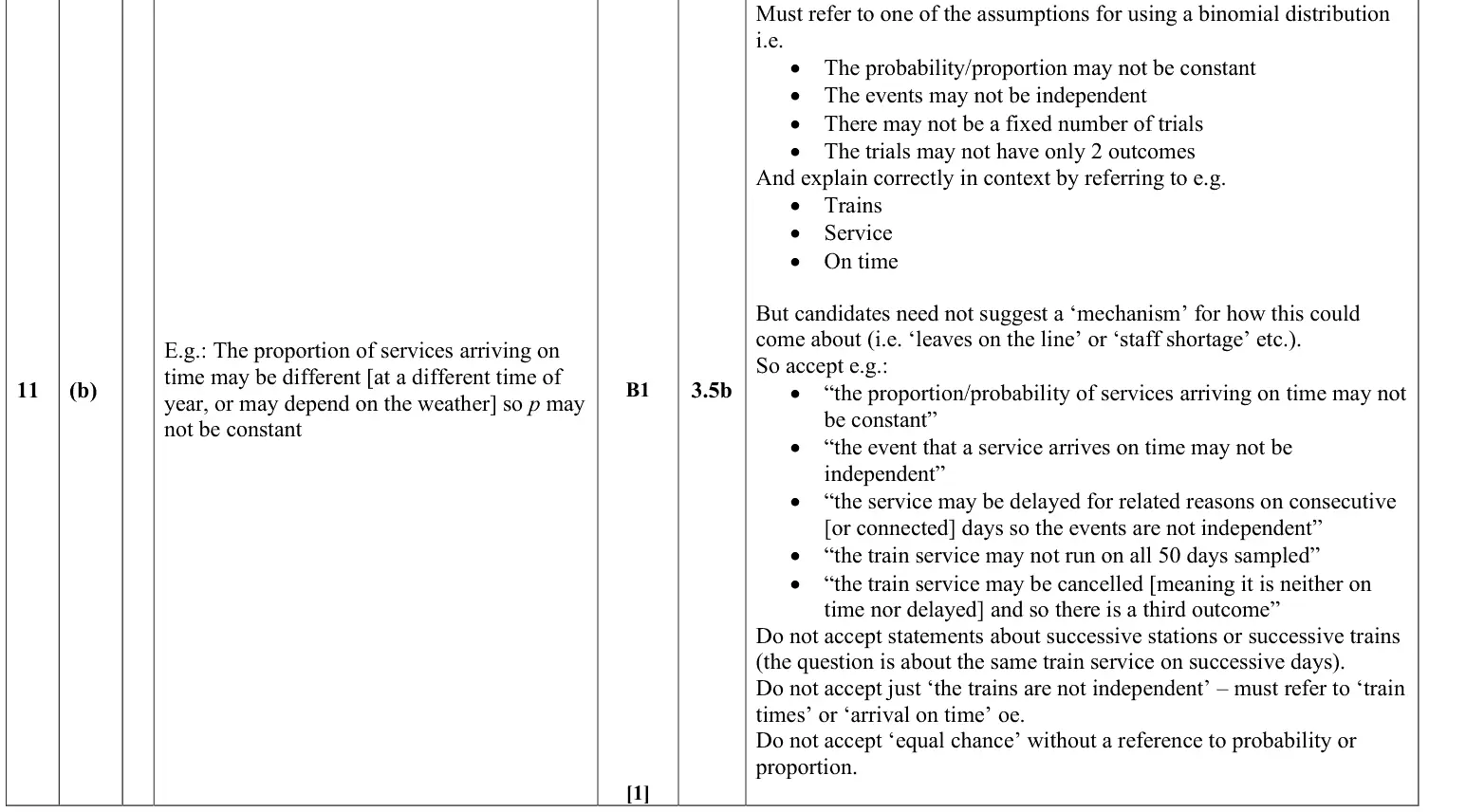
Mark scheme for this part
Examiner's comment
Most candidates gave a sufficiently good answer to score the mark in this part. As set out in the scheme, candidates needed to give a reason in context that directly links to one of the required assumptions for using a Binomial distribution. Most candidates argued that the probability may not be constant, or that the train service’s on-time arrival on successive days may not be independent of previous days. A few candidates identified that there may be more than two possible outcomes (e.g. ‘early’ or ‘cancelled’ as distinct from ‘on-time’ or ‘late’), which was acceptable. Some candidates appeared to struggle with the combination of mathematical and in-context language required to score the mark in this part – for instance, answers that did not specifically link to one of the assumptions in reasonably precise mathematical language were not sufficient (e.g. ‘chance not always the same’). Other candidates gave generic reasons why the result may not be reliable (e.g. ‘small sample size’) which were not acceptable as they did not relate to one of the required assumptions. A number of candidates appeared unsure about the distinction (in definition) between ‘independent events’ and ‘constant probability’ and seemed to confuse these concepts in their answer.
Key points and common errors
- probability of arriving on time may not be constant (season, weather) or days may not be independent
- must be in context of the train service