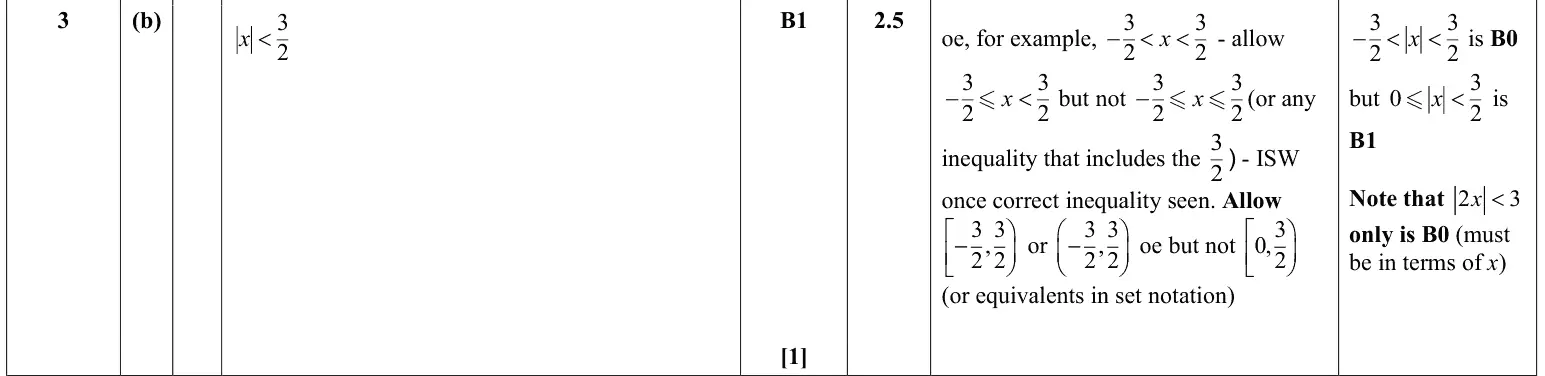
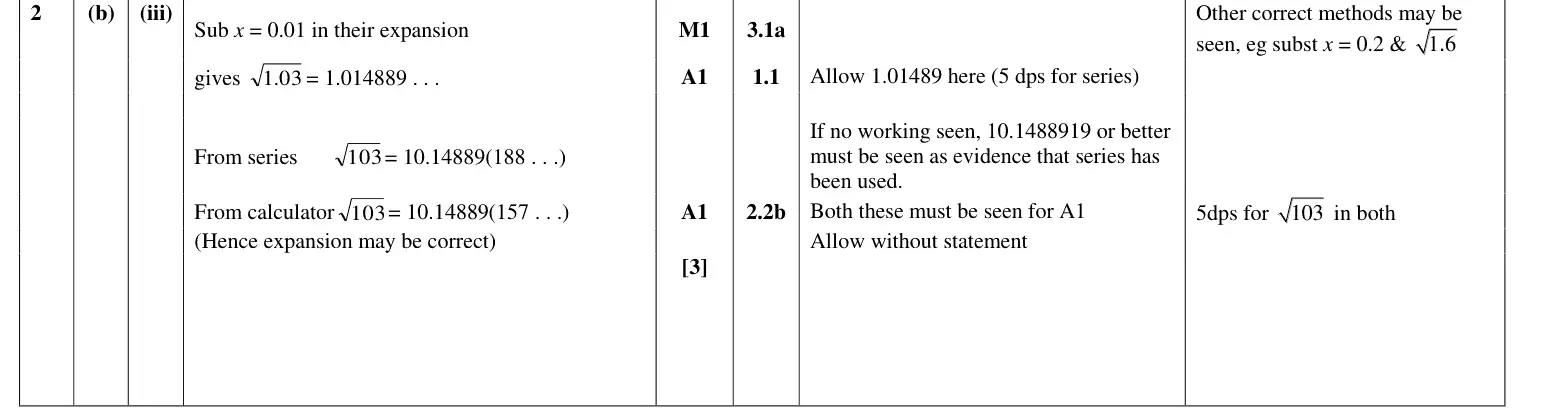
Show the start of this question



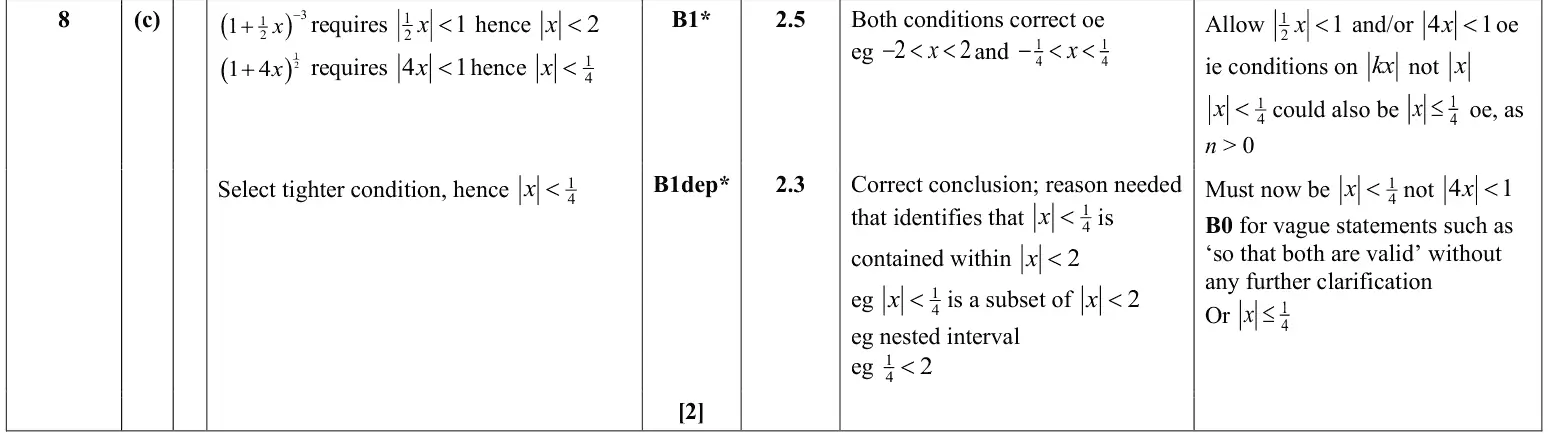
Mark scheme for this part
Examiner's comment
This final part of the question was less well answered, with fully correct solutions being in the minority. To gain the first mark candidates had to state the conditions for each of the two expansions to be valid, yet many were unable to do so despite conditions on ax being condoned for this mark. Candidates should be aware that this is listed in the formulae at the start of the paper, and appreciate how to use it. To gain the second mark, candidates were expected to identify the correct range of values as well as giving a convincing reason for their choice. Some candidates were able to explain about the need to use the tighter condition (sometimes referring to a subset or a nested interval), but other explanations lacked clarity or no explanation at all was given for their choice.
Key points and common errors
- (2 + x)⁻³ valid for mod x < 2, (1 + 4x)^½ for mod x < ¼
- both must hold so the tighter condition mod x < ¼, with reason