3.02b Graphs in kinematics for motion in a straight line

Section
3.02 Kinematics
Level
AS & A level
Statement
Understand, use and interpret graphs in kinematics for motion in a straight line.
Since 2018
4 parts, 8 marks · topic pages: Kinematics: language and graphs, Graphs and transformations

Back to the checklist

June 2024 · Paper 3 · Q12(a) 3 marks Hard
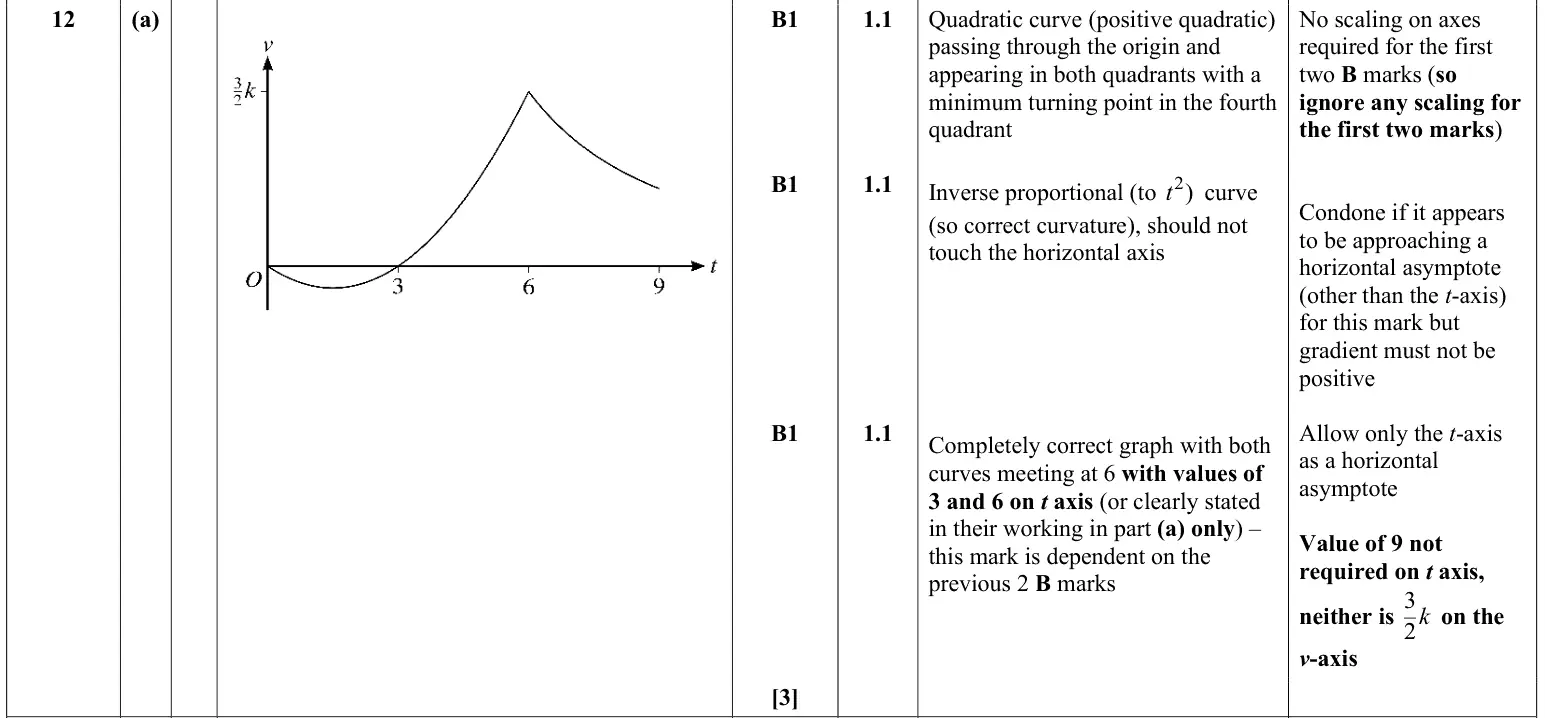
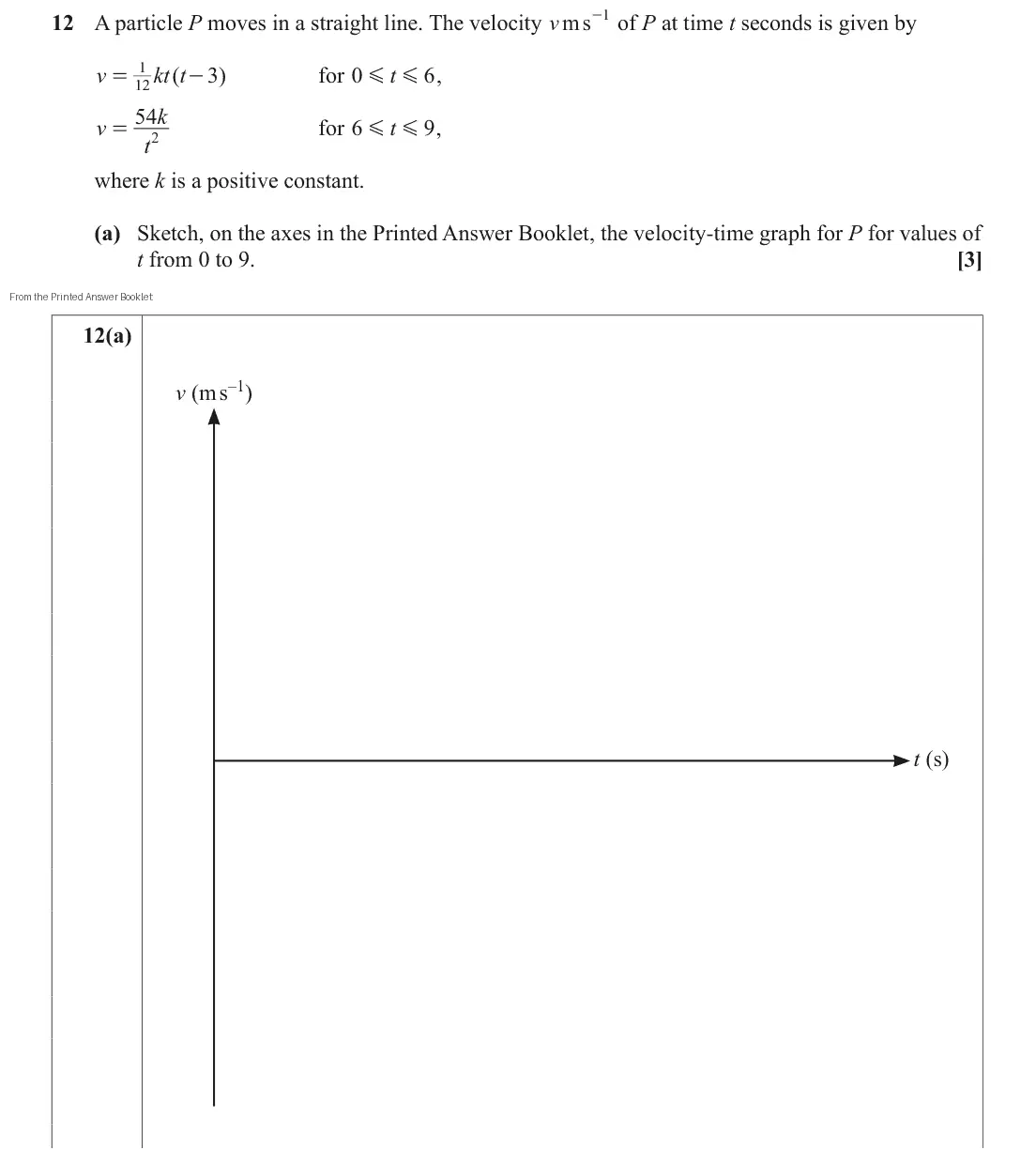
12 A particle P moves in a straight line. The velocity ms v - of P at time t seconds is given by v kt t ( ) for t , = - G G k v for t , = G G t where k is a positive constant. (a) Sketch, on the axes in the Printed Answer Booklet, the velocity-time graph for P for values of t from 0 to 9. [3]
June 2023 · AS Paper 2 · Q9(b) 1 mark Medium
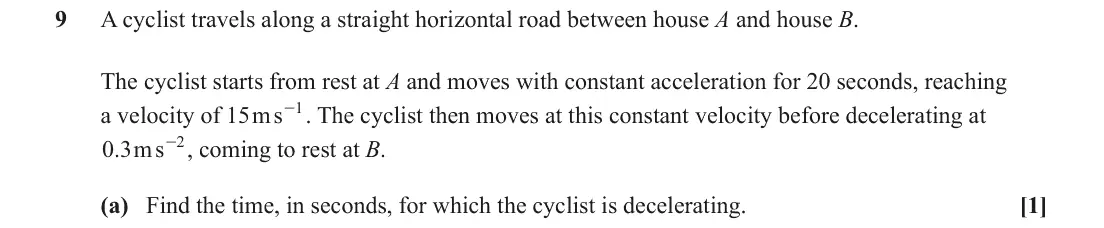
Show the start of this questionEarlier part of this question
(b) Sketch a velocity-time graph for the motion of the cyclist between A and B. [Your sketch need not be drawn to scale; numerical values need not be shown.] [1]
Autumn 2021 · AS Paper 2 · Q10(a) 2 marks Medium
10 A cyclist starts from rest and moves with constant acceleration along a straight horizontal road. The cyclist reaches a speed of 6 m s 1 - in 25 seconds. The cyclist then moves with constant acceleration - . The cyclist then moves with constant deceleration until 0.05 m s 2 - until the speed is 10 m s 1 coming to rest. The total time for the cyclist’s journey is 150 seconds. (a) Sketch a velocity-time graph to represent the cyclist’s motion. [2]
June 2019 · Paper 3 · Q7(a) 2 marks Easy
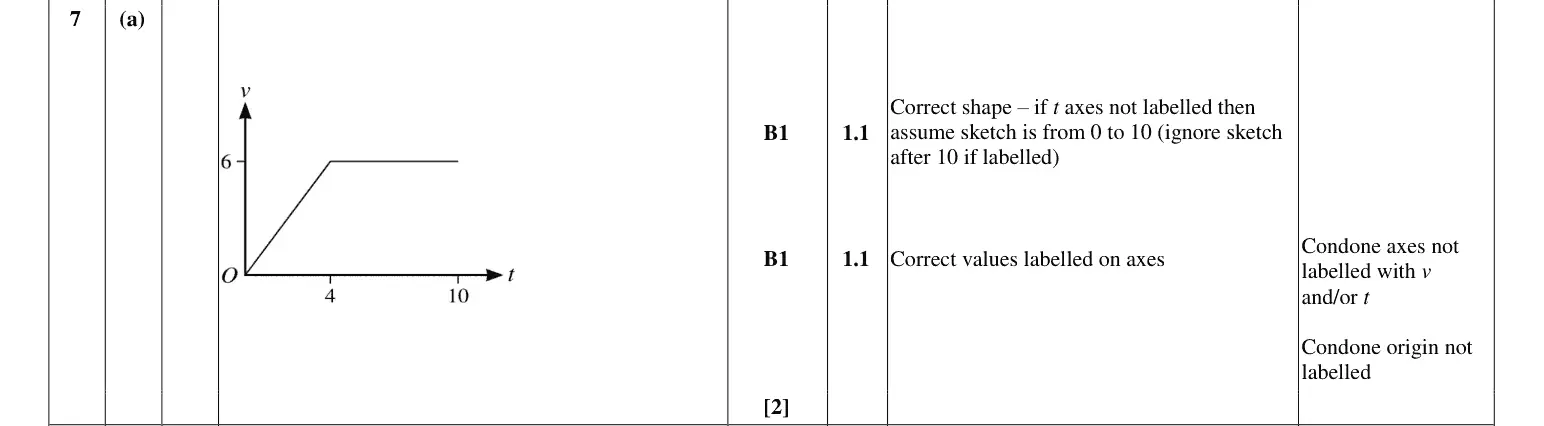
7 A cyclist starting from rest accelerates uniformly at .1 5ms - for 4 s and then travels at constant speed. (a) Sketch a velocity-time graph to represent the first 10 seconds of the cyclist’s motion. [2]

Find an A-level maths tutor

Stuck on this? Book a trial session with an A-level maths tutor.

Prefer email? Send an enquiry

If you are under 18, please include a parent's contact details. Enquiries go to enquiries@mathsaleveltutor.com and are deleted once handled.